VISA Report Interpretation | Great Power Competition: Stablecoins Are Penetrating the Global Economy
TechFlow Selected TechFlow Selected
VISA Report Interpretation | Great Power Competition: Stablecoins Are Penetrating the Global Economy
In September 2024, Visa released a report on stablecoins, providing an in-depth analysis of their penetration in emerging markets.
 Navigating Web3 tides with focused insights
Compiled by: Conflux Blockchain Research Institute
Source: Conflux Blockchain
In recent years, stablecoins have gradually integrated into the global economy, demonstrating strong growth momentum, especially in emerging markets. According to Visa's latest report, stablecoins—initially used as collateral or exchange media within the crypto ecosystem—have evolved into a new form of monetary carrier that now permeates everyday financial life for ordinary users. An increasing number of retail and institutional users are embracing this emerging technology, driving further innovation in global payment systems.
In its report, Visa combines survey results from cryptocurrency users in five key emerging market economies (Brazil, India, Indonesia, Nigeria, and Turkey) with new on-chain estimation data and qualitative analysis to present a comprehensive picture of global stablecoin usage. The report particularly focuses on non-crypto use cases such as remittances, cross-border payments, payroll, trade settlements, and B2B transfers.
1. Stablecoin Market Overview
Stablecoins are currently the "killer application" in the cryptocurrency space. Today, the total value of circulating stablecoins exceeds $160 billion, compared to just several billion dollars in 2020. Over 20 million addresses conduct stablecoin transactions on public blockchains each month. In the first half of 2024 alone, stablecoin settlement volume surpassed $2.6 trillion. Stablecoins offer significant advantages over existing payment systems: programmability on-chain, strong auditability, transaction finality, self-custody of funds, and interoperability.
Although initially adopted by traders and crypto exchanges for collateral and asset trading, stablecoins have since expanded beyond these use cases and are now widely applied across the global economy. In emerging markets, their applications in payments, currency substitution, and access to high-quality yield opportunities are accelerating.
The divergence between stablecoin activity levels and the broader crypto market cycle clearly indicates that stablecoin usage is no longer limited to crypto-native users and trading scenarios.
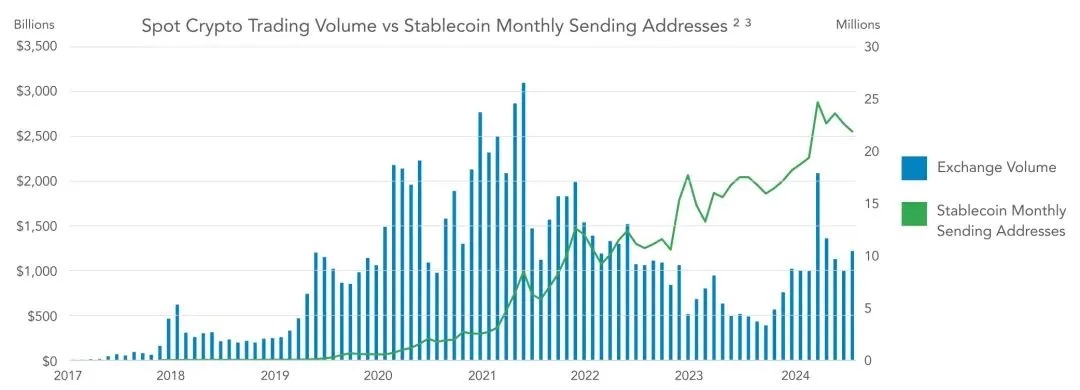
Non-trading uses of stablecoins continue to grow, particularly in emerging markets. They are being used for currency substitution (to escape volatility or local currency depreciation), as alternatives to U.S. dollar bank accounts, for business-to-business and consumer payments, to access various yield-generating products, and for trade settlements. Stablecoins are especially attractive in high-inflation countries or nations with underdeveloped fiat financial systems where U.S. dollar banking services are either unavailable or difficult to access.
2. On-Chain Stablecoin Data
2.1 Steady Annual Growth of the Stablecoin Market
Since 2017, the total supply of stablecoins has grown rapidly. At that time, total circulation was less than $1 billion. Before the collapse of Terra’s UST and the subsequent credit crisis, the market peaked at approximately $192 billion in March 2022. The credit crisis suppressed native crypto yields, reduced trading volumes, and damaged the balance sheets of crypto-native companies. After the crisis largely subsided, starting in December 2023—and amid growing expectations of U.S. approval for Bitcoin ETFs—major crypto assets began to rebound, and stablecoin supply resumed its recovery.
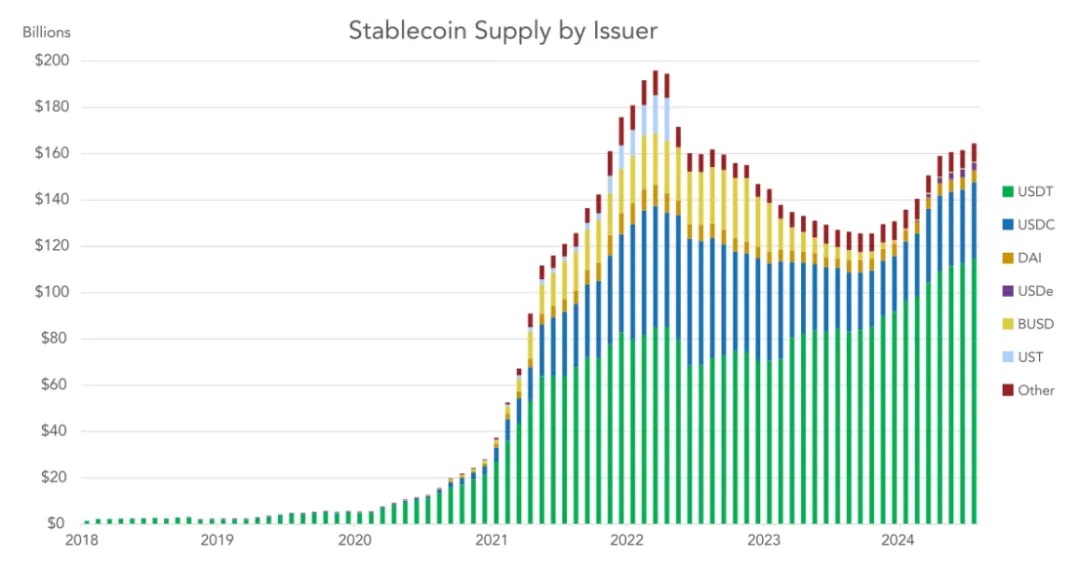
In recent months, as various regulatory bodies have passed clear stablecoin legislation aimed at attracting issuers, new forms of stablecoins have continued to emerge. Jurisdictions most active in establishing stablecoin regulatory frameworks include the European Union, Singapore, Dubai, Hong Kong, and Bermuda.
2.2 Refined and Adjusted Data
In this study, Visa conducted extensive noise reduction and deduplication efforts, resulting in a more conservative estimate of settlement volume. Even the adjusted figure remains challenging to estimate precisely; Visa does not claim authority over its estimates but believes they remain close to reality.
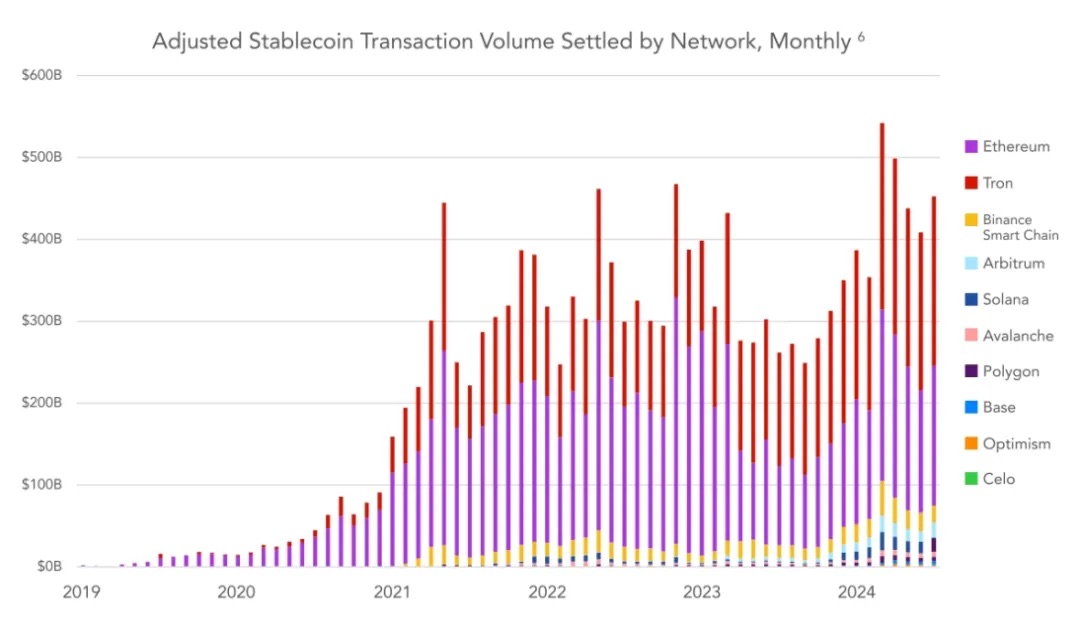
According to Visa’s adjustments, the conservative estimate for full-year 2023 stablecoin settlement volume is $3.7 trillion, while H1 2024 reached $2.62 trillion, projecting a full-year 2024 volume of $5.28 trillion. Notably, despite the sell-off in crypto assets and declining trading volumes in 2022 and 2023, stablecoin settlement volumes have steadily increased throughout the market cycle. This further indicates that stablecoins have attracted a new cohort of users whose interests extend beyond mere exchange settlements.
After noise reduction, as of June 2024, the most popular blockchains by settlement value are Ethereum, Tron, Arbitrum, Base, BSC, and Solana, in that order.
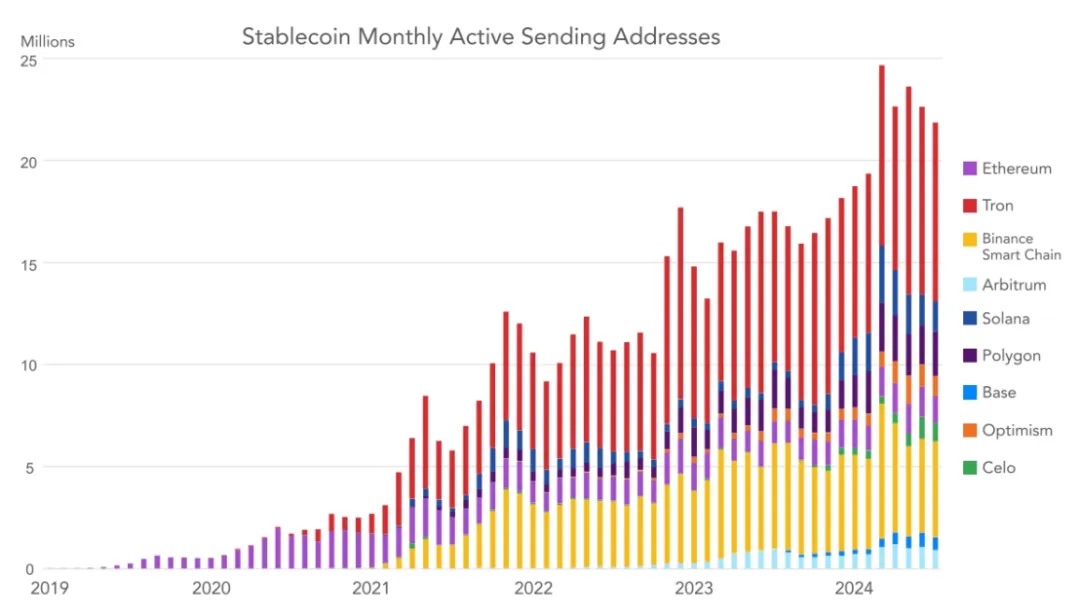
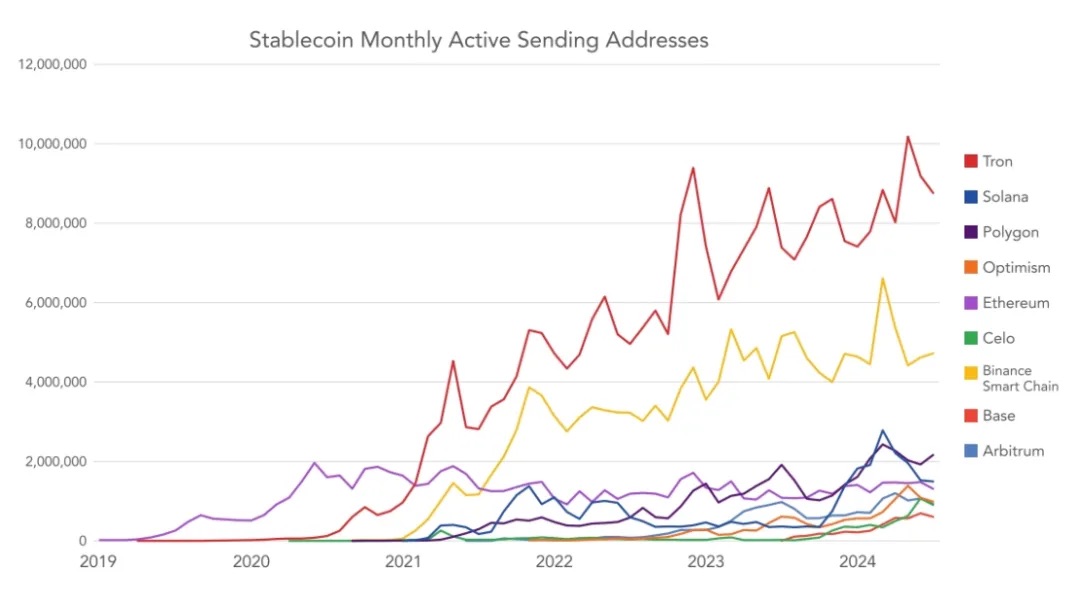
The most frequently used blockchains for stablecoin transfers are Tron, BSC, Polygon, Solana, and Ethereum.
2.3 Dollarization via Stablecoins
A phenomenon of "blockchain dollarization" emerges when comparing stablecoin settlement volumes with native crypto assets. While Bitcoin and Ethereum historically dominated as primary mediums of exchange on public blockchains, stablecoins—and almost exclusively those pegged to the U.S. dollar—are increasingly capturing larger market shares.
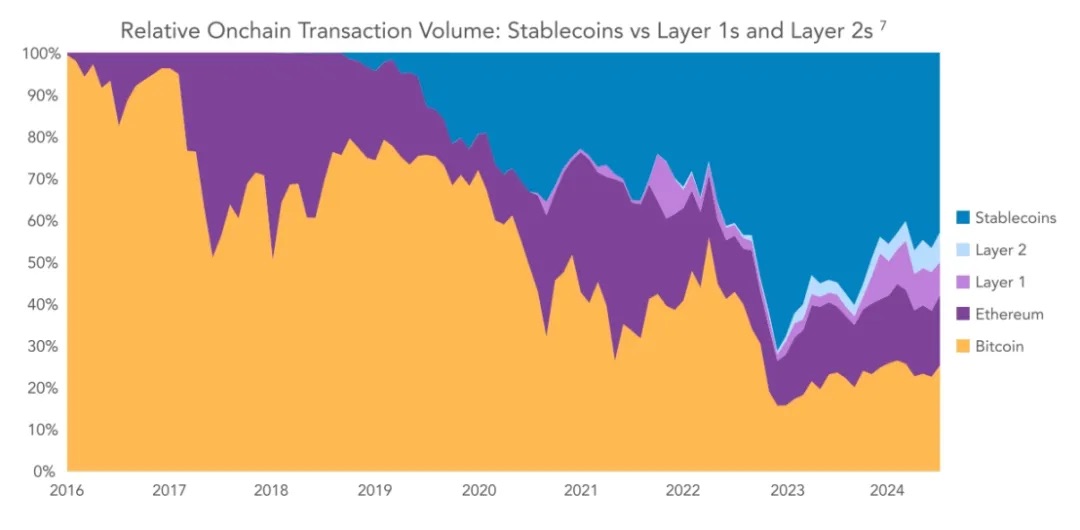
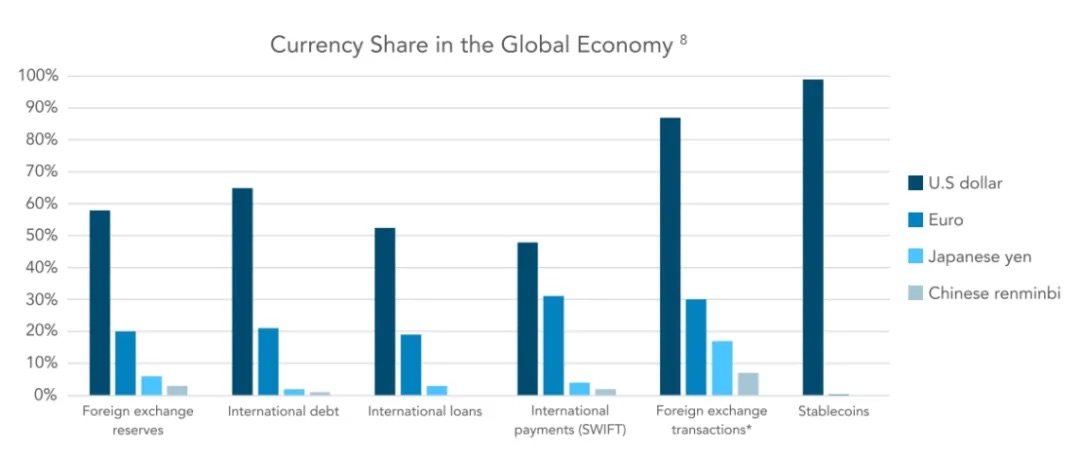
Currently, stablecoins account for approximately 50% of the total settlement value on public blockchains, peaking at 70% at times. The second most common currency for stablecoins is the euro, which had an issuance of $617 million as of June 2024, representing just 0.38% of the entire stablecoin market. While stablecoins denominated in lira, Singapore dollars, yen, and other fiat currencies exist, no currency other than the U.S. dollar and euro has a corresponding stablecoin with more than $100 million in circulation.
3. Emerging Markets Survey Report
Visa surveyed approximately 500 individuals each from Nigeria, Indonesia, Turkey, Brazil, and India, totaling 2,541 adult respondents. The goal was to gain deeper insights into how individuals personally interact with stablecoins.
Survey data reveals growing adoption rates, increased transaction frequency, higher penetration into investment portfolios, and increasingly diverse use cases beyond crypto trading.
3.1 Types of Stablecoin Activities:
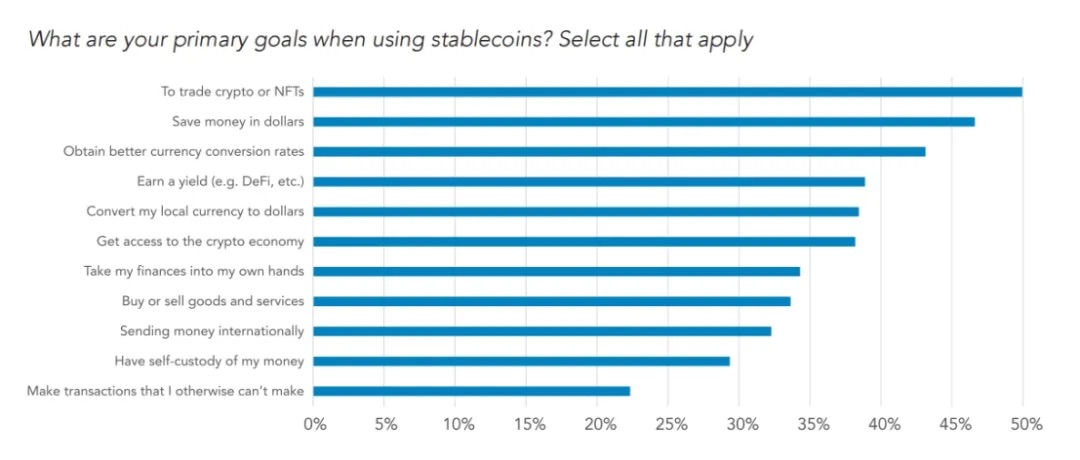
In Visa’s sample, the primary use of stablecoins remains trading cryptocurrencies or NFTs. However, non-crypto uses follow closely behind. Overall, 47% of respondents cited storing funds in U.S. dollars as one of their main purposes, 43% mentioned obtaining better exchange rates, and 39% indicated earning yield.
The conclusion is clear: in the countries surveyed by Visa, non-crypto uses constitute a substantial portion of stablecoin applications.
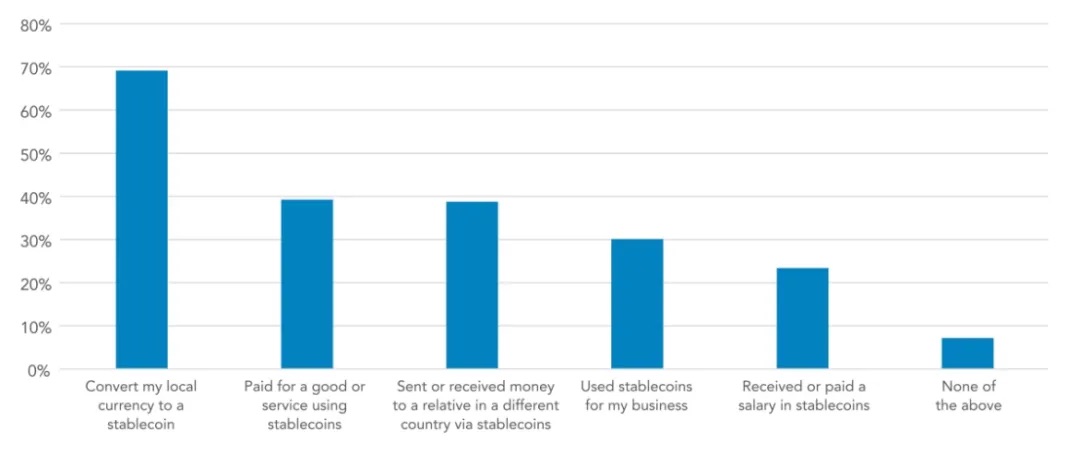
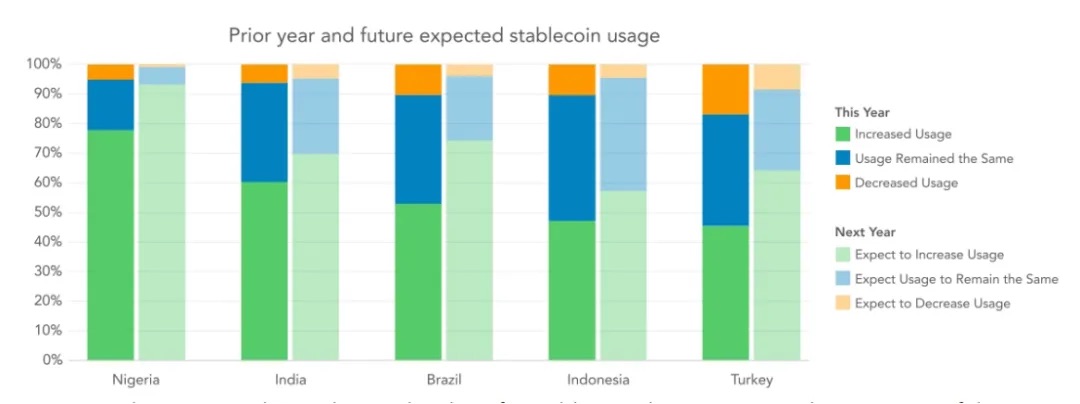
To date, the most popular use case is currency exchange, followed by shopping and cross-border transactions. Notably, a majority of respondents across all surveyed countries reported having used stablecoins for non-crypto trading purposes. In every country surveyed, stablecoin usage has grown over time. 57% of users reported increased usage over the past year, and 72% expect to increase their usage going forward.
3.2 Degree of Stablecoin Penetration
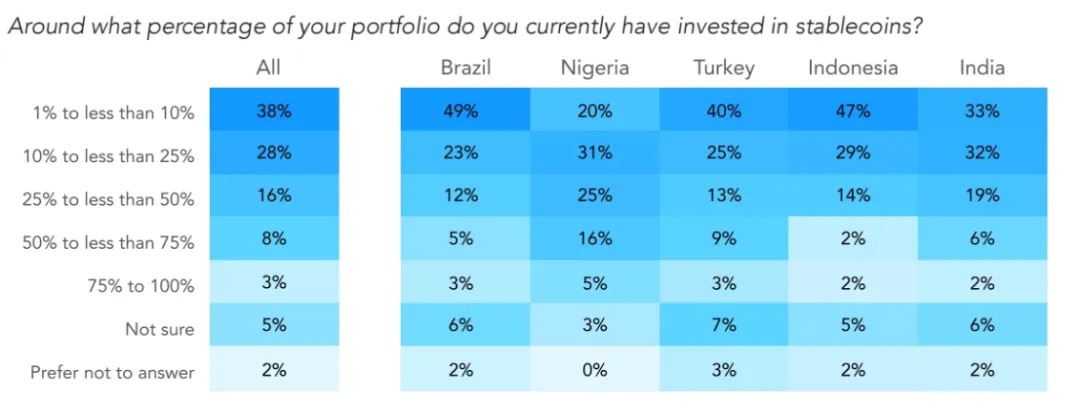
Visa also examined the penetration of stablecoins within users’ investment portfolios. At the national level, Nigerians showed significantly higher proportions than other countries, followed by Turkey and India. Among Indian respondents, wealthier individuals reported larger allocations of stablecoins in their financial portfolios.
Survey Results by Country:
Visa found that Nigerian users exhibit the highest preference for stablecoins—far exceeding other countries. Nigerian users have the highest trading frequency, the largest portfolio share allocated to stablecoins, the most reported non-crypto use cases, and the highest self-perceived awareness of stablecoins.
Interestingly, there are differences in the primary motivations for using stablecoins across countries. Across the entire sample, cryptocurrency trading is the most common purpose, but this varies nationally. In Turkey, earning yield is the top reason, followed by crypto trading; in Indonesia, it’s obtaining better exchange rates, followed by crypto trading and USD savings; in Nigeria, the primary goal is USD savings, followed by crypto trading and better exchange rates.
The most active countries in stablecoin usage are Nigeria, India, Indonesia, Turkey, and Brazil, respectively. When ranked by stablecoin allocation in investment portfolios, Nigeria again leads by a wide margin, followed by India, Turkey, Brazil, and Indonesia.
Survey Results by Age:
Overall, age-based results align with expectations: younger individuals use stablecoins at higher rates. Younger users are more likely to experiment with multiple stablecoins and allocate a larger share of their overall financial portfolios to them.
While there are no significant age differences across most usage categories, younger users are more likely than older ones to use stablecoins for saving U.S. dollars, converting local currency to USD, or gaining access to the crypto economy. Across all non-crypto use cases, younger users show higher adoption: paying for goods or services, sending remittances, and receiving salaries in stablecoins.
3.3 Preference for Tether (USDT)
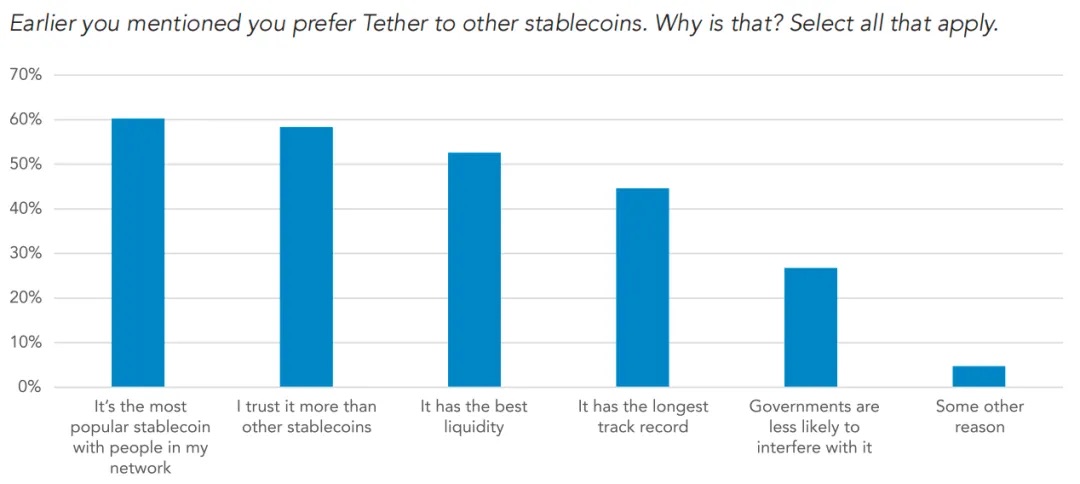
Tether is widely regarded as the most preferred stablecoin among users in emerging markets. The most commonly reported reasons for favoring Tether include its network effects, greater trust in the brand, and superior liquidity.
3.4 Blockchain and Wallet Usage
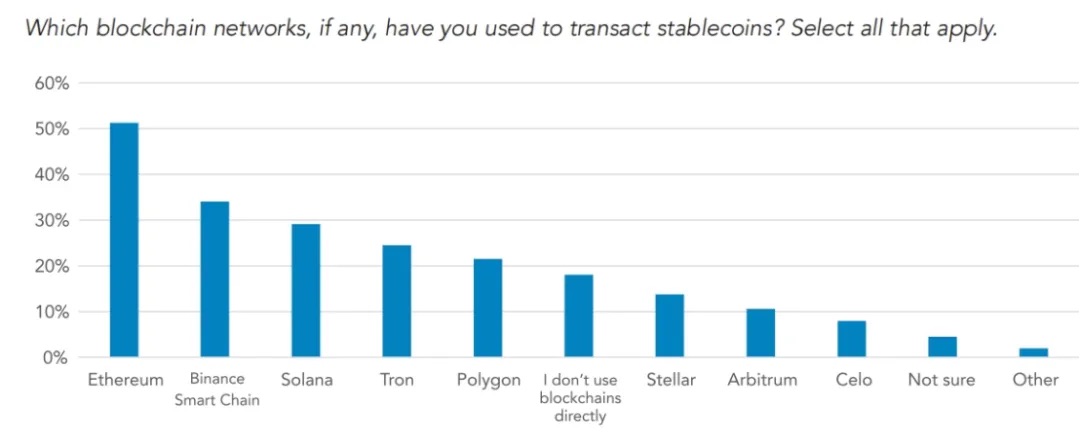
Across all regions, Ethereum is reported as the most popular blockchain network, followed by BSC, Solana, and Tron.
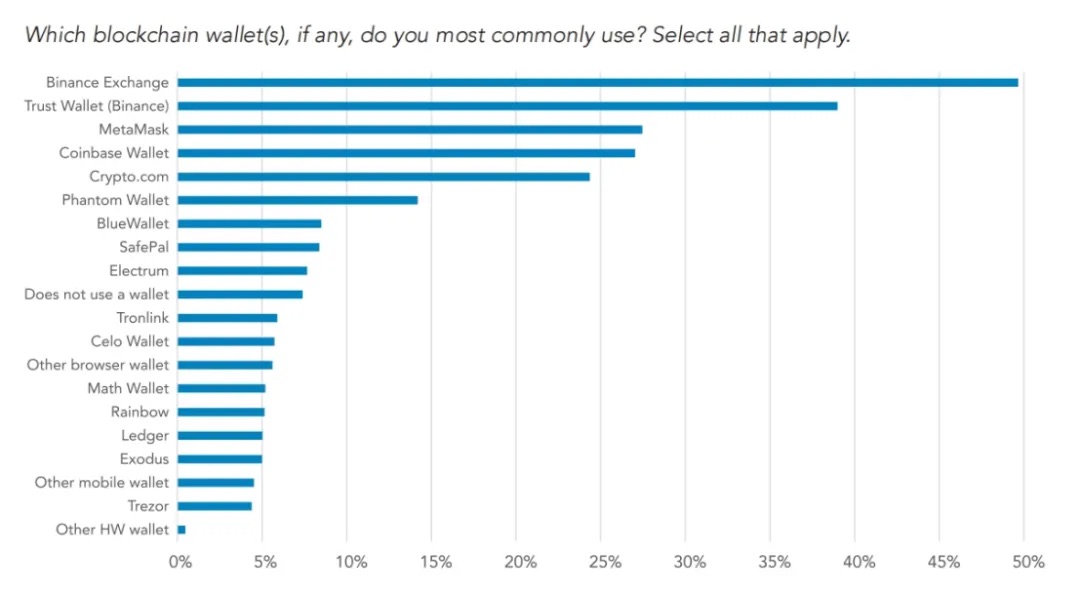
The most popular non-custodial wallets are Trust Wallet, MetaMask, and Coinbase Wallet. More than half of all respondents reported using Binance Exchange as a wallet, making it more popular than any single non-custodial wallet. Notably, 39% of Nigerian respondents admitted using Phantom Wallet (primarily a Solana client).
4. Conclusion
In this study, Visa first demonstrates from an on-chain perspective that stablecoin usage is growing—measured by monthly active addresses, total supply, and settlement volume. In particular, Visa’s revised transaction volume estimates indicate that stablecoins have become a significant settlement tool comparable to existing transfer networks, while avoiding the common overestimation issues found in previous on-chain data.
Visa’s survey findings challenge the prevailing notion that stablecoins are used solely for speculative crypto asset trading. 47% of surveyed crypto users stated they use stablecoins for USD savings, 43% for efficient currency exchange, and 39% for earning yield. While accessing crypto exchanges remains the top use case, a wide range of general (non-crypto) economic activities are clearly evident.
When asked about non-crypto stablecoin activities, the most common use cases were currency substitution (69%), followed by payments for goods and services (39%) and cross-border payments (39%). Clearly, in the surveyed countries, stablecoins have evolved from mere trading collateral into widely used digital dollar tools.
More importantly, nearly all stablecoins (about 99%) are pegged to the U.S. dollar. Discussions around U.S. stablecoin regulation must acknowledge the reality that vast numbers of individuals and businesses in emerging markets rely on these networks for savings, cross-border payments, remittances, and corporate cash management. In nearly all surveyed countries, stablecoins are increasingly serving as substitutes for scarce U.S. dollar banking services. When evaluating the benefits of stablecoins, the potential welfare gains for billions of users in emerging markets—through efficient access to alternative hard currency—must be given due consideration.
Join TechFlow official community to stay tuned
Telegram:https://t.me/TechFlowDaily
X (Twitter):https://x.com/TechFlowPost
X (Twitter) EN:https://x.com/BlockFlow_News
 @CastleIslandVC