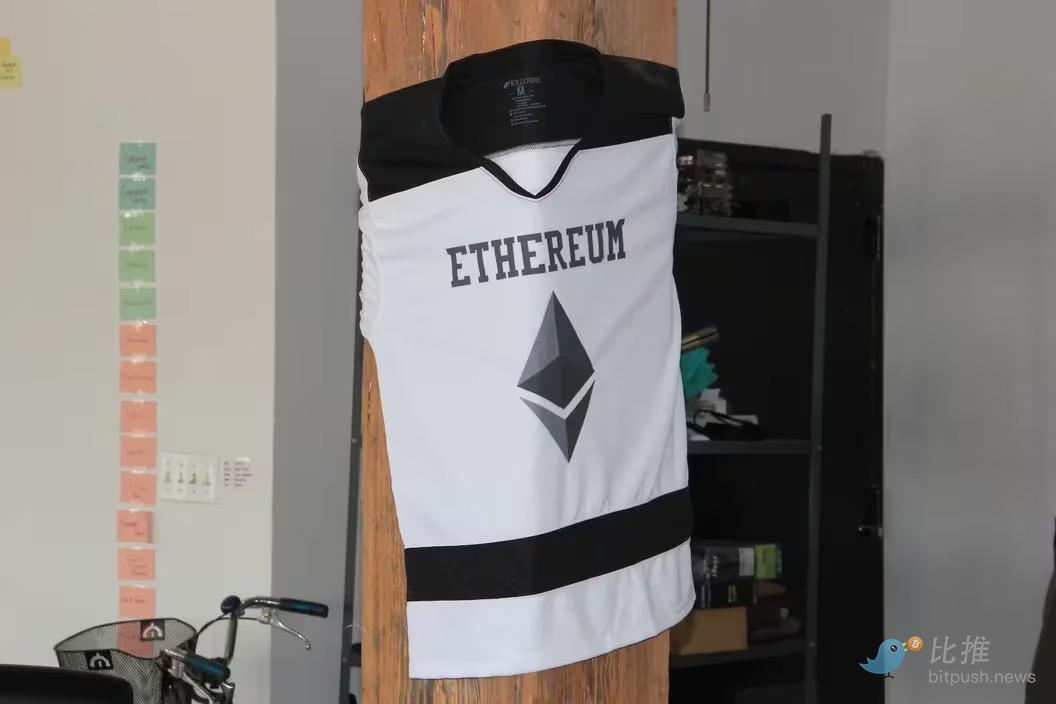
Ethereum: Hard to Stay True to the Original Vision, Where to Go?
TechFlow Selected TechFlow Selected
Ethereum: Hard to Stay True to the Original Vision, Where to Go?
Like Bitcoin, Ethereum will emerge from a dormant state that appears to have little activity.
 Navigating Web3 tides with focused insights
Author: Ganesh Swami
Translation: Mary Liu, Bitpush News
Since launching its network in 2015 under the codename Frontier, Ethereum has evolved from an ambitious vision into the robust foundation powering thousands of decentralized applications worldwide today.
However, with the rise of blockchains like Bitcoin and Solana competing for Ethereum’s developers and user base, the ETH ecosystem has begun to waver, seemingly losing sight of its original goals. Its price performance has been lackluster, still failing to surpass the all-time high of $4,700 set in 2021.
This raises a critical question: Has Ethereum lost its way? And if so, how can it get back on track?
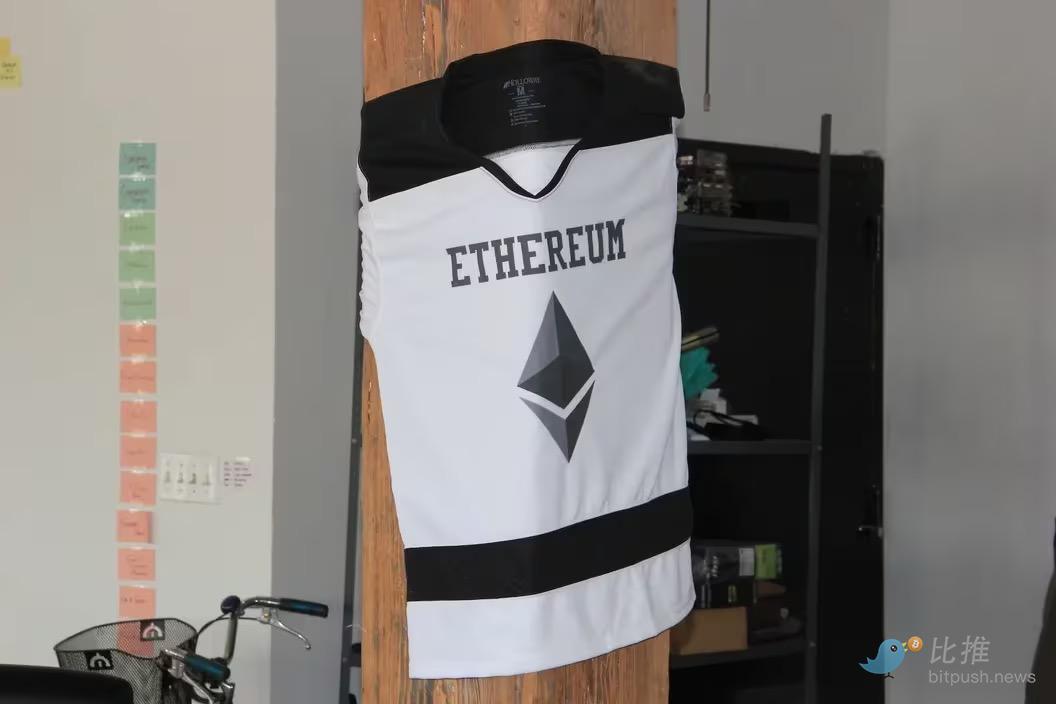
As Confucius said: "He who chases two rabbits catches neither." In pursuing both Solana's faster execution speeds and Bitcoin's hard-money narrative, Ethereum has forgotten its original vision of becoming the world computer.
Péter Szilágyi, lead of the Ethereum team, stated, "Ethereum is losing its dominant position." With declining transaction activity and a reduced ETH burn rate, Ethereum’s inflation rate has reached 0.74%, calling into question its “Ultra sound Money” status. While some advocate preserving ETH’s deflationary nature, it's crucial to remember that Ultra sound Money was never the goal.
Ethereum is more than just a currency. It was never about having the fastest TPS or the lowest gas fees; it has always aimed to build a truly decentralized future. Vitalik Buterin and other co-founders created Ethereum to serve as a world computer—a general-purpose network composed of thousands of machines where anyone, anywhere, could build decentralized applications. While building to enhance accessibility and interoperability, the ecosystem has been distracted by the latest trends and lost focus.
With prices falling below $2,500, many believe ETH’s underperformance stems from the types of applications being built on the network.
Many dApps on Ethereum today gain short-term hype but suffer from poor user interfaces and subpar experiences, resulting in limited usage and slow growth. Moreover, these applications often compete for attention among the same users spread across various L2s, failing to attract new users. Without usable applications, Ethereum cannot achieve its goal of becoming the world computer.
Ethereum’s primary objective has always been strong infrastructure development, not application creation. Decentralized computing, along with secondary and tertiary networks providing data to Ethereum, are under active development—indicating progress in Ethereum’s foundational layer. The cost of developing on permissionless chains is now significantly lower, and even enterprises are beginning to favor open networks like Ethereum over private corporate ones.
Yet despite these advances, Ethereum’s improvements remain slow. The network remains stuck midway through its scaling roadmap, with key technologies such as Merkle trees, zkSTARKs, account abstraction, and unified, seamless L2s yet to be fully realized—marking a period of developmental bottleneck.
It’s time to abandon short-term thinking. Like Bitcoin, Ethereum will emerge from what appears to be a quiet phase of low activity. Ethereum is entering its “lightning moment,” and it needs to let go of the Ultra sound Money narrative and stop trying to chase Solana. For those paying close attention, there is a clear path forward. For example, we have yet to see how people will use Blobs for purposes beyond merely serving as space for Rollup fraud challenge windows.
Following the Dencun upgrade in March, Pectra is the next major Ethereum upgrade scheduled for late 2024. Beyond that, the next phase of Ethereum’s roadmap is “The Purge.” Once Ethereum achieves broader adoption, this upgrade will play a vital role in keeping the chain synchronized with others and handling surges in activity. “The Purge” will simplify the protocol by clearing old historical data, removing technical barriers and reducing the cost of participating in the network.
While removing historical state offers certain benefits, it also risks making the chain vulnerable to centralization, as powerful entities could potentially hoard or control data, turning Ethereum into a data-centric chain. This would make Ethereum more like a “billboard” than a trusted platform. This issue hinders the next stage of the world computer’s evolution, as downstream activities such as multi-agent AI systems and decentralized computing cannot scale without accessible reference data. One solution lies in decentralized long-term data availability.
Yes, Ethereum currently faces bottlenecks in the middle stages of its scaling roadmap. However, it can regain momentum by refocusing on infrastructure. This is the true path toward fulfilling Ethereum’s role as the world computer. As Ethereum completes its roadmap over the coming years and realizes decentralized computing, the world computer will operate efficiently atop a powerful global infrastructure.
Join TechFlow official community to stay tuned
Telegram:https://t.me/TechFlowDaily
X (Twitter):https://x.com/TechFlowPost
X (Twitter) EN:https://x.com/BlockFlow_News
 CoinDesk