








Money and Power: The Political Game of Tech Giants
TechFlow Selected TechFlow Selected
Money and Power: The Political Game of Tech Giants
The fields of encryption and technology are employing sophisticated political tactics.
 Navigating Web3 tides with focused insights
By Charles Duhigg
Translated by Block unicorn
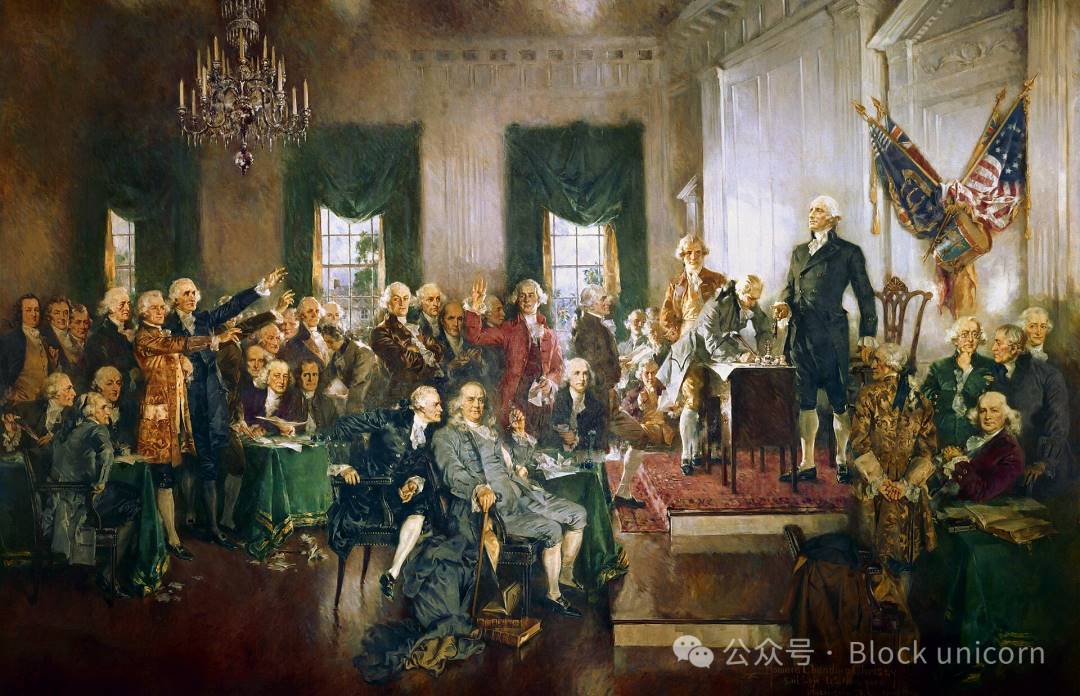
From cryptocurrency to artificial intelligence, the tech industry is pouring millions into super political action committees (Super PACs) to intimidate politicians into supporting its agenda.
One morning in February this year, Katie Porter was lying in bed browsing her computer when she suddenly learned she had become the target of a massive tech-driven political conspiracy. Over the past five years, Porter had represented Orange County, California, in the House of Representatives. She had gained fame for her sharp questioning of corporate titans during congressional hearings—well-known at least on C-SPAN and MSNBC, two networks influential in shaping political preferences. She frequently used a whiteboard to deliver clear, TV-friendly demonstrations of corporate greed. Now, she was locked in a fiercely competitive race for the Senate seat left vacant by the late California Senator Dianne Feinstein, with the primary election just three weeks away.
Block unicorn note: C-SPAN (Cable-Satellite Public Affairs Network): This is a television network focused on U.S. government, politics, and public affairs, primarily broadcasting congressional hearings, speeches, press briefings, and other official events.
MSNBC: A U.S. cable news network providing 24-hour news coverage. Known for its relatively liberal perspective, MSNBC emphasizes political, social, and governmental policy news and analysis.
Porter saw a text from a campaign staffer who had just learned that an organization called Fairshake was buying up ad time to launch a last-minute, aggressive attack against her campaign. In fact, the group planned to spend roughly $10 million.
Porter was baffled. She had spent years raising $30 million for her entire campaign. The idea that an unknown group could suddenly appear and spend vast sums attacking her seemed absurd. “I thought, what the hell is Fairshake?” she told me.
Porter quickly searched Google and discovered that Fairshake was a Super PAC primarily funded by three tech companies involved in the cryptocurrency industry. In the House, Porter aligned closely with Senator Elizabeth Warren, a vocal advocate for financial regulation, and generally sided with the progressive wing of the Democratic Party. Yet Porter hadn’t taken particularly radical stances on cryptocurrency; she had neither supported nor opposed the industry. As she dug deeper into Fairshake, she realized her neutrality didn’t matter. A website aligned with Fairshake labeled her an “extreme anti-crypto” candidate, despite offering incorrect evidence. It claimed she had voted against a pro-crypto bill in a House committee—when in fact she wasn’t even on that committee and hadn’t participated in the vote.
Soon after, Fairshake began airing attack ads on television. These ads made no mention of cryptocurrency or any tech-related issues. Instead, they branded Porter as a “bully” and a “fraud,” falsely implying she had recently accepted campaign donations from big pharmaceutical and oil companies. The ads did not disclose Fairshake’s ties to Silicon Valley, nor did they reveal the group’s support for cryptocurrency or its broader political goals. The negative campaign had a clear effect: although Porter initially led in the polls, she suffered a crushing defeat in the primary, finishing third with only 15% of the vote. However, according to someone familiar with Fairshake, the Super PAC’s goal wasn’t merely to take down Porter. The group’s backers weren’t especially invested in her personally. The real aim of the attack, this insider said, was to scare other politicians—“If you support crypto, we’ll help you. If you oppose us, the entire industry will come after you.”
Shortly afterward, Fairshake and two affiliated organizations disclosed in federal filings that they had raised over $170 million for use in political campaigns across the country in 2024—with more donations expected. That sum exceeded nearly all other Super PACs, including Donald Trump’s Preserve America and those aimed at helping Democrats regain control of the Senate. Pro-crypto donors accounted for nearly half of all corporate contributions in the 2024 election cycle, making the tech industry one of the nation’s largest corporate donors. All this money served the same purpose as the attack on Porter: to draw attention to Silicon Valley’s financial muscle—and prove that its leaders are willing to go to extreme political lengths to protect their interests. “The message is simple,” the insider said. “If you support crypto, we’ll help you. If you oppose us, we’ll destroy you.”
Porter’s defeat marked the culmination of a strategy that began over a decade ago—to transform Silicon Valley into one of the most powerful political operations in the nation. As the tech industry became a dominant global economic force, a cadre of experts—some led by political operatives who popularized the concept of a “vast right-wing conspiracy”—taught Silicon Valley how to play the political game. Their goal was to help tech leaders gain influence in Washington, D.C., and state legislatures comparable to Wall Street’s. In the decades ahead, these efforts are likely to shape everything from presidential elections to which party controls Congress, and from antitrust laws to AI regulation. Today, the tech industry has quietly become one of the most powerful lobbying forces in American politics, using its power like earlier corporate special interests to threaten, bribe, and reshape the nation to serve its own ends.
Chris Lehane coined the phrase “vast right-wing conspiracy” before he turned thirty, using it to explain Republican efforts to undermine Bill and Hillary Clinton. The brilliantly effective messaging strategy even prompted Hillary Clinton to adopt it as one of her signature lines. At the time, Lehane was a lawyer in the Clinton White House, defending the administration against scandal allegations, but he excelled at controlling the political narrative and finding colorful ways to put Republicans on the defensive. The tactic—framing the U.S. president as a victim of a mysterious conservative cabal—was so effective that The New York Times later dubbed Lehane a modern “master of the dark arts of politics.”
In the decades to come, these efforts are likely to influence everything from presidential campaigns to control of Congress, antitrust legislation, and AI regulation. Today, the tech industry has quietly become one of the most powerful lobbying forces in American politics, using its strength like past corporate special interests to intimidate, entice, and reshape the nation in pursuit of its goals.
After leaving the White House, Chris Lehane joined Al Gore’s presidential campaign as press secretary. After Gore’s loss, he founded his own firm in San Francisco. Despite California’s size and electoral significance, many political operatives still viewed the state as politically peripheral due to its distance from Washington. But Lehane, having worked on the 1996 Telecommunications Act, believed Silicon Valley was the future. He quickly built a business offering political services to wealthy Californians.
When trial lawyers sought to raise caps on jury awards in medical malpractice cases, they turned to Lehane. He helped produce flyers resembling body tags and ran ads suggesting doctors might operate while drunk. Years later, when a prominent environmentalist hired Lehane to oppose the Keystone XL pipeline, he brought activists to press conferences carrying samples of toxic sludge from oil spills—so hazardous that reporters fled. Then he enlisted a Navy SEAL who helped kill Osama bin Laden to speak with journalists, explaining how a terrorist attack could trigger one of the largest oil spills in U.S. history in Nebraska if the pipeline were approved.
Lehane once explained his theory of civic discourse to reporters: “Everyone has a plan until you punch them in the face. So we punch them in the face.” This hardball political approach reflected his determination and ability to build political power in Silicon Valley.
Yet Lehane’s efforts generally failed to impress the tech industry. For decades, Silicon Valley companies saw themselves as largely detached from electoral politics. As one senior tech executive explained to me, until the mid-2010s, “if you were a venture capitalist or CEO, you might hire a lobbyist to chat with politicians—but otherwise, most people in Silicon Valley thought politics was stupid.” But within a decade of Lehane’s move to the West Coast, a new type of tech company emerged: so-called sharing economy firms like Uber, Airbnb, and TaskRabbit. These companies were “disrupting” long-established industries—transportation, hospitality, contract labor—that politicians had long claimed the right to regulate. As some startups reached multi-billion-dollar valuations, politicians began demanding compliance. They grew angry when companies like Uber refused even modest regulations. Others took a more conciliatory approach but soon found themselves mired in local political battles and municipal bureaucracy. Either way, as another senior tech executive put it, “Not understanding politics became a survival risk. People broadly realized we had to engage politically, whether we liked it or not.”
In 2015, San Francisco became the epicenter of a major regulatory battle centered on Proposition F—a ballot measure designed to restrict short-term rentals, widely seen as an attack on Airbnb. The proposal stemmed from mounting frustration: some residents complained that entire buildings had become unlicensed hotels filled with noisy tourists who never turned off music or cleaned up, and—most troubling to city leaders—didn’t pay taxes the city could have collected if they’d stayed at Marriott. Other residents believed Airbnb made affordable housing harder to find, since renting to short-term visitors was more profitable than leasing to long-term tenants. Proposition F would have limited Airbnb’s ability to partner with many hosts to just a few weeks per year. Early polling showed strong support. Cities nationwide watched closely, eager to see whether San Francisco—the headquarters of a then-$25 billion internet giant—could show them how to rein it in.
Alarmed, Airbnb executives immediately called Lehane to headquarters. He arrived minutes later, still wearing sweatpants and a baseball jersey from his son’s Little League game. Lehane had the lean build of someone devoted to intense physical training—he ran daily, often fifteen miles at a stretch, while sending cryptic emails and smooth voice memos. His slightly crooked front teeth softened the appearance of his receding hairline. To Airbnb’s leaders, he didn’t look much like a political expert. But once he caught his breath, he launched into a passionate speech. “You’re looking at this wrong,” he said. Proposition F wasn’t a crisis—it was an opportunity to reshape San Francisco’s political landscape and rewrite the narrative. He urged executives to mount a counter-campaign as sophisticated as Barack Obama’s recent presidential run, investing heavily to warn politicians that “Airbnb voters” existed—and shouldn’t be ignored. He proposed a three-pronged strategy, explaining to executives that politicians cared above all about re-election.If the company could show opposing Airbnb would make re-election harder, politicians would comply. Lehane was soon named Airbnb’s head of global policy and public affairs.
His first step was mobilizing Airbnb’s natural advocates: homeowners earning income from rentals and travelers saving money by avoiding expensive hotels. By late 2015, over 130,000 people in San Francisco were renting or hosting through the platform. Lehane recruited several former Obama campaign staffers to lead a team that made tens of thousands of calls warning Airbnb hosts and guests about Proposition F. Team members also urged hosts to attend town halls, talk to neighbors, and contact local officials. During this time, the company (reportedly by accident) emailed everyone who had ever stayed in a California Airbnb, urging them to contact state legislators. The capitol was flooded with messages from around the world.A Senate leader called Lehane, saying the message was received, and pleaded for him to stop the barrage. “If I’d known Airbnb had this kind of influence, I’d have done this myself,” one participant told me—implying a threat to rally Airbnb beneficiaries to withhold votes from candidates who backed Proposition F, since the law would hurt host and Airbnb revenues, increase operating costs, and raise guest prices.
The second part of Lehane’s strategy involved applying pressure through massive spending. The company hired hundreds of canvassers to knock on the doors of 285,000 residents—about a third of the city’s population—urging them to tell elected officials that opposing Airbnb equaled attacking innovation, economic independence, and American ideals. The relentless campaign sent a clear message to the Board of Supervisors:If an official supported Proposition F, Airbnb might encourage others to challenge them in an election. “We said the implicit threat out loud,” a campaign worker said. “The goal was intimidation—making everyone know they’d regret crossing us.” Overall, Airbnb spent $8 million on the campaign, about ten times the combined spending of Proposition F supporters. “This was the most absurd campaign I’ve ever been part of,” the worker told me. “It was all so exaggerated, so extreme. You shouldn’t spend this much on a municipal election.” Still, he enjoyed working for Airbnb: “Best money I’ve ever made in politics.”
The third element of Lehane’s strategy was reframing the debate by proposing alternative solutions. Otherwise, Lehane and Airbnb CEO Brian Chesky feared the company would face similar measures in other cities. Lehane told the board: “You can’t just oppose everything—you have to support something.” As a compromise, Airbnb volunteered to start collecting short-term rental taxes in the city. It also shared internal company data, such as monthly visitor counts, to help officials monitor community impacts. Additionally, Airbnb offered to build a web interface for San Francisco officials to register hosts and track rental patterns. The solution was self-serving—it made the city dependent on Airbnb to monitor its own activity. But it addressed many concerns driving Proposition F.More importantly, it secured tens of millions in annual tax revenue for San Francisco. When Proposition F finally went to a vote, it was overwhelmingly defeated.
Airbnb’s political tactics contrasted sharply with Uber’s. Uber, newly the world’s most valuable startup, faced attacks from cities and countries over its defiance of taxi regulations. Airbnb’s approach, however, appealed to politicians’ higher ideals. After Proposition F, Lehane began working with SEIU, one of the nation’s largest unions, to unionize cleaners for Airbnb rentals. Though the effort ultimately failed, pro-union politicians in San Francisco and New York began viewing Airbnb as a potential ally.
To other political operatives, Lehane’s tactics weren’t novel. But in Silicon Valley, they felt revolutionary. One tech executive told me: “You can get huge returns from relatively small investments. It turns out political ROI far exceeds expectations.”
Block unicorn note: The success of this strategy highlights the growing involvement of tech companies in political activities, especially in areas facing regulatory challenges. Through building alliances, enhancing public image, and leveraging financial power, Airbnb effectively transformed its relationship with politics, emerging as a significant political force.
After Proposition F was defeated, San Francisco’s Board of Supervisors eventually adopted many of Airbnb’s proposals. By then, Lehane had moved on, running similar Airbnb campaigns in dozens of cities including Barcelona, Berlin, New York, and Mexico City. When the U.S. Conference of Mayors met in Washington, D.C., in 2016, Lehane was invited to speak after Michelle Obama. To the audience, he declared: “Listen, we want to pay taxes.” Airbnb soon reached agreements with over a hundred cities. And when local politicians remained defiant—like Austin’s leaders, seemingly indifferent to Airbnb’s offers—the company bypassed them entirely. In Texas, it persuaded the state legislature to pass laws making it difficult for municipalities to ban short-term rentals. Today, Airbnb has deals with thousands of cities.
Years after joining Airbnb, a venture capitalist pulled Lehane aside at a party and said: “Back then, hiring the right CFO was the most important thing for taking a company public. But you proved political operatives are just as crucial.” Yet Lehane had a deeper insight. These campaigns revealed that tech companies—especially platforms connecting individuals who might otherwise struggle—had become potentially the most powerful political actors. “There was a time when organizations like unions or parties could organize and truly mobilize large voter blocs,” Lehane told me. “Now, internet platforms wield greater influence; tech companies can communicate with hundreds of millions with the push of a button.” “If Airbnb can mobilize fifteen thousand hosts in one city,” Lehane said, “that could sway a city council or mayoral race. Fifty thousand votes could decide a congressional or Senate race.” Of course, a vast user base alone doesn’t guarantee Airbnb gets its way. Voters only respond to persuasive incentives. But Lehane understood that companies like Airbnb could present arguments faster and more effectively than almost any party or interest group—an immense source of power. “Now,” Lehane said, “platforms are the only entities that can actually talk to everyone.”
During the Trump administration, the tech industry endured a chaotic period. President Trump attacked tech platforms for bias against conservatives, while liberals blamed Silicon Valley’s social media companies for helping elect Trump. Tech executives publicly supported immigration in response to Trump’s Muslim ban and family separation policies—all while grappling with employee protests and walkouts over racial injustice, sexual harassment, and gender-neutral bathrooms—issues they hadn’t trained for in engineering or business school.
In 2020, Joe Biden’s victory brought relief to Silicon Valley leaders. The Biden administration seemed to herald a return to the “Obama peace,” when tech was trendy and politicians proudly claimed close ties to Mark Zuckerberg. Biden’s win also meant Chris Lehane, with deep Democratic roots, would become Silicon Valley’s top political advisor. Many companies sought his counsel. Employees appreciated his generous recognition of their work, making politics fun. Former colleagues often proudly recounted the nicknames he gave them. Most importantly, he made collaborators feel they were fighting for a just cause.
But Silicon Valley’s enthusiasm for Biden faded quickly. Biden swiftly appointed three well-known tech skeptics—Gary Gensler, Lina Khan, and Jonathan Kanter—to lead the SEC, FTC, and DOJ’s antitrust division. The administration quickly filed lawsuits or opened investigations against Google, Apple, Amazon, Meta, Tesla, and others.Though some probes began under Trump, Biden’s SEC particularly targeted the crypto industry. Gensler, close to Elizabeth Warren, initiated over 80 legal actions accusing crypto firms or promoters of violating laws, usually by selling unregistered securities.
Among executives sued by the SEC were many who had generously supported Democrats. Ripple CEO Brad Garlinghouse, who had fundraised for Obama, felt persecuted. He told Bloomberg the federal government acted like “a bully” and tweeted: “Democrats continue to back Gensler’s illegal war on crypto—undermining America’s ability to innovate. No wonder Republicans have announced pro-crypto positions… Voters are watching.”
All this underscores the growing importance and influence of Silicon Valley in political battles. As tech companies grow more powerful on the political stage, the role of political advisors becomes increasingly critical.
To some, the government’s actions seemed unusually aggressive. One crypto executive told me she discovered her bank account frozen when trying to withdraw funds to repair a severe septic system failure—without explanation. Meanwhile, regulators warned banks about risks from the crypto sector. When her account was later unfrozen, again without clarity, she began suspecting the government aimed to intimidate the industry (the Office of the Comptroller of the Currency, which regulates national banks, says it does not instruct banks to freeze individual accounts).
Biden’s adversarial stance seemed justified in 2022 when FTX—a massive crypto exchange and hedge fund led by Sam Bankman-Fried—collapsed after revelations that over $8 billion had been misallocated or lost. Bankman-Fried, a prolific political donor, was charged in part with violating campaign finance laws. Another crypto executive said that after the FTX scandal, many in the industry “just wanted to lie low,” adding, “The less attention we get, the better.”
But for Silicon Valley’s wealthiest, retreat wasn’t an option. Powerful VC firm Andreessen Horowitz had already raised over $7 billion for crypto and blockchain investments. “Super angel” investor Ron Conway poured millions into crypto firms through his venture fund. Lehane urged major crypto investors and companies—many bickering on Twitter—to form a coalition and shift the public narrative.He began hosting biweekly private meetings called the “Ad-Hoc Group” to discuss collaboration. Eventually, Katie Haun, a former Andreessen Horowitz partner, suggested that Coinbase bring Lehane onto its board as an advisor.
Lehane met with Coinbase co-founder Brian Armstrong, telling him—as with Airbnb—that crisis was actually an opportunity.“This isn’t the time to stay quiet,” he said. “It’s a chance to define your company and the entire industry, proving you’re different from FTX.” In 2023, Lehane joined Coinbase’s Global Advisory Council. Twenty-five days later, the SEC sued the company.
Lehane assembled a strategic team with one main goal: convince politicians that opposing crypto would carry excruciating political consequences. A Fairshake insider (then a Coinbase employee) said, “It wasn’t about explaining how crypto works or anything like that. It was about hitting politicians where they’re most vulnerable—re-election.” At a 2023 crypto conference, Armstrong clarified the mission: “We need to ask candidates: Are you with us or against us? Will we advertise for you—or against you?”
While Lehane’s core strategy mirrored Airbnb’s, that campaign focused on local issues and elections. Crypto efforts were national, targeting Senate and House races—and possibly the presidency—requiring far more funding. Lehane advised Armstrong to allocate $50 million for outreach. Armstrong replied: “Let’s do $100 million.” Coinbase, Ripple, and Andreessen Horowitz (A16z founders) donated over $140 million to the crypto Super PAC Fairshake, with other executives contributing millions more.
Lehane worked closely with Fairshake to craft a pro-crypto messaging campaign and help build a “grassroots” army. He told the Coinbase team: “We need to prove there are crypto voters—millions of Americans own this stuff. We must show they’ll vote to protect it.”
The Federal Reserve estimated fewer than 20 million Americans owned crypto in 2023. Polls showed it wasn’t a top issue for most voters. A Coinbase employee pointed out the gap: “I don’t know if crypto voters really exist.”
Lehane replied: “Then we’ll create them.”
Coinbase aggressively promoted surveys claiming 52 million Americans owned crypto, many intending to vote to protect their digital wallets. These surveys said 60% of crypto owners were Millennials or Gen Z, 41% were people of color—key demographics both parties seek. Lehane also quietly helped launch an advocacy group, Stand with Crypto, which promoted itself to Coinbase’s millions of U.S. customers every time they logged in, urging crypto owners to contact lawmakers and sign petitions. The group claims over a million members. A Coinbase employee told me Stand with Crypto identifies cities like Columbus, Ohio, with high concentrations of crypto enthusiasts, then sends mass push notifications to organize town halls and rallies. “If we get fifty or sixty people to show up,” he explained, “with good camera angles, it looks like hundreds. In a small state or close race, that’s enough to scare candidates.”
This so-called army of crypto voters directly enabled the next phase: intimidating politicians. Stand with Crypto created an online dashboard scoring U.S. senators, representatives, and many challengers on crypto support. Scores were typically either “A (strongly pro-crypto)” or “F (strongly anti-crypto),” though the underlying data was sometimes inaccurate. “Most haven’t taken clear stances,” another Coinbase employee said. “So we look at their speeches or who they’re friends with and make educated guesses. If you’re friends with Elizabeth Warren, you’re more likely to get an F.”
Still, Lehane insisted Fairshake remain nonpartisan. The Super PAC carefully supported equal numbers of Democratic and Republican candidates and, on Lehane’s advice, planned to avoid the 2024 presidential race entirely. A venture capitalist who advised the crypto industry told me the group’s nonpartisanship was essential: “To get the right regulations passed through Congress, we need bipartisan votes.” Plus, Fairshake aimed to “create bipartisan costs for being negative toward crypto and tech,” the investor added. “People need to know there are consequences.”
To drive this home, Lehane and Fairshake sought a race where their spending would attract national attention. They compiled a list of high-profile contests, with California’s race to replace Dianne Feinstein topping it. An obvious target was Katie Porter, whose strongest Democratic rival in the primary was Rep. Adam Schiff. California was a reliably blue state, so if Fairshake helped defeat Porter, it wouldn’t be accused of handing a seat to Republicans. Plus, California’s primary was on March 5—early in the season—meaning Porter’s race would draw wide attention, giving Fairshake time to publicize its role and frighten candidates elsewhere. Porter’s friendship with Elizabeth Warren made her easy to paint as anti-crypto, regardless of fairness. Crucially, most polls showed Porter unlikely to win anyway. “If the Super PAC spends big, makes a splash, and she loses, Fairshake wins either way,” a Coinbase employee said. The calculation paid off: Fairshake’s spending helped sink Porter in the primary, and in the general election, Schiff appeared poised to win (he earned an “A” from Stand with Crypto). “If you even mildly criticize us, we won’t just kill you—we’ll kill your family, end your career. Politically, it was a perfect masterpiece. Porter will leave government by year’s end,” another operative said.
After Porter’s defeat, many politicians who had previously scorned or opposed crypto suddenly became supporters. In May 2023, two months after Porter’s elimination, a pro-crypto bill came to a House vote. Similar bills had previously stalled due to lukewarm Republican support and Democratic opposition. This new bill—the Financial Innovation and Technology for the 21st Century Act—was openly opposed by President Biden yet passed easily in the House, with near-unanimous Republican backing and 71 Democratic votes. Senate Majority Leader Chuck Schumer recently attended a Crypto4Harris virtual town hall, declaring legislative passage “absolutely possible” and adding, “Crypto is here to stay.” Longtime crypto critic Senator Sherrod Brown (D-OH), running for re-election in Ohio,has seen Fairshake pour $40 million into ads supporting his opponent; Brown has since softened his public criticism of the industry. Earlier this year, crypto donors signaled they might intervene in Montana’s Senate race, where incumbent Democrat Jon Tester—a crypto skeptic—faces a tough challenge. Soon after, Tester voted to weaken the SEC’s crypto oversight, earning a “C (neutral)” rating. So long as Tester maintains the right votes, Fairshake appears poised to stay out of Montana. A similar dynamic unfolded in Maryland: after the Super PAC threatened to act in the state’s Democratic Senate primary, both leading candidates declared support for crypto.
Overall, Fairshake and its affiliated Super PACs have spent over $100 million in 2024 political races, including $43 million in Senate races in Ohio and West Virginia, and $7 million in four House races in North Carolina, Colorado, Alaska, and Iowa. $3.5 million targeted two left-wing representatives, members of the “Squad”: Jamaal Bowman of New York and Cori Bush of Missouri. In 42 primaries involving Fairshake, supported candidates won 85% of the time. Latest filings show the Super PAC has over $70 million left to spend for the rest of the election cycle. Its political donations now rival those of the oil and gas, pharmaceutical, and union industries.
Just as Airbnb tried to shift the debate over Proposition F by offering concessions like tax payments and data sharing, the crypto industry has positioned itself as a seemingly solution-oriented advocate—pushing for new regulation of crypto and blockchain. Yet critics argue these proposals are self-serving. A key dispute between the industry and regulators is whether crypto qualifies as a security—like Apple stock, subject to strict investor protection laws—or a commodity, like a bushel of corn, sold with minimal government oversight. Most fiat currencies—government-issued money—are used mainly to buy food and clothes, not to gamble on exchange rate swings. In contrast, crypto is often difficult—or even impossible—to use for buying physical goods, and is frequently held by speculators betting solely on price increases. Thousands of cryptocurrencies exist, with some—especially Bitcoin and Ether—viewed as commodities, while most others remain legally ambiguous.
Within the crypto industry, many hope Congress will pass laws treating mainstream cryptocurrencies as commodities regulated by the CFTC. The CFTC is a relatively low-key agency unfamiliar to most people, generally seen as more lenient than the SEC. If the CFTC became the primary crypto regulator, lawsuits and fines against major crypto firms might decrease or cease. More importantly, selling Dogecoin (a Shiba Inu-themed crypto), Dentacoin (“the only cryptocurrency created by dentists for dentists”), or CumRocket (a porn-themed crypto) would become significantly less risky and more profitable.
Yet some in government see this as disastrous. An official familiar with SEC thinking said: “Frankly, many of these tokens lack real utility or practical use—they’re just for gambling or scamming people. We’ve had investor protection laws in place for decades. Crypto just wants to ignore them. If your entire business model hinges on asking, ‘Can we get Kim Kardashian to tweet about us?’ and then take people’s money, the government needs to step in.”
In reality, it’s extremely difficult to convince ordinary Americans that the crypto industry is a healthy, customer-focused space: polls show most don’t view it as safe. So Lehane and his peers slightly adjusted their strategy. Getting Congress to pass favorable legislation remains the priority, but now it’s framed as serving a higher cause: protecting innovation, entrepreneurship, and America’s future.
In July 2023, Marc Andreessen and Ben Horowitz of Andreessen Horowitz released a 91-minute video accusing President Biden of weakening America. Marc told Ben: “The attack on an emerging industry is so brutal, I’ve never seen anything like it. I’m completely shocked this is happening.” Ben responded: “They’ve basically overturned the rule of law to attack crypto.” They argued these government actions threatened America’s economic, technological, and military edge. Biden’s rejection of tech proposals, they said, gave China a chance to catch up. “The future of technology and the future of America are at stake,” Ben declared. The duo said they were so alarmed that in 2024, they had no choice but to back Donald Trump. They mentioned billionaires like them might pay higher taxes under Biden, but that issue drew less attention.
Within the crypto industry, the video went viral, winning praise from Elon Musk and other titans, many calling it brilliant strategy. As one Coinbase employee put it: “Now you have Andreessen and Musk and other powerful figures saying crypto is part of a bigger fight.This is an attack on American innovation, progress, and the future! It shifts the conversation from ‘Is crypto a scam?’ to ‘Does Biden really care about middle-class entrepreneurs?’”
Though Lehane opposed Trump’s campaign and had nothing to do with the video, Andreessen and Horowitz’s move was clearly part of Lehane’s playbook. Lehane taught Silicon Valley how to play politics—now others were copying his tactics. In July, Lehane joined Coinbase’s board. A Coinbase employee praised him: “Lehane’s a genius. I don’t know how he thinks of this stuff, but he changes reality. He makes magic happen.”
Bitcoin’s annual convention is usually no place for politicians. The event draws over 25,000 attendees, many skeptical of government. Wandering the booths, you can get free vodka at 10 a.m. or hear “tax avoidance strategies” straddling fraud and fantasy. Vendors sell Edward Snowden T-shirts and crypto-themed board games. It’s a safe haven for “Bitcoin maximalists.” But when the event convened in Nashville this July, it was star-studded. Eight senators, nearly ten representatives, and countless state and national candidates showed up, some delivering impromptu speeches when electronic music paused. The biggest draw? Donald Trump.
Trump’s appearance—and willingness to spend a campaign day in a state he’s certain to win—confirmed the impact of the crypto movement Lehane helped launch. As Trump spoke to a packed crowd, attendees wore orange wigs and “Make Bitcoin Great Again” hats. He promised: “On Day One, I will fire Gary Gensler,” drawing a standing ovation and chants. One man even FaceTimed his wife watching from the delivery room.
Trump’s stance on crypto had done a complete 180. As president, he tweeted he “didn’t like” crypto, calling it “not money” and saying it “may facilitate illegal acts like drug dealing.” He added: “We have only one real currency in the U.S., and it’s the dollar!” Later, he said Bitcoin “looks like a scam.”
But after leaving office, Trump sought new revenue streams, like selling NFTs—blockchain-based digital collectibles that earned him $7.2 million in 2023. That success convinced him of crypto’s potential. His campaign became one of the first presidential bids to accept crypto donations and announced he’d become “Chief Crypto Advocate” for World Liberty Financial.
At Nashville’s Bitcoin conference, Trump pledged that if elected, he’d have the federal government hold billions in crypto reserves and declare America the “global capital of crypto” and “world’s Bitcoin superpower!” He even echoed crypto advocates’ claims: if America doesn’t act, “China will!”
Though Trump’s turnaround might seem like a win for Chris Lehane, it wasn’t—and shows Lehane’s strategy may have succeeded too well. Like with Airbnb, Lehane didn’t want the crypto industry tightly tied to either party, as that would make legislation harder. Anything Trump champions instantly becomes partisan.
President Biden’s July announcement that he would drop out of the race seemed to offer crypto a chance to rebuild ties with Democrats. Vice President Kamala Harris’s rise—being a tech-friendly Californian—raised hopes of balancing party dynamics. In a September speech outlining her economic vision as president, Harris vowed: “America will maintain dominance in artificial intelligence, quantum computing, blockchain, and other emerging technologies.” The softening seemed to work: on October 4, Ben Horowitz—featured in the anti-Biden video—told his staff he and his wife would make personal donations to “entities supporting the Harris-Walz campaign,” partly because private talks with Harris and her team left him “very hopeful” she’d abandon Biden’s “highly destructive” crypto policies as president. As for Chris Lehane, he donated $35,000 to Harris’s campaign—and nothing to Trump’s.
Meanwhile, the crypto coalition helped build by Chris Lehane began fracturing, falling victim to partisan divides. In August 2024, California power broker Ron Conway emailed other Fairshake funders—including Andreessen and Armstrong—complaining the campaign was alienating Democratic lawmakers. “How short-sighted and stupid can you be?” he wrote. He noted Fairshake’s support for Senator Brown of Ohio had offended Schumer. “Not one of you told me in advance what you were doing. Billionaires can’t even manage basic communication. We now have two factions: moderates and a Donald Trump faction (Coinbase founder and A16z founder)... I’ve collaborated too long with people who don’t share my values. I can’t accept it anymore. Because of your selfish, opaque handling, it’s time we go our separate ways... I won’t compromise myself through association or assistance anymore.”
Republican leaders voiced similar complaints. In summer 2024, Andreessen and other crypto executives attended a GOP retreat in Jackson Hole, where attendees expressed anger over Fairshake’s ads supporting Democratic candidates in Senate races in Arizona and Michigan.
Whether Lehane’s coalition holds together, one thing is clear:Silicon Valley has learned to navigate politics with skill, and tech giants are increasingly mastering political tactics, combining money and political savvy to sustain long-term support for their interests in crypto, the sharing economy, and social media. Yet the SEC fears that if crypto prevails, other financial institutions may follow, moving their products onto blockchains to bypass existing regulations—a scenario that could lead to catastrophic consequences.
Even Lehane’s colleagues aren’t sure their actions benefit the public. Coinbase employees admit that while Silicon Valley is now more politically sophisticated, that doesn’t necessarily mean it’s good for the public.
Silicon Valley’s new political savvy can be viewed in two ways:
One view sees it as democracy working as intended. Prominent Democratic strategist Peter Ragone noted: “I’d rather see people actively engaged, openly debating regulation and expressing opinions, than have all the rich making backroom deals like in the past.” Some of America’s proudest political victories—marriage equality, universal suffrage, environmental protection—succeeded largely because they had wealthy, determined backers. The tech industry has those advantages too.Moreover, money can’t win elections unless voters embrace the agenda. As Ragone said: “No matter how rich you are, if most people don’t agree with you, you won’t get elected.” From this angle, tech advocates are simply learning, like many Americans, how to champion a cause, build coalitions, and ensure their voices are heard.
The other view sees Silicon Valley’s political activism as a symptom of systemic corruption, proof that American governance and legislation have been warped by money so thoroughly that only billionaires can advance their agendas. This dynamic is especially dangerous because the U.S. economy has concentrated vast wealth in a small group of discontented, unaccountable tech elites. Many critics argue today’s entrepreneurs and venture capitalists, like early robber barons, use wealth for selfish ends—acting like industrial tyrants of a century ago, when income inequality matched today’s levels.
Lehane acknowledges flaws in the political system but believes he’s helping improve it. He stresses his success stems from collaborating with talented colleagues committed to building a fairer, better world. Lehane says his goal has always been to help the “little guy” gain greater economic benefit. He cites Airbnb challenging hotel chains so teachers and nurses can earn extra income by renting spare rooms, and Coinbase helping people avoid big banks’ high fees.
Yet Lehane’s mission isn’t purely altruistic—his efforts have made him very wealthy. Though he won’t disclose exact figures, he insists his motivation isn’t just profit, but fighting for justice. On his social media profile, he appears wearing boxing gloves, throwing a punch—a symbol of his commitment to these “fights.”
In August, AI giant OpenAI announced it had hired Lehane as VP of Global Affairs. Unlike his clearer battles at Airbnb and Coinbase, the political fight over AI is more complex and just beginning. The tech industry is rife with conflicting interests: Marc Andreessen has called for minimal or no additional regulation of AI, arguing that hindering potentially life-improving technology is akin to “murder.”
Opposing him are AI engineers who believe their creations may soon become powerful enough to threaten humanity.Thus, strict regulation is needed to ensure only the “wisest” experts can pursue such complex technological innovation. These technologists inevitably see themselves as among these “enlightened” few, and their vision of “more responsible” AI development often aligns conveniently with their own startups’ business plans.
In the middle of this clash stands Lehane and OpenAI. In July, CEO Sam Altman, with Lehane’s support, published an op-ed in The Washington Post framing the AI regulation debate as a contest between democracies and authoritarian regimes. Altman wrote: “Democratic AI leads authoritarian AI because our political systems give American companies, entrepreneurs, and scholars this advantage.” But he warned this lead wasn’t guaranteed—only legislation encouraging key software advances and prioritizing “rules of the road” and “norms for AI development and deployment” could preserve it. Altman stated OpenAI welcomes strict limits on data security and transparency and supports creating a government agency to regulate AI development and use.
Though this sounds noble, Altman’s stance isn’t free of self-interest. Smaller competitors may find complying with these rules costly and burdensome, putting them at a disadvantage compared to OpenAI. Altman’s piece is also classic “Lehane-style reframing”: instead of discussing competition between big AI firms and small startups, or tensions between rapid progress and safer, slower development, he recasts the AI battle as good versus evil—with Silicon Valley cast as righteous superheroes.
Some AI observers are skeptical. Suresh Venkatasubramanian, a computer science professor at Brown University and co-author of the White House’s AI Bill of Rights Blueprint, advocates regulation on data privacy, transparency, and preventing algorithmic bias. He notes OpenAI refuses to address allegations of copyright infringement—clearly “anti-democratic,” and if true, “anti-American.” (ChatGPT was developed by scraping vast amounts of text from the internet, mostly without crediting or paying original authors; OpenAI claims this falls under fair use.)
Moreover, Altman’s reframing ignores key disagreements among democracies—such as who should bear the environmental cost of AI data centers or what privacy rules should govern AI. As Venkatasubramanian put it, OpenAI’s strategy is about securing a seat at the table: “The goal is to have a voice, so you can influence the outcome.”
This influence is already evident at the state level. For example, Workday is lobbying several states to insert subtle loopholes into legislation on workplace “automated decision-making tools,” shielding AI-powered hiring software vendors from lawsuits over racial bias or other discrimination.
Lehane admits the political fight over AI is still in its early stages, with key pressure points unclear and alliances and rivalries shifting. But one thing is certain: Silicon Valley will keep using money and massive user bases to court and threaten politicians.
Still, history suggests tech giants may eventually face backlash—just as Gilded Age monopolies were broken up and 20th-century industrial tyrants were tamed by public opinion.
Join TechFlow official community to stay tuned
Telegram:https://t.me/TechFlowDaily
X (Twitter):https://x.com/TechFlowPost
X (Twitter) EN:https://x.com/BlockFlow_News
 @NewYorker









