Who will divide this $100 billion business?
TechFlow Selected TechFlow Selected
Who will divide this $100 billion business?
Exploring the Integration of Blockchain and Texas Hold'em (Part 2)
 Navigating Web3 tides with focused insights
Author: Gua Tian Lab
[Editor's Note]: To write this case study, I've been deeply experiencing the product capabilities of Coinpoker and MTT Sports, and took the opportunity to participate in MTT Sports' first-week competition. Luck was on my side—triple lucky strikes—and I actually won first place in the inaugural week! Moreover, on October 8th, I received the weekly champion reward: 0.5 BTC and 6,946 MTT tokens! Riding this wave of excitement, I powered through and completed the second part quickly, hoping to provide more fellow "melon lovers" with useful insights.
Who Will Share This Billion-Dollar Business? — Re-examining Blockchain Meets Texas Hold'em (Part 1)
The previous article discussed how blockchain technology can integrate with online Texas Hold’em. In this follow-up, we’ll analyze specific real-world examples currently active in the market. Over the past few years, many projects have entered the WEB3 poker space—our team at Gua Tian has researched and tested over a dozen: Coinpoker, W3poker, NUTSDAO, GalaGame PokerGO, XCard 7Deuce, zkHoldem, PokerDAO (Mental Poker), InPoker, Web3 Poker Club, DreamPokerClub, Macondo, CCpoker, ChipChip, MTT Sports...
Many of these projects have already disappeared; some continue operating at low cost but suffer from abysmal daily active user counts. Frankly, certain teams simply wrapped an existing online poker codebase with a WEB3 concept, issued NFTs and tokens, raised funds, and then vanished—a basic playbook in the WEB3 world. So far, very few projects have managed to sustain operations with viable business models. Within the WEB3 ecosystem, we’ve selected one leading example each for the two main types of poker—cash games and tournaments—to conduct an in-depth analysis.
Case Study 1: Cash Game Representative – Coinpoker
Coinpoker is something of a long-standing survivor in the WEB3 online poker landscape. Whenever I feel the urge to play, Coinpoker is often the only option available. Honestly, it’s out of necessity—most WEB3 online poker platforms vanish within a year. At least Coinpoker has operated continuously since 2017 and remains relatively stable.
Coinpoker heavily promotes transparent and fair dealing, using a publicly audited RNG (random number generator). The platform primarily offers cash tables. Users deposit USDT to start playing, with around 500 players typically online daily.
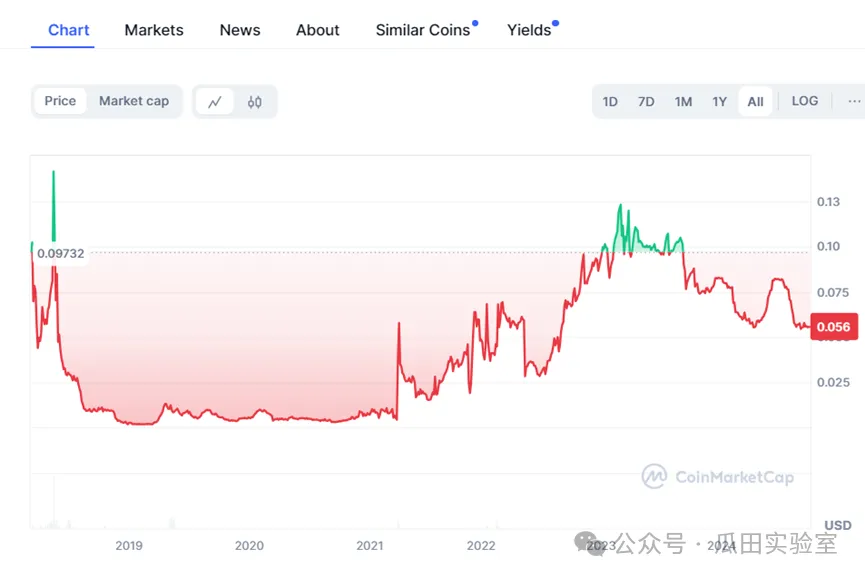
The project launched a token called CHP (price chart below), which isn’t listed on any centralized exchange and only appears as orders on decentralized DEXs. The token utility and emission design are quite underwhelming. We suspect that because cash games fall into the gambling category, investment institutions and exchanges are hesitant to associate with such projects.
As for product experience, I have numerous complaints. Here are two screenshots:
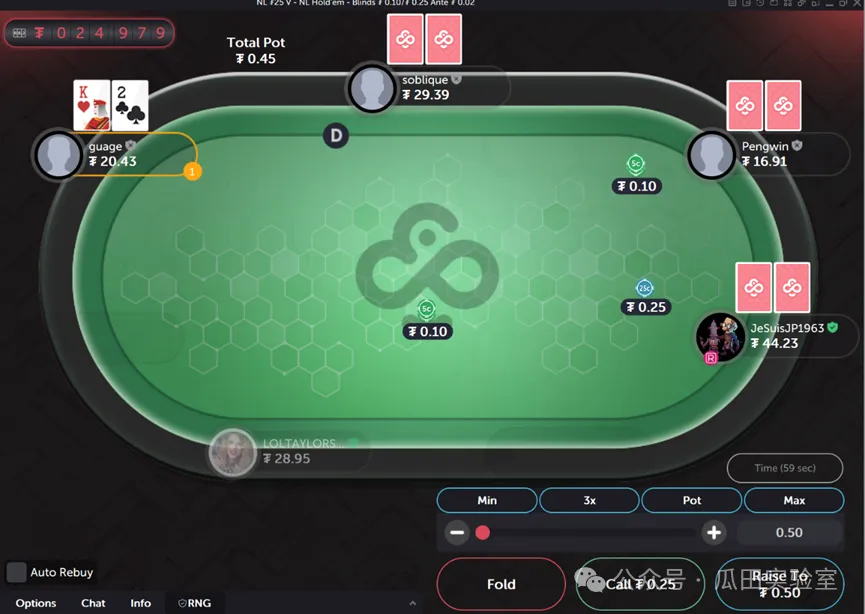
In-game interface: Players aren't centered; raise options offer only a single preset (3x); no quick buttons for Check/Call...
Main interface: Packed with features, yet only cash tables attract players, making table selection visually overwhelming.
These poor UX choices make it hard for someone like me—who’s used to polished WEB2 platforms like PokerStars—to adapt. It feels like going from 4G back to 2G. Even the deposit process lacks guidance; I had to cautiously test with a small amount before confirming I’d done it correctly. The reason Coinpoker dominates the WEB3 cash game scene isn’t due to superior quality—it’s because competitors either died off or never delivered decent user experiences. No wonder so many WEB2 investors view WEB3 products as Ponzi schemes: after all these years, they still prioritize CX (community hype) and token launches over actual product improvement.
That said, Coinpoker does deserve credit for two things: First, withdrawals are nearly instant. Second, registration requires only an email and phone number, lowering the barrier for WEB2 users.
Case Study 2: Tournament Representative – MTT Sports
From our initial exploration, we noticed that MTT Sports’ whitepaper clearly defines the mission of its foundation: leveraging decentralized technology to build the world’s most successful multi-table esports brand and push MTT-format esports into the Olympics. This ambition is truly striking. While esports have already become major events in large-scale competitions—for instance, seven titles including *League of Legends* were added to the 2023 Asian Games—if esports could enter the Olympic program, it would significantly elevate the industry’s image and further reinforce the idea that poker tournaments aren’t gambling.
In terms of current product experience, MTT Sports doesn’t just dominate the WEB3 online poker space—it stands shoulder-to-shoulder with top-tier WEB2 products. Feel free to try it yourself:
https://sports.mtt.xyz/?i=30d8b409
When I first started playing MTT Sports, several standout features immediately impressed me:
-
It’s a web-based product—accessible directly via URL on both computers and mobile devices (on phones, you can even create a home-screen app icon from the link), significantly reducing entry barriers. Most online poker platforms require downloading an app, which adds friction.
-
Players familiar with the platform will appreciate its smoothness. Achieving app-like responsiveness and speed purely through a browser speaks volumes about the technical prowess of the development team.
-
Login supports three modes seamlessly: Google account, email + password, and crypto wallet.
-
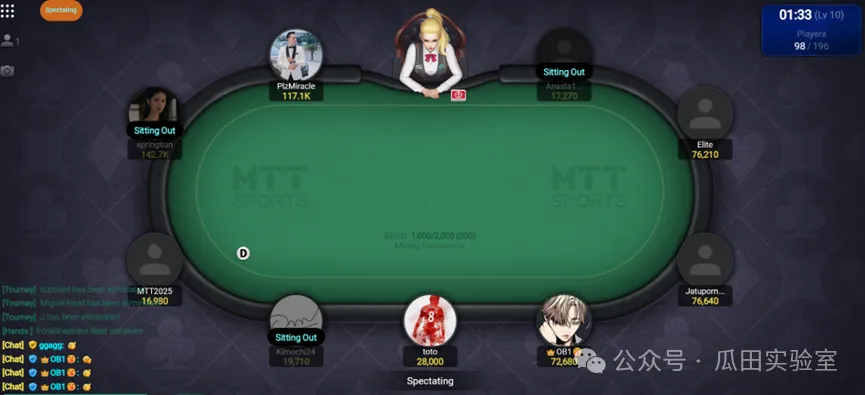
Comfortable gameplay interface. Here's the desktop version:
The mobile experience is even better:
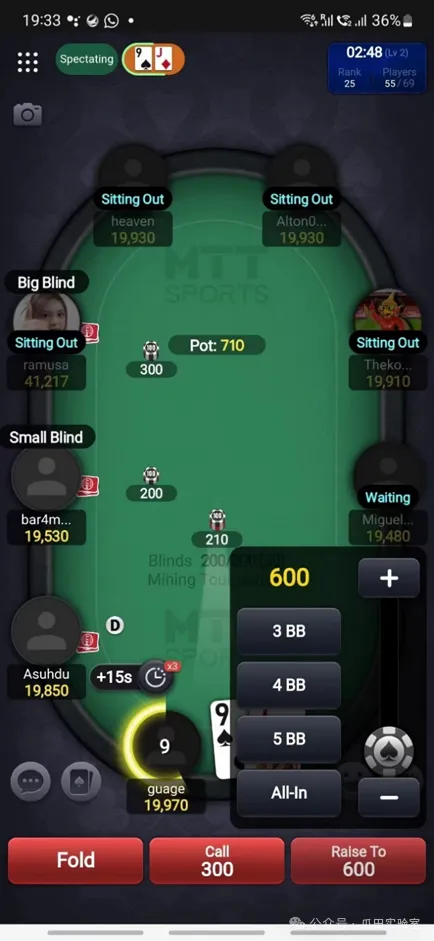
Due to these remarkable product qualities, we began tracking and researching MTT Sports early, hoping to get in on the ground floor.
Below are our findings from the research:
-
First, Product Positioning.
MTT Sports is not merely an online Texas Hold’em platform. As its full name suggests—Multiple Table Tournament Sports—it aims to create a blockchain-powered “online multi-table gaming competition.” Texas Hold’em is just the first game in this vision. Additionally, the team is developing its own EVM-compatible public chain built on Cosmos. To be clear: currently, MTT only supports tournaments—no cash games! MTT Sports positions itself strictly as a WEB3 esports project.
Is there potential in online poker esports? Consider this: the most influential Texas Hold’em event globally today is WSOP. Last year, over 10,000 players registered for its live main event, creating a prize pool of $93 million, with the winner taking home $12 million.
The tournament economic model is simple and effective. Prize pools come mostly from player entry fees, supplemented by minor revenue from ads and sponsorships. Player rewards stem from real payments by actual participants—not from a Ponzi-like structure where earlier users profit from later entrants’ capital. Therefore, this model is healthy and sustainable. You earn because you trust the fairness and transparency of the rules—and believe in your own skill. In contrast, Ponzi-style models reward those who “enter early and exit fast.”
-
Second, Project Background.
On MTT’s Twitter @mtt_sports, we found no information about the founding team. None of the three versions of the whitepaper disclose team details either—we only know it’s an overseas team. Until Token2049 Singapore in September 2024, MTT Sports deliberately maintained a low-key testing phase. But after the first weekly competition launched in early October, key metrics surged: Twitter followers now exceed 16,000; Discord community has 305 members; Telegram group has reached 34,000. Daily participation in mining and daily tournaments ranges between 600–700 players—the highest DAU in the current WEB3 poker sector. Friends who’ve undergone KYC confirm the process is extremely strict, suggesting most users are genuine.
Some members of our Gua Tian community played the test version before October, largely due to this tweet:
https://x.com/mtt_sports/status/1835142937140748674
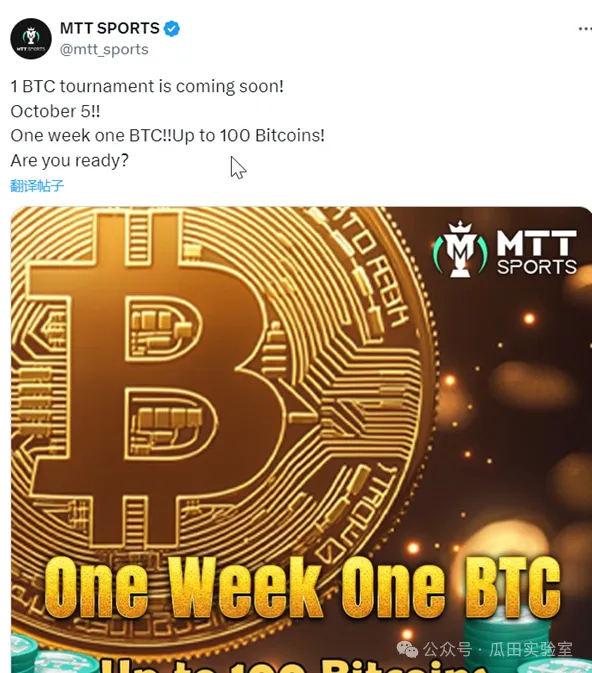
Straightforward message: official competitions begin October 5, with 1 BTC awarded weekly until 100 BTC are fully distributed! Naturally, most WEB3 users joined for profit—some even started learning Texas Hold’em from scratch. Don’t underestimate WEB3 users’ learning speed, haha! Recently, friends have privately asked me: Is this project trustworthy? Worth holding long-term? My personal take: Absolutely yes! We’ve uncovered clues about the project’s key investors—individuals with strong industry expertise and technical backgrounds—which explains why MTT Sports’ product quality is so exceptional.
-
Third, Project Roadmap.
MTT Sports has published three whitepapers: one for the MTT Network blockchain, one for MTT Tournaments, and one detailing tokenomics. To promote adoption, the project adopted a free-entry model—essentially “free farming,” beloved by WEB3 users. If you believe in your skills, top rankings bring real rewards. Currently, multiple tiers of online events are live; instructions on how to play will follow later in this article.
Several aspects in the whitepaper particularly caught our attention:
- Annual offline mega-events planned—clearly aiming to rival WSOP;
- Qualified individuals may open clubs to manage; Gua Tian Community hopes to become one of the first club operators;
- Strict identity verification system, with top-tier requiring facial recognition;
- RNG card-dealing mechanism described in depth. However, the current whitepaper does not explain how players can verify the fairness and transparency of this mechanism, nor whether blockchain technology is integrated into the shuffling process.
-
Fourth, Economic Model.
Current rewards for mining tournaments, daily, and weekly events are primarily paid in MTT Tokens (weekly winners also receive BTC)—the only token issued by MTT Sports. Total supply is 2.1 billion, currently unlisted on both CEXs and DEXs. Distribution breakdown shown below (see whitepaper for details):
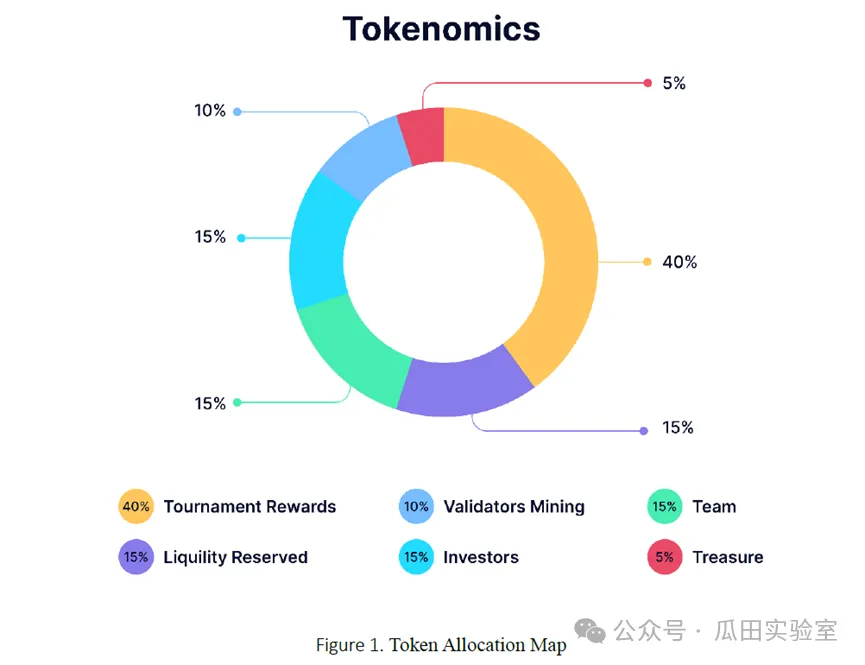
Note that 40% of total supply comes from tournament rewards—the largest allocation. This whitepaper details MTT token emissions (summarized in chart below), but mentions few use cases for spending MTT tokens. Based on current product experience, we propose several potential utilities:
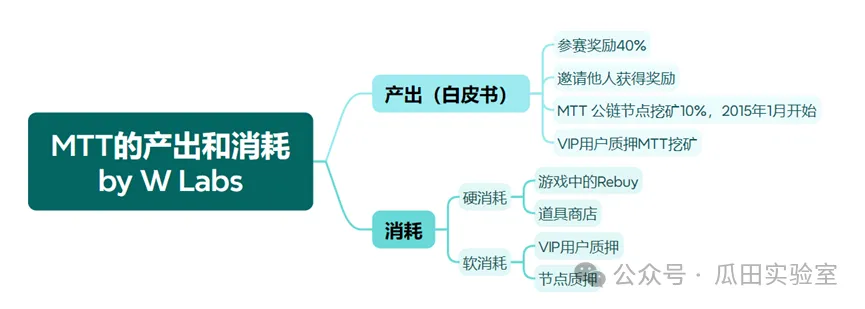
1. Entry to lower-tier tournaments is free; higher-tier and offline events require MTT tokens as entry fee;
2. Players establishing and managing clubs must stake MTT tokens; once popular, club slots could be auctioned with MTT as bidding currency;
3. During offline events, merchandise and partner sales could accept MTT as payment.
Thus, economically, MTT Sports avoids the gimmicks common in other WEB3 projects—no NFTs, single-token model—aligning well with competitive sports logic: to earn, you must win. The current tournament format serves as MTT Sports’ foundational use case. Future expansions could include club-vs-club battles, celebrity pro-player showdowns (“MTT Brothers and Sisters Fighting Through Challenges”), etc.—greatly expanding MTT Token utility.
-
Fifth, How to Get Started.
We'll walk through the desktop web version:
New users register an account and complete tiered KYC verification. From the main interface, select "Tourney" from the left sidebar.
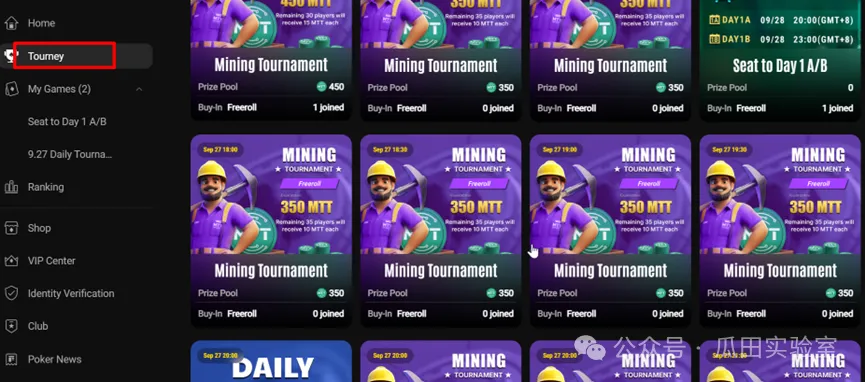
Currently, three types of tournaments are available—all allow registration and automatic entry at scheduled times:
Hourly Mining Tournaments (purple icon):
Top 20–40 players (depending on turnout) enter the money and receive 10–15 MTT tokens each. The game ends when the required number of players remain. Pre-October, first place earned a title—small reward, high honor! These are essentially practice rounds.
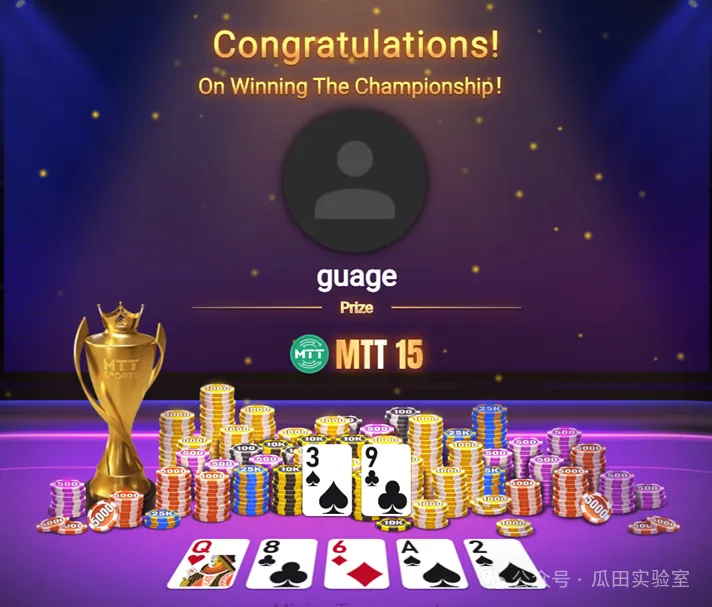
Daily Tournament (blue icon) at 8 PM (UTC+8):
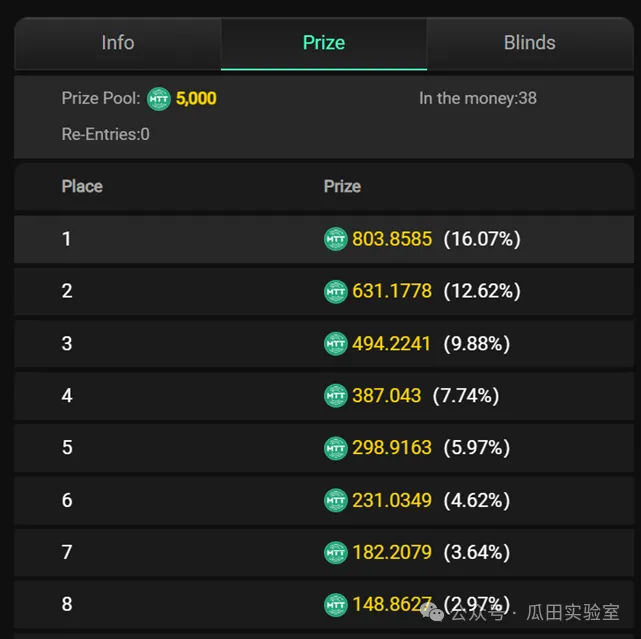
Continues until a sole winner emerges. Rewards vary by rank—for example, the daily winner receives ~800 MTT tokens.
Weekly Tournament (green icon) every weekend:
The most rewarding event: weekly prize pool = 1 BTC + 100,000 MTT tokens. Final table (top 9) shares 1 BTC; top 200 split 100,000 MTT tokens. Participation peaks here—nearly 1,000 players joined the first week.
Qualifiers ("Seat to DAY1") run Monday to Friday. Top finishers earn a weekly tournament entry ticket. On Saturday, qualified users join either DAY1A at 8 PM or DAY1B at midnight. If eliminated, players get one re-buy chance by spending 110 MTT tokens. Top performers from DAY1 advance to DAY2 on Sunday night at 8 PM, carrying over their chip stacks. DAY2 is an intense elimination round, culminating in a final table of nine players competing on Monday night.
After registering, click "My Games" under Tourney to see upcoming matches, complete with countdown timers reminding you when to join.
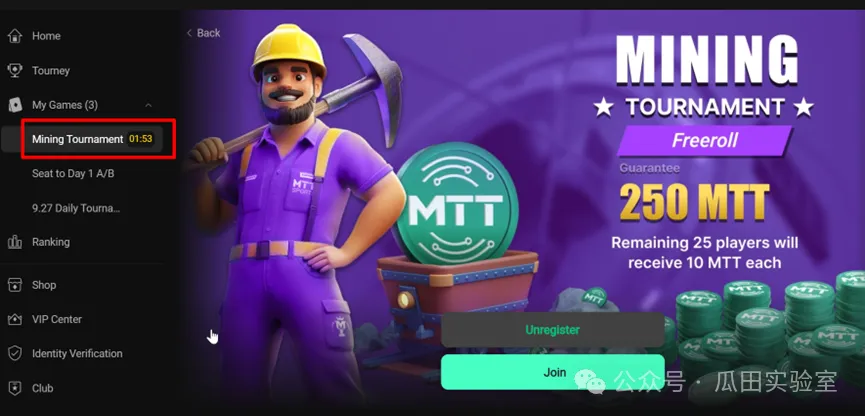
Additional tabs like Rank and Shop are already live—explore them to get familiar.
-
Sixth, Future Outlook.
MTT Sports occupies a uniquely strategic position in the WEB3 space. It’s currently the only product we’ve seen focusing exclusively on tournaments without offering cash games—unlike other online poker platforms that include cash tables. This distinction opens doors for investment firms and exchanges interested in poker and esports: MTT Sports avoids sensitive gambling associations, enabling partnerships.
MTT Sports’ revenue model is clear: as long as entry fee income exceeds prize payouts, it’s profitable. Backed by a 100 BTC war chest from major shareholders, the project is positioned for long-term sustainability.
Users earn MTT tokens by participating in events—holding them could yield significant future value. We believe MTT tokens may deliver pleasant surprises down the line.
To conclude: W Labs has navigated the ups and downs of the WEB3 application space for over three years, researching categories ranging from blockchain gaming and social platforms to RWA. We’re constantly exploring what kind of projects can attract genuine users and build sustainable business models.
Two principles have gained consensus among our team:
-
First, blockchain technology should address shortcomings in WEB2 products or enhance user experience—for example, improving card dealing, anti-cheating mechanisms, and asset storage in online poker;
-
Second, product quality must meet at least a baseline standard—not every project needs to be a "Black Myth: Wukong," but none should appear blatantly subpar.
End of article.
Join TechFlow official community to stay tuned
Telegram:https://t.me/TechFlowDaily
X (Twitter):https://x.com/TechFlowPost
X (Twitter) EN:https://x.com/BlockFlow_News
 瓜田实验室W Labs