








Hailed by Vitalik, with on-chain data growing rapidly, veteran public chain Celo ushers in a new narrative through L2 and stablecoin expansion
TechFlow Selected TechFlow Selected
Hailed by Vitalik, with on-chain data growing rapidly, veteran public chain Celo ushers in a new narrative through L2 and stablecoin expansion
Vitalik tweets, Celo surges into double-digit gains.
 Navigating Web3 tides with focused insights
Text: Nancy, PANews
A single tweet from Vitalik has sent Celo soaring into double-digit gains. As a well-established blockchain, Celo—originally known for its focus on ReFi (Regenerative Finance)—is accelerating its strategic shift toward becoming a Layer 2 and stablecoin powerhouse, delivering impressive results that add new momentum to its growth story.
Shifting the Narrative: Embracing L2 and Stablecoins
On September 25, Ethereum co-founder Vitalik Buterin tweeted about Celo, triggering a short-term spike of approximately 22.3% in its CELO token. On X, Vitalik stated, "Improving global access to basic payments and financial services has always been a key way Ethereum brings benefits to the world. I'm glad to see Celo gaining attention. My impression is that Celo explicitly focuses on developing countries. That’s a good thing because this is where many critical challenges and opportunities lie."
Vitalik's public endorsement reflects Celo’s successful narrative transformation. First, Celo is transitioning to become an L2, aligning itself with Ethereum. After initially proposing a migration last July—from an EVM-compatible Layer 1 blockchain—Celo recently announced it is transforming into an Ethereum Layer 2 solution aimed at delivering fast, low-cost, and user-friendly seamless experiences. Regarding this shift, Celo emphasized cultural alignment with Ethereum, stating, "Becoming an L2 not only ties Celo more closely to Ethereum’s vast ecosystem but also empowers the community to innovate with greater confidence and impact."
As part of this transition, Celo is currently operating two Layer 2 testnets: Dango, built on OP Stack and already live, and Alfajores, which upgraded to L2 status on September 26. The mainnet launch for Celo’s L2 is scheduled for November this year.
Beyond this major shift, Celo is also aggressively expanding into stablecoin payments and the broader RWA sector. For example, in February, the Celo Foundation announced that Circle’s US dollar-pegged stablecoin USDC had been deployed on the Celo mainnet. The following month, it partnered with Tether to deploy USDT. To boost adoption, Celo allows users to pay gas fees using either USDC or USDT—a move supported by dozens of protocols across savings, lending, remittances, peer-to-peer transactions, and cross-border payments.
In addition, Celo has launched initiatives such as Credit Collective, providing 2 million cEUR to support RWA projects; integrated with RWA protocol Centrifuge; and co-launched the RWA Base Camp accelerator program to further strengthen its position in the RWA space.
According to official disclosures, Celo has established partnerships with over 1,000 organizations across 150 countries, including Opera MiniPay—an ultra-lightweight stablecoin wallet available in Kenya and Ghana. Recently, MiniPay surpassed 2 million users in Africa, bolstering Celo’s growing influence in the L2 and RWA markets.
Surging Metrics in 2024, Likely Driven by Stablecoin Growth
A series of rapidly growing metrics demonstrate the effectiveness of Celo’s transformation efforts.
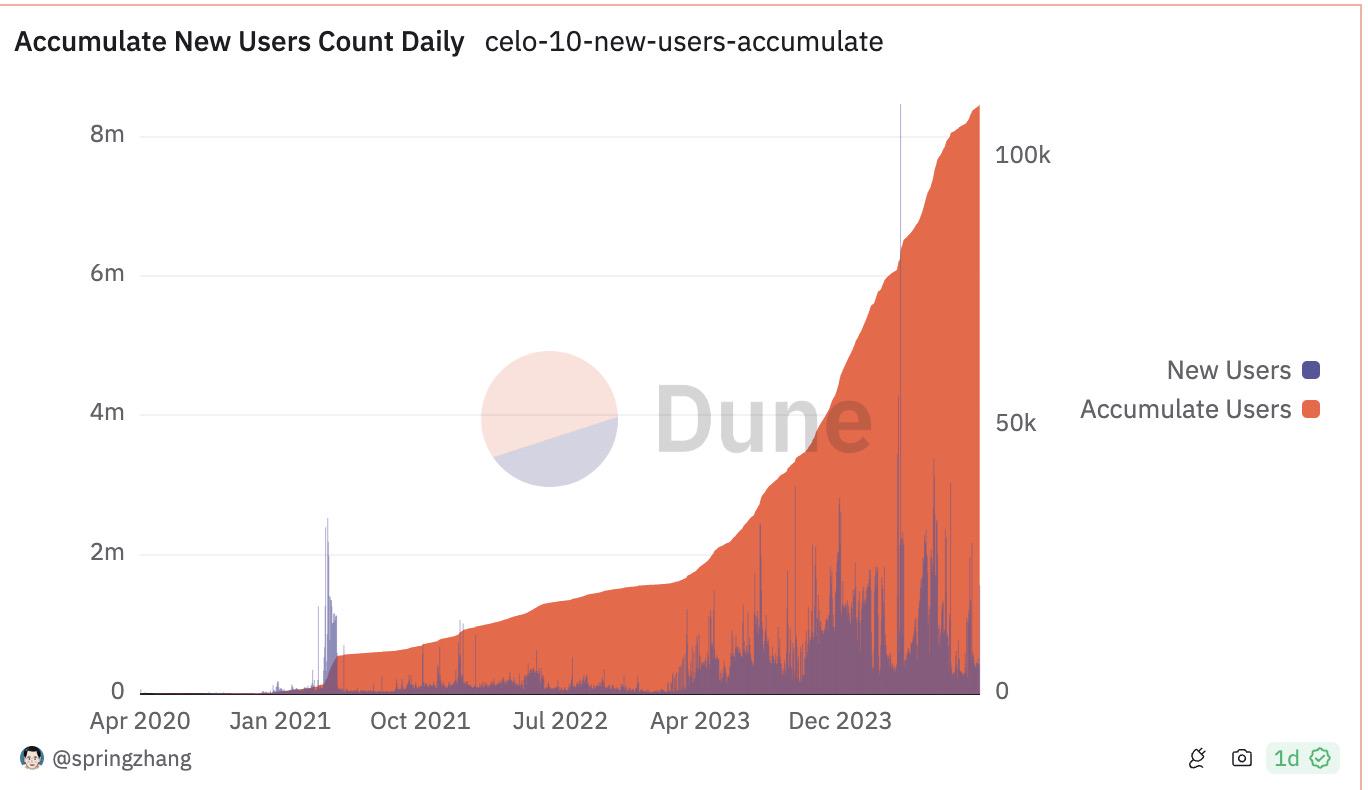
Data from Dune shows that as of September 25, transaction volume on the Celo network has exceeded 470 million, showing a consistent month-on-month increase. Daily transactions have more than tripled since the beginning of the year, reaching 1.2 million. Meanwhile, unique user addresses have grown to 8.467 million, representing an 84.1% increase in 2024 alone, with new users accounting for up to 63.1% of total users in April.
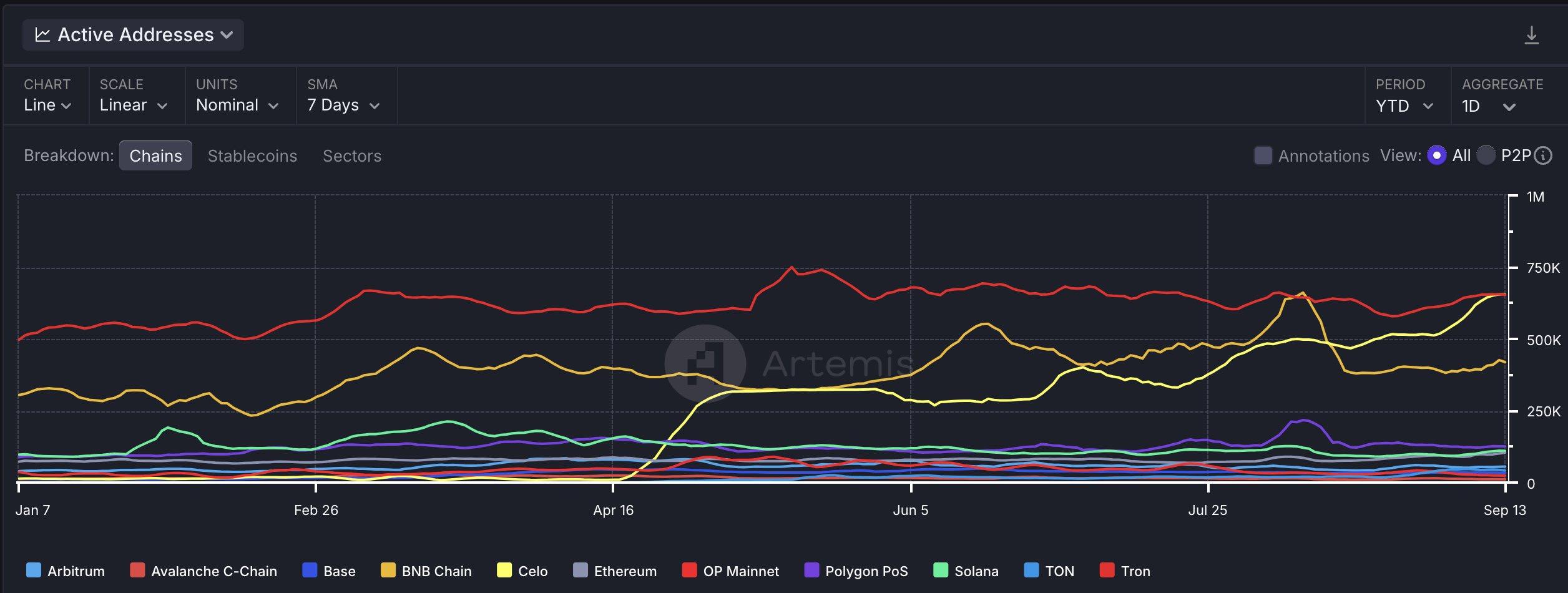
Artemis data also reveals that Celo’s recent active address count has surpassed major blockchains including Tron, BNB Chain, and Polygon PoS. Further analysis indicates that this surge in addresses is primarily driven by rising stablecoin transaction volumes on Celo.
As of September 25, Artemis reports that Celo’s monthly stablecoin transfer volume is nearing 1.13 billion, with a growth rate exceeding 28.3% over the past three months. Stablecoin supply on Celo has reached $290 million—approximately 6.4 times higher than at the start of the year. According to Tether’s official transparency dashboard, the total authorized supply of USDT on Celo has exceeded $470 million, surpassing both Near and Cosmos. Of this, $269 million worth of USDT has been authorized but not yet issued.
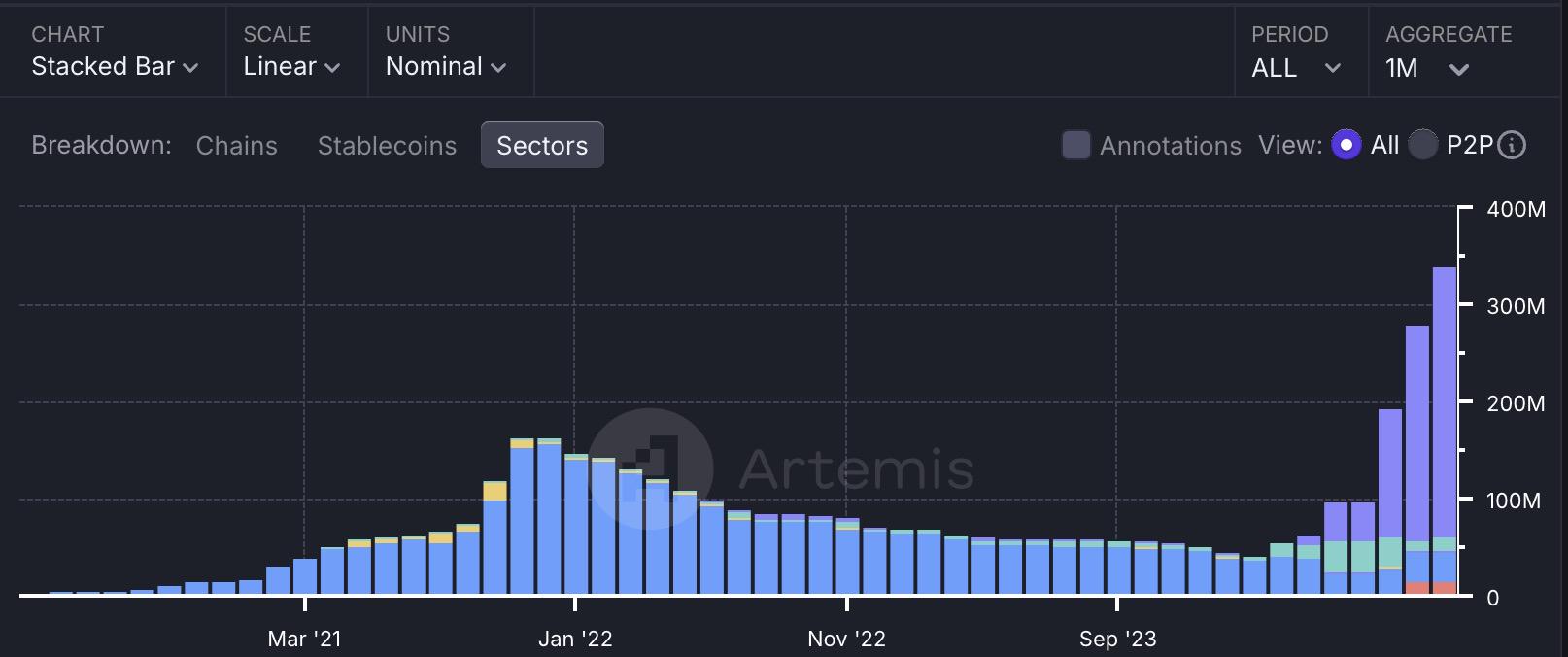
Moreover, application-level data from wallets within the Celo ecosystem further confirms the overall rapid growth. For instance, MiniPay, a Web3 payment wallet launched in 2023, reached 1 million wallets within five months and grew to 3 million by July 2024. It has expanded into high-adoption crypto markets such as Kenya, Ghana, and South Africa.
Join TechFlow official community to stay tuned
Telegram:https://t.me/TechFlowDaily
X (Twitter):https://x.com/TechFlowPost
X (Twitter) EN:https://x.com/BlockFlow_News
 PANews






