Four Pillars: The Rise of Vertical Blockchains
TechFlow Selected TechFlow Selected
Four Pillars: The Rise of Vertical Blockchains
In this episode, we discussed the emergence of vertical blockchains as an alternative form to general-purpose blockchains or application-specific chains.
 Navigating Web3 tides with focused insights
Author: Pillarbear
Compiled by: TechFlow
Welcome to Consumer Watch Issue 3, a newsletter covering the latest news and insights in consumer crypto.
In this issue, we discuss the emergence of vertical blockchains as an alternative form to general-purpose or app-specific chains. Vertical blockchains offer a centralized platform with shared interests and characteristics, serving both users and applications.
Below, you'll also find a market recap summarizing key developments, along with our curated insights showcasing materials that provide valuable trends and perspectives on consumer crypto.
The Rise of Vertical Blockchains
Don’t try to do everything at once. When you become #1, you create great network effects. It’s extremely valuable to delight your customers and become the leader in your domain and region—whatever they may be. — Fabrice Grinda
So far, there have been two main types of blockchains: general-purpose blockchains and application-specific blockchains.
Most existing and upcoming blockchains are general-purpose. These can support a wide variety of applications built on top of them, giving them the potential to become the central hubs for most blockchain activity. However, these blockchains—especially newly launched ones—often struggle to differentiate themselves from others. Despite significant room for improvement, the advantages applications gain from advanced infrastructure often fail to outweigh the disadvantages of losing access to large user bases and composability between tokens and apps within a single chain. Moreover, the repeated launch of minimally differentiated projects in the L1/L2 space has led to fatigue among users and investors, primarily benefiting only liquidity providers.
On the other end are application-specific blockchains. While experimentation continues, practical implementations remain scarce. Limited adoption of app chains may stem from their inability to deliver a smooth user experience when exploring multiple applications. Additionally, running a full blockchain just to operate a single application is inefficient for most developers in the space. Although frameworks are being developed to mitigate these challenges and assist both users and developers, it appears some time will pass before these solutions are fully realized and operational.
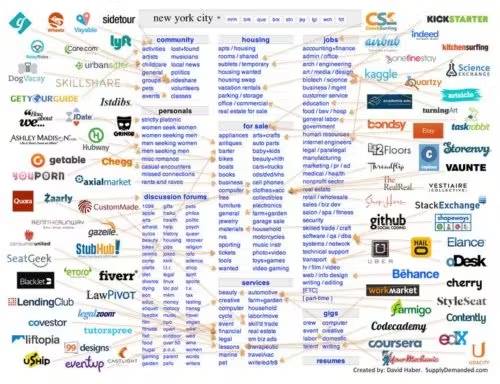
Source: Make Your Marketplace Unit Economics Work
A promising and relatively unexplored alternative is the concept of purpose-built vertical blockchains. While not entirely new, this idea has recently gained greater significance. Vertical blockchains resemble vertical platforms in Web2 businesses—a trend typically emerging during market maturation. While general-purpose platforms still generate most transaction volume and user activity, over time, an increasing number of industry- or feature-focused vertical platforms tend to attract dedicated user segments.
Vertical blockchains are tailored to specific industries or functions, offering users a seamless multi-application experience. These platforms host applications with similar characteristics, creating ecosystems focused on particular user groups. For example, there's a clear contrast between users trading memecoins and betting on internet trends versus those managing government bonds and yield optimization. By addressing the needs of each user base, vertical blockchains eliminate the necessity for users to switch between different ecosystems.
These specialized chains also leverage network effects to support their hosted services, solving common "cold start" challenges faced by new applications. For emerging apps, these platforms serve as effective distribution channels, providing direct access to target audiences and venues to showcase their value propositions. Some chains go further by offering specialized tools and features that significantly reduce initial development costs and ongoing operational overhead. This allows teams to allocate resources more efficiently, focusing primarily on service development and innovation.
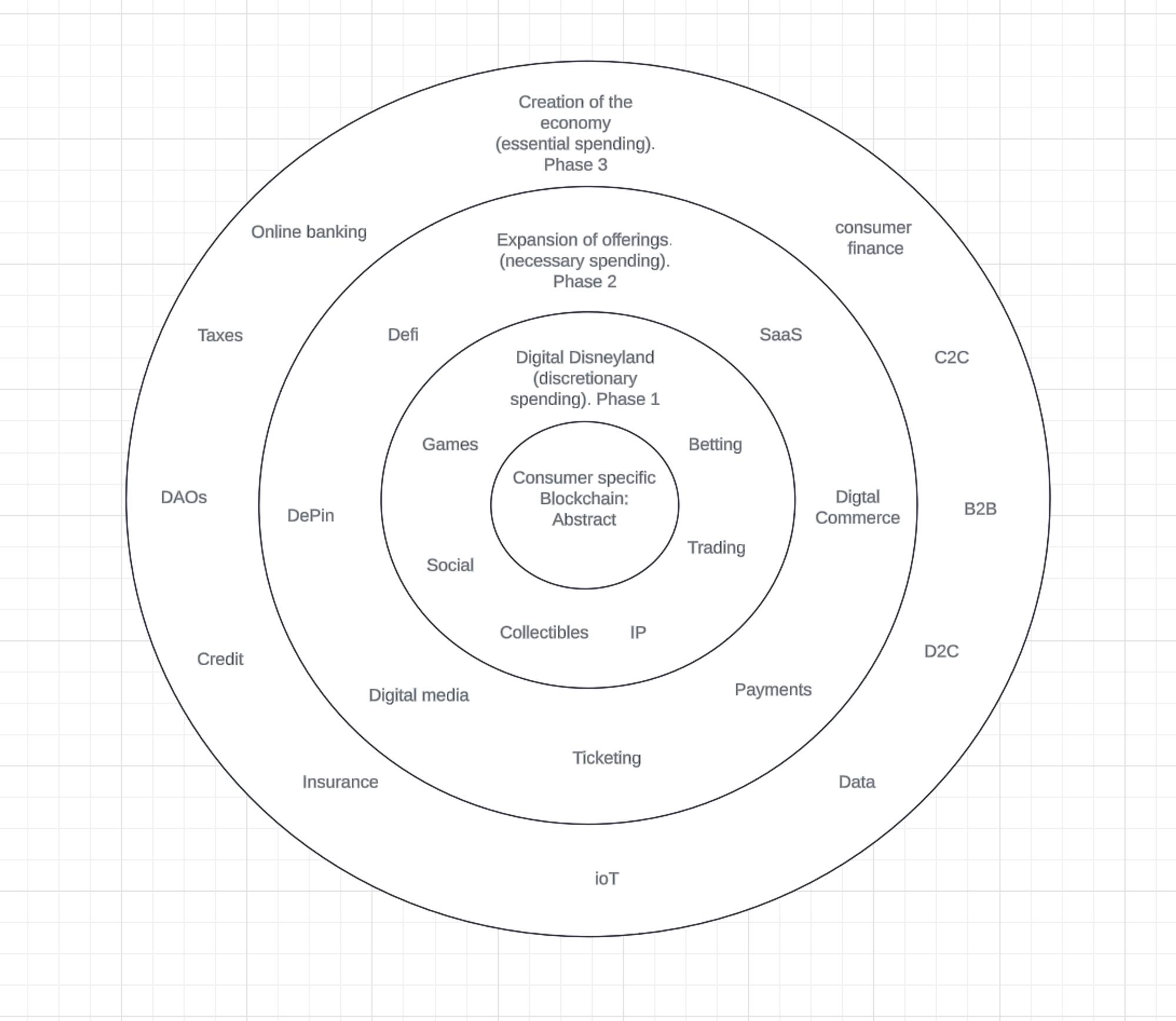
Source: What is Consumer Crypto?
Within this theme, the most prominent—but not exhaustive—examples are Abstract targeting consumer applications and Plume Network focused on RWA projects.
While Abstract is expected to offer special features and tools such as the Abstract Global Wallet (AGW) for consumer use cases, its true value may lie in serving as an integrated distribution channel, generating network effects through similarities in user demographics and application types. Though its detailed strategy and functionalities remain uncertain, Abstract appears best positioned for success among similar projects.
Unlike infrastructure innovations or B2B services, the success of consumer-facing crypto applications is far harder to predict than many anticipate. This unpredictability stems from the volatility and fickle nature of user behavior and preferences—especially in domains where most services aim to capture user excitement and interest rather than fulfill specific needs.
The current crypto landscape emphasizes user engagement and novelty, making predictions about optimal user experiences particularly challenging. In this context, the key lies in creating an ecosystem that enables multiple positive expected value (EV) strategies, thereby increasing the overall probability of success.
Pudgy and Luca have demonstrated exceptional marketing and community-building capabilities in crypto, orchestrating viral campaigns and cultivating influential communities. Their success relies not only on attention-grabbing tactics but also on consistent brand strategy and high-quality standards—critical ingredients for long-term success in consumer applications. Such dedication and skill are especially rare in the crypto industry, where many projects prefer chasing the next hype cycle.
Abstract seems to be positioning itself to capitalize on this dynamic. Leveraging its strong community-building and marketing prowess, it aims to attract a large base of targeted users to its platform. This user concentration could, in turn, draw more top-tier developers into its ecosystem. The potential synergy between high-quality services and an active user base may significantly elevate Abstract’s position as a leading vertical blockchain for consumer applications.
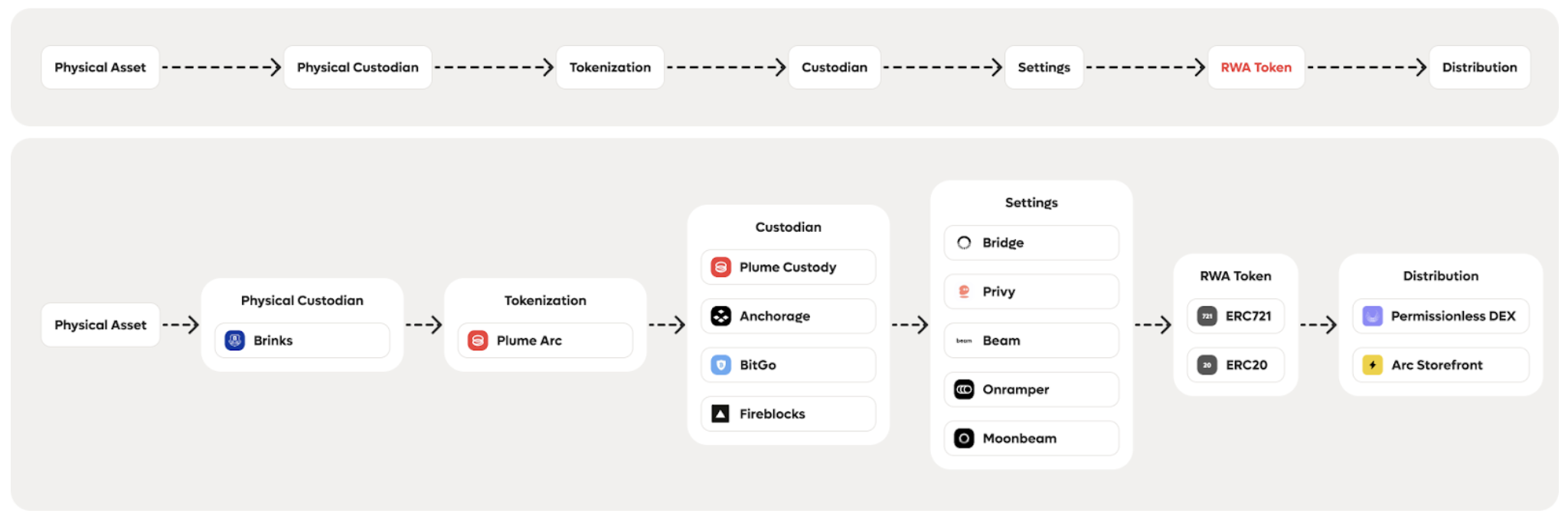
Source: Plume
Another important candidate in the vertical blockchain space is Plume Network. Plume is a modular blockchain designed specifically to address major challenges in RWA while establishing the emerging field of RWAfi. By integrating tokenization engines and compliance directly into its platform, Plume dramatically lowers the barrier to building RWA projects.
Plume is fostering a virtuous cycle—lowering entry barriers to attract more assets and users into its ecosystem. Within the Plume ecosystem, users will be able to utilize tokenized real-world assets (RWA) much like how other on-chain assets and protocols are used today. This includes using RWAs as collateral for loans, staking to earn interest, borrowing against them, or even engaging in leveraged speculation via derivatives trading. By supporting this diverse range of activities around RWA, Plume is not merely tokenizing assets—it is creating an entirely new financial ecosystem, blurring the lines between physical and digital assets.
Note that Abstract and Plume are not the only representatives of vertical blockchains. An increasing number of blockchains are attracting developers through focused operations, branding, and functionality. As the industry matures, we’re witnessing the end of the era focused solely on building general-purpose chains. The next phase will involve developing industry-specific platforms capable of building concentrated user bases and generating network effects among applications with shared attributes and interests.
Join TechFlow official community to stay tuned
Telegram:https://t.me/TechFlowDaily
X (Twitter):https://x.com/TechFlowPost
X (Twitter) EN:https://x.com/BlockFlow_News
 Four Pillars