Onboarding Guide: A Three-Minute Overview of CAT Protocol
TechFlow Selected TechFlow Selected
Onboarding Guide: A Three-Minute Overview of CAT Protocol
Is CAT Protocol Worth It? Must-Read Before Jumping In, Fast Track in One Article.
 Navigating Web3 tides with focused insights
By shaofaye123, Foresight News
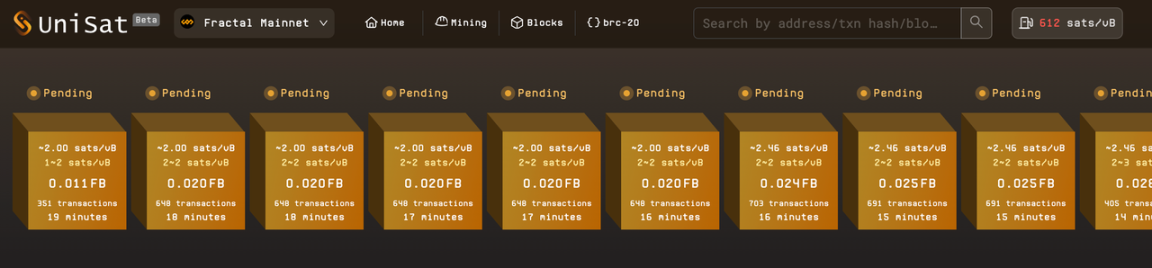
Gas wars rage on, with fees soaring to 600 sats/vb, pushing FB's over-the-counter price higher. Is CAT Protocol a fresh opportunity to replicate the inscriptions craze and fractalize Bitcoin, or merely a premature protocol rush doomed to die after the hype? Market excitement is building rapidly, and FOMO is spreading fast. But don't rush in yet—this article gives you a quick three-minute overview of CAT Protocol.
What is the trending CAT Protocol?
According to the official introduction by ProtocolCAT, CAT Protocol is a new Bitcoin token standard based on UTXO—Covenant Attested Token (CAT). This protocol relies on miners for validation and uses smart contracts to manage token minting and transfers. Key features include:
-
No indexer required: The token rules are guaranteed by Bitcoin consensus. All data and logic reside on-chain, operating independently of any off-chain third parties (e.g., indexers). It inherits native Bitcoin’s Proof-of-Work security.
-
Modular: CAT tokens can be integrated into other smart contracts to build more complex decentralized applications (e.g., AMMs, lending, staking), providing a powerful and versatile new building block for expanding Bitcoin’s utility.
-
Programmable minting: Token issuance rules are enforced by smart contracts. Any over-minting transactions will be rejected outright by the network.
-
Cross-chain interoperability: The CAT Protocol enables trustless asset bridging across different blockchains, allowing applications to operate across multiple chains.
-
SPV compatible: CAT tokens support Simplified Payment Verification (SPV). Lightweight clients can independently verify token authenticity without relying on centralized servers.
CAT Protocol supports both fungible tokens (referred to as the CAT20 standard) and non-fungible tokens (called CAT721 standard). Note that CAT721 has not been launched yet.
Multiple CAT Protocols Emerge
However, there isn't just one CAT Protocol in the market right now. Based on current information, at least three related protocols have surfaced, each with a notable following. ProtocolCAT currently leads in popularity—possibly due to its head start—but how long this momentum will last remains uncertain. This article summarizes available information for reference; corrections and discussions are welcome. (The subheaders below reflect project Twitter handles.)
ProtocolCAT
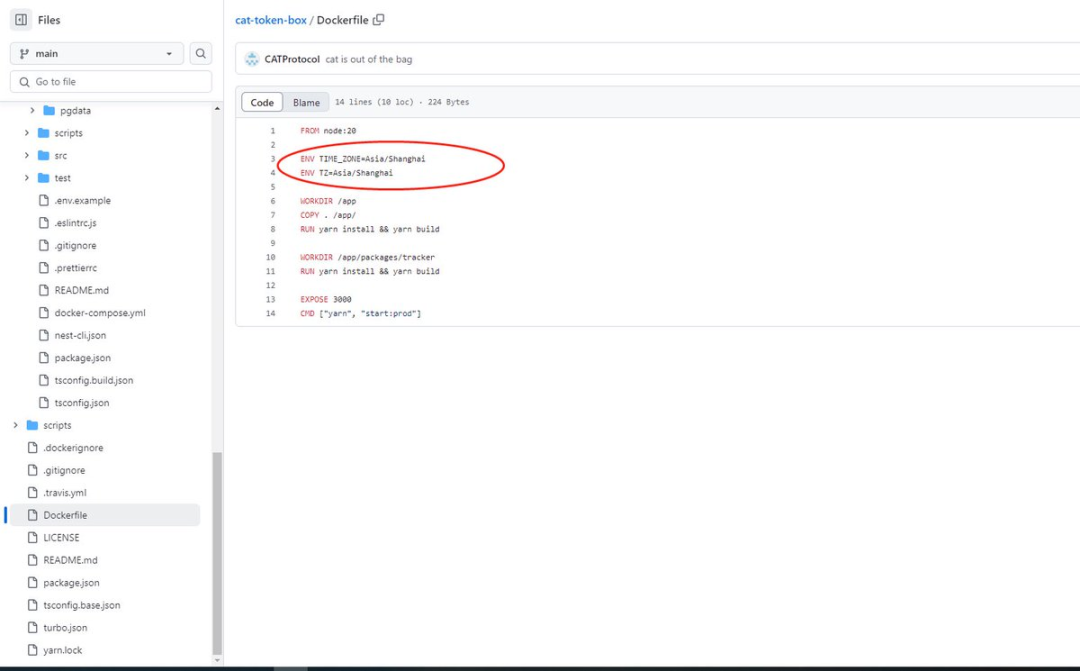
Launched around 3:00 AM on September 11, the protocol offers a total supply of 21 million CATs and currently supports CLI-based minting. It is the only CAT Protocol live and ready for use at present. Code analysis reveals signs of Chinese developers, but the team remains anonymous, with no identifiable members disclosed.
bc1plainview
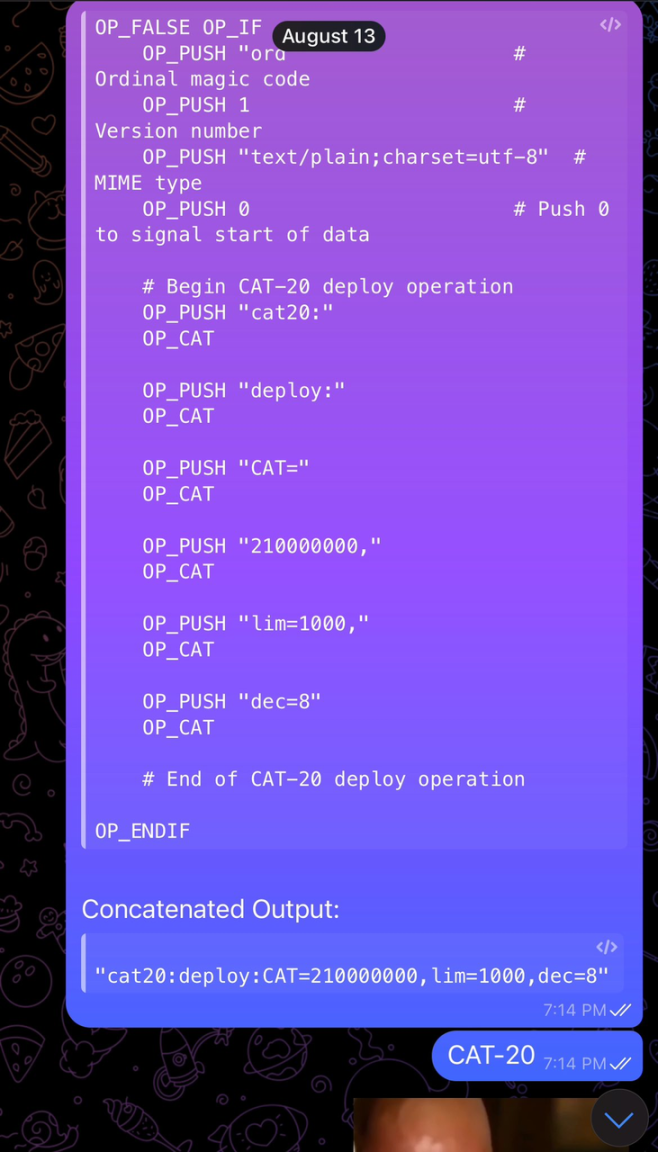
bc1plainview claims to be the original creator of the CAT20 protocol, having published it in August alongside an OP_CAT-enabled BRC20-like protocol. The project originates from the opnet team, and the protocol will only activate at block 21000—expected to go live in about two days. He argues that ProtocolCAT’s claim of “no indexer needed” is misleading, since users still require an indexer to view token balances.
rot13maxi
CATNIP was proposed by Udi Wertheimer, co-founder of Taproot Wizards, and is another secondary token protocol built upon OP_CAT. CATNIP allows partial order fills and bidding, eliminating the need for users to pre-split UTXOs—users can simply purchase the exact amount of tokens they want. Additionally, the protocol plans to support on-chain L1 AMMs and liquidity pools. Currently, no CATNIP tokens exist; deployment will begin only after OP_CAT launches on Bitcoin’s mainnet.
All projects remain in early stages—exercise caution before participating.
Participation Guide
Fees and Costs
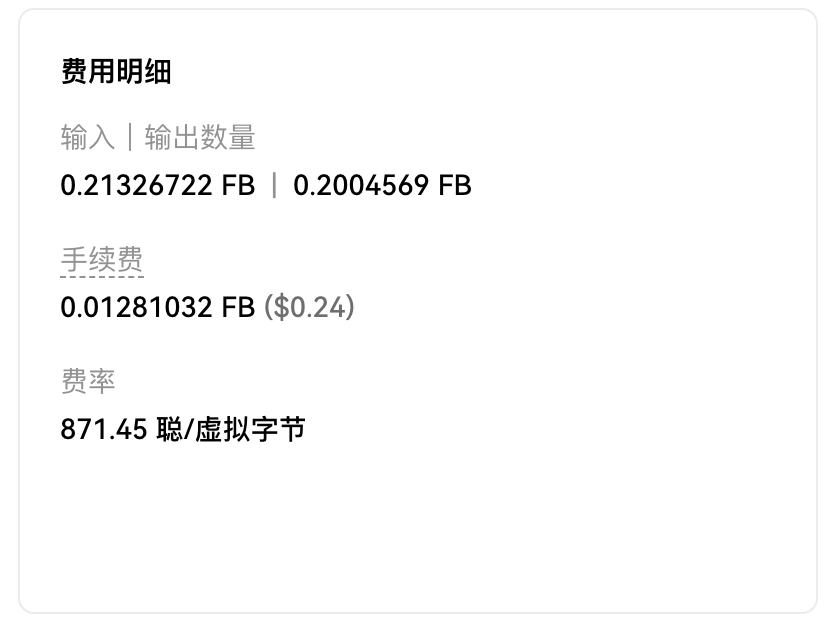
While many bloggers have shared code tutorials, few discuss costs. Fee levels can be monitored via Mempool or OKX. At 300 sats/vb earlier today, minting cost roughly 0.005 FB per attempt; at the current rate of 870 sats/vb, it costs about 0.013 FB. Meanwhile, the OTC price of FB has climbed to 20 USDT, up from the previous level of around 6.6 USDT.
Minting Tutorial
Minting manually requires some technical proficiency. Below are the basic setup steps:
1. Set up your environment and install three dependencies: git, Node.js, and Docker. Then download the CAT Protocol source code.
2. Run the Docker container. You'll need to run a Fractal full node and a local indexer on your server.
3. Install and compile the CLI tool.
4. Create a wallet and proceed with deployment and minting.
For detailed code instructions, refer to: https://mirror.xyz/3p-labs.eth/0IWdR6toFMACCRZTwTAF3XFAv2TiEAPEAHqzVF707g8
Join TechFlow official community to stay tuned
Telegram:https://t.me/TechFlowDaily
X (Twitter):https://x.com/TechFlowPost
X (Twitter) EN:https://x.com/BlockFlow_News
 Foresight News