








Discussing the Behavioral Psychology Behind Meme Investing Addiction Through 'Bombie'
TechFlow Selected TechFlow Selected
Discussing the Behavioral Psychology Behind Meme Investing Addiction Through 'Bombie'
Replace opportunity with meaning, instant rewards with deep experience, and rapid repetition with expert judgment.
 Navigating Web3 tides with focused insights
Bombie is a new zombie-themed game in Catizen's Game Center, inspired by "Xun Dao Da Qian." Since I had already become a paying user of Xun Dao Da Qian somewhat unintentionally, this time I decided to take the opportunity to read up on articles about its underlying mechanics and psychological principles—so at least I'd understand what I'm paying for!

Two related psychological concepts that make such games addictive are the Scarcity Loop and the Skinner Box.
Scarcity Loop
"Scarcity creates desire." When desire exceeds actual need, addiction can easily form.
The scarcity loop operates in three steps:
1. Opportunity
There’s usually a scenario—an ad, a friend’s recommendation, or a get-rich-quick opportunity—that prompts users to take action.
2. Unpredictable Reward Probability
After taking action, you might get the desired outcome, or you might not—or you might hit the jackpot. The reward could be a rare physical item or a dopamine rush.
3. Rapid Repetition
Once one round ends, the next begins immediately. Before you have time to process the loss from the previous round, you’re already starting again.
Skinner Box

The Skinner Box is an experimental apparatus developed by American psychologist B.F. Skinner. Its basic setup includes a lever on one wall of a box and a food dispenser nearby. When a pigeon inside presses the lever, food is released into the box, allowing the pigeon to eat.
Skinner conducted several experiments. When hungry pigeons pressed the lever and consistently received food (positive reinforcement), they quickly learned the connection between pressing the lever and receiving food—similar to Pavlov’s classical conditioning. Similarly, when pressing the lever removed a negative stimulus (e.g., stopping electric shocks), pigeons also quickly learned the behavior.
Skinner concluded that the relationship between a response and the subsequent stimulus (reinforcement) controls behavior and affects the likelihood of future responses. Applied to product design: after a user performs an action (e.g., following or sharing), giving them a reinforcement (e.g., points, Memecoin) increases the chance of repeating that behavior.
But the experiment didn’t stop there. He introduced probabilistic rewards—food would drop only occasionally when the lever was pressed. Interestingly, under this condition, the pigeons’ learned behavior disappeared very slowly, showing strong persistence. Even when it took 40–60 lever presses for one food drop, the pigeons kept pressing. Later, psychologist Zentall found that animals actually prefer random rewards over fixed ones—even when fixed rewards were seven times more frequent, some animals still chose the random option. (This is practically the experimental foundation for repeatedly chasing meme coins despite repeated losses.)
Because outcomes are probabilistic, users can’t easily tell whether the reinforcement mechanism has failed. A single failure doesn’t deliver a clear “punishment,” so habitual behavior continues without interruption.
An unexpected side effect observed in these probabilistic reward experiments was the emergence of strange rituals among pigeons—like head-banging or spinning in circles. This happened because right before food dropped, the pigeon was performing one of these actions, leading it to associate the behavior with reward—a superstitious belief in “magic.” Today, players perform various ritualistic “lucky” behaviors before gacha pulls, all echoes of this same phenomenon. I call this biased positive feedback.
Both mechanisms can be distilled into a simple addictive loop:
Opportunity → Unpredictable Reward → Rapid Repetition
The simplest example is short video apps:
Opportunity—You can open TikTok anytime and start scrolling
Unpredictable Reward—You never know what the next video will be
Rapid Repetition—If you don’t like it, just swipe away and the next one appears instantly
Add immersive design elements, and it’s easy to unknowingly spend hours in the app.
The model can go even further: by introducing biased outcomes to enhance positive feedback—similar to algorithms like “Recommended for You”—users can be trapped deeper within the app.
Now let’s look at the zombie version of Xun Dao Da Qian—the game Bombie
Opportunity—Players continuously open boxes, which come from in-game activities and incentives. Bombie also sets up a series of simple tasks—“Open 10 boxes,” “Sell X amount of gear,” “Challenge arena once,” “Pass level N,” “Reach level N”—to keep players opening boxes nonstop. It’s like placing frequent intermediate checkpoints along a running path, encouraging continuous progress.

Unpredictable Reward—Each box gives various equipment; sometimes high-tier gear drops. The more boxes you open, the higher your chances of getting better gear through upgrades, helping you advance through game levels.
Biased Positive Feedback—Achieved via monetization. After establishing an initial psychological anchor, the game offers a first-time top-up deal. You think: “I’ve spent so much time grinding for this little gear—why not pay $0.1 or $6 to guarantee good gear?” If you value your time highly—and factor in prior time investment—spending money suddenly feels justified. Even if you swore you’d never pay for such a game, this moment marks the first step. And as they say, there’s only once and forever—this applies across games too.

Rapid Repetition—Besides drawing and equipping skills, the only gameplay action is rolling dice. With auto-roll and gear iteration features, starting the next round is extremely fast.
In fact, trading low-cap cryptocurrencies and memecoins follows a similar scarcity loop.
Opportunity—Crypto offers 24/7 opportunities. With platforms like Pump.fun lowering asset issuance barriers, a single trend can spawn dozens of memecoins simultaneously.
Unpredictable Reward—Each memecoin has uncertain outcomes: zeroing out or becoming a 100x gem—existing in a superposition of ruin and riches.
Biased Positive Feedback—Various analysis methods—on-chain data tracking, KOL shilling, private group signals—create the illusion that you can win through skill (PvP).
Rapid Repetition—Endless stories of overnight wealth and trading signals on Telegram, Twitter, news feeds, or blockchain itself push you into the next low-cap gamble.
Synergy Evolution—Xun Dao Da Qian + Memecoin
Now, Bombie takes the scarcity loop of Xun Dao Da Qian a step further by integrating a VC-free token launch. Let’s examine how this might alter its addictive cycle.
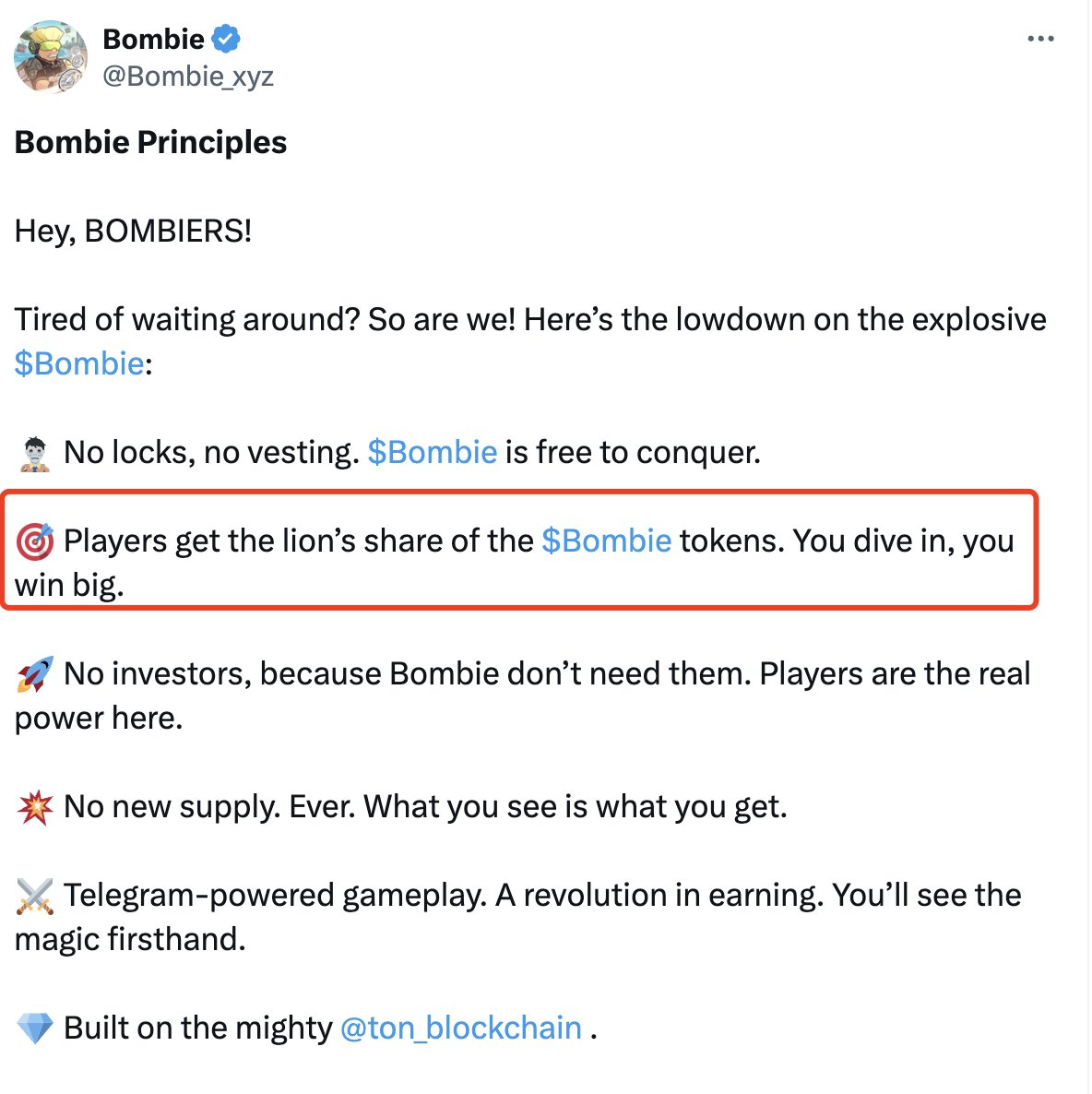
Opportunity—Beyond in-game box openings, players are reached through external memecoin viral links.
Unpredictable Reward—In addition to powerful gear from boxes, players don’t know how many $BOMBIE tokens they’ll receive. Leaderboards and arena rankings amplify the sense of reward scarcity.
Biased Positive Feedback—The more you play and spend, the more $BOMBIE you feel you can earn.
Rapid Repetition—Same as before
The impact of this hybrid model remains to be seen. But early results are promising: in just two weeks with minimal promotion (Catizen only recently shared it), Bombie has already attracted 90,000 users—with a staggering 11% paid conversion rate.
Escaping Addiction: How to Break Free
Falling into these loops happens because we seek outlets for unchanneled dopamine, developing what’s known as a “scarcity mindset.” To break the cycle, we must deconstruct the scarcity loop. The author of *Scarcity Brain* proposes the “Abundance Loop” as a counter-solution.
He argues we often mistake means for ends, accumulating and repeating meaninglessly.
For example, fishing should be a relaxing, laid-back activity—but many middle-aged enthusiasts turn it into a competition over rod brands, buying increasingly expensive rods without catching more fish.
If your goal is fishing—not collecting rods—then equipment doesn’t matter much; functional tools suffice. The author summarizes the “Abundance Loop” as follows:
-
Replace opportunity with meaning: Being skilled at fishing is far more meaningful than owning premium gear;
-
Replace instant rewards with deep experience: The dopamine from collecting rods pales in comparison to the joy of being immersed in the act of fishing;
-
Replace rapid repetition with expert judgment: As a seasoned angler, you won’t be easily tempted by a new rod.
Once you experience higher meaning and deeper fulfillment through the abundance loop, the scarcity loop loses its appeal.
But here’s a question: where does deep meaning come from?
Ironically, it emerges from scarcity itself.
Living in the real world means experiencing life under constraints—dancing in chains, coexisting with scarcity.
Returning to the example of trading low-cap coins: the dopamine spike comes from FOMO. Spotting a trend is the opportunity; past 10x–100x gains represent unpredictable rewards; new memecoins appear constantly, enabling rapid repetition.
How can the abundance loop dismantle this scarcity trap?
-
Replace opportunity with meaning: Gain a sense of mastery from learning new knowledge; deepen social connections and personal growth; build experiences beyond speculative trading. This is also why many number-driven games lose appeal over time—players initially get hooked by the scarcity loop, but long-term engagement requires deeper meaning and enjoyment.
-
Replace instant rewards with deep experience: Through trading interactions, users gain rich feedback (experiential self)—emotions, feelings, memories—which ultimately contribute to identity formation (narrative self) and personal development.
-
Replace rapid repetition with expert judgment: Develop and refine cognitive frameworks through trading, thereby discovering meaning and joy in mastery, community, and content.
Crypto used to be exactly this way. While profit was still the core motivator, people found self-assigned meanings—decentralized payments, anti-censorship, ownership, privacy protection. Engaging deeply in innovation brought richer experiences, and market cycles weren’t as rapidly repetitive as today.
Even though in today’s liquidity-starved environment, meme coin trading may seem more “pure,” meaning is inherently self-defined. If everything becomes this “pure,” nihilism becomes unavoidable. The point of life is to find joy, curiosity, exploration, and meaning—precisely why crypto was once so exciting.
Final Thoughts
The purpose of studying addictive behavioral psychology is, of course, to avoid falling into it.
You probably don’t want to stay stuck in a cycle of losing money on meme coins forever, do you?
As Uncle Pigeon—the fellow who’s also called a pigeon—once said: “The best way to overcome fear is to face it!”
For the sake of a better future, rather than being mentally drained by endless memecoins,
why not proactively play Bombie—a game that makes its addictive mechanisms transparent—and undergo deliberate desensitization?
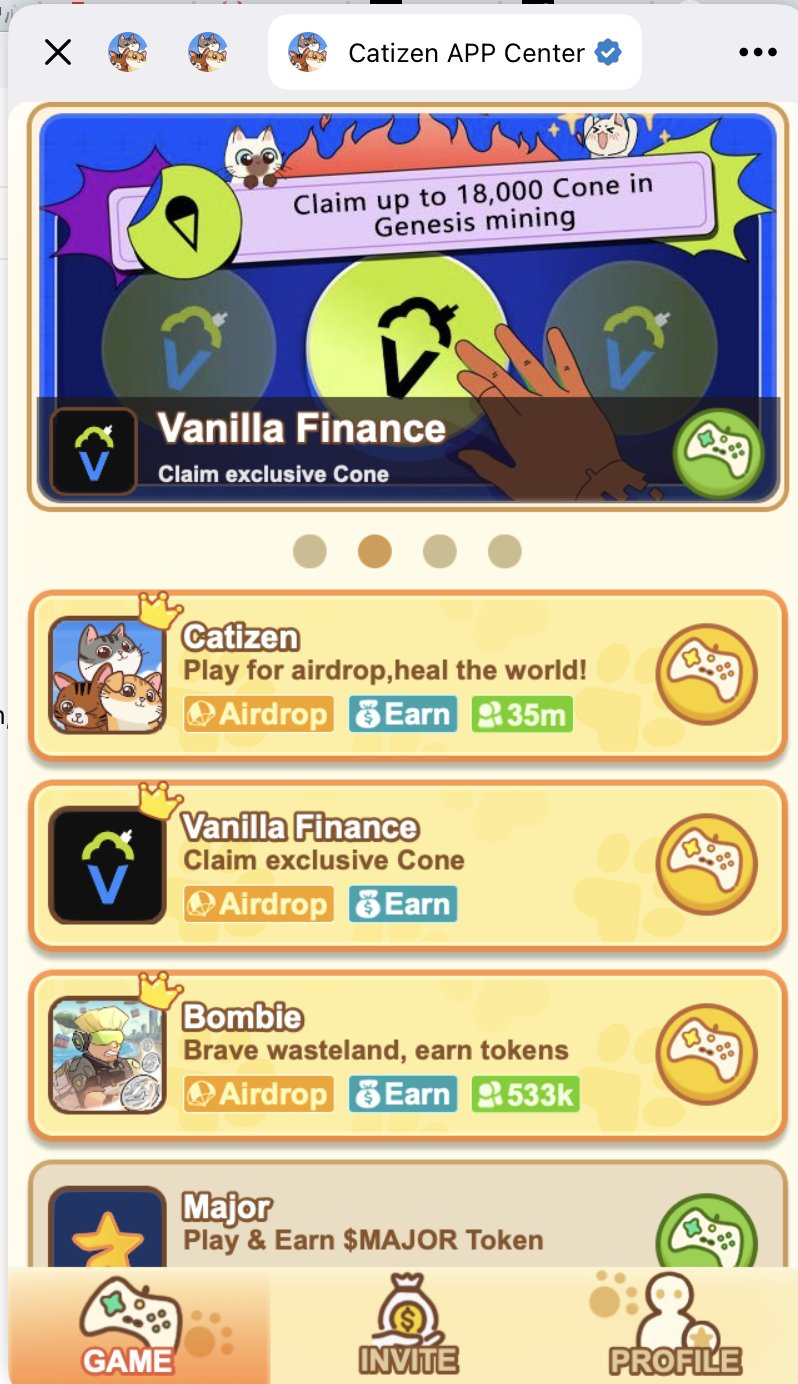
https://t.me/catizenbot/gamecenter?startapp=p_22
Join TechFlow official community to stay tuned
Telegram:https://t.me/TechFlowDaily
X (Twitter):https://x.com/TechFlowPost
X (Twitter) EN:https://x.com/BlockFlow_News
 @qiqileyuan


