








How much does it cost to run your own chain?
TechFlow Selected TechFlow Selected
How much does it cost to run your own chain?
Despite significantly lower on-chain operational costs, Web2 founders must still conduct a thorough cost-benefit analysis before deciding to launch their own chain.
 Navigating Web3 tides with focused insights
Author: Sharanya Sahai
Translation: TechFlow
Over the past year, there has been a significant increase in the launch of new Layer 2 (L2) solutions, driven by technological advancements, unique market entry strategies, focus on specific use cases, and strong community engagement. While this progress is exciting, the primary challenge remains how to scale these blockchains in a more cost-effective manner. Running appchains has emerged as a key solution, enabling applications to manage blockchain operating costs through various measures within modular infrastructure stacks.
Although specific initiatives on L1s like Ethereum have significantly reduced transaction costs on-chain, major rollups and infrastructure providers are also heavily investing in further improving scalability and unlocking use cases that are currently too expensive to execute on-chain.
We can categorize and analyze these developments across three dimensions: a) L1 initiatives, b) L2 initiatives, and c) modular infrastructure initiatives—all of which are meaningfully lowering the barriers to on-chain transactions.
Recently, we've seen several upgrades to Ethereum—such as EIP-1559 and EIP-4844 (the Dencun upgrade)—that have reduced costs and enhanced scalability.
We begin with L1 initiatives, such as EIP-1559 and EIP-4844 (Dencun upgrade), which have helped rationalize transaction costs on Ethereum. EIP-1559 introduced the concept of base fee plus tip/priority fee, along with a congestion-based dynamic pricing mechanism, giving users a better way to estimate costs and conduct transactions based on their priority and network congestion. EIP-4844, meanwhile, brought a new type of transaction to Ethereum by introducing blobs (binary large objects). This provides L2s with an extremely cheap alternative: when settling transactions on L1, they can store data in blobs instead of expensive calldata.
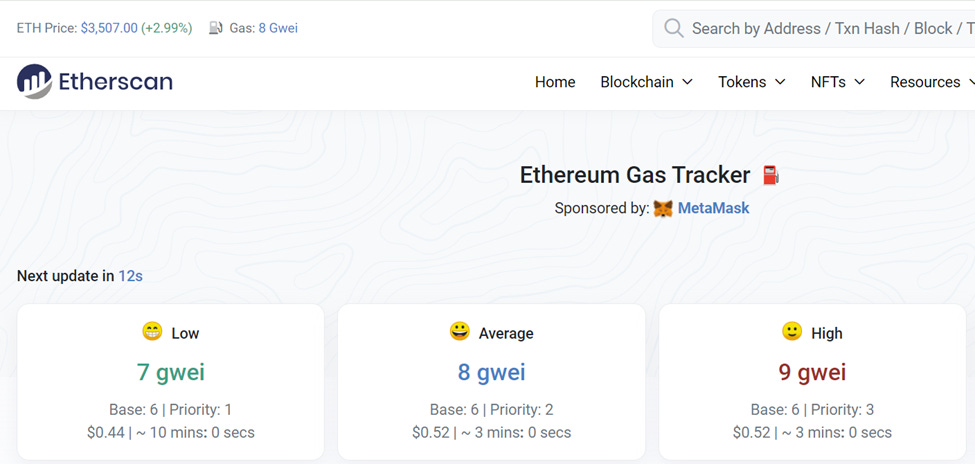
Figure 1: Average gas price for base and priority fees was 8 gwei on July 19, source: Etherscan
The implementation of blobs has dramatically reduced transaction costs due to lower per-byte storage costs and increased block capacity. Blobs do not compete with Ethereum transactions for gas and are not stored permanently—they are removed from the blockchain after approximately 18 days.
A blob consists of 4096 field elements, each 32 bytes, and up to 16 blobs can be included per block, providing a maximum additional capacity of about 2 MB (4096 * 32 bytes * 16 blobs per block). Capacity can start at a lower level (currently 0.8 MB, targeting 3 blobs per block, expandable to 6 post-EIP-4844) and scale up over time via multiple network upgrades.
Given the historical benchmark of 2–10 KB of calldata per block, EIP-4844 theoretically enables growth of up to 384x.
In practice, many L2 fees have decreased by over 90% following the implementation of EIP-4844 (see Figure 2). However, relying solely on these upgrades is insufficient for Ethereum to achieve greater scalability. In a world with thousands of rollups, increasing demand for storage due to mass on-chain adoption could cause transaction costs to spike.
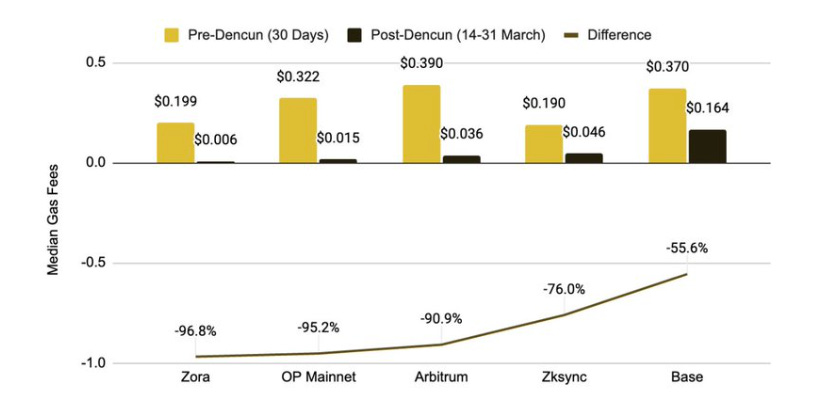
Figure 2: Median gas fees on major L2 networks declined after EIP-4844 implementation, source: Binance
As L2s move execution off-chain to reduce costs while maintaining security, industry-wide efforts such as open-source frameworks and revenue-sharing models are shaping a competitive "L2 stack war."
In the previous cycle, rollups emerged to significantly reduce the cost of on-chain operations by moving execution off the main chain, while still deriving security from it via various types of proofs. Optimistic rollups allow a single honest entity to submit "fraud proofs" and receive rewards for identifying malicious sequencers, while ZK (zero-knowledge) rollups use zero-knowledge proofs to verify correct updates to the L2 chain.
Rollup operators must perform several tasks, including:
-
Sequencing: Ordering end-user transactions, grouping them, and occasionally publishing these batches to L1.
-
Execution: Storing and executing operations and updating the state of the rollup.
-
Proposing: Proposers periodically update the rollup's state root on Layer 1, crucial for ensuring the blockchain remains trustless and verifiable by all.
-
State root challenges: Submitting evidence of fraudulent state roots and challenging them on Layer 1 (applicable only to optimistic rollups).
-
Proving: Generating validity proofs for each state root update from rollup to L1 (applicable only to ZK rollups).
Their revenue comes from transaction fees paid by users (sequencer revenue) and potentially extractable MEV, though it should be noted that MEV is not yet widely extracted as a strategy. Their costs primarily stem from L2 (operational costs) and L1 (data availability and settlement) expenses (see Figure 3). Organizations wishing to launch their own chains would ideally do so only if expected transaction fees exceed planned costs.
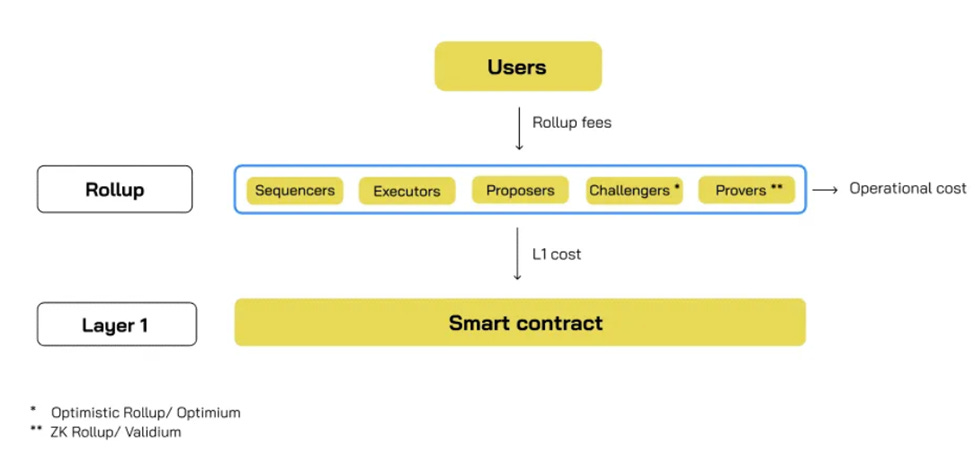
Figure 3: Rollup business model, source: Exploring the Rollup Ecosystem
Base-layer networks like Ethereum typically charge high fees for computation and storage because most nodes need to synchronize and validate the chain. However, in rollups, the chain is considered secure as long as one honest entity can verify it. As a result, rollups charge less for computation and storage but more for batching and publishing transactions to L1. Prior to EIP-4844, L1 costs accounted for up to 98% of total L2 costs (see Figure 4).
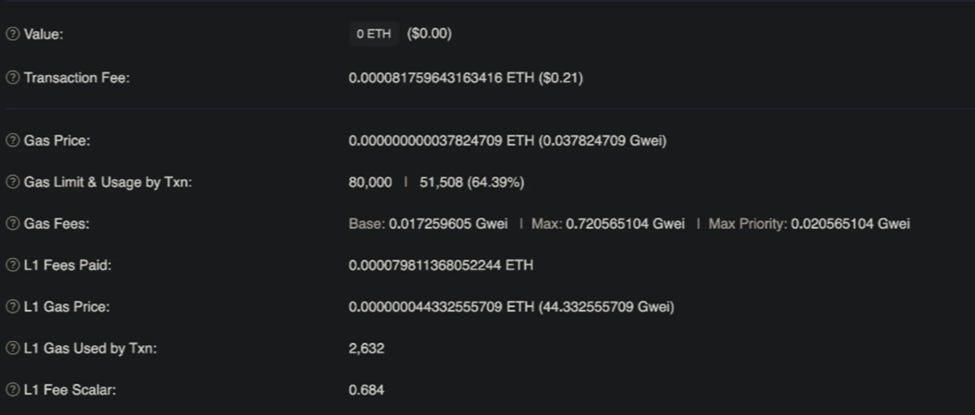
Figure 4: Fee breakdown of a typical transaction on Optimism prior to EIP-4844, source: Biconomy
Beyond base-layer optimizations, L2s are actively pushing further cost reductions—these are the Layer 2 initiatives mentioned at the beginning of the article, broadly falling into two categories: industry-aligned or company-aligned.
Industry-aligned initiatives involve open-sourcing L2 technology stacks (rollup frameworks) to allow new players to build their own chains. While this wave was led by optimistic rollups launching the OP Stack and Arbitrum Orbit, other mature L2s—including Polygon (Polygon CDK), ZK Sync (ZK Stack), and Starkware (Madara Stack)—have also contributed by offering or announcing the open-sourcing of their proprietary technologies to drive mass adoption.
Company-aligned initiatives refer to efforts by these chains to accrue value to their tokens, either through direct revenue/profit-sharing models or indirect ecosystem expansion effects. Examples include Optimism’s Superchain vision, Arbitrum’s Expansion Program, Polygon’s Aggregation Layer, and ZK Sync’s Elastic Chain. While details vary, a common theme is a widespread interconnected network that enhances interoperability and communication across multiple rollups, improves capital efficiency through shared critical infrastructure (like data availability, shared bridges, aggregated proofs—exclusive to ZK chains). This addresses current issues in the Ethereum ecosystem such as fragmented liquidity and poor cross-rollup interoperability. At the same time, these stacks allow individual chains to maintain customization in parameters like block time, withdrawal period, finality, token usage, and gas limits, eliminating public chain drawbacks like high gas costs and latency caused by unrelated application activity.
While these independent ecosystems focus on growth and adoption, we are already seeing more mature players like Optimism and Arbitrum achieving profitability.
Optimism charges participants who wish to join its Superchain either 2.5% of total sequencer revenue or 15% of sequencer profit (i.e., sequencer revenue minus L1 settlement and data availability costs). Arbitrum charges users of its stack launching an L2 a 10% share of sequencer profit. Meanwhile, ZK rollup stacks—including Polygon CDK and ZK Stack—are currently free to use, but may introduce sustainable economic models as they grow and gain traction.
The formal "L2 stack war" is now underway, with major ecosystems competing with unique strategies to attract key projects (see Figure 5). Optimism announced $22 million in grants for Superchain builders and retroactive airdrops based on usage and participation, while ZK Sync offered $22 million to migrate Lens from Polygon to its stack. Arbitrum allows anyone to use its stack for free as long as they launch an L3 chain (an L3 uses an L2 as its settlement layer instead of Ethereum), since it benefits from increased L3 activity, which will eventually pay settlement costs to Arbitrum over the L3's lifecycle.
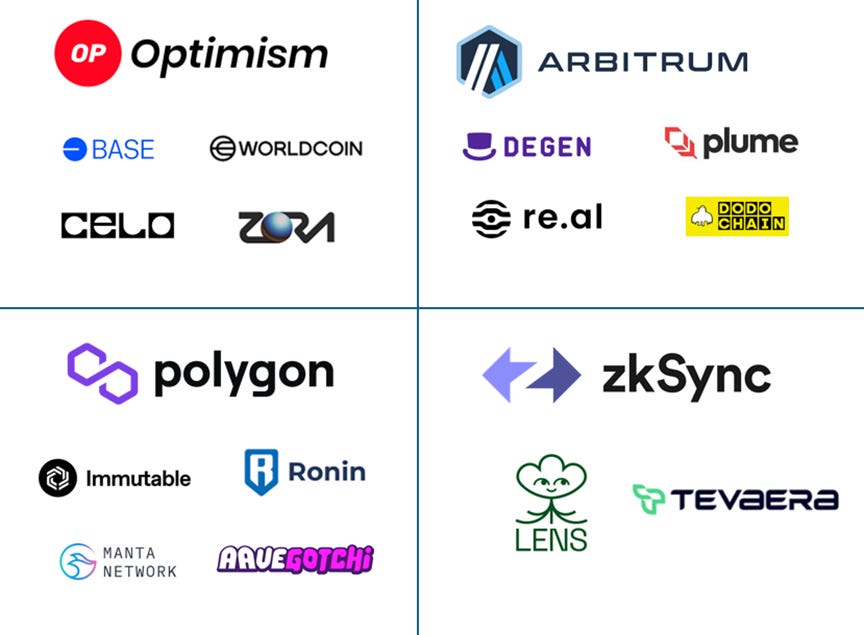
Figure 5: Distribution of projects using L2 stacks across ecosystems
RaaS and alternative settlement and data availability solutions are redefining blockchain cost structures, and future innovations in modular infrastructure are expected to bring further savings.
Despite support from these technology stacks, running a blockchain still requires substantial operational overhead, manpower, expertise, and resources. Developers hoping to attract end-users on-chain are reluctant to be distracted by managing and maintaining chain infrastructure, preferring to focus on core business activities.
This challenge has led to a rapid rise in RaaS (Rollup-as-a-Service) providers who partner with developers to simplify the complexity of chain operations using the mature L2 frameworks/stacks discussed earlier. These providers offer services including node operation, software updates, infrastructure management, and products like sequencing, indexing, and analytics. RaaS providers adopt different strategies in competing for market share—some align with specific L2 ecosystems, while others take a framework-agnostic approach, offering cross-ecosystem integration. Conduit and Nexus Network align with optimistic rollups (e.g., Optimism and Arbitrum), while Truezk, Karnot, and Slush focus on ZK chains. Meanwhile, Caldera, Zeeve, AltLayer, and Gelato offer integrations across both optimistic and ZK rollups.
The typical business model for these providers includes fixed fees and a share of sequencer profits. Monthly subscription fees for running optimistic rollups typically range from $3,000 to $4,000, while ZK rollups—due to the intensive computation required to generate ZK proofs and high verification costs—can double to between $9,500 and $14,000 (see Figure 6 for details). Additionally, a 3–5% share of sequencer profits is commonly charged to align incentives between RaaS providers and rollups, allowing them to benefit economically as these chains grow.
Caldera is exploring a different model: its Metalayer vision charges only a 2% variable share of sequencer profits with no fixed costs, aiming to enable cross-chain interoperability among chains using Caldera across both optimistic and ZK stacks.
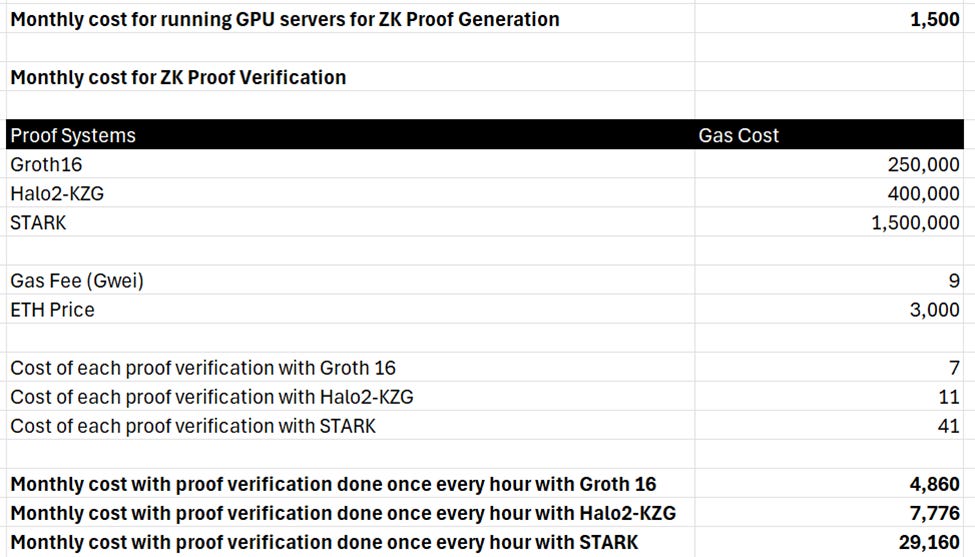
Figure 6: Cost of ZK proof verification, source: Nebra
It should be noted that due to the dynamic nature of the industry and ongoing team efforts—especially in the ZK space—subscription fees for RaaS providers may decrease further. Additionally, due to the lack of strong consumer Web3 businesses, consumer-facing applications may negotiate more favorable economic sharing agreements with infrastructure providers, leading to non-uniform initial pricing across applications.
As previously mentioned, the largest expense for rollups is L1 cost, including fees for data availability and settlement. A standard rollup processing 100 million transactions could incur monthly L1 costs as high as $25,000, making L1 settlement feasible only for the largest or most frequently used chains within the ecosystem. The need for alternative settlement and data availability solutions has driven specialized participants at these layers to optimize cost and performance. For data availability, alternatives to Ethereum include Celestia, Near, and EigenDA, while the mature L2s discussed earlier aim to serve as settlement layers for rollups—effectively functioning as L3s. These participants reduce rollup settlement and data availability costs by several orders of magnitude. Figure 7 roughly illustrates cost savings if rollups publish calldata to Celestia instead of Ethereum. Notably, cost savings grow exponentially with increasing transaction volume.
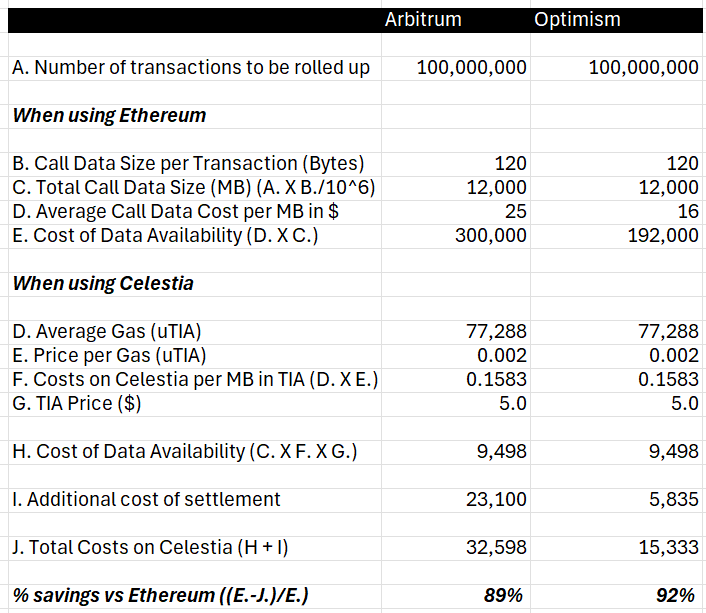
Figure 7: Rollup cost savings using Celestia vs. Ethereum, source: Lenses
In addition to data availability costs, there are extra settlement costs—Celestia posts a pointer to Ethereum to ensure the ordering and integrity of data published on Celestia can be audited.
Within the modular infrastructure stack, the emergence of specialized players in alternative data availability and RaaS is collectively known as the modular infrastructure initiative. Other verticals in this category are also being explored for further cost optimization, including shared sequencing (e.g., Espresso, Astria, Radius) and proof aggregation (e.g., Nebra, Electron). These are currently in early development stages, and costs are expected to continue declining as the industry matures.
Despite significant reductions in on-chain operational costs, Web2 founders must still conduct a thorough cost-benefit analysis before deciding to launch their own chain.
Web2 founders need to carefully evaluate the cost-benefit of launching their own chain, as even with reduced on-chain costs, these expenses may still appear high by Web2 standards. The total cost of running a chain depends on its specific usage requirements, but we can estimate the average monthly cost for an optimistic or ZK rollup handling 2 million transactions using alternative data availability solutions, as shown in Figure 8.
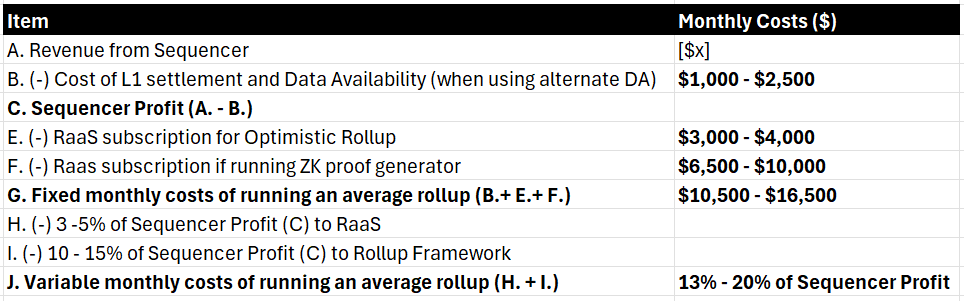
Figure 8: Example cost structure of a rollup
Despite multiple optimizations at the industry and chain levels, monthly funding requirements still include total costs of $10,500–$16,500 for ZK rollups and $4,000–$6,500 for optimistic rollups. Additionally, once the chain becomes profitable, up to 20% of sequencer profits may need to be allocated.
The three major categories of initiatives highlighted in this article are key drivers of industry adoption, with the ultimate goal of closing the gap in cost and convenience between decentralized applications and Web2. For developers, conducting an independent cost-benefit analysis between launching a standalone chain versus building on an existing one—based on end-user needs, product priorities, required performance metrics, and existing market appeal—is critical.
We recognize the need to build solutions that close the cost and performance gap between Web3 and Web2 infrastructures, as societal preference for decentralized systems alone is not yet sufficient to drive widespread Web3 adoption. This challenge remains the primary bottleneck to blockchain mass adoption, and we look forward to meeting founders innovating in this space!
We thank Dr. Ravi from Zeeve, Mayank from Nexus Network, Raghu from Rabble, Rafael from Numia, Apoorv from Karnot, Shumo from Nebra, Garvit from Electron, and Yush from Lysto for generously sharing valuable insights that have been incorporated into this article.
Hashed Emergent may have invested in or may invest in companies mentioned in this article. The content herein is for informational purposes only and should not be construed as investment advice. Please conduct your own research before making any investment decisions.
Join TechFlow official community to stay tuned
Telegram:https://t.me/TechFlowDaily
X (Twitter):https://x.com/TechFlowPost
X (Twitter) EN:https://x.com/BlockFlow_News
 @hashed_official











