Interview with Circle CEO: From Regulation to Innovation, the Digitization of the Dollar is an Inevitable Trend
TechFlow Selected TechFlow Selected
Interview with Circle CEO: From Regulation to Innovation, the Digitization of the Dollar is an Inevitable Trend
Jeremy Allaire shared insights on the regulatory environment for cryptocurrencies and Circle's journey to becoming a public company.
 Navigating Web3 tides with focused insights
Compiled & Translated: TechFlow
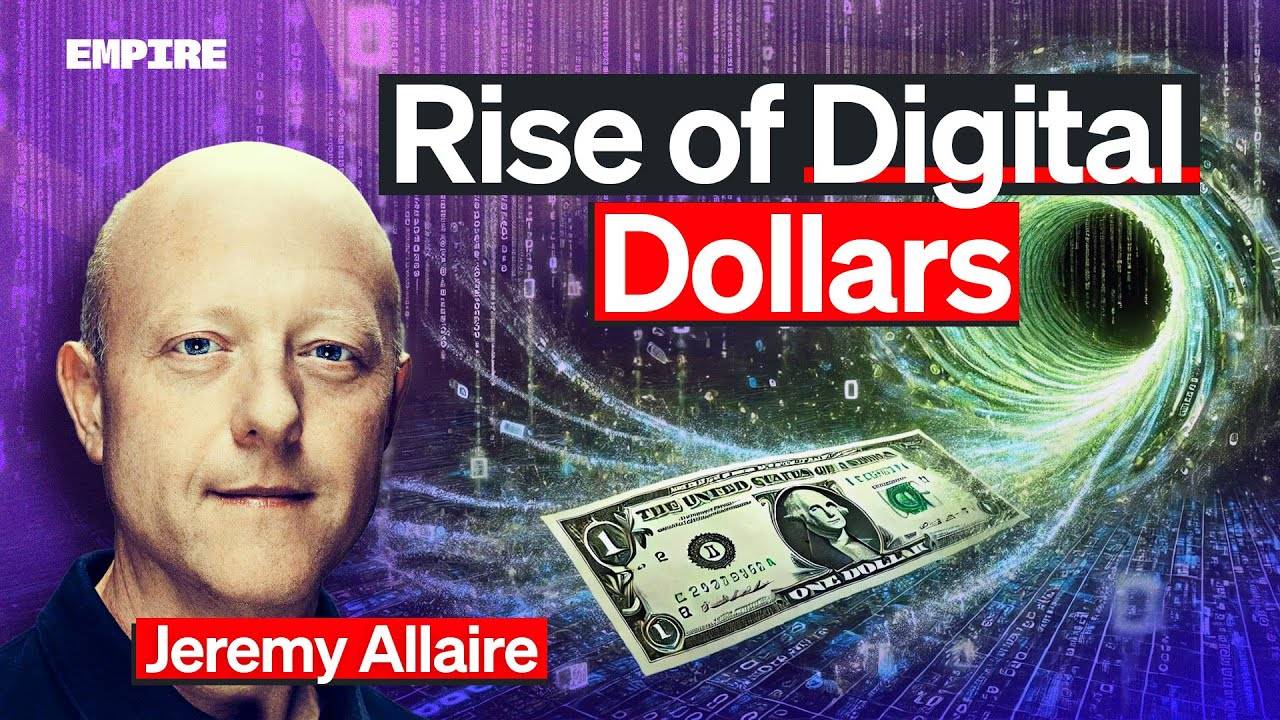
Guest: Jeremy Allaire, CEO of Circle
Hosts: Jason Yanowitz, Co-founder of Blockworks; Santiago R. Santos, Investor
Podcast Source: Empire
Original Title: Why the Dollar's Stablecoin Update is Inevitable | Jeremy Allaire, Circle
Air Date: August 30, 2024
Background
In this podcast episode, Circle CEO Jeremy Allaire discusses the future of money. He explains how stablecoins can transform global finance by accelerating fund transfers and reducing transaction friction. Jeremy shares insights into the regulatory landscape for cryptocurrencies, Circle’s journey toward becoming a public company, and his vision for a more efficient and accessible financial system.
The Architecture of the Dollar System
-
Jeremy Allaire discusses the technical architecture of the U.S. dollar and its impact on the financial system. He notes that different forms of dollar balances represent varying degrees of risk, including credit risk, market risk, and liquidity risk.
-
Jeremy explains that the dollar’s infrastructure primarily consists of a set of Oracle databases running on outdated technologies such as FTP servers and text files. These databases record physical cash (M0), while most money is actually credit created by banks.
Market Size of Legal Electronic Money
-
Jeremy highlights that the legal electronic money market is worth up to $100 trillion across multiple currencies. He analyzes the diverse use cases within this market—retail payments, B2B electronic transactions, and capital markets—all representing massive opportunities. He believes technological advancements will dramatically increase the velocity of money, thereby driving greater economic value creation.
The Future of the Internet and Money
-
Jeremy envisions money natively existing on the internet like other digital information. He imagines a monetary protocol similar to HTTP, enabling seamless transactions over open networks. As these networks scale, he expects the cost of storing and transferring money to approach zero, drastically increasing money velocity. This transformation, he argues, could boost economic activity as profoundly as the internet revolutionized information sharing.
-
Jeremy emphasizes that eliminating friction in value exchange will enhance global economic prosperity. His vision is to foster sustainable economic growth through frictionless transactions, ultimately leading to higher transaction volumes and increased economic value.
Efforts in Stablecoin Regulation
-
Jeremy discusses the current state of stablecoin regulation and regulators’ attitudes. While acknowledging regulators' recognition of stablecoins’ potential, he notes their hesitation stems from concerns about losing control, making them cautious about embracing the technology.
-
Jeremy acknowledges that stablecoin technology still carries uncertainties and operational risks, making regulatory caution somewhat justified.
Technological Evolution and Trust
-
Jeremy draws parallels with the early days of the internet, when large enterprises doubted the security of public networks. Over time, as technology matured and economies of scale emerged, businesses gradually adopted it. Similarly, he stresses that trust in stablecoins and cryptographic technologies takes time to build, requiring continuous improvements to meet market demands.
Crypto as an Innovation Lab
-
Jeremy views the cryptocurrency space as a vast global innovation lab, attracting top technologists and entrepreneurs. He firmly believes open innovation outperforms government-led models in both capability and outcomes. He notes central banks and regulators are actively building stablecoin regulatory frameworks, and by late 2025, stablecoins like USDC may be recognized as legal electronic money regulated by major financial centers.
Future Outlook
-
Jeremy emphasizes that this evolution marks significant progress in financial markets, enabling traditional institutions to leverage stablecoins—an idea once unimaginable. With clearer regulations and advancing technology, he believes stablecoins will play a crucial role in the future.
The Transition from Money to Stablecoins
-
In this section, Jeremy details how stablecoins like USDC operate within existing financial frameworks and how collaboration with governments and financial institutions enables this transition.
Current Operational Framework
-
Jeremy describes how Circle built its business on the U.S. electronic money and payments framework, becoming the first company licensed nationwide. They comply with federal and state e-money transmission laws and hold specific licenses such as New York’s BitLicense. Additionally, they adhere to strict reserve requirements, investing only in safe assets like U.S. Treasuries, overnight repos, and cash.
Global Expansion and Regulatory Collaboration
-
As Circle expands globally, it collaborates with key regulators. For example, in Singapore, the Monetary Authority of Singapore (MAS) oversees Circle to ensure USDC distribution and usage comply with local regulations.
-
Jeremy emphasizes that such regulatory cooperation allows them to establish direct banking infrastructure in Singapore and Hong Kong, enabling market participants to easily mint and redeem USDC within local banking systems.
Regulatory Milestone in Europe
-
A key milestone is Circle becoming the first globally regulated and licensed stablecoin issuer within the European Union. Jeremy notes their euro-backed stablecoin (EURC) is also growing. This development transforms stablecoin oversight and reserve structures. They work closely with lawmakers including the European Commission, European Banking Authority, and Banque de France to implement a dual-issuance model, ensuring USDC interoperability regardless of issuance location.
Capital Requirements for Stablecoins
-
Regarding European reserve rules, Jeremy mentions MiFID imposes specific capital requirements on stablecoins. Current regulations require a 3% capital buffer for reserves serving European users. He also notes the pending U.S. "Payment Stablecoin Act" would empower the Federal Reserve to determine appropriate capital requirements for stablecoin issuers.
Risk Management and Capital Framework
-
Jeremy emphasizes that Circle has collaborated with its chief economist to publish a comprehensive capital and asset management framework tailored for stablecoin risk management. This framework addresses various risks associated with issuance and reserve models—including liquidity, market, and operational risks. He stresses that stablecoin operators must account for specific risks such as multi-chain deployment, network failures, and secure key storage to ensure safety and reliability.
The Endgame for Central Bank Digital Currencies (CBDCs)
Status and Prospects of CBDCs
-
Jeremy observes there appears to be no political will or public demand for a general-purpose CBDC in the United States. While acknowledging CBDCs as a long-term goal, he argues that if the U.S. monetary architecture continues relying on outdated systems—like legacy databases and file transfer protocols—it urgently needs modernization. He hopes to see upgrades at the central bank infrastructure level using cryptography and distributed ledgers to improve efficiency.
Innovation Driven by the Private Sector
-
Jeremy stresses that intermediation and innovation in the economy should be led by the private sector. He believes private-sector innovation moves far faster than public-sector efforts and will drive systemic transformation. Just as the internet made information dissemination fast and free, blockchain technology can make value transfer efficient and low-cost.
The Future of Value Exchange
-
Jeremy predicts that technological advances will enable machine-driven value exchange, where commercial, labor, and financial relationships can be encoded and executed via smart contracts on public blockchains. He sees this breakthrough in economic coordination as the fundamental advancement of blockchain technology.
The Role of Decentralized Finance (DeFi)
-
He notes DeFi is already bringing core elements of traditional financial markets on-chain, paving the way for richer forms of value exchange. He hopes to bring more traditional financial principles—such as time value—on-chain, eventually enabling unsecured lending.
The Prospect of Unsecured Lending
-
Jeremy sees unsecured lending as a major opportunity. He points out the private credit market has grown significantly in recent years and could be realized on-chain. He cites emerging protocols like Maple and Goldfinch as examples. He envisions a model where legally compliant individuals and institutions can intermediate capital supply and borrowing on-chain, creating an efficient marketplace.
Insurance Models and Risk Management
-
On risk management, Jeremy suggests on-chain insurance models could protect participants, especially retail users. He believes insurance can be priced and managed on-chain, forming composable financial products. This would allow users to maintain liquidity while allocating part of their assets to lending, achieving efficient capital utilization.
Evolution of Legal Frameworks
-
Jeremy believes the internet disrupted many legal paradigms—for instance, local broadcast licenses were once mandatory but are no longer required. He hopes the financial industry will demonstrate the advantages of cryptographic technology in efficiency, transparency, and risk management to drive policy evolution toward greater international alignment.
Market Access and Compliance
-
Santi asks about factors that might limit or accelerate this process.
-
Jeremy responds that market and regulatory recognition is needed for financial intermediaries to build products and services on public blockchains. He notes Europe’s MiCA regulation provides a framework for such innovation, but achieving global acceptance remains a challenge.
The Potential of Cryptographic Technology
-
Jeremy stresses the industry must explore better solutions than the current financial system by leveraging cryptographic advantages such as zero-knowledge proofs and cryptographic credentials. He urges innovation in user experience and privacy protection rather than simply complying with existing laws.
Legal Status of Stablecoins
-
He adds that recognizing stablecoins as legal electronic money would allow financial institutions to treat them as valid collateral on balance sheets, usable as working capital in transactions. This is critical for encouraging traditional financial institutions to participate in crypto markets.
The Impact of Transparency on the Financial System
Transparency and Risk Management
-
Santi notes that as more transactions move on-chain, there will be greater visibility into borrowers’ risk profiles. For example, salaries paid via USDC in real-time flows could reduce risk.
-
Jeremy agrees, emphasizing the importance of cryptographic credentials (e.g., KYC verification) for compliance and security. He mentions geographic restrictions can ensure users comply with specific legal frameworks.
The Cost of Opacity
-
Santi points out that opacity in the financial system is often treated as a feature, not a flaw. Some actors benefit from this lack of transparency—through higher interest rates or profit centers. However, this also leads to problems like the global financial crisis, where risks couldn't be accurately assessed due to insufficient transparency.
The Potential of Transparent Systems
-
Jeremy agrees with Santi, noting that players profiting from opacity will face challenges. He believes open internet infrastructure enables massive economies of scale, reshaping industry economics and improving products and services. This shift, he says, will have profound impacts across retail payments, capital markets infrastructure, lending, and asset management.
Industry Restructuring and Innovation
-
Jeremy further notes that many industries are overcrowded, and blockchain and cryptographic technologies will enable more efficient, lower-risk, and higher-value offerings. He draws a parallel with media: while the internet didn’t immediately disrupt media companies in the early 2000s, technological progress later posed existential threats to many traditional firms.
Consolidation and Globalization Trends
-
He predicts finance will undergo a similar consolidation, resulting in fewer but stronger internet-native platforms that are more global. In high-margin areas, increased transparency will drive innovation and competition, delivering better services to users.
The Value of Decentralized Systems
-
Santi acknowledges technology can be centralizing but expresses hope for decentralized infrastructure development.
-
Jeremy expresses strong conviction in distributed and decentralized systems. He finds one of the most exciting aspects of crypto and blockchain is enabling secure peer-to-peer commercial and financial transactions among global economic participants.
Potential of Open-Source Protocols
-
Jeremy advocates for community-governed open-source protocols maintained collectively by stakeholders and continuously improved. He believes such infrastructure can support thousands of different business models. For example, he cites Uniswap as a community-governed protocol where many build and compose their own markets.
Real-World Examples and Innovation
-
Jeremy highlights Zora’s recent launch of a secondary market integrated with Uniswap as a prime example of a foundational decentralized platform others can build upon. He believes such infrastructure enhances system resilience and fosters broader innovation.
Vision for Token Incentives
-
He elaborates on the importance of token incentives in creating broader products and services, combining real-world motivations with on-chain economic coordination. This model could help restructure historically centralized platforms into more decentralized ones.
The App vs. Infrastructure Debate
-
In today’s crypto landscape, debate persists between apps and infrastructure. Jeremy hopes to see decentralized applications using digital tokens and novel coordination mechanisms that create meaningful value at both consumer and enterprise levels. He aligns closely with Chris Dixon’s views and looks forward to more such innovations.
The Impact of Interest Rates
High vs. Low Interest Rates
-
Yano raises a question: in the current rate environment, many believe high rates benefit Circle’s business, but he wants to understand the impact of low rates. He notes low rates could increase money velocity.
-
Jeremy shares his view that lower rates promote better economic policy and benefit the real economy, digital economy, and crypto economy alike.
Ideal Rate Environment
-
Jeremy states a more neutral interest rate environment would be ideal for the USDC platform. Lower rates, he argues, increase liquidity and activity, boosting demand for highly functional digital currency. He emphasizes Circle is building infrastructure to make USDC the world’s most utility-rich currency and encourages developers to build on it.
Liquidity and USDC Growth
-
Jeremy believes rising liquidity and falling rates will strongly accelerate adoption of their stablecoin network. While high rates previously reduced USDC circulation, he observes that as rates stabilize and expectations decline, USDC volume is beginning to grow significantly.
Economic Activity and Stablecoins
-
Santi notes this dynamic could shift dramatically as USDC sees increased use in payments and commerce.
-
Jeremy explains that declining interest rates increase monetary liquidity in the economy, particularly for commercial transactions and settlement needs. He sees a strong correlation between USDC platform capabilities and on-chain commercial and financial activity, influenced by interest rate changes.
Investment and Capital Markets
-
Jeremy adds that capital liquidity in capital markets is a key driver of growth. Many investors seeking returns above 3% are willing to allocate capital to higher-yielding assets, increasing risk appetite and driving USDC adoption. At the same time, lower rates boost monetary liquidity in commercial transactions.
-
Overall, Jeremy underscores the profound impact of interest rate changes on both the broader economy and digital currencies. He believes lower rates enhance liquidity, accelerate USDC adoption and growth, and contribute to overall economic prosperity. As market conditions evolve, Circle will continue building and optimizing its platform accordingly.
Innovative Development of Stablecoins
Challenges of Yield-Bearing Stablecoins
-
Yano mentions recent yield-bearing stablecoins like Mountain Protocol and asks whether Circle considers passing net interest margins to users to gain market dominance.
-
Jeremy responds directly: it’s illegal. He explains that offering yield turns the product into a security. Since Circle is regulated as a payment and electronic money system, it cannot offer such returns.
Impact of Regulatory Environment
-
Jeremy further notes that global stablecoin laws—including Europe’s MiCA and the proposed U.S. Payment Stablecoin Act—classify stablecoins as non-interest-bearing cash and electronic money. He believes this is the right decision. While he hopes users can seamlessly switch between digital cash and yield-bearing products, this must happen within compliant frameworks.
Vision for USDC
-
Jeremy articulates Circle’s vision: to make USDC the best digital cash, the best digital dollar in the world. He wants USDC to become the preferred settlement tool when users seek yield—whether from DeFi, unsecured on-chain lending, or other investments.
Role as Market Infrastructure
-
Jeremy positions Circle as a market-neutral infrastructure provider, focused on building tools that empower developers. He mentions ongoing development of cross-chain transfer protocols and gas abstraction mechanisms to simplify user experience, allowing transactions without needing to understand blockchains or fees.
Investment and Innovation
-
Jeremy adds that Circle Ventures makes small minority equity investments in innovative projects. He emphasizes Circle’s primary goal is enabling other developers to build on its platform.
Outlook on IPO
-
On going public, Jeremy says Circle is highly focused on becoming a globally listed public company. He believes this will enhance transparency, trust, and uphold high standards of governance and ethical responsibility in future growth.
Advice for Entrepreneurs
-
Finally, Jeremy offers advice to entrepreneurs: be willing to make sacrifices, know when to abandon failing initiatives, and stay focused on the core vision. Despite challenges, entrepreneurs should remain committed to their original mission while adapting and evolving.
-
Overall, Jeremy’s perspective emphasizes innovative development of stablecoins within compliant frameworks, Circle’s efforts to bridge digital cash and yield-bearing products, and guidance for entrepreneurs navigating challenges. He believes the future holds more surprises and innovations that will propel the entire crypto ecosystem forward.
Join TechFlow official community to stay tuned
Telegram:https://t.me/TechFlowDaily
X (Twitter):https://x.com/TechFlowPost
X (Twitter) EN:https://x.com/BlockFlow_News
 深潮TechFlow