Bill Qian, from JD.com to Phoenix: A Pioneer of Chinese IPOs in the UAE
TechFlow Selected TechFlow Selected
Bill Qian, from JD.com to Phoenix: A Pioneer of Chinese IPOs in the UAE
Bill Qian, an entrepreneur carrying both the "Bitcoin" and "Middle East" hot tags.
 Navigating Web3 tides with focused insights
By: Z Potentials
In 2023, aside from AI, the hottest topics were undoubtedly "Bitcoin" and the "Middle East." Larry Fink, legendary CEO of the world's largest asset management firm, recently stated in interviews with Fox Business and CNBC that "Bitcoin is digital gold." The Financial Times has observed that amid the global economic shift toward the East, Middle Eastern sovereign wealth funds are accelerating their investments into Asia. These funds are now exploring direct investments in Chinese projects, while an increasing number of companies are rushing into the Middle East to seize new opportunities.
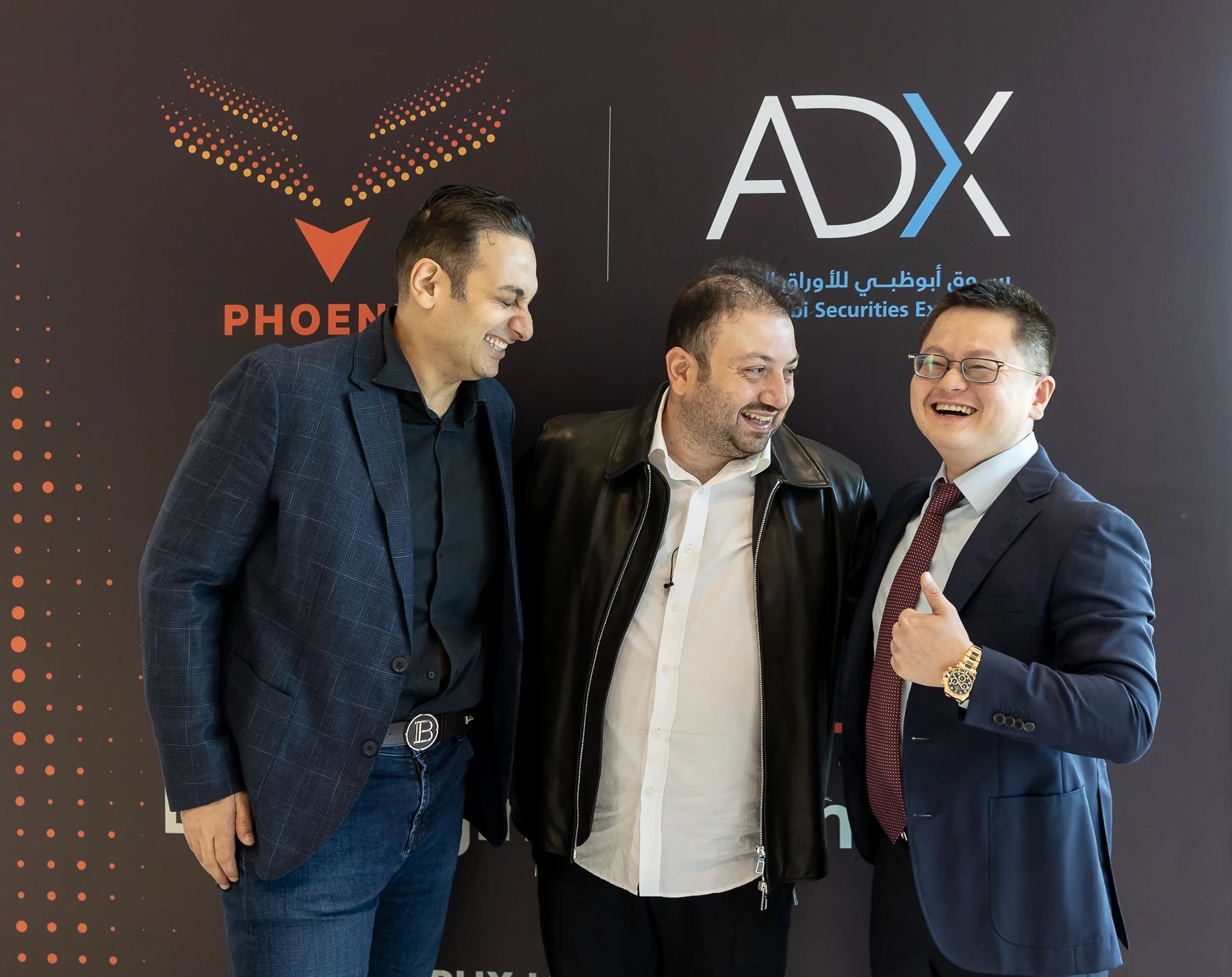
In this edition, we are honored to welcome Bill Qian, partner at Phoenix Group—the largest Web3 platform in the Middle East—and a founder uniquely positioned at the intersection of both "Bitcoin" and the "Middle East" trends. He shared his journey from grassroots employee to manager, from corporate professional to entrepreneur, and from domestic market player to global operator. He also discussed the foundational logic of Web3, his outlook on future markets, and insights into the current Middle East boom.
Guest Profile
Bill Qian, currently based in the UAE, is a partner and Chief Investment Officer (CIO) at Phoenix Group, the only publicly listed Web3 company in the Middle East. He is also the first Chinese national to lead and experience an IPO in the UAE. Backed by sovereign wealth funds, Phoenix’s core business is Phoenix Miner, the world’s largest Bitcoin mining operation, which controls 7% of the global Bitcoin network’s computing power. Bill co-owns and operates a $650 million joint mining facility in Abu Dhabi with ADQ, a major sovereign fund. Additionally, he serves as CIO at M2.com, a regulated cryptocurrency exchange headquartered in Abu Dhabi, and as Chairman/GP of Cypher Capital, a Web3-focused investment fund. Prior to joining Phoenix, Bill was Vice President of Global Investments and Financing at Binance, managing over $20 billion in assets. Before that, he led fintech and technology investments at JD.com and worked in internet sector investing at ZhenFund. Bill is currently also a board member of the TON Foundation, supporting Telegram’s blockchain ecosystem, which boasts up to 800 million active users.
01 Steady Progress: From Institutional Analyst to Global Team Leader, Maintaining Founder Mentality
ZP: Could you briefly introduce yourself and walk us through your career journey—your mindset shifts along the way, and how each stage contributed to your growth?
Bill Qian: My career path wasn’t the typical one from elite university to investment bank, consulting firm, big tech, or dollar-denominated fund. After graduation, I spent two years working at a state-owned enterprise and even attempted the civil service exam—which I failed. Eventually, I realized I wanted to pursue finance, so I went to Singapore for a master’s degree. After graduation, I joined ZhenFund, a U.S.-dollar fund, then moved to JD.com. I caught the tail end of China’s mobile internet wave, staying until regulatory tightening began around 2020, after which I transitioned from FinTech 1.0 to FinTech 2.0—Web3. At Binance, I completed my industry transformation—from a Web2 investor to a Web3 investor. Since I managed global fundraising and investments there, it effectively transformed me from a China-focused operator into a global team leader, investing across international markets. At the time, Binance was valued between $20–30 billion, and serving as head of投融资 made this a significant milestone in my career. Later, joining Phoenix allowed me to transition not only from being Web3-focused but also from being Asia-based to Middle East-based, taking on roles as Group CIO and fund manager at Cypher Capital.
In terms of mindset evolution, I’d say I’m someone who can endure long periods without dramatic change. If time were bullets or capital, I’d be the type who holds concentrated positions and rarely switches. I spent nearly a decade doing Web2 investments in China, and during that period, I went through an uncomfortable transition phase where I constantly had to search for direction. One thing I feel lucky about is having greater awareness than most around me. As early as 2020, I sensed that China’s Web2 golden era was ending, so I spent the entire year reflecting on what to do next.
I approached it using a two-axis framework: where to go, and which industry to enter. These two decisions define the most important source of investment beta. After reflection, I chose “globalization” and “Web3.” In terms of growth: at ZhenFund, I received foundational training; at JD, I learned how large-scale operations work and became a manager; at Binance, I started leading international teams within an Asian-rooted global company; and at Phoenix, I am now fully immersed in overseas markets—as both a manager and a founder.
ZP: As the head of Cypher Capital, Phoenix’s ecosystem investment arm, what changes have you experienced in required capabilities and mindset when moving from investor to fund operator?
Bill Qian: Unlike Baototal in the TV drama *Blossoms Shanghai*, whose growth was explosive, mine hasn’t been particularly dramatic. I don’t recall any sudden epiphanies or breakthrough moments—my progress has been cumulative, like rolling snowballs. From analyst to independently leading deals, from leading deals to managing investment teams, and eventually participating in corporate strategy and transformation—this progression happened at ZhenFund and JD. Then, I extracted all those skills from Web2 and applied them to Web3, transitioning from managing Chinese-speaking teams to English-speaking ones, and from focusing on Greater China and Asian deals to global deals—at Binance. Finally, at Phoenix, I shifted from managing an international team with an Asian base to leading a truly diverse team composed of white Americans, Arabs, Iranians, Indians, and Russians, operating a purely international fund. So every step built upon the last. But reaching each new stage always brings fresh challenges—and new growth.
ZP: Has your thinking evolved accordingly?
Bill Qian: The first 7–10 years were about “doing things,” the second 7–10 years about “doing things through people,” and the third decade will be about “using people to get things done.” Often, the challenges and business areas exceed your own capabilities. To expand your boundaries, you either step forward yourself—or enable your team to do so.
ZP: You mentioned your philosophy is “I am an entrepreneur who happens to be an investor.” Why define yourself this way? What entrepreneurial traits do you possess?
Bill Qian: Founder mentality is fundamentally a mindset—one that resists conformity, embraces challenges, and creates new things. From this perspective, whether you’re a builder in traditional industries, the founder of an investment fund, or even a ruler like Dubai’s sheikh, ultimately you need founder mentality. Since 2015, I’ve never been just a pure financial investor. Investing has always been part of my life and work, but I often participate directly in organizational building and launching new ventures. Today, my time is roughly split: one-third at Phoenix Group and M2, one-third managing Cypher Capital, and one-third incubating new businesses. Throughout this process, the most important thing I’ve learned is helping the platform achieve effective resource allocation—efficient use of capital, talent, and especially time and attention in strategic decision-making.
ZP: What did you expect from yourself ten years ago? Have you achieved those goals? Looking ahead today, what kind of person do you hope to become in another ten years?
Bill Qian: Ten years ago, I hoped to one day become a fund partner or head of corporate development at a major internet company. Looking back, I’ve actually surpassed those expectations. Those old goals are now just milestones in my past. Many aspects of my current situation were beyond my imagination. For example, I never thought I’d live abroad long-term. I used to assume the next 20–30 years would involve betting heavily (“going long”) on China’s domestic tech market—a very simple mindset. Looking back, that reflects a common cognitive bias: people tend to draw linear growth curves. But the past 36 months have taught me that living in the present, being resilient and adaptive, matters deeply.
At the same time, I believe we should lower our expectations for the future. Just because the outcomes of the past decade exceeded expectations doesn’t mean I should set higher targets for the next ten years. I agree with Charlie Munger’s advice that “young people must lower their expectations.” So I don’t have specific expectations for the next decade. Life has seasons—everyone experiences ups and downs. I aim to stay grounded, grateful, and make the most of each day.
ZP: Any words of advice for young people today?
Bill Qian: In favorable times, don’t slack off; in adversity, don’t give up. Even in tough times, keep doing your job well every day. Remember: a gentleman carries his tools with him, waiting for the right moment. When your chance finally comes, don’t hesitate. Most people won’t win the lottery every day—many may never win at all. But you still have to live a meaningful life. Occasionally, you might receive help from a mentor or encounter a rare opportunity. When that moment arrives, act decisively. That, I believe, is a balanced yet bold way to live.
02 “Web3 Is Innovation in Factor Distribution; AI Is Innovation in Productivity”
ZP: Could you give us a brief introduction to Phoenix in the Web3 space?
Bill Qian: Our main businesses include the world’s largest Bitcoin mining operation, a regulated exchange based in Abu Dhabi, and we’re also entering new internet domains through business incubation. We’re currently listed on the Abu Dhabi stock exchange with a market cap of nearly $4 billion, making us one of only three tech stocks traded there.
ZP: How does Cypher Capital, as a Web3 fund, differ from traditional equity investment funds?
Bill Qian: A key difference lies in investment horizon. In VC, a Web3 project typically exits within 36 months. Secondly, funding needs are smaller. Projects usually raise only millions to tens of millions of dollars before going public, so Web3 VCs don’t require massive fund sizes. Moreover, many strong founders can raise directly from their user base, leaving even less room for institutional investors.
ZP: Among your portfolio companies, which investment are you most proud of? What was your original thesis?
Bill Qian: The first project I invested in at Binance was LayerZero—an infrastructure play in Web3. It had a $50 million valuation then; today, less than two years later, it’s worth $3 billion. At Cypher, in 2022, we were the only Middle Eastern investor in Sui, which has since delivered over fivefold returns and now has a $19 billion market cap. Both are infrastructure projects. I believe we’re still in the early days—like the internet in the 1990s—where most opportunities lie in building foundational layers. “First build airports (infrastructure), then manufacture airplanes (applications).”
ZP: How do you view Web3’s long-term value? What’s the underlying logic?
Bill Qian: First, I see Web3 as innovation in factor distribution, not productivity innovation. It shouldn’t be judged purely by efficiency metrics. Factor distribution innovation is akin to how socialist public ownership emerged alongside capitalist models. Productivity innovation is like the steam engine revolution. Web3 should be understood through the lens of factor distribution: Bitcoin becomes digital gold that anyone can self-custody—transforming gold itself. Ethereum, as a planetary computer, allows everyone contributing to its network to earn tokens and share in its rewards. That’s factor distribution innovation. Any form of productivity can eventually integrate with such innovations. Ethereum, as a decentralized computing platform, reimagines how centralized cloud resources (like AWS) distribute value.
Traditional corporate structures follow fixed paradigms: a company’s ownership belongs to shareholders, who provide services to users and capture surplus value, which ultimately flows back as profit to shareholders. This model dates back to 1600s Holland—the first IPOs involved private fundraising, followed by public offerings, then delivering services to users. Another paradigm: no matter how large a company grows, especially in modern times, it cannot issue its own currency—only sovereign states can do so (though historically, even companies like the East India Company once issued money).
With Web3, the private sector can now issue currencies—that’s a paradigm shift. Building a business now allows users, builders, and investors to become one unified entity. Previously, these roles were separate. On Ethereum, users holding ETH are also investors. Developers or node operators contributing to the network earn rewards and simultaneously use the system—making them users, builders, and investors all at once. With Microsoft, using Office365 doesn’t make you a shareholder—you’d need to buy stock separately. But with Ethereum, simply using it makes you a stakeholder.
ZP: How do you understand the frequently mentioned bull and bear cycles in Web3? What drives these cycles?
Bill Qian: Web2 transformed information industries—the first innovation was the digital newspaper, like Yahoo. Web3 transforms ownership and distribution models. Its first innovation was digital gold (Bitcoin), followed by a crowdsourced planetary computer with native currency (Ethereum). This naturally attracts speculators and bubbles, because Web3 assets inherently carry financial attributes. As assets, they experience seasonal cycles—spring, summer, autumn, winter. Since 2009, Web3 has seen four-year micro-cycles, increasingly intertwined with broader global economic trends. That’s why discussions around Web3 inevitably center on bull/bear markets and price movements.
If we treat Web3 as an economy, it has a population base—how many Web3 users exist globally (demand side)—and a supply side: the emergence of new offerings. Early on, countless worthless “shitcoins” competed for dominance as digital gold. In 2014, a new category emerged: crowdsourced planetary computers like Ethereum and Polkadot, vying to become the dominant Worldwide Computer. Later came gaming, expanding supply categories. Supply-side assets themselves are influenced by market sentiment, creating cyclical booms and busts.
In the long run, I believe this industry will continue evolving. Because of its financial nature, it has cycles; because of its growth potential, it remains a growth sector—a “small cycles, big growth” industry. That’s why people say Web3 cycles every four years, yet each cycle sees Bitcoin reach new highs. Now, people are debating when Bitcoin’s total market cap could match gold’s $14 trillion. Larry Fink of BlackRock said “Bitcoin is digital gold.” Gold didn’t start out as “gold”—it took 5,000 years to achieve consensus. Thanks to the internet and globalization, Bitcoin’s consensus formation will be much faster.
ZP: What new technologies or innovations do you foresee emerging in Web3 in the coming years?
Bill Qian: New technologies will certainly emerge. For instance, Ethereum as a planetary computer continues to face challenges improving transactions per second (TPS). But solving this isn’t about matching AWS or Microsoft in raw performance. Rather, incremental improvements address weaknesses, allowing factor distribution innovation to better stimulate every participant in the ecosystem. Thus, Web3’s technological innovation exists primarily to overcome internal challenges arising from its novel economic model—and thereby amplify its unique advantages.
Moreover, I believe nearly any consumer-facing product globally can eventually be tokenized. Larry Fink suggested even global mutual funds could be tokenized—meaning all capital flows could occur on-chain. Ethereum could tokenize global cloud computing resources.
03 Go Global: Seizing Opportunities in the Middle East
ZP: How did your connection with the Middle East begin? What was your biggest motivation?
Bill Qian: Moving to the Middle East felt inevitable. At the time, I was Binance’s only senior executive still based in China. Personally, I was ready for globalization. Professionally, it aligned with company needs. Plus, starting fresh in a new region presented exciting opportunities.
ZP: What has been the biggest change in the Middle East over the past few years? Why is everyone rushing there now?
Bill Qian: Two reasons: capital and market. The deepest pockets globally remain in the U.S.—Blackstone manages ~$1 trillion, BlackRock ~$10 trillion. But the Middle East hosts some of the world’s most centralized, fast-decision-making pools of capital—mainly UAE, Saudi Arabia, Qatar, and Kuwait.
Second, market access. As growth slows in China and opportunity costs decline, entrepreneurs notice a regional market of hundreds of millions with solid per capita GDP—worth pursuing. Whether B2B tech procurement or B2C goods, the Middle East remains relatively open to Chinese products. So here, you find both capital and market.
ZP: Many Chinese internet companies have made solid progress in the Middle East. What lessons can others learn?
Bill Qian: Huawei has operated here for over a decade, with a MINA (Middle East, North Africa, Central Asia) regional HQ in Dubai employing thousands. On the consumer side, TikTok, Shein, and Yalla have succeeded. Key success factors: the product must be strong—proven successful in its home market—and international expansion requires determination and focus.
ZP: How can China leverage its strengths to drive tech transfer into the Middle East?
Bill Qian: Two key advantages: manufacturing (secondary industry) and digital economy know-how. Every country has its comparative advantage. Filipinos speak English well and offer low-cost labor—dominating the domestic helper market. Indians and Pakistanis combine cost efficiency with high employee compliance, occupying roles from taxi drivers to junior staff and mid-level managers.
ZP: What advice do you have for young entrepreneurs looking to succeed in the Middle East?
Bill Qian: From a capital perspective, the Middle East is a “dumbbell” market: one end consists of numerous high-net-worth individuals and family offices; the other, sovereign wealth funds. Family offices lack institutional sophistication, and sovereign funds—numbering around ten—are focused on large, established enterprises. There’s no robust mid-tier investment market. In contrast, the U.S. offers family offices, professional GPs, and endowment funds, creating a more balanced ecosystem.
From a market perspective, as domestic opportunities shrink due to slowing growth, the Middle East becomes increasingly attractive. Offering top-tier products with strong localization means facing less intense competition than in China.
ZP: Can you share someone you deeply admire?
Bill Qian: Lee Kuan Yew. Starting without strong advantages, he used visionary leadership to elevate his nation to global prominence. From an entrepreneurial standpoint, he exemplifies an exceptional founder.
ZP: What channels do you typically use to motivate yourself and keep learning?
Bill Qian: Motivation varies by individual. For Charlie Munger, immense satisfaction comes from accumulating knowledge and wisdom—he says you should go to bed smarter than when you woke up. I resonate with that. Gaining insight and understanding gives me deep fulfillment—it’s an intrinsic, non-monetary driver that sustains long-term momentum. Continuous learning depends on context: some years are for reading widely, others for traveling and experiencing the world—it depends on circumstances and timing.
Join TechFlow official community to stay tuned
Telegram:https://t.me/TechFlowDaily
X (Twitter):https://x.com/TechFlowPost
X (Twitter) EN:https://x.com/BlockFlow_News