Brand refresh backfires, MakerDAO to launch USDS and SKY with freeze function revealing expansion ambitions
TechFlow Selected TechFlow Selected
Brand refresh backfires, MakerDAO to launch USDS and SKY with freeze function revealing expansion ambitions
But this transformation has plunged MakerDAO into a controversy over regulatory compliance and decentralization.
 Navigating Web3 tides with focused insights
By Nancy, PANews
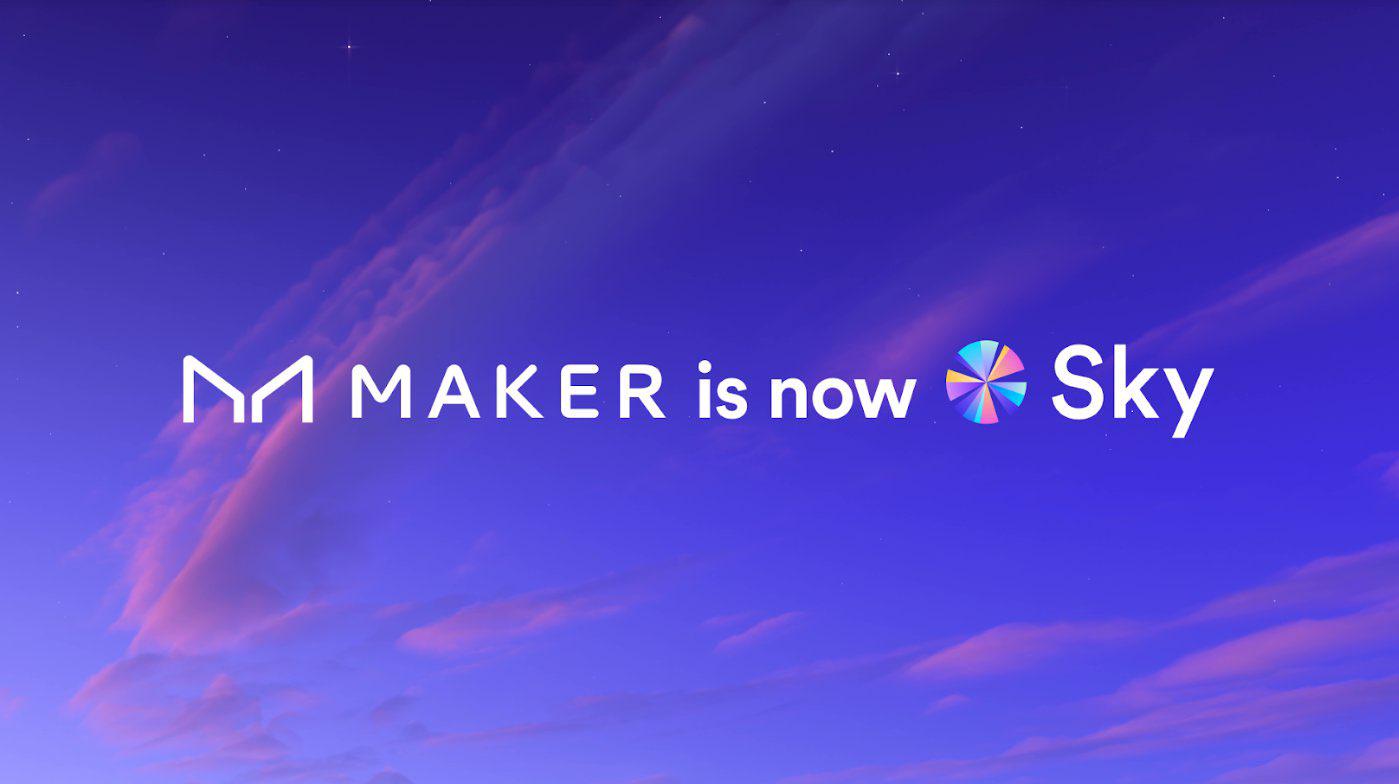
After two years, the veteran DeFi project MakerDAO has finally upgraded to a new phase as originally outlined in its Endgame plan. On August 27, MakerDAO announced it is rebranding as Sky Protocol and will launch a new stablecoin USDS and governance token SKY. While brand rebrandings among DeFi protocols are not uncommon—PANews previously covered 15 Web3 projects that changed names—MakerDAO’s transformation has drawn controversy over regulatory compliance versus decentralization.
Rebranded as Sky, Token Upgrade to Be Deployed on September 18
MakerDAO officially announced its rebranding to Sky, aiming to democratize DeFi and simplify user experience. As part of the upgrade, Sky will launch the new stablecoin USDS and governance token SKY on September 18. The existing DAI stablecoin and MKR governance token will continue to exist, with users having the option to voluntarily upgrade their tokens.
According to the exchange rules, DAI can be converted to USDS at a 1:1 ratio, while each MKR token can be exchanged for 24,000 SKY tokens. Governance token SKY will distribute rewards annually at a rate of 600 million SKY tokens to participants holding USDS. Additionally, Sky is offering a double "early bird" reward campaign: until September 18, users who provide USDS through the Sky Token Rewards module on the new platform Sky.money will receive double rewards.
Meanwhile, MakerDAO has launched a new DeFi application and website, Sky.money (maintained by independent entity Skybase, owned by a company linked to MakerDAO co-founder Rune), offering key functions of the Sky protocol. It also introduced a cross-chain solution called Skylink to support migration of Sky ecosystem tokens such as USDS and SKY to major Layer 2 networks.
In addition, MakerDAO's SubDAO has been renamed Sky Stars, with the first being Spark, a lending platform built on Sky focused on delivering high-quality, user-friendly DeFi products. MakerDAO co-founder Rune Christensen stated that Stars have real users and value-generating capabilities, which can truly foster innovation and creativity.
Regarding this upgrade, Rune said, “This rebranding marks a step toward embracing the ‘next evolution of DeFi.’ Rebranding does not alter the core essence of MakerDAO or DAI; instead, it makes the protocol’s governance mechanism immutable and fully decentralized.”
According to the official website, only about 1,550 users have completed the token migration via Sky’s migration tool so far. CoinGecko data shows that over the past 24 hours, the price of Maker’s MKR token dropped by 7.6%. Although this was partly influenced by broader market declines, MakerDAO’s significant product update did not provide any positive impact on its token price.
Freeze Feature Sparks Controversy, DAI Struggles Amid Stagnant Growth
However, community reactions to MakerDAO’s upgrade have been mixed. On one hand, given MakerDAO’s strong reputation within the DeFi community, the rebranding is seen by some as damaging to its brand equity. Furthermore, the team failed to properly manage the original X account, allowing another party to register it—posing potential phishing risks.
On the other hand, Sam MacPherson, CEO of Phoenix Labs and Spark Protocol (who later deleted the post), revealed that after upgrading to USDS, DAI would introduce a freeze function similar to centralized stablecoins like USDT and USDC.
At the same time, Sky’s official website appears to block access from certain regions at the frontend and prohibits login via VPN. Compared to DAI’s previous censorship resistance, this change is viewed by the community as violating the foundational principles of DeFi decentralization—the gate of decentralized stablecoins has seemingly fallen.
In response, Rune clarified on Twitter that USDS will not initially include a freeze function. Such features would only be implemented later through governance decisions based on comprehensive data analysis, aiming to mitigate risks as much as possible. He emphasized that the upgrade is optional: DAI will continue operating normally, and only USDS may eventually have freeze capabilities. In other words, DAI and USDC will coexist.
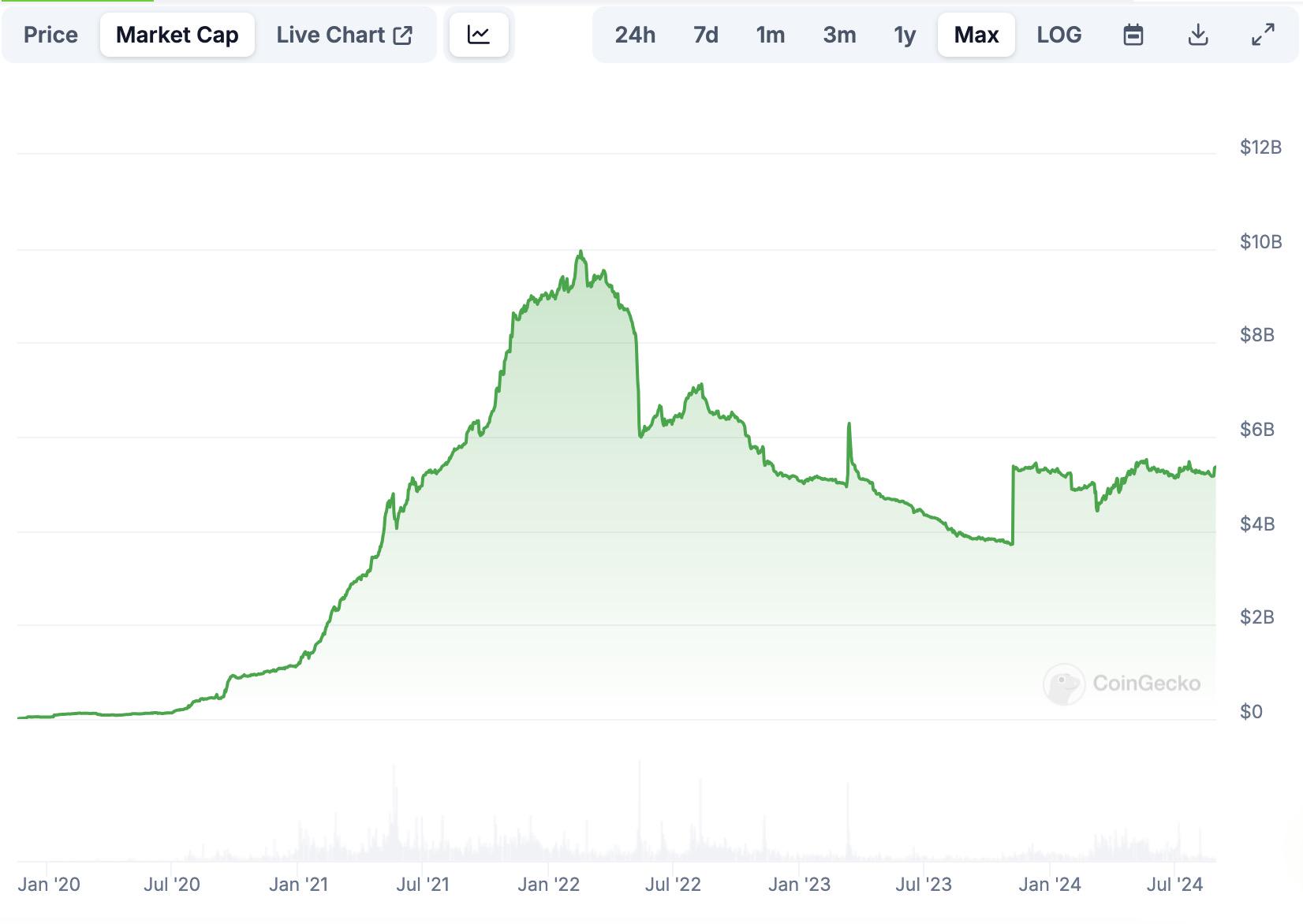
In reality, according to CoinGecko data, DAI’s market cap peaked at $9.87 billion in February 2022 and has since declined continuously, falling more than 45.5% to date. Despite ranking third in stablecoin market cap, DAI’s size is only 4.5% of the leading USDT and 15.5% of second-place USDC. In terms of growth momentum, as of August 28, DAI’s market cap had decreased by approximately 2.1% since the beginning of the year, whereas USDT’s market cap expanded by 28.7% during the same period, and USDC grew nearly 40.3%.
Indeed, not just DAI but the entire category of decentralized stablecoins faces growth challenges, primarily due to lack of regulatory clarity preventing mainstream institutional adoption and limiting use cases. In contrast, centralized stablecoins have experienced substantial market expansion and rapid growth. Data from DeFiLlama shows that as of August 28, just USDT and USDC together captured over 89.7% of the stablecoin market share.
The upgrade of DAI into USDS signals that it will now compete directly with centralized stablecoins. For MakerDAO, this transformation is understandable—especially considering that after achieving notable growth during the previous bull cycle driven by rising U.S. Treasury yields amid interest rate hikes, MakerDAO now faces potential revenue challenges amid the current trend of monetary easing.
Join TechFlow official community to stay tuned
Telegram:https://t.me/TechFlowDaily
X (Twitter):https://x.com/TechFlowPost
X (Twitter) EN:https://x.com/BlockFlow_News
 PANews