








Data Reading L2: Daily Transaction Volume Hits Record High of 16 Million, ARB Still Holds Largest Share
TechFlow Selected TechFlow Selected
Data Reading L2: Daily Transaction Volume Hits Record High of 16 Million, ARB Still Holds Largest Share
Layer 2 transaction volume increased by over 350% year-on-year.
 Navigating Web3 tides with focused insights
Author: OurNetwork
Translation: TechFlow
Layer 2s
Arbitrum | Base | Blast | Starknet

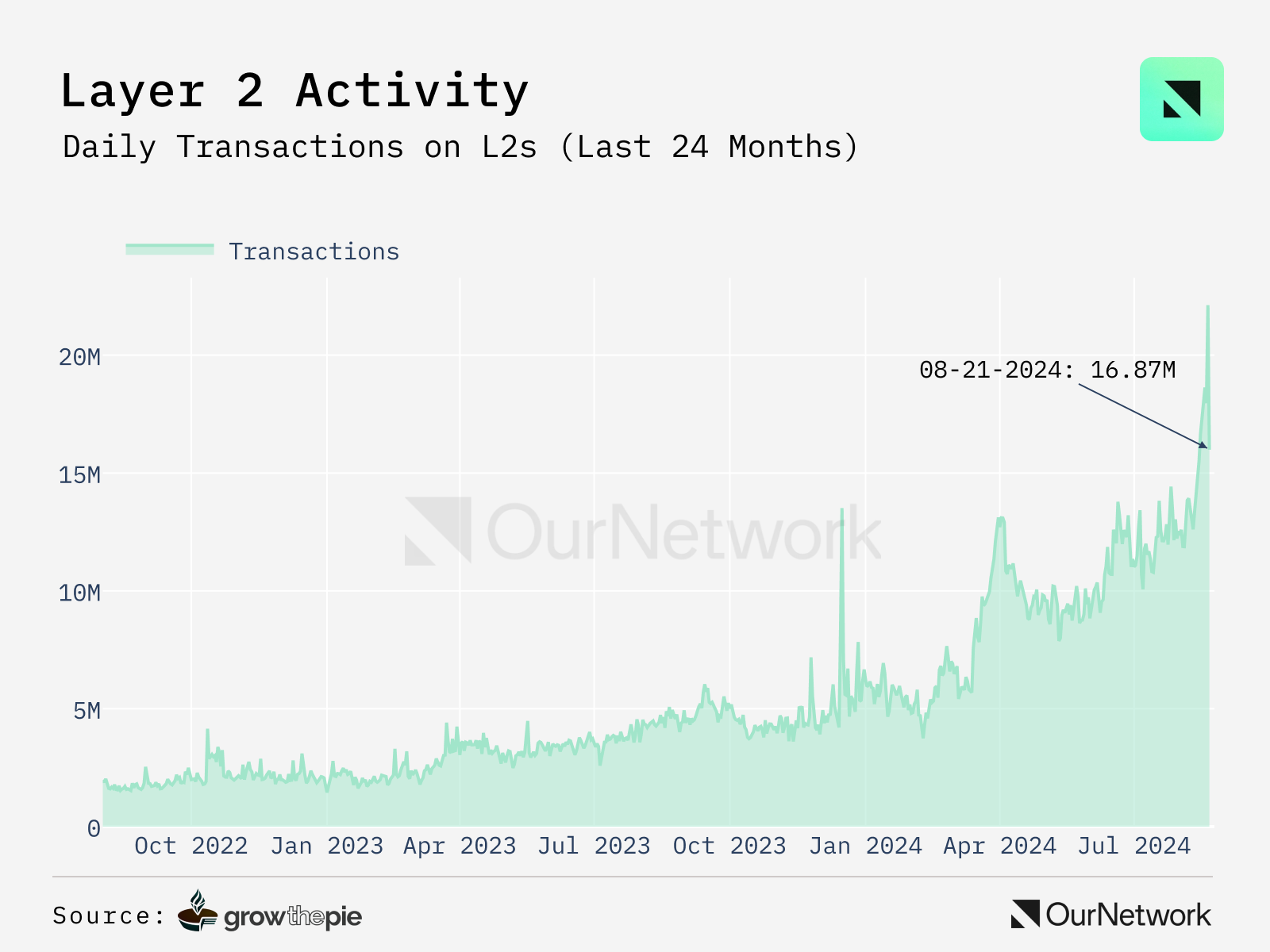
Layer 2 transaction volume up over 350% year-on-year, reaching ~16.87 million daily transactions
-
growthepie provides curated insights on Layer 2s. Since inception, L2s have shown remarkable growth—daily transaction volume hit a record high of ~16.87 million in August.
-
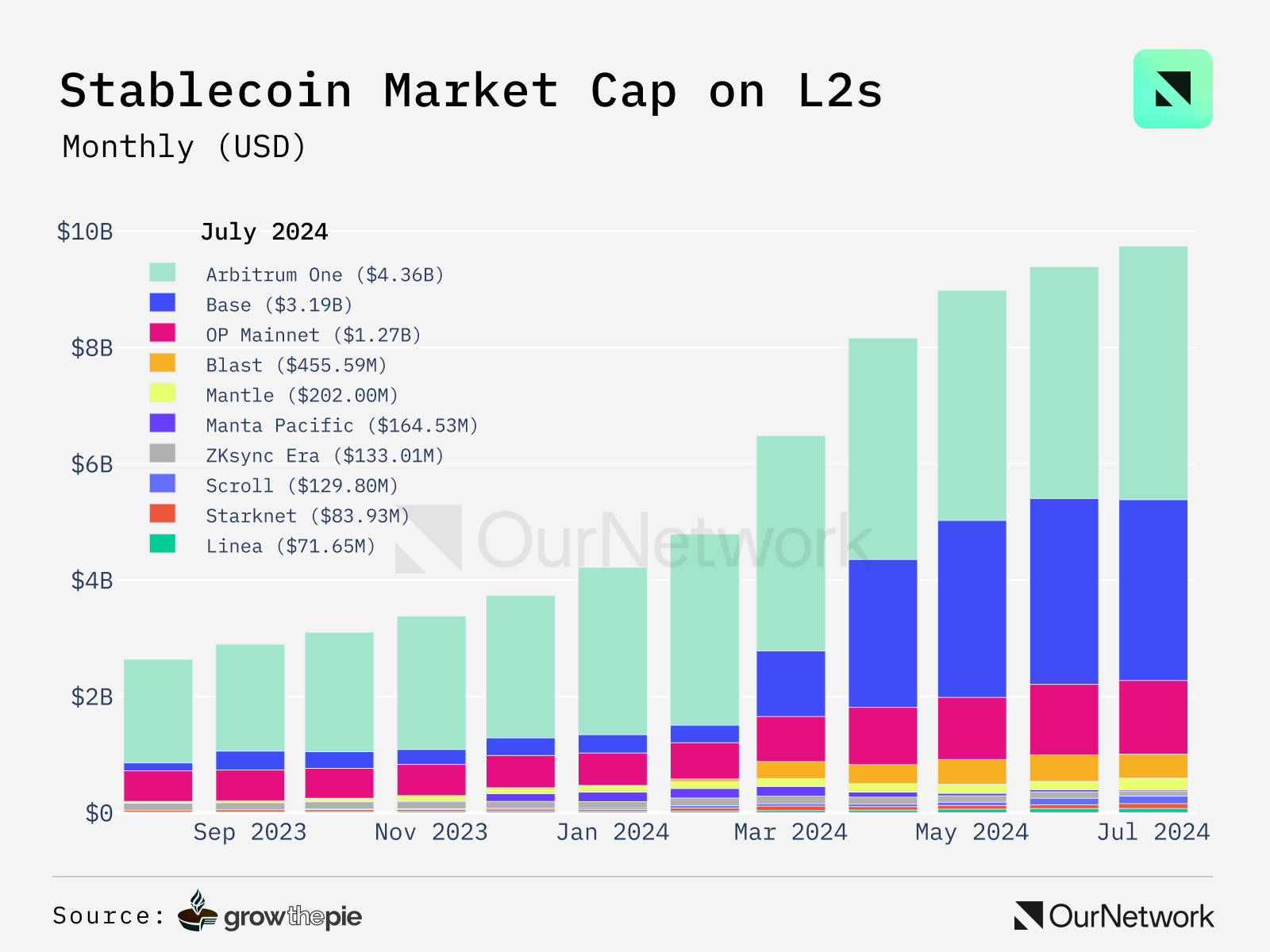
The stablecoin market cap on L2s is also rising—now nearing $10 billion. For reference, this equals ~12.5% of Ethereum’s stablecoin supply or ~5.7% of the entire stablecoin market. Over 75% of L2 stablecoins are on Arbitrum One or Base—with Arbitrum One alone accounting for ~45% of all L2 stablecoins, the largest share.
-
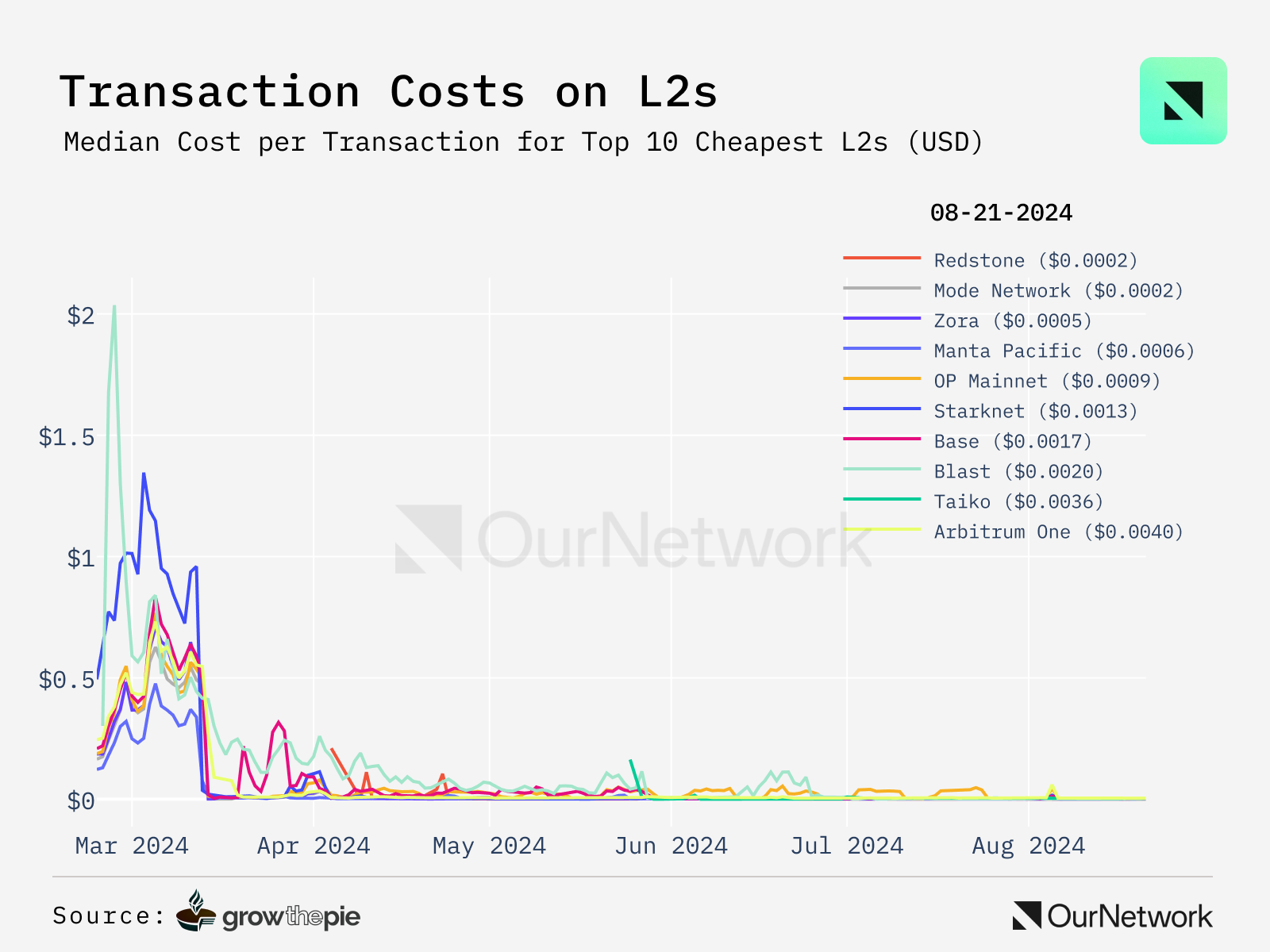
Transaction costs across most L2s have now dropped below a cent—among the 16 chains tracked by growthepie, only two have median transaction costs above one cent. These costs can fluctuate. Over the past 30 days, Polygon zkEVM had the highest daily median cost at $0.124.
-
Transaction-level analysis: Using growthepie's labels page, we see that the contract address with the most transactions over the past 7 days was tagged as WETH9 and located on Taiko, an L2. This address has over 6.5 million transactions, more than half of Taiko’s total activity during that period. It is likely being used by airdrop farmers.
1. Arbitrum
Sbhn_NP & Sam Friedman | Website | Dashboard
Arbitrum continues to expand its liquidity layer, currently holding approximately 41% of total L2 TVL on Arbitrum One and about 51% of bridged ETH across chains.
-
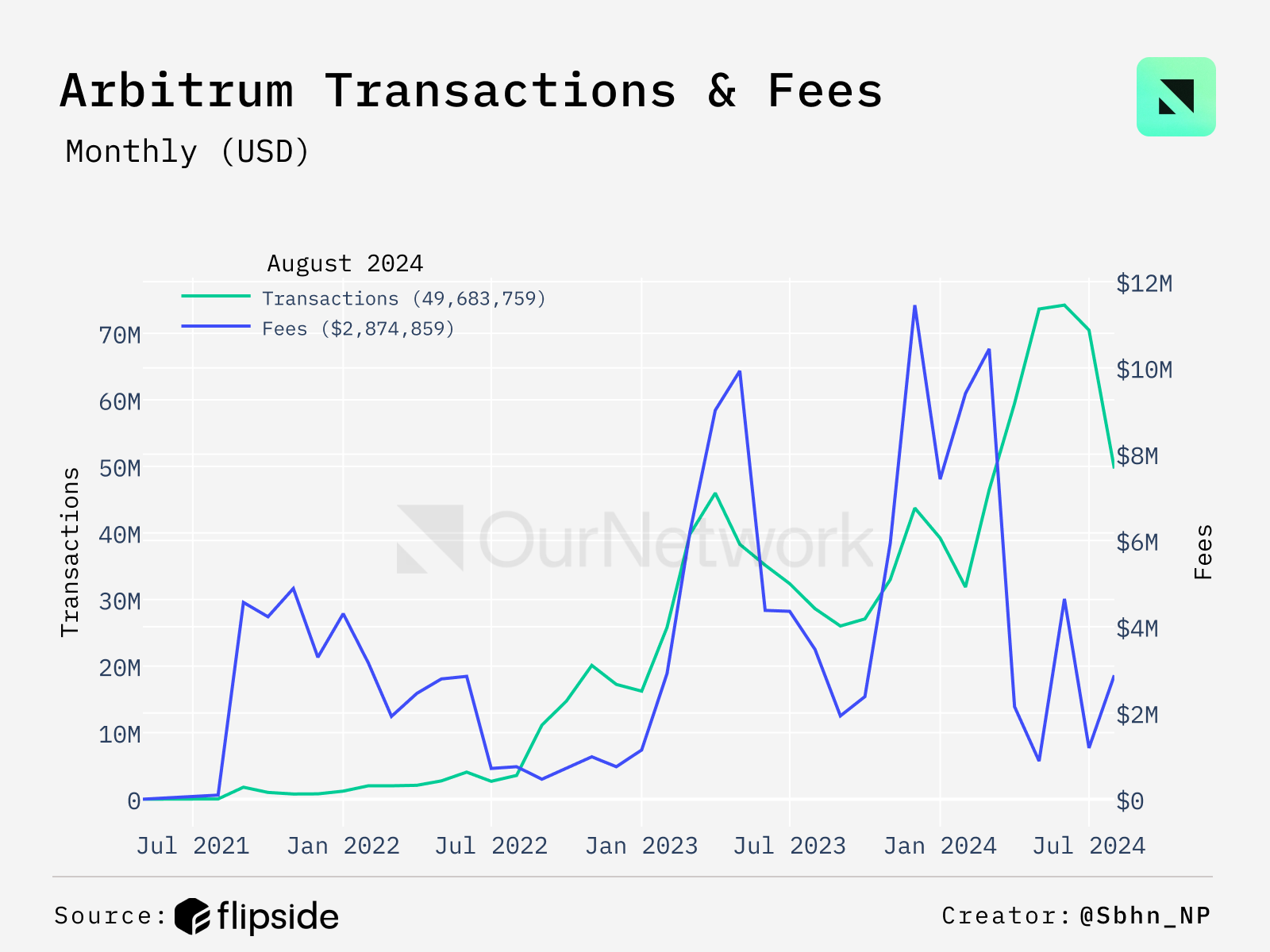
Recent data shows transaction volume nearly doubling over recent months (May, June, and July), while user-paid fees have significantly decreased. Arbitrum has successfully reduced transaction fees over the last few months, dropping over 80% since Q1 2024.
-
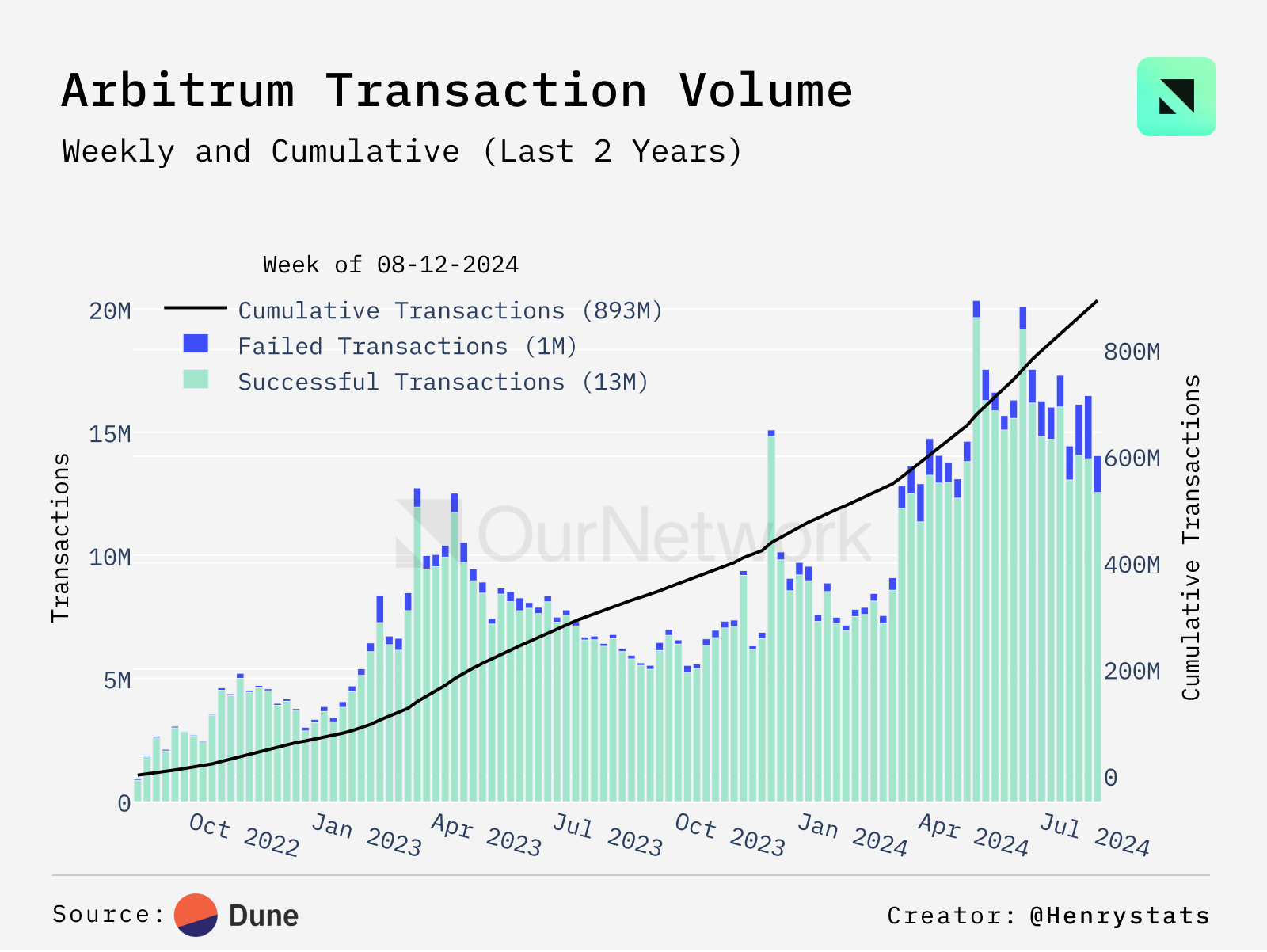
Arbitrum's popularity appears to be rising since Q1 2024. Transaction volume surged, with May and June being the most active months. Additionally, they recorded more failed transactions than ever before, which is understandable given increased transaction volume.
-
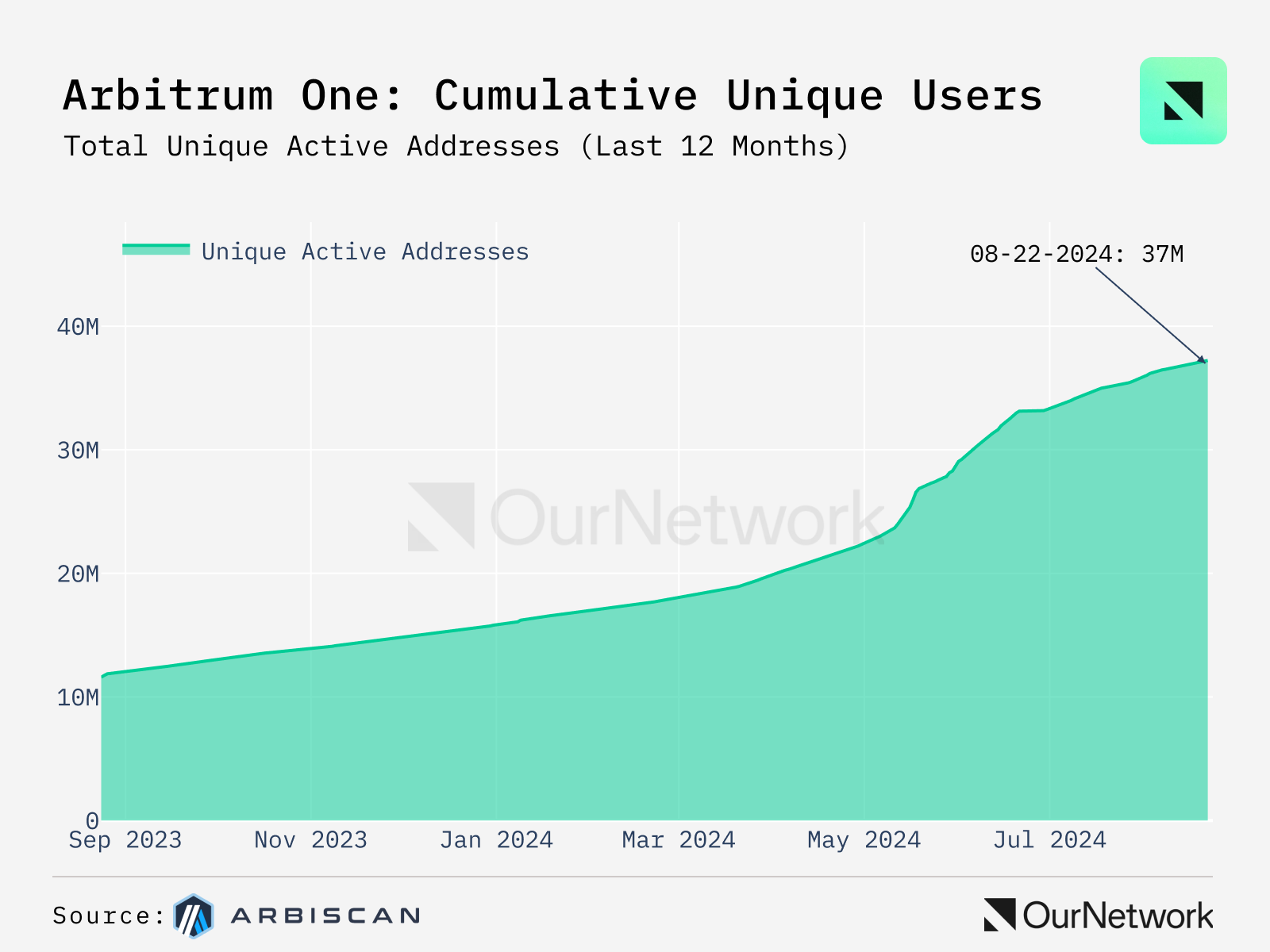
This chart shows the total number of addresses on the Arbitrum One blockchain and the growth of daily active addresses over the past year. On May 18, 2024, a record high of 637,812 new addresses were added.
2. Base
El Barto | Website | Dashboard
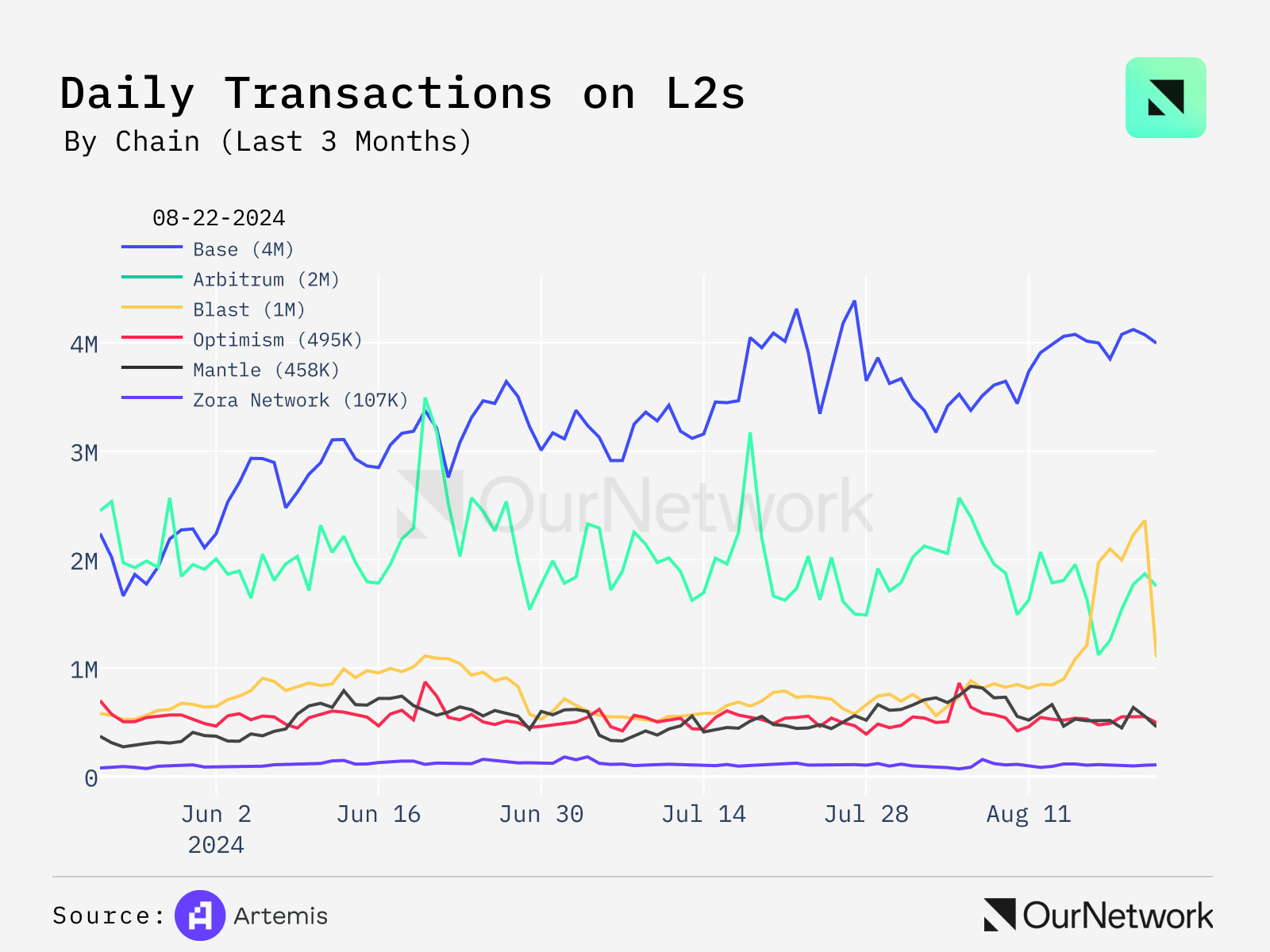
Base exceeds 4 million daily transactions
-
Coinbase describes Base as “a secure, low-cost, developer-friendly Ethereum Layer 2 designed to bring the next billion users onchain.” Since the beginning of the year, Base has shown strong growth across multiple metrics, including daily active addresses, DEX trading volume, and transaction count. In the past week, Base reached 4 million daily transactions, ranking first among all optimistic rollups.
-
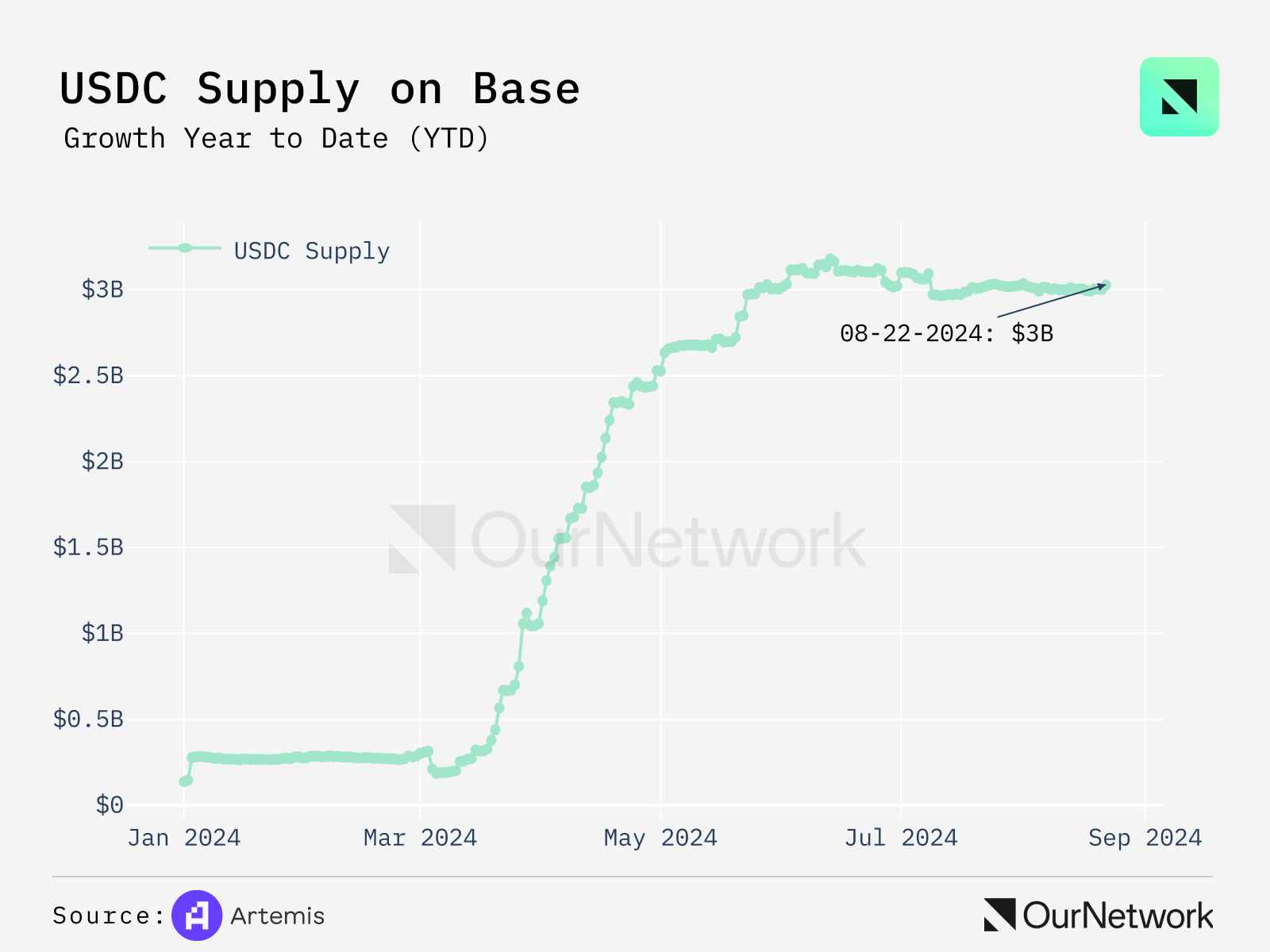
Thanks to low fees from optimistic rollups, Base is well-suited for stablecoin payments. Since the start of the year, USDC circulation on Base has grown rapidly, now totaling around $3 billion.
-
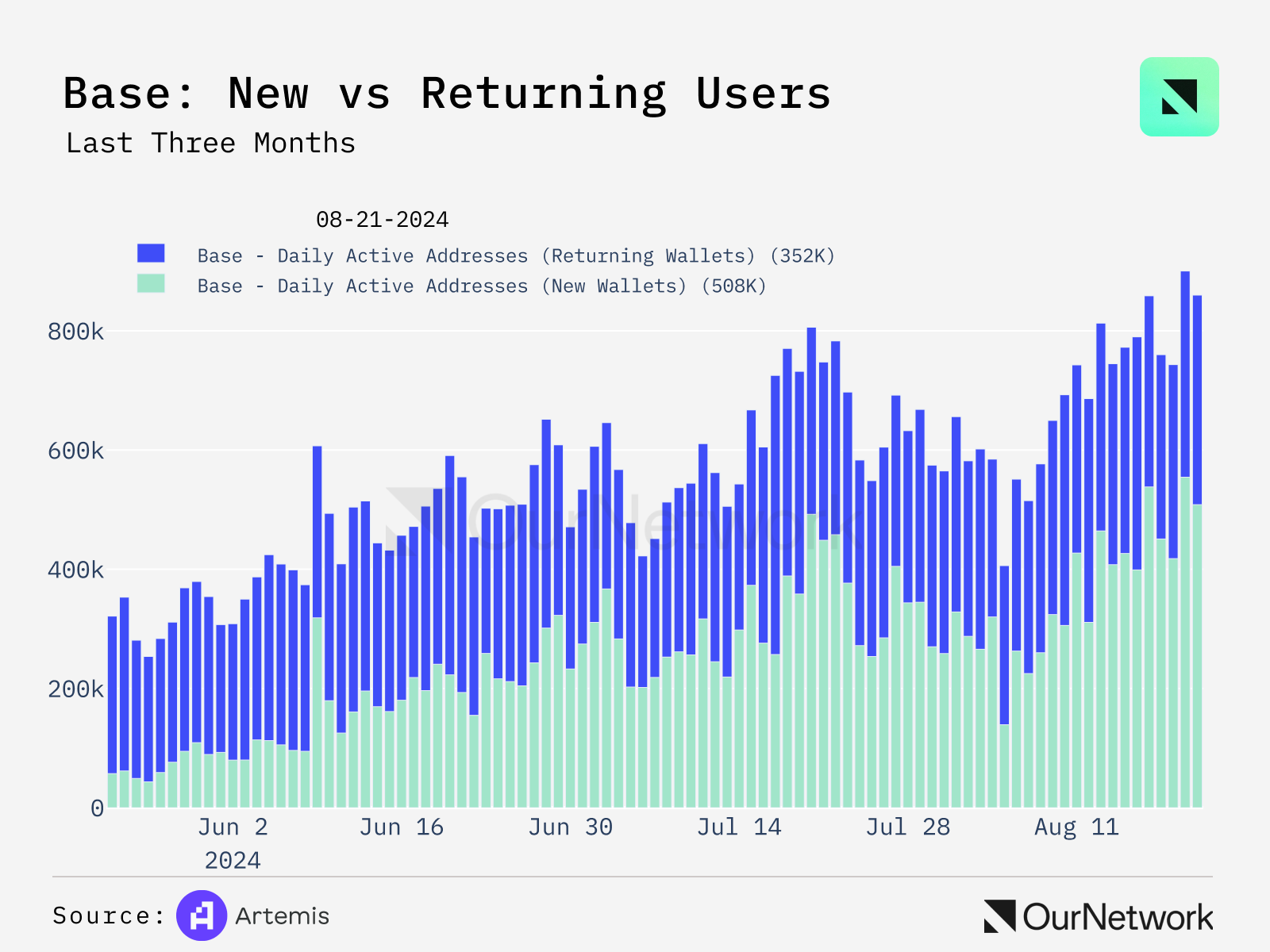
Recently, Base saw a surge in new wallets, largely driven by Uniswap and Blocklords, a game leveraging account abstraction. As the Base ecosystem expands, there is little reason to expect this trend of user adoption to slow down.
3. Blast
Blast surpasses 121.5 million transactions, 1.5 million wallets, and $10 million in revenue
-
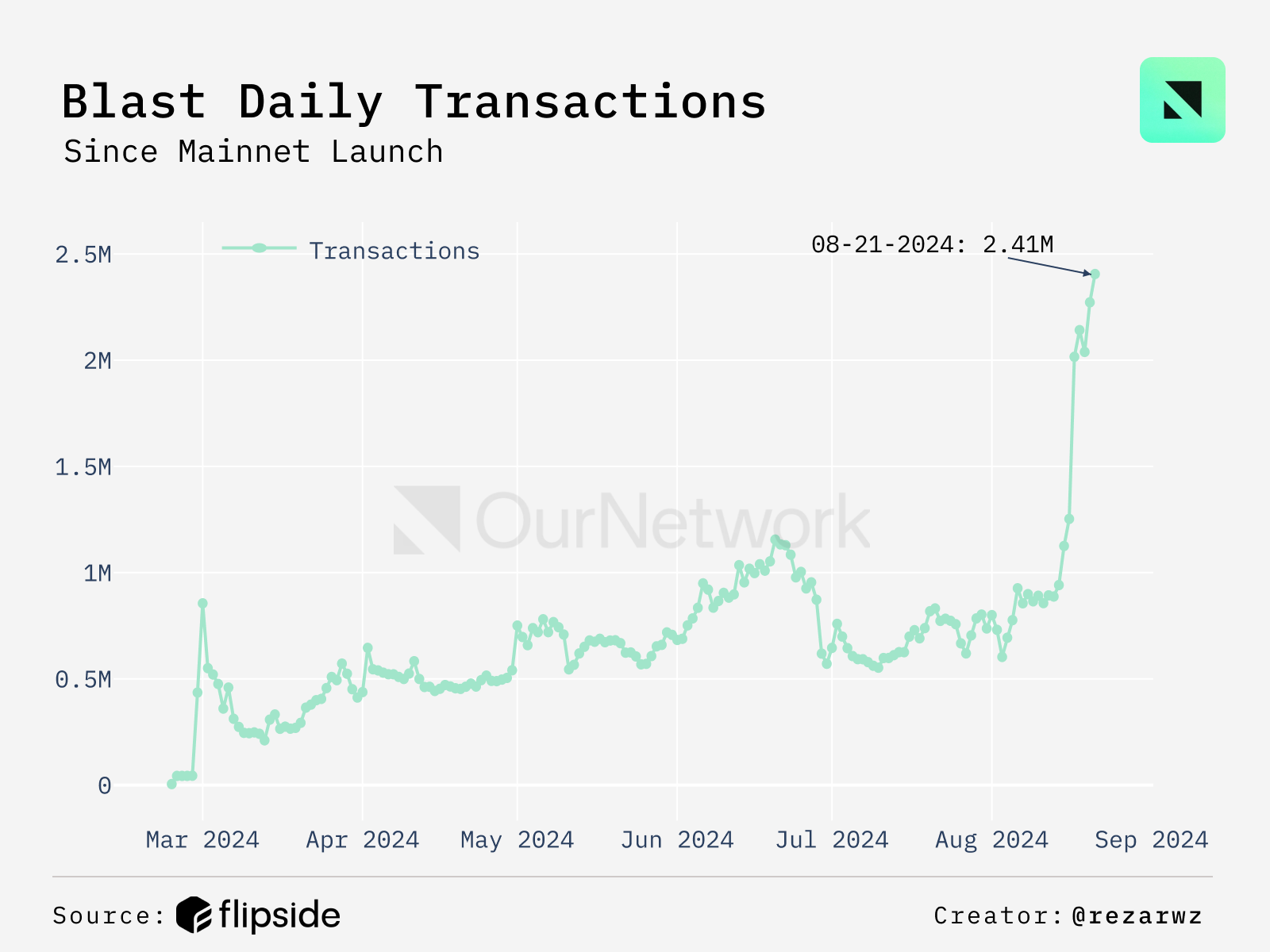
Blast is the only Ethereum L2 offering native yield on ETH (4%) and stablecoins (6%). In under six months since launch and less than two months after its initial airdrop, Blast has processed 121.5 million transactions, averaging 20 million per month. Daily transaction volume spiked in the past seven days, hitting a record high of 2.72 million in a single day. Over the past two weeks, daily volume has consistently exceeded pre-Token Generation Event (TGE) averages.
-
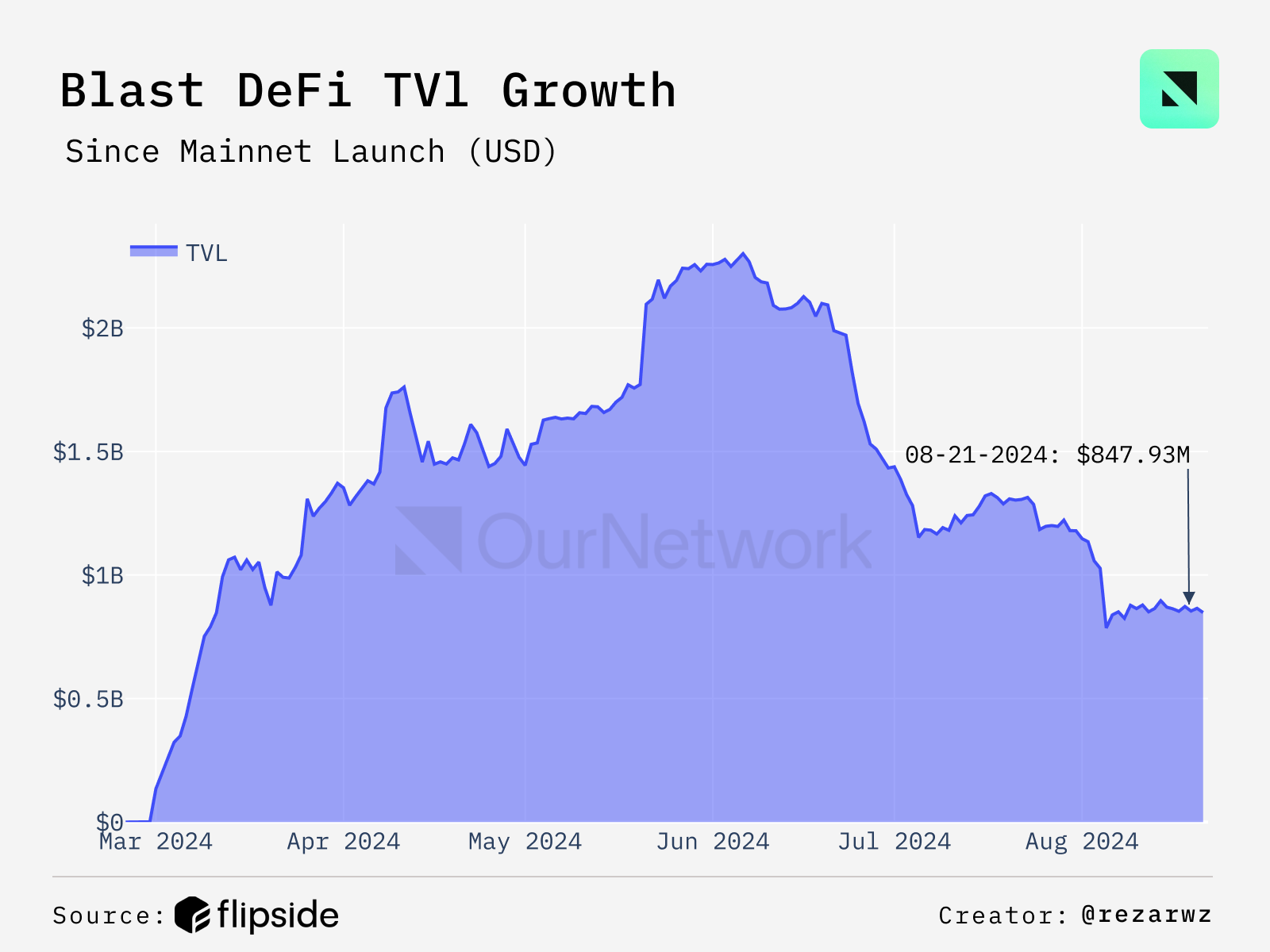
Blast is known for its DeFi ecosystem, reaching $1 billion in Total Value Locked (TVL) within 10 days of launch, peaking at $2.3 billion. However, post-TGE, TVL dropped sharply and is now 60% below its peak at $857 million. Over 80% of TVL comes from native Blast platforms, led by Thruster, Juice Finance, and Particle Trade.
-
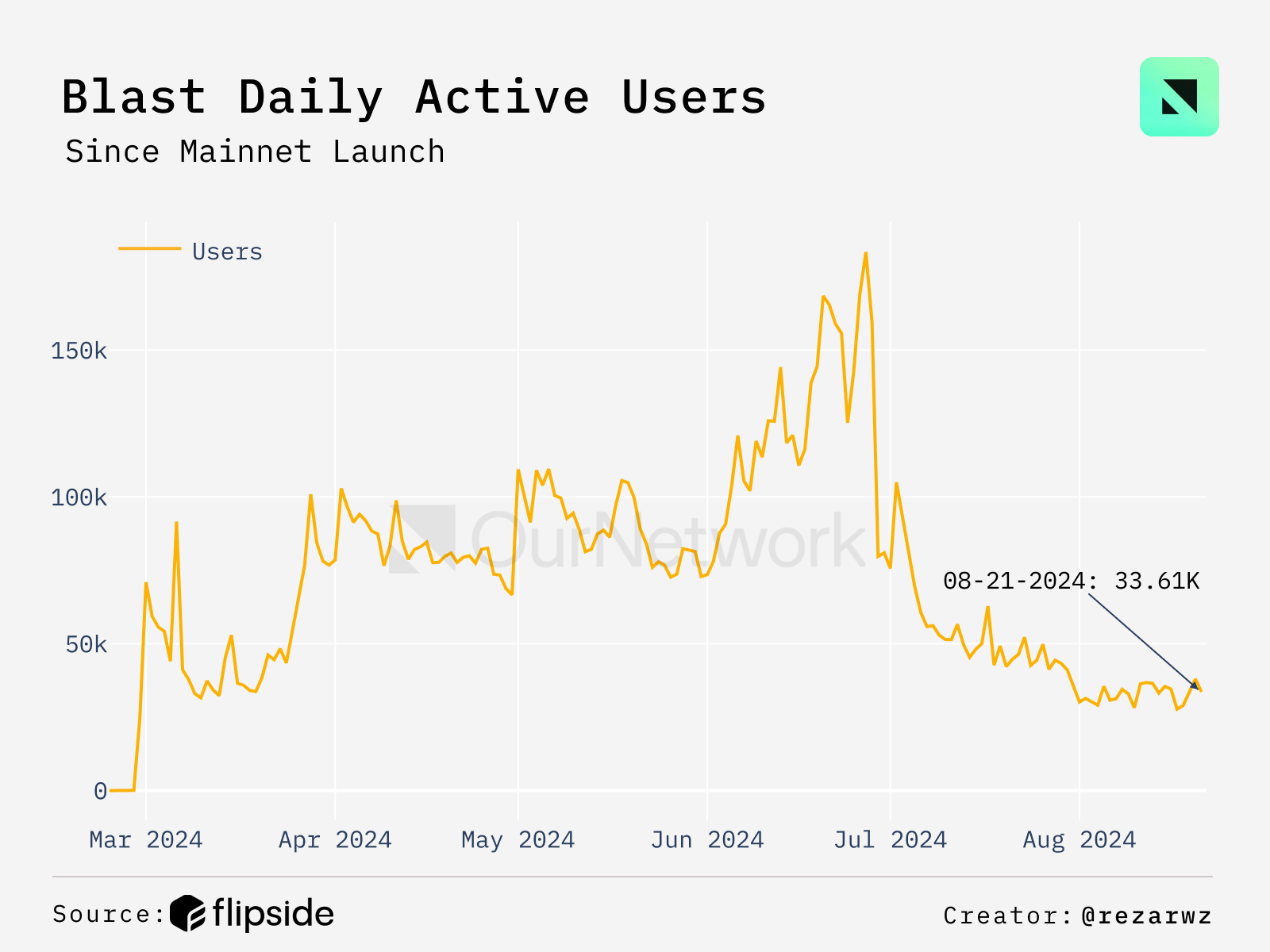
Post-TGE, Blast’s daily active users dropped noticeably—from an average of 81,000 pre-TGE to 51,000 post-TGE, a decline of over 35%. New user growth also plummeted, averaging only 3,000 per day in the past month compared to 30,000 previously—a 70% drop.
-
Transaction-level Alpha: Blast collected $18 million in gas fees from users and generated ~$10 million in revenue via blobs and subsequent changes. While other L2s retain gas fee revenue, Blast programmatically redistributes net gas revenue back to decentralized applications (Dapps). Most of the revenue goes to Dapps, with developers having collected 775 ETH so far. For example, Juice Finance collected 200 ETH (including this transaction worth 60 ETH), while SynFutures collected 166 ETH (this transaction included 48 ETH).
4. Starknet
Ali Taslimi | Website | Dashboard
Starknet surpasses 4 million users, averaging 7,500 daily active users
-
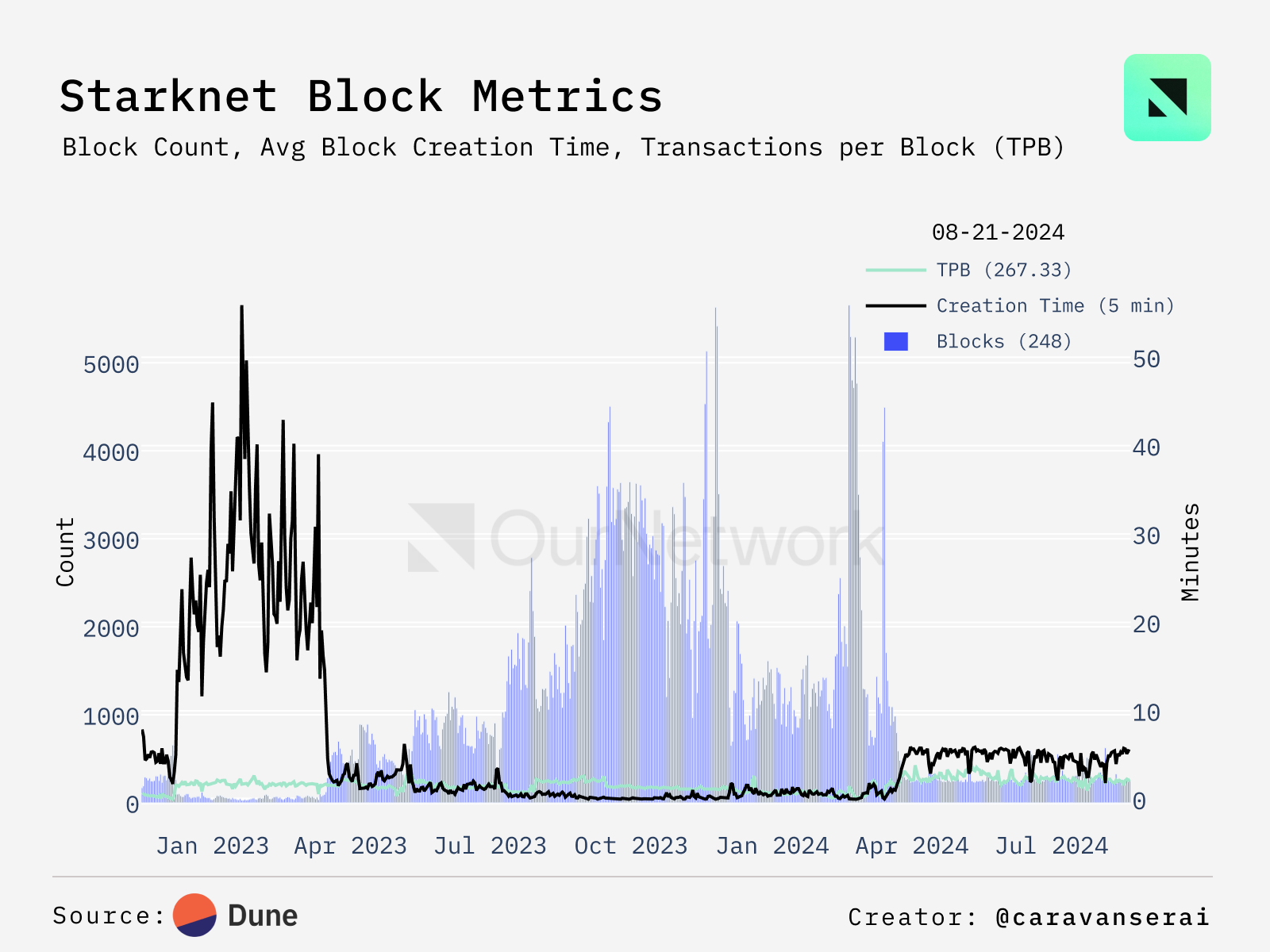
Starknet is a permissionless zero-knowledge rollup L2 aiming to enable large-scale computation for Ethereum while leveraging Ethereum’s composability and security. It creates approximately 300 blocks per day, with block times between 4 to 6 minutes. With the upcoming Starknet v0.13.2 upgrade, the network will introduce parallel execution, allowing transactions to be processed simultaneously. This will increase transactions per second (TPS) and reduce block creation time.
Dune Analytics - @caravanserai
-
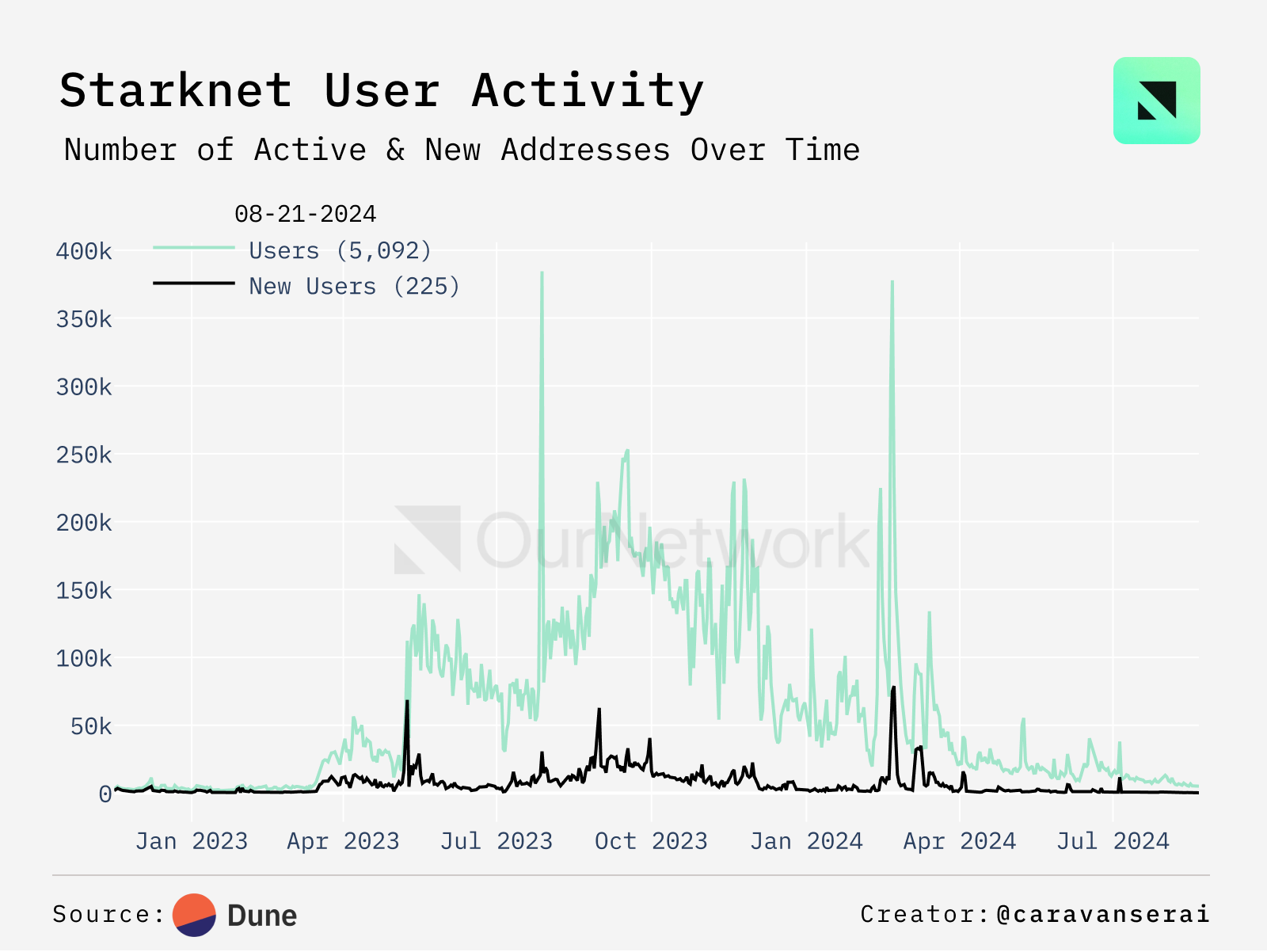
Starknet launched its mainnet on November 16, 2021, with the STRK token released a year later. Activity surged due to airdrop eligibility, but after the STRK launch in February 2024, both active and new user counts declined, with fewer than 1,000 new users and under 10,000 active users per day.
Dune Analytics - @caravanserai
-
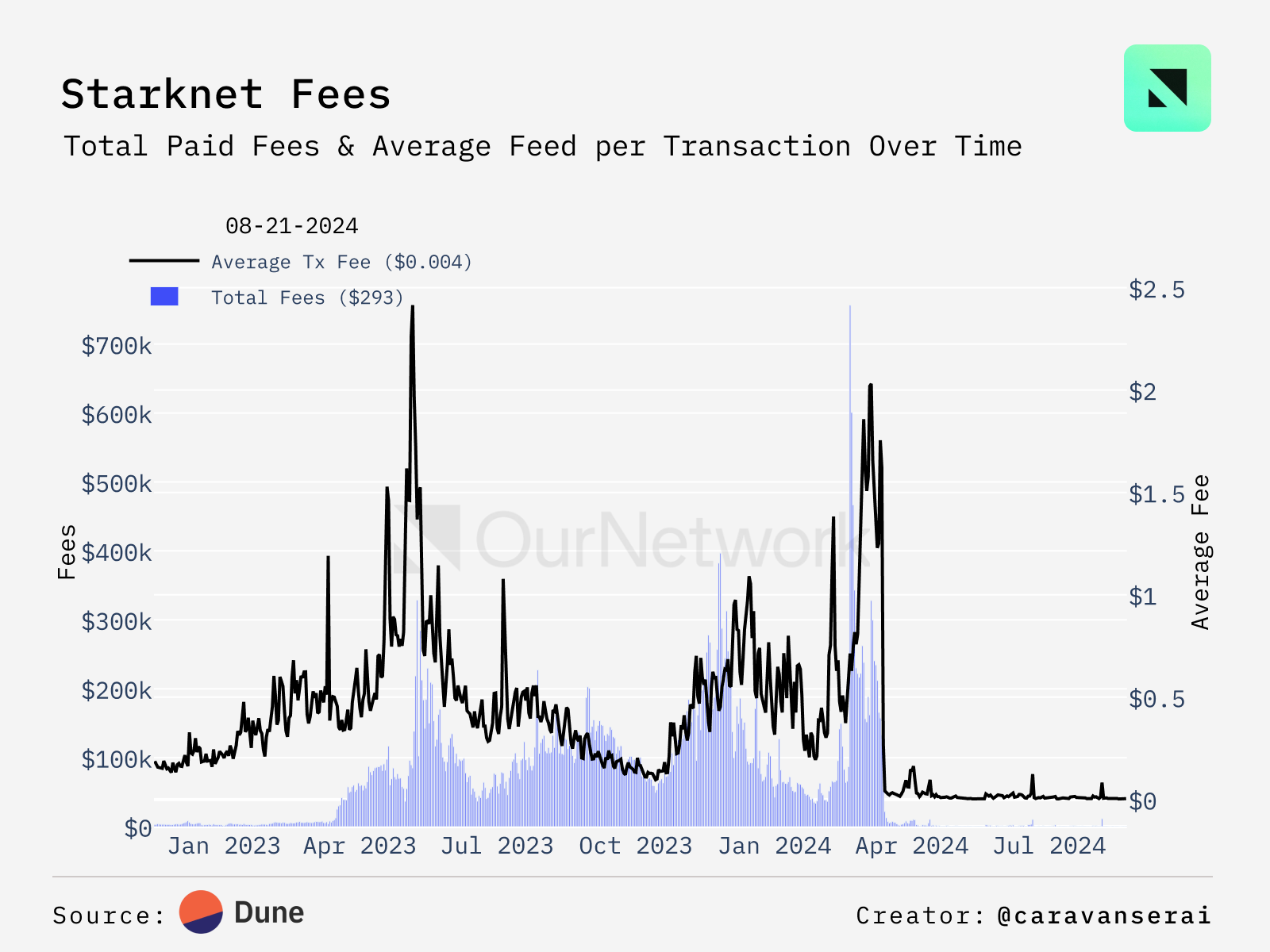
Following Ethereum’s Dencun upgrade on March 13, which introduced blob transactions, transaction fees on major L2s—including Starknet—dropped significantly. Since then, all Starknet transactions use blobs, with average fees falling below one cent.
Join TechFlow official community to stay tuned
Telegram:https://t.me/TechFlowDaily
X (Twitter):https://x.com/TechFlowPost
X (Twitter) EN:https://x.com/BlockFlow_News
 @ournetwork__






