Strategy Test 03 | OKX and AICoin Research Institute: Martingale Strategy
TechFlow Selected TechFlow Selected
Strategy Test 03 | OKX and AICoin Research Institute: Martingale Strategy
A simple way to help you understand classic strategies.
 Navigating Web3 tides with focused insights
OKX, in collaboration with the premium data platform AICoin, has launched a series of classic strategy research initiatives aimed at helping users better understand and learn various trading strategies through empirical data testing and analysis of core aspects—such as strategy characteristics—minimizing blind usage.
The Martingale strategy, formally known as Dollar Cost Averaging (DCA), is a position management-focused trading method. Its core principle is "averaging down on losses and resetting upon profit." The main feature involves doubling the trade amount after each loss until a single winning trade recovers all prior losses and generates profit. This strategy operates under the assumption that, given sufficient capital, a final winning trade will offset previous losses and yield net gains. As a high-risk approach, Martingale is suitable only for traders with substantial capital who can withstand potentially significant drawdowns.
In the cryptocurrency market, this strategy primarily takes two forms: Spot Martingale and Contract Martingale.
Episode 03 introduces the Martingale strategy, conducting live tests on both Spot DCA and Contract DCA using three major data models:
Model 1: Contract DCA vs. Spot DCA under a 5-minute cycle during an uptrend
Model 2: Contract DCA vs. Spot DCA under a 5-minute cycle during a downtrend
Model 3: Contract DCA vs. Spot DCA under a 5-minute cycle during sideways consolidation
Testing standards for this episode:
Long DCA: Initiate a buy order when the market starts. When the price drops, perform cost-averaging purchases up to five times, setting a stop-loss level at the fifth purchase. Once the market rebounds and reaches the target price, sell all holdings at once to realize profits.
Contract DCA: Based on the long DCA logic, adds short-selling entries. At market initiation, open a short position. When the market rises, add to the short position up to five times, also setting a stop-loss at the fifth addition. When the market retraces and hits the target price, close the entire position via a single buy-back to secure profits.
In summary: Contract DCA performs better in range-bound markets; Spot DCA excels in clearly trending upward markets—but both require careful risk awareness.
Pros and Cons Comparison
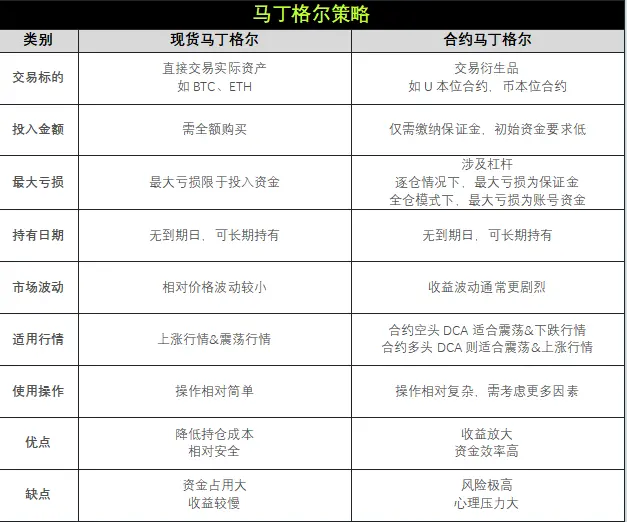
Both forms of the Martingale strategy follow the same fundamental rule: increasing trade size after losses to lower average entry prices, aiming for eventual recovery and profit. However, they differ significantly in execution, risk profiles, and optimal use cases. Strategy selection should be dynamically adjusted based on the trader’s risk tolerance and prevailing market trends, always incorporating sound risk controls to mitigate potential losses.
Both spot and contract Martingale are considered position management strategies. The spot version reduces average cost by doubling buys but risks severe drawdowns during prolonged declines. The contract version amplifies both gains and risks via leveraged positions and carries a heightened liquidation risk.
Model One
This model simulates: Contract DCA vs. Spot DCA under a 5-minute cycle during an uptrend
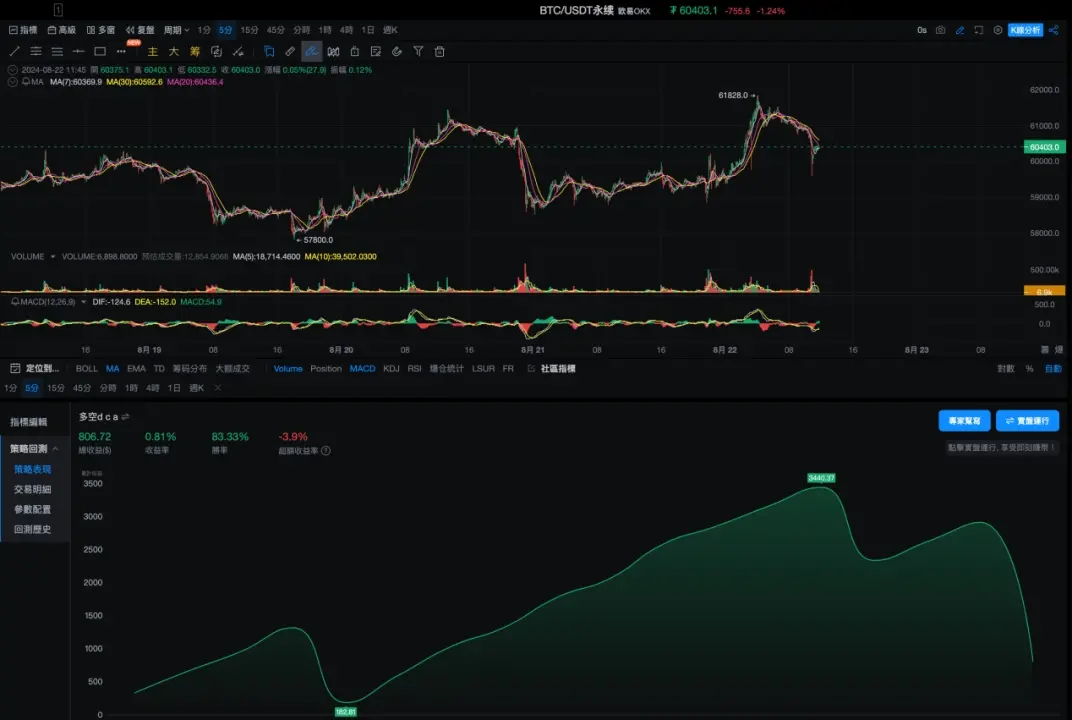
Figure 1: Contract DCA under a 5-minute uptrend cycle; Source: AICoin
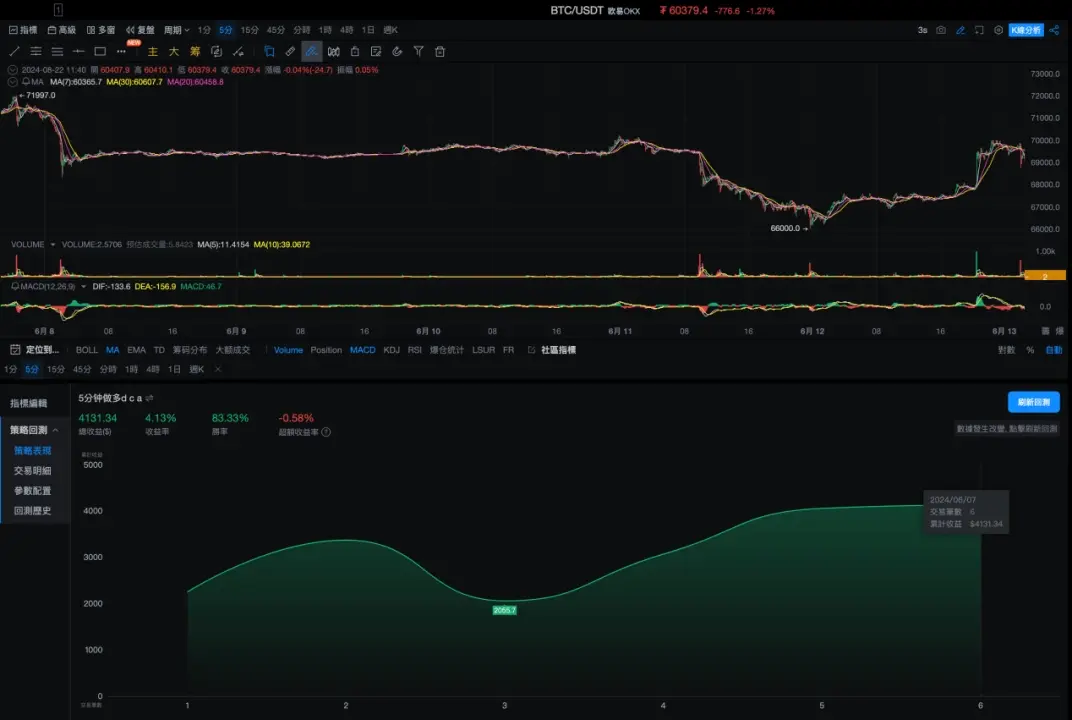
Figure 2: Spot DCA under a 5-minute uptrend cycle; Source: AICoin
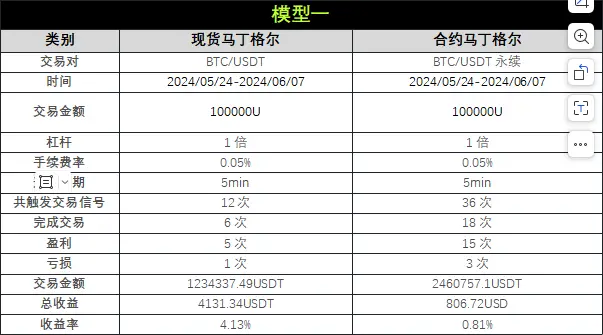
Model Two
This model simulates: Contract DCA vs. Spot DCA under a 5-minute cycle during a downtrend
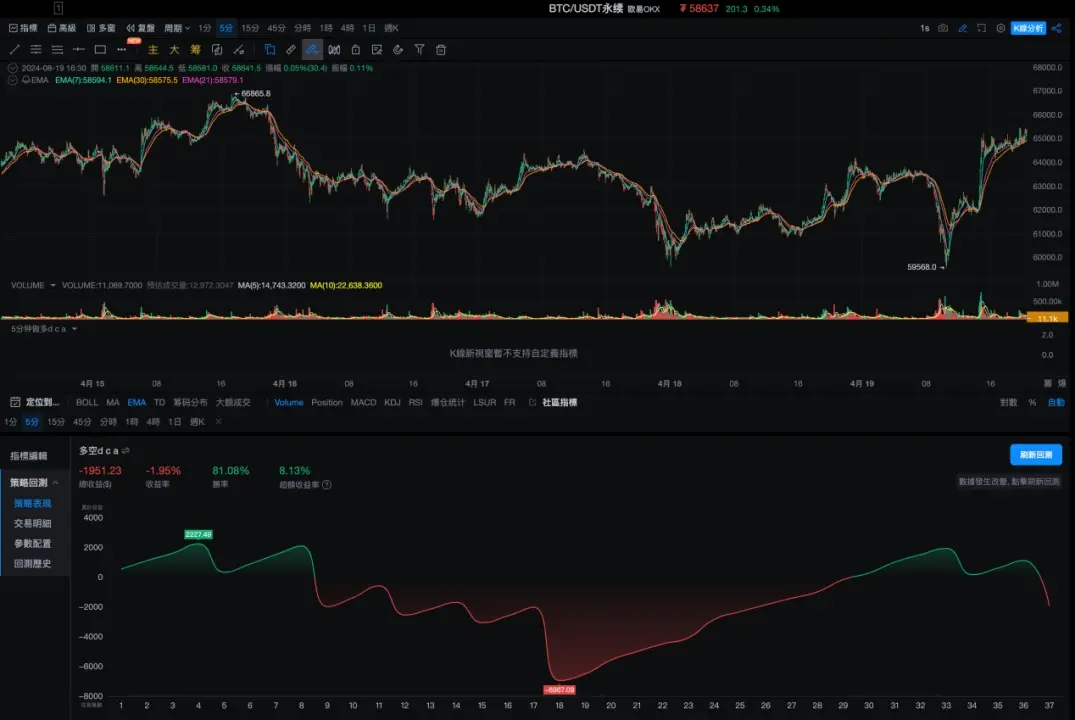
Figure 3: Contract DCA under a 5-minute downtrend cycle; Source: AICoin
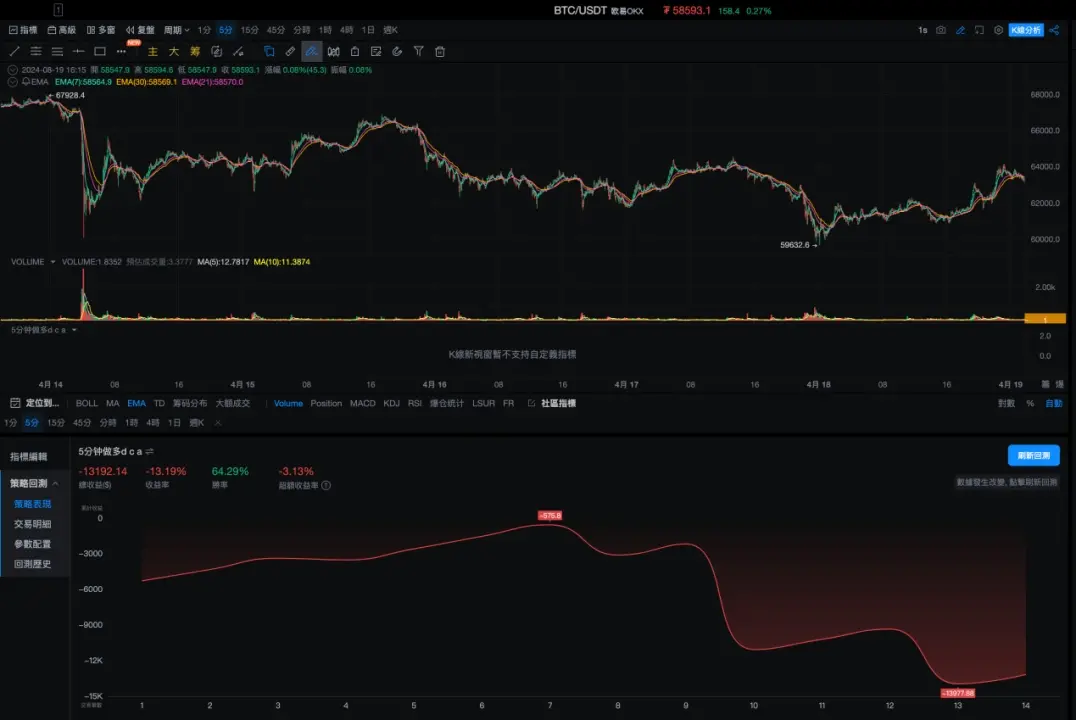
Figure 4: Spot DCA under a 5-minute downtrend cycle; Source: AICoin
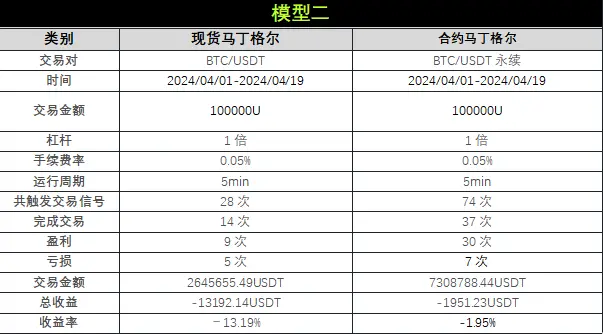
Model Three
This model simulates: Contract DCA vs. Spot DCA under a 5-minute cycle during sideways consolidation
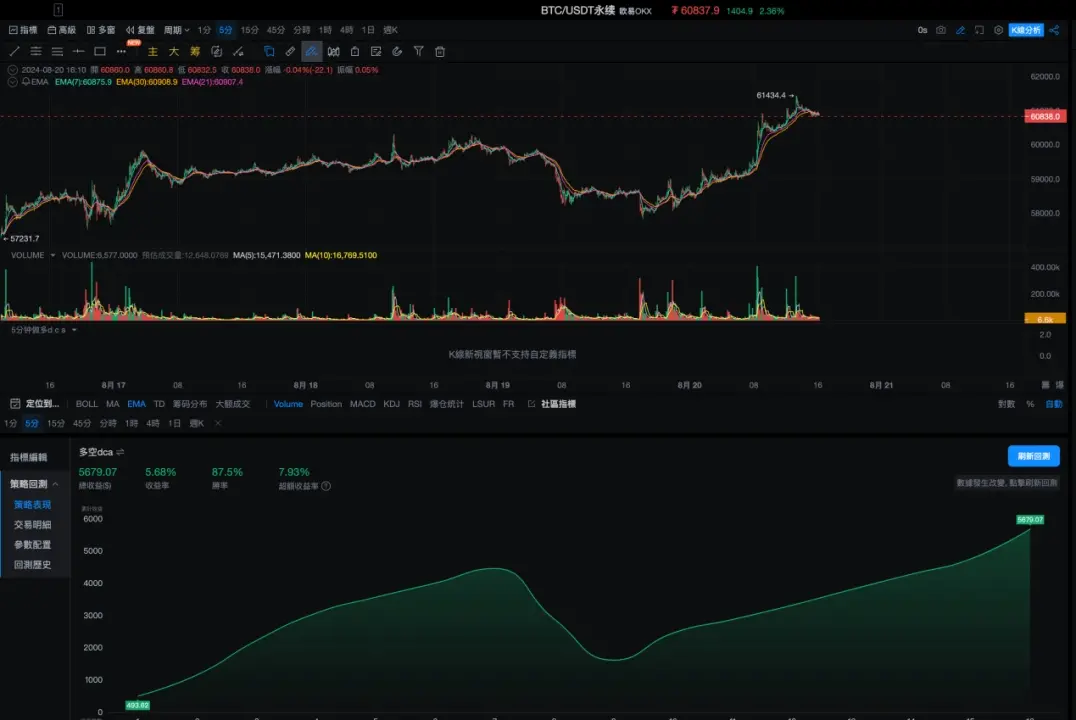
Figure 5: Contract DCA under a 5-minute range-bound cycle; Source: AICoin
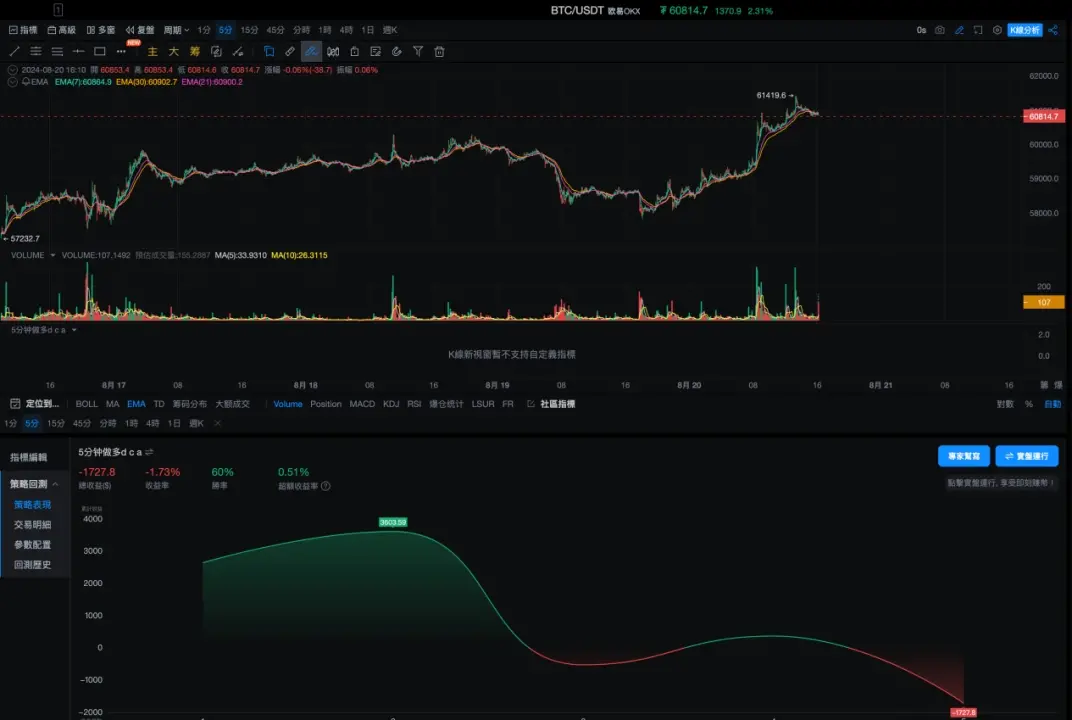
Figure 6: Spot DCA under a 5-minute range-bound cycle; Source: AICoin
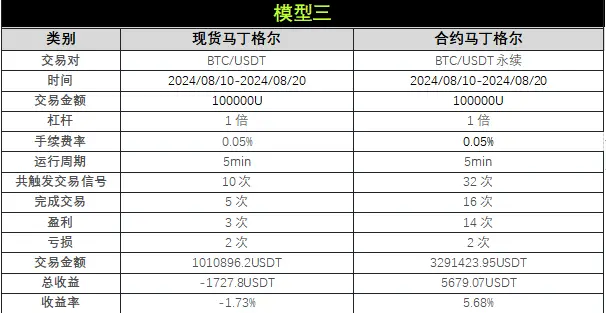
Analysis and Summary
Sharp volatility is detrimental to Contract DCA, which performs best in ranging markets. Specifically, short Contract DCA suits range-bound and bearish conditions, while long Contract DCA fits range-bound and bullish environments. Spot DCA performs well in rising markets.
Contract DCA demonstrates strong adaptability across different market conditions, showing particular strength in sideways markets. Spot DCA performs well in uptrends but poorly in ranging or declining markets. Contract DCA achieves returns through more frequent trades and higher win rates, though it may entail greater risk. With fewer trades, Spot DCA may be more suitable for long-term or risk-averse traders.
Typically, when the reinvestment parameter is set to 1, these strategies behave similarly to grid trading. However, when set to 2 (or higher), they may lead to rapidly escalating capital requirements and significant psychological pressure on traders. Especially for Contract Martingale, leverage magnifies risk, potentially resulting in liquidation.
Specifically:
Select Strategy Based on Risk Tolerance
High risk tolerance: Consider Contract DCA, especially in range-bound markets.
Low risk tolerance: Opt for Spot DCA, particularly in clearly defined uptrends.
Align with Market Trends
Uptrend: Both strategies are viable, but ensure timely profit-taking.
Downtrend: Use cautiously—consider adjusting or pausing the strategy.
Sideways/Ranging: Contract DCA may hold the edge.
Dynamic Adjustment
Flexibly adapt strategies according to market changes; avoid rigid adherence to a single model.
Risk Management
Set stop-loss levels, control capital per trade, and diversify to reduce exposure.
Combined Strategies
Consider combining Contract DCA and Spot DCA to balance risk and return.
Ongoing Learning and Optimization
Regularly backtest and evaluate performance, refining strategies with new market data.
Monitor External Factors
Beyond technical analysis, monitor macroeconomic developments and industry news that could impact markets.
By applying these strategies wisely and adapting them to personal circumstances and market dynamics, traders can better manage risk and improve their chances of profitability. However, always remember that cryptocurrency markets are highly volatile—only allocate funds you can afford to lose.
OKX & AICoin Martingale Strategy
Currently, OKX Strategy Trading offers convenient and diverse strategy options. The OKX Spot and Contract versions of the Martingale strategy have been significantly optimized based on crypto users’ habits and needs. Two creation modes are available for users of varying experience levels: manual setup and smart (intelligent) setup.
Manual setup allows experienced, well-capitalized traders to define parameters based on their own market views. Ordinary users are recommended to use the intelligent setup mode, where they select from system-recommended parameters aligned with their personal risk preferences to determine investment amounts and buying frequency.
It's important to note that the system-recommended parameters are derived from historical market data and asset volatility, calculated using OKX's backend algorithms, offering considerable authority and reliable guidance. Drawing inspiration from traditional securities trading segmentation, the intelligent mode categorizes users into three risk profiles—conservative, balanced, and aggressive—and recommends corresponding parameter sets accordingly to manage risk relative to user assets and risk capacity.
How to access more strategy trading options on OKX? Users can navigate to the "Trading" section via the OKX app or official website, enter "Strategy Trading," then click either "Strategy Plaza" or "Create Strategy" to begin. In addition to creating custom strategies, the Strategy Plaza currently features "Premium Strategies" and "Top Performer Strategies," allowing users to copy or follow strategies directly.
OKX Strategy Trading offers multiple core advantages: ease of use, low fees, and robust security. For usability, OKX provides intelligent parameter suggestions to help users set scientifically sound trading parameters, along with图文 and video tutorials for quick mastery. Regarding fees, OKX has comprehensively upgraded its fee structure, significantly reducing trading costs. On security, OKX employs a world-class security team providing bank-grade protection.
How to Access AICoin's DCA Strategies?
All-Crypto DCA Strategy: Navigate to the left sidebar of the AICoin product, go to "Strategies," and select "All-Crypto DCA." Here, you’ll find AICoin’s market-based recommendations for diversified DCA across all cryptocurrencies.
Spot DCA Strategy: In the AICoin left sidebar, go to "Market Data" and select "Spot DCA." This page displays Spot DCA strategies tailored to your selected trading pair.
Contract DCA Strategy: In the AICoin left sidebar, go to "Market Data" and select "Custom Indicators / Backtesting / Live Trading." Click in, then search "Contract DCA" under "Community Indicators" to find the DCA strategy code.
Disclaimer
This article is for informational purposes only and reflects the author's views, not necessarily those of OKX. It does not constitute (i) trading advice or recommendation; (ii) an offer or solicitation to buy, sell, or hold digital assets; or (iii) financial, accounting, legal, or tax advice. We make no guarantees regarding the accuracy, completeness, or usefulness of the information provided. Holding digital assets—including stablecoins and NFTs—involves high risk and may result in significant price fluctuations. You should carefully assess whether trading or holding digital assets is appropriate for your financial situation. For specific advice, consult your legal/tax/trading professionals. You are solely responsible for understanding and complying with applicable local laws and regulations.
Join TechFlow official community to stay tuned
Telegram:https://t.me/TechFlowDaily
X (Twitter):https://x.com/TechFlowPost
X (Twitter) EN:https://x.com/BlockFlow_News
 OKX
OKX