









Recreating the 2021 bull market? Bitcoin may just be getting started
TechFlow Selected TechFlow Selected
Recreating the 2021 bull market? Bitcoin may just be getting started
Based on the duration of the previous three bull markets, Bitcoin should continue to rise through mid-next year.
 Navigating Web3 tides with focused insights
Translation: Scott Liu, BitpushNews
If you believe we're still in a Bitcoin bull market, we’re now 640 days into it. A few hundred days ago, back in January, Bitcoin’s performance roughly matched the previous two bull cycles: delivering returns slightly below 4.5x.
However, if we rewind further, during the 2015 to 2018 cycle, Bitcoin heated up rapidly. From January to July 2017, Bitcoin surged from $800 to over $2,800.
Ultimately, by the end of 2017, Bitcoin reached nearly $20,000, setting a new all-time high that remained unbroken for three years.
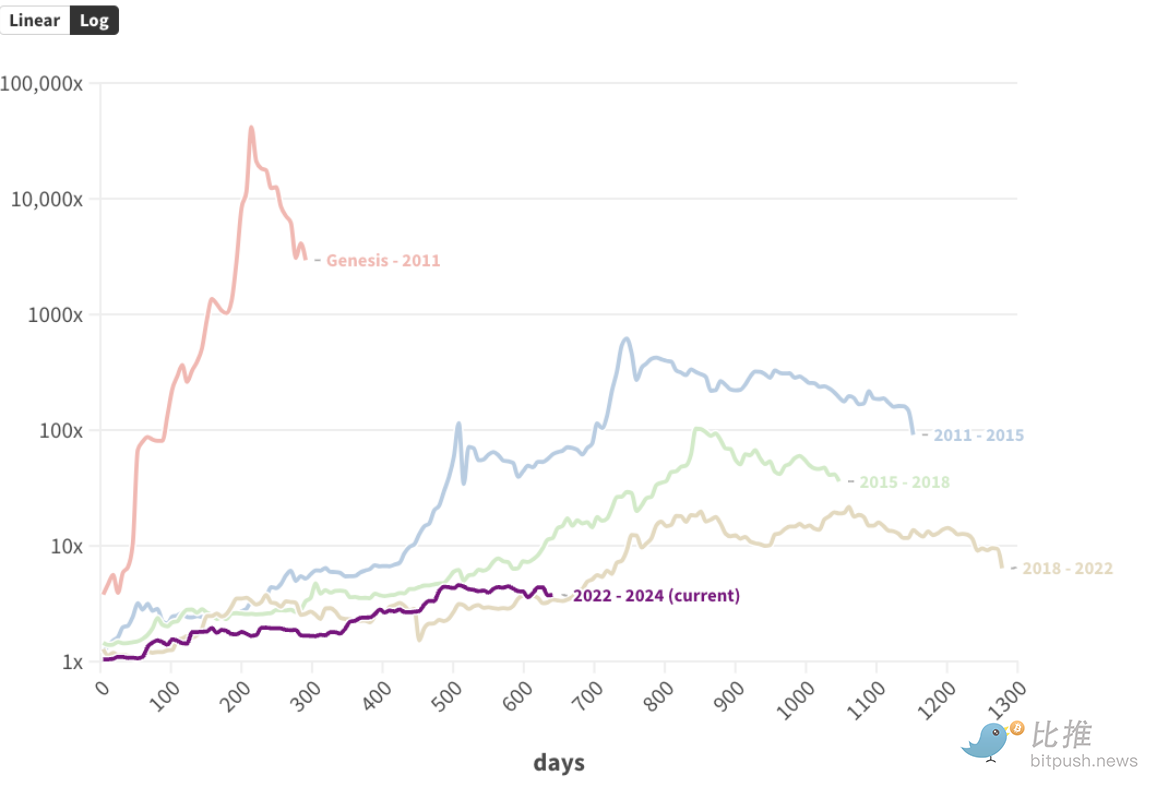
If we compare different bull cycles, today’s Bitcoin market more closely resembles the 2018 to 2022 cycle. As shown by the brown line in the chart above, its return so far has been 278%.
But not all cryptocurrencies are as bullish as Bitcoin.
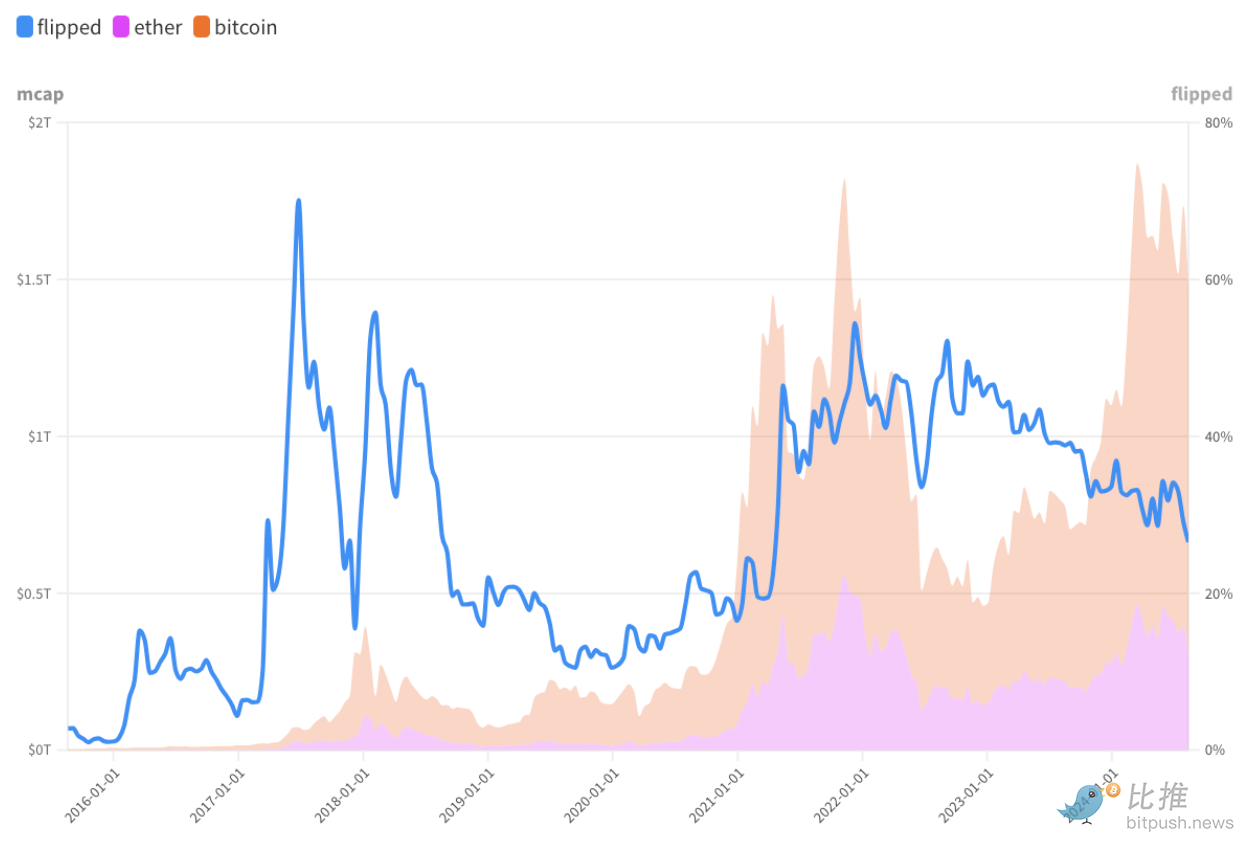
Take Ether, for example—it hasn’t been this close to outperforming Bitcoin in three and a half years.
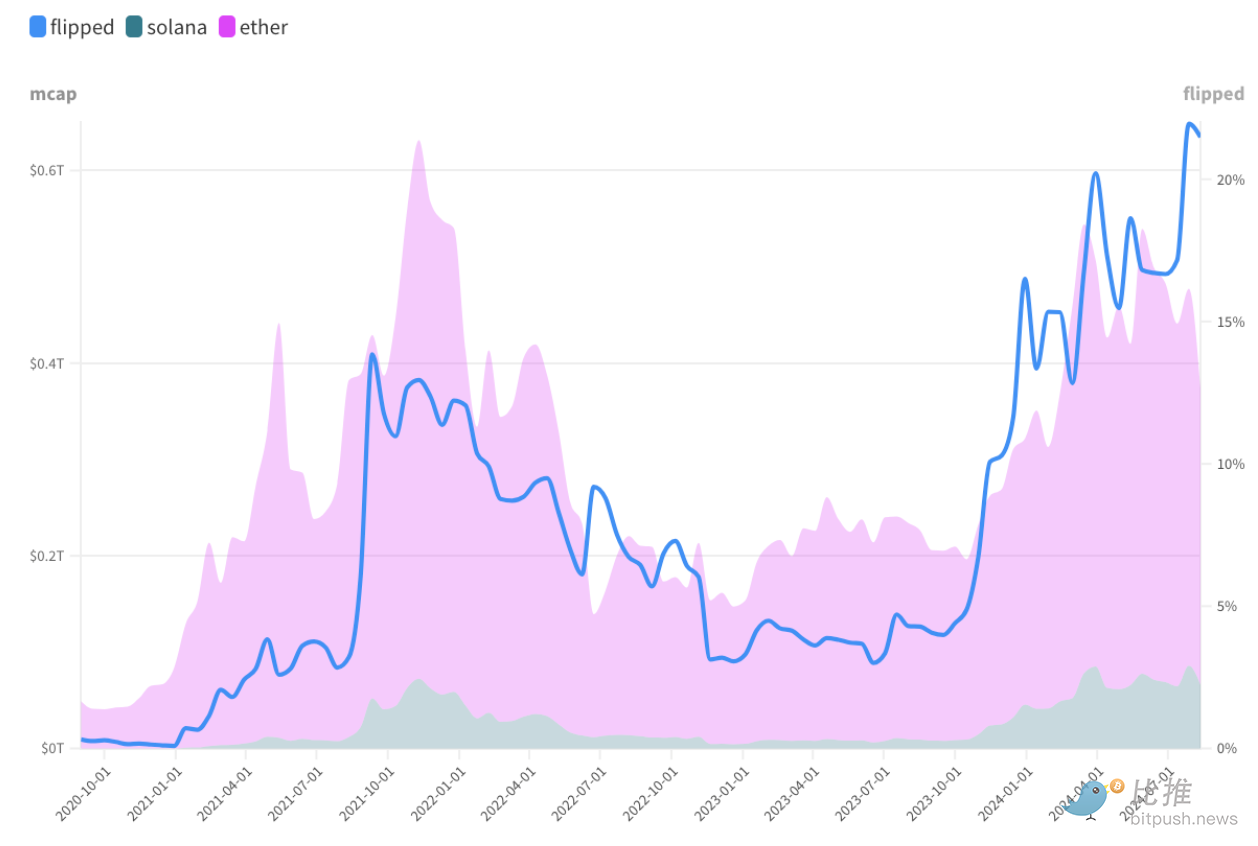
The ETH/BTC ratio, measuring Ethereum’s price against Bitcoin, has nearly halved since the end of 2021. Meanwhile, Solana has never been closer to overtaking Ethereum. At this time last year, Solana’s market cap was just 4% of Ethereum’s—$9.3 billion versus $217.2 billion. Now, it stands at 22%—$66 billion versus $307.6 billion.
Similar chart analysis suggests Solana has potential to surpass Ethereum. But how much longer can this bull run last? All we can do is compare the duration of previous bull markets, which varies across different models.
The simplest method defines a bull market as beginning when Bitcoin hits its bottom and ending once a sustained downtrend is fully confirmed.
Using this approach:
Our current bull market began on November 9, 2022, when Bitcoin dropped below $15,670 following FTX suspending withdrawals—that was 642 days ago. The previous three bull runs lasted between 1,047 days (2015–2018) and 1,278 days (2018–2022). If Bitcoin follows its typical four-year cycle (though there's no guarantee), we’re already past the halfway point. If the bull market has already ended, it would be the shortest in Bitcoin’s history—excluding the initial two-year price discovery phase after genesis.
Of course, past performance does not guarantee future results. But that doesn’t stop us from having fun. If the bull run continues and Bitcoin’s price action remains cyclical as before, it must keep climbing from here to align with historical patterns.
Therefore, based on the length of the previous three bull markets, Bitcoin should continue rising through mid-next year—a timeline consistent with some analysts’ forecasts.
Join TechFlow official community to stay tuned
Telegram:https://t.me/TechFlowDaily
X (Twitter):https://x.com/TechFlowPost
X (Twitter) EN:https://x.com/BlockFlow_News
 Blockworks









