








Most Active Community Produces Most Disappointing Launchpad—What Did Jupiter Get Wrong?
TechFlow Selected TechFlow Selected
Most Active Community Produces Most Disappointing Launchpad—What Did Jupiter Get Wrong?
To restore value, seeking consensus within community engagement has seemingly become the standard solution for crypto projects.
 Navigating Web3 tides with focused insights
Author: Luccy, BlockBeats
Editor: Jack, BlockBeats
This year, the market has severely lacked new narratives. The brief bull run brought by ETFs did not truly inject fresh vitality into the crypto market. Meme coins have become the most profitable sector, while VC-backed tokens have repeatedly faced criticism. Particularly in DeFi projects, there has been little momentum amid several rounds of capital rotation, leaving them still struggling.
To restore value, value-driven tokens are actively seeking breakthroughs. "Community consensus" is their common answer, with community engagement serving as a key metric for measuring the strength of that consensus. Jupiter is one such project.
Jupiter’s co-founder meow had long remained anonymous within the crypto developer community. He previously served as chief advisor at Instadapp, Kyber, and Blockfolio, was a co-founder of wBTC—the largest wrapped Bitcoin token—and a founding contributor to the Handshake project. Despite these credentials, meow never revealed his identity until two days before the JUP airdrop, when he made his public debut in an exclusive interview with Luke Belmar, founder of Capital Club.
In the interview, meow emphasized the importance of community consensus multiple times. He criticized the current misuse of the term “community” in the crypto world, arguing that only strong consensus can truly constitute a “community,” and it is this consensus that shapes money.
To that end, Jupiter has invested significant effort into building and maintaining its community. Following events such as the collapse of PPP collaborator Irene Zhao and the JLP contract platform surviving a sharp market downturn—earning it recognition as a top dollar-cost averaging target—Jupiter attracted considerable attention. However, this attention hasn’t translated into much tangible value increase for JUP.
The Hottest DEX Community
At last year's Solana Breakpoint hackathon, meow’s talk was hailed as one of the most popular presentations. Feeling the buildup of consensus amid the audience's enthusiasm, he decided to take the first step—transforming Jupiter’s fans into an active community.
Jupiter aims to build the most vibrant, forward-thinking, and non-insider community in crypto. To achieve this, dedicated teams were formed to manage Twitter, Discord, website, YouTube, Reddit, and other media channels, with operations jointly handled by core team members and community contributors.
Through meticulous management, Jupiter cultivated a thriving community. According to Similarweb data, Twitter accounts for 66.25% of all Jupiter’s social traffic. Overall, social media drives 3.49% of Jupiter’s total web traffic—outperforming Raydium, another so-called Solana frontrunner, in converting social buzz into actual visits, primarily via Twitter. This suggests a tighter integration between Jupiter and its community.

Top: Jupiter; Bottom: Raydium
“Thousand-Person Meetings” Are Routine
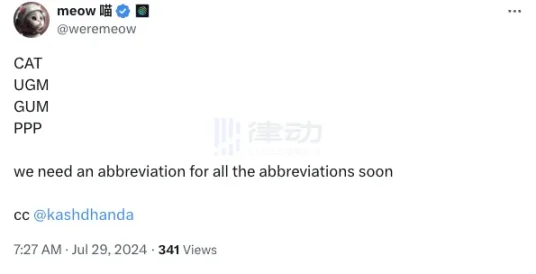
Just like fan communities using unique acronyms to identify insiders, Jupiter uses its own language to build a core group.
Meow constantly creates new abbreviations, often without providing textual explanations. Only by watching Jupiter’s Planetary Calls can viewers understand what they mean. Fans seem proud of being “in the know,” chatting in shorthand on comment sections. Outsiders wishing to join must learn the lingo.
Planetary Calls stream live every Wednesday on YouTube and Twitter. Meow and Uplink leader Kash host each episode, joined by team members who thoroughly update the community on project developments. Each YouTube livestream consistently draws over 4,000 views, while Twitter viewership reaches tens of thousands.
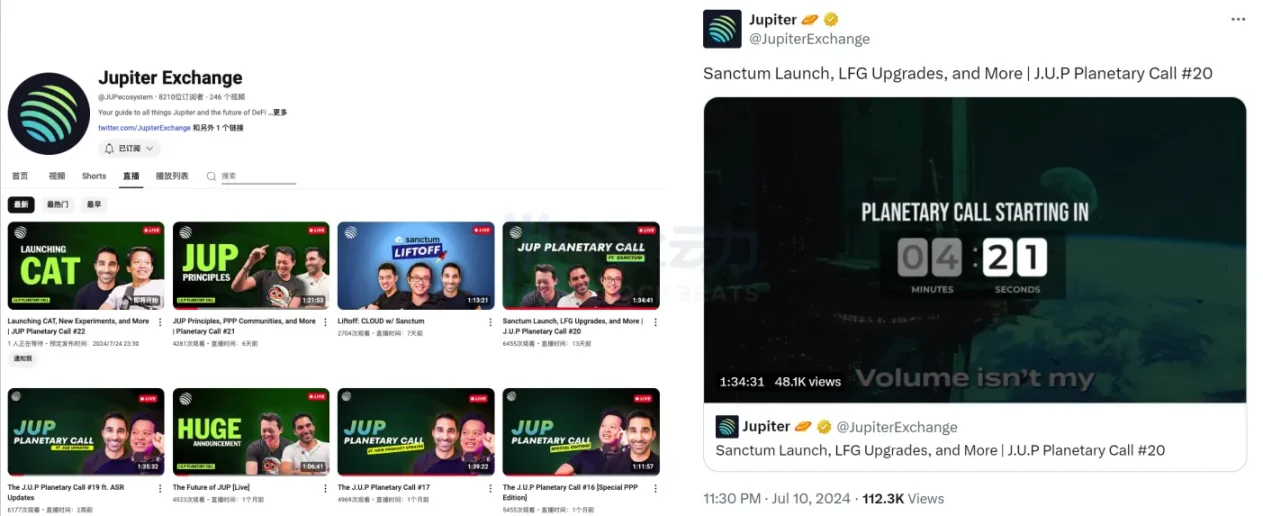
Left: Jupiter YouTube series; Right: Twitter livestream of Jupiter Planetary Call #20
Across the entire crypto ecosystem, only Ethereum comes close in terms of consistent developer communication. Ethereum holds weekly core developer calls hosted by the Ethereum Foundation. Despite hundreds of episodes, average YouTube views rarely exceed 500. Searching related keywords on Twitter shows the top result dates back to 2022.
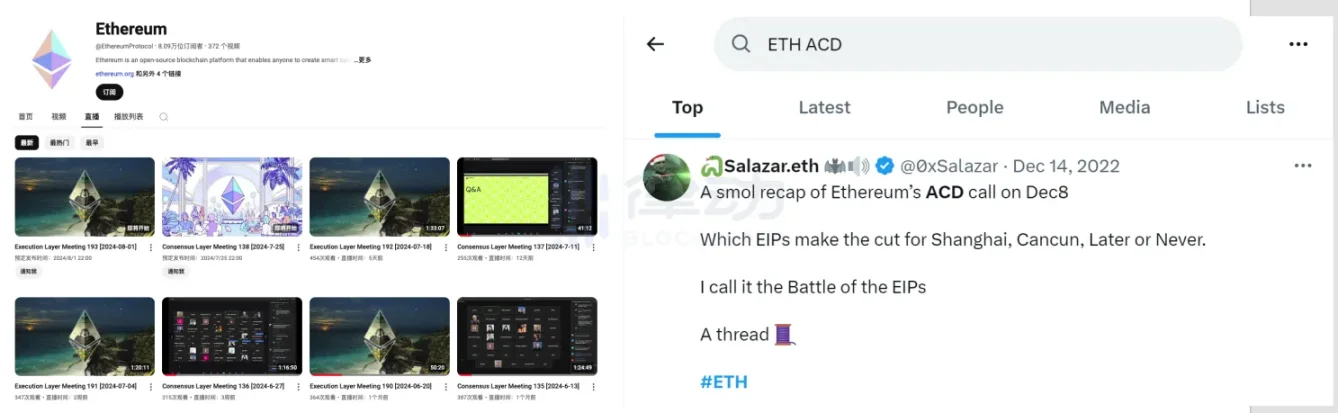
Left: Ethereum YouTube livestream; Right: Twitter search results for “ETH” and “ACD”
In terms of interaction, Jupiter’s livestream comments are continuously active, often flooding the screen. In contrast, Ethereum’s meeting comment sections are mostly empty. Jupiter videos consistently receive engaged comments, whereas Ethereum meetings see few, if any, genuine interactions—sometimes only bot-generated ads.
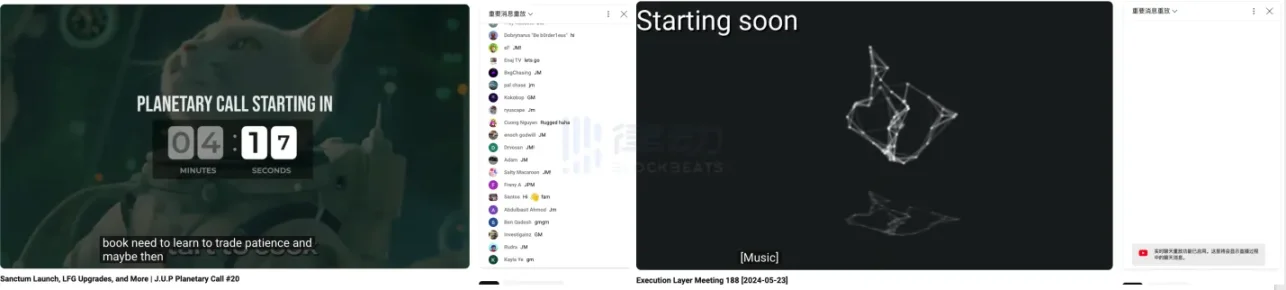
Left: Jupiter Planetary Call; Right: Ethereum Core Developer Meeting
On governance proposals, DAO members decide how tokens are allocated across working groups. The Uplink working group received the fewest votes, around 178 million. Even so, based on current JUP staking levels, voter turnout four months ago exceeded 50%. Most proposals pass with over 70% support, while abstentions stay below 15%.

From left to right: Core, Website, Catdet (Discord), Reddit, and Uplink working group budget proposals
Additionally, to further “stay close to the people,” Jupiter proposed reducing its token supply in mid-June, with the team voluntarily cutting 30% from their allocation, resulting in a 30% reduction in emissions. The remaining reductions come from prior allocations such as limited partnerships and strategic reserves. The proposal launched on August 1 and gathered over 160 million votes in just half a day. Ultimately, it passed with 95% approval and 274 million votes—a DAO voting record.

Perhaps Jupiter felt allocating tokens via voting wasn’t enough. On July 31, it released a protocol draft mandating: biannual public reviews of JUP distribution; full disclosure of any token sales; and careful, proportional release of reserve tokens tied to market liquidity, with at least three months’ advance notice. All wallets will be clearly labeled to enable transparent tracking of JUP usage. Notably, all community-allocated tokens will be distributed through DAO votes to ensure complete visibility.
Moreover, to address the PVP chaos in meme coins, Jupiter introduced PPP. As meow explained, the core focus of a PPP community should not be attracting others only to abandon them, but rather gaining more allies to build a shared long-term future together.
To promote PPP, Jupiter first evangelized the concept, even dedicating an entire Planetary Call to it. During the 90-minute livestream, meow and Kash interviewed six meme traders. These weren’t famous KOLs, nor were their recommended memes likely winners, yet the event drew thousands of viewers who flooded the chat with “PPP.”
Afterward, meow published a detailed explanation of PPP and launched a PPP experiment, inviting community members to leave their Solana addresses in the comments. Despite information asymmetry, the experiment attracted hundreds of thousands of participants within a month.
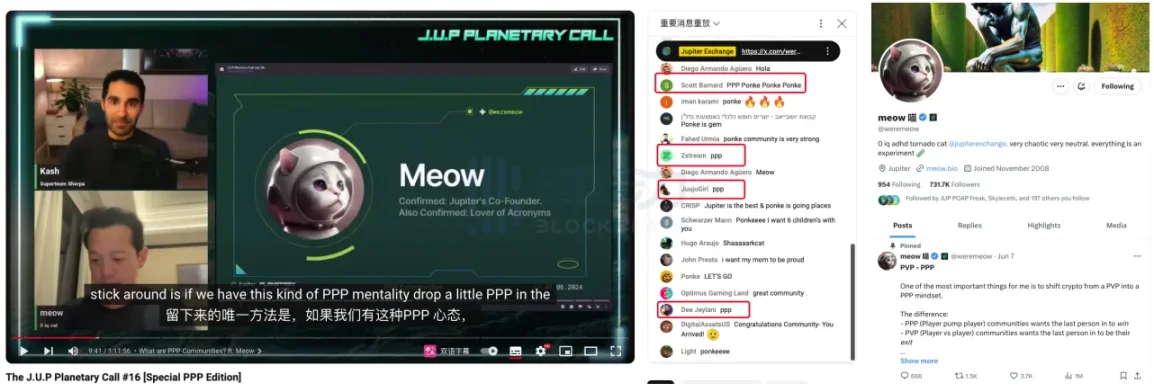
“Let’s Fucking Go”
Through continuous Q&A, Jupiter realized that merely letting the community observe wasn’t sufficient for true “activity.” They needed to participate—become builders themselves.
Thus, Jupiter launched its Launchpad, handing project selection power directly to the community. Jupiter DAO was created for this very purpose. In February, Jupiter launched its DAO, requiring a 50 JUP stake to vote. To date, over 350 million JUP have been staked by more than 550,000 unique addresses.
After the first test proposal passed, Jupiter immediately held its first LFG Launchpad vote, drawing over 200 million JUP in participation. Notably, in Jupiter DAO, retail holders hold voting power nearly equal to whales. According to data from LFG Round 3, voting power and independent wallet counts were closely aligned—the winning project received 59.4% of voting power and 60.7% of individual wallet support, showing remarkable parity.

Beyond voting, Jupiter involved DAO members throughout the entire Launchpad process. Jupiter LFG Launchpad consists of four stages: application, presentation, voting, and launch.
Applicants must post project details on the Jupiter forum, allowing the entire community—not just the team—to act as evaluators. The level of interaction between a project and the community is treated as “community sentiment,” a major factor in determining finalists. To succeed, applicants must actively engage with the Jupiter community, answering questions and building trust—generating positive feedback loops that bring substantial traffic and attention to the ecosystem.
Finalist projects receive a dedicated channel in Jupiter’s official Discord and conduct AMAs with the team, increasing transparency and communication opportunities. Post-livestream, these AMA clips are edited and reposted individually, each regularly receiving thousands of views. Finally, the winning project launches alongside the Jupiter protocol token.
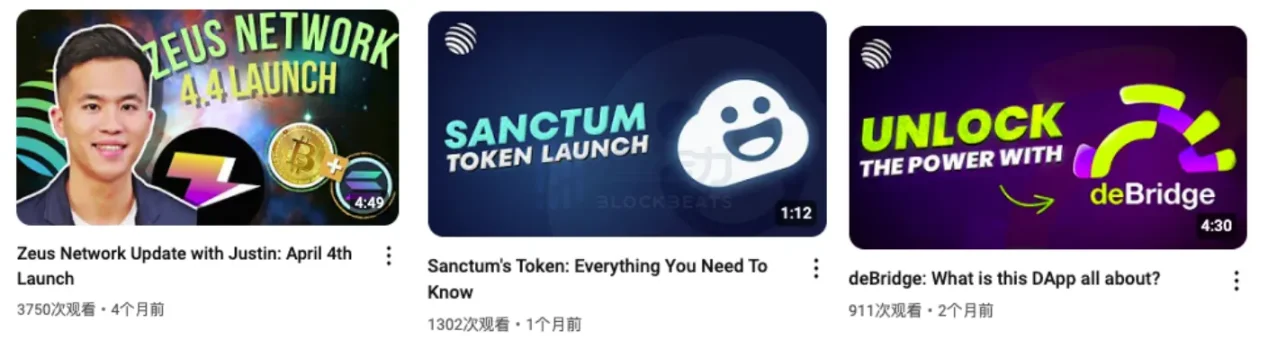
From left to right: AMA video clips of Zeus, Sanctum, and deBridge—the winners of LFG Rounds 1, 2, and 3
Public voting greatly boosted community engagement. Many users participated in Launchpad like gambling on low-cap projects, leading LFG to be jokingly called “Let’s Fucking Go.” According to Similarweb, during the Launchpad period, the LFG website received over 3.23 million pageviews. Concurrently, the DAO conducted two LFG voting rounds, generating over 3.4 million pageviews—data closely matching.
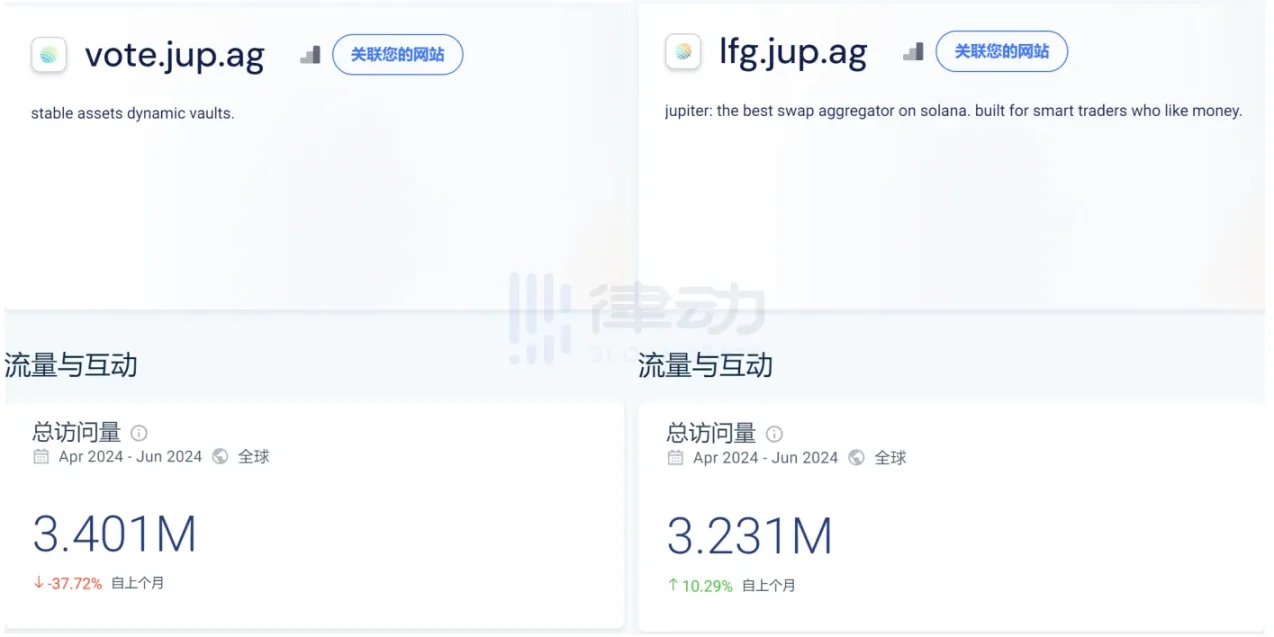
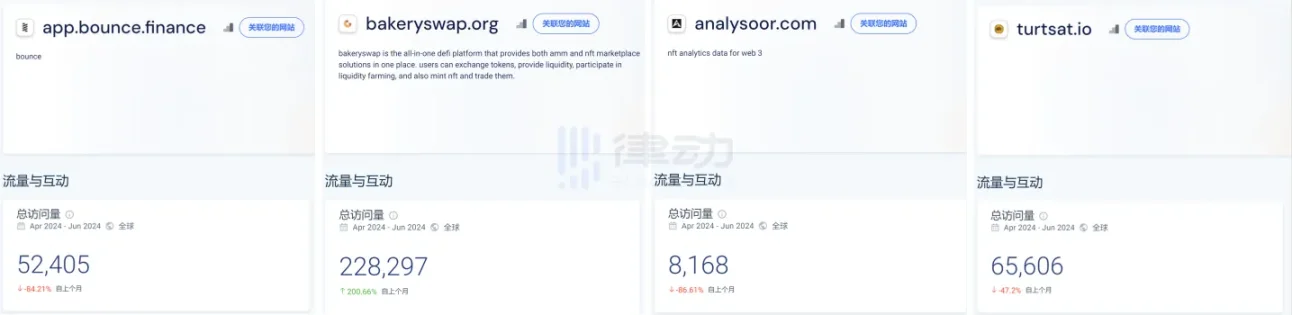
For a platform launched in April—less than six months old—Jupiter Launchpad’s traffic outperforms other launchpads. Four once-popular on-chain launchpads—Bounce Brand, BakerySwap, Analysoor, TurtSat—combined saw only 355,000 visits, roughly one-tenth of Jupiter’s volume.
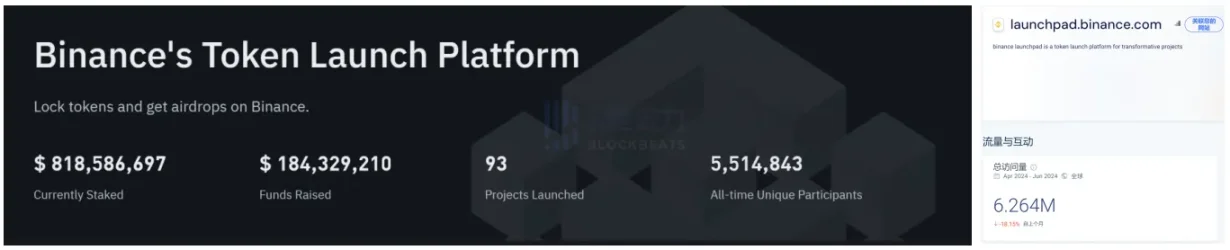
Compared to off-chain platforms, Binance Launchpad—the most active—has launched 93 projects with over 5.5 million unique participants, both figures ten times higher than Jupiter’s. In the past three months, Binance launched six projects and recorded 6.26 million website visits. Meanwhile, LFG, having launched three projects, achieved over half of Binance’s traffic.
Misaligned Consensus
Jupiter’s efforts in community building have yielded visible results, proving the team’s ability to attract numerous collaborators.
After announcing LFG rules, 20 projects applied for the first round, followed by a steady stream of new applications. Countless meme communities rallied behind PPP, hailing Jupiter as a “revolutionary.” Whether through social media engagement, DAO voting, participating in LFG, or promoting PPP, Jupiter consistently drew massive user involvement. But does high热度 really mean strong consensus?
What Are You Voting For?
The first winner, Zeus Network, officially launched on Jupiter LFG on April 4. ZEUS had a total supply of 50 million and closed at $0.776. OKX quickly listed ZEUS, hitting $100 million in trading volume within 20 minutes. But the rally didn’t last—within a week, ZEUS crashed to $0.185, down tenfold from its peak.
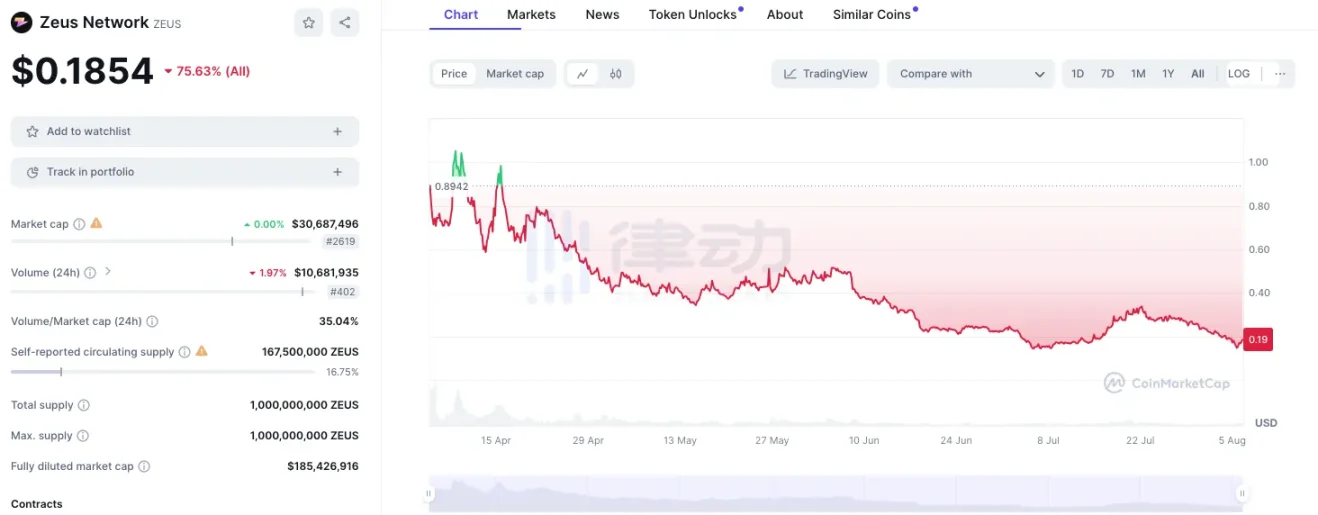
The day after ZEUS collapsed, voting began for LFG Round 2. With little time to react, retail investors rushed into the next round like chasing another dog coin—pouring all their enthusiasm into the second vote.
Sanctum, the second-round winner, frequently connected with Jupiter’s team early in the campaign. Related videos on Jupiter’s official YouTube channel garnered thousands of views and strong KOL backing. It not only attracted over 230 million votes—the highest in any LFG proposal—but also secured 64% of votes, surpassing the first and third-round winners, neither of which exceeded 60%.

From left to right: Results of LFG Rounds 1, 2, and 3
Yet Sanctum later faced backlash over its airdrop distribution. On July 16, Sanctum opened its airdrop claim portal. Its rules allowed the team to handpick 2,000 “genuine contributors” to receive 50 million tokens—defined as users who promoted Sanctum on social media. This sparked outrage among “points farmers” who had invested real capital.
The project was chosen collectively by the community, yet ended poorly—suggesting consensus hadn’t truly formed. Jupiter’s goal with Launchpad was to foster synergy between projects, the Jupiter ecosystem, and Solana. This alignment should guide community decisions—not just speculative returns.
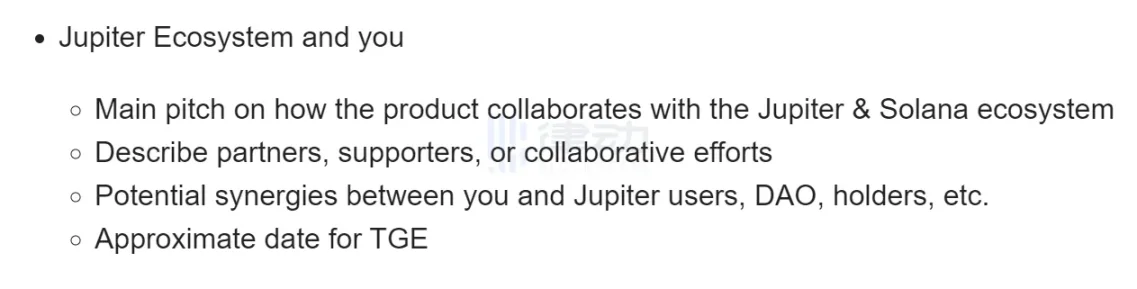
LFG application template, source: Jupiter Forum
For many community members, participating in LFG feels like making an investment. A failed project means lost money—so voters naturally favor projects with unique advantages.
An insider told BlockBeats: “Winning LFG projects have strong engagement—lots of users actually use their protocols. Personally, I vote for projects that maximize my benefit.” For him, projects he’s used or wants to use gain priority: “Because launching via LFG gives the project a big boost in visibility and valuation, and I get airdropped tokens too.”
Additionally, comparing同期 candidates, winners Zeus and Sanctum both had strong VC backing. Crypto Weituo explained to BlockBeats: “Retail voting logic is influenced by VCs and CEXs—they believe only VC-backed grand narratives can list on major exchanges.”
Zeus announced an $8 million raise at a $100 million valuation in early April, backed by Mechanism Capital, OKX Ventures, Animoca Ventures, and The Spartan Group. Angel investors included Solana co-founder Anatoly Yakovenko, Stacks co-founder Muneeb Ali, and Mechanism Capital founder Andrew Kang.
Similarly, on April 4, Sanctum announced a seed extension round led by Dragonfly, with participation from CMS, DeFiance Capital, Genblock Capital, Jump Crypto, and Solana Ventures. Angels from LayerZero Labs and Drift Protocol also joined, raising $6.1 million total.
Other finalists, like NFT lending protocol Sharky.fi and NFT liquidity protocol Banx, also had funding, though far less than Zeus. Sharky.fi only raised from Token Ventures (amount and date unknown); Banx raised $1 million in 2022. Projects like DePIN infrastructure Uprock, clean energy network Srcful, and MonkeyDEX had no known funding records.
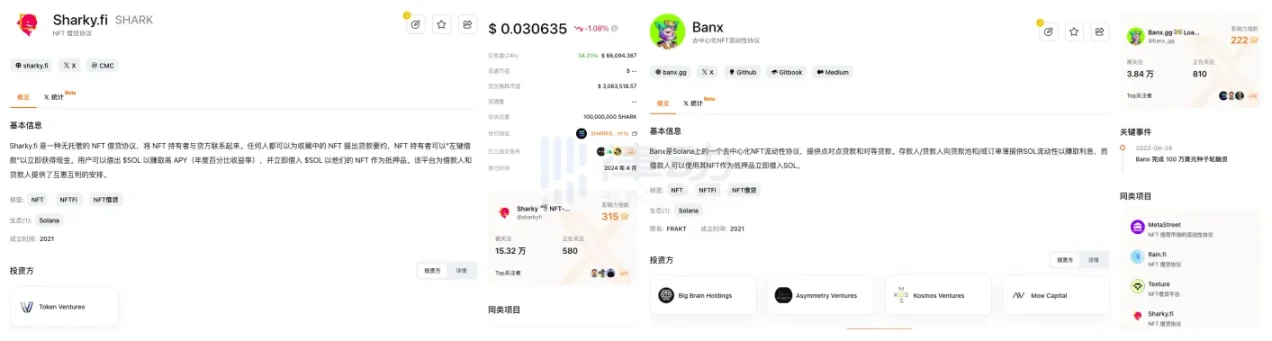
Source: rootdata
So what happens when all candidates lack VC backing? How do retail voters decide then? Crypto Weituo invoked meme coin logic: meme coins are inherently unbacked, yet often see higher volumes than VC coins. But when placed alongside VC-backed projects in a Launchpad vote, retail investors struggle to evaluate fairly.
“That’s the paradox of the Launchpad model,” Crypto Weituo said. Platforms like Jupiter, DaoMaker, and Seedify are fundamentally similar—removing on-chain signals without reducing risk exposure.
Furthermore, because Jupiter emphasizes fairness and deliberately minimizes vote-buying, any user staking at least 50 JUP can vote—one wallet, one project, one vote per JUP. Wind Wu commented: “This turns voting into a mere formality.”
There’s Trust
At the end of July, Jupiter launched a new meme-focused initiative—CAT Launch Mechanisms—announcing ASIANMOM as its first project.
When ZachXBT exposed that partner Irene Zhao had repeatedly participated in scam projects, Jupiter inevitably became a focal point of controversy. Discussion around Irene and Jupiter intensified. ALL IN CLUB promptly hosted a Space, drawing over 1,300 live listeners, with Irene herself appearing. Yet, the community’s consensus did not strengthen despite the surge in attention.

Not only Chinese communities condemned Irene—English speakers urgently demanded explanations from Jupiter.
That same night, Jupiter responded during its 22nd Planetary Call with one word: “trust.” Meow stated, “Without trust, PVP happens. With trust, PPP happens.” Irene told BlockBeats that meme launches are complex and require long-term commitment—like extended lockups—demanding sustained community engagement. Clearly, Jupiter still relies heavily on “faith” to push PPP forward.
If earlier PPP trust stemmed from Jupiter’s status as a Solana leader, trust in ASIANMOM now hinges solely on transparency. As Jupiter responded to community and ZachXBT’s skepticism, Irene repeatedly emphasized during the Space: “All token supply allocations will be fully transparent.”
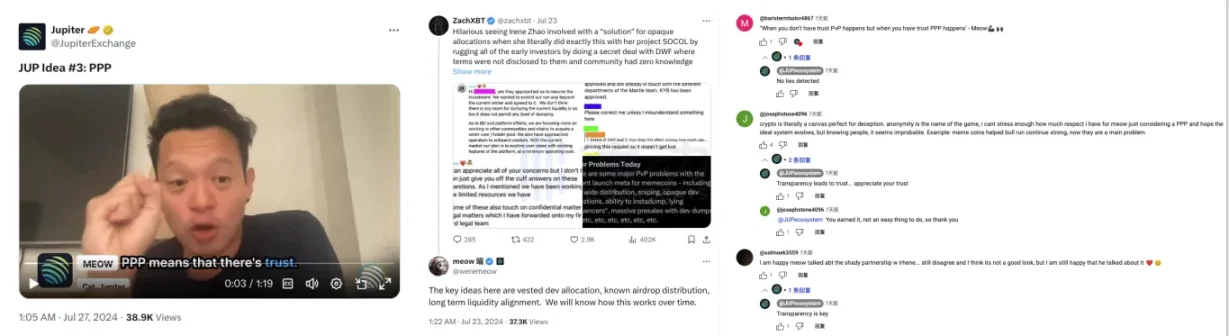
Jupiter’s transparency is widely recognized. But Irene’s track record over three years in crypto shows missing fund flows from past projects—hardly aligning with “transparency.” Though she claims an 18-month lockup for her ASIANMOM tokens and full traceability, doubt has already taken root. The community can’t simply ignore it.
In reality, Jupiter never hid its desire to bring memes onto Launchpad—if they’re good enough, they can apply for LFG. But all LFG applicants so far fall under GameFi, NFT, DeFi, or infrastructure—traditional categories. So Jupiter took direct action, launching meme-specific mechanisms and advancing PPP experiments. Irene confirmed in the Space that her collaboration with Jupiter was prearranged, and the PPP experiment content was jointly developed.

LFG Launchpad guidelines, source: Jupiter Forum
The day after ASIANMOM imploded, meow hosted a two-hour livestream with MOTHER founder Iggy. He stressed the importance of building trust and recognition in Web2. Perhaps what Jupiter values most is Irene’s cross-over experience between Web2 and Web3.
Before entering Web3, Irene spent years as an Instagram influencer. Transitioning into Konomi as CMO, she built her personal brand and amassed Web3 popularity and followers within six months. She told BlockBeats: “The Telegram sticker pack modeled after IreneDAO hit over 1,000 downloads in just three days—all from native Web3 Telegram users, including many industry leaders.”

Left: YouTube livestream of meow & Iggy; Right: IreneDAO Telegram stickers
Irene emphasized in the Space that the main reason for the collaboration was meow’s love for the “Asian mom” narrative. Seeing MOTHER inspired meow, a Chinese man, to want an “Asian mother” figure of his own. To him, the “mother” narrative isn’t just a meme—it symbolizes a self-replicating cultural unit.
Meow also noted that in pop culture, “mother”-themed memes gain visual appeal and memorability, creating a perfect storm of emotional connection, polarization, and cultural resonance—making them highly effective and enduring. Thus, Irene—with existing Asian mom community roots—naturally became Jupiter’s ideal partner.
But regardless of reasoning, the partnership felt like a surprise raid to the community. Without strong prior consensus, the trust and faith built up instantly crumbled the moment ZachXBT presented evidence.
Despite Irene telling BlockBeats that she and Jupiter’s Launchpad, Uplink, and airdrop teams have been deeply discussing implementation—with most teams involved in designing the mechanism—her past history unavoidably raises doubts about her capabilities and leadership potential.
Moreover, beyond preaching “trust,” Jupiter has yet to make concrete progress. When asked about PPP’s prospects, Wind Wu replied: “Memes are PVP. Meow isn’t a savior—he can’t change anything.”
The Best Alternative
“Love JUP, avoid Launch”—this may be the highest praise the community can offer after repeated Launch failures. It also indirectly shows that while high community热度 hasn’t translated into strong consensus, focusing on attention economics isn’t necessarily wrong.
This cycle, DeFi has generally underperformed. According to Dune, daily DEX trading volume reached $4.26 billion, with Uniswap dominating nearly half. Yet according to DeFiLlama, Uniswap’s volume has stagnated since the start of the year. Hence, DEXs must turn to attention markets, making LFG Launchpad and meme launches essential steps. Transparent LFG attracts native Web3 traffic, while meme launches with partners like Irene tap into Web2’s market potential.

Left: DEX market share; Right: Uniswap’s TVL and trading volume trends in 2024
DeFi stagnation reflects on altcoins. According to Binance Research, 2024’s altcoin MC/FDV ratio stands at just 12.3%—the lowest in three years. Explaining Launchpad’s poor performance, Wind Wu told BlockBeats: “Beyond project quality concerns, this may also relate to the broader altcoin market slump.”
“Last bull cycle had metaverse, NFTs, GameFi—any project matching hot themes could rise. This cycle, 99% of alts peak at launch. Aside from Solana memes, no real breakout projects exist,” Wind Wu added.
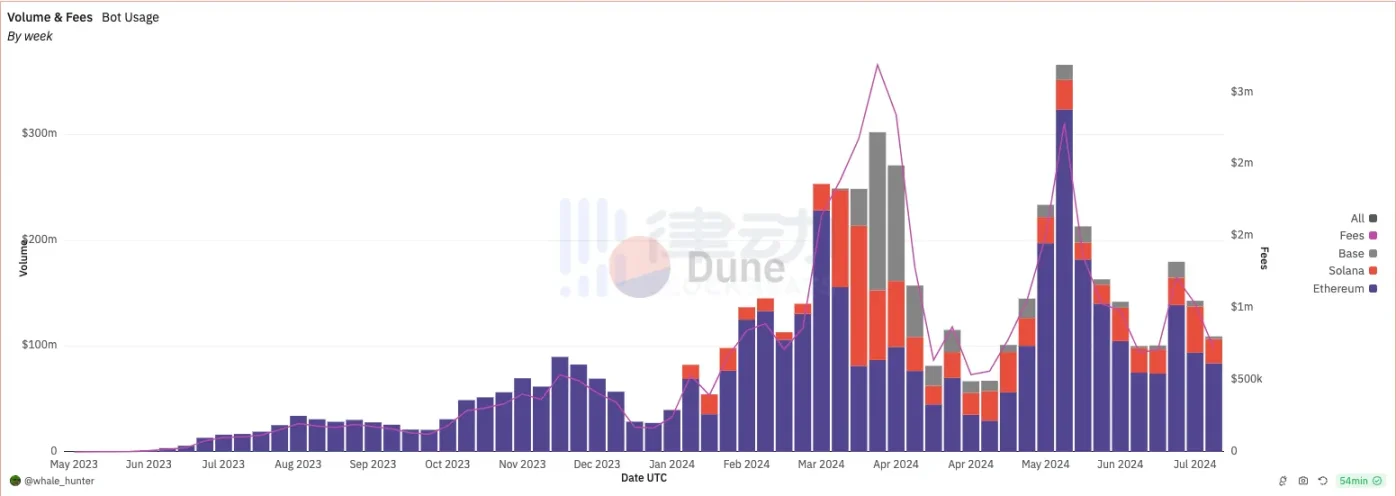
Due to increasingly frequent meme surges, tools like TGBot—which offer copy-trading, analytics, and cross-chain asset movement—have further eroded DEX market share. Per Dune, Banana Gun achieved $5 billion in volume during meme hype, now exceeding $5.6 billion, averaging over $23 million daily.
Within a year, Banana Gun surpassed MetaMask, Curve Finance, and Raydium in protocol revenue. Its multi-million-dollar earning power caught Binance’s eye—during its seventh anniversary, Binance listed BANANA as its first HODLer Airdrop project.
Among DEXs, Solana DEXs show slight improvement. According to Defillama, in July, Solana DEX volume hit $55.876 billion, slightly surpassing Ethereum’s $53.867 billion—marking the first time Solana’s monthly DEX volume exceeded Ethereum’s.
Yet despite both being Solana leaders, Jupiter has long suffered user drain to Raydium. Dune data shows most Solana DeFi users are on Raydium. While pump.fun has steadily captured Solana users since launch, Raydium remained relatively unaffected compared to Meteora—another Jupiter-affiliated project.
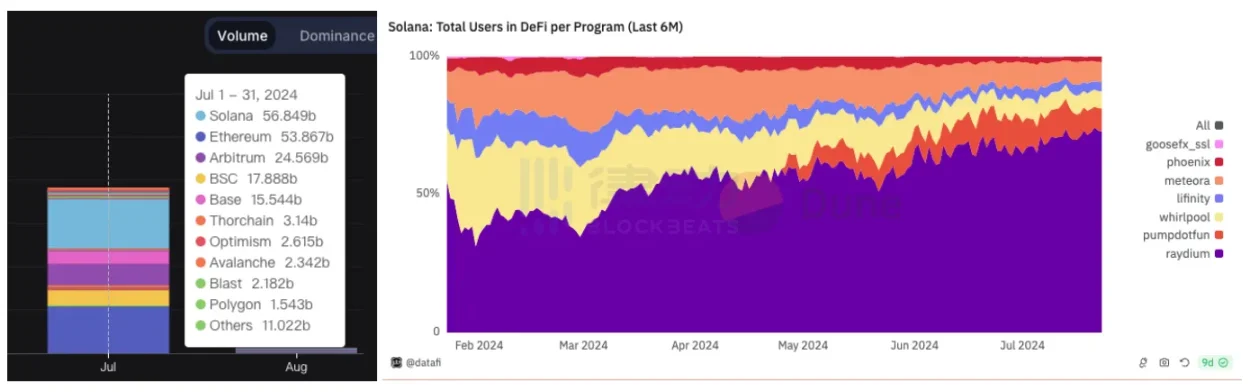
Left: DEX volume ranking by chain; Right: Total users across Solana DeFi protocols
Moreover, per Messari’s Q2 Solana Ecosystem Report, Raydium became the primary beneficiary of pump.fun, seeing a 77% MoM increase in daily trading volume to $867 million, with TVL reaching $991 million—the highest among Solana DeFi protocols. By comparison, although Jupiter remains the main source of Solana trades (accounting for 51% of DEX volume), Raydium overtook it in market share by quarter-end.
With TGBot ahead and DEX rivals behind, Jupiter is willing to “shed feathers” to attract long-term players and capital. Going mainstream is part of that strategy.
From the legendary pizza-for-Bitcoin story to Ethereum’s launch to Musk boosting Dogecoin, each cycle has its breakout narrative. This cycle, outside the space, ETFs fueled a Bitcoin bull run; inside, Solon led a meme-fueled rally. Celebrity-led meme entries might be Jupiter’s chance to break out.
In conversation with Iggy, meow firmly expressed his desire to be the first true Alpha. To him, only the first celebrity project proven successful and sustainable long-term earns that title. Bringing celebrities onboard, creating launch platforms, and forging brand partnerships are vital for visibility and revenue. Jupiter hopes to map out a path for guiding and elevating specific token awareness through collaborations and merchandise.
This is essentially a battle for attention. However, Irene doesn’t think it’s the right time for Web2 stars to enter. She told BlockBeats: “Current Web3 is dominated by on-chain players who aren’t eager to support Web2 celebrities.”
Additionally, for a Web2 celebrity project to succeed, they must already have some Web3 recognition. “It’s not like anyone can just drop a selfie NFT and go viral,” Irene added. “Others tried copying IreneDAO but failed—they didn’t understand meme or Web3 culture.”
When asked about promoting PPP in Web2 communities, Irene replied: “Most Web2 folks don’t even know what PVP is—talking about PPP is premature.” Plus, “most Web2 celebrities are only driven by profit, not genuine interest in the industry.”
Still, Jupiter’s focus on attention economics won’t shift. It will continue aggressively pursuing every opportunity, capturing every potential “believer.” As meow put it: “Most great entrepreneurs, politicians, and influencers are masters of hype—because you need massive attention to take meaningful action.”
Join TechFlow official community to stay tuned
Telegram:https://t.me/TechFlowDaily
X (Twitter):https://x.com/TechFlowPost
X (Twitter) EN:https://x.com/BlockFlow_News
 BlockBeats






