Interview with DWF Senior Advisor Fiona: Balancing Token Unlocks, Strategic Focus on Consumer Applications, and Optimism for Hong Kong's Crypto Market Development
TechFlow Selected TechFlow Selected
Interview with DWF Senior Advisor Fiona: Balancing Token Unlocks, Strategic Focus on Consumer Applications, and Optimism for Hong Kong's Crypto Market Development
Without high-quality DApps, a robust blockchain cannot be built.
 Navigating Web3 tides with focused insights
Author: Marco Manoppo & The Launchy Team
Compiled by: TechFlow

Hi everyone,
We're currently launching our new podcast. It'll still take a bit of time, but I recently had the chance to interview two close friends and investors.
So please enjoy these final two episodes of Chain Venturer v1 — v2 will be out once we’re all set. This is just a little teaser :)
Have a great weekend. — Marco
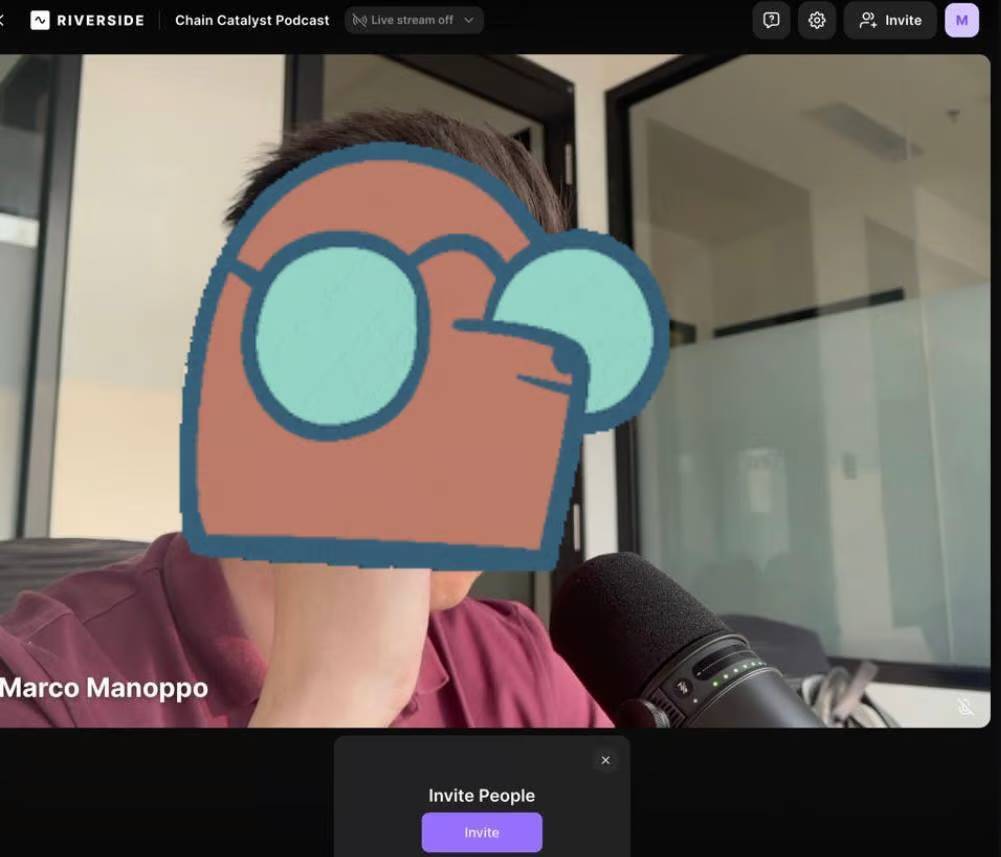
Fiona Ma from DWF Labs

Fiona Ma is a Senior Advisor at DWF Ventures, the venture capital arm of DWF Labs. DWF Labs is a next-generation Web3 investor and crypto market maker, one of the world’s largest high-frequency crypto trading entities, conducting spot and derivatives trading across more than 60 top-tier exchanges globally.
Fiona has an outstanding career spanning both Web3 and traditional finance. Since early 2023, she has been working at DWF Ventures managing the firm’s venture investments. Her responsibilities include research, identifying promising founders, and conducting investment evaluations to support investment decisions.
Before entering Web3, Fiona began her career in traditional finance, gaining extensive experience in private equity and Goldman Sachs Investment Banking. Her expertise focuses on growth investing and M&A, primarily covering TMT, consumer & retail, and financial institutions sectors.
Fiona holds a BBA degree from the Stephen M. Ross School of Business at the University of Michigan. Prior to college, she competed for eight years as a member of Hong Kong’s national swimming team.
Below is my interview with Fiona Ma.
Quick takeaways:
-
DWF Labs is a powerhouse in crypto trading, market making, and investing, with over 700 portfolio companies.
-
Finding the right balance and designing a stable, rational token unlock schedule is crucial to addressing the current high-FDV, low-circulation issue.
-
While token-driven venture models have dominated so far, Fiona expects the number of private equity deals may gradually increase as the crypto industry matures.
-
The relationship between infrastructure and decentralized applications (DApps) resembles the chicken-and-egg dilemma—great blockchains can’t exist without quality DApps, and great DApps can’t exist without solid foundational blockchains.
-
As yield farming becomes increasingly complex and requires higher expertise, Fiona anticipates the average number of participants engaging in such activities may decline.
PS: The following sections are not verbatim quotes. They are paraphrased interpretations of our conversation, adapted for written format. In this process, some context and nuances may not have been fully conveyed.
The author of this piece assumes no responsibility for any misinterpretations in this issue.
All information provided by this publication and its affiliates is for educational purposes only and should not be considered financial, legal, investment, or any other form of advice.
What was the defining moment that drew you into crypto?
Fiona’s crypto journey began during DeFi Summer in 2020, when she first started exploring cryptocurrencies like Bitcoin and Ethereum. This exploration led her to experiment with various decentralized finance (DeFi) protocols, which she found highly compelling.
Defining moment: In 2021, Fiona was working at a $7 billion AUM private equity family office. Beyond traditional Web2 investments, she began exploring crypto opportunities for the firm. Inspired by her senior crypto-focused boss—who had built substantial wealth through early Bitcoin investments—Fiona decided to dive deeper into crypto. Leveraging her background in private equity and venture capital, she entered the crypto VC space in 2022. She currently works at DWF Ventures, continuing to explore the vast potential of this industry.
What is DWF Labs?
DWF Labs is a well-known market maker and multi-stage Web3 investment firm, and one of the largest high-frequency trading firms globally. Currently, DWF Labs conducts spot and derivatives trading across more than 60 leading exchanges. With over 700 portfolio companies, DWF Labs is experiencing rapid growth and expansion.
DWF is best known for its market-making services, but it also operates an RFQ (Request for Quotation) platform facilitating OTC trades in liquid markets. Additionally, the company has a venture capital and incubation arm focused on early-stage investments, particularly at the seed and angel stages, while selectively participating in later rounds. While DWF Ventures is not limited to specific sectors, it tends to invest in consumer and DeFi areas.
What are your thoughts on the phenomenon of low circulation and high FDV? Do you think alternative funding models like private equity are needed for consumer crypto products unsuitable for traditional VC?
Fiona believes there's no absolute right or wrong, as issues often have multiple perspectives.
On one hand, concerns within the community about high FDV and low circulation in many crypto projects are understandable, especially since Q4 2024. These characteristics can make projects more vulnerable to price manipulation and sell-off pressure. Meanwhile, the altcoin market hasn't fully recovered, and some highly anticipated token launches from major infrastructure projects have failed to meet expectations.
As a result, retail traders have become more cautious toward high-FDV, low-circulation projects. More traders appear to favor more liquid projects where tokens are fully or largely locked, as these are theoretically more resistant to manipulation. Looking ahead, more VCs might also reduce interest in high-FDV, low-circulation projects and shift toward earlier-stage, lower-valuation opportunities.
On the other hand, Fiona also believes that large-scale token unlocks in early project stages could pose problems, especially for long-term projects requiring sustained team commitment and community contribution.
If a project front-loads most of its token incentives early, later users typically receive significantly smaller rewards. This could make attracting new participants in later stages difficult. Moreover, if project teams can unlock their allocations too early, their motivation to continue contributing may diminish. Therefore, finding the right balance and designing a stable, reasonable token unlock schedule will benefit long-term sustainability.
Compared to token-centric crypto VC models, Fiona believes private equity approaches may better suit crypto business models centered on equity. The EigenLayer acquisition of Rio is a prime example of using a private equity acquisition model. While token-driven VC models have dominated so far, Fiona expects we may see increasing numbers of private equity deals as the crypto industry matures.
What are your thoughts on investing in consumer-facing crypto projects, given the challenges in this space?
Looking ahead, DWF Ventures is targeting more consumer-facing opportunities. Fiona notes that most infrastructure today has become homogenized, leading to diminishing returns. Despite the surge in Layer 1 and Layer 2 chains, most lack widely used applications. This presents challenges for scaling and broader adoption. Thus, the crypto industry needs more high-quality consumer applications to attract organic users and liquidity.
Fiona points out that the relationship between infrastructure and decentralized applications (DApps) resembles the chicken-and-egg problem. Great blockchains cannot exist without quality DApps, and quality DApps cannot exist without solid foundational blockchains. For example, Arbitrum’s leading position as an L2 solution owes much to GMX’s adoption.
DWF Ventures believes that consumer-facing applications will be the biggest winners in this cycle. When the next wave of mainstream users enters crypto, the apps they use daily will capture most of the traffic and attention.
For instance, Telegram is one of the largest social and messaging platforms both inside and outside the crypto space. This creates opportunities for consumer projects built on the TON ecosystem to attract users simply by staying within Telegram’s user interface. TON, leveraging Telegram’s powerful distribution channel—similar to WeChat mini-programs in China—can help consumer projects achieve mass adoption. This is evidenced by Notcoin and Catizen rapidly growing to millions of users. Hence, DWF Ventures sees significant potential in this type of consumer DApp.
What are your thoughts on airdrops and their impact, especially amid recent criticism? Are you more bullish or bearish on them? Do you expect more projects to adopt aggressive anti-Sybil measures?
Fiona observes that airdrops play an important role in the crypto ecosystem, particularly as marketing strategies to drive user engagement with protocols. However, many retail users may become increasingly disappointed, especially upon realizing that some protocols they participated in didn’t deliver the expected airdrops or transparency. As yield farming grows more complex and requires higher expertise, Fiona expects participation among retail users may decrease.
Regarding LayerZero’s anti-Sybil mechanism, Fiona views it as a valuable social experiment. While opinions on their approach vary, she acknowledges their innovative efforts in this area. She emphasizes that the true measure of a project’s success lies in its ability to create products users genuinely find valuable—not merely relying on airdrops and promotional tactics. Ultimately, sustainable growth in crypto will depend on building real utility, not just capturing attention.
What are your thoughts on Hong Kong’s Bitcoin ETF?
Fiona takes a positive view of Hong Kong’s broader crypto ecosystem, not just its Bitcoin ETF. She notes that crypto adoption in Hong Kong is becoming increasingly widespread, with crypto-related ads and posts visible throughout the city. Government support is evident through approvals of Bitcoin ETFs and grants offered to Web3 companies.
She also mentions that DWF Labs has sponsored the Hong Kong Web3 Festival in both 2023 and 2024, noting a significant increase in attendance this year. Industry leaders such as Vitalik Buterin and many Western ecosystem founders have come to Hong Kong to speak at events. Participation from major ecosystem projects in main conferences and side events reflects growing regional commitment in resources, time, and effort.
Therefore, Fiona sees these developments as positive signals for Hong Kong’s crypto ecosystem, although she acknowledges regulations may evolve over time. She remains cautiously optimistic and looks forward to observing how things unfold.
As a Pudgy holder, what advice do you have for other NFT founders who are struggling?
A well-developed intellectual property (IP), complete with unique backstories, characters, or themes, can give NFTs greater perceived value and collectibility—much like how Disney’s IP drives value in Web2. Thanks to the Pudgy team’s efforts, the Pudgy Toys series is now available at major mainstream retailers like Walmart, Toys "R" Us, and Amazon, marking a significant step toward mainstream adoption of Web3-based IP.
Community always comes first—and it’s not easy. Pudgy Penguins frequently dedicates significant time and resources to host offline events in cities like Hong Kong, Malaysia, and Singapore. Additionally, Pudgy Penguins CEO Luca Netz consistently engages with community members on X and other platforms. This level of interaction is remarkable. When Fiona spoke with him, he was very friendly and made her feel like a respected holder, not just another anonymous one.
The founder’s personality and charisma are also critical. For example, despite past controversies, Azuki’s founder Zagabond maintains a strong following due to his charisma and community trust. Founders must act as spokespersons and know how to effectively enter the market—this logic applies to all projects in crypto. For instance, Sreeram from EigenLayer is an excellent speaker who frequently appears at conferences, demonstrating the importance of founder presence.
Additionally, providing benefits to the community enhances engagement and satisfaction. For example, Pudgy Penguins received several airdrops from infrastructure projects like LayerZero and ZKSync, which were greatly appreciated by holders.
Quickfire Questions
-
What should every aspiring investment professional read/watch?
-
"Zero to One: Notes on Startups, or How to Build the Future" by Blake Masters and Peter Thiel
-
What was your biggest investment mistake?
-
Investing in the wrong meme coin. Fiona’s liquid portfolio mainly consists of BTC, ETH, and select altcoins and meme coins she strongly believes in.
-
What is the most underappreciated use case in crypto?
-
One of the most common yet underappreciated use cases in crypto is decentralized payments. While it may not be the most exciting narrative, enabling decentralized, borderless fund transfers can be life-changing for many—especially in developing countries.
-
What is your most contrarian view in crypto right now?
-
It may no longer be contrarian. When TON wasn’t getting much attention, Fiona started regularly investing in and supporting TON tokens early on.
-
What is the biggest risk facing crypto?
-
Regulatory uncertainty in decentralized finance (DeFi).
Join TechFlow official community to stay tuned
Telegram:https://t.me/TechFlowDaily
X (Twitter):https://x.com/TechFlowPost
X (Twitter) EN:https://x.com/BlockFlow_News
 @launchy_