








Peso depreciates, yen and yuan surge as global carry trades suffer massive collapse
TechFlow Selected TechFlow Selected
Peso depreciates, yen and yuan surge as global carry trades suffer massive collapse
The analysis suggests that the massive unwinding of carry trades was initially triggered by the Bank of Japan's rate hike, but growing concerns over global economic growth have further fueled the turmoil in recent days, intensifying the market moves.
 Navigating Web3 tides with focused insights
By Yaqi Zhang, TechFlow
The unwinding of global carry trades is turning into a major rout, shaking financial markets worldwide and sending the Japanese yen and Chinese yuan higher.
On Monday, major global stock indices plunged sharply. As the sell-off in risk assets intensified, everything from equities to cryptocurrencies suffered heavy losses.
Currency markets were hit hard, with the Australian dollar falling around 2%:
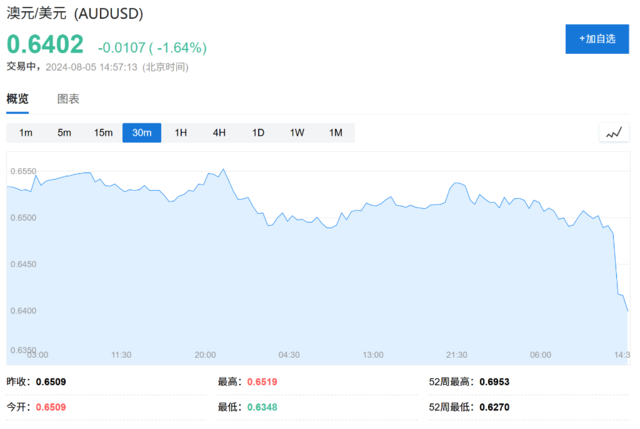
The Mexican peso dropped more than 5% against the U.S. dollar:
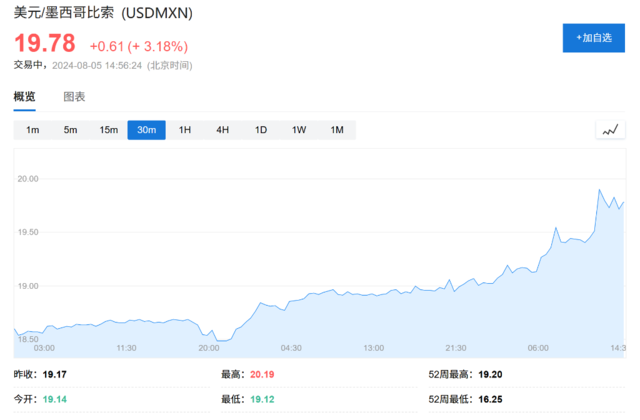
Two currencies frequently used as funding sources for carry trades surged—the yen rose over 3%, pushing the dollar-yen exchange rate down to 143;
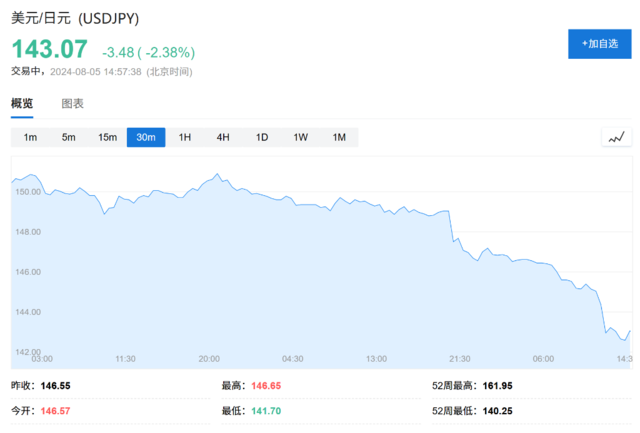
the yuan gained approximately 0.7%.
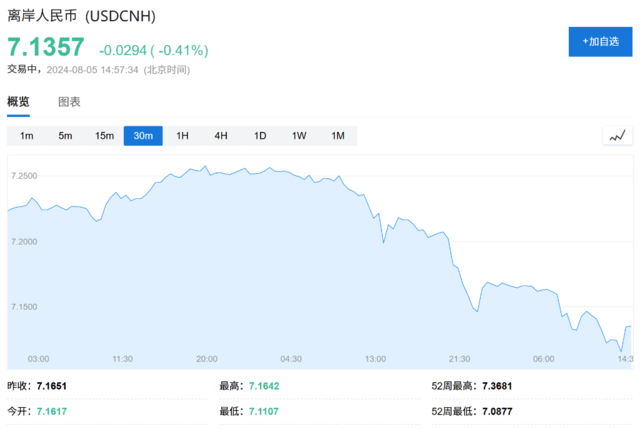
The sudden appreciation of funding currencies has damaged carry trade strategies—borrowing in low-interest-rate currencies to invest in higher-yielding assets. The rise in the yen and yuan has made such strategies unprofitable.
Growing concerns are mounting that the Federal Reserve is falling behind the curve in addressing the slowdown in the U.S. economy. Investors are flocking to bonds as safe-haven assets. The yield on the U.S. 10-year Treasury note fell 5 basis points to 3.74%; China's 10-year government bond yield dropped below 2.10%, the first time on record.
Fears of a U.S. economic recession have increased market volatility, further undermining carry trades. Alvin Tan at Royal Bank of Canada noted that rising recession risks create an unfavorable environment for carry traders.
Recession risks also imply greater market volatility, prompting investors to scale back carry trades.
I think this situation could easily persist, as we’ve already been in a prolonged period of low volatility—over a year, in fact.
Investors who once relied on carry trades may now face a reality where previously effective strategies no longer work: the Bank of Japan raised rates for the second time recently and signaled potential further hikes; data shows that returns on a basket of emerging market currencies denominated in renminbi are negative, while gains from yen-denominated trades have nearly vanished.
Nick Twidale, chief market analyst at ATFX Global Markets, said there has been massive liquidation of carry trade positions—“everyone is running for the exits at the same time.”
Join TechFlow official community to stay tuned
Telegram:https://t.me/TechFlowDaily
X (Twitter):https://x.com/TechFlowPost
X (Twitter) EN:https://x.com/BlockFlow_News










