Bitcoin Political Power Game
TechFlow Selected TechFlow Selected
Bitcoin Political Power Game
If Trump is elected, will he fulfill his promises, and could aligning with him damage cryptocurrency's reputation among the general public?
 Navigating Web3 tides with focused insights
Author: Greythorn
As Bitcoin gains political prominence in the 2024 U.S. presidential election, this phenomenon is reshaping the electoral landscape. Influential figures such as the Winklevoss brothers and Kraken’s Jesse Powell have made political donations worth millions of dollars, sparking intense debate within the crypto community. In fact, the cryptocurrency industry has spent more on the 2024 U.S. election than the entire energy and healthcare sectors combined.
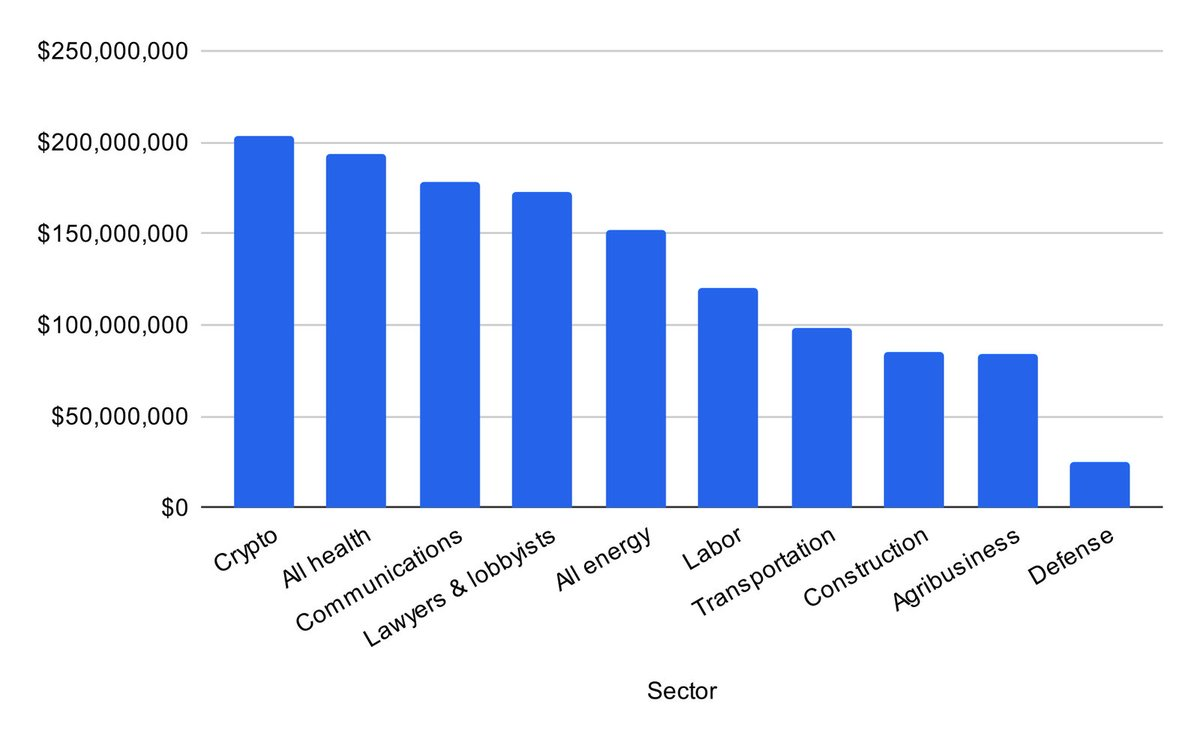
Source: OpenSecrets
At the recent Bitcoin conference, Trump suddenly voiced support for Bitcoin, surprising the entire industry and reflecting a broader trend: Bitcoin and other cryptocurrencies are no longer just financial tools but key topics in political discourse. The crypto community, particularly on platforms like Crypto X, is divided. Some openly support Trump, believing his endorsement benefits the industry's growth, while others feel pressured to back him due to perceived hostility toward crypto from the Democratic administration. Arthur Hayes is one prominent figure expressing concern, arguing that Trump’s support for crypto is not genuine but merely a strategy to attract donations, and that Trump will forget about crypto once elected. In today’s article, we’ll dive deeper into this topic and explore various potential outcomes for Bitcoin under different election and post-election scenarios.
Prevailing View: Trump Is Good for Crypto
As the election approaches, several candidates have made their stance on Bitcoin clear, signaling a significant shift in how digital assets are perceived. Robert Kennedy Jr., Vivek Ramaswamy, and Ron DeSantis have all publicly endorsed Bitcoin, advocating policies that protect and encourage its use. Recently, Donald Trump has also shown support for Bitcoin—surprising many given his previously skeptical stance. This has been well received in the crypto community because:
-
Despite protectionist tendencies during his previous term, Trump generally favors deregulation and market freedom. This suggests his administration might adopt a less restrictive approach to crypto regulation compared to the Biden administration.
-
His focus on economic growth and job creation could lead to policies encouraging investment in crypto businesses, fostering an environment conducive to startups and innovation, stimulating economic activity and job opportunities.
-
He has expressed skepticism toward developing a CBDC (central bank digital currency), allowing Bitcoin to dominate the market.
-
His government may take a competitive stance against other nations, aiming to ensure U.S. leadership in financial technology and the global crypto market.
-
At the Bitcoin 2024 conference, Donald Trump demonstrated notable support for the crypto industry, marking a shift from his earlier critical position on Bitcoin.
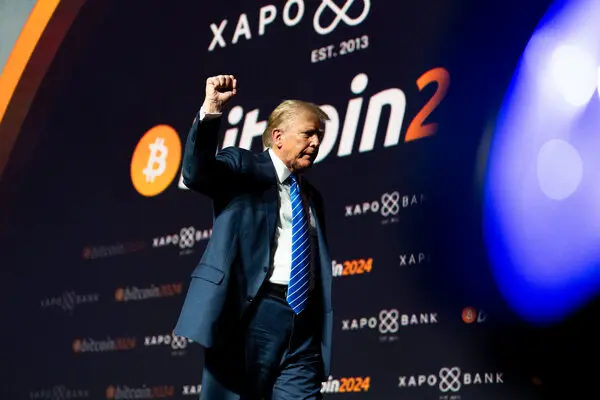
Source: The New York Times
In contrast, the Democratic scenario appears less favorable:
-
A stricter regulatory framework could be established, increasing compliance costs for crypto businesses.
-
The Biden/Harris administration has shown interest in developing a U.S. CBDC, according to reports, which could lead to increased scrutiny and regulation of existing cryptocurrencies, paving the way for a digital dollar.
-
Both Biden and Kamala Harris emphasize climate change and environmental sustainability, potentially leading to policies targeting PoW (proof-of-work) cryptocurrencies like Bitcoin.
-
There may be increased tax scrutiny on crypto transactions and stricter reporting requirements for individuals and businesses.
We don’t claim to be political experts, but this seems to fairly represent the general community sentiment toward the two candidates’ stances on crypto.
Alternative View: Trump Might Be Bad for Crypto
Or at least not as good as it initially appears. As mentioned earlier, prominent crypto figure Arthur Hayes recently argued that Trump isn’t genuinely supportive of crypto. He believes Trump’s pro-crypto stance is primarily aimed at winning votes in key swing states rather than representing a real commitment. Hayes contends that, like many politicians, Trump will say anything to get reelected but won’t follow through once in office. He also warns that crypto supporters may naively trust Trump’s promises and advises demanding concrete pro-crypto legislation before the election.
We find this a very interesting perspective, as history shows candidates often fail to deliver on their promises. Perhaps Trump truly intends to honor his commitments to Bitcoin—we simply don’t know. Either way, it’s a viewpoint we should all consider. Now, another angle to consider when relying entirely on Trump’s support for crypto:
Trump Could Lose
The current political climate is unpredictable, with numerous polls showing conflicting results. In the U.S., polls suggest Trump could win. However, global trends show that the political landscape is dynamically shifting.
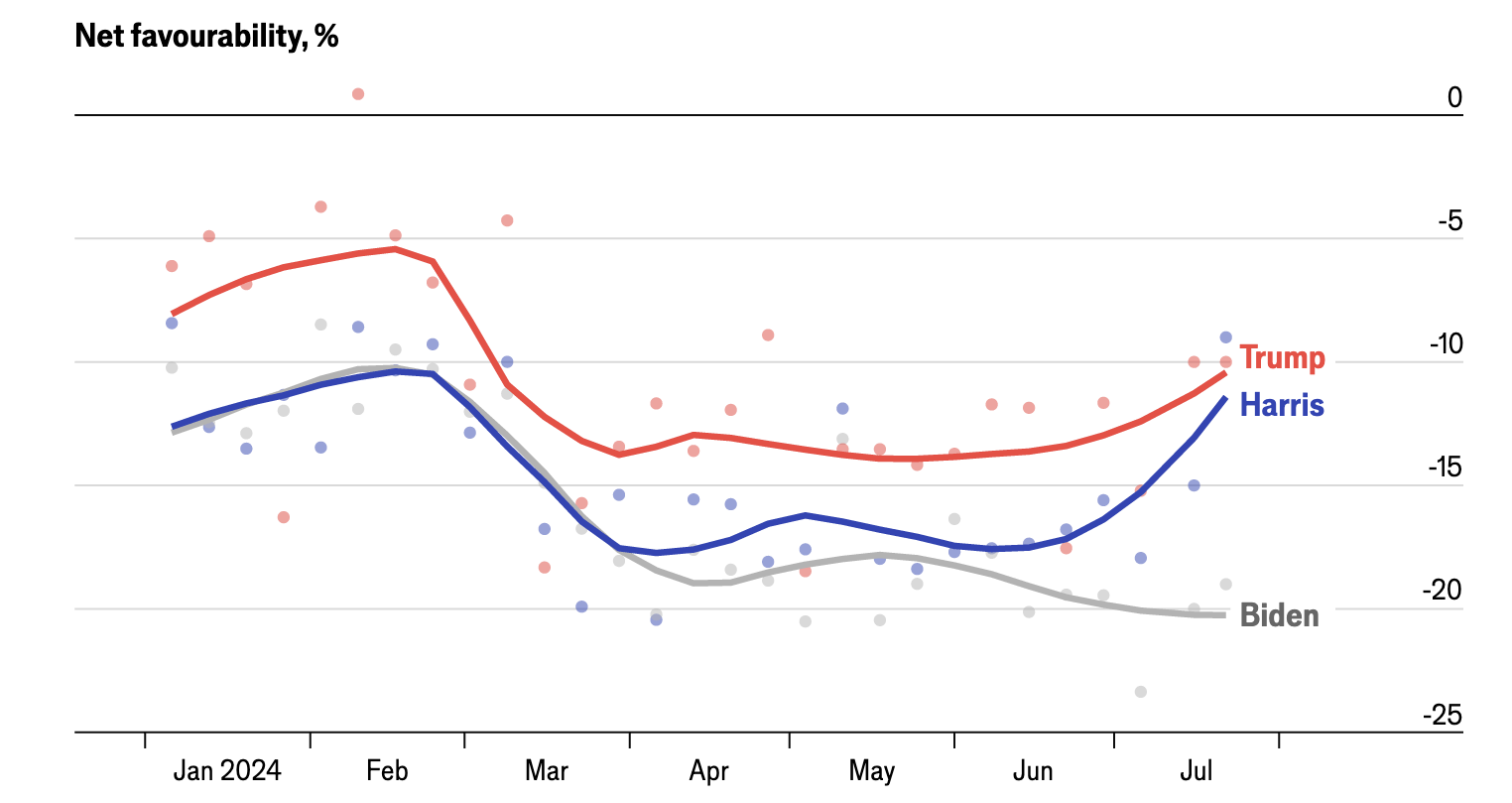
Source: The Economist
Spanish General Election
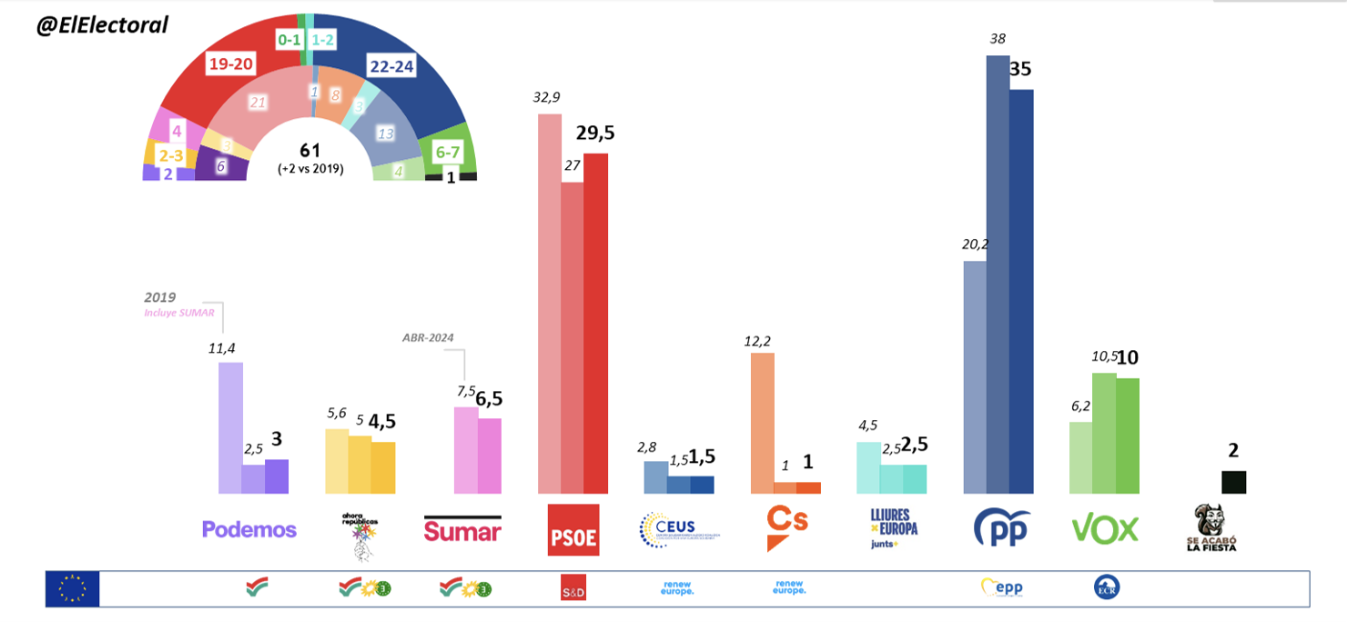
In Spain, the right-wing People’s Party (PP) was expected to win, with pre-election polls suggesting they could secure a majority with support from far-right Vox. The PP (blue) won the most votes, securing 136 seats in parliament, but even with Vox’s 33 seats, they fell short of an absolute majority. Unexpectedly, the left-wing Spanish Socialist Workers' Party (PSOE, red), led by Prime Minister Pedro Sánchez, outperformed expectations, winning 122 seats. Sánchez successfully negotiated with smaller parties to remain in power.
Source: ElElectoral
Political Surprise in France
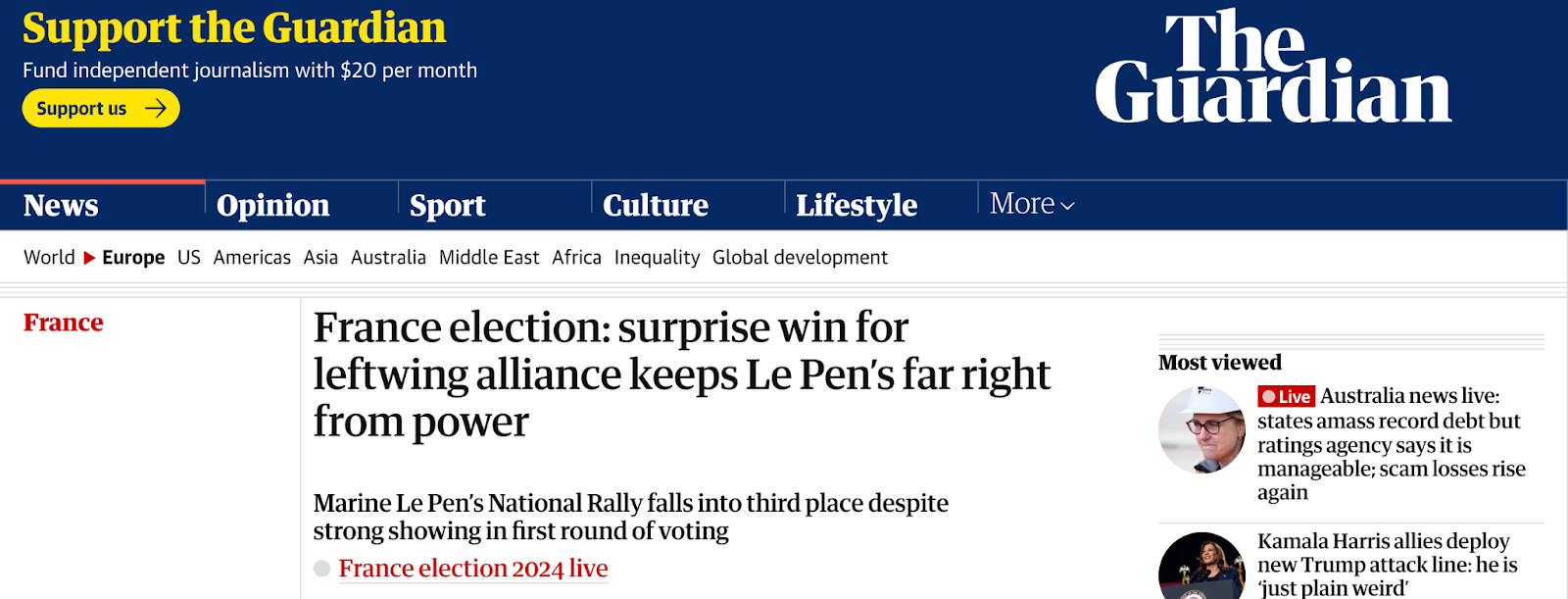
In France, the far-right National Rally, led by Marine Le Pen, appeared poised for victory. However, in an unexpected turn, her party suffered a major defeat in the second round, failing to finish second. This outcome was largely due to left-wing factions uniting to counter the right-wing challenge.
Source: The Guardian
Labour’s Revival in the UK
The UK political landscape underwent a historic shift. The left-wing Labour Party, led by Keir Starmer, achieved a landslide victory in the 2024 general election, ending 14 years of Conservative rule. Labour secured 412 seats, while the right-wing Conservatives, led by Rishi Sunak, suffered their worst defeat, winning only 121 seats. This marks Labour’s return to power with a strong mandate.

Source: CNBC
Recent elections in Spain, France, and the UK illustrate broader trends of political unpredictability and shifting voter loyalties. Right-wing movements often generate significant noise, with Trump supporters and wealthy individuals vocalizing opinions across platforms. However, their policies frequently favor the wealthy and fail to resonate with ordinary people facing high living costs, layoffs, and eroding social welfare systems.
These everyday individuals may lack equivalent platforms to voice their views, but their votes carry equal weight. This isn’t about endorsing one side over another, but preparing for unexpected outcomes that could impact markets—especially Bitcoin.
Considering the possibility that Trump might lose, what would be the implications for Bitcoin and the market if Kamala Harris were elected?
She has shown some interest in the crypto space, fueling speculation about her stance on Bitcoin. Recently, rumors circulated that she might speak at the Bitcoin 2024 conference. This raised hopes among some in the crypto community that she might soften her position on digital currencies. However, she ultimately decided not to attend or speak at the event. This decision was seen as a missed opportunity to engage with a growing base of crypto enthusiasts and voters. Her stance appears cautious—while she hasn’t issued any explicit anti-Bitcoin statements, her choice not to directly engage with the Bitcoin community at such a high-profile event suggests she may not yet fully embrace the sector.
Conclusion
The purpose of this article is to offer as balanced a view as possible on the current state of cryptocurrency and its political implications, exploring both potential benefits and risks when the crypto community aligns with specific political parties. Questions remain: If elected, will Trump actually deliver on his promises? Could aligning with him damage crypto’s reputation among the general public? As a community, the best course may be to keep Bitcoin and other cryptocurrencies nonpartisan, focusing instead on pushing for clear crypto regulations before the election—prioritizing tangible outcomes over political promises, as Arthur suggested.
Join TechFlow official community to stay tuned
Telegram:https://t.me/TechFlowDaily
X (Twitter):https://x.com/TechFlowPost
X (Twitter) EN:https://x.com/BlockFlow_News
 Greythorn