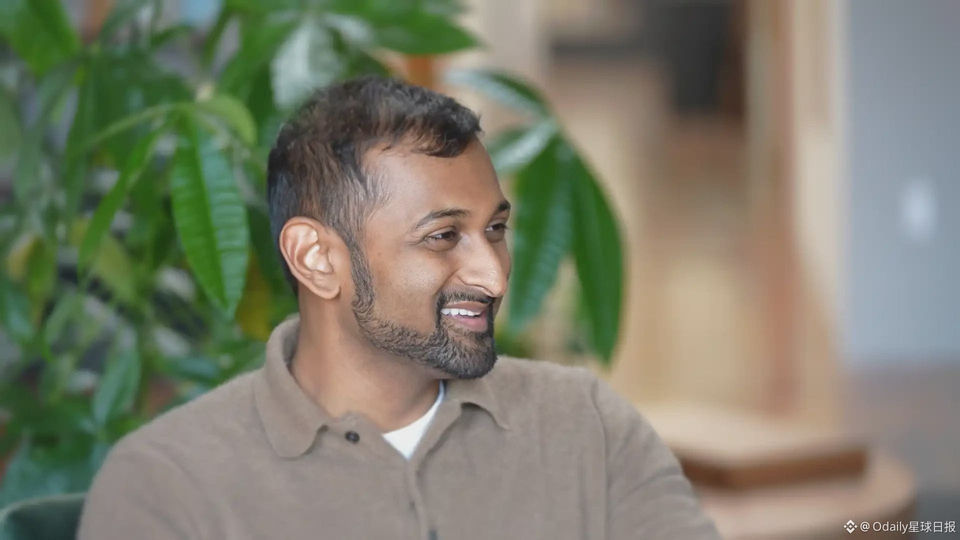
Coming from a securities background and capturing numerous Alphas—how to bet on cycles and赛道 (sectors)?
TechFlow Selected TechFlow Selected
Coming from a securities background and capturing numerous Alphas—how to bet on cycles and赛道 (sectors)?
"3.12" Loss of 100 BTC to the fund manager.
 Navigating Web3 tides with focused insights
Guest: Rocky
Host & Editor: FC_0x0, Founding Partner at SevenX Ventures
Content from Space, FC Talk | In Conversation with Trader Rocky: How Did He Nail Most Alpha Plays? What Research Logic Does a Trader With a Brokerage Background Use?
Where would someone go after earning their first fortune of 20 million RMB during the ICO era, then losing half a small goal worth of BTC in the March 12 crash?
@Rocky_Bitcoin’s answer: becoming the manager of a secondary market fund that has generated 4.5x returns.
In Rocky, I see how powerful review and systematization can be in accelerating one's trading growth. His experience in position management, portfolio tracking, and risk control offers valuable insights for anyone trading in this market. He also openly shared his views on the current cycle, the five key sectors he’s betting on and why, and detailed how he captured $RNDR and $KAS.
All content is for sharing purposes only and does not constitute any investment advice.
I. About Trader Rocky
At the core of trading is the “person.” One’s experiences, background, personality, and capital nature shape their trading strategy.
(1) What Is Rocky’s Trading Strategy?
1. Trading Logic
-
Running a discretionary strategy for a secondary-market fund
Using a combination of Alpha and Beta: seeking high returns through Alpha, while anchoring performance to BTC trends via Beta.
-
Top-down (macro-to-micro) research and investment framework:
Macro analysis determines trend and position sizing, sector analysis selects target verticals, and project fundamentals guide project selection and portfolio management.
2. Capital Size
Capital size should be determined by acceptable drawdown risk. In crypto—a high-risk, high-return alternative asset class—capital should be at a level where even total loss wouldn’t impact your lifestyle, ensuring long-term holding capacity.
Capital must match the number of investment targets: 0–200k USD, ~5 positions; 200k–1M USD, ~10 positions; 1M–5M USD, ~15 positions; 5M–20M USD, ~20 positions; over 20M USD, no more than 30 positions.
Currently managing 45 million USD in AUM.
3. Expected Return and Capital Cycle
As Zhou Jintao said, “Getting rich in life depends on Kondratiev waves”—cycles are often the key determinant of returns. When studying expected returns, what really matters is understanding the U.S. dollar cycle, because all risk assets are strongly correlated with it, as is capital timing.
Typically, the dollar runs on a 4.5-year cycle: two years of contraction (interest rate hikes), followed by 2.5 years of expansion (rate cuts). This push-and-pull creates the “dollar tide.” We are now at the end of the hiking phase, approaching the onset of the easing cycle.
On May 25, 2022, Rocky published a tweet outlining his cyclical outlook:
The first quarter of 2023 marks the bottom of the Kitchin cycle. The real breakout will come after rate cuts end and QE begins pumping liquidity, lasting until the end of Q3 2025—the peak of the Kitchin expansion. At that point, both U.S. equities and crypto are likely to reach their zenith.
4. Risk Control
Risk control consists of three pillars: position risk, portfolio risk, and baseline risk.
First, position risk—i.e., position management.
Position size directly determines drawdown depth and room to hold stablecoins. During downturns, holding stablecoins provides greater flexibility. Position management relies on macroeconomic data assessment, with different indicators weighted accordingly. Composite scores inform specific position recommendations. Currently, Rocky’s team places heavy weight on the following macro indicators: DXY (Dollar Index), 10-year Treasury yield, and M2 money supply data.
Second, portfolio risk—i.e., management of held projects.
The classic venture cycle—raise, invest, manage, exit—highlights that “management” is a critical stage. It enables assessing a project’s lifecycle stage, having confidence and rationale to average down during dips, or issuing early warnings and taking profits when decline sets in. Portfolio management is conducted via project dashboards tracking metrics such as user growth, DAU, TVL, revenue, etc.
Third, baseline risk control.
Rocky’s fund currently follows a 30-40 rule: 30% trigger for risk alerts, 40% liquidation line, supported by additional internal data points.
(2) Why Did Rocky Develop This Trading Strategy?
1. Trading Experience
Rocky went all-in on Web3 in 2016. His first fortune came during the 2016–2017 ICO boom. From 2018 to 2021, he ran a blockchain-focused media outlet and investment incubator. In 2022, he founded Blue Ocean Capital, which currently boasts a NAV of 4.5. Two pivotal experiences shaped Rocky’s trading philosophy—one instilled faith in the industry, the other taught him respect for the market.
First, Early Market Gains
When Rocky first encountered cryptocurrency, he thought it was utterly abstract—his worldview required tangible backing for any asset to have reasonable valuation. But trusting a friend, he allocated 200k RMB to crypto investments, achieving a 4x return within two months, starkly contrasting with the sluggish A-share market.
This windfall deeply impressed Rocky, prompting him to read widely—Bitcoin’s whitepaper, Hayek’s "Denationalisation of Money," "The Road to Serfdom"—leaning into free-market economic theories, forming a nascent belief. He then entered the space full-time in 2016 and earned nearly 20 million RMB during the ICO era.
Second, Losing 100 BTC on “March 12”
From late 2019 to early 2020, Rocky believed BTC had bottomed cyclically, so he opened a 1x leveraged long at around 7,000 USD. Based on the assumption that “BTC could never drop more than 50%,” he considered this a safe, guaranteed win. However, the extreme volatility of “March 12” wiped out 100 BTC. Rocky locked himself in a room for two months reviewing and reflecting.
This event triggered three major shifts:
-
First, adopting his “Three Nos”: no leverage, no futures contracts, no borrowing to trade crypto;
-
Second, building a formal investment risk management system and founding a team—separating operations (research and investing) from execution truly reduces risk exposure;
-
Third, shifting from “technical trader” to “value investor.” Technical indicators can help time entries and exits, but they cannot guarantee long-term returns.
2. Professional Background
Before entering crypto, Rocky worked as a researcher at Changjiang Securities Institute. His brokerage experience gave him two advantages: a solid macro strategy foundation and a top-down research framework—from macro, to sector, to individual projects. This systematic thinking continues to guide his crypto investments.
(3) Who Is Rocky’s Trading Strategy Suitable For?
Rocky’s strategy—or rather, his systematic way of thinking—is suitable for anyone aiming to “earn sustainably.” Holding long may not be hard; the challenge lies in aligning capital cycles with market cycles. Finding one alpha isn’t difficult; the real challenge is identifying promising sectors and consistently capturing alphas.
II. Rocky’s Trading Stories
Knowledge validated through action is true knowledge. Reviewing specific trades offers clearer insight into how strategies are applied.
(1) How Did He Capture Render ($RNDR) and Kaspa ($KAS)?
1. About Render @rendernetwork
Noticed Render due to Multicoin’s investment
In 2021, Multicoin invested 30 million USD in Render, which drew Rocky’s attention and led to long-term tracking. Two reasons made him particularly sensitive to Multicoin’s moves:
In 2021, Rocky’s investment strategy was to follow Multicoin—including SOL, GRT, AR, LPT—which delivered excellent returns.
Multicoin operates on research-driven investment, publishing detailed thesis reports for every bet, greatly influencing Rocky’s own investment thinking.
Fundamental analysis confirmed Render as investable
Render’s business model: positive cash flow loop
During that bear market, Rocky asked: which projects could survive? Answer: those whose revenue covers costs, creating a self-sustaining loop. Besides DeFi, few met this bar—Render was one. Render’s parent company is OTOY, whose product Octane serves Hollywood and Disney studios, already highly profitable. OTOY’s main issue was high compute costs, so its founder created Render to solve the compute shortage—not to launch a token for speculation.
Render’s founder: an extreme workaholic and tech fanatic
Rocky believes founders are crucial in evaluating early-stage projects—they define long-term trajectories.
Render’s founder has several traits: OTOY was already successful and well-funded; he led OTOY from 2008 to launching Render in 2017—nine years as a builder; and he routinely works over 50 hours per week—an obsessive workaholic and tech enthusiast who carries a customized 10-kilogram laptop to demo his software’s rendering capabilities.
Engagement with team revealed extra potential, confirming investment
Rocky was an Ethereum miner in 2017 with abundant GPU power. He once discussed compute collaboration with the team—though no deal resulted, he learned Render might open C-end GPU interfaces. Rocky saw huge demand here: post-Ethereum PoS transition, there’d be need for new projects to absorb idle compute. Though still unrealized, the potential was evident. He began accumulating around November 2022 at ~$0.50, making it a major position.
2. About Kaspa @KaspaCurrency
For the full story on Kaspa, refer to Rocky’s thread: x.com/Rocky_Bitcoin/, here’s a brief recap:
After Ethereum’s shift to PoS, Rocky sought new mining opportunities for his hardware, prompting his research team to search—and they found Yonatan’s project, Kaspa.
Yonatan (“Y God”) pioneered DAG (Directed Acyclic Graph) technology. Many projects using this tech—including IOTA and Avalanche—have drawn from Yonatan’s papers.
The entire team consists of professors from Hebrew University—a pure Israeli project. Israeli teams tend to persist until completion, a trait Rocky’s team values.
Kaspa uses 100% fair mining—no pre-mine, no team allocation, no VC involvement. Given the founder and team profile, they decided to try mining.
Despite monthly electricity losses of ~$30k due to low KAS price, mining output was strong—overall ROI reached nearly 200x. They sold part of holdings but remain invested.
Both Render and Kaspa share a common trait: decisions weren’t based on charts or technical indicators, but on deep research—reflecting Rocky’s post-March 12 investment philosophy evolution.
(2) Which Sectors Are Promising in the Bull Market’s Second Half? Why?
This question breaks into two parts: first, when will the bull market’s second half occur? Second, which sectors look promising?
1. Rocky believes the second half will likely begin after rate cuts start
Based on patterns from the past three rate-cutting cycles, monetary easing tends to shock markets, especially U.S. equities, potentially causing significant drawdowns during the cut phase. Key data from the last 30 years:
-
First, 2000 dot-com bubble: Fed funds rate dropped from 6.5% in 2001 to 1% in 2003. U.S. equities fell 49% from March 2000 to October 2002 (S&P 500).
-
Second, 2007–2008 financial crisis: rate dropped from 5.25% to 0.25%. Equities fell 57% from October 2007 to March 2009.
-
Third, 2019–2020 pandemic: rate dropped from 2.25% to 0%. Equity drawdown ~34%.
The upcoming cycle will drop from 5.5%, expected to stabilize around 2% over 2.5 years.
2. Rocky is bullish on five sectors: AI, RWA, DePIN, BTC Ecosystem, GameFi
In this market cycle, we saw a meme coin surge in October 2023 and another altcoin wave in February 2024. These rallies already reveal the dominant narratives. Projects or sectors that didn’t perform in these two waves likely aren’t worth much attention. Below are detailed reasons for the five favored sectors.
First, AI.
Top VCs are doubling down. Primary market interest remains strong—Q2 saw nearly $1 billion invested.
Second, RWA.
The RWA sector today is like DeFi in 2020. Previously, U.S. strategy was “dollar asset nationalization”—many countries held U.S. Treasuries. But recent yields have disappointed, prompting many to sell. So the U.S. has shifted toward “dollar asset democratization”—encouraging global retail adoption. This strategy succeeded in the latest dollar tide: amid currency depreciation in emerging markets (e.g., Argentine peso, Turkish lira), demand for dollars surged. Due to capital controls, this demand migrated online—to “digital dollars” like USDT and USDC. Notably, Solana—the de facto “U.S. blockchain”—has openly embraced RWA, a politically strategic move.
Third, DePIN.
One billion users is a tipping point—from incremental to exponential growth. Internet adoption exploded after hitting 1B users; similarly, 1B users will be a key inflection for Web3. DePIN represents the most viable gateway to bring Web2 users into Web3 at scale.
Fourth, Bitcoin ecosystem.
Bitcoin’s current $1.2 trillion market cap has yet to generate any yield-bearing assets. Once unlocked, this will unleash massive liquidity for reinvestment, creating a powerful new market. With increasing VC interest and derivatives like ETFs emerging, more use cases will unfold.
Fifth, GameFi / gaming sector.
In early internet days, games were the primary driver of user growth. GameFi plays the same role in Web3—user acquisition. Despite criticism over tokenomics, sustainability, and gameplay, the fundamental logic holds. Over time, these gaps will close. GameFi is still too young—comparing to Web2, GameFi is only at the Tetris, Super Nintendo, or Red Contra stage. It needs time and space to grow.
(3) When Might This Strategy Fail? What’s His Stop Doing List?
Rocky believes this cycle is likely the last one for ordinary individuals and small-to-mid institutions. The next phase may belong to Wall Street-style players:全天候对冲 (all-weather hedging), high-frequency trading, AI bots. Until then, he believes his strategy remains effective—but he’s actively investing in AI+ areas like AI-driven event triggers, AI-enhanced indicators, and AI-powered on-chain analytics.
Regarding his Stop Doing list, Rocky emphasizes doing right things instead of avoiding wrong ones. Here are five things not to do:
-
First, avoid leverage, avoid futures, avoid borrowing to trade crypto. If you’re skilled, spot trading alone can make you wealthy over time; if not, leverage only accelerates ruin.
-
Second, avoid high-frequency trading. Spend more time and energy researching macro, sectors, and projects.
-
Third, avoid working in isolation. Broaden your视野 (vision), engage with peers, communicate with industry veterans or experts, attend conferences.
-
Fourth, don’t invest in what you don’t understand. Only invest after gaining sufficient knowledge—this builds confidence.
-
Fifth, don’t seek shortcuts or try to overtake on curves. Social media fuels anxiety, leading to FOMO—but FOMO rarely generates profit. Stay disciplined to innovate. Focus on projects that genuinely contribute to Web3 or have compelling narratives—that’s where real value comes from. Value may seem intangible sometimes, but Web3’s progress so far has been driven by underlying value creation.
III. Rocky’s Must-Read List
Great traders grow through continuous external input—learning from others, exploring insightful content. We can also learn from others’ must-read lists to accumulate knowledge and grow.
Rocky categorizes recommended content into three types:
First, macro. Rocky strongly recommends retail investors learn about cycles.
Recommended books:
-
Zhou Jintao’s *Tidal Waves of Cycles* (Rocky has read this over ten times—he believes Zhou’s grasp of cycles is unmatched in China.)
-
Hong Hao’s *Cycles* (Rocky considers Hong Hao one of the few chief economists in China brave enough to speak truthfully.)
-
Kindleberger’s *Manias, Panics, and Crashes: A History of Financial Crises*
-
Rothbard’s *A History of Money and Banking in the United States*
-
Shiller’s *Irrational Exuberance*
-
Mankiw’s *The Economics of Business Cycles*, which uses numerous case studies and academic papers to explain the causes and dynamics of economic cycles.
Recommended Twitter accounts:
-
Bianco Research @biancoresearch—an institution with over 20 years in macro analysis
-
Bloomberg analysts: @matt_levine, @elerianm, @ritholtz
Second, industry.
-
Mainly track top VCs on Twitter—for example, in AI, Rocky follows @sequoia, @multicoincap, @a16z.
Third, specific projects
-
Mainly follow Messari reports @MessariCrypto, Nansen’s Smart Money data @nansen_ai, market sentiment tracker @lunarCrush, AI-driven Web3 trend monitor @TrendX_official, early alpha hunter @alphascan_xyz.
Final Thoughts
More important than answers themselves is recognizing questions and finding ways to solve them. I hope Rocky’s thinking brings value to everyone. And again, thank you to Rocky for sharing his first full retrospective of his trading journey with our “Trader Dialogues” series.
Join TechFlow official community to stay tuned
Telegram:https://t.me/TechFlowDaily
X (Twitter):https://x.com/TechFlowPost
X (Twitter) EN:https://x.com/BlockFlow_News
 7UpDAO