Web3 Lawyer: Unveiling TON's Legal Compliance Framework
TechFlow Selected TechFlow Selected
Web3 Lawyer: Unveiling TON's Legal Compliance Framework
At its core, TON's dispute with the SEC touches on a highly challenging issue in the digital asset space: how to define the nature of digital tokens and whether they should be classified as securities.
 Navigating Web3 tides with focused insights
Authors: Honglin Liu, Jinjianzhi, ManQin Law Firm
TON (The Open Network) is one of the most closely watched blockchain projects in today’s Web3 world. Originally developed by the founding team behind Telegram, TON aims to build a highly decentralized and scalable blockchain platform. Its core technologies include a multi-chain architecture and dynamic sharding, designed to solve widespread challenges in blockchain scalability and speed. The TON ecosystem supports applications across payment systems, decentralized storage, social networks, and more, offering broad support for developers.
The Origins and Evolution of TON
Understanding TON requires understanding its relationship with Telegram. Telegram is a free instant messaging app founded in 2013 by brothers Pavel and Nikolai Durov. Renowned for its strong security and user experience, Telegram quickly grew into one of the world’s leading communication platforms, now boasting nearly 900 million monthly active users and serving as a key tool within the Web3 community.
In 2017, facing growing demands from Telegram's massive user base, the Durov brothers began exploring blockchain solutions—only to find that no existing Layer 1 blockchain could meet their needs. As a result, they decided to design their own Layer 1 chain: the Telegram Open Network (TON). Through a 2018 token sale (of "Grams"), Telegram raised $1.7 billion, setting a record for fundraising scale in the crypto industry.
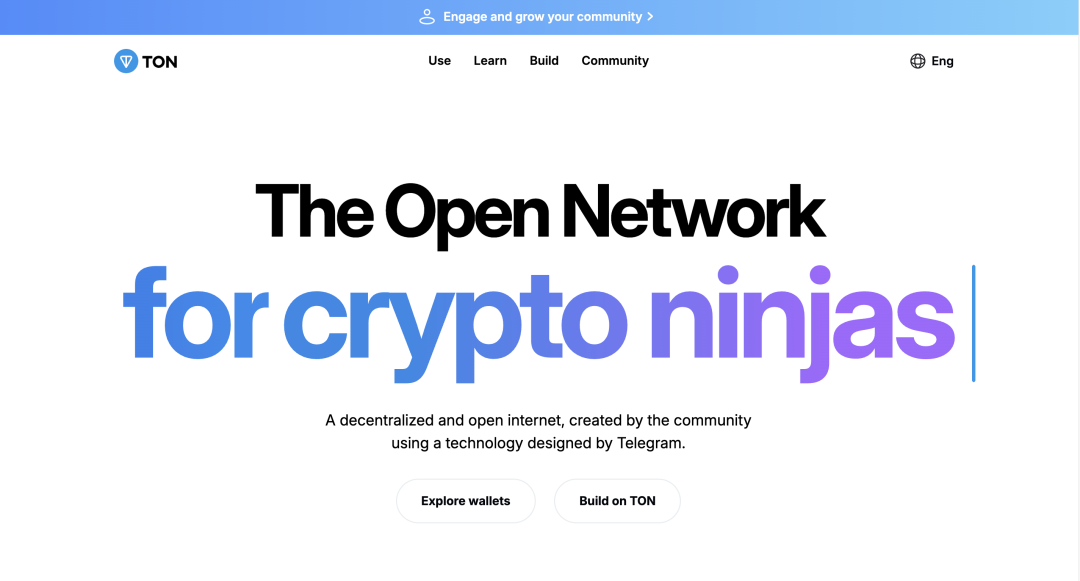
* Image source: TON official website
However, shortly after the TON team published a detailed blockchain architecture and launched two testnets, the U.S. Securities and Exchange Commission (SEC) filed charges in October 2019, alleging that Telegram had conducted an unregistered securities offering. This legal challenge severely hindered the project’s progress. After prolonged negotiations and legal battles with the SEC, Telegram announced in May 2020 that it would cease development of TON, agreeing to pay an $18.5 million settlement and return funds to investors.
Telegram’s withdrawal did not mark the end of TON. Between 2020 and 2021, a passionate group of open-source developers known as NewTON took up the mantle. They inherited and deeply studied TON’s technical architecture and codebase, remaining faithful to its original vision, ultimately restarting the project. In May 2021, NewTON was officially rebranded as the TON Foundation, and TON evolved from Telegram Open Network to The Open Network, continuing its journey toward decentralization and scalability.
TON’s Regulatory Challenges
Between 2019 and 2020, the original TON project faced not only allegations of unregistered securities issuance from the U.S. Securities and Exchange Commission (SEC), but also accusations of “inadequate investor protection.” According to the SEC's claims, ManQin Law identifies several compliance issues:
Unregistered Securities Offering
At its core, the dispute between TON and the SEC touches on a particularly challenging issue in the digital asset space: how to define the nature of digital tokens and whether they should be classified as securities. Under the U.S. "Howey Test," an investment qualifies as a security if it involves (1) an investment of money, (2) in a common enterprise, (3) with an expectation of profits, (4) derived primarily from the efforts of others. In the case of TON, the SEC argued that Grams met these criteria and therefore constituted securities subject to regulatory oversight.
Investor Protection and Transparency
Beyond the primary issue of unregistered issuance, the SEC also accused TON of insufficient investor protection. It claimed that Telegram failed to adequately disclose risks associated with the Grams token, particularly regarding its economic model, governance structure, and market potential. This lack of information could have led investors to make decisions based on incomplete data, exposing them to significant risk.
Cross-Border Legal Challenges
As an international project, TON’s fundraising activities spanned multiple jurisdictions. This complexity not only made compliance more difficult but also exposed the project to potential conflicts among different national laws, further increasing legal risk.
These challenges served as hard lessons for the TON project, but also provided valuable insights that have since informed its ongoing compliance strategy. Next, ManQin Law will analyze TON’s new architectural framework and compliance approach, offering strategic takeaways for Web3 entrepreneurs.
TON’s Compliance Architecture
Following its legal conflict with the SEC, the TON project refocused on building a robust compliance framework to address future legal and regulatory challenges. After thoroughly examining TON’s official website, ManQin Law has identified how TON maintains compliant and stable operations across multiple jurisdictions.
Non-Profit Entity: TON Foundation
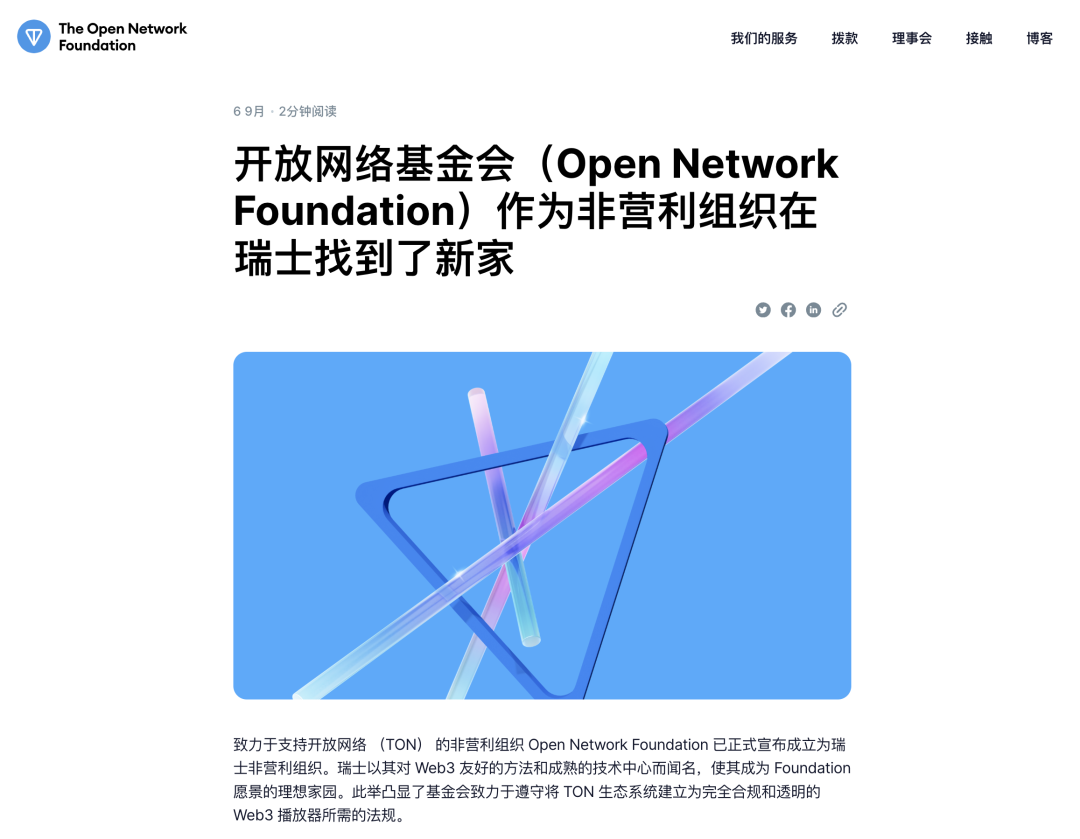
The six-month legal battle with the U.S. Securities and Exchange Commission (SEC), beginning in October 2019, had a profound impact on TON. As a result, in rebuilding its compliance architecture, TON chose to continue development through a non-profit entity—the TON Foundation (The Open Network Foundation). The foundation established its legal registration in Zug, Switzerland, known as the “Crypto Valley” for its crypto-friendly regulations—a jurisdiction also known for high compliance costs.
* Image source: TON Foundation official website
According to publicly disclosed information, the TON Foundation describes itself as “a fully community-donation-funded nonprofit organization that safeguards community interests by supporting initiatives aligned with its mission. While providing support to the TON project, the foundation does not control TON technology and is merely one of many network contributors within the decentralized TON community. TON operates on an open-source codebase, allowing anyone to contribute, with no single controlling entity.”
“Nonprofit, no control, decentralized, mission-driven, supportive”—these terms not only describe the role of the TON Foundation but also suggest the intended legal effect of this structure: isolating risks potentially arising from token issuance.
In practice, however, according to official disclosures, the TON Foundation serves as a supervisory and educational body for the TON blockchain and its ecosystem, performing numerous specific functions:
-
Community Governance. By publishing detailed roadmaps and regular progress reports, the foundation ensures transparency and helps steer the direction of TON. These reports comprehensively cover TONcoin’s tokenomics, issuance strategy, partner allocations, community incentives, and operational and ecosystem uses of assets.
-
User Education. The foundation provides educational resources explaining blockchain fundamentals and TON-specific technologies and ecosystems to enhance user understanding and engagement.
-
Developer Support. Through its Grants Program, the foundation coordinates, supports, and funds community-recognized projects, attracting more developers and boosting network growth and user activity.
-
Brand Partnerships. For example, on July 22, 2024, the TON Foundation and MOCA Foundation jointly announced a $20 million reserve of MOCA Coin and TONcoin, launching joint incentive programs—including open alliances, hackathons, and accelerator initiatives—to encourage developer and user adoption of the TON ecosystem.
-
Community Operations. Despite being a nonprofit, the foundation appears to perform some commercial operational roles. For instance, it publishes interviews and press releases under its own name. A July 23, 2024 release explicitly stated: “This is where the TON Foundation explores meme coins in the TON Ecosystem,” indicating that the foundation’s risk isolation is not entirely complete.
By choosing Switzerland as its registration jurisdiction, the TON Foundation strives for high compliance standards to minimize legal risk. Its declarations of decentralization and non-control aim to prevent regulatory scrutiny over token issuance. However, the foundation’s actual operational responsibilities and connections to commercial activities may require further clarification of its role to ensure full compliance with nonprofit regulations and avoid potential legal or tax liabilities. This compliance framework requires ongoing legal review and transparency to meet global regulatory expectations and maintain public trust.
Operating Entity: TON Community
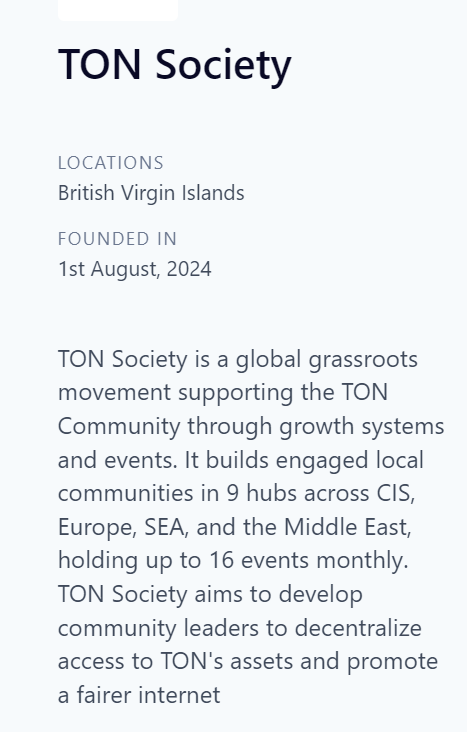
Although the TON Foundation performs certain community operations, much of the community management is handled by TON Society. According to information disclosed on the official website, TON Society has established active local communities across nine centers in Europe, Southeast Asia, and the Middle East, hosting up to 16 events per month—including major conferences and gatherings involving large audiences and open discussions. A key compliance challenge for TON Society is the inability to fully control all speech at these events, especially concerning public safety and content moderation, which could lead to legal liability. In certain jurisdictions, if events involve the promotion of securities, financial products, or other regulated activities, such situations become particularly sensitive and likely to attract regulatory attention.
* Image source: TON official website
ManQin Law discovered subtle clues on TON’s official website suggesting that TON Society should be a legally recognized entity—but it has not yet been formally established. Meanwhile, TON appears to be planning an offshore BVI corporate structure for this operating entity to mitigate potential legal liabilities arising from large-scale community events. After all, organizing large gatherings inevitably involves managing participants who may make impassioned statements, increasing the likelihood of regulatory scrutiny in certain jurisdictions.
Establishing an offshore company not only helps reduce liability-related risks but also strengthens legal protection for TON Society.
Development and Investment Entity
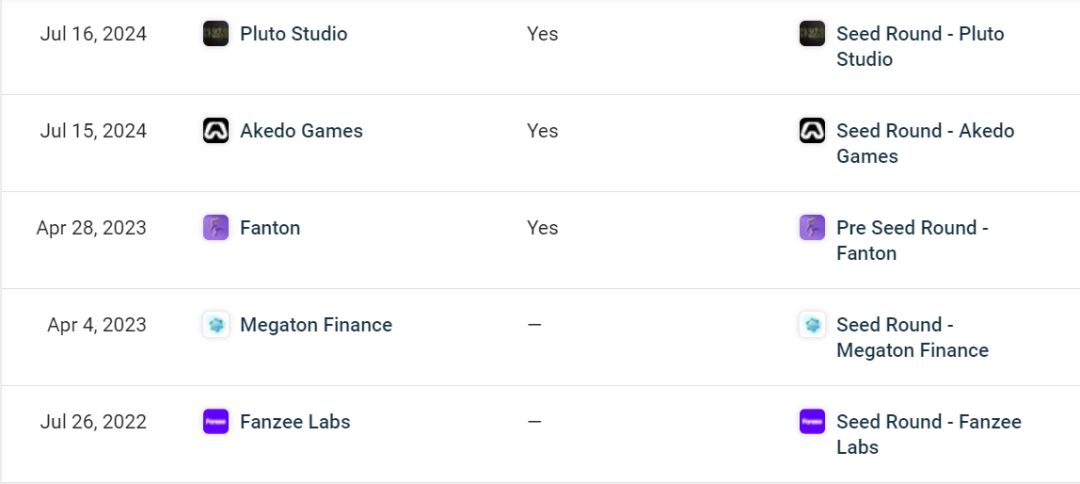
From the contact information listed in TON’s privacy policy—[email protected]—it is evident that First Stage Labs (also known as Top Labs or The Open Platform) is a key component of TON. Public records show that this entity is registered in the UAE and functions as a venture studio focused on seed-stage investments in the TON ecosystem, with multiple public investment records confirming its central role.
* Image source: Crunchbase
According to disclosures from Top Labs, beyond investment, it also possesses co-building capabilities, demonstrating its strength as a development firm. Notably, Top Labs manages several critical functions on the TON website—for example, operating TON’s wallet and running STON.fi, a DEX platform on TON. Moreover, Alena Shmalko, Ecosystem Lead at the TON Foundation, publicly confirmed that the wallet functionality is operated by Top Labs, further underscoring Top Labs’ pivotal role in development and technical services.
Another notable point is the TONStat feature, which updates daily statistics on the TON blockchain—including total transactions, performance metrics, and total fees—with the contact email [email protected], another direct link to Top Labs.
While Alena Shmalko mentioned in an interview: “That’s not our team; it’s a completely separate company called TOP (The Open Platform). They run the wallet, operate one of the DEXs on TON—STON.fi—and many other great TON projects, all funded and built by TOP.” From a legal equity standpoint, given the foundation’s independent, shareholder-free structure, this statement is technically accurate. But those who understand, know.
First Stage Labs plays a crucial role in technological development and investment within the TON ecosystem. Its independence and clear functional division are vital for TON’s overall compliance and legal risk management. Although the TON Foundation and First Stage Labs are legally distinct, their close operational collaboration and overlapping roles may give rise to complex legal and compliance issues. TON must ensure transparency, clearly define responsibilities, and adhere to relevant laws and regulations to maintain the compliance and stability of the entire ecosystem.
Lessons for Web3 Startups
TON’s compliance architecture offers a successful example of how a Web3 project can implement multi-layered legal and compliance structures to ensure global operational legality and long-term sustainability. Below are key takeaways for other Web3 startups from TON’s experience:
In-Depth Understanding and Application of International Laws
Web3 companies should thoroughly research the legal environments of their target markets before launch, especially regulations related to cryptocurrency and blockchain technology. TON’s choice of Switzerland as its registration location leverages the country’s relatively clear and favorable crypto regulations. Additionally, companies should anticipate potential legal conflicts across jurisdictions, particularly in cross-border transactions and operations, ensuring their business models are both legal and viable globally.
Risk Isolation Strategy
Establishing independent legal entities or using decentralized corporate structures (e.g., BVI offshore companies) can effectively isolate legal risks arising from specific divisions. TON’s multi-tiered corporate structure exemplifies how to separate risks between technology development and capital operations. Such structures help protect core assets during litigation or regulatory scrutiny.
Establish Robust Compliance Review Mechanisms
Web3 companies should establish systematic compliance review mechanisms to monitor internal operations and assess the compliance status of external partners and service providers. For example, while TON relies on Top Labs to manage key functions, it must also ensure these providers operate fully within legal boundaries.
Transparency and Community Communication
Enhancing transparency around project progress, financial status, and management decisions is key to building trust. The TON Foundation’s transparent operations and regular community updates help strengthen confidence among users and investors, reducing regulatory concerns. Furthermore, effective community engagement increases user participation and provides valuable market feedback and momentum for development.
Strategic Preparation for Complex Legal Challenges
Web3 projects should anticipate and prepare for legal challenges from various jurisdictions. This includes collaborating with specialized legal counsel, regularly assessing compliance, and preparing for potential disputes. TON’s experience underscores the importance of timely communication with regulators and reaching settlements when necessary.
By implementing these strategies, Web3 companies can strengthen their legal resilience and expand sustainably in global markets, while meeting increasingly stringent regulatory requirements worldwide. These measures will help entrepreneurs build legally compliant, enduring global businesses.
Join TechFlow official community to stay tuned
Telegram:https://t.me/TechFlowDaily
X (Twitter):https://x.com/TechFlowPost
X (Twitter) EN:https://x.com/BlockFlow_News