The Barbarians at the Gate: Crypto Whales Quietly Eroding American Politics
TechFlow Selected TechFlow Selected
The Barbarians at the Gate: Crypto Whales Quietly Eroding American Politics
Fairshake supports candidates committed to ensuring the United States remains a home for the next generation of internet innovators. For the broader open blockchain economy to reach its full potential in the U.S., it is critical to provide blockchain innovators with the ability to build their networks within clearer regulatory and legal frameworks.
 Navigating Web3 tides with focused insights
Author: Wu Tianyi, DeThings
On July 23, according to the FEC website, the blockchain group FairShake has become the largest Super Political Action Committee (Super PAC) in this election cycle, raising over $200 million. According to CoinDesk, the fund has so far supported more than 20 congressional candidates in securing primary victories during the 2024 election. The vast majority of funds are managed through a coordinated set of PACs under Fairshake. The company behind Fairshake PAC and its affiliates has declined to answer questions about its origins or ongoing relationship with the organization.
PAC stands for Political Action Committee—an organization that collects and uses funds to support or oppose political candidates. PACs typically follow specific contribution limits and reporting requirements and operate within individual and entity donation caps. They may also make direct contributions to candidate campaigns.
In contrast, Super PACs have the ability to raise and spend unlimited amounts of money, but are prohibited from making direct donations to candidates or political parties.
Fairshake PAC was jointly established in 2023 by more than ten cryptocurrency companies and has since become one of the highest-spending PACs in the 2024 election cycle. Pro-crypto venture capital firm Andreessen Horowitz, cryptocurrency exchange Coinbase, veteran investor Ron Conway, venture capital executive Fred Wilson, tech executives Cameron and Tyler Winklevoss, and crypto solutions company Ripple have all contributed to Fairshake.
Currently, Fairshake PAC is openly seeking to "influence" U.S. politics. Kara Calvert, Coinbase’s head of U.S. policy, stated that Coinbase is committed to "educating" members of Congress so that "when they're asked about crypto at a town hall, or when they’re approached by Fairshake or any other organization, they’d better know what they’re talking about."
Cryptocurrency groups like Fairshake PAC are no longer content operating behind the scenes. Practitioners and enthusiasts of cryptocurrency are now choosing their own president:
"Fairshake supports candidates committed to ensuring America remains the home of next-generation internet innovators.
If the broader open blockchain economy is to fully realize its potential in the United States, it is essential to empower blockchain innovators with the ability to develop their networks within clearer regulatory and legal frameworks."
Any discussion of effective altruism has vanished.
The rise of cryptocurrency onto the political stage began in 2021, when lobbying efforts saw their first major surge. Amid lockdowns fueling interest in virtual economies and quick wealth schemes, various sectors of the industry—Bitcoin, altcoins, NFTs, blockchain—gained mainstream exposure, political recognition, and sky-high valuations. The newly formed Biden administration had already turned its attention to crypto regulation; in February that year, the SEC filed securities charges against Ripple while simultaneously approving the listing of Coinbase, a major crypto exchange. One of the company's largest investors, renowned venture capital firm Andreessen Horowitz, poured significant capital into other crypto players and launched an aggressive lobbying campaign aimed at shielding the industry from tax reporting and anti-money laundering regulations—and most importantly, from SEC oversight.
Results came quickly: before its passage in November, Biden’s infrastructure bill included broad tax reporting requirements for Bitcoin miners, but these were significantly weakened due to intense lobbying.
Members of the Biden administration and lawmakers across party lines—such as Senators Kirsten Gillibrand and Cynthia Lummis—were lavishly hosted by several crypto entities including Grayscale, Blockchain Association, Digital Chamber of Commerce, and BTC Inc. In the summer of 2022, amid the crypto market crash, they introduced legislation designed to fulfill lobbyists’ goals: shifting regulatory authority away from the SEC and exempting digital assets from certain tax obligations such as capital gains taxes.
Among them was a key lobbyist—former FTX founder Sam Bankman-Fried (SBF). Senators who received cash from SBF introduced an even more lenient bill, placing cryptocurrency under the supervision of the Commodity Futures Trading Commission instead.
However, after FTX collapsed at the end of 2022, it emerged that SBF—one of the biggest spenders in American politics at the time—had spent his days concealing a Ponzi scheme. Every politician who had cozied up to SBF faced renewed scrutiny, and the industry’s enthusiasm for political spending waned. Already suffering from the effects of rising interest rates and misconduct by firms like Terraform Labs and Celsius (alongside their fervent lobbyists), the sector appeared ready to retreat—a shift evident in the noticeable absence of crypto ads during the 2023 Super Bowl.
AI and Web3 Join Forces to Disrupt
After FTX’s collapse, the Biden administration began pursuing every major cryptocurrency company, achieving several significant legal victories along the way—for example, Binance, once the world’s largest crypto exchange, saw its operations completely unravel due to U.S. and international lawsuits. (Its former CEO, Changpeng Zhao, was forced to step down from both the company and the crypto industry and sentenced to four months in prison.) The day after filing suit against Binance, the SEC also sued Coinbase, the largest U.S. crypto exchange, accusing it of operating as an unregistered securities broker—if successful, the lawsuit could completely dismantle Coinbase’s business model.
But just weeks after SBF’s downfall, another seed for the resurgence of crypto lobbying was planted: the launch of ChatGPT.
As the impressive chatbot became one of the fastest-growing applications in history, crypto proponents and their investors noticed rapid adoption among consumers and professionals alike, recognizing an opportunity to forge a natural alliance. OpenAI’s CEO, the parent company of ChatGPT, is himself a crypto enthusiast and holds shares in WorldCoin, a biometric cryptocurrency project backed by Andreessen Horowitz.
Thriving AI startups and companies require massive infrastructure to handle their resource-intensive technologies—infrastructure that struggling crypto miners possess in abundance, including data centers, cooling systems, and energy connections, all essential for companies racing to catch up with OpenAI’s advancements. Financially strained digital asset experts discovered they could leverage the AI investment frenzy by integrating their technology into crypto processes. So-called AI tokens surged in value, mirroring the trend seen across all AI-related companies today.
Beyond material interests, crypto maximalists and AI bulls share something deeper: a desire for unfettered growth and disdain for regulatory burdens.
Adherents of effective accelerationism believe any slowdown in AI development threatens the mission of creating life-changing technologies that can propel humanity forward—and generate enormous profits for its practitioners. They march forward under the banner of the “techno-optimist manifesto,” which advocates for the unrestricted advancement of all technologies—free from government intervention or regulation.
And bold supporters of Bitcoin and cryptocurrency—including Coinbase’s Brian Armstrong—subscribe to this philosophy. It has also transformed their approach to lobbying.
Thus, crypto activism took a sharp turn to the right. The Biden administration’s crackdown on cryptocurrency and attempts to establish AI guidelines angered both industries, leaving technologists eager for sweeping change—a more libertarian, hands-off transformation.
From Pawns to Players
In August 2023, as Coinbase launched its "Stand With Crypto" campaign, Brian Armstrong announced that he and his company would donate to the Super PAC Fairshake.
Fairshake PAC thus stepped onto the U.S. political stage, led by chief spokesperson and organizer Josh Vlasto, formerly an aide to the current Senate Majority Leader and former New York Governor.
While managing Fairshake, Vlasto also coordinates the billionaire-backed organization "Fact Over Fear," a pro-Israel group founded after October 7 to shape the information landscape around the Gaza war. In the initial months of the conflict, "Fact Over Fear" was one of the largest online ad buyers, spending nearly $500,000 on targeted ads to counter criticism of Israel online.
This election year’s record-breaking crypto spending has been fueled by recent price surges in digital currencies. Bitcoin prices jumped to a historic high of $73,000, partly due to slowing mining rates that constrained supply. (BTC currently trades at $69,000.)
The Biden administration inadvertently boosted this market rally, thereby enriching donors who are now spending heavily on campaigns. Yet SEC Chair Gary Gensler remains firmly opposed to cryptocurrency. As a result, Fairshake PAC, armed with substantial funding, carefully selects targets—eliminating politicians critical of the industry while cultivating new allies across both parties to replace them.
One of its most notable interventions occurred in March, when progressive Democratic star Katie Porter raised over $30 million for her campaign and stood a strong chance of winning California’s Senate seat. However, Porter followed Elizabeth Warren’s political playbook and played a key role in Harris’s battle against big banks, leading Fairshake to label her a potential “anti-crypto ally” of Warren.
During California’s primary period, Fairshake invested over $10 million to undermine Porter’s base among young voters. Hollywood skies were filled with banners and billboards on Sunset Boulevard featuring sharp critiques of Porter, accusing her of misleading voters into supporting corporate-friendly legislation. Ultimately, roughly one-third of Porter’s campaign funds were offset by Fairshake’s spending, causing her to trail behind fellow Democrat Adam Schiff and miss advancing to the general election.
Leveraging Republican Control of the Senate
Whether crypto can credibly claim its advertising swayed primary results in a large state like California remains debatable. But Fairshake is clearly attempting to shift the Senate toward Republican control to gain greater influence in the House.
Republicans are generally more favorable toward loosening crypto regulations, so these PACs aim to strengthen their foothold within the Democratic Party. Ripple, Andreessen Horowitz, and Coinbase—the largest donors to Fairshake—have each contributed over $1 million to the Majority PAC, the campaign expenditure arm controlled by House Minority Leader Hakeem Jeffries (D-NY). According to campaign finance analyst Open Secrets, Coinbase has also donated $500,000 each to the Republican Senatorial Leadership Fund and the Democratic Senatorial Campaign Committee.
Two races particularly symbolize how crypto PACs strategically back friendly Democrats in crowded open-seat contests.
In Alabama’s new second congressional district, a majority-Black district heading into a Democratic primary runoff, Shomari Figures gained momentum over his opponent thanks to $1.7 million in campaign funding provided by the "Protect Progress" organization.
In Texas’s 32nd district, Julie Johnson recently won a contentious Democratic primary, succeeding Colin Allred, who is running for the U.S. Senate. Johnson also benefited from cryptocurrency funding.
Like Adam Schiff, Figures and Johnson have each created dedicated sections on their campaign websites supporting cryptocurrency, sending a clear signal to Super PACs that they seek financial backing from the industry. Yet voters seem largely indifferent—polls consistently show cryptocurrency never ranks among the top 20 voter priorities.
In some races, crypto groups don’t even need to spend money to influence politicians. Fairshake says it still plans to participate in Senate races in Michigan and Maryland but hasn't yet taken sides. This looming threat alone has already shaped candidates’ positions.
In Maryland’s Democratic primary, Congressman David Trone and Prince George’s County Executive Angela Alsobrooks have both expressed openness to cryptocurrency, despite previously holding neutral stances. Trone co-signed a letter last year with crypto critic Elizabeth Warren calling for stronger enforcement, but recently echoes industry talking points. He now says he believes in legal certainty for crypto companies so the U.S. won’t “fall behind in the global race for technological advancement and economic competitiveness.”
Alsobrooks, too, has praised blockchain technology, emphasizing how it “can help all Americans, including historically underserved communities, create generational wealth for their families.”
This phenomenon extends beyond elections and directly into messaging directed at sitting officials. According to CNBC, a dark-money nonprofit called Cedar Innovation Foundation, “heavily funded by participants in the cryptocurrency industry,” ran ads encouraging crypto enthusiasts to pressure Ohio Senator Sherrod Brown to oppose SEC Chair Gary Gensler and Senator Elizabeth Warren.
In December, American entrepreneur and investor Ben Horowitz published a blog post condemning “misleading and politicized regulation,” criticizing lobbyists who “often stand in opposition to a positive technological future,” and declaring his firm’s political strategy: “If candidates support an optimistic, technology-enabled future, we support them. If they seek to stifle important technologies, we oppose them. These vital technologies include artificial intelligence and decentralized technologies from the blockchain/crypto/web3 ecosystem.”
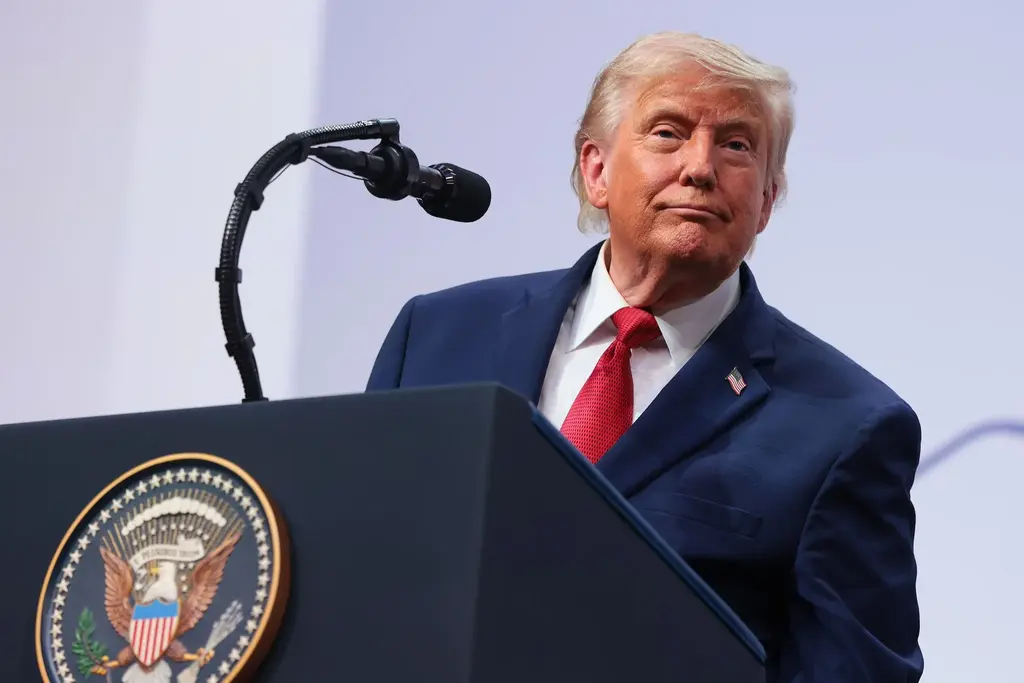
It’s clear that deregulation has become a shared demand across fast-moving tech sectors. This sentiment peaked when Trump declared at the 2024 Bitcoin Conference, “I will fire the current SEC chair on day one,” instantly transforming himself into a self-proclaimed “crypto savior.” At the same time, an intriguing data point emerged: Fairshake has quietly raised $202 million—surpassing even Trump’s MAGA PAC in fundraising.
Join TechFlow official community to stay tuned
Telegram:https://t.me/TechFlowDaily
X (Twitter):https://x.com/TechFlowPost
X (Twitter) EN:https://x.com/BlockFlow_News
 @DethingsNews