








Pantera Research: There is a wage gap in the crypto industry, with women earning 15% more than men
TechFlow Selected TechFlow Selected
Pantera Research: There is a wage gap in the crypto industry, with women earning 15% more than men
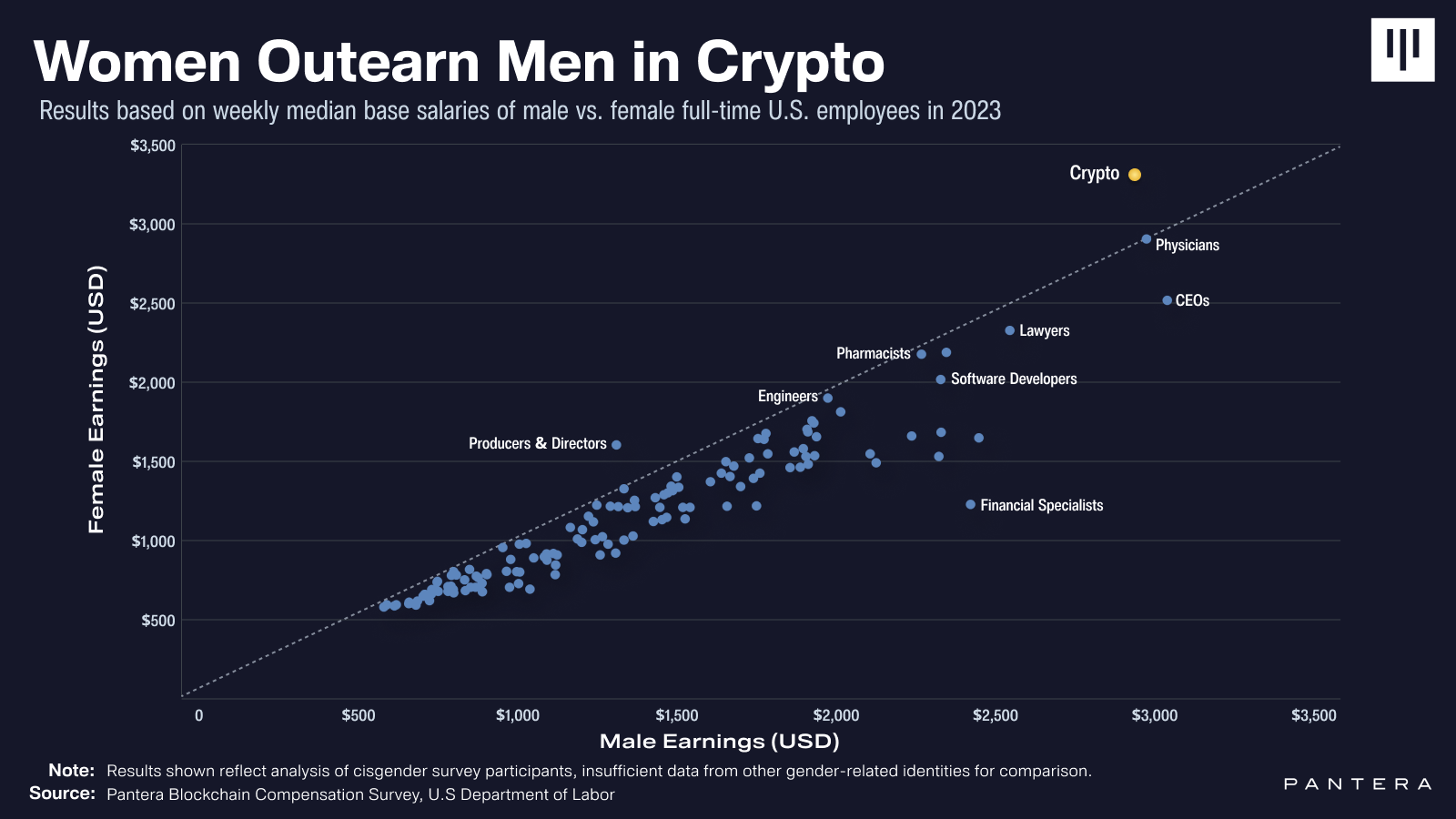
The only other field in the entertainment industry where women earn more than men is among producers and directors.
 Navigating Web3 tides with focused insights
Authors: Matt Stephenson, Ally Zach & Nick Zurick
Compiled by: TechFlow
We present Pantera Capital’s cross-sectional survey findings on compensation in the blockchain industry. With 502 respondents from the general population, this is the largest such survey to date. Our analysis reveals a gender pay gap in the crypto industry that runs counter to the norm—women earn more than men in our sample.
Gender Pay Gap
Methodology
This study employs a two-stage research design to address potential issues of multiple hypothesis testing and p-hacking. Preliminary observations from last year’s survey were treated as a pilot study, informing the current research.
Pilot Study (Previous Year)
A gender pay gap was observed during exploratory data analysis of the prior survey, but it was not reported as a finding due to the risk of false positives arising from multiple comparisons. This approach aligns with best practices for avoiding Type I errors and publication bias. Based on pilot data, we conducted an a priori power analysis to determine the sample size needed in this year’s survey to detect the hypothesized effect. These results are presented here.
Confirmatory Analysis:
The current study serves as a confirmatory test. This method allows for more reliable interpretation of p-values, as it is not affected by multiple comparisons or post hoc hypotheses.
By adopting this two-stage approach, we avoid the need for multiple comparison corrections such as the Bonferroni method, which would be appropriate in a single study testing multiple hypotheses simultaneously. Instead, our approach aligns with the concept of "out-of-sample validation" in predictive modeling, enhancing the robustness of our findings.
This methodological framework strengthens the validity of our results and provides a model for rigorous hypothesis testing in exploratory fields such as cryptocurrency industry research.
Survey Methods and Results
Data were collected between June 4 and July 20, 2024, via an online survey distributed through professional networks (LinkedIn), social media platforms (X), newsletters, and email. The sample consisted of 502 U.S. respondents who self-identified as male or female. Only full-time employees were included in the analysis.
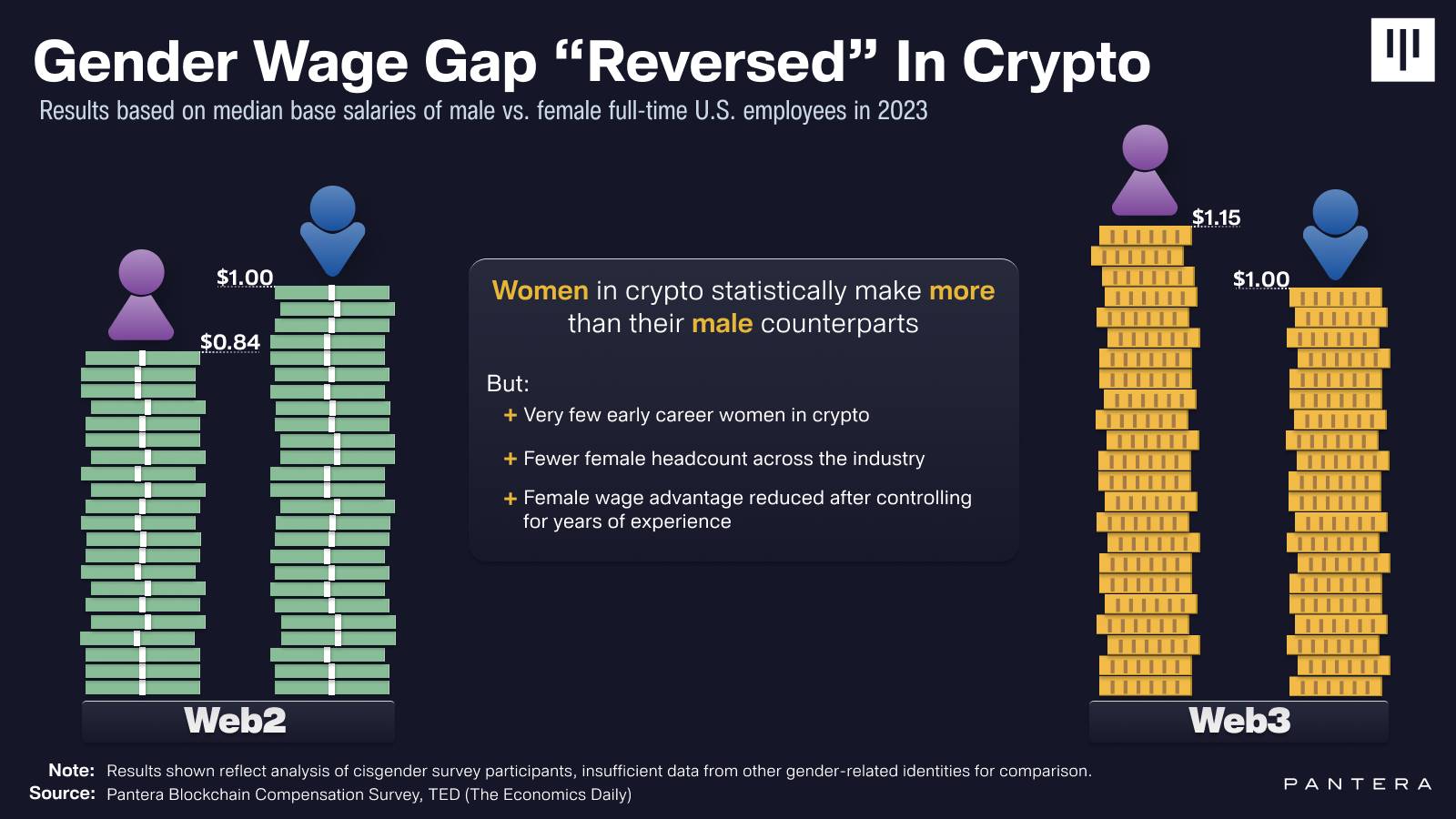
Analysis of median base salary shows that women at cryptocurrency companies earn 14.67% more than men. Women’s median base salary is $172,000 compared to $150,000 for men, meaning women earn $1.15 for every dollar earned by men.
This difference is statistically significant (Mann-Whitney U test, p < 0.05), contrasting with general labor market trends where women typically earn less than men. Regression analysis also shows the average difference favors women (p < 0.05).
These results challenge the narrative of the gender pay gap. In non-crypto companies, women typically earn only $0.84 for every dollar earned by men.
Further Analysis
Upon closer examination of occupational groups, producers and directors in the entertainment industry are the only other field where women earn more than men. While compensation in other high-skill professions approaches parity, the reality is that even in Web2 technology sectors, men still earn significantly more than women.
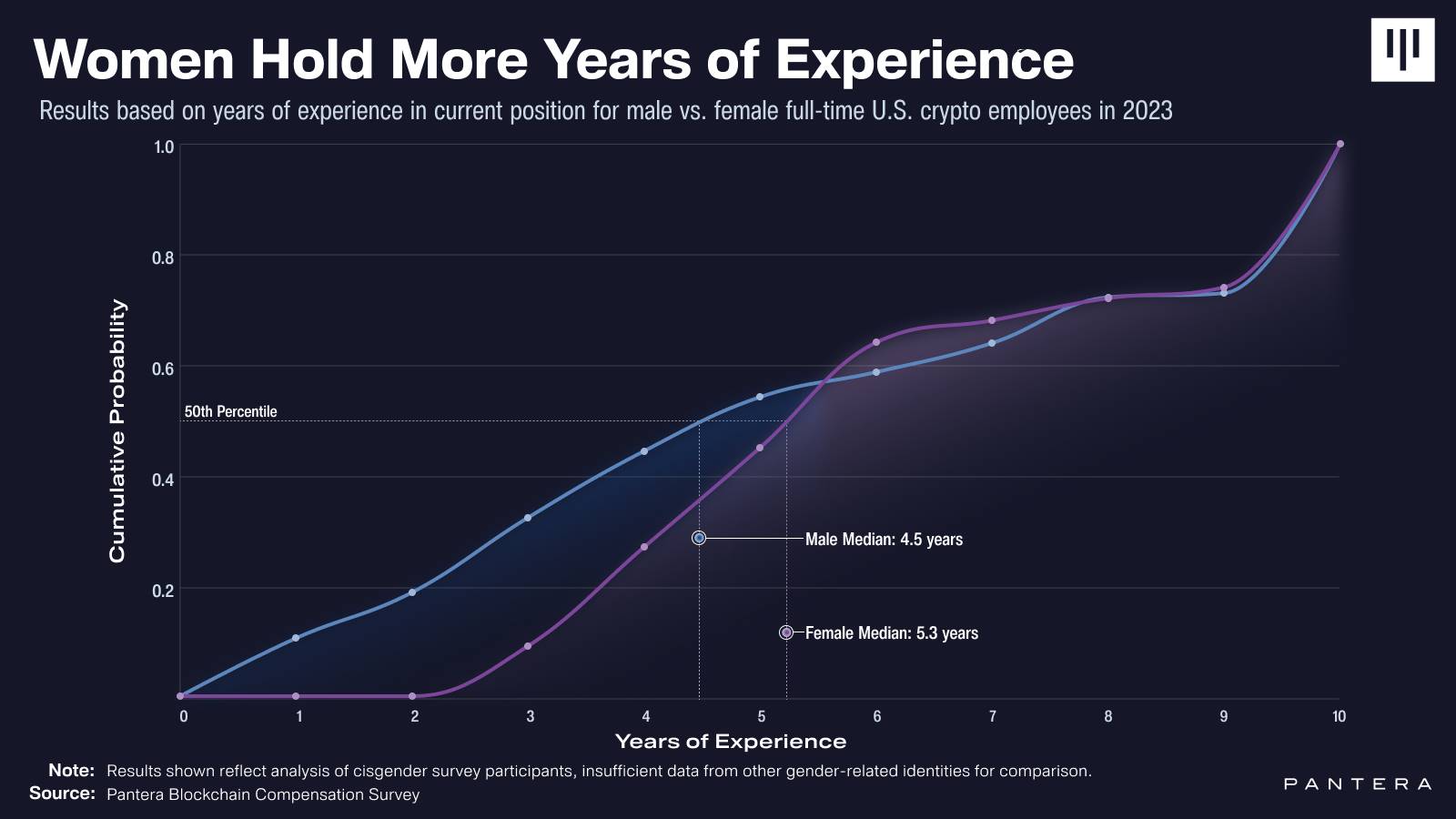
This reverse pay gap may be partly attributed to differences in experience levels between genders. Women in the crypto industry tend to have more experience, often holding mid-to-senior level positions with over five years of experience in their current role. In contrast, more men occupy entry-level roles as they transition into the crypto industry.
This “reverse” wage gap may indicate that the crypto industry offers better opportunities for women compared to traditional sectors.
It must be acknowledged that women may still face barriers and challenges within this industry. However, the relatively equitable compensation in crypto suggests that gender equality is moving in a positive direction, signaling a progressive trend in this emerging field.
Join TechFlow official community to stay tuned
Telegram:https://t.me/TechFlowDaily
X (Twitter):https://x.com/TechFlowPost
X (Twitter) EN:https://x.com/BlockFlow_News
 Pantera Capital


