








What is the real reason behind the failure of fundamental analysis in this market cycle?
TechFlow Selected TechFlow Selected
What is the real reason behind the failure of fundamental analysis in this market cycle?
Ethereum's decade: technology and applications will determine the future.
 Navigating Web3 tides with focused insights
Author: Blockchain Knight
It has been 10 years since Ethereum’s inception, and from a financial market perspective, this has undoubtedly been a dramatic "class leap." Ethereum has moved from the wild frontier to being recognized by mainstream Wall Street institutions through ETFs. But is this Ethereum’s endgame—or the ultimate destiny of crypto assets? The reality may be otherwise.
At the recently concluded EthCC event, Blockworks contributor Mippo interviewed Ethereum founder Vitalik Buterin on a podcast, during which Vitalik stated that the focus in the future will gradually shift from Layer1 issues to those closer to the application layer.
He also believes that what ultimately determines the success of crypto assets is their real-world applications, not endless hype. As he sarcastically put it, “It would be disappointing if the crypto space were remembered as a group of increasingly disillusioned idealists shouting at each other, or people trading digital monkeys and celebrity photos.”
Perhaps some Web3 practitioners have already awakened: this industry needs more than just an asset for senseless speculation—it requires broader applications that reach the mainstream public. This is why ecosystems like Ton have suddenly become focal points for investors and institutions: behind them lie Web3 products accessible to billions of users. Though still in early stages, these products are beginning to take shape.
Despite the market still being flooded with Layer2 narratives, after witnessing various "ghost towns" and inflated valuations, neither institutions nor ordinary participants remain confident in this story. After all, when Layer1 capacity is already sufficient, who really cares about Layer2?
From the explosive emergence of ETH L2s in the first half of the year to the sudden proliferation of BTC L2s now, the same narrative repeats itself. Yet behind these Layer2s lies repeated stalling of ecosystem development—only brief surges of airdrop farmers as users, followed by stagnation.
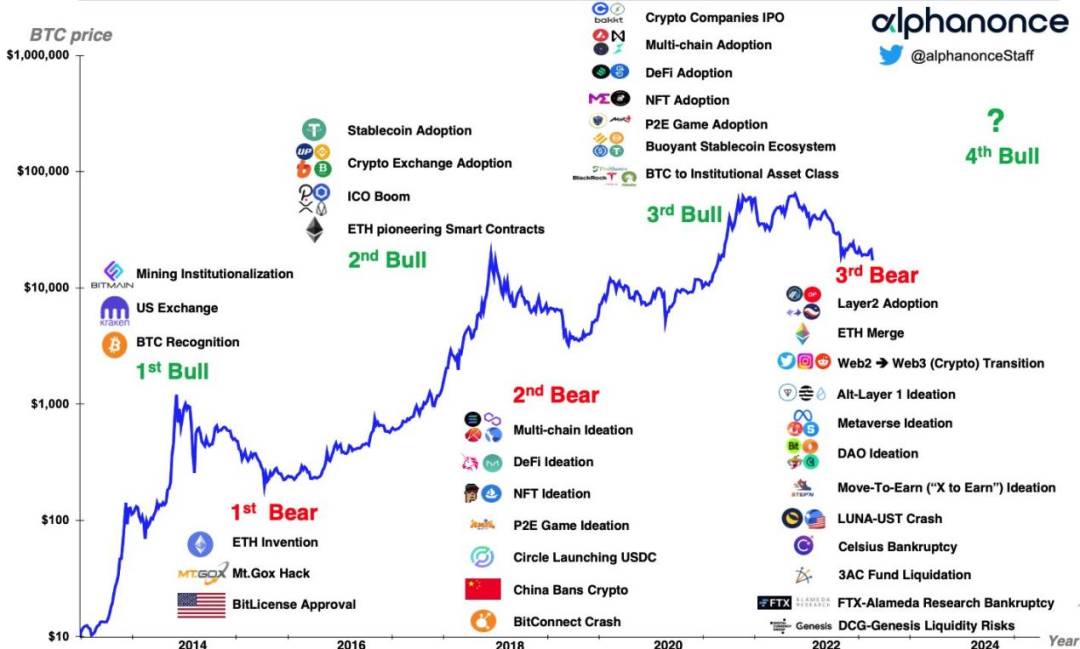
When we now reflect on why projects characterized by "high market cap, low circulation" fail to gain acceptance, beyond capital abandonment, the deeper reason is that people can’t find a rationale for "holding" them. Why should a project without real value command such a high valuation? Besides capital chasing, there seems to be no other explanation. We’ve seen parallels in past crazes like "move-to-earn sneakers" and "crab NFTs"—once user attrition begins, a death spiral follows. Indeed, the previous cycle’s new public chains met the same fate.
Behind all these stories lies one conclusion: infrastructure alone isn't enough. We need large-scale quality applications and users to solidify the growth of L1s and L2s. This is precisely why Vitalik so bluntly mocks NFTs.
People often say fundamental analysis no longer works in this so-called bull market. But in my view, aside from ETFs, the industry hasn’t actually seen any real fundamental changes yet—which explains why BTC outperformed most other assets in gains. If fundamentals haven’t changed, how can we conduct meaningful fundamental analysis?
Therefore, if the above reasoning holds, the fundamentals we should currently seek in the industry are sectors that bring in significant liquidity or fun, user-attracting products. These might be the true "flywheels" of this bull cycle. Yet so far, such products or sectors are extremely rare (most still in infancy). Instead, the majority remain various "ghost town projects" exploiting liquidity. Under these conditions, where is the explosive bull market?
As fundamental analysis pioneer Benjamin Graham once said, in the long run, the market is a weighing machine; in the short run, it's a voting machine. If Web3 aims to ascend to the next level, financial tools alone won’t suffice to drive a $10 trillion market cap. After all, the "Magnificent Seven" in U.S. equities, worth $15 trillion, didn’t achieve dominance by farming airdrops. Unless this industry is content with only BTC as "digital gold," but at least Vitalik isn’t.
From "proving it" to "witnessing it," we may still need another five or even ten years.
Join TechFlow official community to stay tuned
Telegram:https://t.me/TechFlowDaily
X (Twitter):https://x.com/TechFlowPost
X (Twitter) EN:https://x.com/BlockFlow_News










