Sui DeFi Report: Trading Volume Surges 3,689% — Exploring the Driving Forces Behind the Leading Layer-1's Strongest Growth Momentum
TechFlow Selected TechFlow Selected
Sui DeFi Report: Trading Volume Surges 3,689% — Exploring the Driving Forces Behind the Leading Layer-1's Strongest Growth Momentum
This unique growth of Sui stems not only from market cycles and technological advantages, but also from the strong push of multiple ecosystem support policies within Sui.
 Navigating Web3 tides with focused insights
Written by: TechFlow
In this market cycle, we are witnessing an unprecedented proliferation of blockchains: increasingly low barriers to launching new chains have led every project to aspire to launch its own chain in pursuit of higher narrative potential within the broader blockchain ecosystem. This has further fragmented liquidity—already scarce in this cycle—not only intensifying the Matthew effect in the public chain sector where strong chains grow stronger and weaker ones fade, but also causing even prominent chains like Ethereum to exhibit sluggish growth in on-chain data.
Amid this battle for liquidity, one standout outlier has emerged. Since Q4 2023, Sui—one of the two leading Move-language public chains—has demonstrated remarkable growth momentum:
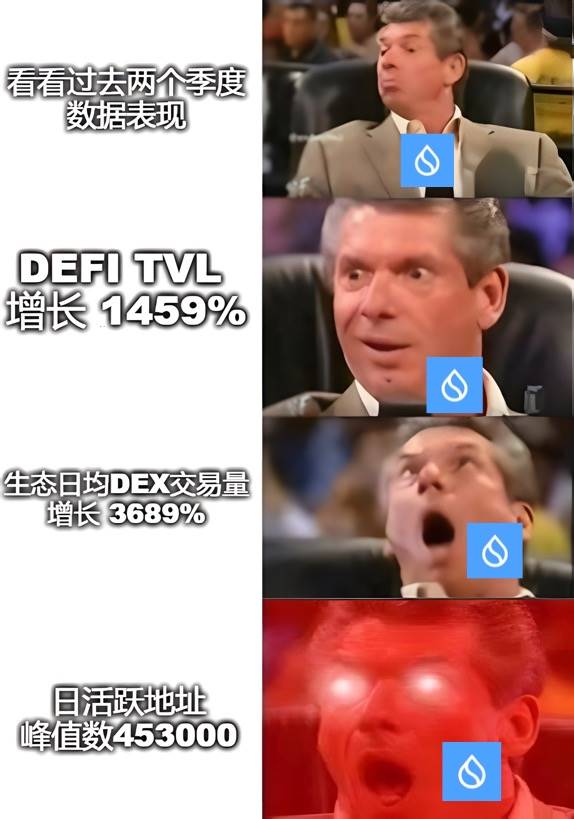
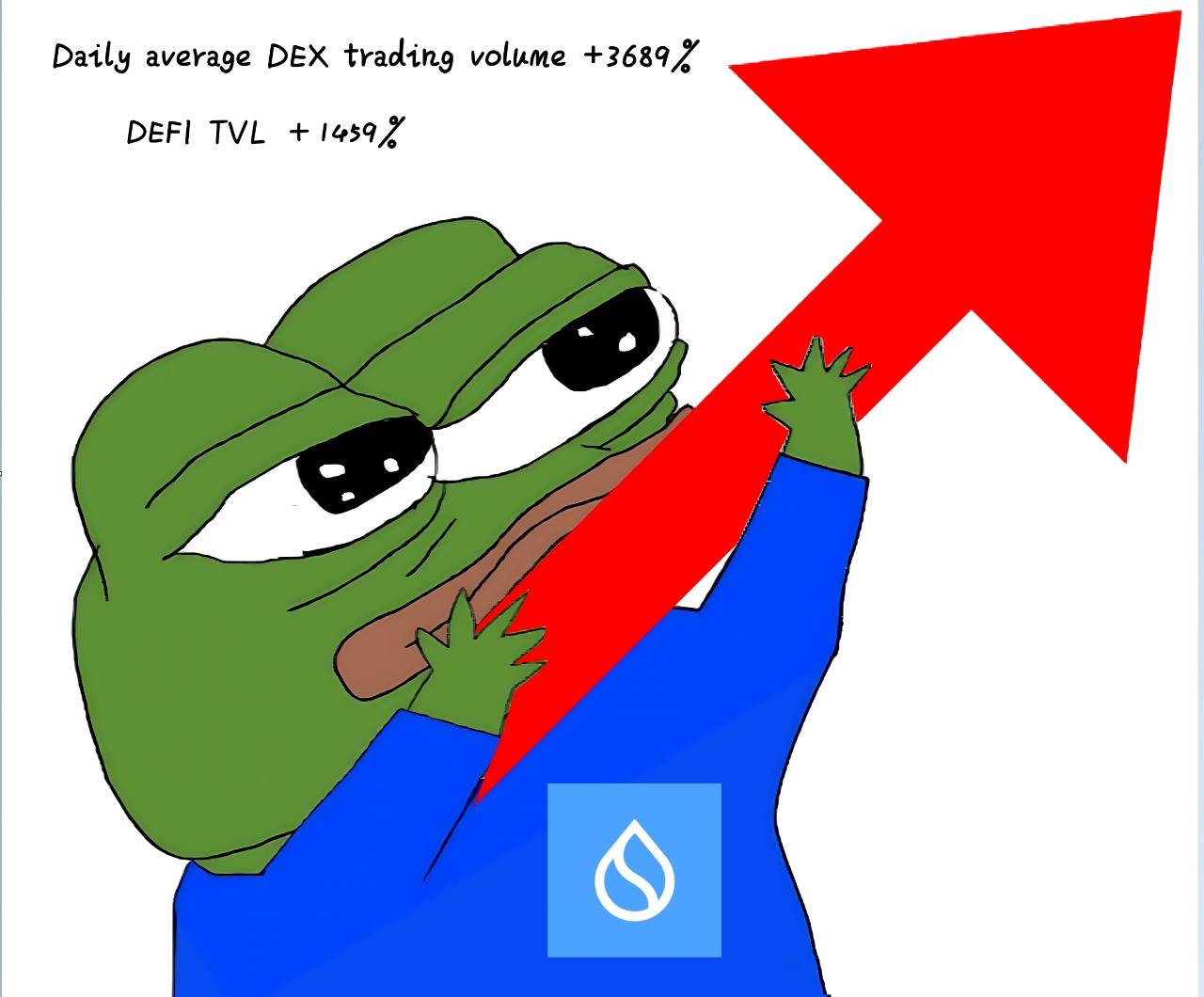
According to Messari’s State of Sui reports for Q4 2023 and Q1 2024, Sui’s average daily DEX trading volume surged by 3,689% over the past two quarters, while DeFi TVL increased by 1,459%. The peak number of daily active addresses reached 453,000, with an average of 24,000 daily active addresses.
In a recently released Sui DeFi report, Sui's TVL grew from nearly zero to a peak of $750 million over the past six months, while on-chain transaction volume achieved tens of times growth. Multiple DeFi projects within the ecosystem—such as Scallop, Navi, and BlueFin—have delivered impressive results.
How was this achieved? And is such growth sustainable?
Seizing the opportunity presented by the release of the Sui DeFi report, let us analyze the driving forces behind Sui’s ecosystem growth through rich data insights, and delve deeper into Sui’s unique positioning and future potential in today’s competitive public chain landscape.
Unmatched Growth Momentum: Key Insights from the Sui DeFi Report
Before diving into specific growth drivers, let’s first examine several striking metrics that illustrate Sui’s extraordinary DeFi growth trajectory over the past six months.
Sui’s mainnet officially launched on May 3, 2023, and experienced explosive growth by the end of 2023 amid a recovering market.
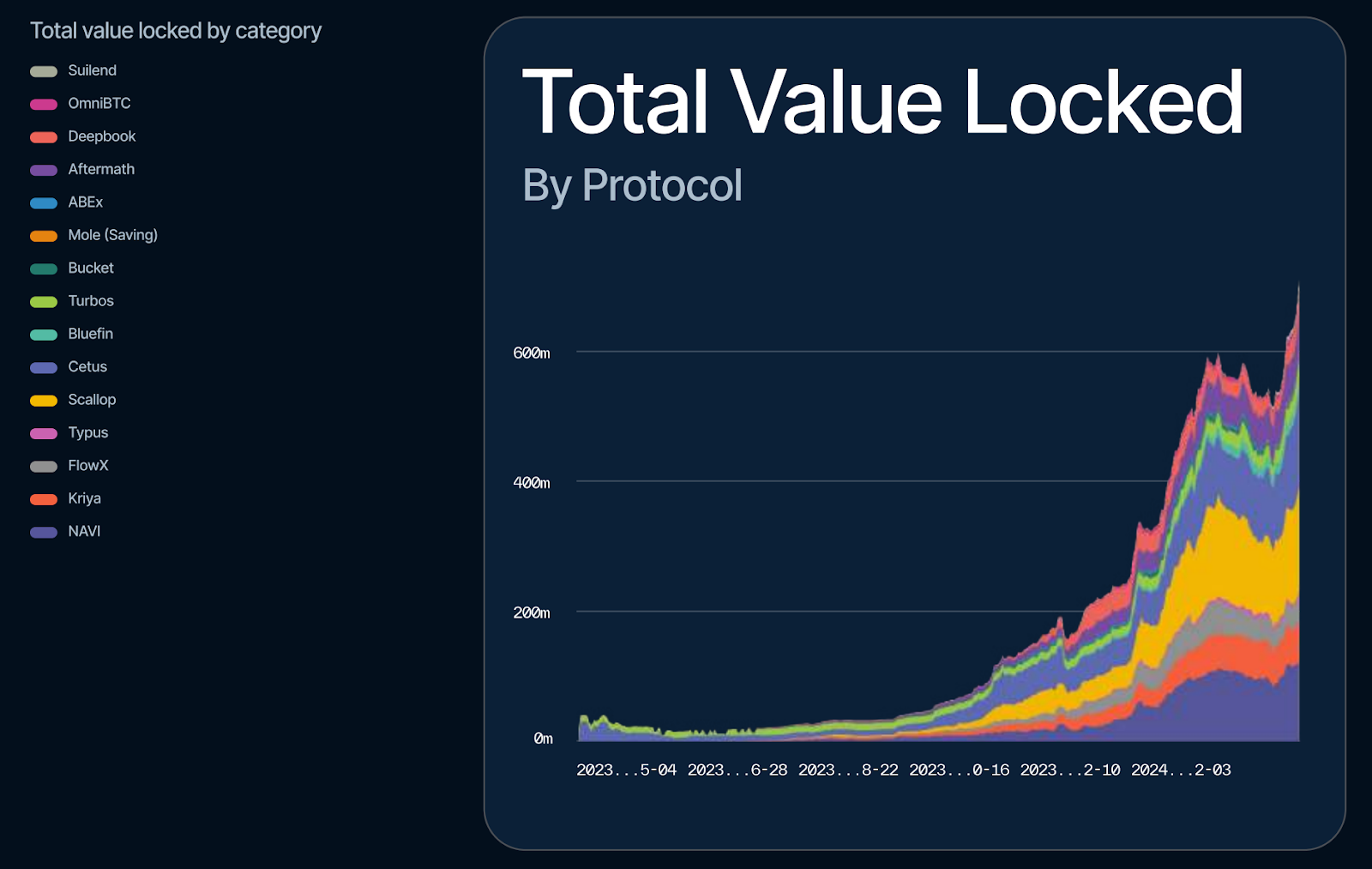
In terms of TVL, Sui’s total value locked skyrocketed from near zero to a peak of $750 million in just over half a year—briefly placing it among the top ten public chains. Such rapid vertical growth is unparalleled in today’s blockchain landscape. As a key indicator of DeFi development, higher TVL signifies greater available liquidity and broader, deeper financial services across the network.
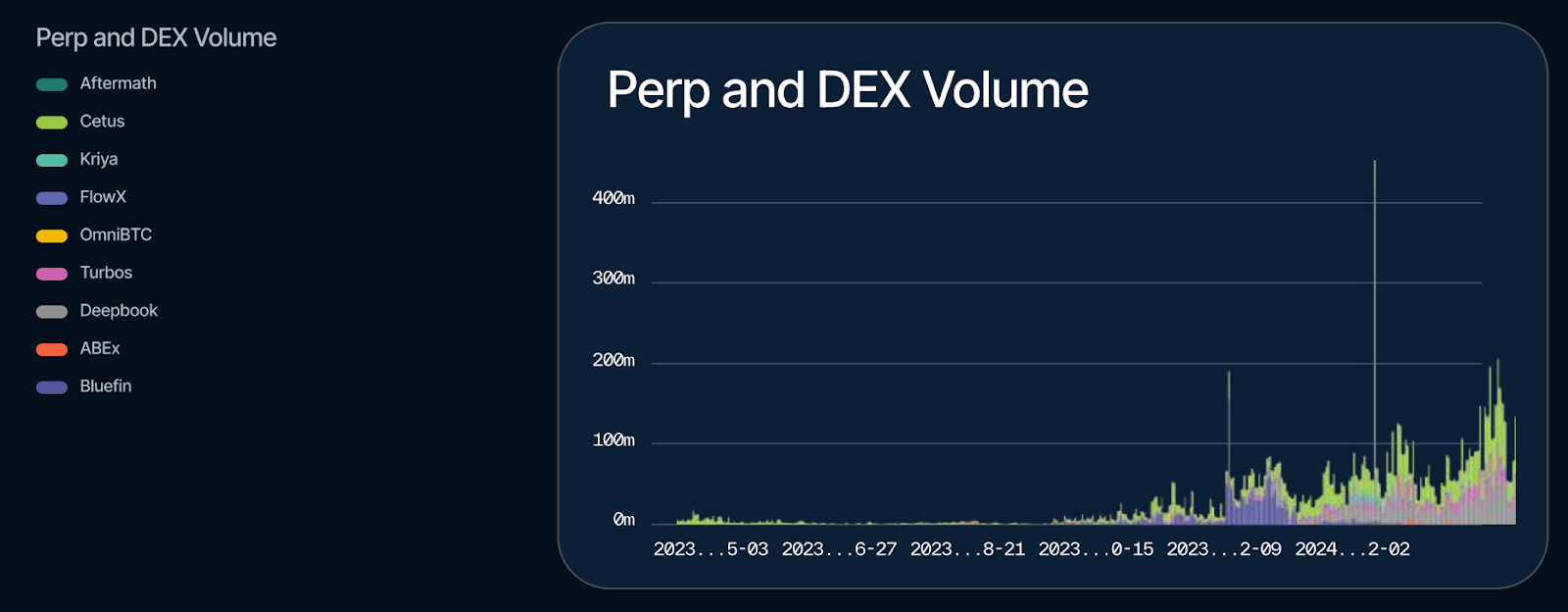
Regarding on-chain trading volume, Sui’s two-week rolling average for derivatives and spot trading stands at $166 million and $125 million respectively—both ranking within the top ten among public chains. Additionally, according to Coin98 Analytics, Sui processes up to 40 million daily transactions, surpassing Solana (27 million) to rank first. Compared to TVL, transaction volume better reflects user engagement and activity levels within the DeFi ecosystem—a critical measure of overall health. Higher transaction activity translates into richer rewards for liquidity providers and greater network fee income, indicating stronger self-sustaining revenue generation capability.
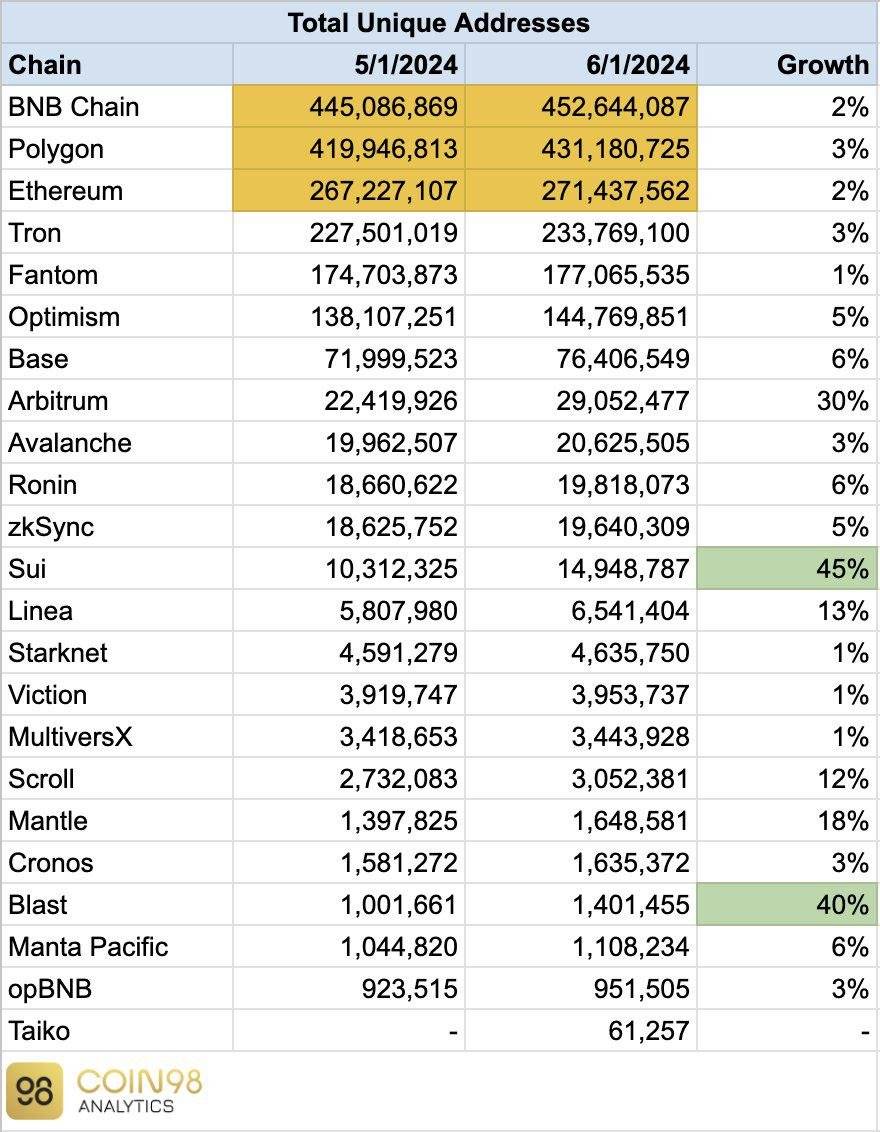
In terms of address count, Coin98 Analytics reported in June that Sui ranked first among 23 tracked blockchain platforms, with a 45% month-over-month increase in unique addresses in May—the fastest-growing blockchain platform. Official data shows Sui has now surpassed the 10 million mark in active accounts, reaching 14.83 million, demonstrating both broad and solid user adoption and robust growth momentum.
Furthermore, the Sui DeFi report provides detailed analysis of asset distribution on Sui. Native SUI tokens and stablecoins constitute the majority of TVL contributions, while non-SUI volatile assets primarily consist of DeFi protocol tokens and Memecoins.
As public chains serve as foundational infrastructure, dApps built atop them act as vessels for users, assets, and transactions—with DeFi being a core component. Having reviewed Sui’s macro-level data, let us now explore specific DeFi applications within the Sui ecosystem.
Currently, the Sui ecosystem hosts over 20 active DeFi projects spanning decentralized exchanges (DEXs), lending protocols, liquid staking (LST), derivatives, and collateralized debt positions (CDPs). Throughout previous cycles, it has been common to see application-led growth fueling broader chain adoption. Behind Sui’s rapid expansion, multiple DeFi sub-sectors have produced high-quality “blue-chip” projects.
In the lending space, dual leaders Scallop and Navi have made significant contributions to liquidity and TVL: Navi Protocol boasts a TVL exceeding $175 million; Scallop has surpassed $165 million in TVL and recently announced $1 million in total revenue for July.
In derivatives, trading volume is highly concentrated on BlueFin, with over 90% coming from perpetual contracts on BTC, ETH, and SUI. In the DEX space, Cetus dominates spot trading with $120 million in TVL. Other notable projects—including Kriya, Aftermath, and Typus—have also achieved strong performance in their respective niches, contributing to continued growth in Sui’s on-chain metrics.
Sui’s impressive growth figures have drawn widespread admiration and prompted deeper investigation into the underlying drivers. As community members begin to understand how Sui has built its growth flywheel, it becomes clear that this unique momentum stems not only from favorable market timing but also from technological advantages and proactive ecosystem support policies.
Market Rotation: Seeking the Next Public Chain Alpha in the New Cycle
A close look at Sui’s growth curve reveals a clear alignment with the broader market recovery cycle.
Since October 2023, the blockchain market has entered a visible rebound phase. According to DefiLlama data, total value locked across chains began rising from October 2023 onward, signaling improving market sentiment. At this opportune moment, Sui intensified its efforts in DeFi ecosystem development, capitalizing on the market upturn to attract substantial user and capital inflows, achieving rapid growth and becoming a focal point of industry attention.
Regardless of the cycle, public chains—as foundational infrastructure hosting applications—remain a consistently highlighted and closely watched sector. This cycle is no exception, with growing demand for identifying the next public chain alpha.
Today, Layer-2 solutions continue to draw assets away from Ethereum. While Ethereum remains the dominant ecosystem, it is no longer the primary target for most alpha hunters. Meanwhile, Solana—revived after the FTX collapse—has emerged as the undisputed leader in 2024. According to CoinGecko, its token has gained 616.2% over the past year, increasingly regarded as a beta play in the public chain space.
Given these conditions, Sui—which has already begun to shine in this cycle—stands out due to its superior performance, strong financial suitability, and broad community backing. Its success has rekindled interest in the Move language, attracting more developers to explore and build with Move. As a leading Move-based chain, Sui is now seen by many as the next public chain alpha and the preferred entry point into the Move ecosystem.
Notably, when discussing Move’s advantages, few projects are better positioned than Sui: led by Sam Blackshear, the creator of the Move programming language and Sui’s CTO, Sui is widely believed to best inherit and advance Move’s strengths in security, financial design, and high performance. Indeed, during its rapid growth, we’ve clearly seen how technical superiority empowers Sui’s ecosystem.

Continuous Innovation Based on Move: Sui as a Fertile Ground for DeFi
Move is a programming language designed for secure smart contracts, originally developed by Facebook to support the Diem blockchain. Although Diem ultimately failed, Move’s strengths in security and performance have inspired a wave of new crypto projects—Sui being one of the most successful.
By adopting Move as its core smart contract language, Sui fully inherits Move’s advantages—particularly in DeFi and digital finance use cases.
On one hand, Move enhances Sui’s security and verifiability. Unlike other languages, Move treats token assets at a fundamental level. In Move, assets are defined as Resources—a distinct data type separate from regular data. Resource objects must reside under user accounts and must be moved or destroyed during transactions—never duplicated or double-spent. This design effectively prevents double-spending attacks and other vulnerabilities, ensuring transaction safety. Moreover, Move uses static dispatch, allowing all execution paths to be determined at compile time, combined with built-in security algorithms and validators for thorough analysis—significantly reducing the risk of contract bugs.
On the other hand, Move’s modular architecture enables powerful composability. Smart contracts in the Sui ecosystem function like Lego blocks—developers can freely combine them to create new products for diverse scenarios. Because composition occurs between Modules, upgrading a Module automatically updates all dependent contracts, saving block space and simplifying upgrades.
More importantly, Diem aimed to offer a global alternative to fiat currency for Facebook’s 2 billion users, so Move was designed from the outset with high performance in mind. The Move Virtual Machine optimizes bytecode execution, ensuring efficient smart contract operations. Even under heavy load, Move maintains fast response times, delivering smooth user experiences.
Building upon Move, Sui implements a parallelized architecture enabling different DeFi applications and scenarios to run independently. Whether across different dApps or different liquidity pools within the same app, Sui ensures performance isn’t affected by traffic elsewhere. For traders interested in multiple assets, strategies, or markets, interference is eliminated—each operation executes independently.
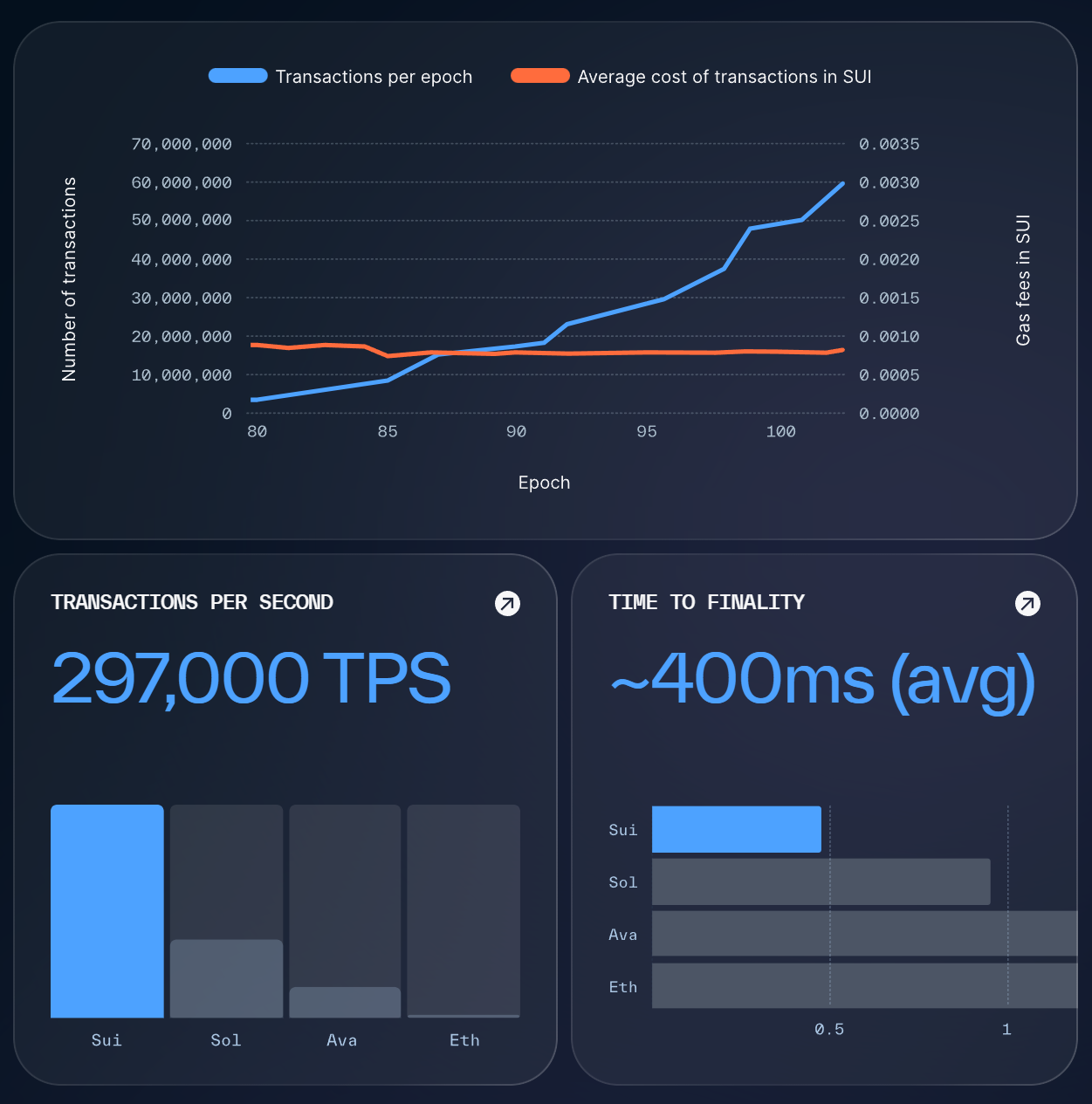
Official data indicates Sui currently supports over 100,000 transactions per second, with finality achieved in just 400 milliseconds. These metrics far exceed traditional blockchain limitations, enabling Sui to support high-frequency trading and complex financial operations while greatly enhancing user experience and meeting demand for speed.
It’s worth noting that since its inception, Move has continued evolving. The 2024 update introduced new features including enums, macros, and method syntax, significantly enriching developers’ toolkits and making it easier to implement complex business logic—further attracting developer interest.
From day one, many in the community jokingly referred to Sui as Move’s “favorite son.” Undeniably, Sui’s choice of Move gave it a head start. But over the past two years, Sui has continuously pushed technical innovation, exploring the frontiers of blockchain performance and user experience to solidify its technological edge.
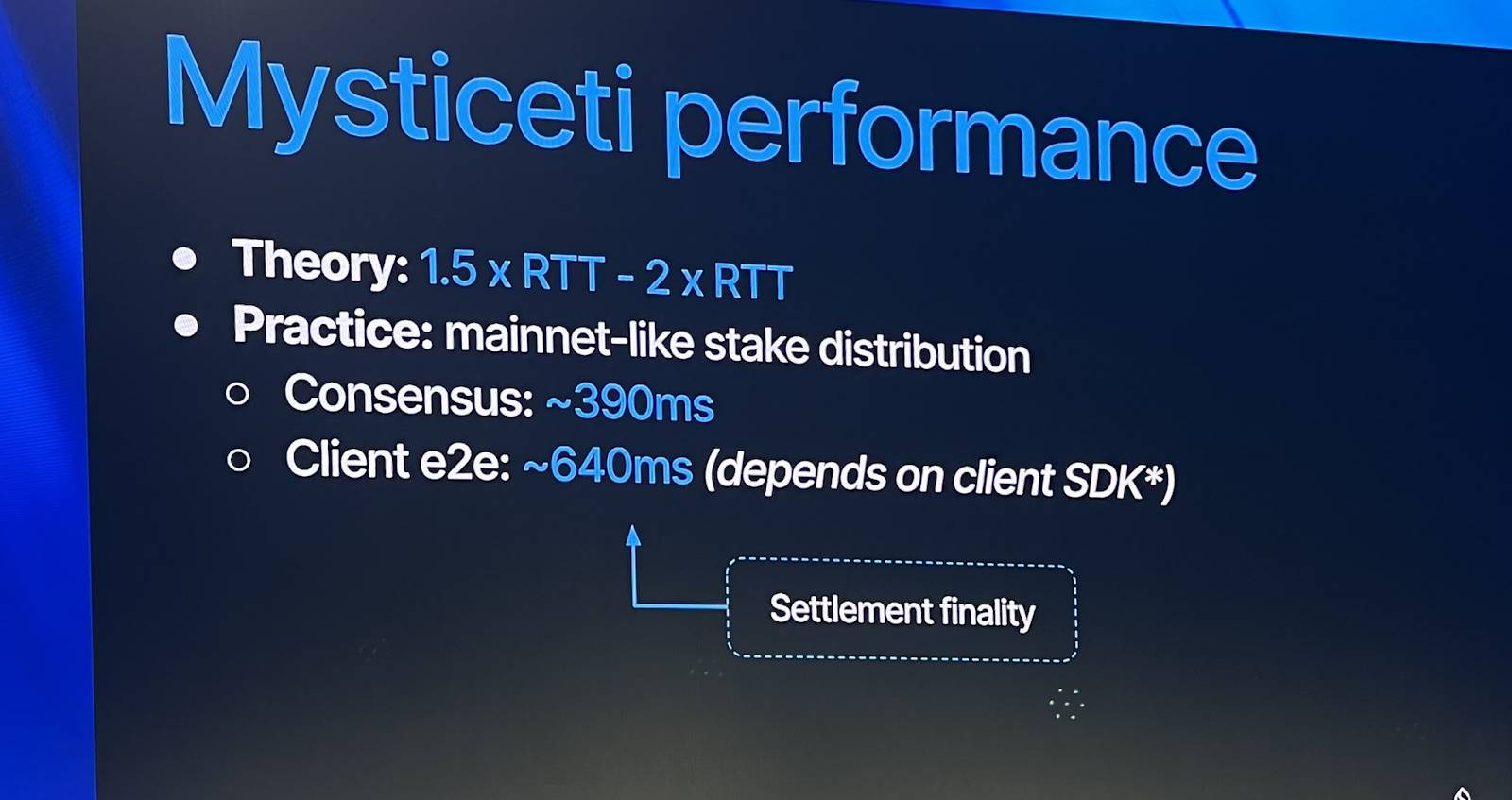
One compelling example is the recent deployment of the new consensus protocol Mysticeti on testnet in May. Developed from deep research into Byzantine Fault Tolerance (BFT), this breakthrough reduced Sui’s consensus time by 80%—down to 390 milliseconds—while maintaining industry-leading throughput. With Mysticeti, Sui will become the fastest consensus layer in the industry. This speed is crucial for real-time execution of trading strategies, liquidations, and portfolio rebalancing.
Earlier in March, Sui’s development team Mysten Labs unveiled Pilotfish, a new execution scalability solution. During testing, Pilotfish (a Sui scaling prototype) achieved an 8x throughput increase across eight machines, reduced network response time, and kept latency below 20 milliseconds—demonstrating linear scalability potential.
Additionally, Sui has implemented various technical iterations to lower barriers for developers and users alike, laying a solid foundation for mass adoption at scale: for instance, zkLogin offers immense convenience by allowing users to log into Web3 apps using existing Web2 identities from Google or Twitch, eliminating the need to manage private keys. Another example is Enoki, a SaaS (software-as-a-service) product enabling enterprises to seamlessly integrate Sui wallets into existing or new services. These innovations open a new era of interaction and participation for developers and users on Sui.
Beyond empowering projects technically, Sui actively cultivates a supportive environment for developers and users—enhancing project efficiency and success rates.
For DeFi projects, system stability is paramount—any brief network outage could result in fund losses, failed transactions, or erosion of user trust. Since launch, Sui has experienced zero downtime or performance degradation, offering strong assurance to developers and users.
Moreover, developers care not only about product implementation but also long-term growth. Ecosystem support becomes essential here. Through hackathons, grants, and RFPs, Sui provides emerging projects with abundant resources and support, cementing its status as fertile ground for DeFi innovation.
Multiple Parallel Developer Incentives Driving Rapid DeFi Growth
Public chain development has evolved from storytelling to real-world execution. With strong technical foundations established, ecosystem strength has become another key battleground—essentially, winning developers means winning the future.
According to Electric Capital’s developer data, Sui has seen explosive growth in developer numbers over the past six months, now home to the largest and fastest-growing Move developer community. From January 2024 to July 1, monthly active developers on Sui surged by 219%, with over half focusing exclusively on single-chain development. This dramatic rise reflects growing developer interest in Move and Sui—and serves as direct feedback on the effectiveness of Sui’s various incentive programs.
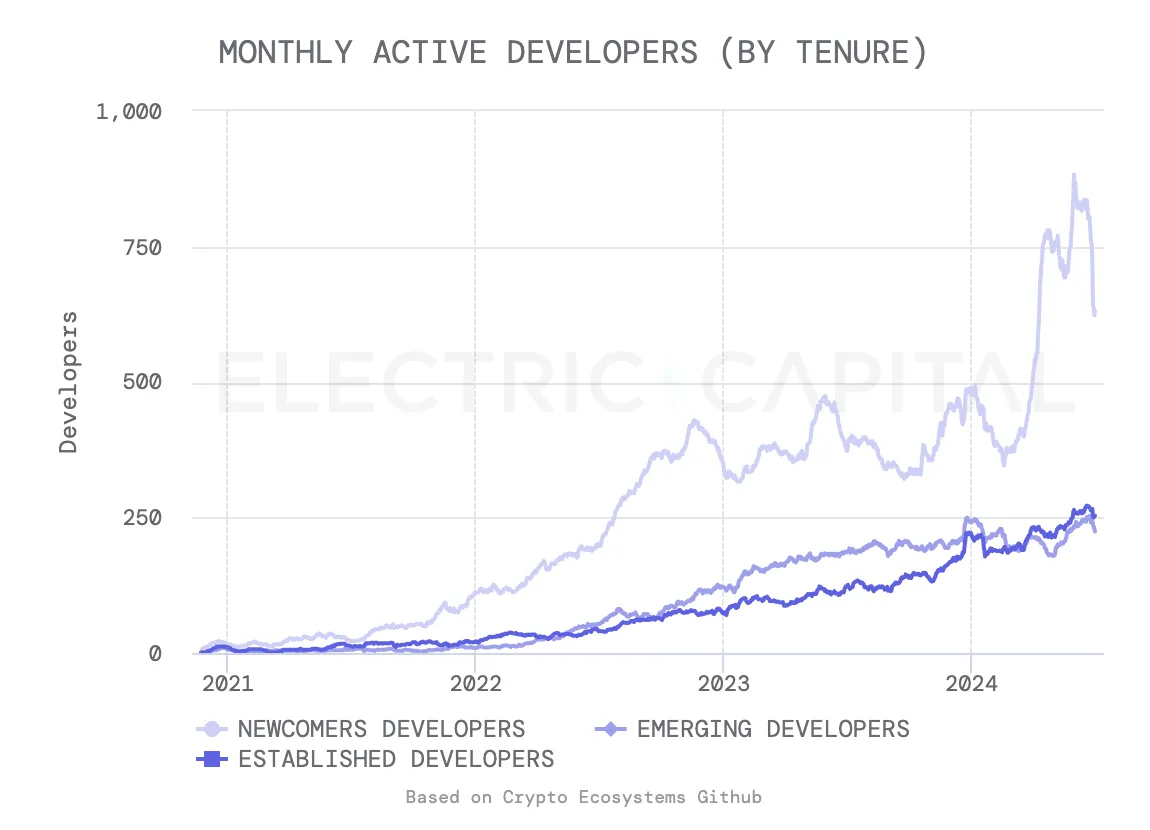
Notably, from March to June 2024, Sui saw a massive influx of new developers—largely driven by the Sui Overflow hackathon. As the largest prize pool event in Sui’s history, Sui Overflow featured eight tracks: consumer and mobile apps, DeFi, gaming, infrastructure & tools, advanced Move features, multichain, randomness, and zkLogin. Over eight weeks, the event attracted 352 projects from 79 countries, with 32 outstanding teams splitting a $500,000 prize pool.

Beyond Sui Overflow, Sui has hosted themed hackathons such as Liquid Stake Hackathon and MOVE Online Hackathon, along with Move HackerHouse events in cities like Singapore and Chengdu—providing developers with platforms for showcasing ideas, exchanging knowledge, and sparking innovation to foster a vibrant, diverse ecosystem.
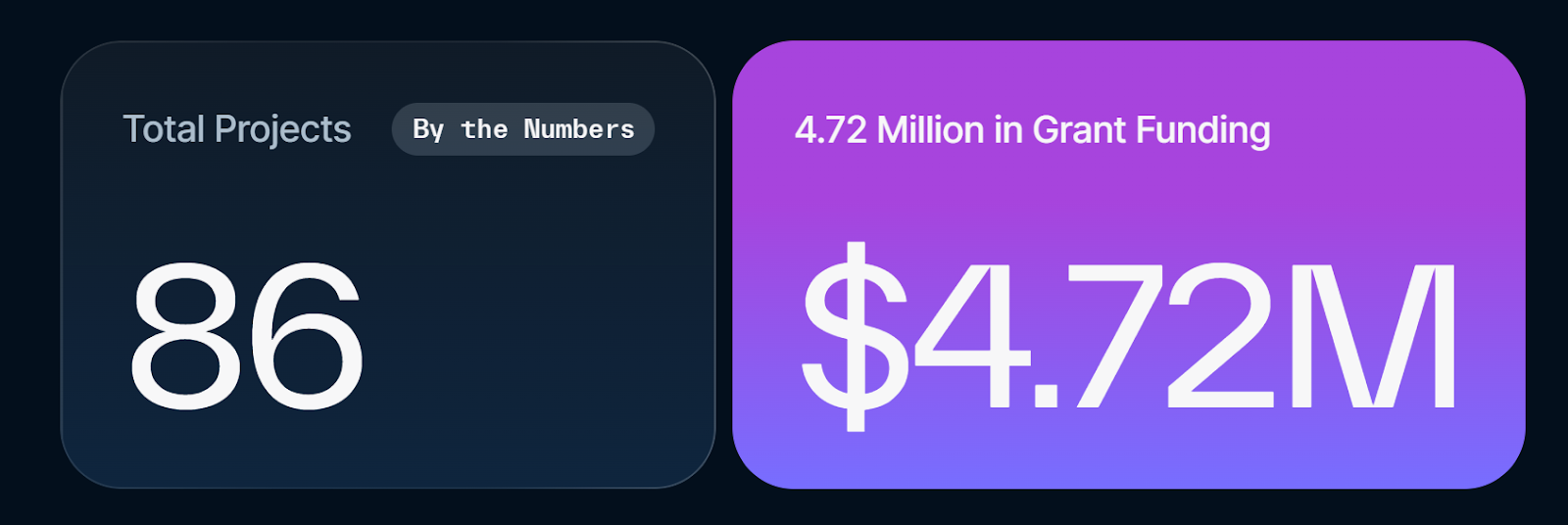
In addition to periodic offline and online events, on October 25, 2023, the Sui Foundation officially launched its website and opened applications for the Developer Grant Program. This ongoing initiative offers funding ranging from $10,000 to $100,000 to help kickstart projects, with opportunities for additional funding upon reaching milestones. After nine months of operation, Sui has received hundreds of proposals, approved 86 projects, and disbursed $4.72 million in total grants. Today, flagship projects like Cetus and Navi—core pillars of the Sui ecosystem—were early grant recipients.
Sui also launched the Request for Proposals (RFP) program to address specific ecosystem needs with targeted support. Among the first batch of RFP awardees were Byzantion Inc (minting infrastructure compatible with Sui Kiosk), HashCase (no-code loyalty platform), Arden Labs Inc (consumer engagement platform), and Mojito Inc (white-label websites for loyalty programs)—all enhancing developer-friendliness within the ecosystem.
Sui’s ecosystem incentives also aim to attract top global academics to explore frontier research in Web3. By focusing on blockchain technology, smart contract programming, and Sui-based platforms, the Sui Academic Research Award was established, offering $100,000 per approved proposal.
In the latest fourth round of awards, 20 exceptional proposals from institutions including UC Berkeley, Yale, NYU, EPFL, and NUS were funded. Topics include accelerating zero-knowledge proofs (ZKP) via caching, automated risk management in Sui DeFi, and benchmarking Sui from a parallel execution perspective—all aimed at improving platform security and efficiency. Due to the exceptional quality of submissions, the Sui Foundation pledged an additional $1 million in 2024 to accelerate blockchain innovation and adoption.
Through diversified ecosystem incentives, Sui has built a rapidly iterating and innovative platform. These initiatives not only attract large numbers of developers but also provide them with rich resources and support. In such a dynamic environment, developers are free to explore possibilities across finance, gaming, social platforms, and beyond—injecting continuous momentum into Sui’s ecosystem growth.
Recent Developments
Of course, given Sui’s explosive growth, the community now focuses on two key questions.
First: Can this growth momentum continue?
The answer is very likely yes.
On one hand, Sui’s roadmap includes several upcoming milestones: Adeniyi Abiodun, co-founder and Chief Product Officer of Mysten Labs, revealed in a podcast that Sui will introduce on-chain randomness next month and complete the second-phase upgrade of its consensus mechanism this month—reducing latency to around 300 milliseconds and further establishing Sui as a leader in speed. Additionally, Sui is set to launch native stablecoins.
On the other hand, beyond regular long-term incentives, Sui will host the Move-themed Antalpha HackerHouse in Chengdu on August 12. Official mentors will guide participants from idea conception to code implementation. Projects developed at the event can directly enter the Move Online Hackathon, which is currently open for registration until August 25, with $13,000 in prizes to be shared.

Additionally, NAVI Protocol—one of Sui’s top-tier projects—announced months ago the formation of the NAVI X ecosystem fund, committing 10 million NAVX tokens to support innovation and growth in Sui’s DeFi and Move ecosystems.
Through multiple incentive programs, Sui continues to stimulate innovation and unlock further growth potential.
The second question: Given Sui’s foreseeable growth, how can one best participate?
Beyond purchasing SUI tokens on exchanges (currently listed on Binance, KuCoin, OKX, and Gate), participating in TGEs and airdrops from leading Sui ecosystem projects offers a more effective way to engage.
As Sui’s premier trading platform, Bluefin delivers a multi-product experience combining derivatives and spot trading, powered by high-speed processing, transparent on-chain security, and a user-friendly interface. Bluefin is approaching its TGE—users can earn points by trading on the platform, or boost points through tiered league events, Bluefin Stable Pools, and Open Referral programs.
BLUE token allocation emphasizes ecosystem growth (52%), with 13% allocated to airdrops, 19.5% to trading and liquidity incentives plus future growth initiatives, and 4.5% used for initial liquidity—fully unlocked at TGE.
Bluefin has already integrated with major on-chain financial protocols including CetusProtocol, Turbos Finance, KriyaDEX, and AVEO, and partnered with well-known NFT communities such as Pudgy Penguins, MadLabs, and Azuki. BLUE airdrops will be distributed to members of these partner communities at TGE.
Notably, users of NAVI Protocol—the leading lending protocol on Sui—will receive Bluefin airdrops. These will be distributed to 10,000 community members based on a weighted system: 60% by leaderboard points, 40% by NAVX holdings.
Additionally, Scallop—the leading lending platform on Sui—has launched a loyalty program where users staking SCA can share $100,000 worth of SCA token rewards.
In summary, beyond technical strengths, Sui’s rich ecosystem not only supports rapid growth but also offers diverse participation avenues. As more users join, they further fuel ecosystem expansion—creating a positive flywheel effect.
In this new cycle and evolving public chain landscape, Sui stands out as a top performer. Its unique technical architecture and flexible ecosystem strategy have distinguished it among numerous chains, drawing significant attention and investment.
With continuous technological iteration, Sui keeps optimizing performance, security, and user experience. Coupled with sustained developer incentives, more builders are choosing Sui as their innovation platform—driving ecosystem diversification and richness. In the foreseeable future, Sui is poised to maintain its rapid growth trajectory and emerge as the go-to public chain alpha for many investors.
As one of the Move twins, we look forward to more exciting developments from Sui ahead.
Join TechFlow official community to stay tuned
Telegram:https://t.me/TechFlowDaily
X (Twitter):https://x.com/TechFlowPost
X (Twitter) EN:https://x.com/BlockFlow_News
 深潮TechFlow