When Payments Meet DeFi: A $100 Trillion Efficiency Revolution
TechFlow Selected TechFlow Selected
When Payments Meet DeFi: A $100 Trillion Efficiency Revolution
The question left for readers may have already shifted from “Can PayFi be established?” to “How can one get involved as early as possible?”
 Navigating Web3 tides with focused insights
In April 2024, at the Hong Kong Web3 Carnival, Lily Liu, Chair of the Solana Foundation, introduced the term “PayFi” to the public for the first time. Sitting in the audience were blockchain professionals—most of whom reacted with: “Another new narrative.”
Two years later, no one says that anymore.
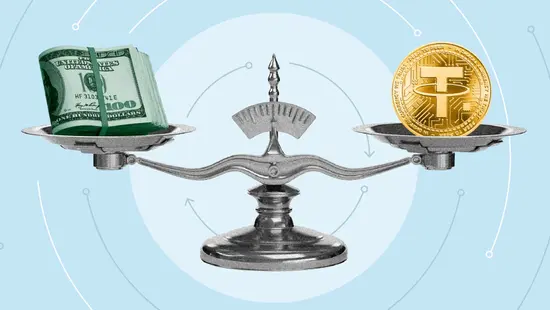
Stablecoin annual transaction volume has surpassed $9 trillion—exceeding the combined total of Visa and Mastercard. Over 200 million people globally now use stablecoins for everyday payments. Payment giants like PayPal and Stripe have all launched stablecoin products. PayFi has moved beyond conceptualization into real-world migration.
Amid this migration, a project named PolyFlow has simultaneously drawn attention from both Eastern and Western capital. From the Solana ecosystem to top-tier Asian funds, a group of the most agile institutions almost simultaneously placed bets within the same narrow window.
Why PayFi? Why PolyFlow?
This report attempts to answer both questions.
I. The PayFi Market: From $9 Trillion to $100 Trillion of Addressable Opportunity
1.1 Stablecoins Have Already Won the First Battle
Let’s start with some data. According to the Visa Onchain Analytics Dashboard:
Stablecoin Transaction Data for 2025:
- Gross transaction volume: $32.3 trillion
- Volume excluding bots and arbitrage: $9 trillion
- Share attributable to genuine payment use cases: 45%
In 2022, only 18% of stablecoin transactions represented real-world payments—the rest were speculative or arbitrage-driven. By 2025, that share rose to 45%. Stablecoins are transforming from “speculative instruments” into “payment tools.”
A more intuitive comparison:
- Visa’s 2025 transaction volume: ~$7.5 trillion
- Mastercard’s 2025 transaction volume: ~$6 trillion
- Stablecoin’s genuine transaction volume: $9 trillion
Stablecoins have become the world’s largest payment network.
But this is just the beginning.
1.2 When Machines Start Spending, PayFi Is No Longer Optional
Over the past six months, the term “Web4.0” has appeared more frequently in discussions among top-tier VCs, developers, and infrastructure projects. It is not merely a conceptual upgrade—it signals a structural inflection point driven by a shift in economic actors.
If Web3’s core premise is “humans owning digital assets for the first time,” then Web4.0’s defining shift is: AI Agents becoming independent economic participants.
They are no longer just tools. In an increasing number of scenarios, they are progressively assuming roles as “employees, service providers, executors—and even business operators”—receiving tasks, invoking services, procuring resources, completing objectives, receiving payments, and executing payouts.
What does this mean?
It means future commercial activity will involve not only “human-to-human” and “human-to-platform” payments—but also extensive “Agent-to-Agent,” “business-to-Agent,” and “Agent-to-human” settlement relationships. An economic network jointly operated by humans and intelligent agents is emerging.
Once this stage arrives, traditional payment systems will quickly reveal their limits.
AI Agents lack bank accounts, IDs, or credit cards—and cannot comply with account onboarding, KYC, credit assessment, or clearing and settlement processes designed for “natural persons.” Subscription models may cover costs for a small number of Agents, but when Agent counts scale from millions to billions—and transaction behavior shifts from “low-frequency, human-triggered” to “high-frequency, autonomous execution”—subscriptions and advertising models become unsustainable. AI lacks “attention” to monetize; the Agent economy demands a payment system that is machine-callable, instantly settleable, globally accessible, and low-cost to operate.
This is why the payment foundation for the Web4.0 era will almost certainly be built upon digital currencies and on-chain settlement.
In other words, PayFi is not an optional value-add layer for Web4.0—it is a foundational operational necessity.
Coinbase and Cloudflare’s x402 protocol, launched in 2025, is an early signal in this direction. It reactivates the HTTP 402 status code, enabling Agents to initiate instant payments when calling APIs, renting GPUs, or accessing data services—no account registration, no credit card binding, no end-of-month reconciliation: pay on invocation, settle per call. This isn’t incremental improvement—it’s rewriting the payment interface for the “machine economy.”
Under this trend, PayFi’s future extends far beyond serving human users’ on-chain payments. It evolves into a lightweight settlement infrastructure for the Web4.0 world: serving both humans and Agents; handling consumer payments as well as payroll, revenue sharing, settlement, and clearing in business collaborations; supporting cross-border flows and foreign exchange conversions and payouts across currencies.
This is precisely where PolyFlow is positioning itself.
Where AI Agents need on-chain identity, PolyFlow’s PID (Payment ID) provides the solution. PID delivers not only a payment identity for human users—but also functions as a “digital passport” for AI Agents—a verifiable, traceable, cross-chain-compatible payment identity. In 2025, PolyFlow integrated the x402 protocol, and its encrypted payment gateway, Pelago Connect, is expanding payment use cases from “human-to-human interaction” to “Agent-to-Agent interaction.”
Where AI Agents require high-frequency micropayment channels, PolyFlow’s PLP (Payment Liquidity Pool) is natively suited—capable of processing sub-dollar microtransactions, hundreds of settlements per second, and operating 24/7 unattended. This “light settlement” capability is exactly the prerequisite for Web4.0 commercial activity to truly scale.
Where AI Agents need a credit system, the on-chain credit data accumulated by PID becomes the trust bedrock of the Agent economy—which Agents are “reliable executors,” which merchants are “compliant transactors,” and which partnerships demonstrate consistent fulfillment records—all require verifiable, traceable, and reusable credentials. PID provides the first infrastructure-layer foundation for these judgments.
This is also PolyFlow’s long-term positioning in the Web4.0 era: Today building payment infrastructure for humans; tomorrow building the payment and settlement highway for the intelligent-agent economy.
From a product perspective, PolyFlow won’t remain limited to being just a “payment channel.” Instead, it will gradually extend into lightweight settlement products closely aligned with real-world business collaboration—for example, global payroll, payout, FX conversion, and settlement execution capabilities—serving commercial networks involving “employers, employees, clients, vendors, and Agents.” In other words, in the Web4.0 world, many actions previously requiring manual finance operations, manual reconciliation, and manual cross-border wire transfers will be redefined by goal-driven intelligent-agent collaboration and on-chain settlement systems—not “monthly salary disbursement,” but instant settlement around task completion and business objectives.
This is PolyFlow’s foresight: When Web4.0 fully arrives, PolyFlow won’t just be a PayFi project—it will be the foundational payment layer connecting human and AI Agent economic activity.
A world that cannot function without cryptocurrency-based payments is already taking shape before our eyes.
1.3 PayFi Is Targeting a $100 Trillion Market
The $9 trillion stablecoin figure is just the tip of the iceberg. The real battlefield lies in the traditional payment market:
Global Payment Market Size (2025):
① Credit Card Payments: $16 Trillion
- Problem: Merchants pay 2–3.5% fees per transaction
- PayFi Solution: Fees reduced to 0.3–1%
- Savings: $24–56 billion in annual fees
② Business-to-Business (B2B) Payments: $89 Trillion
- Problem: Requires $4 trillion in pre-financing liquidity, resulting in massive capital opportunity cost
- PayFi Solution: Smart-contract-based instant settlement, eliminating pre-financing needs
- Liquidity Released: $4 trillion
③ Cross-Border Remittances: $80 Billion
- Problem: Average fee of 6.5%, 3–5 days to settle
- PayFi Solution: Fee <0.5%, settlement in seconds
- Savings: $520 million in annual fees
Total: Over $100 trillion in addressable market.
Even if PayFi captures just 5% of this market (a conservative estimate), that still represents $5 trillion in annual transaction volume.
1.4 Three Catalysts for 2026
Catalyst One: Regulation Shifts from Observation to Embrace
2025 marks a watershed year:
- The U.S. GENIUS Act passed, granting stablecoins explicit legal status
- The EU’s MiCA regulation fully enters into force
- Singapore, Hong Kong, the UAE, and Japan each introduce regulatory frameworks
The result: Traditional financial institutions are no longer observing—they’re entering en masse.
Traditional Institutions Entering in 2025:
- PayPal (PYUSD monthly transaction volume exceeds $1 billion)
- Stripe (full stablecoin support across 135 countries)
- Visa (deep collaboration with Circle, testing blockchain settlement)
- JPMorgan (JPM Coin daily volume reaches $1 billion)
Catalyst Two: Technology Maturation and Cost Control
Layer-2 Scaling Results:
In 2022, an Ethereum transfer could cost $15–$50 in gas fees. By 2025, L2 transfers cost just $0.01–$0.05. On Solana? $0.00001.
When transaction costs fall to negligible levels, micropayments finally become viable.
Imagine:
- Tipping $0.50 for an article you enjoy
- Purchasing a $0.99 in-game item
- Paying $10/month for your AI assistant subscription
These use cases are either impossible (fees exceed the amount) or require cumbersome processes (card binding, monthly billing) under traditional payment systems.
Under PayFi? Scan, pay, done—in three seconds.
Catalyst Three: DeFi Yields Rebound, Innovative Applications Regain Vitality
Many believed DeFi died during the 2022–2023 DeFi winter.
But starting in 2025, as RWA (Real-World Asset) tokenization advances, DeFi yields begin rebounding:
- On-chain U.S. Treasuries: 4–5% annualized yield
- Stablecoin lending: 6–8% annualized yield
- High-quality asset staking: 10–15% annualized yield
When DeFi can reliably deliver >8% annualized yields, a novel application becomes feasible: Buy Now Pay Never (BNPN)—buy now, never repay.
This was one of the most exciting use cases Lily Liu highlighted when introducing the PayFi concept.
II. PID: The Invisible Infrastructure of PayFi
Before discussing PolyFlow, we must first recognize a prerequisite: For PayFi to succeed, the bottleneck lies not in the payment tool itself—but in infrastructure.
2.1 The Three Core Challenges of PayFi
Challenge One: How to Achieve Compliance in a Decentralized Environment?
Traditional payment companies (Visa, PayPal) rely on centralized KYC systems. You upload your ID upon registration; they verify and approve—you’re ready to go.
But on blockchains, everything is decentralized. No one can compel you to upload your ID.
So what do we do? Skip KYC—and violate regulations. Implement KYC—and undermine decentralization.
Challenge Two: How to Make Payment Data Valuable?
Every time you swipe your credit card, banks collect your spending data: What did you buy? Where? How much?
What do banks do with this data?
- Evaluate your creditworthiness (determining loan eligibility and interest rates)
- Sell to advertisers (e.g., baby-product purchases trigger formula ads)
- Optimize risk models (detecting fraudulent transactions)
Yet users receive zero compensation for the value generated by this data—platforms monopolize it.
Challenge Three: How to Extend Financial Services to Small Merchants?
Traditional banks’ logic: You deposit money; they invest it and keep profits—your interest rate? Near zero.
Payment companies’ logic: Merchant funds sit in their accounts while they earn interest—profits go to them; merchants wait passively for settlement.
Small merchants’ hard-earned revenues lose time-value during the payment process—“free-riding” by financial institutions.
2.2 PID: An Elegant Solution
PolyFlow’s proposed PID (Payment ID) is essentially a “decentralized digital identity wallet.” Yet it elegantly solves all three challenges above.
Solving Challenge One: Zero-Knowledge Proof-Based Compliance
PID uses zero-knowledge proof technology to achieve “proof without disclosure.”
Example: You purchase alcohol, and the merchant must verify you’re over 21.
- Traditional method: Show your ID—merchant sees name, DOB, address, ID number—all exposed.
- PID method: Generate a proof stating “my age ≥ 21”; merchant receives only “True” or “False”—nothing else revealed.
This is “privacy-preserving compliance”—meeting regulatory requirements (age verification) while protecting user privacy (no identity leakage).
More importantly: This KYC proof is cross-platform interoperable.
You complete KYC on Platform A, receive a “verified” credential stored in your PID. When using Platform B, simply present this credential—B verifies its signature validity and knows you’re KYC-compliant, eliminating repeated ID uploads.
What Does This Mean for Users?
Imagine needing to access 10 different platforms—payment apps, exchanges, DeFi protocols.
- Traditional: Complete KYC separately on each platform—10 ID uploads, 10 reviews, possibly weeks.
- PID: Complete KYC once—then instant authentication across all platforms in 5 seconds.
What Does This Mean for Platforms?
- Traditional KYC cost: $50–$100 per user (manual review, system maintenance, compliance overhead)
- PID method: $5–$10 per user (signature verification only)
- 90% compliance cost reduction.
Solving Challenge Two: Returning Data Sovereignty to Users
In the PID system, all transaction data resides encrypted in users’ own PIDs—not controlled by platforms.
Users Can Choose To:
- Grant no authorization (privacy protection)
- Authorize AI analysis (to receive personalized financial services)
- Authorize data buyers (to directly earn revenue)
Example: Your daily Starbucks purchase record lives in your PID. Visa wants this data to improve consumer-behavior models. In the traditional system, Visa acquires it directly from Starbucks or payment processors—you get nothing.
Under PID:
- Visa requests your authorization
- You approve, and the system generates anonymized frequency data (no identity)
- Visa pays $0.50 to acquire this data
- $0.50 goes straight to your wallet
Why shouldn’t you sell your own data?
BCG estimates individual data asset value at $100–$1,000 annually. With 5 billion internet users globally, this is a $50–500 billion market. PID gives ordinary users their first chance to participate in this market’s returns.
Solving Challenge Three: Enabling Merchants to Earn While Receiving Payments
This is another PolyFlow innovation: PLP (Payment Liquidity Pool).
Traditional Model:
Merchant receives payment → Funds sit in payment company’s account for 3–7 days → Payment company earns interest → Profits go to payment company → Merchant receives principal only, no interest
PolyFlow’s PLP Model:
Merchant receives payment → Funds enter PLP smart contract → Automatically deployed into DeFi to earn yield → Yield accrues to merchant → Merchant withdraws principal + yield anytime
2.3 PID’s Network Effects
PID’s value lies not in individual users—but in network effects.
This mirrors WeChat Pay’s early logic: In 2013, WeChat Pay had only a few million users—Alipay dominated 90% market share. Many declared WeChat Pay “doomed.”
But WeChat Pay got one thing right: binding social relationships.
- Your friends use WeChat Pay—you join too.
- More stores accept WeChat Pay—more merchants onboard.
- More merchants onboard—more users join.
This is network effect: Users attract merchants; merchants attract more users.
PID is currently at WeChat Pay’s 2013 stage—network effects have just begun, yet potential is enormous.
III. Tokenomics: Value Capture Driven by Real-World Use Cases
If PID is PolyFlow’s “identity infrastructure,” then the $PID token’s burn mechanism is its “value capture engine.”
Many tokens exist purely for speculation—their price swings depend entirely on market sentiment, lacking real value anchors. But $PID is different. Its design follows a simple principle: The more the network is used, the higher the token’s value.
3.1 How the Burn Mechanism Works
Every PolyFlow transaction triggers automatic burning. The protocol takes a portion of transaction fees, buys back $PID from the open market, and permanently burns it. Merchant redemptions of liquidity certificates also incur fees—100% of which are used for buybacks and burns.
There’s also credit-penalty burning: If users violate protocol rules (malicious refunds, fake transactions, shilling), the system burns additional $PID they’ve staked. This maintains ecosystem health and creates extra deflationary pressure.
3.2 Real-World Burn Scenarios
If PID is PolyFlow’s “identity infrastructure,” then $PID’s tokenomics is its “value capture engine.”
Many tokens exist purely for speculation—their price swings depend entirely on market sentiment, lacking real value anchors. But $PID is different. Its design logic is simple: The more the network is used, the scarcer—and more valuable—the token becomes.
$PID’s value derives from real-world applications—not vaporware narratives.
Scenario One: Every Payment “Adds Value” to the Token
Every genuine transaction on the PolyFlow network—whether consumer-to-merchant payments, cross-border transfers, or merchant liquidity certificate redemptions—automatically triggers $PID buyback and burn.
The protocol extracts a fixed percentage from transaction fees, buys back $PID from the open market, and permanently burns it. No human intervention is needed—the entire process executes autonomously via smart contracts.
More transactions = faster burning = lower supply. This is a promise written in code.
Scenario Two: PID Becomes the Value Medium for On-Chain Crowdfunding and Community Collaboration
PID is more than just a payment identity. Within PolyFlow’s ecosystem, PID is spawning new value use cases. On-chain crowdfunding is a prime example—creators and project teams launch campaigns via PID; supporters contribute stablecoins; $PID serves as both value medium and rights凭证 throughout.
Each crowdfunding transaction triggers burning—aligning participants’ and holders’ incentives tightly.
This is what distinguishes $PID from purely speculative tokens: It doesn’t live solely on exchange order books—it’s embedded in ecosystem collaboration and value distribution workflows.
Scenario Three: Revenue-Sharing System—$PID as the “Fuel” for Ecosystem Incentives
In PolyFlow’s revenue-sharing mechanics, $PID plays a central role in profit distribution and value settlement. Whether content-platform creator payouts, merchant referral rewards, or liquidity provider yield shares—$PID serves as the transfer and settlement medium.
This means $PID isn’t just an “investment asset”—it’s a “productive asset” used, transferred, and consumed daily within the ecosystem.
Consequently, $PID demand stems not only from secondary-market expectations—but also from real internal allocation and collaboration behaviors.
Scenario Four: Credit Penalty Mechanism—Using Burns to Maintain Ecosystem Health
If users violate protocol rules (malicious refunds, fake transactions, shilling), the system burns additional $PID they’ve staked. The more severe the violation, the higher the burn ratio.
This maintains ecosystem health while creating additional deflationary pressure. In PolyFlow’s design, burning serves not only value capture—but also network governance and credit-order maintenance.
Scenario Five: AI Video Platforms and Global Expansion Sales—Driving $PID into a “Business Growth” Loop
$PID’s value scenarios extend beyond payments and settlement—progressing into business growth. A key direction: AI video platforms + global sales + PayFi acquiring + performance points systems.
In this scenario, merchants use AI tools to generate sales videos, test multilingual content, and drive global sales; orders settle via PayFi networks for acquiring, FX conversion, payouts, and revenue sharing; platforms then issue points and incentives based on video output, performance, and collaboration contributions—fully integrated with the $PID system.
This means $PID’s value capture expands beyond “payment volume” to bind the full commercial loop: “content creation → transaction conversion → settlement distribution.”
As AI tool usage rises, merchant transaction volumes grow, and settlement and revenue-sharing activities increase—$PID’s usage frequency, circulation depth, and burn triggers all rise accordingly. For a PayFi infrastructure targeting Web4.0 and the intelligent-agent economy, such scenarios represent crucial growth vectors.
The Flywheel Effect: Why It Accelerates
Understanding these scenarios makes the flywheel effect clear: More users and merchants join → transaction volume grows → burning accelerates → supply shrinks → demand increases → price rises → holder confidence strengthens → more stake (further reducing circulating supply) → flywheel spins faster.
Unlike BNB and others relying on quarterly profit buybacks and burns, $PID’s burning is real-time, automatic, and transparent—triggered instantly per transaction, directly tied to on-chain activity. Thus, $PID’s deflation speed depends entirely on PolyFlow’s real-world usage—not subjective decisions by the team.
$PID’s design philosophy: Better slow and sustainable than fast and fragile. No inflationary token emissions to lure short-term traffic—instead, long-term value created through real-world consumption.
3.4 Comparison With Other Projects’ Burn Mechanisms
$PID prioritizes sustainability—driving deflation through real-world transaction consumption, not emission subsidies to chase short-term traffic.
IV. The Capital Logic of the PayFi Sector
4.1 An Underappreciated Profit Model
Let’s start with a lesser-known fact.
Just USDT transfers on the TRON network generate daily profits in the hundreds of thousands of dollars. And this is the most basic “moving money”—from address A to address B, with zero financial innovation—yet it already sustains a substantial business model.
So what if it’s more than just moving money? What if payments integrate with DeFi yields? What if cross-border clearing shrinks from T+3 to 3 seconds? What if AI Agents’ high-frequency micropayments all flow on-chain?
This is why capital finds the PayFi sector so compelling. PayFi targets a $100 trillion traditional payment market ripe for efficiency upgrades. Credit cards extract billions annually in fees; cross-border remittances absorb 6.5% friction; B2B payments lock up trillions in liquidity—these friction costs won’t vanish; they’ll migrate to more efficient channels.
4.2 Why Are Both Eastern and Western Capital Entering Simultaneously?
In 2025, the PayFi sector experienced unprecedented capital inflows—not coincidental, but rooted in a clear industrial logic.
Traditional Payments Represent a $100+ Trillion Market
Global credit card payments: ~$16 trillion, with merchants paying 2–3.5% fees per transaction. B2B payments: ~$89 trillion, requiring trillions in pre-financing liquidity. Cross-border remittances: ~$80 billion, averaging 6.5% fees and 3–5-day settlement times.
Huge efficiency gaps await unlocking.
More notably, even basic on-chain “money movement” already yields astonishing profits. Take TRON: Daily USDT transaction profits reach hundreds of thousands of dollars. And this is just “moving money”—if payments integrate DeFi yields and compress cross-border clearing from days to seconds, the entire value chain’s profit potential multiplies exponentially.
This is the core reason PayFi attracts massive capital: It’s not inventing a new concept—it’s upgrading an existing $100 trillion market.
So why PolyFlow?
Examining capital’s entry logic clarifies the answer. PolyFlow attracts both Eastern and Western top-tier institutions for two core reasons:
First, real, live transaction volume. PolyFlow isn’t stuck in a PowerPoint phase. Its encrypted payment gateway already processes real cross-border trade orders—soybeans from Latin America, electronics from Asia. PID user count has reached millions, spanning 12 blockchains. Investors see not “concept,” but “a flywheel already spinning.”
Second, Neo Bank (digital banking) empowerment capability. PolyFlow’s roadmap explicitly includes a “digital currency virtual banking system,” meaning it’s not just a payment tool—but a complete financial infrastructure spanning payments, credit, lending, and asset management. For capital, this represents immense upside potential.
Thus, institutions including CEIC, Stellar Foundation, Solana Foundation, IBC Group (Mario Nawfal), 10K Ventures, ZC Capital, Waterdrip Capital, Kucoin Ventures, and HashGlobal have all entered. When PayFi’s conceptual pioneers (Solana ecosystem) and Asia’s most active crypto capital simultaneously bet on the same project, it sends a powerful signal—market consensus on PayFi infrastructure demand has formed across both sides.
For community members, this implies several things:
First, long-term viability is assured. Top-tier ecosystem strategic investors don’t fund short-term projects—they assess long-term sector value and the project’s positioning within it. Second, technical iteration is supported. Blockchain tech evolves rapidly—deep integration with top ecosystems ensures PolyFlow always leverages optimal tech stacks. Third, user growth has channels. Mainstream ecosystems host millions of active users—PolyFlow, as core PayFi infrastructure, gains natural user acquisition. Fourth, valuation upside exists. Industry benchmarks show top-tier institutional investment typically enables multi-fold valuation growth.
4.3 What Truly Draws Capital In: A Set of Counterintuitive Data Points
From 2025 to 2026, the broader crypto market weakened—total market cap declined, open interest (OI) contracted steadily, and many declared “bear market onset.”
Yet one dataset moved inversely: stablecoin supply grew from $210 billion to $307 billion—a near 50% increase.
This capital didn’t flood into speculative trading. It flowed into cross-border payments, supply-chain settlements, and merchant acquiring—i.e., PayFi use cases.
This is a critical signal: When the broader market recedes, sectors backed by genuine demand actually grow. The most astute institutions recognized this.
This isn’t the first time.
Before the 2020 DeFi Summer, real on-chain usage on Ethereum quietly accumulated—DEX volumes and lending protocol TVL rose steadily, yet mainstream narratives still dismissed Ethereum as “just hype.” a16z led Uniswap’s funding round at that moment—not because “the story sounded good,” but because “on-chain data spoke.” Uniswap became the undisputed DEX leader, peaking at over $30 billion market cap.
Paradigm’s investment in Blur followed identical logic—NFT markets cooled overall, yet on-chain data showed professional traders’ needs unmet by OpenSea. Six months post-launch, Blur’s volume surpassed OpenSea to become #1.
Today: Stablecoins grew 50% during the “bear market,” with capital flowing into payment use cases—not speculation. This is that “on-chain data speaking” moment.
PolyFlow attracting both Eastern and Western top-tier institutions rests on the same judgment: This isn’t betting on a concept—it’s backing a direction validated by data. For the community, this means capital’s entry logic is fundamentals-driven—not emotion-driven. This capital moves slowly—but steadily.
V. 2026: PayFi’s Acceleration Year—from 1 to 100
If 2024 was PayFi’s “conceptual year” and 2025 its “validation year,” then 2026 will be its “acceleration year.”
5.1 Four Growth Engines
Engine One: Regulatory Implementation, Institutional Onboarding
2025 was regulatory thawing; 2026 is regulatory implementation.
Expected 2026 Developments:
- U.S. GENIUS Act detailed rules published; first stablecoin licenses issued
- At least 10 traditional financial institutions launch stablecoin products
- Stablecoin market cap grows from $250 billion to $400–500 billion
This means more institutions will need PID-like compliant infrastructure—directly benefiting PolyFlow.
Engine Two: DeFi Yield Recovery, Innovation Application Boom
In 2026, with RWA tokenization advancing, institutional capital returning, and L2 scaling completed, DeFi yields are projected to rebound to 8–12%.
This restores commercial viability for innovative applications like “Buy Now Pay Never.”
Imagine:
- You stake $10,000, earning 10% annualized yield
- Monthly yield: $83
- Use $83 to pay phone bills, streaming subscriptions, coffee
- Principal remains untouched—and continues appreciating
Given current DeFi yield recovery trends, this scenario becomes feasible in 2026.
Engine Three: AI Agent Economy—Web4’s PayFi Demand
Per a16z’s forecast, over 1 million AI Agents will autonomously transact on blockchains by 2026.
AI Agent Characteristics:
- Micropayments (cents to dollars per transaction)
- High frequency (hundreds per second)
- Automation (24/7 operation, no human involvement)
As noted earlier, Agents lack bank accounts—traditional payments are ineffective for them. The Web4 Agent economy inherently requires on-chain payment infrastructure.
PolyFlow’s Advantageous Use Cases:
- PID provides identity and credit for AI Agents
- PLP handles high-frequency, low-value payments
- Smart contracts enable full automation
PolyFlow has already integrated the x402 protocol, and its Pelago Connect gateway is expanding from “human-to-human” to “machine-to-machine” payments. Per its roadmap, by Q4 2026, it aims to process payments for over 1 million AI Agents.
From serving human users to AI Agents, PolyFlow’s infrastructure possesses inherent scalable extensibility.
Engine Four: Cross-Chain Payments Become Essential
Today’s blockchain world remains fragmented:
- Ethereum assets can’t be used directly on Solana
- Solana DeFi yields can’t directly pay for Ethereum goods
But PolyFlow’s PID is already deployed across 12 blockchains, enabling cross-chain identity interoperability.
In 2026, as cross-chain payment demand surges, PolyFlow’s multi-chain advantage will become increasingly pronounced.
5.2 What to Watch in 2026
Based on four growth engines (regulatory implementation, DeFi yield recovery, AI Agent economy, cross-chain payments), PolyFlow is poised for order-of-magnitude growth in user base and transaction volume in 2026.
By industry benchmark, the PayFi sector stands on the cusp of explosion. Compare early DeFi—Uniswap achieved tens-of-fold transaction growth in one year. As a new sector bridging the $100 trillion traditional payment market, PayFi’s growth potential rivals the original DeFi Summer.
PolyFlow’s growth engines are already active: PID users growing steadily, merchant coverage accelerating, token burns executing automatically per transaction. “The flywheel has begun spinning.”
VI. Community Opportunities: How to Participate in This Revolution
By now, you might think: “This sounds impressive—but what can I do?”
The good news: This revolution isn’t just for big institutions—ordinary individuals have many ways to participate.
6.1 Become an Early PID User
The simplest way: Create a PID.
Like those who registered WeChat in 2011 or Alipay in 2013, they witnessed mobile payments’ rise—and enjoyed early-user benefits (more promotions, more privileges).
PID is at this exact stage.
Early-User Advantages:
- Earlier establishment of on-chain credit history (higher credit score)
- Earn points via early promotions (potentially convertible to token airdrops)
- Easier access to loans, wealth management, and other financial services
6.2 If You’re a Merchant, Integrate PolyFlow
Integrating PolyFlow’s payment gateway offers three direct benefits:
- Lower fees: Reduced from 2–3.5% to 0.3%—potentially saving tens of thousands annually
- Earn while receiving payments: Merchant funds automatically enter PLP to earn DeFi yields
- Attract new customers: As more users adopt PID payments, merchants supporting PID gain foot traffic
6.3 Participate in Scan to Earn
PolyFlow offers a “Scan to Earn” product: Scan receipts after purchases to earn points.
Point Uses:
- Exchange for tokens
- Boost PID credit score
- Participate in future airdrops
Fundamentally, this is a data contribution mechanism. Your anonymized receipt data helps refine PID’s credit model—participants receive commensurate rewards.
6.4 Track Key $PID Token Milestones
PolyFlow’s token rollout timeline is clear:
On January 3, 2026, $PID completed its initial test deployment on BSC (Binance Smart Chain), marking formal on-chain operations.
Per the official roadmap, 2026 unfolds in phases:
Q1: BSC initial operations begin; first ecosystem program launches. Q2: Node staking launches; payment + credit ecosystem launches; integrations with Binance Pay/OKX Pay complete. Q3: Multi-chain operations launch; VISA Direct integration completes. Q4: Token officially listed on centralized exchanges (CEX); pre-burn pool and official burn pool activate.
In Q1 2027, $PID will list on decentralized exchanges (DEX), and the ecosystem token launchpad activates.
Prior to CEX listing, community members can participate via: watching official announcements for community sales or early-bird rounds; participating in ecosystem activities to accumulate points and credit history; tracking project progress independently.
Investment Guidance:
- Never invest more than you can afford to lose
- Hold long-term (minimum 2–3 years) to benefit from burn-driven value growth
- Focus on transaction volume and burn metrics—not short-term price volatility
6.5 PolyFlow’s Community Logic: From Private to Public—Respecting and Embracing the Community
A notable strategic signal: PolyFlow is undergoing a core strategic shift—from “private community” to “public ecosystem.”
Early on, PolyFlow chose an uncommon path—first deepening its private community rather than chasing public traffic immediately. This meant its earliest supporters weren’t “passing visitors” lured by KOL calls—but “co-builders” who genuinely understood PayFi’s vision and committed to long-term partnership.
This choice carries deep intent. In crypto, too many projects rush marketing for traffic—only to fade as quickly as they rose. PolyFlow took the opposite approach—spending time refining products, validating models, and cultivating core users in private communities. Only after infrastructure truly runs smoothly does it expand to the public.
In 2026, PolyFlow executes its strategic upgrade from private to public. This means:
First, brand awareness expansion—from “insiders” in core communities to broader crypto users, traditional payment professionals, and even general consumers.
Second, ecosystem collaboration openness—from closed testing to open access, enabling more merchants, developers, and financial institutions to join the PolyFlow network.
Third, community governance upgrades—as user base scales, PolyFlow will leverage $PID’s DAO governance to let community members participate authentically in decision-making and promotion.
But most importantly: PolyFlow consistently places early community members at its core. The shift from private to public isn’t “abandoning old users for new traffic”—it’s “bringing the core community onto a larger stage together.” Early PID holders’ credit accumulation, point benefits, and governance voting rights are all returns on this trust.
In crypto, projects that truly respect their communities often go the furthest. PolyFlow’s community strategy fundamentally declares: We’re not just building a product—we’re co-building an open, inclusive ecosystem with our community.
6.6 Join the Community, Spread the Vision
Last but equally important: Join the PolyFlow community and spread PayFi’s vision.
PayFi’s success depends not only on technology—but on shared understanding. The more people grasp PayFi, the more willing they are to use it—the larger the ecosystem grows.
What You Can Do:
- Share PolyFlow articles with friends
- Post your experiences on social media
- Recommend PolyFlow to local merchants
- Join community discussions and offer suggestions
Every share adds bricks to this payment revolution.
Conclusion: The Final Mile from Concept to Reality
In 2024, Lily Liu introduced PayFi at the Solana Conference, painting a vision of “redefining money’s time value.”
Two years later, that vision has flesh and blood.
PID users grew from zero to millions. Cross-border payment gateways process real orders. Deployed across 12 blockchains. Already profitable. x402 protocol integration complete—Web4 Agent payment channels under construction. Strategic shift from private to public community underway.
From the ecosystem perspective:
- Strategic investments from top-tier Eastern and Western capital
- Partnerships with Roam, Huma, Nihao Pay, and others
- Founding member of the Global PayFi Alliance
These constitute a functioning infrastructure network—not just conceptual plans.
More importantly: The entire PayFi sector remains in its early stages—growth potential remains far from capped.
In 2026, regulatory implementation, DeFi yield recovery, AI Agent economy takeoff, and Web4 concepts moving from whitepapers to products—PayFi is shifting from “early adopters” to “early majority.”
And PolyFlow—as the infrastructure powering this revolution, as the practitioner realizing PayFi’s vision—stands squarely at history’s inflection point.
The question for readers may have shifted from “Can PayFi succeed?” to “How can I join early?”
About PolyFlow
PolyFlow is the first modular PayFi infrastructure, connecting Real-World Assets (RWA) and Decentralized Finance (DeFi) via PID (Payment ID) and PLP (Payment Liquidity Pool), delivering compliant, secure, and efficient blockchain solutions for global payment use cases.
Core Investors: CEIC (CE Innovation Capitals), Stellar Foundation, Solana Foundation, IBC Group (Mario Nawfal), 10K Ventures, ZC Capital, Waterdrip Capital, Kucoin Ventures, HashGlobal
Strategic Partners: Circle, Stellar, Tabi Chain, Roam, Huma Finance, Trusta Labs, Conflux, BNB Chain, OKX, Token Pocket, Hashkey, ZKPass, etc.
Ecosystem Support: Founding member of the Global PayFi Alliance, Solana Accelerate program, recipient of Stellar Community Fund
Contact Us:
- Website: https://www.polyflow.tech/
- X (formerly Twitter): https://x.com/Polyflow_PayFi
- Telegram: https://t.me/polyflow_official
- Discord: https://discord.gg/polyflow
This report is an independent study compiled from publicly available information. It does not constitute investment advice. Cryptocurrency investments carry high risk—please make decisions with caution.
February 2026
Join TechFlow official community to stay tuned
Telegram:https://t.me/TechFlowDaily
X (Twitter):https://x.com/TechFlowPost
X (Twitter) EN:https://x.com/BlockFlow_News
 @Polyflow_PayFi