








Monad's First Chinese-language Offline Gathering: From Technology to Community, Discovering the True Monad
TechFlow Selected TechFlow Selected
Monad's First Chinese-language Offline Gathering: From Technology to Community, Discovering the True Monad
Look around, everything is MEME.
 Navigating Web3 tides with focused insights
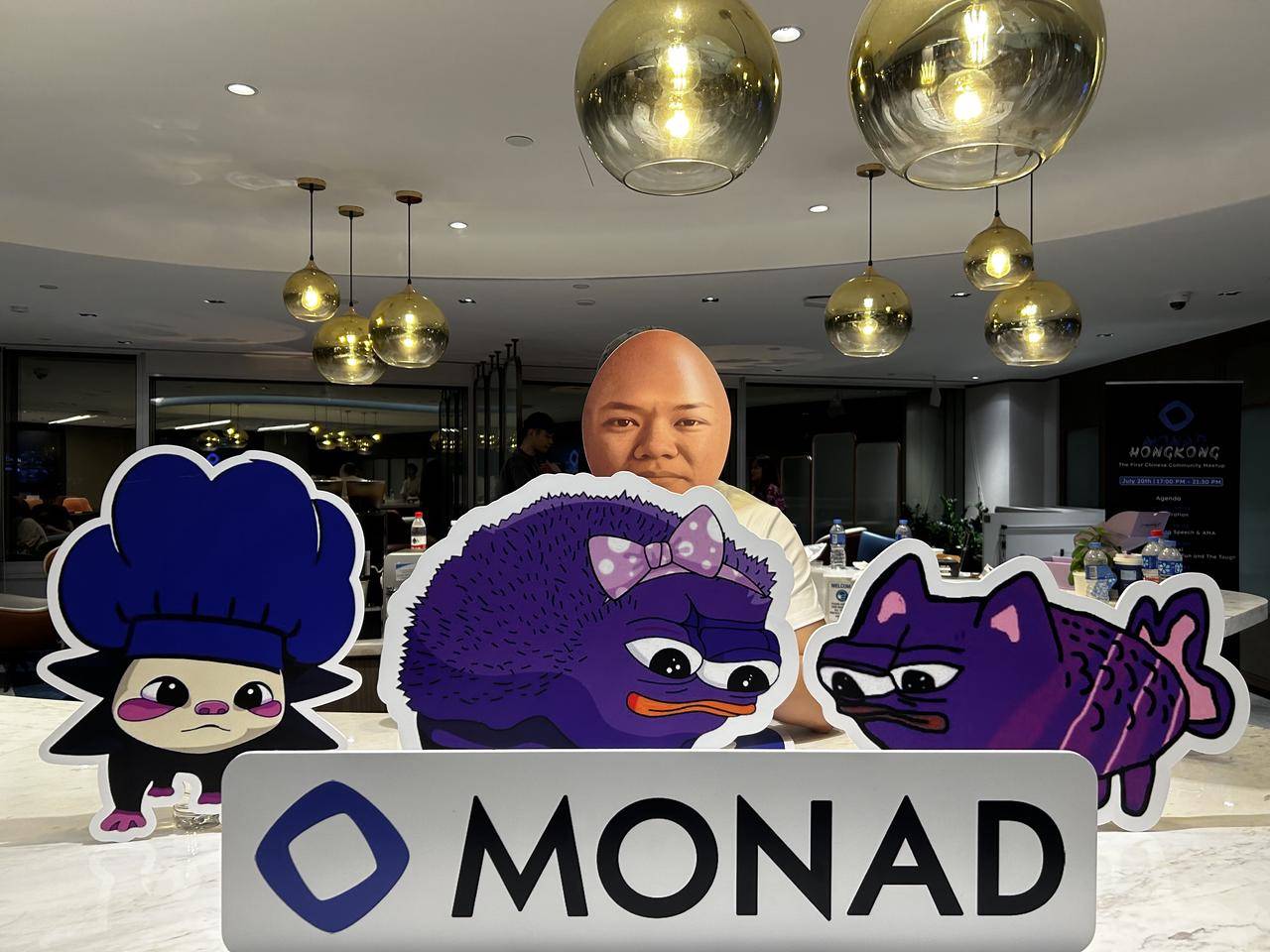
On July 20, Monad held its first in-person Mandarin event in Hong Kong.
Community members, VC professionals, and project founders gathered together—wherever you looked, it was all MEMEs.
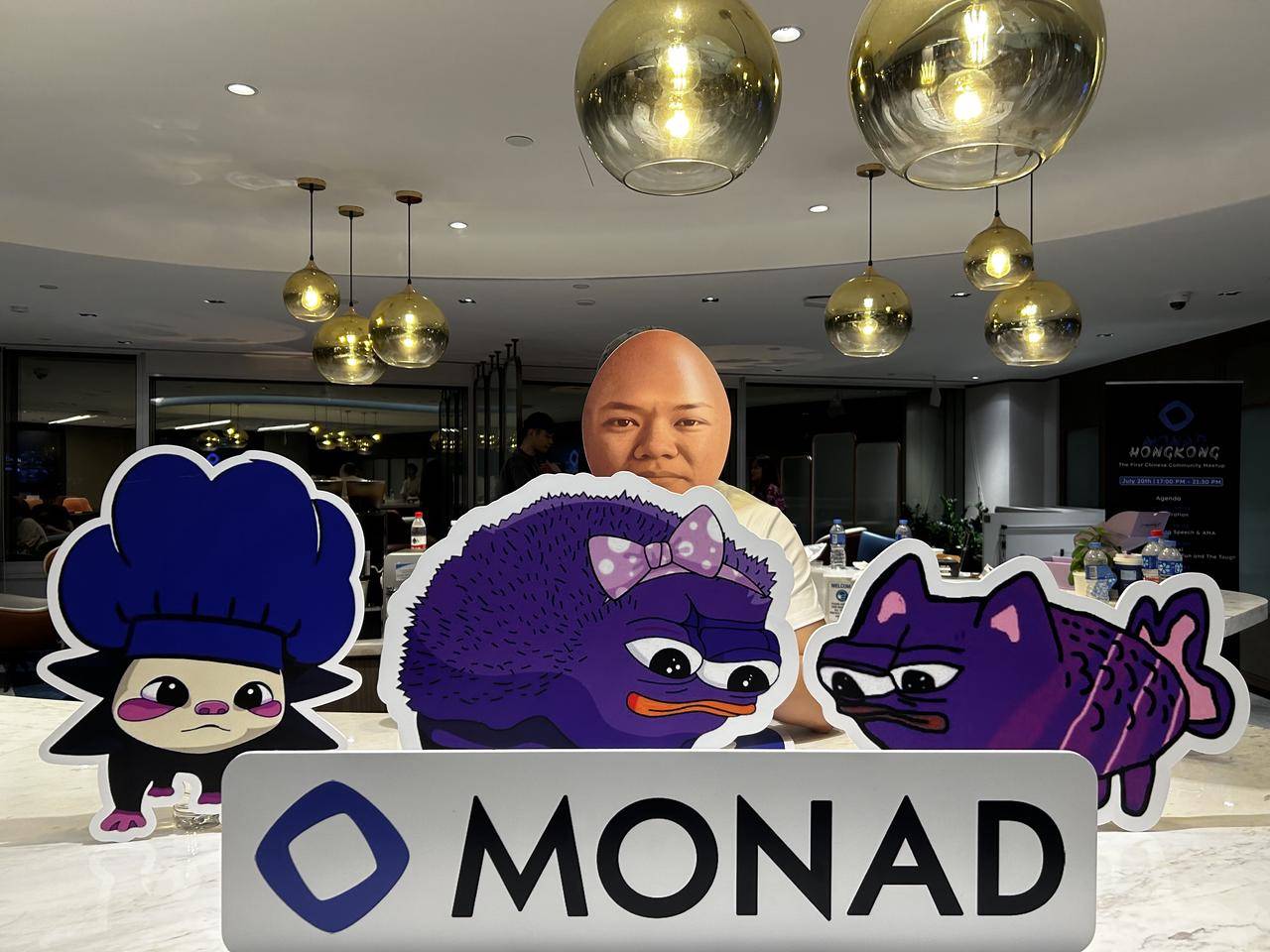
SungMo, Monad APAC Lead, delivered a keynote speech, offering a comprehensive breakdown of Monad across technology, community, and developer ecosystem. Below are the notes taken by this reporter as a community member.
Technology
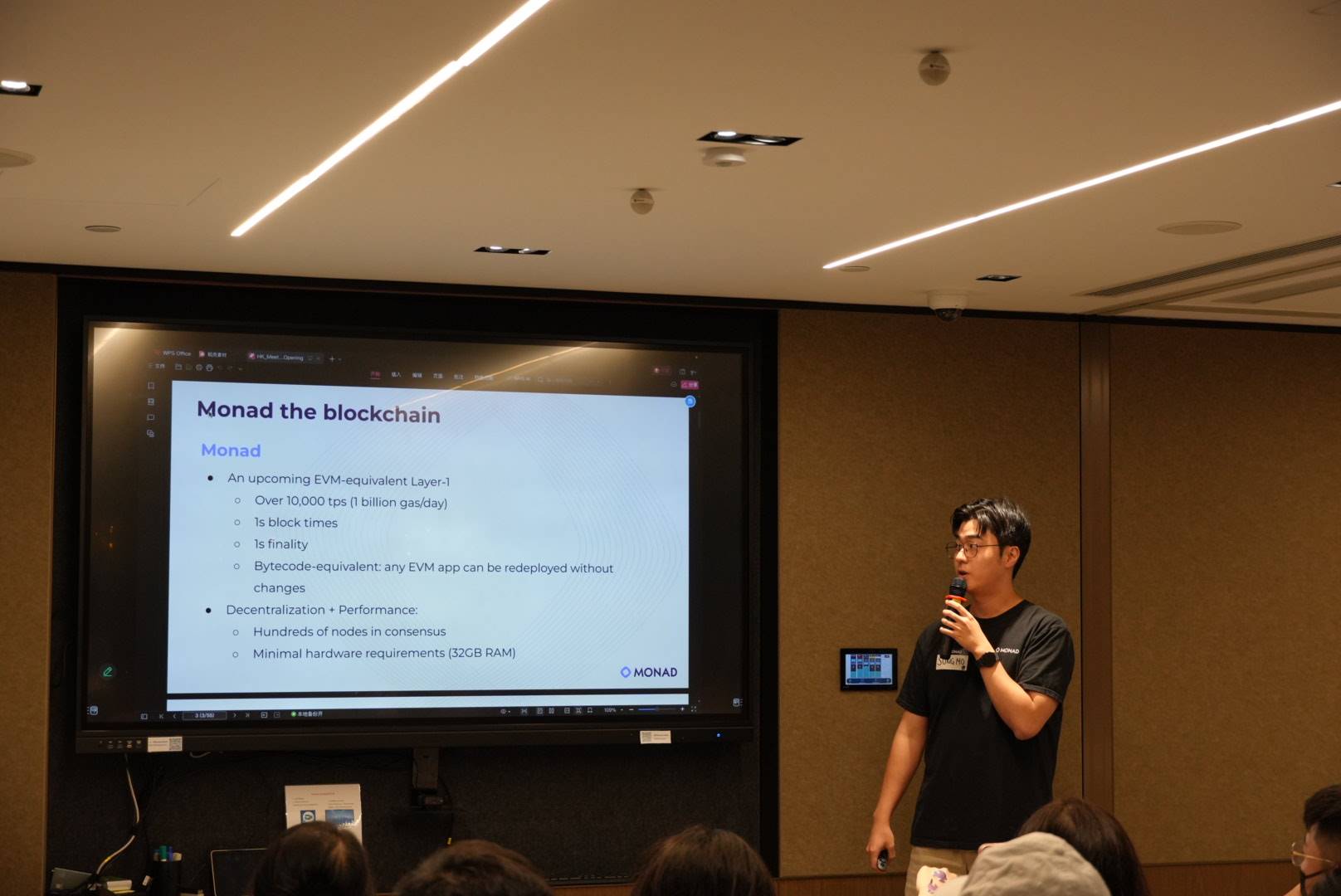
When people talk about Monad, the first thing that comes to mind might be a technical term—parallel EVM. Currently, Monad seems to have become the poster child for this technology. However, achieving over 10,000 TPS, 1-second block times, and full EVM compatibility is no small feat. Technically, Monad consists of the following key components:
1. Asynchronous Execution (Deferred Execution)
In traditional blockchain systems, all nodes must complete transaction ordering and execution within each block. This means that during a single block time, most of the time is spent on nodes reaching consensus, leaving very little time for actual transaction execution.
Monad separates consensus from execution to improve performance. Specifically:
-
Consensus Phase: All nodes first agree on the order of transactions but do not execute them immediately.
-
Execution Phase: Nodes independently execute the pre-ordered transactions in subsequent blocks.
This approach offers several benefits:
-
Improved Efficiency: By decoupling consensus and execution, consensus can occur in one block while previously ordered transactions are being executed in another, making better use of block time.
-
Increased Throughput: More time is available for transaction execution, enabling each block to process more transactions.
-
Reduced Latency: Since execution is independent, nodes can process transactions faster, reducing confirmation times.
2. Parallel Execution
In traditional blockchain systems, transactions are executed sequentially—one after another—like queuing up to buy tickets, where everyone must wait for the person ahead to finish. While simple, this method is inefficient, especially when handling large volumes of transactions.
Monad’s parallel execution uses a smarter approach, akin to selling tickets simultaneously through multiple windows. Specifically:
-
Parallel Transaction Processing: The system processes as many transactions simultaneously as possible—similar to multiple service windows handling different customers at once.
-
Generating "Pending Results": Inputs and outputs of each transaction are recorded in a “pending result.” Like temporary records kept at each window after processing.
-
Validation and Commitment: The system checks these pending results in their original order. If a transaction’s input hasn’t changed during processing, its result is committed; if the input has changed, the transaction is re-executed. Similar to reviewing each ticket in sequence after all windows have finished—if an issue is found, reprocessing occurs.
3. Monad DB
In blockchain systems, every node frequently accesses and updates stored data (e.g., user balances, transaction records). Traditional storage systems may encounter performance bottlenecks under high concurrent access.
MonadDB is a custom-built database designed specifically for storing blockchain state. It leverages modern SSD capabilities to optimize data access and employs cutting-edge asynchronous I/O technology to boost efficiency and performance.
MonadDB allows multiple transactions to concurrently access and update stored data—unlike traditional systems that must wait for I/O results before processing the next transaction. With asynchronous I/O, the CPU can handle other transactions without waiting for specific I/O operations to complete. This asynchronous model significantly improves transaction processing efficiency while maintaining Ethereum compatibility.
Community
Despite Monad's strong technical foundation, one of the most frequently mentioned keywords at the Hong Kong event was neither technology nor performance—but rather community and MEME culture.
“Community is the Product”—the community itself is the product.
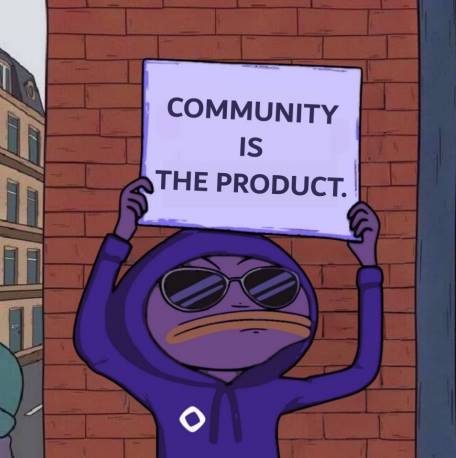
According to Monad, the community follows a powerful growth loop: building value in group chats → value transcends chat groups → value attracts new members, who in turn generate more value…
Although Monad has yet to launch, it has already built a massive community, nearly cult-like in scale. On platforms like Twitter, the purple PEPE army is frequently visible.
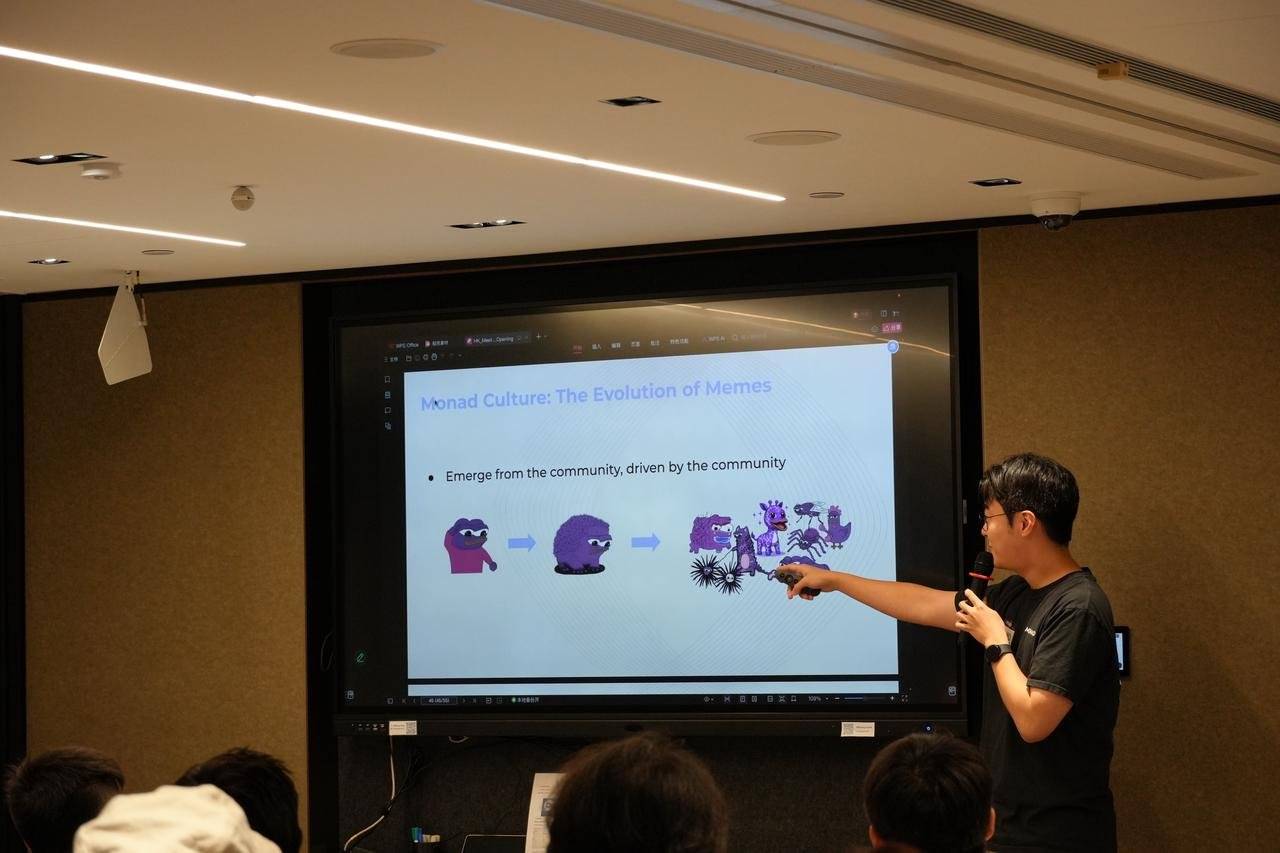
Thanks to its strong, self-driven community force, Monad has developed unique MEMEs that continuously evolve—from the purple PEPE to Molandak, everything becomes Monad.
Molandak is a unique “community pet” created by the Monad community. There are also Chog, Moyaki, Mouch… From day one, they’ve carried the distinctive purple Monad mark.
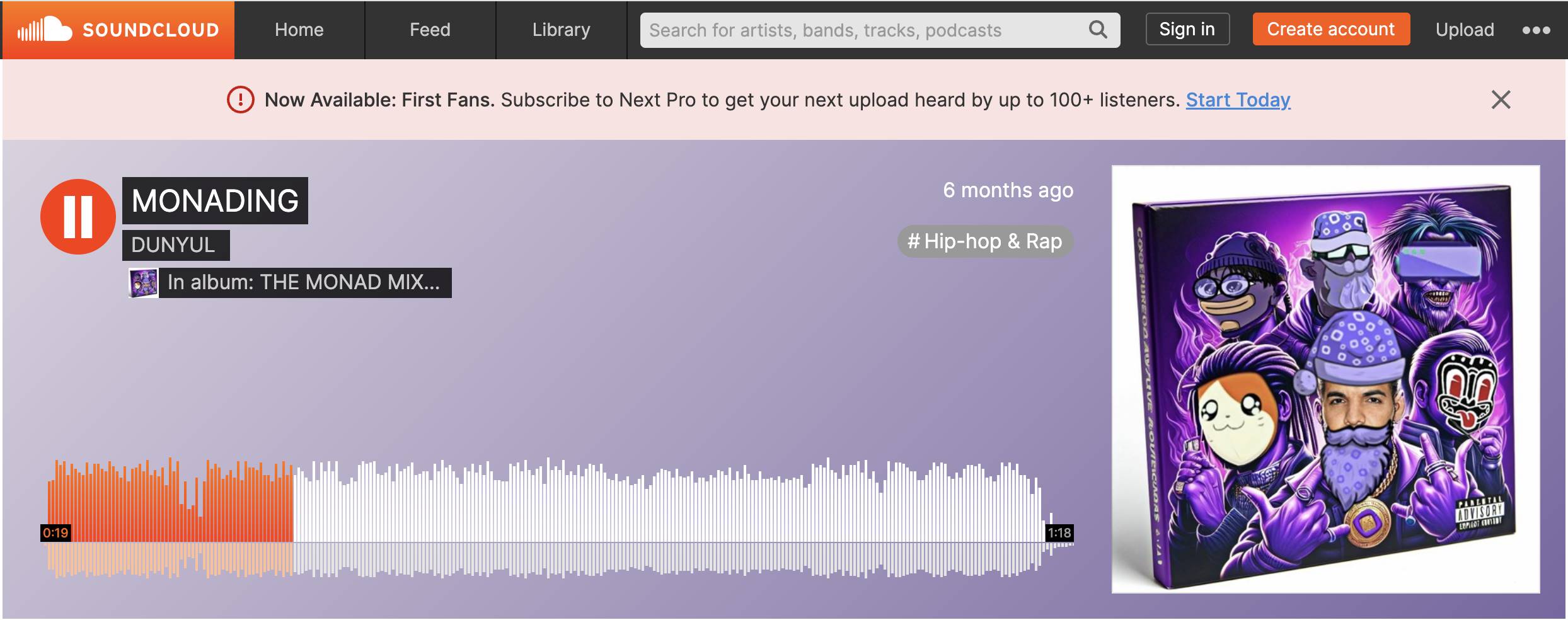
Beyond MEMEs, Monad community members have even self-organized to produce multiple electronic music albums—you can listen to tracks like “10,000 TPS” and “MONADING”…
 In the crypto market, debates often arise about whether technology or community comes first—the chicken-or-the-egg dilemma. But if you've listened to Keone or Eunice speak, you’ll realize this is a remarkably intelligent and articulate team.
Technology is often dry and hard to resonate with emotionally. Moreover, all projects face the risk of technological underperformance—that’s exactly why communities matter. When things get tough, especially during bear market downturns, the community is truly all a project has.
Currently, most crypto communities have devolved into “airdrop communities,” driven solely by airdrop expectations—a growth factor, yes, but reliance on incentives alone isn't sustainable. Historically successful communities were powered by economic incentives. Yet what makes Monad’s community-building most remarkable is that it cultivated a genuine community long before any major product release or token incentive. After all, Monad’s testnet hasn’t even launched yet, and still, over 300,000 community members remain active on Discord.
Developer Ecosystem
As a Layer 1 blockchain, developers are absolutely critical to Monad.
In June, Monad brought its developer program (The Foundry) directly to its New York office, resulting in The Foundry NYC.1.1—an impressively hands-on move.
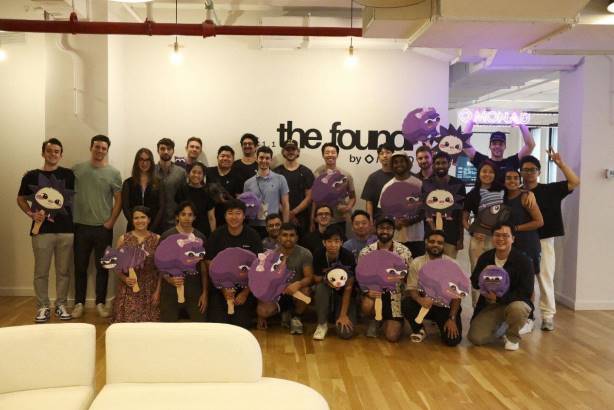
Over the course of a week, 21 teams and 34 builders engaged in one-on-one sessions with Monad team members, receiving advisory support on go-to-market strategies (GTM), fundraising, strategy, product design, code audits, hiring, and community building, as well as introductions to potential investors and partnership opportunities.
At the Hong Kong event, several crypto project founders shared their visions for building on Monad, including:
Salvo Games: An innovative NFT-scalable gaming platform and GameFi-as-a-Service (GaaS) solution whose economic model supports both traditional in-game purchasers and provides full blockchain infrastructure, allowing all conventional gamers to easily participate in the Web3 ecosystem.
Curvance: A stablecoin lending protocol led by Wormhole, with co-investment from Arbitrum and Frax.
Zomma Protocol: A decentralized derivatives protocol focused on building a range of innovative and diversified products, including staking, yield farming, European options trading, settlement, and minimal collateral requirements.
PoPP: A Web3 creator community application that uses blockchain technology to build users’ metaverse social relationships. Everyone can issue programmable soulbound tokens and non-fungible tokens to represent their social connections, organizational ties, credentials, and creative works—ensuring contributors are rewarded and helping users discover more valuable individuals and content on the platform.
Narra: A fan-owned, community-led crypto AI story world where users become Narra trainers. Through interaction, ZAI “children” evolve into different characters within this gamified universe.
At the event, numerous developers expressed interest in building on Monad. A notable point: many likened Monad to the next Solana and framed it as launching a new challenge against Ethereum: "Ethereum is bad, but EVM is good"!

Join TechFlow official community to stay tuned
Telegram:https://t.me/TechFlowDaily
X (Twitter):https://x.com/TechFlowPost
X (Twitter) EN:https://x.com/BlockFlow_News
 深潮TechFlow






