Silicon Valley's top-tier venture capital firm a16z founder: Why we've shifted support to Trump?
TechFlow Selected TechFlow Selected
Silicon Valley's top-tier venture capital firm a16z founder: Why we've shifted support to Trump?
In the current policy environment, Trump is better positioned than Biden to promote technological advancement and startup development.
 Navigating Web3 tides with focused insights
Podcast: Ben & Marc Show
Translation: Rhythm's staff, BlockBeats
Translator’s Note:
The bullet that grazed Trump’s right ear acted like a dividing line—not only boosting his odds of winning the presidency, but also splitting Silicon Valley leaders’ attitudes toward him. While Elon Musk, the world’s richest man, publicly supports Trump, and top investor Peter Thiel backs J.D. Vance as vice-presidential candidate, other tech leaders are shifting positions—such as A16Z.
Marc Andreessen, co-founder of A16Z—one of Silicon Valley’s most prominent venture capital firms—was a lifelong Democrat. He supported and voted for Clinton, Al Gore, John Kerry, Obama, and Hillary. But now, he says, he no longer identifies with the Democratic Party. In the 2024 presidential election, he will support and vote for former President Donald Trump. His decision to back Trump over Biden comes down to one key issue: he believes Trump’s policies are more favorable to technology, especially the startup ecosystem.
Andreessen has long emphasized the importance of technology to society. Last October, he released a “Techno-Optimist Manifesto,” urging technologists to ignore critics and pessimists and to view technology as the “only eternal source of growth.” According to PitchBook, A16Z is among Silicon Valley’s largest venture investors, managing over $42 billion in assets.
In the latest episode of the “Ben & Marc Show”—hosted by A16Z co-founders Marc Andreessen and Ben Horowitz—the two discuss their new article, “The Startup Tech Agenda,” why America’s innovation future is at a critical juncture, and their reasons for supporting Trump. The podcast was even pinned to Elon Musk’s Twitter profile.
In this one-on-one conversation, Ben and Marc compare Trump and Biden’s policies on startups and tech, explore the potential futures of blockchain, cryptocurrency, and artificial intelligence, examine how tax policy shapes the future of startups and venture capital, and reflect on the recent assassination attempt against President Trump.

Left: Marc Andreessen; Right: Ben Horowitz
TL;DR
-
Marc Andreessen and Ben Horowitz believe startups uniquely drive innovation, while monopolies stifle it. Success in tech and startups is vital to U.S. technological leadership, especially in blockchain, crypto, and AI.
-
They emphasize the importance of blockchain and cryptocurrency, arguing these technologies can reshape societal operations, particularly around information and data control. Blockchain, they say, enables fairer capitalism, allowing creators to earn higher returns.
-
The Biden administration’s regulatory approach to crypto is criticized as anti-innovation. Andreessen and Horowitz argue these policies harm startups and call for clearer, friendlier regulations. They express concern over Biden’s tech regulation, which they believe may hinder U.S. competitiveness—especially in AI.
-
They attempted to meet with Biden but were rejected. Their recent meeting with Trump gave them deeper insight into his character. Despite being a complex figure, his courage during crisis impressed them. Given current policy environments, they believe Trump is better positioned than Biden to advance tech and startups. This isn’t personal preference—it’s based on policy impact analysis.
-
They also discuss QSBS (Qualified Small Business Stock exemption) and the billionaire tax. QSBS is a crucial tax incentive encouraging entrepreneurship and investment. Biden’s proposal to eliminate QSBS would severely impact startups and venture capital. Andreessen calls Biden’s plan to tax unrealized capital gains the “last straw.” For private, illiquid companies, taxing valuation increases without liquidity is unworkable and could devastate the startup ecosystem.
Below is BlockBeats’ compiled translation of the podcast:
The Importance of Startups
At the intersection of tech and politics, startups face uniquely complex challenges. In this section, Ben Horowitz and Marc Andreessen explore the unique value of startups and explain why they believe Trump is the right choice for supporting startup technology.
Ben Horowitz: A lot of my friends will be angry at me for saying nice things about President Trump. I don’t want our company, employees, or portfolio companies dragged into this—it’s so emotional. It’s hard. But actually, the future of our business, the future of technology, the future of new technology, and the future of America are all at stake. We’re here. For startup tech, we believe Donald Trump is actually the right choice. Sorry, Mom. I know you’ll be mad at me, but we have to do this.
Alright, today we’re discussing the startup tech agenda, especially how the upcoming presidential election affects startups, how we see it, and how you see it, because things are getting very real for startup tech and the presidency. Sometimes I feel like we focus too much on political negativity. It feels good to understand some of this. Maybe we should summarize briefly.

The U.S. election heats up
One reason we started this podcast is that others might know more about foreign policy, civil rights, economic theory, or other topics. But when it comes to startups and related policies, maybe only one or two people globally operate at our level—we live this every day. We work with startups. We see policy impacts. And we’ve done extensive work in Washington. That’s why we’re doing this podcast. So listeners, you know—we spend a lot of time talking with senators and congressmen from both parties. Marc mentioned we met President Trump. We’ve met White House officials—many of them—including Chief of Staff Jeff Zients, National Security Advisor Jake Sullivan, Commerce Secretary Gina Raimondo, and others.
We haven’t met President Biden. We tried but failed. But we have a good sense of working with the government. We’re deeply embedded in politics.
We focus on one issue: the startup tech agenda. On this front, we’re bipartisan—we donate heavily to both parties. There are strong pro-startup voices in the Democratic camp and in the Republican camp. We just focus on this single issue. Marc, maybe you want to talk about your background and political journey, since it differs from your earlier story about inventing the browser. You entered presidential politics young. I was going to say, obviously you had to be a Democrat—you had to be a good person. That was the fundamental reason.
But especially successful businessmen can become successful philanthropists—a path pioneered by Gates and many others. Then you can take progressive stances on social issues and stand on the right side of social change. People paid attention to that. It all seemed completely obvious, totally simple. So I took that path—and frankly, stayed on it until 2016. Looking back, anti-tech sentiment and anti-business feelings began emerging around the early 2010s. By the way, something that bothered me was rising anti-charity sentiment—we probably won’t discuss that today.
Marc Andreessen: I usually don’t talk about this unless it relates to the presidential race we’re discussing on this podcast. But it’s relevant for people to understand my starting point, our starting point—at least regarding the origin stories behind thinking about these issues. I’ve had an unusual career and life in many ways. One is due to my early involvement in things. I first met a U.S. president in a business context when I was 23, 30 years ago—in summer 1994, President Clinton. Bill Clinton and I did the first-ever presidential webcast together. I was one of three participants in that first presidential webcast—Bill Clinton at the White House, and me in a lecture hall at Google Campus. I think I met Bill around 1996. Then Al Gore—I obviously knew Al Gore, I mentioned last time, he played a key role in creating the internet, making all my work possible.
I knew him well. I interacted with them, collaborated with them. And they were right. By the way, there were various political issues along the way. The encryption wars were actually a big deal. Many interactions with the White House, and ultimately they made the right decisions. I knew them well. I actually supported Clinton politically in ’96. I supported Al Gore in 2000—I was deeply disappointed when he lost. Then through all this, I knew Senator Kerry, John Kerry, and supported him in 2004. I met Obama—I thank Dan Rosenzweig for introducing me to early Obama. In 2008, I wrote a strong endorsement of him. You can still find it online.
I publicly supported Hillary Clinton in 2016—I’ve never been this deeply involved in politics before. But I’ve always participated, on and off. In the 1990s, I was part of Generation X, came of age as an entrepreneur in the ’90s. Like almost everyone I knew—including myself—you naturally assumed you were a Democrat. Of course you supported Democratic presidents. The answer was because it basically solved all the basic equations. The formula boiled down to a simple answer—that Democrats at the presidential level supported business. They supported tech, supported startups. Supported America winning in tech markets. Supported entrepreneurship. You could start companies. They supported business. You could succeed in business. You could make a lot of money. Then you donated it to charity and got huge recognition. That solved all your problems. I was going to say, obviously you had to be a Democrat—you had to be a good person.
Marc Andreessen: That was the underlying mindset. But especially successful businessmen could become successful philanthropists—a path paved by Gates and others. Then you could progress on social issues, stand on the right side of social change. People were focused on that. The whole thing seemed completely obvious, completely simple. So I followed that path—until 2016. Looking back, anti-tech and anti-business sentiments started appearing around the early 2010s. Then something that bothered me was growing anti-charity sentiment—we probably won’t discuss that today.
Ben Horowitz: But oh, those who earned a lot and donated it were criticized for giving to charity instead of paying more taxes. I just want to mention a specific moment—like envy pushed to the extreme.
Marc Andreessen: What made me realize the situation was shifting was when Mark and Priscilla Zuckerberg launched the Chan Zuckerberg Initiative. They pledged to donate 99% of their wealth. But one political faction strongly criticized them. The argument: they should pay taxes so the government can distribute the money. They shouldn’t control where the money goes. Another criticism: “Oh, they’re just doing it for tax breaks.”
Ben Horowitz: That’s not true. It can’t be true—you can’t get tax benefits by donating 99% of your assets.
Marc Andreessen: Donating 99% of your assets for tax savings? That makes zero sense. It’s like people badmouthing you behind your back out of jealousy. Exactly. The formula started breaking down. Like many in tech, over the past eight years—especially the past four—this became a much harder puzzle to solve.
Ben Horowitz: We’ve both realized this is far more complex than we imagined. And I’ve had a similar experience—or perhaps a stranger one. My grandparents were communists. My father—I always call him the Tiger Woods of communism—he was raised to be arguably the greatest communist ever. He edited Ramparts magazine, a very left-wing publication. In the early ’70s, he worked extensively with the Black Panthers, which culturally influenced me deeply. So many of my cultural references come from that era. I grew up in Berkeley, essentially a communist city. All my childhood friends were extremely, extremely left-wing. My mom still is very left-wing. But eventually my father switched sides—if you’re interested in such far-right figures, you can read about him. Growing up, I constantly heard fierce debates between both views—still do. But only recently did I truly grasp all the details.
And it’s not just that Democrats and Republicans differ greatly—but politicians differ greatly from each other, especially regarding tech. That’s one major issue. We’ve met many forward-thinking people on both sides, but also people on both sides who don’t understand anything. And some have almost dark agendas—almost inevitably tied to what I call control. Can they control power? When you enter politics, you enter power. If people pursue power at all costs, it can get very, very dark. Okay, so let’s discuss: why does startup tech matter to America—or even matter at all? We have so many urgent issues—competition with China, potential war; war with Russia; war in the Middle East; all these equality and fairness issues. Why should anyone care about tech—let alone a startup tech agenda influencing how they view policy, politics, or who they vote for?
Marc Andreessen: Okay, I’ll break it into three parts. First, why does tech matter? Second, why do startups matter? Third, which startups matter? So, does tech matter? My view: if you look across history, Americans have been lucky in many ways. One way we’ve been lucky is that the U.S. has basically been the world’s dominant or leading nation since WWI. It was U.S. entry into WWI that truly turned the tide for the Allies. Again, U.S. entry into WWII turned the tide in that war. During that period, the U.S. led the so-called Second Industrial Revolution—the rollout of nearly all modern technology we use today. From cars to railroads to telephones, logistics, air conditioning—everything that makes life livable and comfortable—came from that era. The U.S. was far ahead in all of it. After WWII, we continued leading. For the next 50 years, we were the dominant nation on Earth. This proved critical during the Cold War, facing Soviet-style totalitarian communism—an opposing ideology. Those who didn’t live through it can’t feel it, but it really felt like life or death. I grew up believing we might all die in nuclear war—until it ended.
Ben Horowitz: We used to do those drills. Remember hiding under desks?
Marc Andreessen: You hid under desks. When bombs fall, hide under desks—because that helps. From the late ’80s onward, this was very real for our generation and older ones. Basically, for over 110 years, the U.S. has been the world’s most important nation. You can criticize many American actions. But in basic economic development, technological advancement, military strength—and again, foreign policy—you can debate it endlessly. But look: the past 70 years have seen unprecedented global peace compared to any historical period. This is largely tied to U.S. technological and military dominance. We’ve grown accustomed to it. Frankly, we take it for granted. We inherited it and assume it’s permanent. But it’s not inevitable. It hasn’t always been this way. The world used to be more fragmented, more violent.
Ben Horowitz: I mean, this hasn’t lasted long. But that’s the problem—it could easily change again.
Marc Andreessen: It absolutely could change. We live in this world. We take it very seriously—we don’t want to live in any other world. We want this to continue. There’s a popular narrative that America’s best days are behind us, that we’ve lost control, etc. So far, that’s not true. But it remains undecided.
Ben Horowitz: And America still has real advantages. People underestimate this. It’s like dealing with politicians—easy to see all America’s flaws. But we take America’s strengths for granted.
Marc Andreessen: I call it the triangle. There are three areas where we’re the best in the world. These happen to be critically important. They are tech, economy, and military. Imagine them as a triangle—it’s interesting because each depends on the other two. This predates Silicon Valley—it traces back 100, 110, 120 years to the creation of any modern warfare system—even ancient Japan.
We’ve maintained technological dominance throughout this entire period. This technological edge has granted us economic dominance. The foundation of American economic success over the past century has been successive waves—from the Second Industrial Revolution, to the computer age, internet era, now AI and accompanying biotech, etc. So tech and economy are deeply intertwined. You can only have world-leading military power if you’re a world-leading technological power and a world-leading economy.
Because you need technology to develop advanced military systems, and economic strength to fund them. Basically, the greatest geopolitical success story in our lifetimes was the collapse of Soviet communism in 1989. If you study that period, they basically surrendered. They gave up. By the way, this shocked nearly all experts—the Soviets appeared one day and said: “We’re done. We’re not fighting you anymore. We’re finished.” What happened was they fell behind technologically. They fell behind economically. Then concluded they’d lose militarily—winning the war was impossible, continuing to fight pointless. One of history’s most extraordinary events: a global empire with massive ambition, power, and brutal records simply gave up.
Ben Horowitz: Hundreds of millions of lives saved and improved by escaping that system.
Ben Horowitz: I know. It’s interesting—there’s always been a communist movement in America, especially among youth. The cure is always: just meet someone who lived under communism, and you’re cured.
Marc Andreessen: Completely agree. Any critique of capitalist societies or economies gets amplified tenfold under communism. Whether environmental destruction or quality of life—any issue is worse under communism. It was a huge moral victory—but owed to that triangle: technological strength, economic strength, military strength. That’s why tech matters. Without the tech piece of that triangle, you wouldn’t have the economy piece. Or the military piece.
Ben Horowitz: And this strength was built by small tech entrepreneurs—Thomas Edison, Henry Ford—who created the technologies, companies, manufacturing capabilities that helped win WWII and build the economy. These same entrepreneurs exist today—or their descendants. These are the interests we care about and try to protect.
Marc Andreessen: Exactly. Then comes the role of startups and startup tech. On this, I probably disagree most with my close friend Peter Thiel, who famously wrote in his book that innovation requires monopoly. This is where I most disagree with him—monopoly kills innovation. Monopoly equals death for innovation. Because as you like to say, any monopoly’s motto is: “We don’t care, because we don’t need to.” Just observe any monopoly—they don’t innovate. The answer? Because they don’t need to. It’s hard, risky, dangerous—you might get fired, people might mock you—they just won’t do it. So innovation fundamentally comes from startups. It comes in two ways. Directly from startups. As you mentioned that long list—Lockheed, for example, was once a startup. Hughes—all core defense contractors who won WWII and the Cold War—were startups when they began.
When they succeeded, they started as startups. You get contributions from startups, but another key part: the existence of startups keeps big companies alert and motivates action. The classic example playing out now: Google invented the Transformer in 2017, then shelved it. Then startups picked up the idea and ran with it—OpenAI, Anthropic, and many others. Now, as a result, Google is forced to respond—now doing amazing technical development, using Gemini, achieving breakthroughs—clearly driven by startup pressure. So even if you believe all innovation comes from big companies, they still need motivation—and they’re motivated by startup competition. So basically, America’s technological edge depends on whether startups can succeed, whether there’s fertile soil. Finally, I want to address: which startups? Because one response I hear is: Marc, sure, this is true for something like drone autonomous software due to military applications—but how can you say this for XYZ other things?
Here I say: historically, it’s truly impossible to predict which innovations will matter. In our last podcast, I mentioned my personal example: in 1993, no expert class member would have said—or did say—the internet would have strategic importance. Going further back, one of my favorite books—written 50 years ago by an MIT professor—is “Men, Machines, and Modern Times.” It traces the history of new technologies and their adoption. One example: 100 years ago, a man named Sims invented the first naval gun capable of automatically compensating for a ship rolling on waves—about 120 years ago. A cannon that could maintain aim even as the ship rolled. At every step trying to promote this idea, he was mocked, scorned, ridiculed, and obstructed.
It’s a spectacular story. But any new thing always has such a story—always a narrative that this thing can’t possibly matter or be meaningful. Then sometimes things prove unimportant, but often they prove critically important. Now some believe they can pre-judge which new tech waves, which new startup waves, will be strategically significant. This is a deeply misguided view. They have no ability to predict this. And if they apply such judgment, they’ll likely be wrong. People like them have always been wrong on these topics. Now this tendency—applying what I’ll call perverted industrial policy—saying this sector will be allowed to succeed, but we’ll strangle that sector in the cradle—is highly destructive.
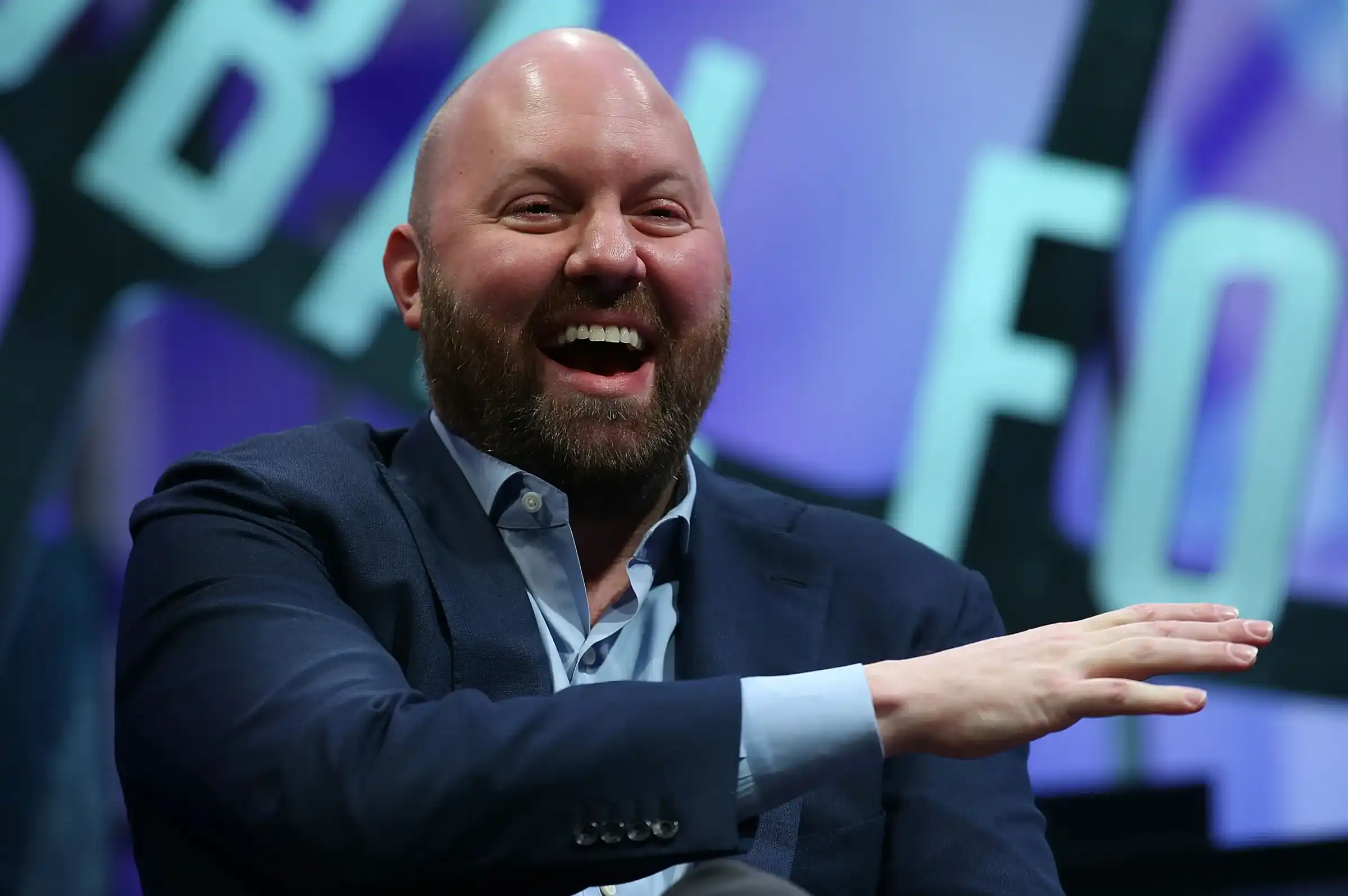
Marc Andreessen
Blockchain, Cryptocurrency, and Stakeholder Capitalism
Ben Horowitz: America’s strength lies in all our smart talent being able to contribute. You’re right. Anyone talented and ambitious can try building something. Contrast that with Stalin’s Russia—if Stalin didn’t allow you to build, you couldn’t. That’s the problem—when you start applying that model, you get all America’s weaknesses: our crazy disconnected culture, decay, drug addiction—but none of what makes it work: our collective talent. As a nation, we’re incredibly talented—talent from everywhere is contributing. But in top-down governments, communist societies, dictatorships, fascist regimes—this isn’t true. In those worlds, talent gets destroyed. Interestingly, we spent time with Malay Yu—I just met him at a conference in Argentina. Argentina’s story—one of the world’s most talented nations—yet all that talent was utterly destroyed by terrible government. This is what worries us on the startup tech agenda.
So should we dive in and contrast the two campaigns? We obviously know more about Biden, since he’s set policies over the past four years. But we do know Trump’s platform and what he did previously. Some tech aspects aren’t prominent, but some are crucial. Okay, first topic: blockchain and cryptocurrency—one of our most active areas with government. Let me first explain why we consider this a very important technology. Back to the internet—one reason it’s so special and important is so-called permissionless innovation, or networks nobody owns. Microsoft doesn’t own it. AT&T doesn’t own it. Nobody owns it. The community runs the network, runs the internet. Anyone can participate, run nodes, move forward. Result: anyone can build businesses on it, create on it—without paying huge fees to some corporation. I remember all the companies built. But I also remember Prince putting his work online. It was amazing—he changed his name to escape record contracts and did all that. An exciting place where everyone can participate without big industry gatekeepers. If you’re talented or have ideas, you can publish them. Write and post online. You don’t need a job at The New York Times, etc.
But then what happened: tech history resembles the history of networks and servers. Eventually, servers were owned by big companies. Many technical architecture reasons. So winning companies ended up owning all data at discovery layers (like Google), social network layers, or commerce layers. Thus, these companies became extremely powerful—more powerful than most governments. Google—we’d all agree—controls information, holds funds, and is stronger than 95% of the world’s countries. This harms people in multiple ways. One: building a business—you now depend on them. They can kill your business by making you unfoundable. If you’re an artist, your cut on Instagram or TikTok is extremely low. You upload content, they get 99%. Nothing else in the world works like this. Even Apple—when you develop an app, they take 30%. This is extreme concentration of economic power, information control, etc.
We lacked the technology to counter this—until now, blockchain. It’s a breakthrough—you can build these same services, but instead of companies owning computers, the community owns computers. Just like the community owns the network. A remarkable breakthrough, vital for how a healthy society functions. We hear terms like “stakeholder capitalism.” This truly is stakeholder capitalism—customers participate, community members running servers participate. Everyone participates. Look at early services—creators get 90% or 95% of revenue, not 1%. This is truly astonishing potential.
Moreover, it solves real social problems we face—like who controls truth. This emerged with deepfakes, right? You have AI now making videos appearing to show Joe Biden. How do we know if it’s real or fake? Who tracks this? Who owns the database of truth? Is it the Republicans? The Democrats? Google? Who do you trust—or should it be a community-run utility? That’s what blockchain solves. We believe for our country, for our society, this may be the most important technology we handle. It needs immediate collaboration with government—because it does require regulation. Specifically, how the community pays for electricity used by computers running the service. About 10,000 people run Ethereum services—one of these blockchains—they receive tokens as payment. Tokens can be stock certificates or Pokémon cards. They’re a computer structure. We need regulations clarifying: in this case, it’s a stock certificate; in that case, it’s a Pokémon card. So the industry can function and eliminate scammers or those trying to steal your money.
Then we went to Congress: maybe pass a law clarifying when something is a security vs. commodity. The government—in the form of the SEC, specifically appointees by the White House—has opposed us at every step, using vicious tactics. Just a few examples. First, they refused to issue any guidance. Then they attacked companies without laws or guidance. So they sued over 30 of our companies. They issued Wells Notices—which we’d never seen in our entire careers—a SEC form declaring investigation and pursuit of any private company. These are private companies. Specifically targeting this industry. They’ve lost almost all these lawsuits—but the problem is, as a startup, you lack funds to fight the U.S. government. They’re destroying the industry this way. They also made having bank accounts impossible—even though building this tech is completely legal. The FDIC told banks: if you provide banking services to these companies, we won’t let you borrow at federal windows. We’ll attack you. It’s a similar technique—you can read about what they used on the marijuana industry, why you must pay cash at pot shops. Same thing they’re doing in crypto. You can read about it—Choke Point 1.0 for marijuana, Choke Point 2.0 for crypto. Beyond law, using the administrative state to destroy an industry.
Then we tried passing laws. There’s SAB 121—a crazy rule by the SEC stating: if you custody others’ crypto assets. If I have Bitcoin and give it to you for safekeeping, then as a bank, if Bitcoin’s price drops, you’re liable—even though it’s my Bitcoin. Imagine: banks store gold, if gold prices drop, their customers own it—not them—they must bear responsibility. Well, that means banks can’t custody crypto. So Senators—even Democrats like Chuck Schumer—said: come on, this is absurd. They voted to overturn this rule. Then Joe Biden vetoed the bipartisan Senate conclusion—kept the rule. That’s how radical they are. This has been truly frustrating and difficult for us and the entire industry—and this is such important technology.
This has been one of our biggest battles. To show how devastating: we have a company, Worldcoin, solving a major AI problem—proving you’re human without revealing identity, Social Security number, driver’s license—proving you’re human not a bot, like hardcore password strength. They’ve launched worldwide—except in the U.S., due to this behavior and these laws. To show how important this product is—Malaysia’s government recognizes it. Half the citizens of Buenos Aires use it regularly. A fantastic, useful, important product improving everyone’s lives—banned in the U.S. A huge blow to startup tech.
Challenges Facing the Crypto Industry
Ben Horowitz: We should keep explaining. We tried meeting Gary Gensler, SEC Chair. He’s leading this anti-crypto crusade. We’re among the world’s largest crypto or blockchain investors. We requested meetings with him at least six times. I even contacted his MIT office colleagues—he said: “Gary will definitely meet you. It’s so important—he must meet you. You know all these things.” But he couldn’t arrange it.
Reportedly, he wasn’t appointed by Joe Biden—but by Elizabeth Warren—who also refused to meet us. She’s the only Senator who refused. Of course, we couldn’t meet the President himself. Truly frustrating and difficult. In contrast, when pushing legislation—Market Structure Act determining what’s commodity vs. security—we worked with Congress. By the way, some outstanding Democrats in Congress helped support us. Richie Torres has been an absolute hero. Chuck Schumer has been great. We’ve worked with them. While doing this, Donald Trump announced his crypto stance—you can read it—but the contrast now is insane.
Marc Andreessen: This came out before we met him—what a stark contrast. But he spoke publicly—he’ll actually speak at the Bitcoin Conference after the convention. He has more on record. One thing Trump did: he rewrote the Republican National Committee platform himself—for this convention. A very clear, simplified statement of intent. You can download and read it—worth reading. I’ll quote directly. Chapter Three: Building the Greatest Economy in History. Point Five. We all support this. We all support this. Point Five: Support Innovation. These words now only come from his side. Then: Pave the way for future economic greatness by leading in new industries of the world. First industry: cryptocurrency. We will end illegal and un-American crypto crackdowns. We will oppose creating central bank digital currencies—another point. We will defend the right to mine Bitcoin. We will ensure every American has the right to self-custody digital assets and transact without government surveillance and control. It’s full-throated support for the entire field. Complete embrace of the whole thing. He’s confirmed this elsewhere. A complete 180-degree shift from what we’ve experienced.
Ben Horowitz: I’ll also say—our experience here personally shocked me. This mindset. Again, I come from an era—Clinton administration would never do this. I don’t think Obama administration would. Absolutely not. This is new behavior.
Marc Andreessen: Well, whatever you think of Obama, he was always interested in business and tech experts’ opinions—whether he agreed or not. He wanted to learn. He wasn’t someone unwilling to listen. That’s exactly our current problem.
Marc Andreessen: It’s tough. It’s truly awful. A brutal assault on the entire industry—I’ve never seen anything like this. I’m completely shocked this could happen. Being unable to make progress with the White House here is truly frustrating.
Ben Horowitz: It’s completely intolerable. And fascinating—our old friend Reid Hoffman wrote defending the Biden administration. He said: businessmen should support Joe Biden because the most important thing for business is the rule of law. I thought: wow, what irony—they’re basically subverting the rule of law to attack crypto. We’re dealing with this now. This might be the most emotional topic. Let’s switch to AI. Why is AI important to America?
Marc Andreessen: Look, this isn’t debatable. Crypto people might debate its importance. Obviously, we firmly believe it is important. Regarding AI—no doubt—it will be a foundational technology for economic growth. If allowed to develop properly, what happens next will be at least equivalent to the 1990s internet boom, if not the computer industry boom since the 1950s—equally impactful for America. Then look: AI is powerful enough—possibly bigger than both. Could be the largest tech boom ever. So extremely important economically. Then look: entire military theory, warfare—all will change. Everything will revolve around AI. By the way, this is already happening. The Pentagon classifies AI and autonomy as their “Third Offset”—meaning basically next-gen foundational tech. In post-WWII history, only three offsets.
First was nuclear weapons. Second was maneuver warfare and related concepts. Third is AI and autonomy. So military affairs will undergo total revolution—how the U.S. military and global militaries operate will be completely restructured. Department of Defense—yes, they’ve confirmed this. We’ve worked extensively with them. They’re pushing hard on this. We fund many companies. So it will be very important. Then China has declared the exact same thing. They’re reshaping their military the same way. A huge national security priority. They fully control their domestic tech industry. So they’re precisely leveraging their smart people to do this. This is the tech race of our era. It will decide the world order for centuries. Decide how governments operate. Decide how surveillance operates. Decide who wins wars.
Marc Andreessen: You can see it. Exactly right. I don’t know why you’re so emotional about this. Well, look—you can already see it. You can see it on the Ukraine battlefield. Yes, I won’t go into detail here—but it’s a massive shift. All unfolding now on the Ukraine battlefield. Then clearly, this will significantly impact events in the Middle East and elsewhere. A core, foundational technology—as expected. America absolutely must win this race.
Biden Administration’s Regulatory Storm
When discussing tech industry development, tax policy is a key factor. Marc and Ben discussed some Biden administration tax proposals and their potential impact on startups.
Ben Horowitz: So what have we seen so far from the Biden administration—especially the White House? I’ll say first—Congress tried finding answers through bipartisanship. The Biden administration approached it differently. Maybe briefly summarize their actions so far.
Marc Andreessen: Different branches. You mentioned the Commerce Secretary—one we’ve been talking to.
Ben Horowitz: By the way, Gina Raimondo’s thinking on AI policy is excellent—especially regarding China and CFIUS, national security. Same for National Security Advisor Jake Sullivan. When we talk about the White House, we’re actually referring to executive orders from different departments.
Marc Andreessen: Also, many smart people in Defense and Intelligence agencies—we should highlight—they’ve done good work. Many positives—many genuinely trying to solve these problems.
Ben Horowitz: Okay. We’re trying to understand this idea in executive orders—basically limiting how much math you’re allowed to do in life—to 10^26 floating-point operations (flops). You and I did research. We talked to White House advisors. We talked to White House policymakers. Ultimately boils down to a belief we think is deeply flawed—let me summarize: probably only three or four foundational models globally will matter, because only a few companies can afford the GPUs needed to build relevant models. This has several problems. First, many techniques already show you can build excellent models on others’ models. There’s distillation—we’ve discussed before. Second, now labeled post-training data appears more effective than adding GPUs. Scale may not be the only thing that matters. But many very important foundational models now aren’t large and aren’t among the typical three—but are widely used. The idea: if only three models exist—all from the world’s biggest companies—you can put barriers in front, they’ll jump over fine. But for startup tech—by the way, nearly all foundational models we invest in are rapidly growing, performing excellently. Such regulations would kill them. Maybe explain why flops limits are so strange.
Marc Andreessen: For those unaware, flops (floating-point operations) is a computer science term—floating-point operations per second. I know that doesn’t explain much. It’s basically a measure of computing speed—how many calculations a computer can do per second, how many math problems it can solve per second. Computers now compute math extremely fast—millions of operations per second. The idea in this executive order—10^26 flops—is, as you said, only the largest models reach that level. But our industry has a 50-year phenomenon—possibly the clearest predictor of our industry’s future—called Moore’s Law. A well-known phenomenon: computing power doubles roughly every year—becoming faster and cheaper.
I’ll add: regarding Moore’s Law, companies like NVIDIA—now one of the world’s most valuable, ~$3 trillion—are incredible success stories. Their existence stems from chips becoming standard. This is now the chip industry’s biggest profit incentive—finding ways to apply more chips competing with NVIDIA, lowering prices, increasing output. Even NVIDIA CEO Jensen Huang—our good friend—is pushing this. He predicts chip speeds will dramatically increase, costs drastically decrease from now. So in ten years, chip costs will plummet. Today’s expensive, difficult tasks will become easy, cheap. Many historical precedents. One of my favorite personal examples: original Sony PlayStation—a game console.
Ben Horowitz: I have one—play Call of Duty.
Marc Andreessen: People know these. When first shipped, they were export-controlled. Sony wasn’t allowed to ship them to countries with possible nuclear programs—like Iraq—because these chips were considered too powerful, potentially usable for nukes. Shows a basic problem: why? Because supercomputers once had flops limits. Then Moore’s Law kicked in—Sony PlayStation emerged as a $300 consumer device with that flops capability. Suddenly, you’re export-controlled. The beauty of GPUs. PlayStation was one of the earliest GPUs—had a GPU inside. These seemingly reasonable limits quickly become unreasonable. One more example showing this deflation: when OpenAI first released GPT-2—probably the first effective LLM—they initially refused to release it—due to safety and danger warnings. Today, GPT-2 is open-source.
Ben Horowitz: Andrej Karpathy, OpenAI co-founder—he’s left—now has an open-source version of GPT-2—you can train your own from scratch for under $100 in compute cost.

Marc Andreessen: It’s like—IDK—they dropped from ~$10 million to $100. That scale of reduction. Today’s expensive, rare things will become mainstream, then cheap—everyone will have them. By the way, every computer science student will have such model capability on their laptop. You’ll have such models on your phone. In five years, you’ll have models of this scale on your phone.
Ben Horowitz: This deflation effect will be dramatic. These will emerge—these will be like microprocessors.
Marc Andreessen: These will become commodities—built into all devices—everyone will have it in every device. Basically, the regime government now threatens—using this limit—will establish only two or three companies they deem important. Like permanent monopoly. They’ll destroy the startup ecosystem beneath. They’ll establish an AI OPEC from the start. One thing I have a big question: is this ignorance or malice? Are they unaware of what they’re doing—or deliberately creating a cartel? Either way, I find it completely unacceptable.
Ben Horowitz: This ties into what we discussed—predicting the future, like the precautionary principle. As Yogi Berra said: predicting is hard, especially about the future. And if they could predict the future, clearly it’s unpredictable—otherwise they’d be richer than Elon Musk or anyone. No one can predict the future—especially about these things. We know we can’t predict the future—our entire job is trying to predict it. But setting policy before the future arrives is extremely dangerous. We’ve seen this in Europe—where this precautionary principle idea eliminated nearly all innovation—trying to stop things before they happen. This is my biggest concern.
Marc Andreessen: I must emphasize: AI is literally math. I mean—just math. Just large mathematical models. Huge equations. Specifically, a field of linear algebra—with a key algorithm called gradient descent. These are taught at every university. Spread globally. On YouTube videos. All over the internet. Standard textbooks. Not rocket science. Hard to hide. Nuclear physics. Operating in plain sight. The idea of shackling this—again involving national vs. global policy—by deliberately binding ourselves with red tape, while the rest of the world lights up—and China lights up—secrets in this field are few. So any restrictions we impose only disadvantage America relative to the world.
Ben Horowitz: It’s like something we often discuss—you enter these laws. There’s law and enforcement. If you make a law impossible to enforce, you end up in what’s called authoritarian anarchy—lawless for those disobeying—they can do as they please. Authoritarian for law-abiding citizens—no matter how carefully you follow Byzantine regulations, you’ll mess up something and get punished. A very bad policy idea. Another concern in handling these matters—how we arrive at these policy conclusions.
Marc Andreessen: If I hadn’t seen blockchain’s trajectory, I might not feel so strongly. But I’ve seen where this leads. You can now see it in real-time in adjacent industries. And it’s already catastrophic. Our country cannot let this happen again.
Ben Horowitz: We’re still very early in this industry. We see crucial innovation across sectors, nations in AI. Now claiming: I know exactly where this entire industry is headed over the next 20 years—is highly irresponsible. My biggest fear is the foreshadowing we saw in crypto. It will happen in AI. It will unleash the administrative state to do their thing. While I’m not confident they’ll side with us—some aren’t the entire administrative state—but certainly parts affecting us.
Marc Andreessen: If government cracks down on AI like blockchain, the nation will be in deep trouble.
Ben Horowitz: That’s the default path. Totally unacceptable. Very concerning. This meeting was very concerning. Outcome undecided. As I said—many in the White House still need convincing—we’ll see. But very concerning. Then let’s discuss Trump’s proposals. When we had dinner together, we actually discussed this. We discussed all these topics—and confirmed this.
Marc Andreessen: Including building the greatest economy in history, supporting innovation, supporting AI. We will repeal dangerous executive orders hindering AI innovation and imposing radical ideas on tech development. We will support AI development based on free speech and human flourishing.
Ben Horowitz: Sounds like a good plan. When we met him, I found his comments insightful and funny. I’ll contrast Biden administration—especially White House core—with Trump’s approach. The White House has a very complex model. I’d say they think they know a lot. They know startups won’t matter—only a few companies can deliver large models. They know everything we don’t—they’ve never heard of distillation, or how AI actually works. But it’s a very complex worldview. Trump’s view is very simple. He told us: AI is terrifying—but we absolutely must win—because if we don’t, China will. That’s a very bad world. Actually, this is a more correct view—basic facts. Look: when things begin, regulation should address them. But preemptively—cars are coming, we think someone will make a 500 mph car—nobody can control it—so we ban cars now. I mean, that’s kind of the AI attitude—we think a sentient model might emerge. Now, seems no one’s building anything moving toward sentience. Still, we have these great tools tutoring kids. No, you can’t tutor kids—because someone might get an idea, build sentient AI. Must cut tutoring. This mindset is terrifying—I’d say.
Marc Andreessen: One of our arguments—we’re not against regulation—as described in the blockchain section, regulation clearly exists.
Ben Horowitz: Or a model self-assembling into super genius—nobody knows how.
Marc Andreessen: We’re actually trying to pass a regulatory law. It’s the 21st Century Financial Innovation Act. We’re trying to build a regulatory framework—because government won’t—so we’re creating new regulations. In meetings discussing AI policy with the White House, our argument: problems will come from AI—but suppose they should be regulated. Regulation should occur at the application layer—not the technology layer. Because regulating AI at the algorithmic level means regulating math. Which makes no sense. Of course, we won’t do that—do you remember what they said? No, actually, we can classify math. Literally—they classified entire fields of physics during the nuclear era as national secrets—like theoretical physics, science, physics. We completely made it a national secret—those research areas disappeared. We fully capable of doing this for AI. We’ll classify any math field we deem heading in bad directions—and terminate it.
Ben Horowitz: Also interesting—now we have the internet, hard to keep math secret. No information secrecy now.
Marc Andreessen: Some might say: that’s crazy—they’d never do it. But the problem: I’ve already seen too many crazy things. I no longer believe I can predict which of these crazy ideas get implemented. Personally, I can’t tolerate the idea existing—literally classifying linear algebra as a national secret. That’s crossing the line.
Ben Horowitz: You’re getting emotional. Okay, I’ll briefly mention fintech—in some ways almost a crypto subclass, regarding regulatory approach. But I want to tell a story—it affected me personally. We invested in a company called EarnIn—founder Ram. I didn’t invest, but talk to Ram almost monthly. We have dinner every two weeks—first, what he’s doing is a mission—deeply connected to my life. The fact about America’s financial system: it’s extremely unfair to the poor. If you’re poor, you pay more for banking than the rich. You and I pay nothing for overdraft protection. Low-income people spend more on overdraft fees than vegetables. Terrible.
A large portion of Americans are unbanked. If unbanked, you usually enter the
Join TechFlow official community to stay tuned
Telegram:https://t.me/TechFlowDaily
X (Twitter):https://x.com/TechFlowPost
X (Twitter) EN:https://x.com/BlockFlow_News
 a16z
a16z