Doubler: A Crypto Native DeFi Protocol Tailored for Volatile Cycles
TechFlow Selected TechFlow Selected
Doubler: A Crypto Native DeFi Protocol Tailored for Volatile Cycles
Doubler could be described as a product tailor-made for this cycle.
 Navigating Web3 tides with focused insights
Authors: Gwen Li, NG, Chen Li
1. Liquidity Challenges in This Market Cycle
In the current bull market cycle, market behavior differs significantly from previous cycles—exhibiting higher volatility and deeper correction phases. Frequent value declines across assets held by both institutional and retail investors reflect two core challenges inherent in this cycle.
1) Shortage of on-chain and off-chain liquidity; token supply inflation further fragments available liquidity.
Under the current macroeconomic environment, the U.S. has maintained a 2-year-and-4-month interest rate hiking cycle alongside a 2-year-and-1-month quantitative tightening (QT) or balance sheet reduction program. Rate hikes reduce circulating capital by increasing borrowing costs, thereby lowering market liquidity, while QT directly drains liquidity from financial markets. Compounding these pressures, the U.S. government’s high debt and fiscal deficit—resulting from pandemic-era monetary expansion—have led to excessive Treasury issuance since 2023, further extracting liquidity from capital markets. Meanwhile, persistent inflation and delayed expectations for rate cuts have increased uncertainty regarding future easing timing and magnitude, contributing to elevated market volatility.
Although ETFs have brought traditional institutional capital into crypto during this cycle, confidence in future price trends remains low among such institutions, causing erratic ETF inflows and outflows. Moreover, due to their settlement mechanisms, ETF flows rarely spill over into altcoin markets. Compounding the issue, the increasingly low barrier to asset issuance has led to an unprecedented pace and scale of token emissions, further diluting already-scarce on-chain liquidity.
2) Lack of Alpha, insufficient upward momentum, and no one escapes downturns.
The fundamental reason external capital remains hesitant is the scarcity of truly innovative projects in this cycle. When market alpha is lacking, secondary market trading devolves into a pure liquidity game, making it difficult for individual assets to sustain independent rallies. As a result, most participants focus on trending plays and airdrop farming rather than genuine value investing. The so-called “failure of value investing” likely stems from the absence of real innovation in investment targets—their price gains being driven merely by temporary liquidity surges. Consequently, at the first sign of market weakness, panic spreads rapidly, triggering broad-based sell-offs.
2. Solving for DeFi Alpha
With both external liquidity constraints and limited internal innovation weighing down performance, investor win rates and risk-reward ratios are declining. What kind of DeFi protocols can help improve these metrics?
1) Addressing liquidity shortage
-
Protocols should emerge organically, aggregating market liquidity to withstand high volatility and increase overall win rates.
-
Avoid zero-sum competition within the ecosystem—users’ primary returns should come from external yield generation, with shared profits among pool participants to boost average win rates.
-
Prevent liquidity lockups caused by repetitive point systems; avoid TVL drawdowns when reward programs expire.
2) Addressing alpha deficiency
-
Launch products suitable for all market conditions—even bearish ones.
-
Innovate business models that unlock true decentralization beyond narrative layering. Deliver novel solutions for risk hedging and return optimization, offering select users outsized return opportunities and improving individual risk-reward ratios.
-
Expand applicability beyond staking and points-based assets to include long-tail assets, lower entry barriers, serve broader user needs, and expand market reach.
3. Why Doubler?
Doubler is a cost-return decoupling protocol leveraging a generalized Martingale strategy to achieve low-buy, high-sell outcomes. It enhances overall win rates while offering risk-seeking users improved risk-reward profiles—providing USD-denominated investors with strategies that match the upside of call options or leveraged longs, but at significantly lower risk and with greater flexibility in duration. By introducing positive externalities to generate external yield and pooling liquidity to combat market volatility, Doubler leverages decentralization to bring the "perpetual profit" nature of the Martingale strategy closer to theoretical idealization. Additionally, by separating cost from future收益 rights, Doubler delivers outsized return exposure under lower risk than traditional options or leveraged contracts.
3.1 Generalized Martingale Strategy
The Martingale strategy involves doubling the bet size after each loss. Once a winning trade occurs, all prior losses are recovered, and the initial stake amount is secured as profit. However, using this strategy individually carries high risk—due to finite personal capital, consecutive losses can quickly deplete funds.
Martingale strategy wiki link: https://en.wikipedia.org/wiki/Martingale_(probability_theory)
Doubler integrates the core principle of the Martingale strategy—“buy the dip, double down on drops”—into an open, shared liquidity pool. During periods of high volatility, strategic additional investments reduce the average holding cost, creating a cost advantage that turns profitable once prices rebound above the average. All participants share risks and rewards, overcoming the limitations of individual capital sizes. This approach not only optimizes risk distribution but also offers a new path for collective wealth growth beyond individual constraints.
Introducing Exogenous Income for “Win-Win” Outcomes
Historically, whether in centralized or decentralized finance, investment has largely been a tense zero-sum game. For example, going long or short requires finding a counterparty—turning markets into competitive arenas where one party's gain comes directly at another’s expense.
Doubler generates profit from real asset appreciation via pooled liquidity executing “buy low, sell high” trades, earning exogenous income. This creates a fundamentally new revenue opportunity and enables true win-win outcomes among all pool participants, breaking the prevailing zero-sum paradigm in DeFi.
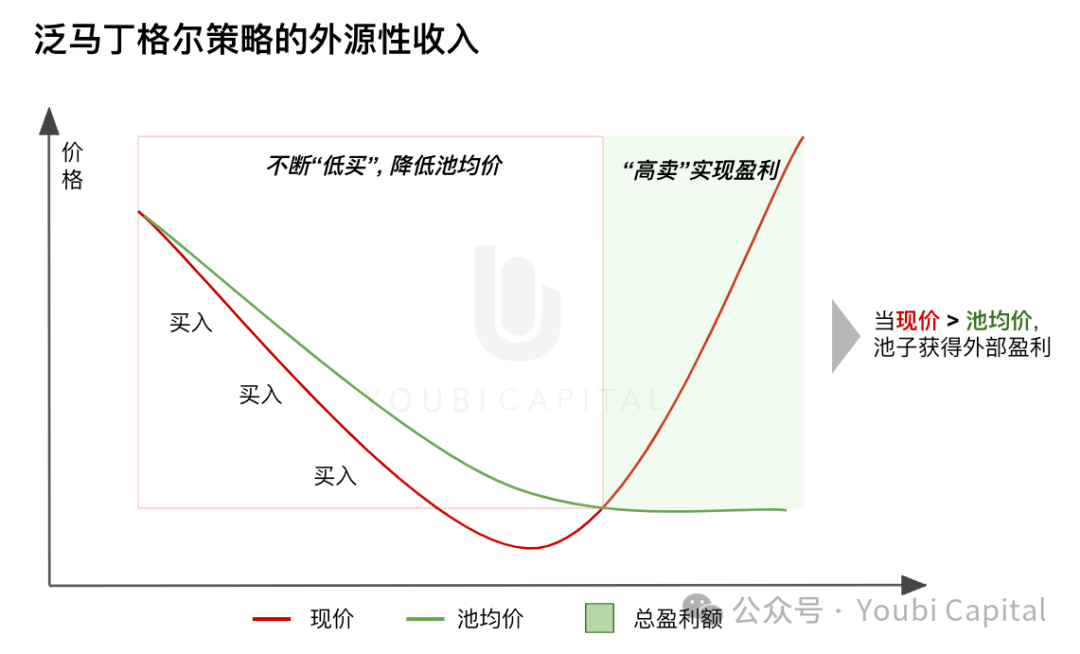
Figure 1: Exogenous Income in the Martingale Strategy
Pooling Liquidity for “Perpetual Profit”
The traditional Martingale strategy is often dubbed a “perpetual profit system,” based on the logic that with sufficient liquidity, exponential reinvestment after losses ensures eventual recovery and initial-stake profit upon any single win. Yet in practice, achieving guaranteed profitability demands vast capital to support exponentially growing bets—a constraint for most individuals due to limited TVL or liquidity.
Doubler upgrades this strategy through an open liquidity pool, transcending individual capital limits. By aggregating market liquidity, the effective betting power increases dramatically. This cleverly leverages the openness of cryptocurrency markets to reduce strategy failure risk—the essence of decentralization. The Lite version introduces tokenized收益 rights (detailed below), incentivizing users to invest more during downturns, becoming the first protocol truly viable in falling or highly volatile markets. Smart contracts ensure smooth operation, bringing the Martingale strategy ever closer to its theoretical “perpetual profit” ideal.
3.2 Asset Return Rights Separation Strategy
At this point, readers may wonder: why would new users keep buying as prices fall? And if the pool’s average price exceeds the current market price, doesn’t new capital unfairly subsidize existing holders? This is where Doubler Lite’s elegant cost-return separation design comes into play.
In Doubler Lite, each asset deposited into the pool sees its cost ownership and future收益 rights split into C-token, 10X-token, and equity token E-token. Depending on market conditions, users receive different tokens. During downtrends, users earn收益 tokens that entitle them to a share of future profits—creating strong incentives to contribute capital and reinforcing the “buy the dip” mechanism for those bullish on the asset’s long-term potential. Detailed calculation and issuance mechanisms for these three tokens are outlined in the whitepaper.
-
C-token: Represents cost shares, quantifying the total USD-denominated cost basis of all assets in the pool. When the pool is in profit (“above water”), C-token holders earn dynamic fee returns, settled daily.
-
10X-token: Represents收益 shares, capturing a portion of the pool’s total profit, with a maximum supply equal to 10% of the pool’s value. It can be obtained in three ways: 1) minted when depositing during underwater phases; 2) exchanged from E-tokens; 3) traded on secondary markets like Uniswap.
-
E-token: Grants unilateral minting rights to unissued portions of 10X tokens and can be converted into 10X tokens at a defined ratio.
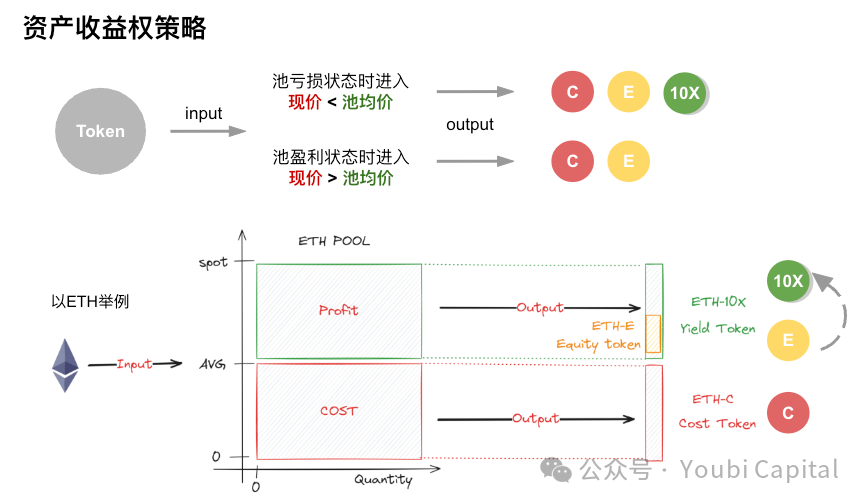
Figure 2: Asset Return Rights Strategy, supplemented on Doubler diagram
Scenario 1: Pool is profitable (“above water”)—current price > average cost. New deposits earn C-token and E-token.
-
Price continues rising: (Dynamic C-token fee income, gold-standard gain) + (E-token redeemable for 10X-token, capturing upside)
-
Price drops: (C-token value unchanged) + (E-token redeemable for 10X-token, which can be held or sold on secondary markets to users bullish on future recovery)
Scenario 2: Pool is underwater—current price < average cost. Depositors receive 10X-token, C-token, and E-token.
-
Price continues falling: (C-token value stable) + (E-token convertible to 10X) + (10X-token either held or sold on secondary markets to optimistic buyers)
-
Price rebounds: (C-token earns dynamic fees) + (E-token exchangeable for 10X) + (10X-token shares in pool profits)
Users exit in USD terms, settled per token (e.g., ARB-ETH settlement in current pools). Core strategic decisions involve timing entries and exits, when to burn E-tokens to mint 10X-tokens, and trading dynamics between C-tokens and 10X-tokens. These decision points shape overall strategy and profit potential, with many additional mechanics for users to explore.
10X: A Perpetual Call Option
From the scenarios above, we see that users bullish on an asset’s long-term upside should participate when underwater, acquiring future收益 rights at lower cost. Since 10X tokens max out at 10% of the pool’s value yet capture 100% of its收益 rights, holding 10X tokens resembles owning a call option.
Recall traditional American call options: users must exercise by a fixed date at a predetermined strike price. If the price rises above strike before expiry, they profit. Otherwise, the option expires worthless.
Clearly, holding 10X tokens offers distinct advantages over traditional options.
Comparing exercise rights: 1) 10X tokens have no expiration date, extending optionality indefinitely; 2) 10X strike price is not fixed—it dynamically equals the pool’s average cost. As long as market price exceeds pool average, 10X tokens generate收益. The “buy the dip” strategy continuously lowers the effective strike while increasing profit potential.
On secondary market value: Traditional options lose trading value near expiry if out-of-the-money. In contrast, 10X tokens retain perpetual tradability due to no expiry—core博弈 centers on differing user cost bases and future price expectations.
Finally, combining options markets with 10X tokens may even unlock arbitrage—for example, selling call options while holding 10X tokens to hedge risk while capturing premium income. Further exploration awaits users.
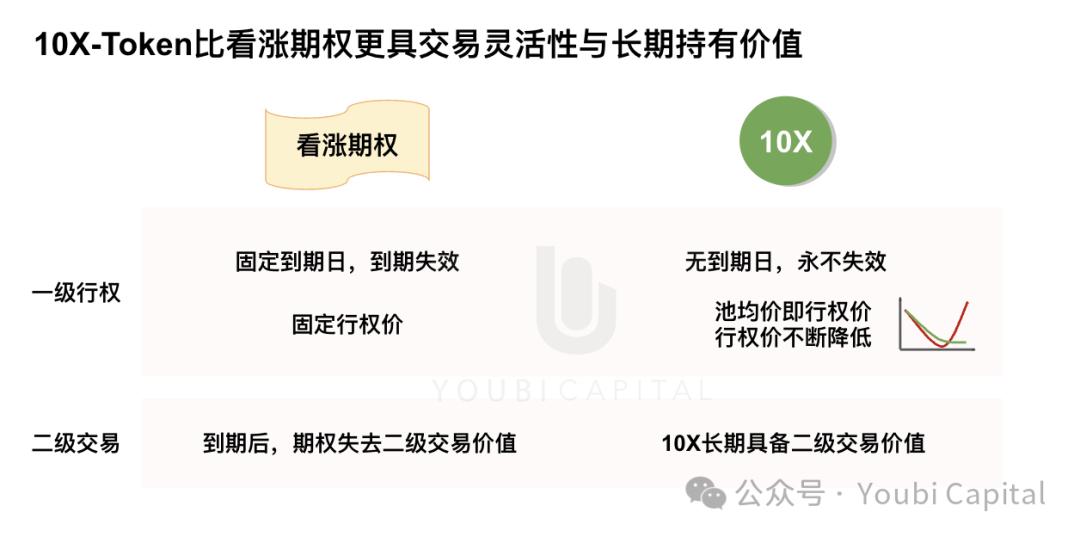
Figure 3: Call Option vs 10X-Token
10X: Leveraged Long Without Risk of Liquidation
Another way to gain amplified exposure to an asset’s upside is leveraged long positions. But leverage is notoriously risky—amplifying both gains and losses. For instance, a 10x leveraged position faces liquidation with just a 10% price drop, losing the entire margin.
In contrast, holding 10X tokens can yield nearly 10x returns without exposing users to equivalent downside risk. The pooled structure aggregates liquidity into a unified entity, breaking individual capital limits and continuously expanding the collective margin buffer, enabling perpetual survival of the liquidity pool. With a hard cap of 10% of pool value, 10X issuance never hits a critical threshold—eliminating liquidation risk entirely.
User risk lies in 10X tokens having no intrinsic value when the pool is underwater. However, since 10X tokens are freely tradable, users can always exit to others who remain bullish. Compared to leveraged positions that lose everything on a 10% drop, 10X tokens offer superior resilience against high volatility and provide a much safer path to outsized returns.
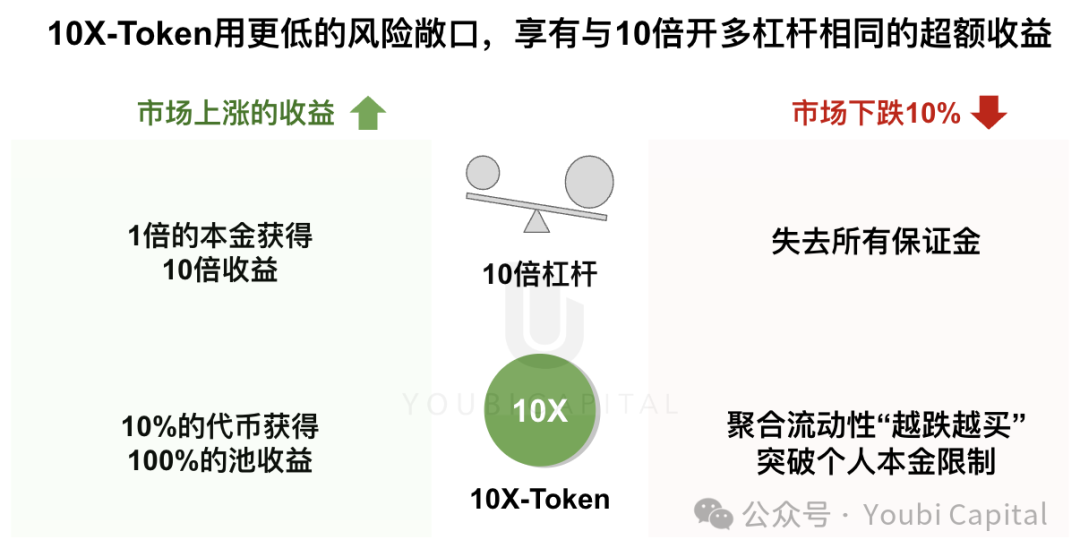
Figure 4: Leveraged Long vs 10X-Token
10X: A More Efficient Yield Derivative
This year, yield-separation protocols built on income-generating assets have opened new demand channels through innovative designs. Doubler Lite’s asset return rights separation appears similar to yield-separation protocols (hereafter referred to as interest rate derivatives), but in reality, their target markets and user博弈 dynamics are fundamentally different.
1) Asset Type Differences
Interest rate derivatives separate native-token assets from their yield components, limiting applicable asset types. Current common examples include staked/re-staked assets, yield-bearing stablecoins, and points-based assets with airdrop expectations. In contrast, Doubler Lite separates USD-denominated cost from capital appreciation收益, making it universally applicable across all asset types and vastly expanding market potential.
2) Tenor Differences
Interest rate derivative pools are typically set up with partners and have fixed durations, resembling traditional call options. For example, points-based yield assets terminate when partner airdrops end, causing pool expiry, asset redemption, TVL outflows, and option invalidation. As previously discussed, 10X tokens maintain perpetual trading value.
3) User博弈 Differences
The core博弈 in interest rate derivatives revolves around short-term interest rate movement expectations. These expectations often depend heavily on partner actions (i.e., asset issuers), leaving room for information asymmetry or front-running. Take Etherfi and LRT assets: the realized yield depends ultimately on Etherfi’s payouts. Markets here involve private information博弈, placing them in semi-strong form efficiency per market efficiency theory.
In Doubler Lite, the核心博弈 centers on price direction of the underlying asset—entry timing and trading strategy. Price movements don’t rely on issuer commitments but are reflected transparently in real-time secondary market trades. Compared to rate forecasts, price expectations reduce information asymmetry and enhance market efficiency.
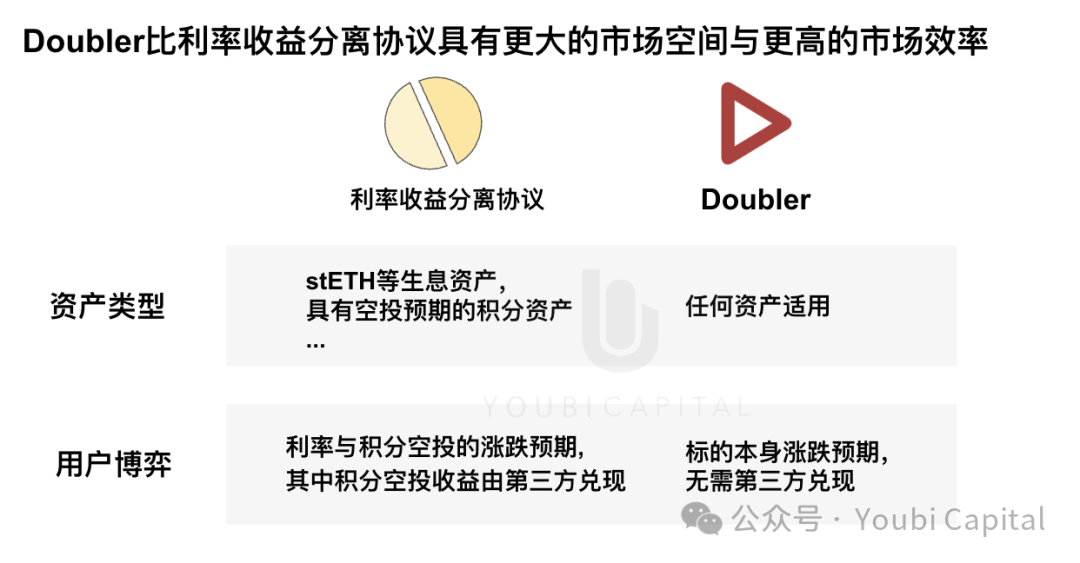
Figure 5: Yield Separation Protocol vs Doubler
Summary
In conclusion, Doubler, like call options and 10x leveraged longs, belongs to the category of USD-denominated financial derivatives. It offers comparable upside to the latter two but with significantly lower risk and greater term flexibility. Meanwhile, yield-separation protocols are native-token derivatives. Doubler applies to a broader range of assets, addresses larger user demand, unlocks greater market potential, and operates with higher market efficiency.
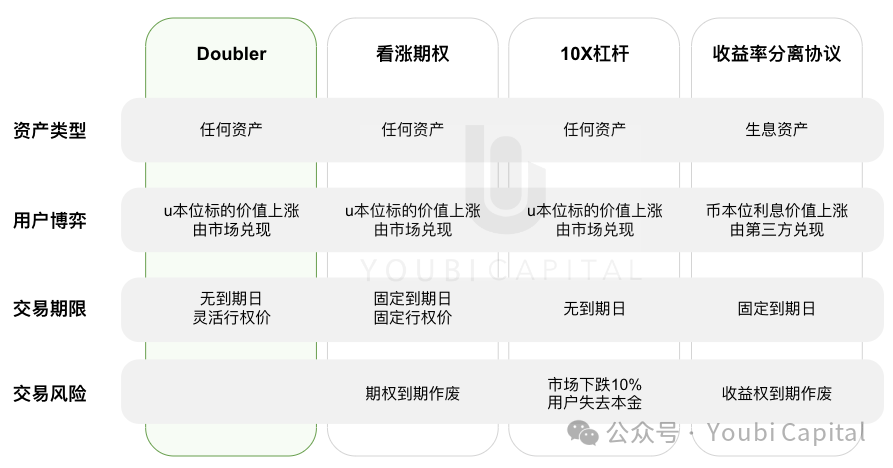
Figure 6: Doubler vs Other Financial Derivatives
Conclusion
Youbi Capital, as lead investor in Doubler’s seed round, is excited to see the Doubler Lite mainnet launch achieving over $3M TVL within days. Doubler is arguably a tailor-made solution for this market cycle—effective even in high-volatility environments. Its innovative mechanics offer fresh perspectives on resolving the current困境 of “insufficient on- and off-chain liquidity → lack of cycle alpha.” By pooling liquidity to resist volatility and boost win rates, and through return rights separation to deliver risk-efficient, high-reward strategies surpassing call options and leveraged longs, Doubler redefines what’s possible.
We look forward to Doubler’s continued evolution. We believe the familiar “Doubler Pool + Big Winner” mechanism from the testnet will continue to surprise and delight users. Stay tuned.
Join TechFlow official community to stay tuned
Telegram:https://t.me/TechFlowDaily
X (Twitter):https://x.com/TechFlowPost
X (Twitter) EN:https://x.com/BlockFlow_News
 Youbi Capital