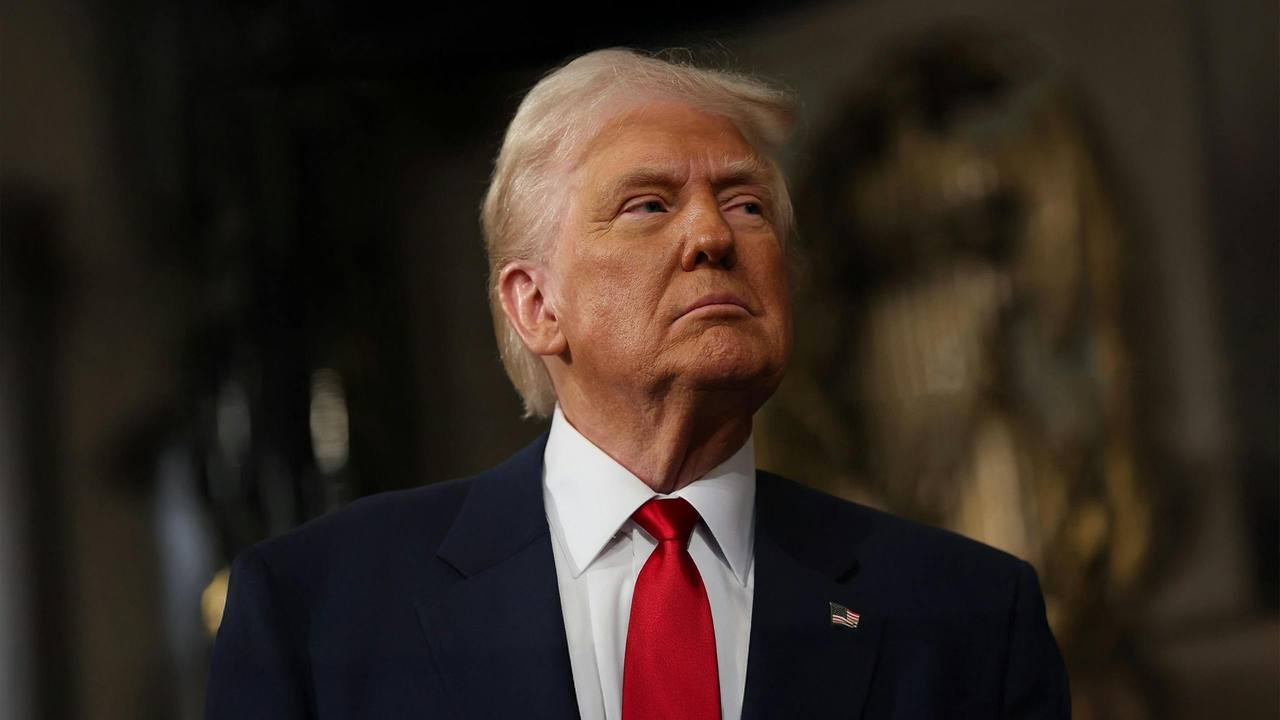
Trump's Cryptocurrency Policy After Assassination Attempt: A New Direction Toward the Presidency
TechFlow Selected TechFlow Selected
Trump's Cryptocurrency Policy After Assassination Attempt: A New Direction Toward the Presidency
The Republican Party will end the Democratic Party's illegal and un-American crackdown on cryptocurrency...
 Navigating Web3 tides with focused insights
By Mike Orcutt
Translated by Block unicorn
*Published on July 12, 2024
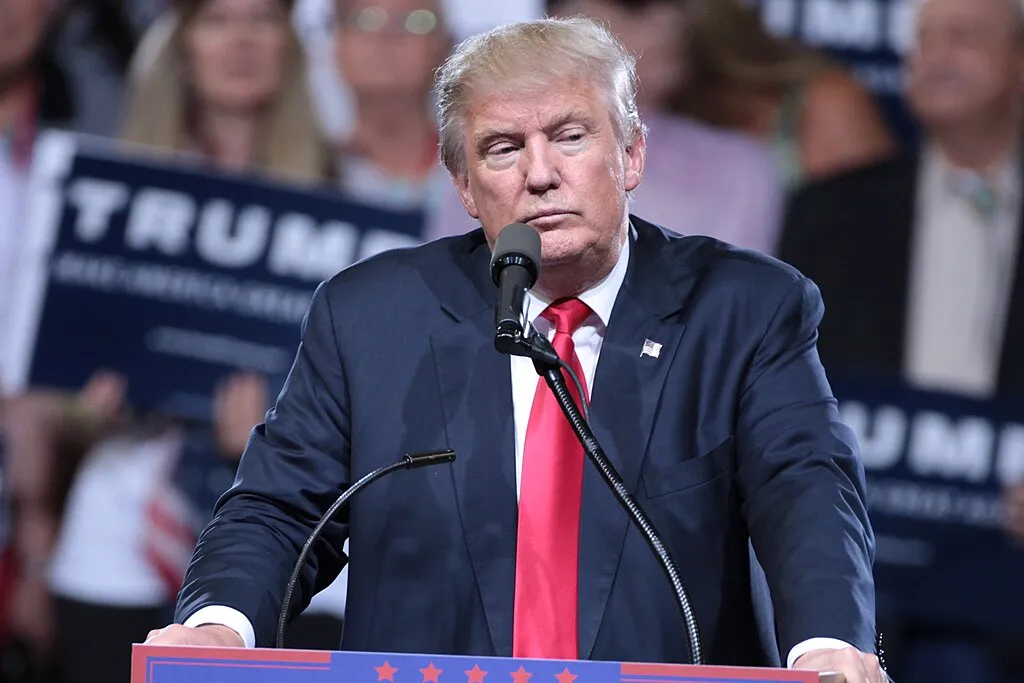
What Does Trump’s Support for Crypto Mean?
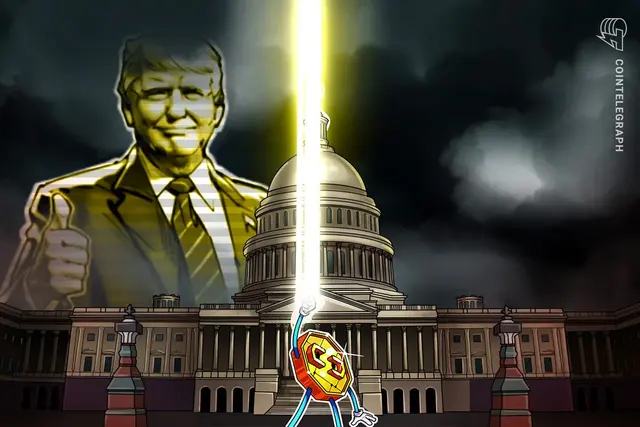
As we've said in our coverage: crypto is many things. It's a technology, a market, an industry—and even a culture. Lately, it's also attempted to become a political faction. So now that Donald Trump has officially thrown his support behind crypto, it's worth examining exactly what that means.
This week, the Trump campaign released a 16-page document titled “Republican Platform 2024,” adding detailed substance—referred to as the party’s political “plank”—to statements Trump has made over the past month or two on the campaign trail.
In a section titled “Promoting Innovation,” the platform includes two sentences specifically addressing cryptocurrency:
The Republican Party will end the Democratic Party’s illegal and un-American crackdown on cryptocurrency and oppose the creation of a central bank digital currency. We will defend the right to mine Bitcoin and ensure that every American has the right to self-custody their digital assets and transact without government surveillance and control.
Behind the partisan language lies a glimpse into how a potential Trump presidency might approach crypto—but also some unanswered questions about how he truly differs from Joe Biden. Let’s break it down line by line.
The Republican Party will end the Democratic Party’s illegal and un-American crackdown on cryptocurrency...
It’s widely believed within the industry—even among Democratic voters—that the Biden administration has been hostile toward cryptocurrency. This isn’t because of anything Biden himself has said or done. If there’s been a so-called “crackdown,” it’s largely due to enforcement actions taken by administrative agencies within the Biden administration, most notably the Securities and Exchange Commission (SEC), the Treasury Department, and the Department of Justice.
A Trump administration would end the tenure of current SEC Chair Gary Gensler, whom most crypto enthusiasts view as their primary adversary. They argue that he brings baseless lawsuits against legitimate players in the industry, stifling U.S. crypto innovation. Whoever Trump appoints to lead the SEC in the future will almost certainly be far more friendly to the industry than Gary Gensler, who has actively pushed for imposing strict regulatory regimes similar to those governing stock and bond trading.
Another front in the Biden administration’s battle over crypto has been national security. Most notably, the Department of Justice charged two developers of Tornado Cash—an Ethereum-based privacy tool—with money laundering and violating sanctions against North Korea. Prior to this, the FBI had determined that North Korean state-sponsored hackers used Tornado Cash to obscure their tracks after stealing $600 million from the crypto game Axie Infinity.
Defenders of the Tornado Cash developers argue that the prosecution represents an unconstitutional attempt to criminalize software development. But whether this constitutes part of the "illegal" crackdown mentioned in Trump’s new platform remains unclear.
And this is precisely where things could get awkward.
As we’ve discussed before, North Korea’s use of Tornado Cash has put crypto in a bind. This “permissionless” privacy tool allows anyone with internet access to conduct transactions using cryptocurrency without leaving a trace. By design, that means North Korea can freely use it to launder stolen crypto funds used to finance its weapons programs. Crypto purists might say that’s just the price of true permissionlessness. But let’s not fool ourselves: no U.S. president would be comfortable with that reality.
This isn't a Republican-versus-Democrat issue. It's about U.S. national security and geopolitical power. Because the dollar is the world’s reserve currency, other countries must hold dollars to trade internationally. That means much of global commerce flows through U.S. banks. And that gives the United States the ability to effectively exclude other nations—especially adversaries like North Korea—from the global financial system by imposing economic sanctions.
Trump understands this as well as anyone. So why—and perhaps more importantly, how—might a Trump administration treat software developers like those behind Tornado Cash differently than the Biden administration?
and oppose the creation of a central bank digital currency
It's actually somewhat strange that this stance features so prominently in the crypto portion of Trump’s platform. What does supporting cryptocurrency have to do with opposing central bank digital currencies (CBDCs)? If crypto is the future of money, why wouldn’t governments adopt the technology?
Simply put, it’s partisan politics. Just a few years ago, the idea that the Federal Reserve might suddenly issue a “digital dollar” barely raised eyebrows in Washington. After all, our lives are increasingly digital. China and many other countries are developing digital versions of their own currencies. Why shouldn’t the U.S.?
Yet roughly two years ago, Republican politicians began claiming the Biden administration wanted to launch a CBDC in order to surveil and censor ordinary Americans’ purchasing behavior. Florida Governor and then-presidential hopeful Ron DeSantis claimed the government wanted to use a CBDC network to prevent people from buying guns and fossil fuels. Conservative lawmakers began introducing bills to block the Fed from issuing a digital currency.
How this anti-CBDC stance became so tightly linked to the Republican Party’s overall position on crypto remains somewhat mysterious. Perhaps it’s simply because the politicians most vocally opposed to CBDCs also tend to support crypto. One Republican argument holds that a CBDC should not be allowed unless it is “open and permissionless.” No one has yet explained how that would technically work.
In fact, neither the Federal Reserve nor the Biden administration has ever planned to issue a CBDC. How a CBDC would function—including how it could offer privacy comparable to cash—remains a subject of academic research. Advanced cryptographic tools like zero-knowledge proofs have shown promise in offering both privacy and compliance, and there’s currently no reason—other than distrust of government—to believe a future CBDC couldn’t or wouldn’t leverage such technologies.
Before tensions escalated, the Federal Reserve Bank of Boston was conducting a complex research project exploring how retail-scale systems might operate technologically—including how advanced privacy features could be integrated. But by late 2022, the bank halted the project after coming under fire from Republican members of Congress. Perhaps those same lawmakers helped draft this policy plank.
In reality, the discussion around CBDCs is more complicated than domestic politics suggest. As China and others develop more innovative ways of digitally transferring funds, some argue that unless the U.S. technologically upgrades the dollar, its status in the world may decline. Incidentally, one of the promises in Trump’s platform is to “maintain the dollar’s role as the world’s reserve currency.”
We will defend the right to mine Bitcoin…
For whatever reason, Trump has recently developed a particular fondness for Bitcoin. He’s even adopted popular views among Bitcoin enthusiasts. Last month, after meeting executives from Bitcoin mining companies at Mar-a-Lago, he posted on his social media platform: “Bitcoin mining could be our last line of defense against a CBDC, and it will help us dominate in energy!!”
Latest update: Trump plans to speak at the major Bitcoin conference in Nashville later this month.
...and ensure that every American has the right to self-custody their digital assets and transact without government surveillance and control
The shift in crypto politics since the collapse of Sam Bankman-Fried’s FTX cannot be overstated. That event galvanized crypto skeptics in Washington, most prominently Senator Elizabeth Warren of Massachusetts.
At the end of 2022, Warren introduced the Digital Asset Anti-Money Laundering Act, which outraged and alarmed crypto lobbying groups because it was interpreted as an attempt to ban “self-custody”—the ability to control your own cryptocurrency rather than relying on third parties. Doing so requires software known as a wallet, and Warren’s bill would have required developers of self-custody wallets to identify their users and monitor transactions for suspicious activity. Policy advocacy group Coin Center called the bill an “unconstitutional attack on crypto self-custody.”
In February 2023, Politico reported that Warren, then vice chair of the Democratic Party, was “assembling an anti-crypto army” and wielding significant influence within her party. Her aggressive stance was seen in the industry as an existential threat. An anti-crypto coalition began mobilizing in Washington—and until recently, it was on a winning streak.
Its main opposition force is Fairshake, a super PAC backed by Coinbase, Ripple, Andreessen Horowitz, and others, which has raised $169 million, making it one of the wealthiest political action committees in the election cycle. According to CoinDesk, Fairshake has supported over 20 congressional primary victories and targeted “anti-crypto” candidates through advertising spending.
Then there’s Trump himself. Using the term “self-custody,” let alone elevating it to the level of a presidential campaign, amounts to a direct assault on the anti-crypto army.
Now, however, that army appears significantly weakened. In May, large numbers of Democrats joined Republicans—defying the guidance of Gensler and Warren—to pass two industry-backed crypto bills. This week, Anita Dunn, one of Biden’s closest advisors, attended a “crypto roundtable” hosted by Democratic Representative Ro Khanna. According to Decrypt, several industry participants came away encouraged and expressed “optimism” that the Democratic Party and the administration could collaborate with the sector.
The Trump campaign’s decision to articulate its crypto policy stance in highly partisan terms reflects an effort to use the issue as an entry point to cast itself as the destroyer of the anti-crypto army—one that may already have been dismantled by Trump. Two years ago, self-custody may have been in danger, but Washington seems to have moved on. Gary Gensler and Elizabeth Warren have lost influence. The real question now is: if elected, what exactly would Trump do on crypto policy?
If you’re unfamiliar with Donald Trump, he says a lot—often things he doesn’t really mean. So all this pro-crypto rhetoric might just be political posturing that vanishes after the election. Still, the anti-crypto army may soon find a powerful ally in the White House.
Join TechFlow official community to stay tuned
Telegram:https://t.me/TechFlowDaily
X (Twitter):https://x.com/TechFlowPost
X (Twitter) EN:https://x.com/BlockFlow_News
 @mike_orcutt