Interview with He Yi: Is Binance Being Made the Scapegoat for the Dismal Market? Let Time Tell
TechFlow Selected TechFlow Selected
Interview with He Yi: Is Binance Being Made the Scapegoat for the Dismal Market? Let Time Tell
Knowledge and action should be unified. What you believe in, you must persistently uphold; only through persistent commitment will results eventually emerge.
 Navigating Web3 tides with focused insights
By TechFlow
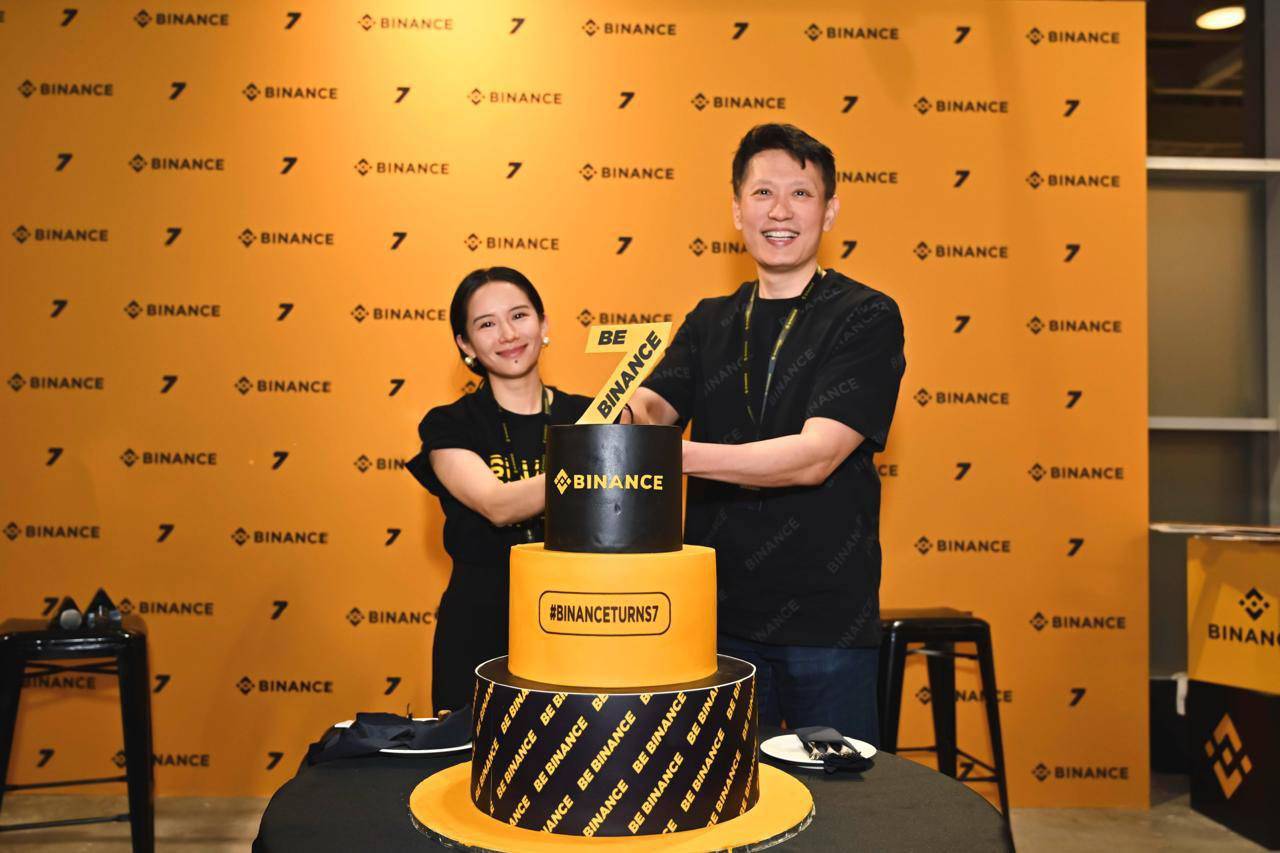
On July 14, 2024, Binance celebrated its 7th anniversary.
Looking back at the history of cryptocurrency, Binance is inseparable from it. As co-founder He Yi often says, "We are not starting a business—we are creating history."
Whether you like Binance or not, you must admit that in seven years, Binance has shaped the history of the crypto industry to a certain extent.
In 2017, amid the wild west of cryptocurrency, Binance emerged out of nowhere. Within just six months, its user base surpassed 6 million, becoming the world's largest crypto exchange by trading volume. CZ made the cover of Forbes magazine, and He Yi became the only "top woman" in the crypto industry.
In 2019, as the crypto market hit rock bottom during a bear market—leaving both projects and retail investors severely lacking confidence—Binance launched Launchpad (IEO). The first project raised $7 million in under 15 minutes and surged over 10x upon listing, bringing a glimmer of hope to the depressed market. Soon after, other exchanges followed suit, and the crypto market gradually regained vitality.
As of July 2024, the cumulative return on investment for all Binance Launchpad projects remains at an astonishing 16x, far ahead of competitors, with peak historical ROI nearing 200x!
In 2020, the summer belonged to DeFi. As a representative of CeFi, Binance didn't miss this feast: In April 2019, Binance pioneered Binance Chain; in September 2020, it launched Binance Smart Chain (BSC), EVM-compatible and still today one of the leading public blockchains by daily active users—now known as BNB Chain.
In 2022, when FTX and Three Arrows Capital collapsed in succession, plunging the market into its darkest hour and triggering an industry-wide trust crisis, Binance stepped up with a $1 billion Industry Recovery Fund and was the first to propose Merkle Tree reserve verification across exchanges—a standard now widely adopted throughout the industry.
In 2023, amid a year of intense regulation, Binance agreed to pay $4.3 billion to settle charges with the U.S. Department of Justice, Treasury, and CFTC. New CEO Richard Teng took over, marking Binance’s entry into a new chapter of compliance.
In 2024, with Bitcoin ETFs approved, Binance continues pushing forward on compliance. Yet, volatile market swings and widespread altcoin downturns have led public sentiment to turn against Binance, accusing it of frequently listing new tokens/VC-backed coins and draining liquidity.
On the evening of July 12, Binance co-founder He Yi, in an interview with Chinese crypto media (Foresight News, WuBlock, TechFlow, Odaily), expressed frustration over these claims. She said, "Let’s look at the data: From last year to this year, Binance has listed only about 30 new tokens. Compare that to some platforms where listings start at 100. Are people saying Binance shouldn’t list any token at all, leaving only Bitcoin…?" In her view, because market performance has fallen short of expectations, people need a scapegoat—and Binance has become that target.
Addressing entrepreneurs discouraged by the current Meme wave, He Yi shared her personal philosophy: "Know what you believe in, and act accordingly. Only through persistent action will results eventually emerge."
"Back in 2017 when BNB launched, people mocked it too—how could an exchange token dare launch without being a public chain? More often than not, it's not that people don’t know—it’s just harder to execute."
Below is the full transcript from TechFlow’s interview:
TechFlow: Based on sentiment across platforms, Binance’s token listings this year have been controversial—both due to the relatively high number and fast pace compared to previous years, and because many believe most listed tokens have strong vested interests with Binance. There's a growing sentiment that both retail investors and projects are essentially 'working for Binance' this cycle. What’s your take on this, He Yi? And what are Binance’s core principles regarding listings?
He Yi:
First, is Binance listing tokens quickly a fact or an opinion? Let’s use statistics: From last year to this year, Binance has listed only around 30 tokens. By contrast, some other platforms start at 100 listings. So are people really suggesting Binance should list zero tokens and keep only Bitcoin—should we just shut Binance down? Does that serve Binance’s interest or someone else’s trading platform? I’m not sure. This is something I’m trying to help my 5-year-old son understand—the difference between facts and opinions.
The world is easily influenced by emotions. Often, people are swept up by negative sentiment caused by falling markets and need a target to blame. But is that accurate?
When people say most listed tokens have strong ties to Binance, two issues arise. If Binance were only listing projects it has vested interests in, many of those tokens probably wouldn’t even qualify for listing. In many cases, Binance Capital hasn’t invested at all, or only invested 0.1%—sometimes just because an early investment manager offered a discount.
Is it true that most listed tokens have strong Binance ties—or is that just an opinion? That requires solid evidence. How much stake does Binance need to hold before a project is considered “related”? We need clear criteria.
Now, when we consider listing a project, we ask: Are you willing to do a Megadrop or Launchpool on Binance? If the team agrees, there’s no need for farming schemes—many farming bot accounts are fake anyway. Binance delivers real value by offering airdrops directly to verified, KYC-completed, facial-recognized active users. Those receiving Binance’s token drops are genuine retail users—Binance itself doesn’t participate. If Binance wanted listing fees, we’d just charge them outright. Do you really think Binance needs to play games with projects? Come on, who do you think we are?
At its core, people aren’t angry because they feel retail or projects are working for Binance—it’s because market performance fell short of their expectations, and returns didn’t meet targets. When that happens, people need a scapegoat. Right now, some want to hang Jack Ma or me on lampposts—that’s exactly what’s happening.
I initially tried to explain what’s actually going on, but eventually realized explanations are useless when public emotion overwhelms everything. Instead, I’ve chosen to stay silent and focus on doing my job well. Time reveals all. Distance tests a horse’s strength; time reveals a person’s heart.
Second, people need to understand Binance isn’t just about one single service. At its core, Binance offers users different risk-tiered trading and non-trading products. For most ordinary people satisfied with 10%-20% annual returns, Earn is still a solid product. Even staking stablecoins like USDC can yield decent returns. But if your expectation is to chase 100x or 1000x gains, that might be problematic.
As the industry matures, information asymmetry shrinks, competition intensifies, and expected returns naturally decline. People seem to expect that whatever Binance lists must go up—but you can’t say buying tokens on other platforms and losing money is normal, while expecting every Binance-listed token to rise.
Ultimately, users should understand that an exchange’s fundamental role is to offer projects that are relatively popular and trending in the market. Our goal is to filter out scam projects that rug pull after three days, and highlight those with potential to succeed or survive longer—but that doesn’t mean Binance-listed tokens only go up or are guaranteed to rise.
TechFlow: Recently, we’ve observed declining confidence in the industry—partly due to poor market conditions, and partly due to disillusionment or a temporary breakdown of technological narratives. Many feel that so-called tech and products are just facades, and the industry is fundamentally about liquidity, sentiment, and chip博弈. Entrepreneurs feel building products is less rewarding than launching MEMEs; retail traders find meme speculation more profitable than tech-focused trading. Often, half of Binance’s top 10 trading volumes are meme tokens. Do you think this will become the norm for crypto? And will we ever see truly impactful crypto applications with real-world externalities?
He Yi:
As you said, if half of the top 10 trading volumes are memes, what happens if Binance refuses to list memes? Users and volume will simply move to other platforms. Often, we don’t have a choice—someone else will list them. Plus, there’s DeFi. So it’s not that the whole industry is working for Binance; rather, we’re making compromises, trying to maximize overall value.
This phenomenon isn’t unique to this cycle. In 2014, people thought everything except Bitcoin was garbage. In 2017, everyone said they were just gambling, chasing quick wins. Many interpret trading behavior purely as speculation. Whether in traditional finance or crypto, markets are deeply emotional—that’s a reality.
But that doesn’t mean building solid products and sound business models don’t work. Every market hype or emotional swing brings challenges for ordinary investors and entrepreneurs.
Recently, I’ve been emphasizing one thing to my team: Align belief with action. Believe in something, and persistently act on it. Only through sustained effort will results emerge.
We all know that studying hard leads to good grades—but many know it yet fail to do it. We know losing weight and getting fit requires discipline and exercise, but temptation tells us to enjoy the moment, eat well, gain weight first, then lose it later.
The same applies to创业 or investing. When you try to stick to your ideals and innovate, others say forget it—just launch a meme. Why trade tech when memes make more money?
Looking back at BNB’s launch in 2017, people mocked it—how funny, an exchange issuing a token? Not even a public chain, yet daring to launch a coin. More often than not, it’s not ignorance—it’s just harder to execute. The industry is the same: Everyone knows we need product innovation, technological breakthroughs, real-world applications that impact society—but that path is harder.
TechFlow: Many veterans in the industry are now pursuing passions outside crypto—CZ building education initiatives, Coinbase’s founder launching a biotech firm focused on longevity. If you had the bandwidth, what would you pursue outside crypto?
He Yi:
I haven’t thought much about it. Outside of crypto, I can hardly imagine starting another venture.
It might be my personality—I studied education and used to be a teacher. I tend to enjoy guiding others. Personally, I want to help more people succeed, because only then can I truly succeed myself.
I struggle to imagine anything outside crypto worth dedicating my time and energy to—perhaps continuing to help others succeed, staying in investing, or sharing effective mindsets.
I understand CZ’s move into education—it’s somewhat passive, frankly. He just needed something to do. Same with Coinbase’s founder. With AI advancing so rapidly, AI may indeed surpass humans as a higher form of intelligence.
Humans are essentially coded with relatively simple logic—input and output are somewhat predictable. Yet humans frequently bug out, because knowing and doing are vastly different. Most people know what to do but fail to act.
Historically, the poor want wealth, the rich seek immortality. Once someone gets rich, their next steps are fairly predictable. In this context, it’s understandable—not just Coinbase’s founder, but many OGs in our space, once wealthy, aim to extend their DNA: having more children, living longer, chasing longevity. Enjoying life, seeking quality—that’s logical and foreseeable.
But just because some OGs leave crypto doesn’t mean the industry lacks credibility. Nor does it mean others lose opportunity when some achieve financial freedom and enjoy life. On the contrary, their departure creates more room for new opportunities.
TechFlow: In the past, people often compared Binance to Tencent in the crypto world. After the 3Q battle, Tencent changed its mission to becoming the most respected company. Years from now, when people reflect on crypto history, Binance will undoubtedly be part of it. How would you like Binance to be remembered?
He Yi:
I’ve said this many times since 2017: "We are not starting a business—we are creating history." I’ve believed this deeply since day one. I believe in blockchain’s transformative power and potential for the world. Because I believe, I go all-in. I commit myself fully.
Can you understand why I毅然决然 left everything behind during the '9/4' incident? Because I saw, within the tide of history, the revolutionary potential of blockchain technology. I was willing to dedicate myself to it—as a mission. I投入 myself completely, and I believe more outstanding entrepreneurs and talents will join us. A spark can start a prairie fire. You must believe to see. If you don’t believe, you can’t make it happen.
Additional Q&A
WuBlock: Many projects hope to receive investment from Binance. What are the key criteria Binance uses when investing?
He Yi:
Let me clarify how we approach investments.
For blockchain to go mainstream and be widely adopted by ordinary people, it must cross the chasm—and that requires real innovation. Binance Labs has invested in nearly—if not quite—2,000 projects. At least 1,000, definitely. But honestly, I haven’t spoken to most of them.
Labs generally evaluates investments based on several framework factors. First: Is the founder a long-term thinker? Do they truly believe in the industry? If they’re here to gamble and exit quickly, they’re no different from gamblers—even if successful, they’ll just dump and leave.
Second, skills and track record matter. For example, someone might be a KOL with 1,500 Telegram followers whose shilling moves prices—would you invest? They might promote a project well, but that doesn’t make them a strong investment candidate.
Third is mindset structure—can they continuously iterate and grow? Some people start with less but keep improving. Through conversation, you can sense whether they have vision, worldview, and solid team capabilities. If fundamentals are decent, we’re happy to invest small amounts to nurture them. Can we guarantee success? No. Traditional VCs fund 10 startups, 9 fail—that’s normal.
Our goal with Labs is to support more innovators to emerge and sustain hope during this long night—whether it’s emotional darkness or the quiet before a major tech leap. If we don’t support others, we end up alone. An industry cannot exist if only one person walks the path.
Odaily: As a Binance co-founder, you achieved financial freedom long ago. Have you considered retiring and handing Binance to professional managers? Could you share your future plans, especially balancing work and family?
He Yi:
First, as a woman, people rarely ask men how they balance work and family. For both male and female founders, the real issue is time management.
First, I prioritize spending time on what matters most.
Second, there’s the concept of time granularity. I rarely spend long hours in face-to-face meetings. I prefer to keep meetings under 30 minutes, ideally under 15 for maximum efficiency. It’s ultimately about managing time granularity. These two points are most meaningful to me.
I tend to carry excessive responsibility—I want to build Binance into a sustainable, enduring system. In every module, I aim to cultivate capable managers with strong successors—people better than me, with stronger backgrounds and expertise. How to organize such talent and maximize their impact? That’s where my hunger for talent lies. When the team is strong enough, each person outperforms me, then I just need to check in occasionally.
I’ve always admired Duan Yongping. After stepping down from BBK, he enabled Vivo, Oppo, and Xiaotiancai watches to thrive. That’s successful retirement—retirement becomes irrelevant when your structure is solid. With the right team in place, the concept of retirement fades in importance.
Foresight News: Historically, many iconic leaders vanished overnight—Nokia, Netscape, Yahoo—while others like Apple and JPMorgan remain enduring. In a fast-moving industry, even giants can fall quickly. What major future risks do you see for Binance, and how are you preparing?
He Yi:
I’m inherently someone with strong crisis awareness. From an industry perspective, the biggest threat is clearly regulatory risk—not just for Binance, though we recently passed one hurdle. Regulation remains a major challenge.
Second is competitive and innovation risk. Currently, exchange competition is horizontal—core competencies aren’t vastly different. We keep learning from others and improving. But greater threats come from unknown uncertainties and disruptive innovations. That’s why we encourage continuous experimentation—from investment angles and internal teams. If a colleague wants to innovate or start a venture, we fully support it.
Ultimately, threats don’t come purely from known competitors, but from environmental uncertainty and new innovations. The greatest danger is when a breakthrough happens and you’re unaware. Like how old mobile giants didn’t realize what smartphone screens meant for their future.
Today’s industry can no longer survive as niche startups. We must engage effectively with regulators and policymakers. Personally, I focus more on transforming a founder-driven startup into an enduring institution. That requires building organizational strength—strong enough to continuously cultivate top talent.
For more interview content, see additional reports below
Foresight News: He Yi: A Decade in Crypto, My Industry Values
Odaily: In Conversation with He Yi: Building Binance into an "Evergreen" System
Join TechFlow official community to stay tuned
Telegram:https://t.me/TechFlowDaily
X (Twitter):https://x.com/TechFlowPost
X (Twitter) EN:https://x.com/BlockFlow_News
 深潮TechFlow