From Toys to Games: Exploring New Design Directions for Fully On-Chain Games
TechFlow Selected TechFlow Selected
From Toys to Games: Exploring New Design Directions for Fully On-Chain Games
We should first focus on creating toys, and then develop games.
 Navigating Web3 tides with focused insights
Written by: consome
In fully on-chain games, there are two distinct design directions. First, we need to clearly differentiate between games and toys, and seriously consider which one we actually want.
01. Costikyan's Game Theory
A few years ago, Will Wright described his creation, SimCity, as a software toy during a talk at the Game Developers Conference. He used the example of a ball: a ball has many interesting uses—it can bounce, spin, be thrown, or dribbled. If you wish, you can use it to play soccer, basketball, or other games. But the rules of these games aren't built into the ball itself; they're a set of rules layered on top by players defining goals. SimCity is similar. Like many computer games, it creates a world that players can manipulate, but unlike most games, it has no explicit objectives. You can choose your own goal—say, building a city with no slums, or one entirely reliant on public transportation. Yet SimCity itself has no win conditions or defined goals; it's simply a software toy. (Link: http://www.costik.com/nowords2002.pdf)
Costikyan theoretically distinguishes between games and toys. For instance, a ball is a toy, while soccer and basketball are games. Toys don’t have fixed ways of being played, but their properties allow people to invent various games around them.
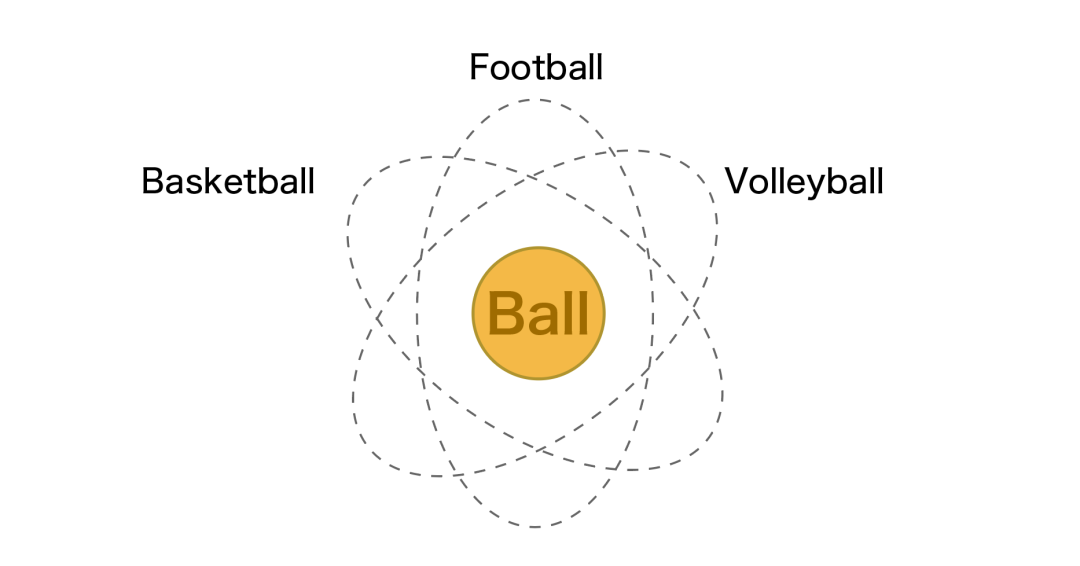
The fact that a ball serves as a common object across different games actually illustrates the concept of "asset sharing across games," something long discussed in blockchain gaming—but which already exists in the real world.
This perspective aligns with the concept I explored in my previous article[1].
02. Understanding from a Cryptocurrency Perspective
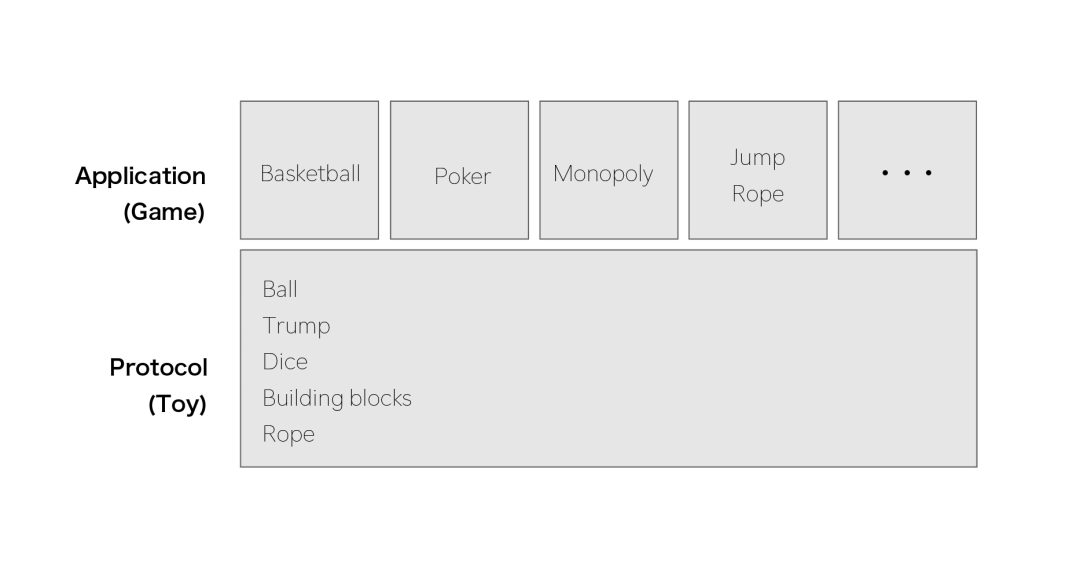
Put differently, a ball can be seen as a protocol, while games are applications built upon it. The Ethereum protocol doesn’t dictate how DeFi should be created or used. Similarly, a toy doesn’t define specific gameplay. A toy could be any of the following items:
-
Ball
-
Playing cards
-
Dice
-
Building blocks
-
Rope
Though simple, these objects offer multiple possible uses. If implemented on a blockchain, they enable "asset sharing across games." If we still aim to build unique blockchain games, we should first focus on creating toys, then develop games atop them.
03. Loot
Loot[2] is the only project that truly fits this concept.
After speaking with many people, I’ve found varied opinions about Loot. I believe Loot was the closest attempt at a successful toy, and I wanted to explore this project further. Surprisingly, however, many view it as a failure or a wrong turn.
Although Loot didn’t define specific gameplay, numerous games or applications have already been built on top of it. While these projects haven’t yet become mainstream within blockchain gaming, I believe this direction is correct.
Creating playing cards involved many challenges and iterations—such as experimenting with six suits or expanding numbers up to 24. Thus, declaring Loot a failure after one attempt is premature. Moreover, there remains vast design space at the toy level.
04. Design Space
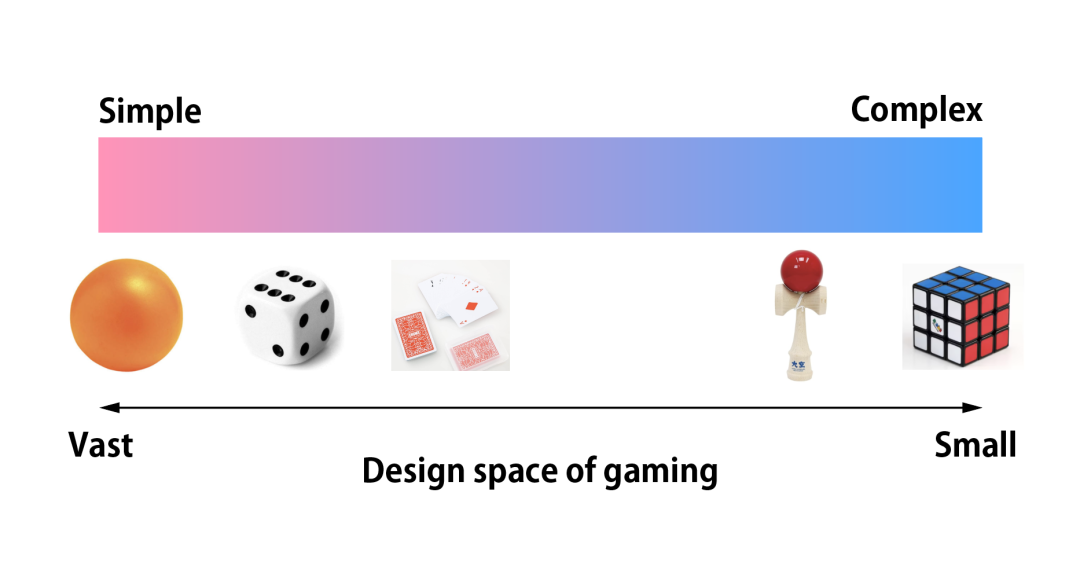
It’s important to note that a toy’s complexity or specific functionality affects the types of games that can be designed around it.
Simpler toys generally support a wider variety of games. Abstract and simple toys like balls, dice, and playing cards often give rise to richer, more diverse games. In contrast, more complex toys like kendama or Rubik’s cubes are less likely to spawn a wide range of competitive games.
Additionally, when implemented on a blockchain, a financial dimension emerges. Loot does not generate revenue or return value back to the application layer. However, successful projects like Optimism, Uniswap, and Nouns have expanded their ecosystems by returning value earned at the protocol layer back to the application layer. This is a bootstrapping process driven by network effects.
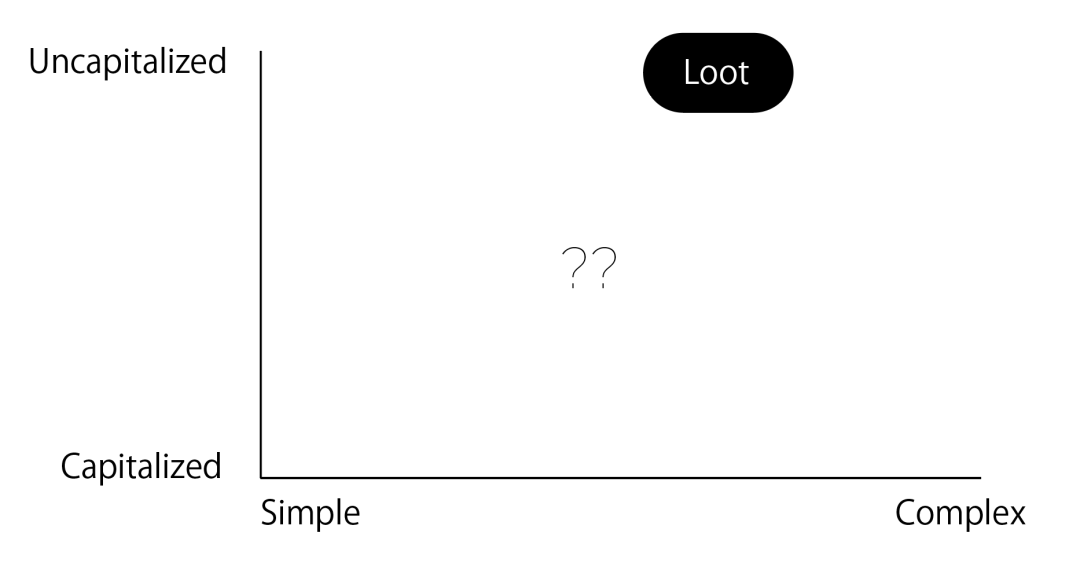
Therefore, there remains significant design space for creating toys on blockchains. This concept isn’t just about making games—it’s about crafting things everyone wants to play with, while inspiring developers to build new games. Furthermore, there’s ample room to explore economic model design.
While I have some ideas, I’ll refrain from mentioning them here to avoid bias.
Join TechFlow official community to stay tuned
Telegram:https://t.me/TechFlowDaily
X (Twitter):https://x.com/TechFlowPost
X (Twitter) EN:https://x.com/BlockFlow_News