








What do Bitcoin and the American Dream have in common?
TechFlow Selected TechFlow Selected
What do Bitcoin and the American Dream have in common?
Just as Americans are united by the American Dream, the spirit of Bitcoin—freedom of transactions—binds Bitcoin enthusiasts together.
 Navigating Web3 tides with focused insights
By George Kaloudis
Translated by Mary Liu, Bitpush News
As poet Walt Whitman once said of America: "I am large, I contain multitudes."
How cliché: the land of the free, the home of the brave, the city upon a hill.
Times change, and so has this country—and its people. These phrases now sound clichéd, tinged with irony. Like the national motto engraved on the Great Seal of the United States, shifting from “Out of Many, One” to the bluntly puzzling “In God We Trust.”
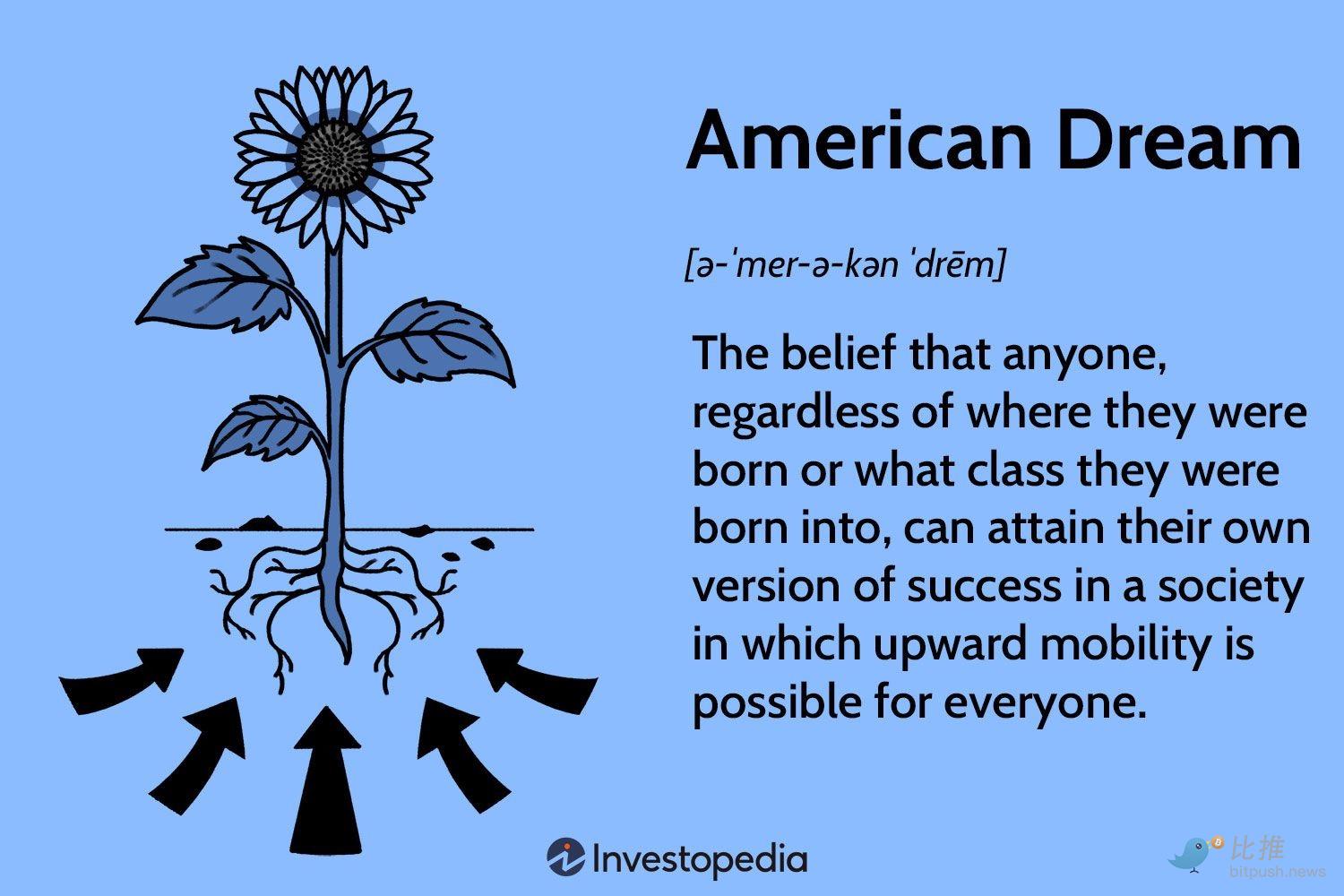
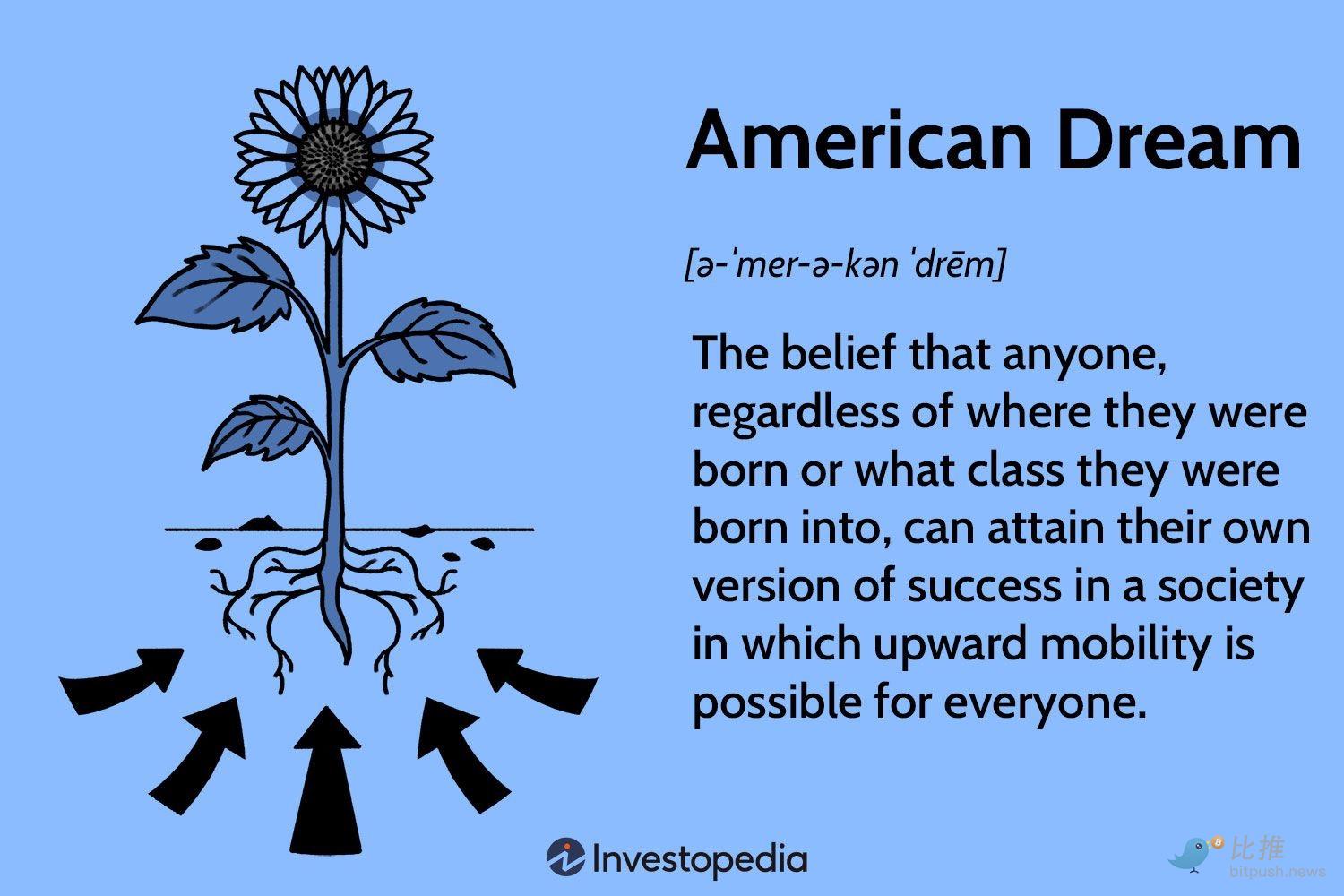
What hasn’t changed—at least in name—is that famous phrase: the American Dream. It promises that anyone can achieve success through sacrifice, talent, hard work, and perseverance, not just luck.
Yet the American Dream means different things to different people. As a first-generation Greek-American, for me it means leveraging the resources available to me—resources made possible by my grandparents’ sacrifices when they left their homeland and became immigrants for the sake of their children.
But whose America is this? And whose dream?
Is it the American Dream for those whose ancestors arrived from Britain ten generations ago?
Or for those whose Irish ancestors immigrated five generations back? Or for descendants of those who arrived on slave ships?
Probably not.
But such ambiguity isn't necessarily a flaw. Many profound ideas share this vagueness—democracy being one example. Just because there's no universal consensus on defining an idea doesn't mean it lacks meaning.
And within these broad ideals lie certain core principles. Illogical as it may sound, Bitcoin and the American Dream are intertwined in precisely this way.
The Clichés of Bitcoin
Some might say: Yes, I know Bitcoin!
Common responses include: Bitcoin solves XXX problem, Bitcoin is synonymous with hope for XXX, you wouldn't understand, bull markets rise, staying poor is fun too.
Comparing Bitcoin to the American Dream might seem cliché, but from my perspective, their similarities are clear.
On the surface, Bitcoin complements the American Dream perfectly. Success through hard work? That’s exactly how Bitcoin mining works: the more effort you put in, the greater your reward.
We could ask deeper questions.
Is Bitcoin peer-to-peer electronic cash? Is Bitcoin digital gold? A store of value? Can Bitcoin drive the clean energy transition? Will Bitcoin consume all our water? Does the Bitcoin protocol enable more ransomware? Can Bitcoin empower individuals under oppressive regimes? Will Bitcoin undermine the Federal Reserve? Will Bitcoin bankrupt you? Make you rich? Is Bitcoin inflation-resistant? Or is it a Ponzi scheme?
The answers depend on whom you ask. So Bitcoin and the American Dream are more alike than they first appear.
Bitcoin means something different to me—a fully banked American citizen with access to any financial product I desire and relative stability in my local currency.
But to Roya Mahboob, an Afghan woman using Bitcoin (and other technologies) to help Afghan girls overcome gender inequality and gain education, Bitcoin means something else entirely.
It means something different again to Argentinians and Venezuelans suffering hyperinflation.
All these interpretations of Bitcoin are valid. Bitcoin “contains multitudes,” embracing diverse users. Enabling permissionless transactions lies at the heart of Bitcoin as a peer-to-peer electronic cash system.
Bitcoin enthusiasts agree Bitcoin can mean many things—just as Americans agree the American Dream (and America itself) can embody multiple meanings.
One thing is certain: just as Americans are united by the American Dream, Bitcoiners are united by Bitcoin’s spirit—financial freedom.
The Cynical Side…
I’ve deliberately avoided the most pressing question—for both America and Bitcoin today:
Is America controlled by Wall Street capital? What about Bitcoin?
Comedian George Carlin famously quipped: “It’s called the American Dream because you have to be asleep to believe it.”
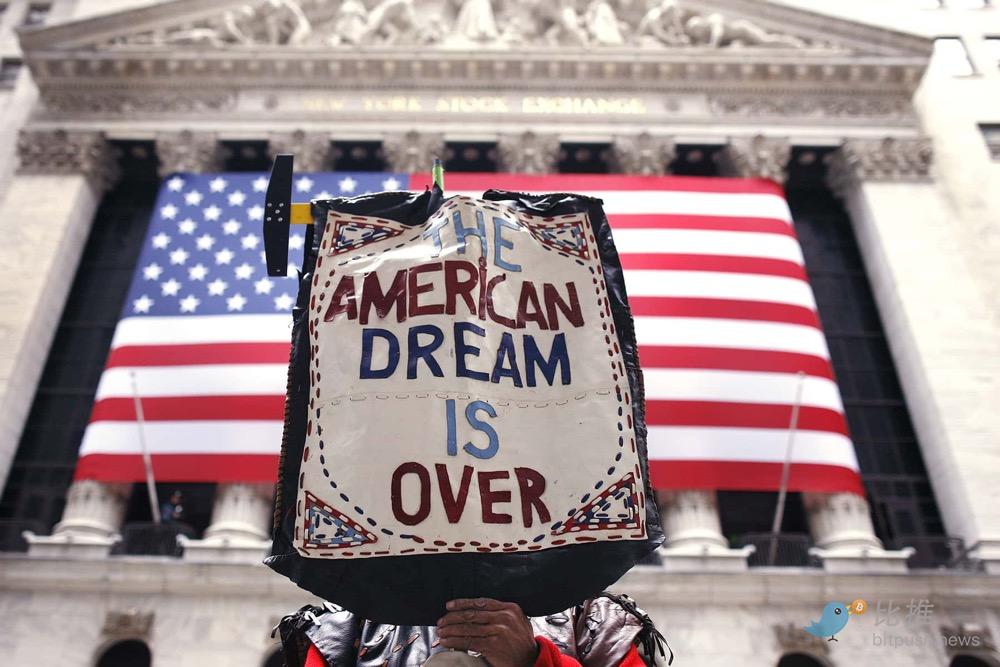
In his view, the country had long been hijacked by capital. To some extent, I share that cynicism. Consumerism and dollar dominance make me, as an American, uncomfortable.
Hunter S. Thompson, father of Gonzo journalism—a style marked by exaggeration, subjectivity, and satire—echoed similar sentiments in his iconic book *Fear and Loathing in Las Vegas: A Savage Journey to the Heart of the American Dream*.
From the title alone, his thesis is clear: Las Vegas, center of gambling and entertainment, serves as a satirical caricature of American excess and consumerism—both of which, along with the drugs highlighted in the book, threaten to tarnish America’s reputation.
As for Bitcoin, today the world’s largest and most mainstream financial institutions—like BlackRock—are promoting Bitcoin via U.S. spot ETFs, repackaging it into institutionally “sanitized” forms.
Bitcoin emerged from the ashes of the global financial crisis as a rebellion against the Icarian behavior of financiers obsessed with leverage and synthetic derivatives. Now, those very institutions are marketing Bitcoin. Has Bitcoin been captured by capital interests?
Perhaps—at least partially.
Still, one of the best things about being American is the freedom to openly criticize America. And one of the best aspects of being a Bitcoin user is welcoming criticism—because only through critique can we improve.
Finally, happy 248th birthday, America!
Join TechFlow official community to stay tuned
Telegram:https://t.me/TechFlowDaily
X (Twitter):https://x.com/TechFlowPost
X (Twitter) EN:https://x.com/BlockFlow_News
 比推 BitpushNews










