
Understanding the shared sequencer network Astria: A smooth enabler for Rollups?
TechFlow Selected TechFlow Selected
Understanding the shared sequencer network Astria: A smooth enabler for Rollups?
Astria is developing a decentralized shared sequencer network designed to provide rollups with fast finality, censorship resistance, composability, and decentralization.
 Navigating Web3 tides with focused insights
By 1912212.eth, Foresight News
As Ethereum Layer 2 networks mature and gas fees significantly decrease, these networks are experiencing robust growth. However, accompanying challenges have emerged—fees and transaction speeds can be suboptimal due to various factors, leading to a less-than-ideal user experience. In this context, the importance of transaction ordering has become increasingly evident, emerging as a key solution to transaction bottlenecks and user experience optimization.
In April this year, Astria, a modular blockchain focused on shared sequencers, raised $5.5 million in seed funding led by Maven 11, with participation from 1kx, Delphi Ventures, Robot Ventures, and others. Just three months later, Astria secured another $12.5 million in funding, co-led by dba and Placeholder VC, with participation from Hasu and others.
What is Astria?
Astria is developing a decentralized shared sequencer network designed to provide rollups with fast finality, censorship resistance, composability, and decentralization.
Currently, running a centralized sequencer is more convenient, cheaper, and easier for users, which is why most mainstream L2s manage their own sequencers internally. While L2 users can directly submit transactions to L1 to bypass the sequencer, they must pay L1 gas fees, and transactions may take longer to finalize.
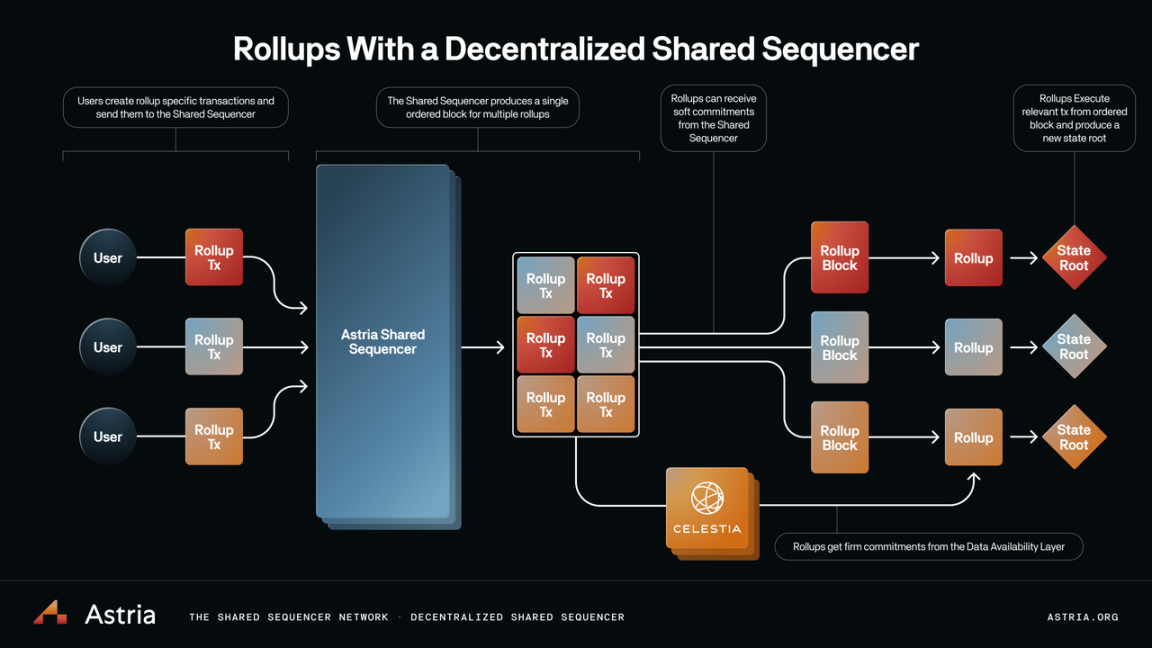
The sequencer controls transaction ordering and theoretically has the authority to exclude user transactions. It can also extract MEV from transaction bundles. With only one sequencer, centralization risks increase significantly.
Therefore, a decentralized shared sequencer remains meaningful.
How Does Astria Work?
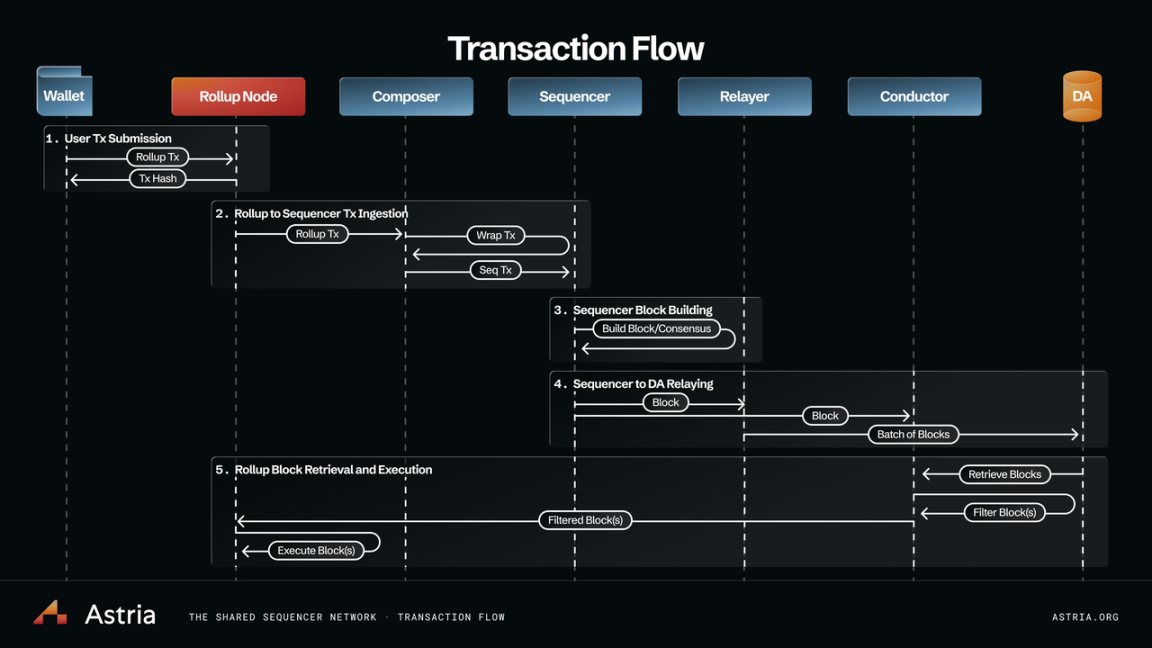
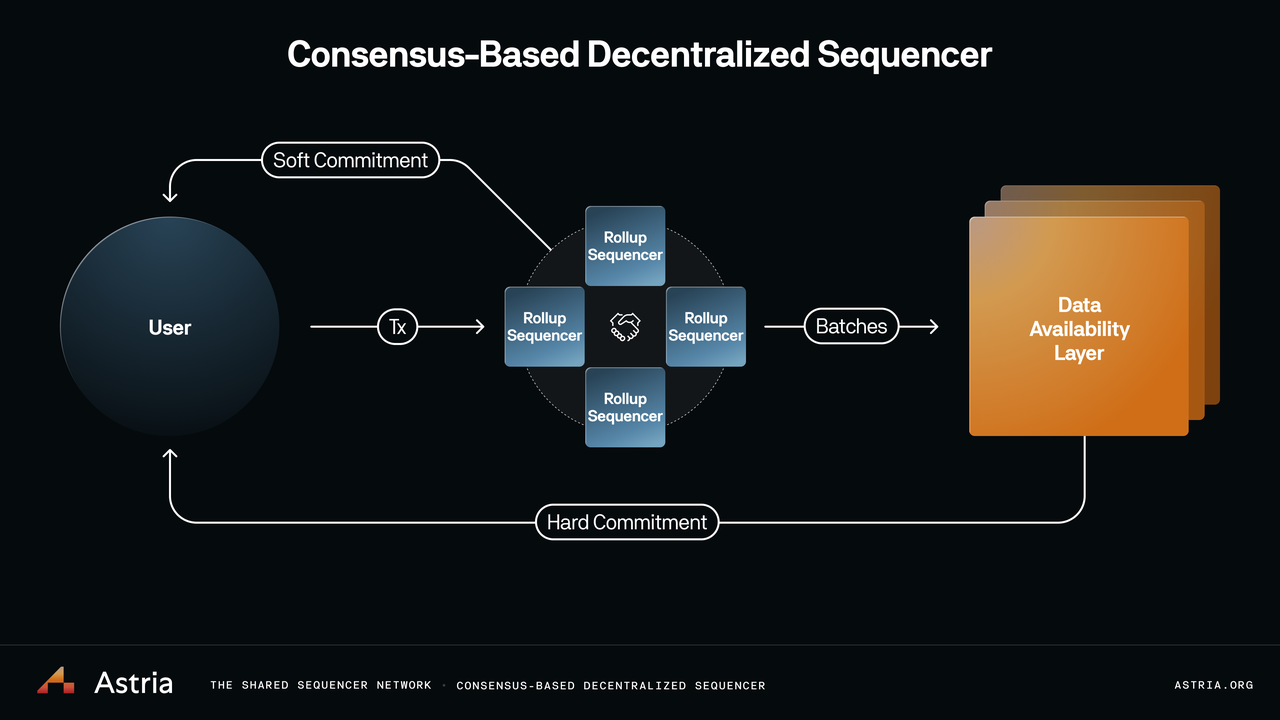
Astria’s decentralized sequencer consists of multiple sequencer nodes that collectively order rollup transactions. In Astria’s operational model, users submit transactions to rollups. These transactions automatically enter the respective rollup node mempool, where the bundler collects txns and sends them to the sequencer. Finally, the sequencer aggregates these txns into a shared block and sends pre-confirmations back to users.
Current sequencers are typically built specifically for individual rollups. Astria, however, batches blocks across multiple rollups. Through data compression, it reduces costs when publishing data to L1. A decentralized shared sequencer network incentivizes participants from multiple rollup ecosystems to act as validators on the network.
The Astria Stack
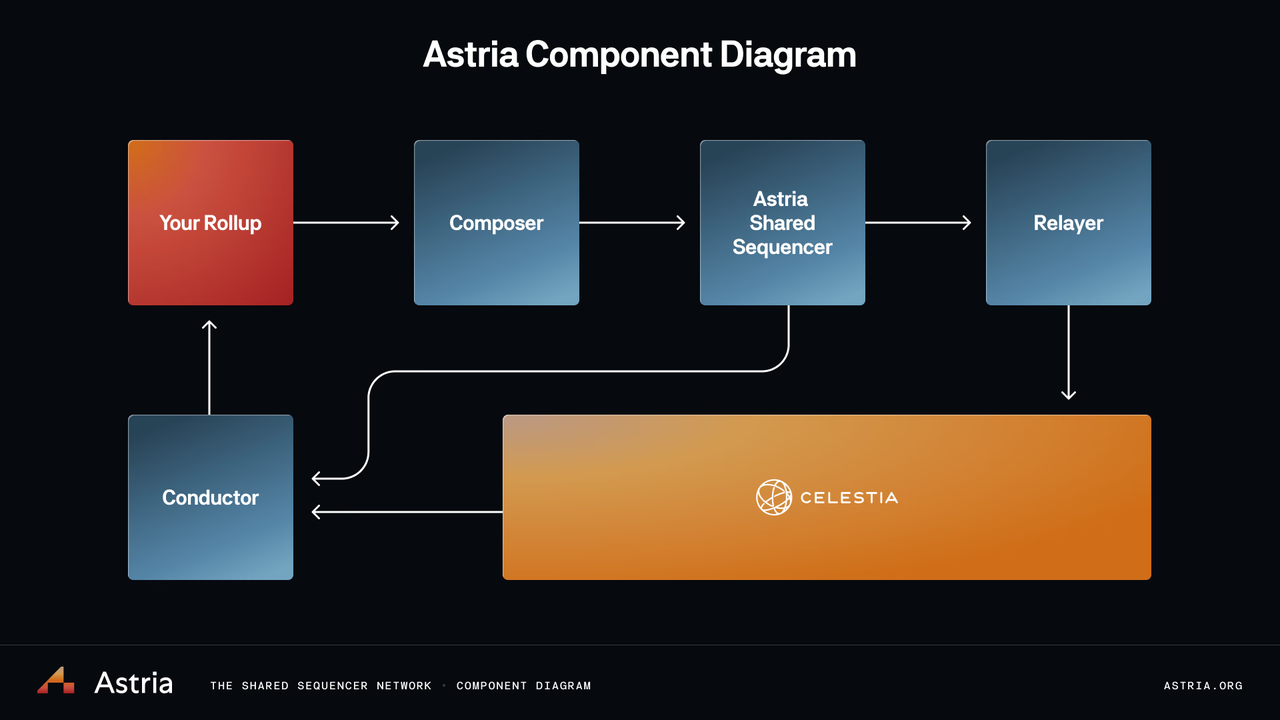
Astria’s architecture comprises five core components: the Bundler, Sequencing Layer, Relayer, DA (Data Availability), and Scheduler.
Bundler
Technically proficient users might interact directly with the sequencing layer for better transaction ordering, but this increases complexity for average users. Direct interaction requires holding sequencer tokens and managing a sequencer wallet—both negatively impact user experience.
Astria provides a bundler to abstract away this complexity. The bundler acts like a gas station, covering the cost of transaction ordering for users. It also offers unordered guarantees, batching transactions in the order they are received.
Sequencing Layer
Astria uses CometBFT as its consensus algorithm for the sequencing layer. Chains supporting CometBFT can also support IBC (Inter-Blockchain Communication), enabling cross-chain interoperability with many other chains.
A unique aspect of the Astria sequencer is that it does not execute transactions (deferred execution), but instead assigns them to another execution engine—rollups. Sequencer nodes can choose to act as "validators," meaning they actively participate in block production and finalization.
The application logic of the Astria sequencer supports three main functions:
-
Ordering rollup data
-
Value transfer
-
Validator set changes
Relayer
The relayer retrieves validated blocks from the sequencer and forwards them to the DA layer. Since the sequencer’s block time is faster than that of the DA layer, the relayer first batches ordered data from multiple sequencer blocks, compresses it, and then submits it to DA.
Individual sequencer blocks can also be fetched by the scheduler before the relayer submits them to DA. This enables rapid finality for improved user experience, acting as a soft commit for the execution layer. The data set sent by the relayer to the DA layer serves as the source of truth and is eventually extracted from DA to serve as the confirmed commitment for finality within the rollup.
DA
Astria uses Celestia as its data availability layer—the final destination for all data ordered by the sequencer network. Once data is written to Celestia, the transaction order is considered final. When new rollup nodes start up, they retrieve all historical data from here.
Scheduler
The scheduler can be seen as the consensus implementation of a full rollup node, similar to an op-node in the OP Stack. The scheduler corresponds to the execution engine, together forming a complete rollup node. Its role is to bridge the sequencer and DA layers with the rollup execution layer by extracting transactions belonging to the rollup node from each sequencer block and forwarding them to the execution layer.
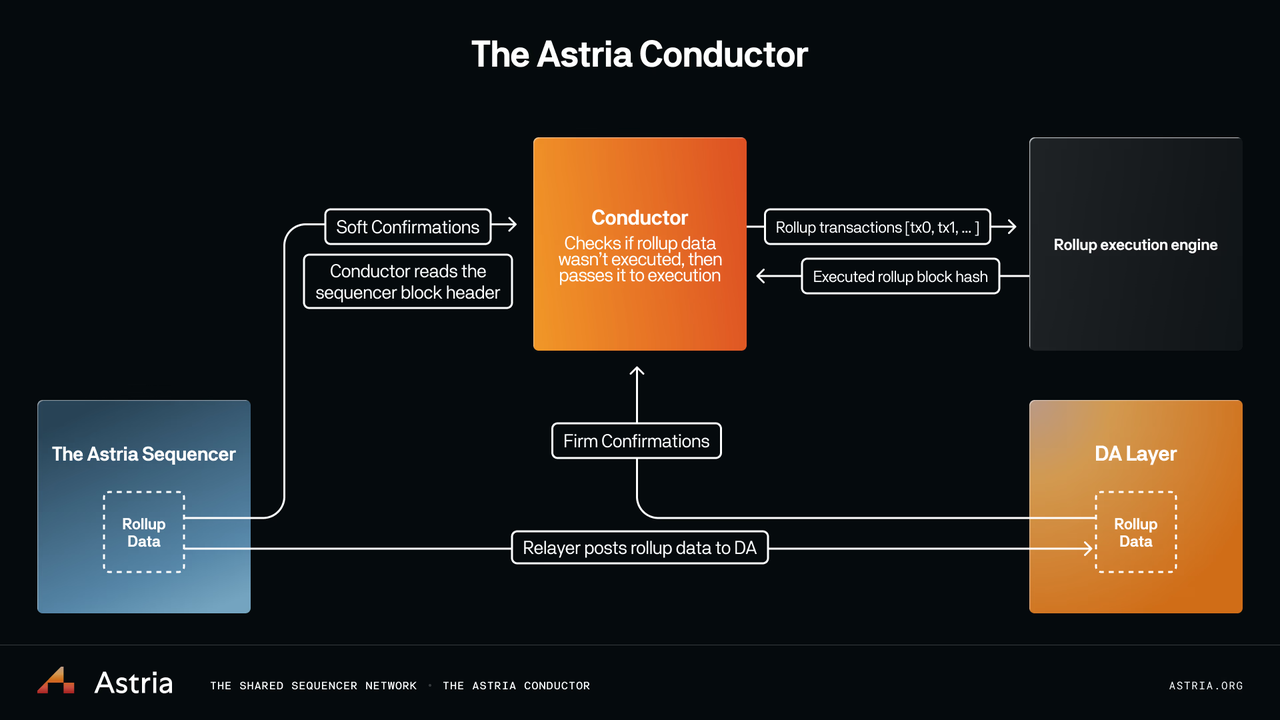
For each sequencer block, it extracts the relevant rollup data, validates the batched rollup data, and upon completion, converts it into a transaction list and passes it to the execution engine.
Join TechFlow official community to stay tuned
Telegram:https://t.me/TechFlowDaily
X (Twitter):https://x.com/TechFlowPost
X (Twitter) EN:https://x.com/BlockFlow_News
 Foresight News