Japan's Crypto Market Status: Premature Regulatory Intervention, Competitiveness Lags Behind Hong Kong and Singapore?
TechFlow Selected TechFlow Selected
Japan's Crypto Market Status: Premature Regulatory Intervention, Competitiveness Lags Behind Hong Kong and Singapore?
Japanese retail investors have long been known for their enthusiasm for leveraged trading.
 Navigating Web3 tides with focused insights
Author: Rick Maeda
Translation: TechFlow
Summary
-
Despite early adoption of cryptocurrency, Japan's development has been rocky due to two of the largest crypto exchange hacks in history.
-
These events forced Japanese regulators to intervene earlier than other countries, providing a clear regulatory framework for the industry.
-
However, strict regulations and high taxation have made Japan less competitive compared to neighboring countries like Singapore and Hong Kong.
-
With low trading volumes and an unexciting domestic startup environment, Japan faces numerous challenges in developing its Web3 sector—revival will require significant policy changes.
Introduction
Due to a lack of high-return investment opportunities and an unattractive domestic stock market, ordinary Japanese investors have long been known for their enthusiasm toward leveraged trading. Japanese retail forex traders have such significant influence on the TRY/JPY (Turkish Lira/Japanese Yen) currency pair that the international financial community even coined the term "Mrs. Watanabe" to represent them. When Bitcoin and other cryptocurrencies entered mainstream awareness in the early 2010s, Japan’s day traders eagerly embraced this new asset class. However, investors soon faced domestic challenges, including two infamous exchange hacks, combined with limited appeal in entrepreneurship and investment, causing the country’s standing in the Web3 space to decline.
In this research article, we will:
-
Review the history of cryptocurrency in Japan, particularly various regulatory developments
-
Analyze Japan's current state
-
Explore some of the major players in the domestic industry
History of Cryptocurrency in Japan
Japan's journey in cryptocurrency has seen many pivotal events, such as the Mt. Gox and Coincheck hacks, prompting the government to implement stringent regulations to protect investors and maintain financial stability. Japan continues to evolve its regulatory framework to address new challenges and opportunities in the crypto space.
Early Days and the Rise of Mt. Gox
2009:
-
Bitcoin, the first cryptocurrency, was introduced by an unknown individual or group using the name Satoshi Nakamoto. In these early stages, awareness and adoption of cryptocurrency were minimal globally, including in Japan, despite the use of a Japanese-style pseudonym by its creator.
2011–2013:
-
Mt. Gox, a Tokyo-based Bitcoin exchange, became the world’s largest Bitcoin exchange, handling the majority of global Bitcoin transactions at its peak (Figure 1).
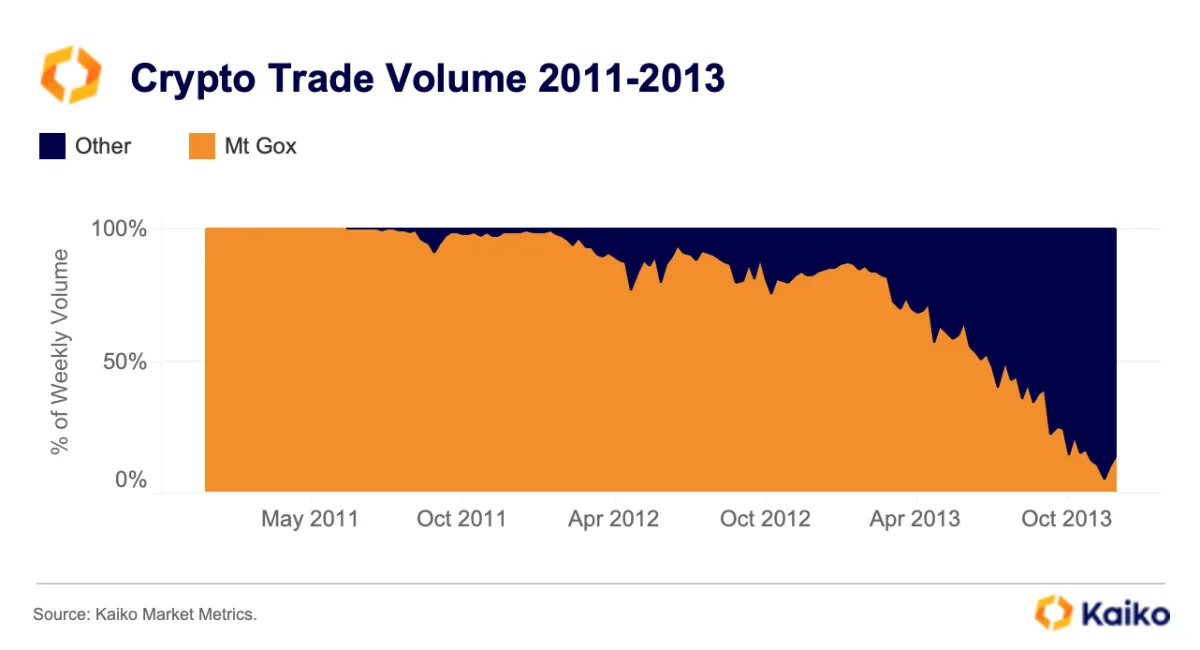
Figure 1: Global CEX Volume by End of 2013
The Mt. Gox Hack and Its Aftermath
2014:
-
Mt. Gox suspended trading, shut down its website, and filed for bankruptcy, announcing that approximately 850,000 bitcoins—nearly 7% of all bitcoins at the time, worth about $450 million—had been stolen. Investigations revealed poor management and inadequate security measures as key causes of the loss.
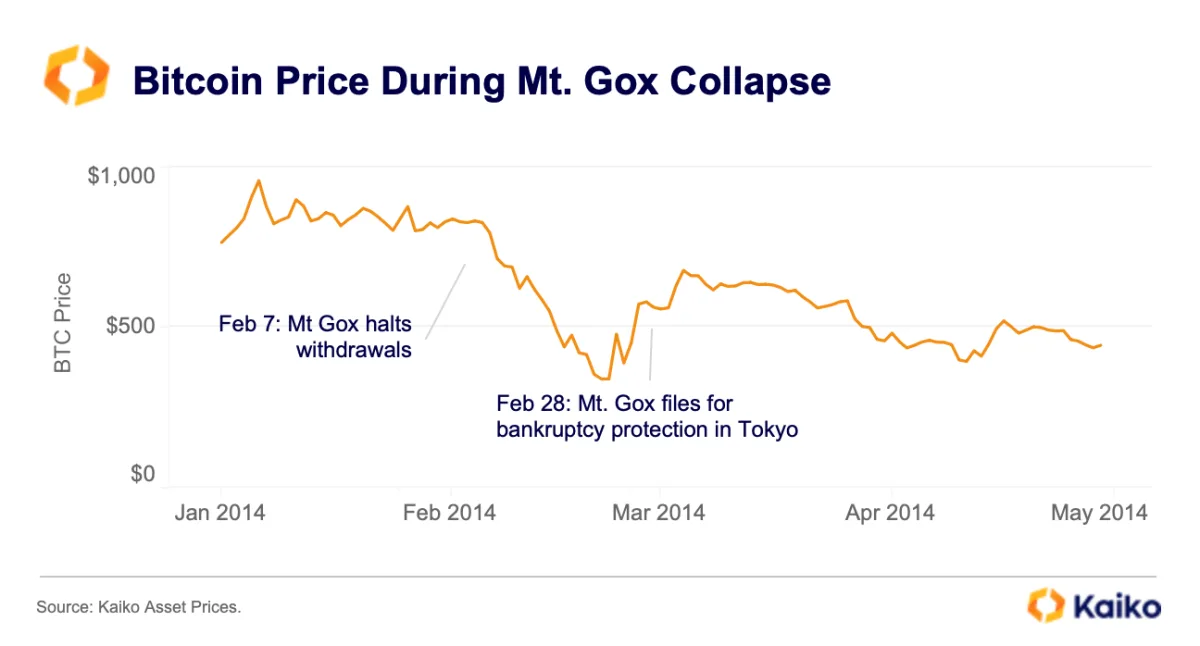
Figure 2: Bitcoin price dropped over 40% within three days after Mt. Gox halted withdrawals
Regulatory Developments and Early Regulations
2015:
-
The Financial Action Task Force (FATF), an intergovernmental policy-making body under the G7, released guidelines recommending that countries regulate virtual currency exchanges to combat money laundering and terrorist financing.
-
The Japanese government began drafting legislation aimed at regulating exchanges to protect consumers and ensure financial stability.
2016:
-
The Japanese Cabinet and Diet passed amendments to the Payment Services Act (PSA) and the Financial Instruments and Exchange Act (FIEA). These revisions recognized virtual currencies (such as Bitcoin, Ethereum, Ripple, Litecoin, and Bitcoin Cash) as a means of payment and imposed regulatory requirements on cryptocurrency exchanges, laying the foundation for comprehensive crypto regulation.
-
The Financial Services Agency (FSA) was tasked with implementing these regulations, focusing on exchange registration requirements, cybersecurity measures, and anti-money laundering (AML) protocols.
Coincheck Hack and Strengthened Regulation
2017:
-
The revised Payment Services Act came into effect in April, requiring cryptocurrency exchanges to register with the FSA and comply with AML and Know Your Customer (KYC) rules. The law also classified Bitcoin as a prepaid payment instrument.
-
Bitcoin and other cryptocurrencies gained significant popularity in Japan, with many merchants—including Bic Camera, Japan’s largest electronics retailer—beginning to accept Bitcoin as payment.
-
The National Tax Agency (NTA) classified cryptocurrency gains as “miscellaneous income,” making them taxable.
2018:
-
Coincheck, one of Japan’s largest cryptocurrency exchanges, was hacked, resulting in the theft of approximately 523 million NEM tokens (worth around $530 million). Customers were ultimately fully compensated by Coincheck. This hack remains one of the largest crypto heists in history and prompted stricter regulatory actions by the FSA. According to Cointelegraph, the exchange stored NEM in hot wallets instead of multi-signature wallets. Figure 3 shows the XEM price dropping over 76% in the two months following the hack. Q1 2018 marked the beginning of a bear market, but even excluding broader market effects, the $XEM/$BTC pair fell over 61%.
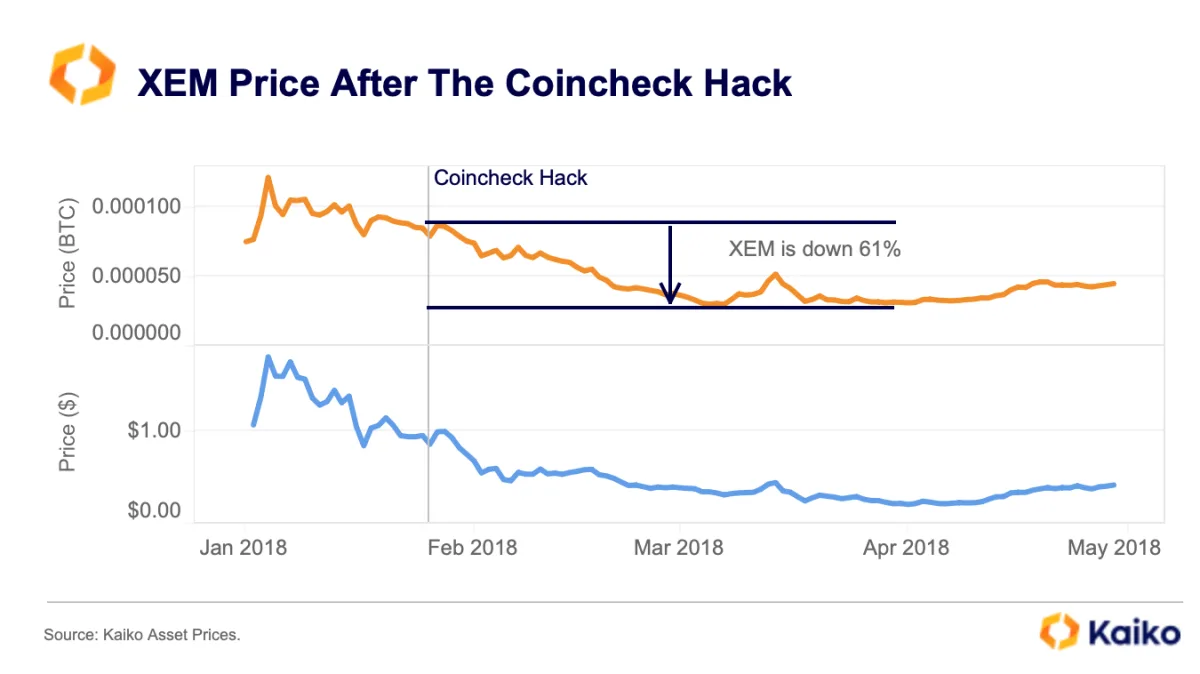
Figure 3: XEM Price Movement During the Coincheck Hack
-
Zaif, a smaller exchange, was hacked, losing around $60 million.
-
The Japan Virtual Currency Exchange Association (JVCEA) was established as a government-approved self-regulatory organization to raise industry standards and oversee token listings on exchanges.
-
The FSA issued business improvement orders to several cryptocurrency exchanges and conducted on-site inspections to ensure compliance with new regulations.
-
The FSA capped leverage in cryptocurrency margin trading at 4x the deposit amount, aiming to curb speculation and protect investors.
Leverage Trading Regulations and Ongoing Developments
2019:
-
Coincheck, now compliant with new regulations, resumed operations.
-
The Japanese Cabinet approved new regulations limiting leverage in cryptocurrency margin trading to 2–4 times the initial deposit.
-
Revised versions of the Financial Instruments and Exchange Act (FIEA) and the Payment Services Act (PSA) took effect, further tightening oversight of cryptocurrency exchanges and Security Token Offerings (STOs).
2020:
-
The FSA reduced the maximum leverage for margin trading to 2x.
-
Further amendments to the PSA and FIEA were enforced, emphasizing enhanced user protection and market integrity.
2021:
-
Japan continued refining its regulatory framework, focusing on investor protection, cybersecurity, and anti-money laundering.
-
The FSA established a new supervisory body to oversee crypto exchange operators and ensure compliance with evolving regulations.
-
The FSA required JVCEA to implement self-regulatory rules, including the “Crypto Travel Rule” concerning information sharing during transactions.
Recent Developments
2022:
-
The FSA introduced additional guidelines for digital asset custody by exchanges, emphasizing strong internal controls and risk management practices.
-
JVCEA incorporated the Travel Rule into its self-regulatory framework, while the Cabinet Secretariat revised the Act on Prevention of Transfer of Criminal Proceeds (APTCP) to enforce it.
-
The Japanese Tax Council revised tax laws to exempt corporate taxes on unrealized cryptocurrency gains for token issuers.
-
Japan explored the potential of issuing a Central Bank Digital Currency (CBDC), with the Bank of Japan conducting experiments and research.
-
The Upper House passed a bill regulating stablecoins, monitoring and combating money laundering activities.
-
The Liberal Democratic Party (LDP)’s Headquarters for Promoting a Digital Society released the “NFT White Paper: Japan’s NFT Strategy for the Web3.0 Era,” proposing policy recommendations for NFT development and protection.
-
The Ministry of Economy, Trade and Industry (METI) established a Web3 Policy Office to foster a supportive business environment for Web3-related industries.
-
The FSA moved forward with lifting the ban on foreign-issued stablecoins.
2023:
-
The FSA continued refining its regulatory approach, focusing on emerging trends such as DeFi and NFTs.
-
The FSA launched a public consultation on a draft order amending the APTCP enforcement regulations, clarifying the application of the Travel Rule to Japanese Virtual Asset Service Providers (VASPs).
-
Prime Minister Fumio Kishida emphasized Web3 as a pillar of economic reform, calling it a “new form of capitalism” and highlighting its potential to drive growth by solving societal issues.
2024:
-
JVCEA plans to streamline the listing process for digital currencies, aiming to simplify approval procedures for tokens already available on the market.
-
Lengthy pre-approval processes for certain digital assets on licensed exchanges are expected to be eliminated.
-
The Cabinet approved a bill allowing venture capital firms’ investment vehicles to directly hold digital assets.
Where Do We Stand Now? Japan Struggles with Web3 Adoption
Japan's weakness in Web3 adoption primarily stems from regulatory constraints, especially regarding exchange listings and taxation. Exchange listings are tightly regulated by the FSA, leaving local CEXs lacking major cryptocurrencies and unable to provide stablecoin liquidity (Figure 4).
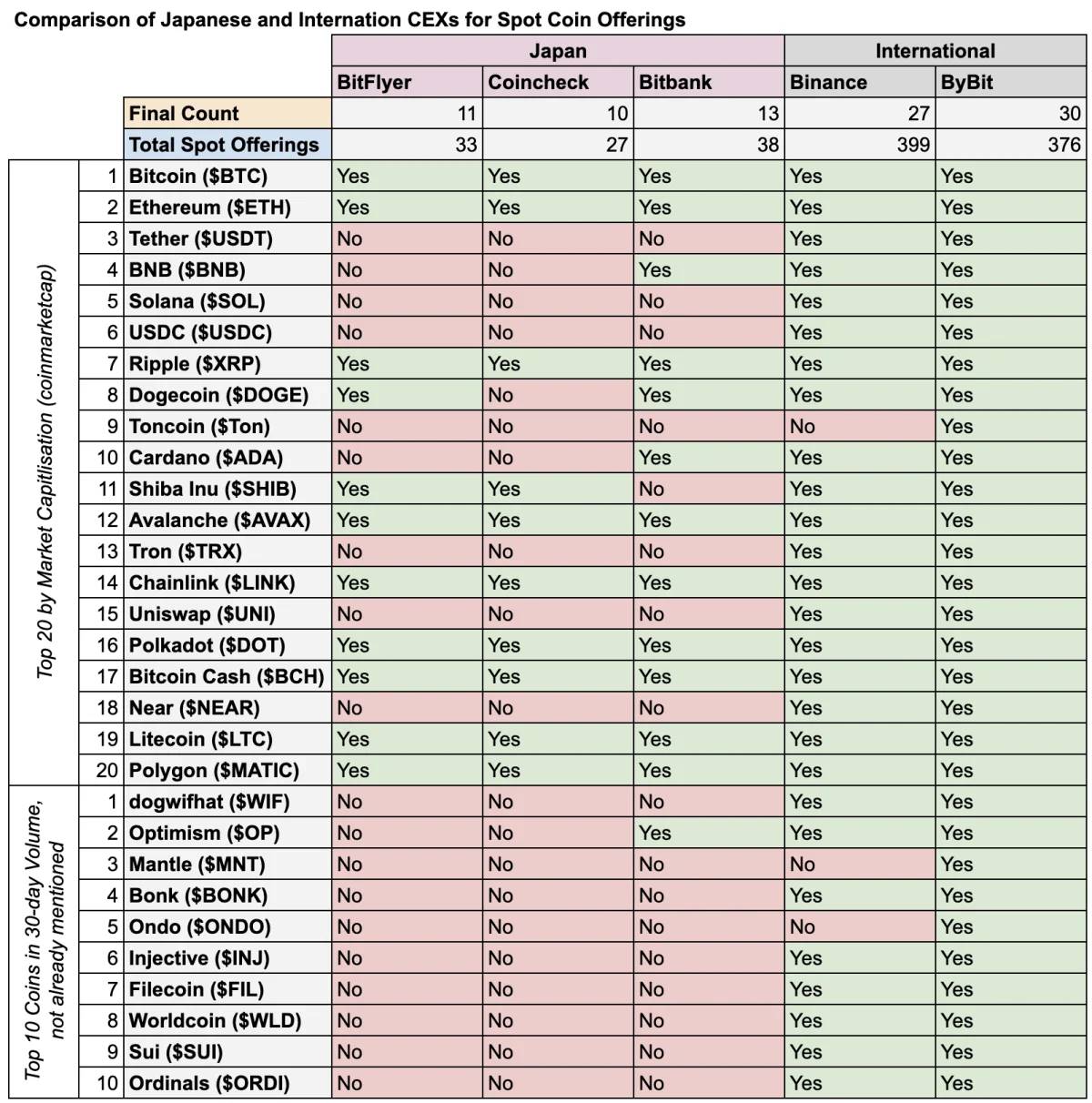
Figure 4: Limited product offerings on local CEXs.
Note: We examined USDT pairs on Binance and Bybit since neither offers USD fiat.
For Bybit, $SHIB and $BONK are offered in 1000-unit blocks ($1000BONK and $SHIB1000)
Aside from Bitbank offering the most coins among Japanese exchanges, this reinforces the dominance of major coins on Japanese exchanges (Figure 5):
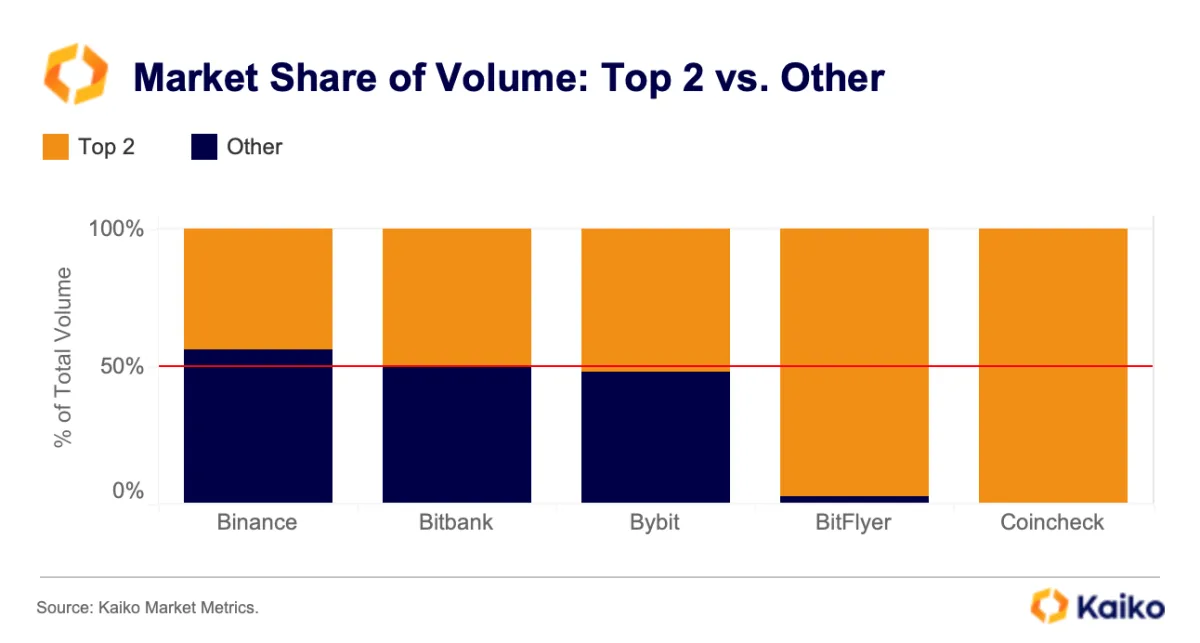
Figure 5: Market share of top two assets on Japanese vs. international CEXs.
Period: Year-to-date 2024
Meanwhile, cryptocurrency gains are treated as miscellaneous income, taxed at progressive personal income tax rates plus local taxes, reaching up to 55% (Figure 6).
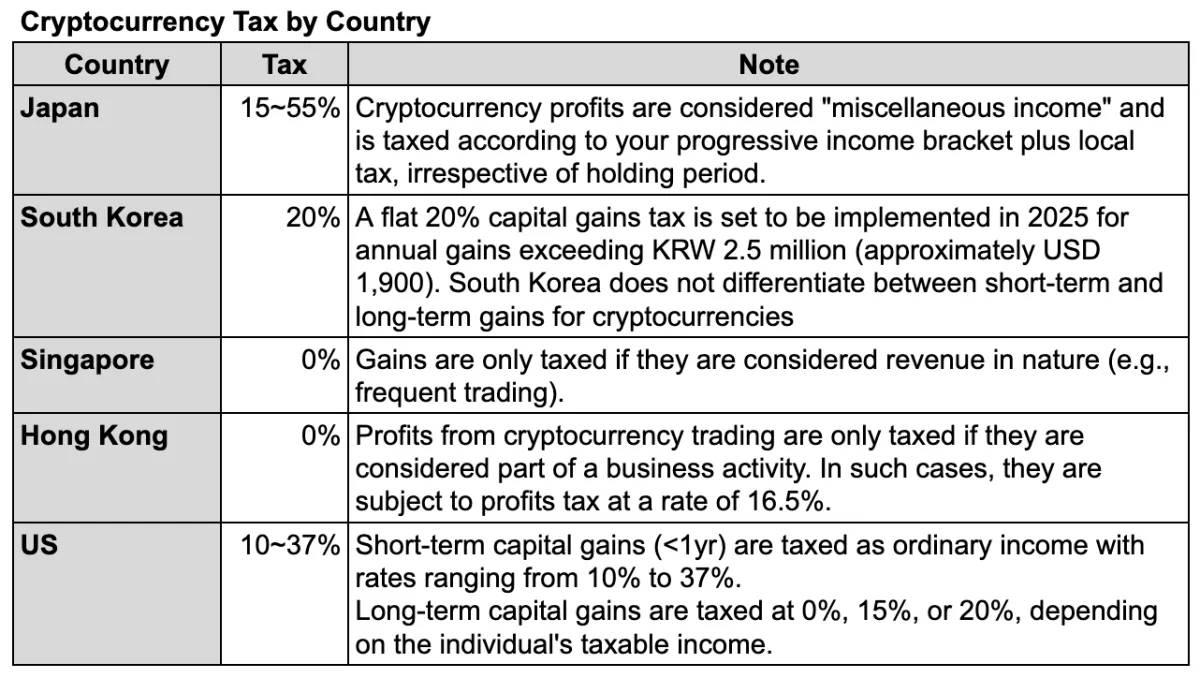
Figure 6: Japan's capital gains tax on cryptocurrency is prohibitively high
There was a time when yen trading volume surpassed dollar volume before institutional investors stepped in, but the above challenges have made the landscape difficult.
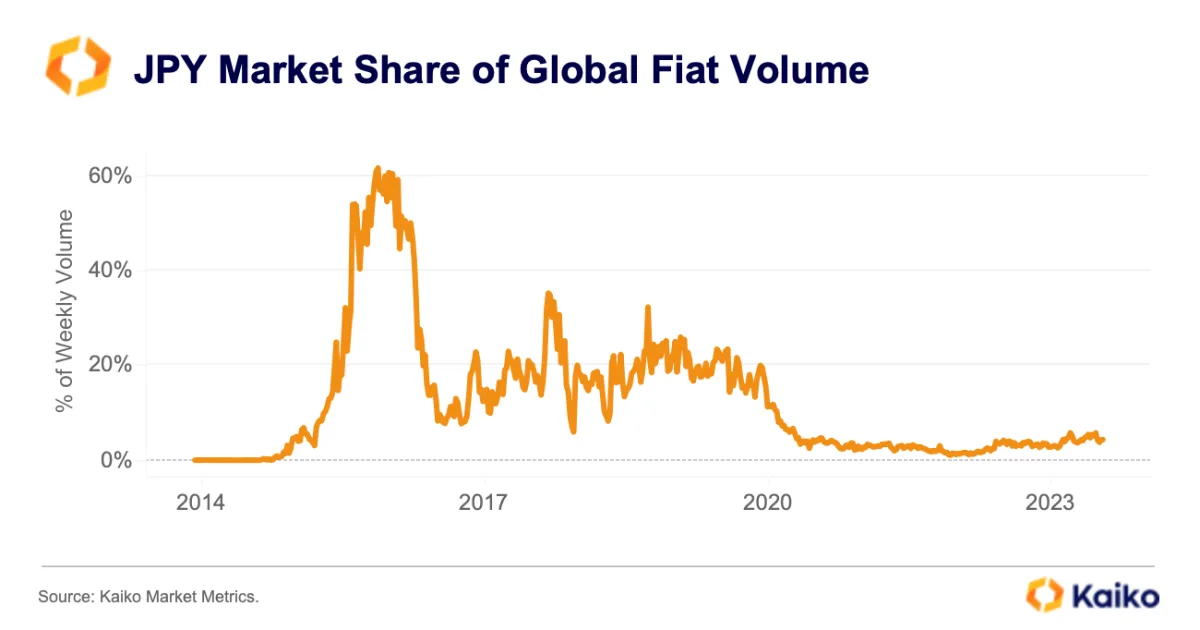
Figure 7: Yen's share of global fiat trading volume
The yen's absolute dominance, once exceeding 60% of all fiat trading volume, rapidly disappeared during the pandemic. However, Asia's total share of fiat trading volume remained relatively stable as volume shifted from yen to won (Figure 8).
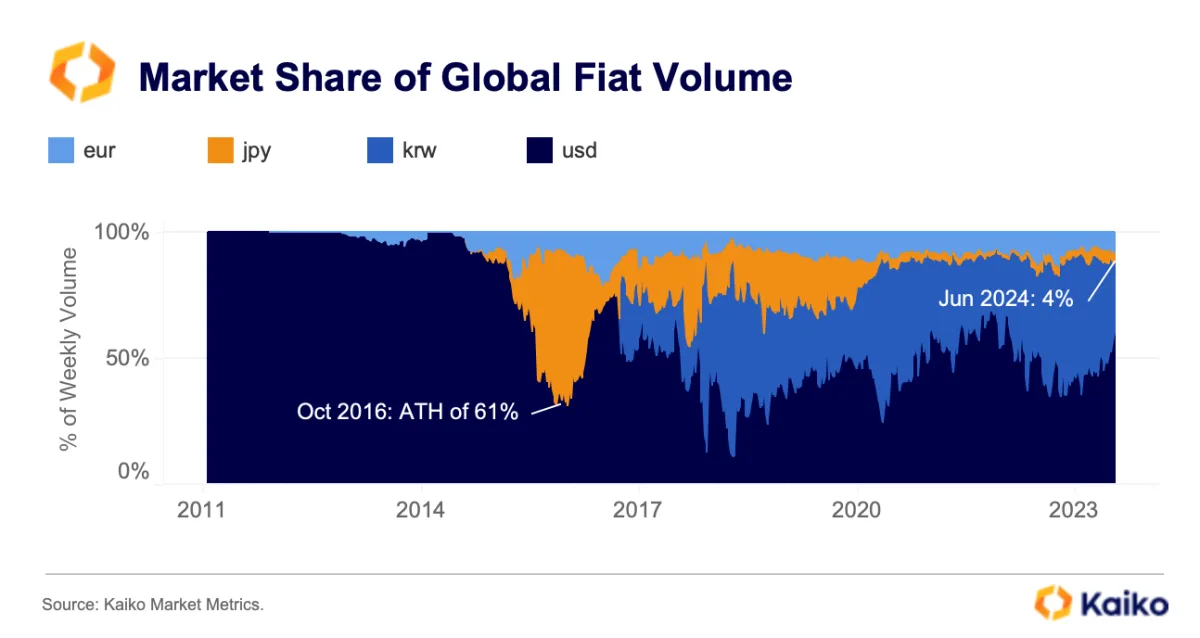
Figure 8: Yen trading volume share relative to other currencies
Interestingly, when we rebase yen and dollar trading volumes to their historical peak in November 2021, yen volume shows stronger recovery in this cycle (Figure 9).
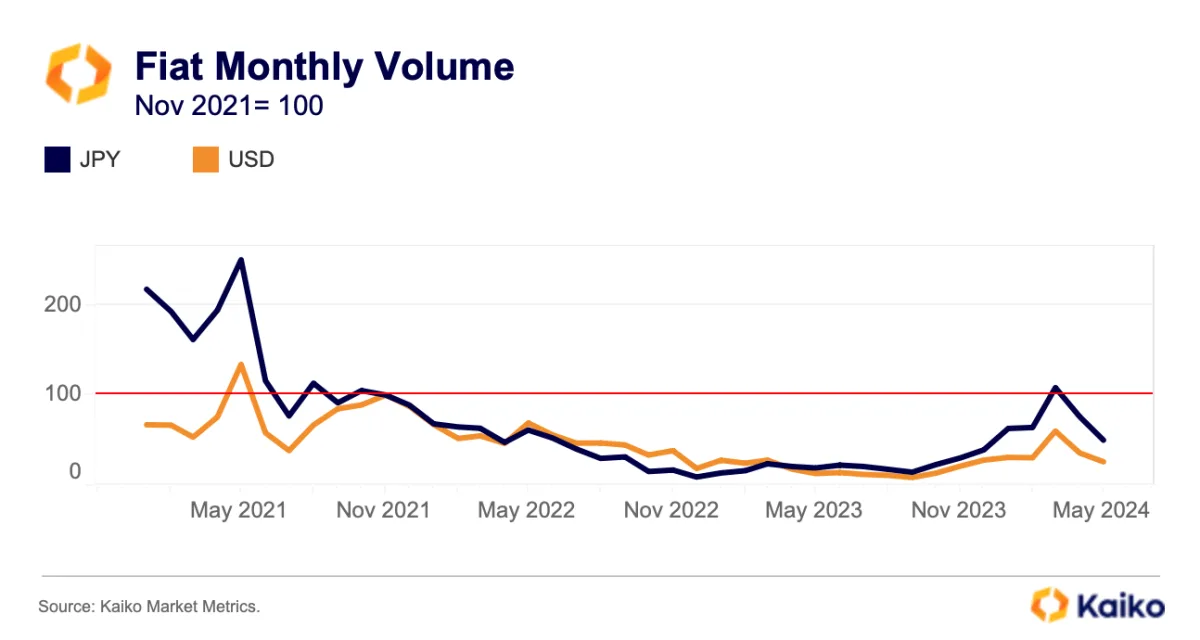
Figure 9: JPY and USD trading volumes rebased to November 2021 historical high = 100
On the institutional side, Japan is rich in content IP, home to companies like SEGA and Kodansha, making it an ideal location for NFT and gaming-driven projects. Theoretically, these companies could bring attention, users, R&D capability, and capital. However, this strategy has shown minimal results anywhere and has long been touted as Japan’s bull case without materializing.
Politically, the pro-deregulation ruling party suffered defeat in the April 2024 House of Representatives election, giving momentum to the opposition Constitutional Democratic Party. However, given the LDP’s continued majority in both houses of parliament and increasing international and domestic competition in Web3 adoption, we believe these developments are currently not concerning.
Cryptocurrency faces many headwinds, but simply put, many issues are cultural—thus unquantifiable and without easy solutions. Extremely low English proficiency in an international metropolis, lack of inherent entrepreneurial spirit, stable jobs at well-known local corporations still seen as the pinnacle of post-graduation employment, corporate caution contrasting sharply with crypto’s “move fast” nature, etc. All these factors are relative—especially compared to Asian competitors like Singapore and Hong Kong—but many are also absolute, making the challenge even harder. Combined with tax and CEX product availability hurdles, it’s difficult to imagine Japan catching up quickly with its Asian neighbors in adoption rates.
Key Players in Japan's Crypto Market
i) Centralized Exchanges (CEXs)
As previously mentioned, Japanese centralized exchanges lag behind international peers in product offerings, while high capital gains taxes make crypto trading unattractive. These challenges are reflected in domestic exchange trading volumes, and their user interface and user experience (UI/UX) also trail foreign competitors.
Currently, there are 29 registered crypto asset trading service providers under the Financial Services Agency (FSA). We illustrate the current market landscape below.
-
BitFlyer is the largest exchange by trading volume and has maintained its dominant position in recent years.
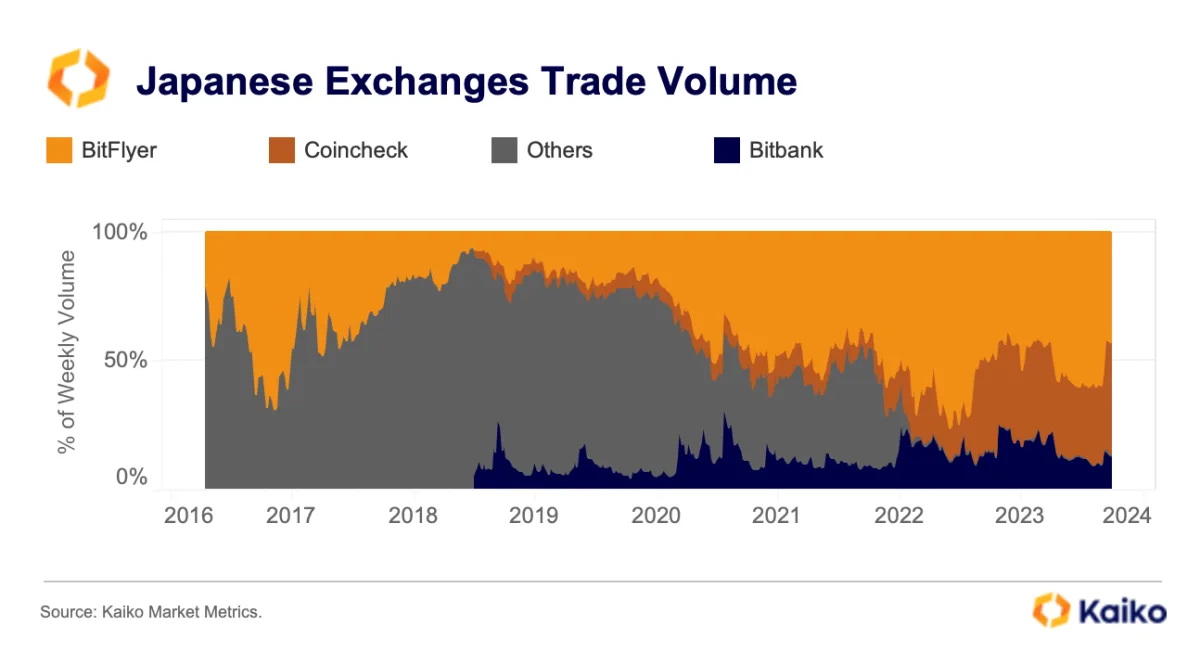
Figure 10: Market Share of Japanese CEX Trading Volumes
However, compared to top international exchanges, Japanese domestic exchanges are barely competitive in trading volume. Since the pandemic, Binance has far outpaced Japanese exchanges.
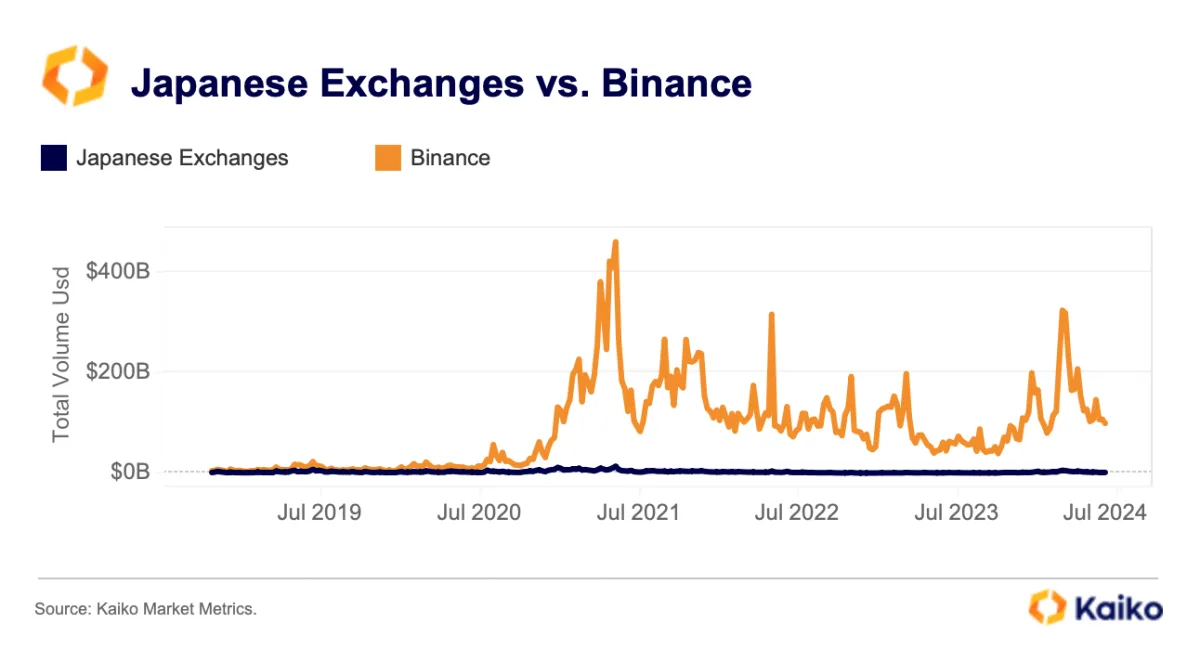
Figure 11: Total Spot Trading Volume of Japanese Exchanges vs. Binance
This disparity is similarly evident when comparing the depth of spot BTC order books across exchanges.
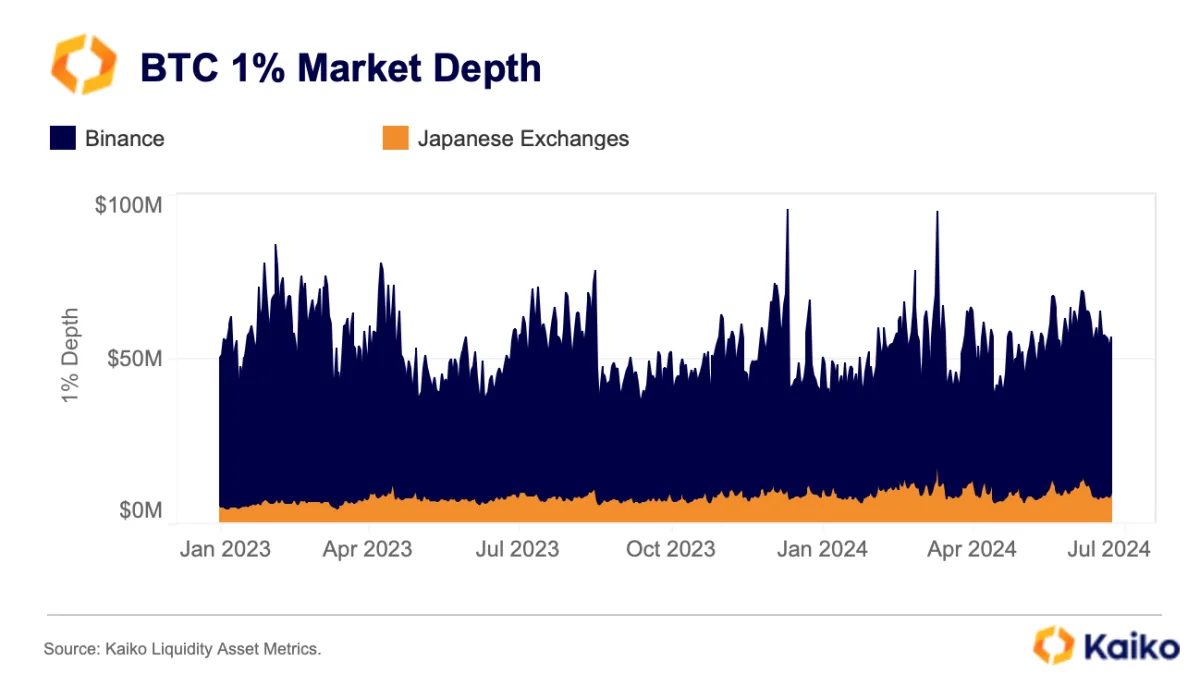
Figure 12: 1% Depth of Spot BTC Order Book – Japanese Exchanges vs. Binance
ii) Investment Groups:
SBI Digital
SBI Holdings (TYO: 8473) is a Tokyo-based financial services group founded in 1999. Originally part of SoftBank Group, it became independent in 2000. SBI Holdings operates across multiple sectors, including financial services, asset management, and biotechnology. It is known for integrating technology with traditional finance to drive innovation and growth.
SBI Digital Asset Holdings, a subsidiary of SBI Holdings, focuses on digital assets and blockchain technology and is Japan’s largest crypto investment group. Launched in 2020, SBI Digital aims to transform traditional finance by offering integrated solutions such as digital asset trading, token issuance, and custody services. They provide secure platforms for various digital asset transactions and facilitate token issuance, enabling companies to raise funds through innovative methods like Security Token Offerings (STOs). Their custody services ensure secure storage and management of digital assets using advanced security measures. SBI Digital also partners with global financial institutions—for example, forming a joint venture with SIX Digital Exchange to launch a crypto venture fund in Singapore, aiming to boost digital asset liquidity and infrastructure across Asia and Europe. Another major initiative is the Digital Space Fund launched in 2023 with up to $660 million in funding, focusing on Web3, Metaverse, Artificial Intelligence, FinTech, and other emerging technologies.
SBI offers diverse services across traditional finance and crypto, including custodial solutions and market-making services through its subsidiary B2C2.
iii) Protocols/Projects:
Astar Network
Astar Network is a decentralized application (dApp) platform built on the Polkadot ecosystem and one of Japan’s most prominent crypto projects (notably, though, headquartered not in Japan but in Singapore). It was founded by Sota Watanabe, a well-known figure in Japan’s blockchain space. Astar aims to provide developers with a scalable, interoperable, and decentralized network for deploying applications. The network supports multiple virtual machines, including the Ethereum Virtual Machine (EVM) and WebAssembly (WASM), allowing developers to write smart contracts in various programming languages.
Astar Network is a decentralized application (dApp) platform built on the Polkadot ecosystem. Although Astar is one of Japan’s leading crypto projects, its headquarters are located in Singapore. Founded by Sota Watanabe, a prominent figure in Japan’s blockchain community, the platform aims to offer developers a scalable, interoperable, and decentralized environment for deploying applications. Astar supports multiple virtual machines, including the Ethereum Virtual Machine (EVM) and WebAssembly (WASM), enabling developers to write smart contracts in various programming languages.
By providing essential tools and infrastructure, Astar fosters dApp development and drives innovation in decentralized finance (DeFi), non-fungible tokens (NFTs), and other blockchain applications. Astar’s integration with Polkadot enhances its interoperability with other blockchains, making it a significant component of the broader blockchain ecosystem.
Astar holds significance in Japan as one of the country’s leading blockchain projects, showcasing interest and investment from Japan’s tech sector in blockchain technology. However, activity on Astar is still in early stages: Figure 13 shows the chain’s TVL (in USD), and Figure 14 shows the growth of its native token TVL.

Figure 13: Astar’s TVL in USD Compared to Larger Chains
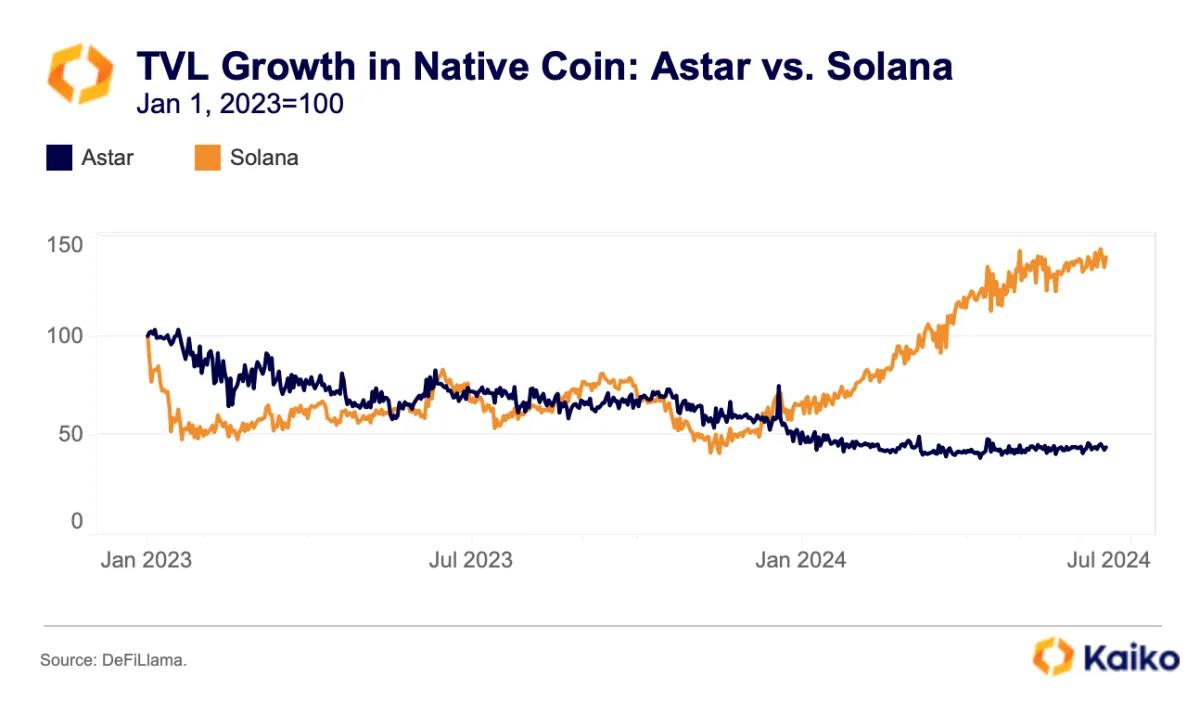
Figure 14: Astar TVL vs. Solana TVL, measured in native tokens ($ASTR and $SOL), rebased to January 23 = 100
Backpack
Backpack is one of the most exciting wallet providers in recent years. Their non-custodial wallet currently supports Solana, Ethereum, and Arbitrum, available as a browser extension and mobile app for iOS and Android. Interestingly, the company was founded by two non-Japanese entrepreneurs who chose Tokyo as their headquarters. We interviewed Backpack co-founder Tristan Yver about why they chose Japan:
-
Who are you, and what is Backpack?
I’m Tristan Yver, co-founder of Backpack. Backpack is a cryptocurrency wallet designed to manage all your crypto assets through a secure, user-friendly platform. I’m also one of the founders of Mad Lads NFT collection, a leading NFT project on Solana and one of the strongest communities in crypto.
-
Why did you choose Japan as your headquarters?
We chose to base our headquarters in Japan because the regulatory environment is gradually improving, and we have a local team based here. Among all Asian countries, Japan is where our team most wanted to establish our base due to its safety and quality of life. We’re also committed to promoting Japan as a thriving Web3 nation and inviting other founders and teams to visit us.
-
What changes do you think are needed domestically to increase crypto adoption?
To drive crypto adoption in Japan, more resources are needed to help engineers learn blockchain programming, and the startup sector needs to recognize the huge opportunities in Web3. I also believe friendlier tax policies would attract more individual investors into the crypto market.
-
Can you tell us about Backpack’s upcoming updates?
We’re excited to add support for more blockchains in the Backpack wallet. Starting with Solana and Ethereum, we now support Arbitrum, and soon Base, Optimism, and Polygon. These innovations aim
Join TechFlow official community to stay tuned
Telegram:https://t.me/TechFlowDaily
X (Twitter):https://x.com/TechFlowPost
X (Twitter) EN:https://x.com/BlockFlow_News
 @presto_labs