Livepeer: A decentralized video streaming protocol built on Ethereum
TechFlow Selected TechFlow Selected
Livepeer: A decentralized video streaming protocol built on Ethereum
Livepeer is a decentralized live video streaming protocol built on the Ethereum blockchain, enabling users to transcode videos in real time upon request.
 Navigating Web3 tides with focused insights
Author: Tea House Assistant
Livepeer is a decentralized live video streaming protocol built on the Ethereum blockchain, enabling users to request real-time video transcoding.
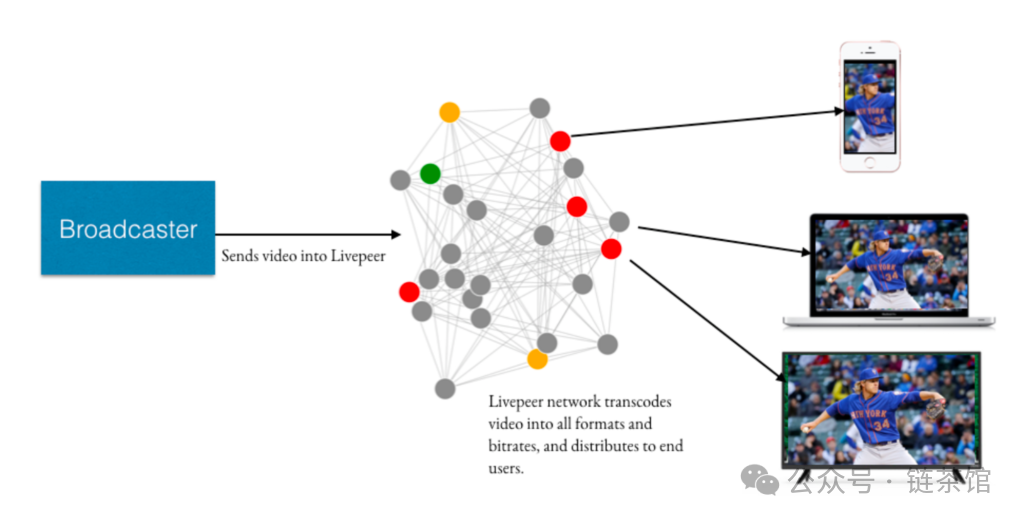
Built as a scalable Platform-as-a-Service (PaaS), Livepeer suits startups and organizations aiming to integrate live or on-demand video into their products. At its core lies an Ethereum-based video transcoding protocol—reformatting videos to suit various bandwidths and devices—designed to deliver cost-effective, secure, and reliable infrastructure capable of meeting today’s high demands for video streaming.
Unlike traditional video streaming providers such as YouTube, Livepeer does not store, manage, or transmit videos. Instead, it leverages underutilized CPU resources, allowing users to broadcast live video or integrate video streams into their applications and websites. This greatly simplifies the process of video distribution for publishers and offers a more cost-efficient solution.
Moreover, the network uses a modified version of the Delegated Proof-of-Stake (DPoS) consensus mechanism, where new blocks are validated through token staking instead of mining. Its native token, LPT, is a work token based on Ethereum's ERC-20 standard, which users can stake to help secure the network.
How It Works
The operation of Livepeer centers around its Ethereum-based video transcoding protocol, which distributes video transcoding tasks across a decentralized network. This protocol aims to provide an infrastructure that is both economically efficient and secure, addressing today’s high demand for video streaming.
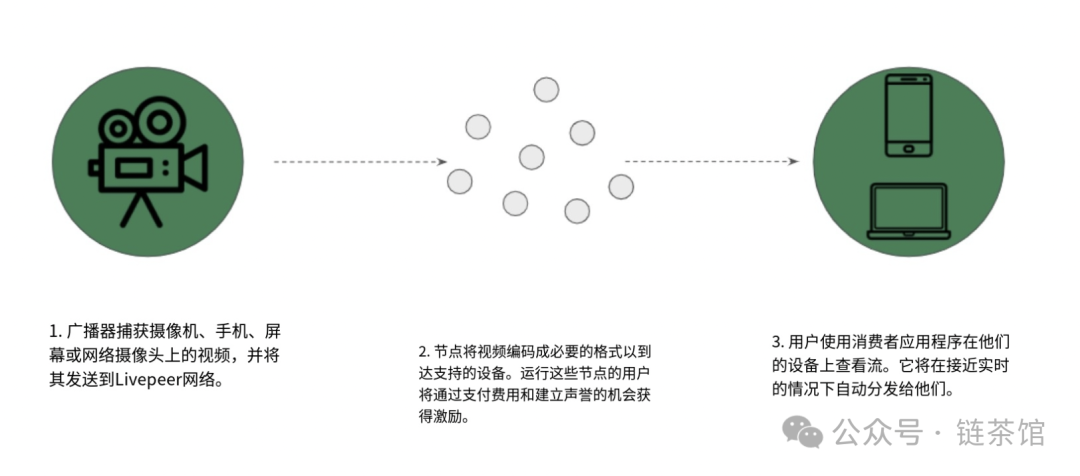
Below is a detailed explanation of how it works:
Video Transcoding Process
-
Sending Video Streams
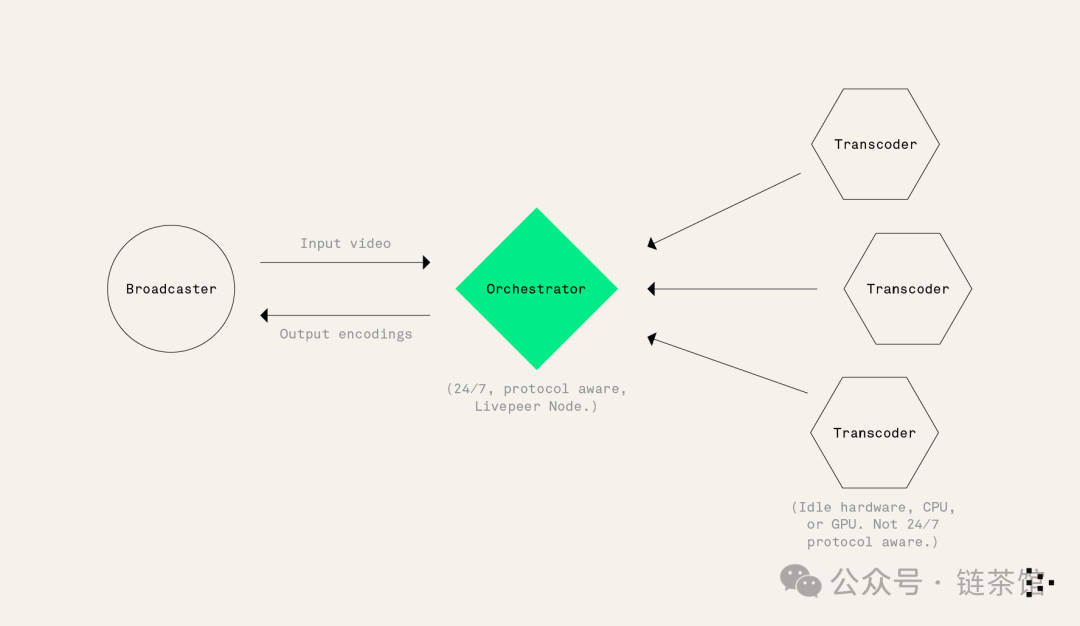
Video content creators or broadcasters send original video streams to the Livepeer network. These broadcasters could be individuals, companies, or any entities requiring video transcoding services.
-
Receiving and Task Assignment
Within the Livepeer network, nodes known as "orchestrators" receive these video streams. Orchestrators are participants who contribute their computing resources (CPU/GPU) and network bandwidth to support network operations.
Orchestrators perform initial processing of received video streams and assign transcoding tasks to specific transcoders—typically GPUs or other specialized hardware with video encoding capabilities.
-
Transcoding Execution
Transcoders receive video streams from orchestrators and convert them from the original format into formats suitable for different screen sizes and network speeds. This includes resolution adjustment, bitrate modification, and changes in encoding format.
During transcoding, video files are re-encoded to ensure compatibility and optimal playback performance on target devices.
-
Return of Transcoded Video
Once transcoding is complete, transcoders send the processed video stream back to the orchestrator. The orchestrator reviews the quality of the stream and then returns the final video to the broadcaster or directly publishes it to designated platforms.
-
Fees and Incentives
On the Livepeer network, broadcasters must pay fees in Ether (ETH) for transcoding services. These fees are distributed to orchestrators and participating transcoders as compensation for providing computing resources and bandwidth.
The amount of LPT tokens held by orchestrators and transcoders determines how many transcoding tasks they can receive—the number of assigned tasks is proportional to their staked LPT.
Consensus Mechanism
Livepeer employs a unique consensus mechanism combining Ethereum’s security with a dedicated layer designed specifically for handling tasks and reward distribution within its network.
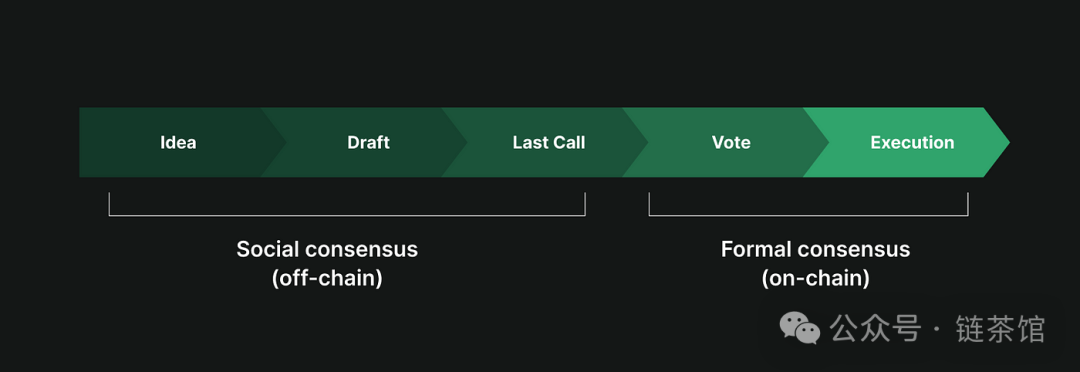
This consensus mechanism consists of two layers. Below is a detailed overview of each layer:
Ethereum Blockchain Layer
-
The first layer of Livepeer’s consensus mechanism relies on the Ethereum blockchain. All transactions and smart contract interactions—including LPT token transfers, staking/unstaking events, and fee payments—are recorded and verified at this layer.
-
By leveraging Ethereum’s security, this layer ensures all financial operations within the Livepeer network are transparent and tamper-proof. It also benefits from Ethereum’s widespread adoption and stability to provide foundational security.
Delegated Proof-of-Stake (DPoS) Layer
-
The second layer operates on a Delegated Proof-of-Stake (DPoS) model, specifically handling validation of video transcoding tasks and reward distribution. In this model, LPT token holders can choose to become "Orchestrators" or delegate their tokens to existing Orchestrators.
-
Orchestrators act as verification nodes in the network, responsible not only for video transcoding but also for validating the work of other nodes. This layer ensures transcoding tasks are correctly completed and meet expected quality standards.
-
Orchestrators verify processing results and participate in the creation and distribution of new LPT tokens. This mechanism supports smooth network operation and growth, encouraging honest and efficient behavior among participants.
Practical Operation of Consensus
-
In the Livepeer network, after an Orchestrator completes a transcoding task, they may self-validate the result or delegate cross-validation to other Orchestrators. Because fully verifying every task would be prohibitively expensive, Livepeer uses random sampling to verify accuracy—significantly reducing operational costs while maintaining network security and reliability.
-
LPT tokens play a critical role here as a form of "bond." If an Orchestrator behaves maliciously—such as submitting incorrect transcoding results—their staked LPT may be slashed, increasing the cost of dishonest behavior.
Through this two-layered consensus mechanism, Livepeer maintains efficient and cost-effective operations while ensuring network security and reliability. This architecture leverages Ethereum’s robust capabilities while optimizing video transcoding-specific functions via the DPoS layer.
LPT Token
LPT is the native token of the Livepeer network, built on Ethereum’s ERC-20 standard.
Uses and Functions
-
LPT incentivizes network participants, including video transcoders (called "orchestrators") and token holders ("delegators"). Orchestrators handle video transcoding tasks, while delegators support specific orchestrators by staking LPT tokens, helping maintain network security.
-
LPT holders can participate in governance decisions, voting on the network’s future direction and protocol upgrades.
-
Voting and Governance
-
Network Security and Incentives
Economic Model
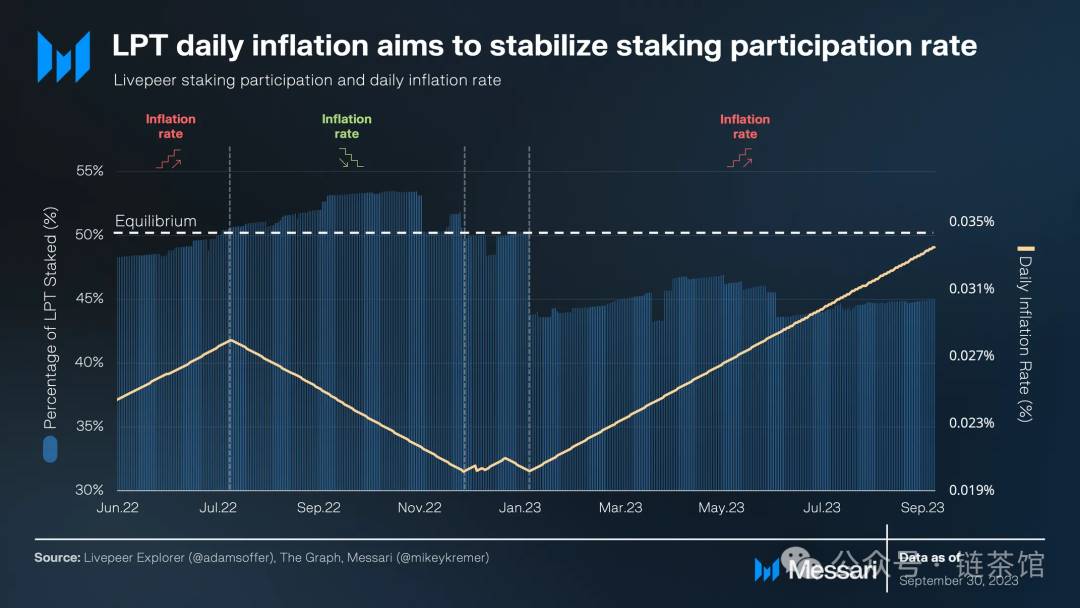
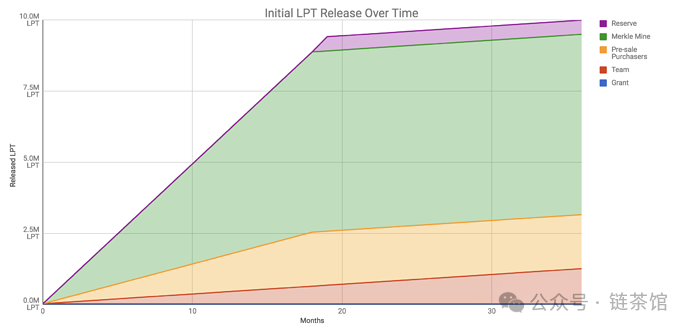
A total of 22,858,012 LPT tokens were issued: approximately 12.35% allocated to the founding team (unlocking after three years), about 19% sold during the presale, and 63.437% made available for public trading. 0.213% was distributed to early advisors and contributors who helped launch Livepeer, and 5% reserved for ongoing platform development and sustainability.
-
LPT is an inflationary token with no maximum supply cap. New LPT tokens are minted and distributed to active network participants—such as Orchestrators performing video transcoding and Delegators supporting them. This reward mechanism encourages greater participation, rewards engagement, provides long-term incentives for new entrants, and enhances decentralization and security over time.
-
The inflation rate of LPT is not fixed; it dynamically adjusts based on the overall network staking rate—the percentage of circulating LPT tokens staked to support Orchestrators.
-
Token Distribution
-
Inflation Mechanism
Acquiring Tokens
1. Network Participation Rewards
The primary way to obtain LPT tokens is by participating in Livepeer’s video processing network, particularly as an Orchestrator or Transcoder. These roles contribute computational resources and bandwidth to perform video transcoding and are rewarded with LPT tokens.
2. Staking and Token Rewards
Users can participate in network maintenance by staking their LPT tokens to an Orchestrator—a process known as Delegating. Delegators support specific Orchestrators and earn a portion of the revenue generated from transcoding tasks, proportional to their staked amount.
3. Initial Token Distribution
During the early stages of the Livepeer network, tokens were initially distributed through public sales, private placements, or an Initial Coin Offering (ICO), offering early investors entry opportunities.
4. Community and Developer Incentives
The Livepeer community may distribute LPT tokens through bounties, development grants, or creative competitions to reward contributors and developers. These initiatives aim to drive technological advancement and community engagement.
Livepeer Ecosystem
Delegators
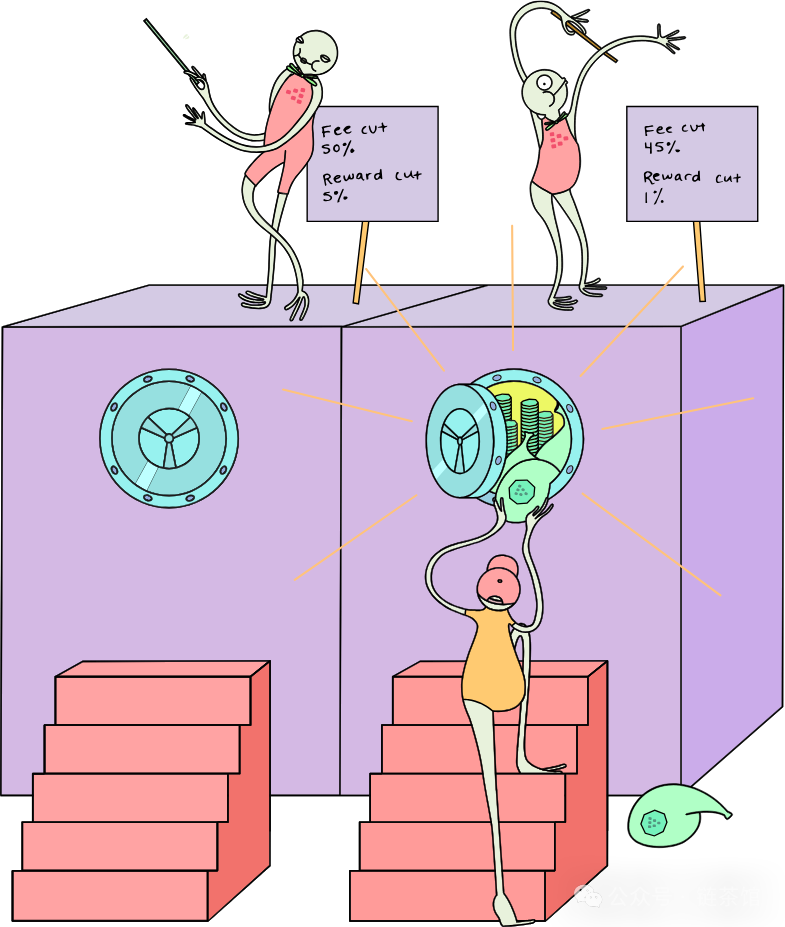
Delegators in the Livepeer ecosystem are individuals or entities who stake their Livepeer tokens (LPT) into the network to participate in consensus and earn rewards. They delegate their LPT to node operators running Livepeer software and performing transcoding work on the network. In return, delegators receive a share of the rewards earned by the node operator.
Orchestrators
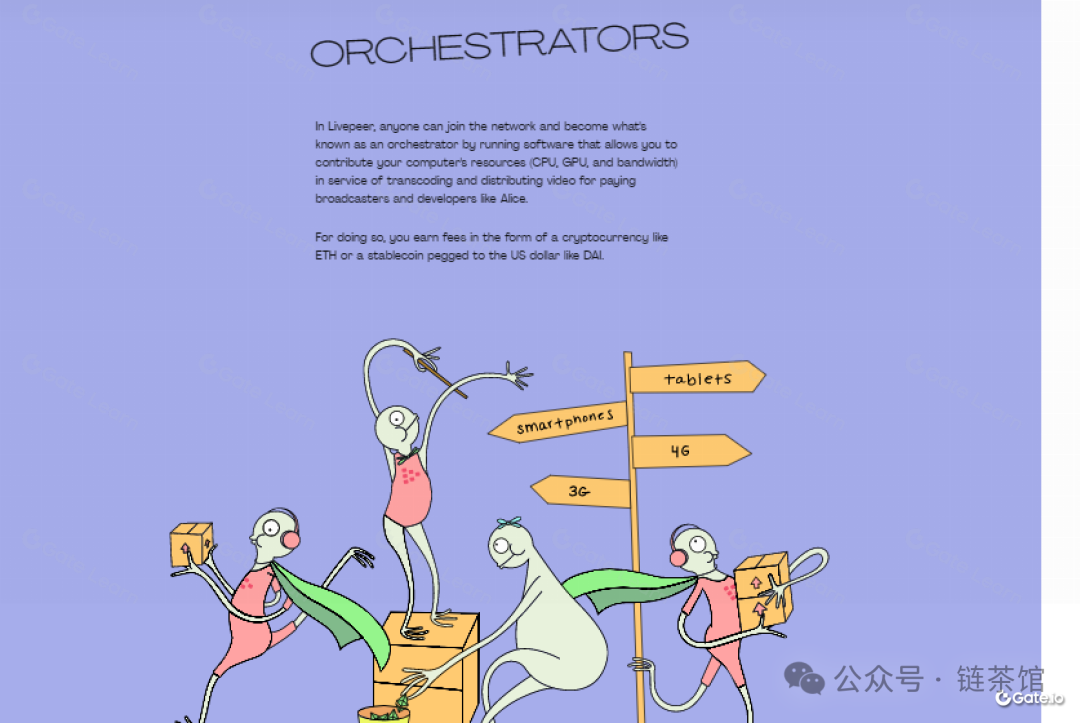
Orchestrators in the Livepeer ecosystem are node operators providing transcoding services. They run Livepeer software to transcode videos and distribute video segments across the network. Orchestrators compete with one another to perform transcoding tasks and earn service fees. They also participate in network consensus by staking their own LPT tokens and can earn additional rewards when selected to validate transactions and create new blocks on the Livepeer blockchain.
Node Operators
Node operators are responsible for processing video sources and converting them into various formats to accommodate different devices and network configurations. Node administrators form the foundation of the Livepeer network. As compensation for their participation, they receive benefits in the form of LivePeer’s native token, LPT.
Transcoder Operators
These are also node operators selected to process and transcode videos into multiple formats. In addition to earning network participation rewards, they also receive payments for transcoding services.
Video Creators
Individuals or businesses that create video content and submit it to the Livepeer platform for delivery and processing are known as video creators. To ensure high-quality delivery and broader audience reach, they may opt to pay for transcoding services.
Users
People who watch video content distributed via the Livepeer network are referred to as users. Without requiring specialized hardware or software, they can access video materials through various devices and enjoy high-quality video streaming.
Video Miners
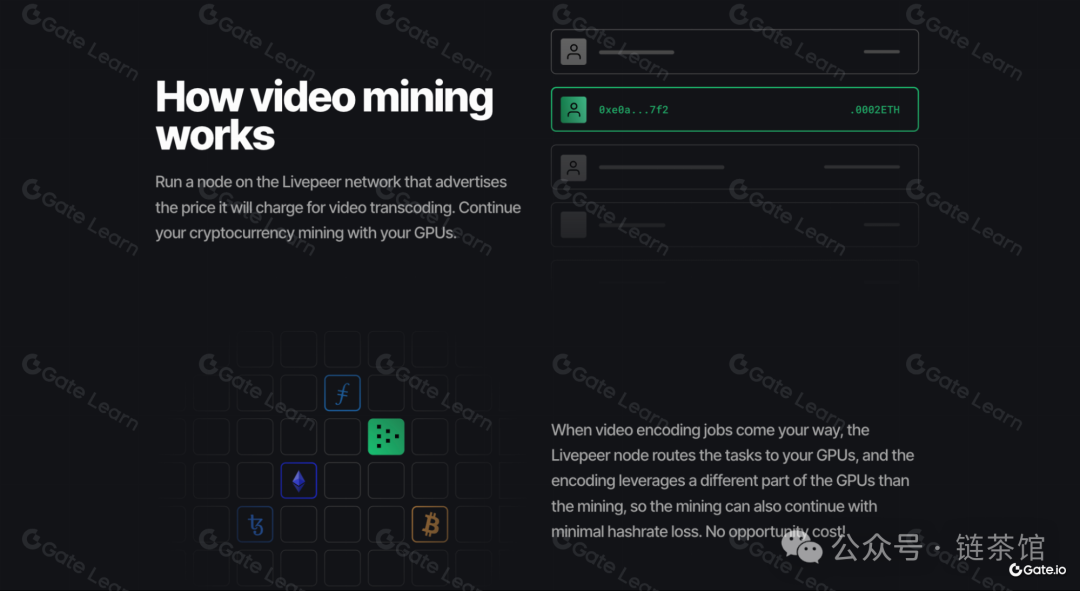
Video miners in the Livepeer ecosystem are individuals who provide computational resources to process and transcode video streams. By participating as video miners, they help ensure the scalability and reliability of the network and are rewarded with LPT tokens for their contributions. The amount of LPT received is proportional to the processing power and bandwidth they contribute to the network.
Token Holders
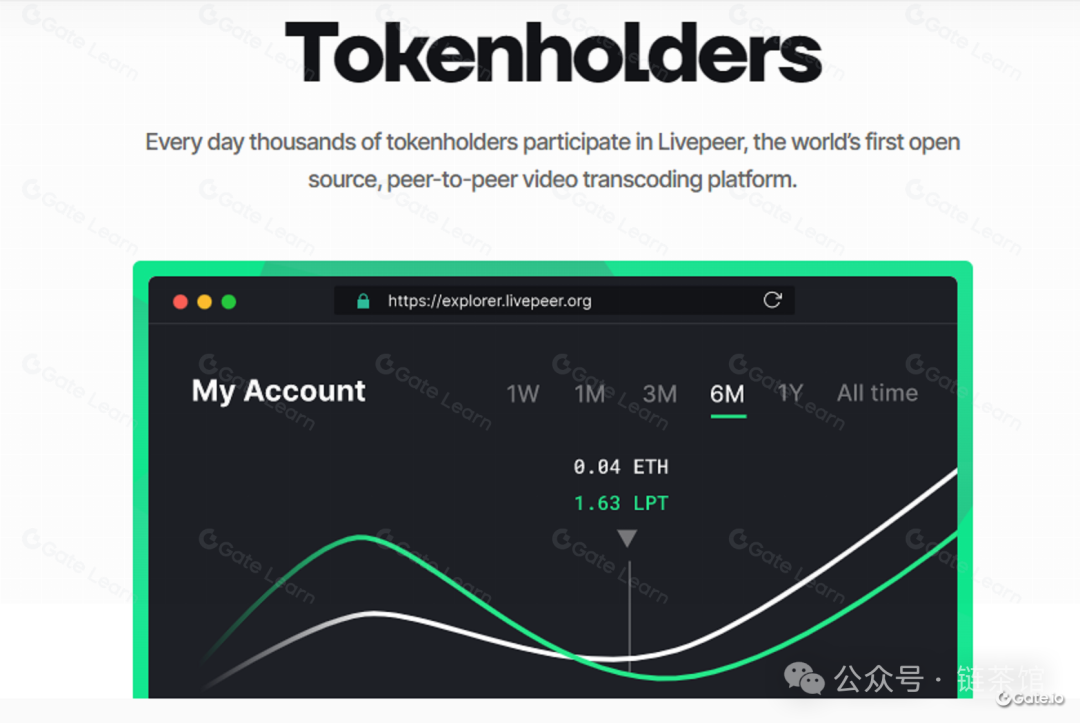
Token holders have the ability to participate in network governance by voting on protocol upgrades and changes. They may also receive a portion of transaction fees as rewards. All transactions and interactions within the Livepeer ecosystem are recorded on the Ethereum blockchain, ensuring full transparency. This guarantees that everyone in the ecosystem can trust the network and its services.
Livepeer Team / Partnerships / Funding / Investment
Team
Livepeer was launched in March 2017 by Doug Petkanics and Eric Tang. Livepeer is an open-source protocol on GitHub, allowing developers to freely contribute to the core code. Meanwhile, Livepeer Inc., co-founded by Petkanics and Tang, serves as the legal entity behind the project. Petkanics serves as CEO, bringing engineering and entrepreneurial experience, while CTO Tang contributes deep technical expertise. The team comprises individuals with diverse skills in technology, business development, and blockchain, all committed to building a decentralized solution for video streaming.

Partnerships
Livepeer has established partnerships with several companies and organizations to promote the adoption of its technology, including:
-
ETHDenver: Livepeer partnered with ETHDenver to provide video infrastructure for the world’s largest Ethereum hackathon.
-
DLive: DLive, a decentralized streaming platform, collaborates with Livepeer to offer users decentralized and more scalable video infrastructure.
-
Hashed: A cryptocurrency investment firm that invested in Livepeer and collaborates to advance decentralized video infrastructure adoption.
-
Parity Technologies: Livepeer collaborates with Parity Technologies to deliver secure and scalable infrastructure for decentralized video streaming.
-
Band Protocol: A decentralized oracle platform that partners with Livepeer to provide secure and decentralized data for video streaming applications.
Funding Status
Livepeer has raised a total of $48 million across four funding rounds.
-
The most recent round was a Series B-II on January 5, 2022, raising $20 million.
-
Investors include Alan Howard, Digital Currency Group, Northzone, Tiger Global Management, and Warburg Serres Investments.
-
Beyond public funding rounds, Livepeer may have conducted additional private or seed investments.
Acquisitions and Investments
-
Livepeer acquired MistServer, a streaming server solution, on November 8, 2021.
-
Livepeer made a seed investment in the Web3 Working Group on December 1, 2022, indicating that Livepeer is not only growing itself but also investing in and supporting other technologies and projects within the ecosystem.
Project Advantages
-
High-Quality Video: Livepeer uses blockchain technology to build a decentralized network of nodes that perform video transcoding, resulting in high-quality video streams.
-
Community-Driven Development: Livepeer is an open-source project, meaning its development is driven by developer and user communities, leading to a more user-friendly and innovative platform.
-
Token Incentives: Livepeer uses its LPT token to incentivize participation. For example, transcoders are rewarded with LPT tokens for delivering high-quality streams.
-
Privacy: Livepeer allows users to stream content without revealing their identity, enhancing privacy compared to centralized platforms that may collect personal data for advertising.
-
Scalability: Livepeer is designed to scale with network growth, capable of handling increasing numbers of users and streams without performance degradation.
-
Reduced Latency: The decentralized node network helps minimize streaming latency, providing smoother and more responsive playback.
Project Disadvantages
-
Competition from Centralized Platforms: Livepeer faces strong competition from centralized platforms like YouTube, Twitch, and Facebook, which have significant advantages in resources and market share, making broad adoption challenging.
-
Regulatory Risks: The regulatory environment for decentralized platforms remains uncertain; government regulations could negatively impact Livepeer’s usage and adoption.
-
Security Risks: Like any decentralized platform, there is risk of hacking or malicious activity. Livepeer’s decentralized nature may make it more vulnerable, potentially leading to loss of user data or funds.
-
Technical Complexity: The technical complexity of the Livepeer platform may hinder non-technical users from understanding and using it effectively, limiting adoption, especially among those unfamiliar with blockchain.
-
Limited Use Cases: Currently, Livepeer’s main use case is decentralized video streaming. It remains unclear how widely the platform will be adopted beyond this. Without broad adoption, it may struggle to fulfill its potential or deliver returns to users.
-
Dependence on Ethereum: Since Livepeer runs on Ethereum, it depends on the stability and security of the Ethereum blockchain. Any issues with Ethereum could negatively affect Livepeer and its users.
-
Limited Decentralization: Although Livepeer aims to be decentralized, if a small number of nodes control most of the network’s computing power, centralization risks increase over time, undermining platform integrity and increasing vulnerability to malicious activity.
Future Outlook
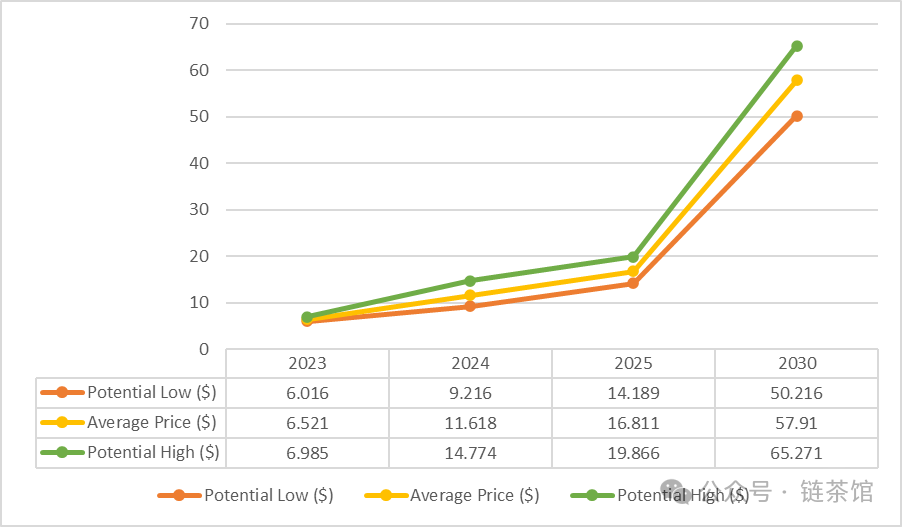
-
By the end of 2024, LPT’s price may reach a high of $14.774, attracting more blockchain investors.
-
LPT Price Prediction for 2025: The live video streaming market is rapidly evolving. The Livepeer team aims to leverage this trend to promote decentralization across the system. With major updates and new features, LPT’s price could reach $19.866 by 2025. If the token avoids significant volatility, the average trading price might be around $16.811. However, if bears dominate, prices could fall to $14.189.
-
Livepeer 2026 Price Prediction: According to analysts, LPT’s price in 2026 may range between $18.25 and $25.66, with an average around $21.87.
-
LPT Price Prediction for 2027: Analysts predict Livepeer’s 2027 price range between $23.94 and $31.10, with an average around $27.31.
-
Livepeer 2028 Forecast: Analysts estimate the LPT crypto forecast range for 2028 between $35.26 and $47.86, with an average token price around $41.61.
-
LPT Token Price Prediction for 2029: Analysts suggest Livepeer’s 2029 forecast may range from $42.16 to $55.18, with an average LPT price around $48.01.
-
Livepeer 2030 Price Prediction: Analysts predict LPT’s 2030 forecast between $50.21 and $65.27, with an average price around $57.91.
Project Summary
The Livepeer project represents an innovative integration of video streaming and blockchain technology. By leveraging blockchain’s decentralization and incentive mechanisms, it seeks to transform traditional video streaming—reducing costs, improving quality, and enhancing privacy. Despite facing challenges from competition, regulation, and technology, as blockchain matures and demand for decentralized services grows, Livepeer has the potential to disrupt the video streaming industry. Moving forward, Livepeer must continue innovating, expand its use cases, and ensure network stability and security to realize its vision in decentralized video services.
Join TechFlow official community to stay tuned
Telegram:https://t.me/TechFlowDaily
X (Twitter):https://x.com/TechFlowPost
X (Twitter) EN:https://x.com/BlockFlow_News