









Bitcoin in distress, miner and exchange reserves hit new lows
TechFlow Selected TechFlow Selected
Bitcoin in distress, miner and exchange reserves hit new lows
Despite low reserves and selling pressure in the Bitcoin market, its dominant position on the blockchain and low sell-side pressure suggest prices may be nearing a bottom, offering long-term holders reason for optimism.
 Navigating Web3 tides with focused insights
Author: BITCOIN MAGAZINE PRO AND LANDO
Translation: Baihua Blockchain
With Bitcoin's price stagnating and declining, miners and exchanges are holding near-record low reserves—an observation that may offer critical insight into Bitcoin’s current state.
By all appearances, we should now be on the verge of a bull market. Bitcoin’s price has hovered between $60,000 and $70,000 for months, with $70,000 sitting just below its all-time high of $73,000. In theory, the community should be thrilled to sustain such elevated levels for so long—especially since previous record-breaking rallies saw sharp declines within three months. Yet despite this impressive stability, sentiment within the Bitcoin community remains subdued. While there are compelling reasons to believe a bull run could be imminent, the fear of an impending market collapse persists. Why is this? And how can a rational Bitcoin investor discern meaningful signals amid such conflicting narratives?
An interesting pair of data points lies in the Bitcoin reserves held by companies across related industries. For instance, exchange-held Bitcoin reserves are currently at their lowest level in three years. This single metric alone invites multiple interpretations—but it becomes especially significant when compared to another: miner-held reserves are now at their lowest point in fourteen years! These two figures stem from different forces operating within a turbulent market, making the actual implications far more complex than they first appear. Indeed, the 11-year gap between these respective lows provides crucial context for understanding the current market dynamics.
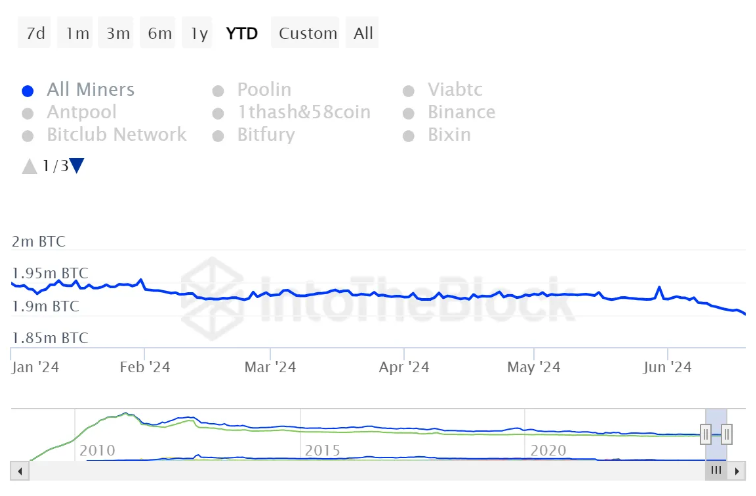
First, the miners’ striking data is best understood in the context of the post-halving environment. Following the 2024 halving, mining firms face unique challenges, particularly in the ETF era. Miners typically struggle for months after each halving before higher prices arrive—but in this cycle, prices peaked shortly *before* the halving event. As a result, many companies were forced to accelerate their usual plans for upgrading equipment, consolidating capital, and finding new revenue streams. Current hash rate data suggests we are now in a phase of miner capitulation. Under these conditions, even strong operators are under broad industry-wide pressure, leading miners to sell at a pace faster than during any previous halving over the past 14 years.
These sales are necessary for many mining firms to maintain basic operations, but they also create ripple effects across the Bitcoin ecosystem. Large holders—“whales”—dumping assets at an aggressive pace have been blamed for Bitcoin’s sluggish performance, yet this narrative often overlooks the fact that many of these whales are actually miners. In other words, the industry’s self-preservation measures combine with opportunistic behavior from other large accounts, creating a story that could undermine confidence in Bitcoin. This is precisely where exchange reserves become important.
While miner reserves are low due to industry hardship, exchange reserves reflect a completely different kind of selling pressure. In fact, low exchange reserves are a clear signal that overall selling pressure on Bitcoin is actually decreasing. After all, if everyone were selling, how could exchanges possibly run low on Bitcoin? Who is buying these assets? Conversely, low exchange reserves indicate a period of intense accumulation—even if it remains unclear exactly who is doing the buying. ETFs themselves may account for part of this activity, but much of the trading occurs among individual investors.
Small traders have emerged as pivotal players in this price phase, as psychological factors may represent the most significant real-world barrier to sustained price growth. To be sure, recent fundamental economic indicators are actually encouraging. However, various motivations behind mass buying or selling decisions may include some disheartening ones. For example, Bitcoin has traded below the $70,000 mark for nearly two weeks, leading to a surge in short positions betting on continued downward movement. From one perspective, if Bitcoin breaks above this level, all sides could profit—but if it does happen, a staggering $1.67 billion in short positions would vanish overnight. These collective bets against Bitcoin exert tangible pressure on the ecosystem, and supporters must find ways to overcome them.
Unfortunately, while bearish wagers hope for further price declines, bullish bets have struggled. New data from the Chicago Mercantile Exchange (CME) shows that newly launched ETFs have almost entirely driven the resurgence in Bitcoin futures arbitrage and basis trading. Specifically, according to data released on June 20, CME’s Bitcoin futures market has grown 80% since ETF approval, with the ETFs themselves serving as valuable instruments for such trades. However, ETF outflows have been severe this week, with five consecutive days of net outflows totaling approximately $900 million. This loss is hardly encouraging for Bitcoin buyers, and the situation was worsened by Germany’s quiet sale of $325 million worth of seized Bitcoin, further eroding market confidence.
Despite these numerous negative signs, there are still many positive developments in the market. For example, Bitcoin has finally regained dominance over its own blockchain, with regular BTC transactions accounting for over 90% of on-chain activity for the first time in months. Previously, protocols like Ordinals and Runes caused severe network congestion, but standard Bitcoin transfers now far exceed those from such protocols. Additionally, analysts have identified several indicators suggesting Bitcoin may be nearing a price bottom, with low exchange reserves strongly implying reduced selling pressure. These factors may seem minor at first glance, but Bitcoin’s potential rebound is no accident.
Overall, predicting the exact price trajectory over the coming days or weeks remains difficult. The key takeaway from low reserves is this: while miners have contributed to selling pressure, that pressure is finally beginning to ease. Even as the German government unexpectedly dumped a large amount of Bitcoin into the market, prevailing sentiment indicates that traders are quietly accumulating. One way or another, Bitcoin will endure—and it’s important to remember that we’ve already broken a record. Never before has the price remained this close to its all-time highs for so long after a major rally. Another surge could be just around the corner. For Bitcoin, we remain long-term holders.
Join TechFlow official community to stay tuned
Telegram:https://t.me/TechFlowDaily
X (Twitter):https://x.com/TechFlowPost
X (Twitter) EN:https://x.com/BlockFlow_News
 @BitcoinMagazine









