How should the gaps in creation and operation be filled in a crypto art market that only focuses on sales?
TechFlow Selected TechFlow Selected
How should the gaps in creation and operation be filled in a crypto art market that only focuses on sales?
Discussing innovative practices and future prospects of crypto art with the Black Void team.
 Navigating Web3 tides with focused insights
Interviewer: Beichen
Guest: Cai Yixuan
「Whistle」previously published an article titled “The Money Game, Social Currency, and the Culture Industry — Tracing How Meme Coins Distorted the NFT Collectibles Market”, arguing that most participants (from VCs to project teams to consumers) understand the NFT collectibles market merely as a money game or social currency, leading them to misappropriate cultural artifacts as art. In such a superficially driven NFT market, most projects are temporary illegal structures—now is the time to discuss post-disaster reconstruction!
We invited Cai Yixuan, lead of the tech-art collective Black Void, to explore from a contemporary art perspective the possibilities blockchain technology brings to art (far beyond mere asset issuance), how the art market should function (certainly not just pump-and-dump schemes), and other topics, correcting many prevailing misconceptions and offering insights into the future trajectory of the crypto art market.
1. Beichen: It seems difficult to define Black Void. As a tech-art team composed of creators from multiple disciplines, what inspired its founding?
Cai Yixuan: I think there were two catalysts—one technological, the other thematic.
Black Void is an art-science collective that uses technologies like blockchain and AI. Around two or three years ago, these technologies triggered a digital art explosion—NFTs offered a way to authenticate digital media and revealed significant financial returns, while AI enhanced productivity and created new modes of image and video generation.
As an architect and curator, I’ve long focused on ecological themes. At CAFA (Central Academy of Fine Arts), I taught a course called “Post-Carbon Futures,” rethinking design through the lens of carbon. I also curated “Vibrating Cloud Layers” at Design Society Shenzhen, exploring atmospheric architecture formed by the interplay of nature and infrastructure—how industrial production injects massive particulates into the sky, transforming atmosphere from natural to artificial.
At that moment, the rise of digital technologies like NFTs and AI allowed us to engage ecologically through digital means and express these ideas artistically. So I brought together friends—algorithm engineers, data scientists—and we quickly launched Twin Cloud (core team members now include Xiao Yuhan, Miao Xinrong, Hong Yun, etc.).
So whether in terms of theme or medium, Black Void emerged precisely two years ago.
2. Beichen: Let’s dive into Black Void’s two current works. Twin Cloud touches on climate issues, generative art, Bitcoin greening, and DePIN. How do these elements form a cohesive artistic expression?
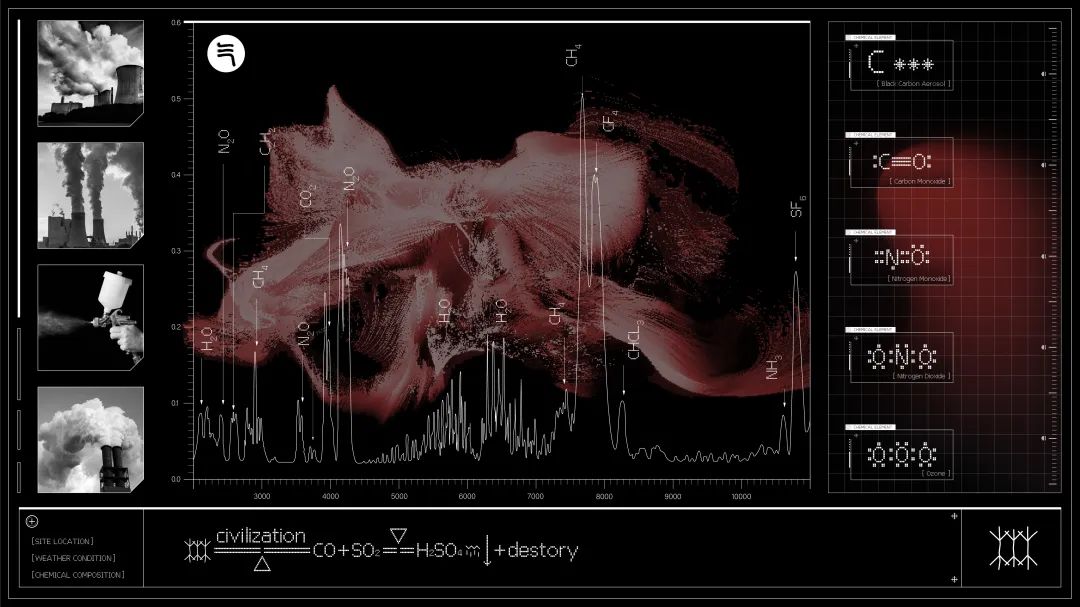
Cai Yixuan: Twin Cloud (Atmospheric Alchemy) is a meteorological-data-driven generative artwork. Clouds mirror ground activity—chemical particles and aerosols from terrestrial events linger in the atmosphere even after the event ends. So we decided to depict each city's clouds through atmospheric chemistry, effectively creating a climatic identity for every city.
Using data from the Copernicus Earth observation satellite system, we extracted meteorological data from over 300 cities worldwide—16 dimensions including greenhouse gases, particulate pollutants, temperature, humidity, and geographic location. We then visualized this data, enhancing its aesthetic qualities, resulting in the digital clouds you see. Each cloud has unique colors, saturation levels, and motion patterns, representing a specific day’s weather in a given city.
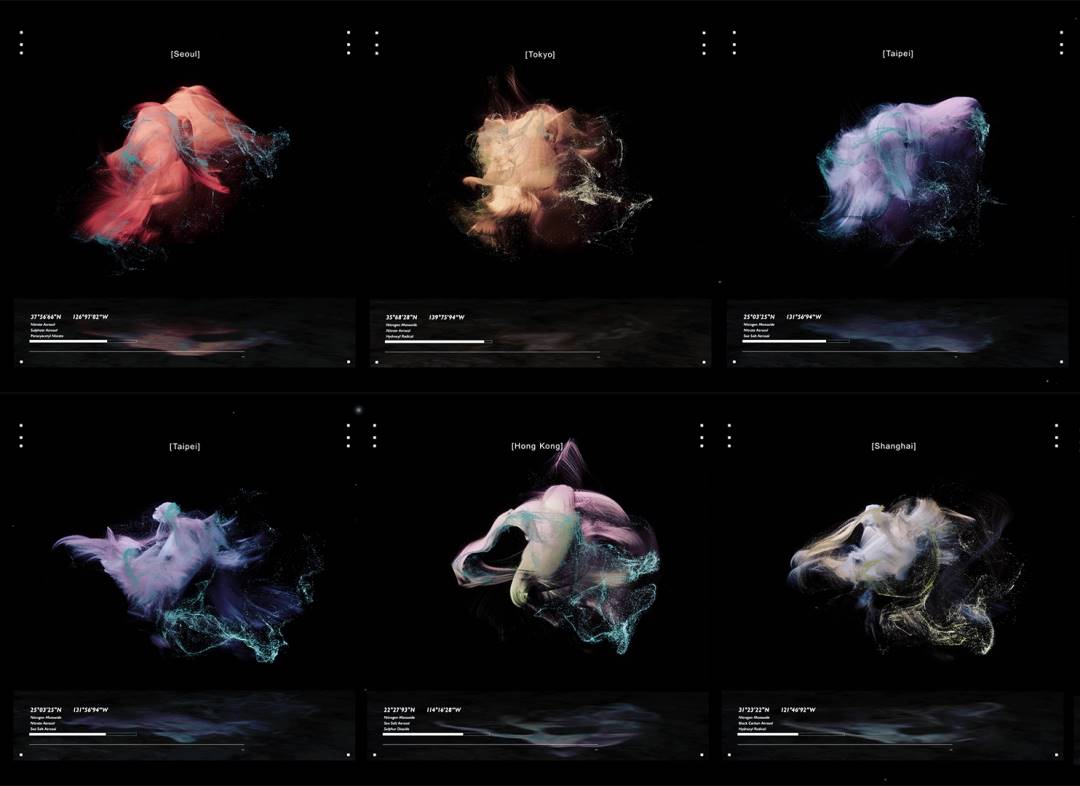
Since digital clouds map directly to cities, they’re ideal for an NFT series. We released a generative art collection of 999 NFTs—sold out within 60 seconds of whitelist minting, topping OpenSea’s trending charts that night. Since then, we’ve done immersive exhibitions, cross-industry collaborations with sustainable brands, and public art projects.
3. Beichen: So Twin Cloud isn’t a finished work but an ongoing independent project, expected to integrate more resources in the future?
Cai Yixuan: Yes, Black Void remains fundamentally an artist collective—we use art to connect projects and enterprises across fields, leveraging art’s emotional resonance to inspire broader action.
During Hong Kong Web3 Festival this past April, we held an exhibition titled “Byte, Block, Black Void,” featuring two special editions: Twin Cloud Hong Kong, showing Hong Kong’s evolving climate over seven years, and Twin Cloud Bitcoin—a “cloud” reflecting Bitcoin network’s carbon footprint.
The Bitcoin network is akin to a decentralized nation or city. Using carbon emission data from the Cambridge Centre for Alternative Finance’s Blockchain Sustainability Indicator (CBNSI), we mapped Bitcoin’s carbon emissions since 2009, including power sources (fossil vs. renewable) and energy intensity.
We’ve also experimented linking Twin Cloud to carbon credits, partnering with DePIN project Arkreen to record GreenBTC.Club’s clean energy contributions toward offsetting Bitcoin’s emissions. For every ART unit: 1000 kWh of green electricity used = 0.5 tons of CO₂ offset. This is a concrete step toward greening Bitcoin. We hope Twin Cloud Bitcoin sets a precedent—linking art assets with alternative assets—with plans for future public art installations.
4. Beichen: Biosphere 3, simulating fungal migration to Mars, spans interstellar species, digital life generation systems, and 3D printing. What role does RWA play here?
Cai Yixuan: RWA is simply one way Biosphere 3 links art with alternative assets—enabling collectors to receive both the NFT and a 3D-printed physical sculpture.
Biosphere 3 is a scientific hypothesis, simulating how fungi might evolve into diverse forms upon arrival on Mars. Environmental conditions on Mars—temperature, pressure, radiation, gravity—trigger morphological and luminescent changes in mushrooms. These organisms can communicate via light signals, bioelectric impulses, magnetic sensing, forming novel Martian fungal species.
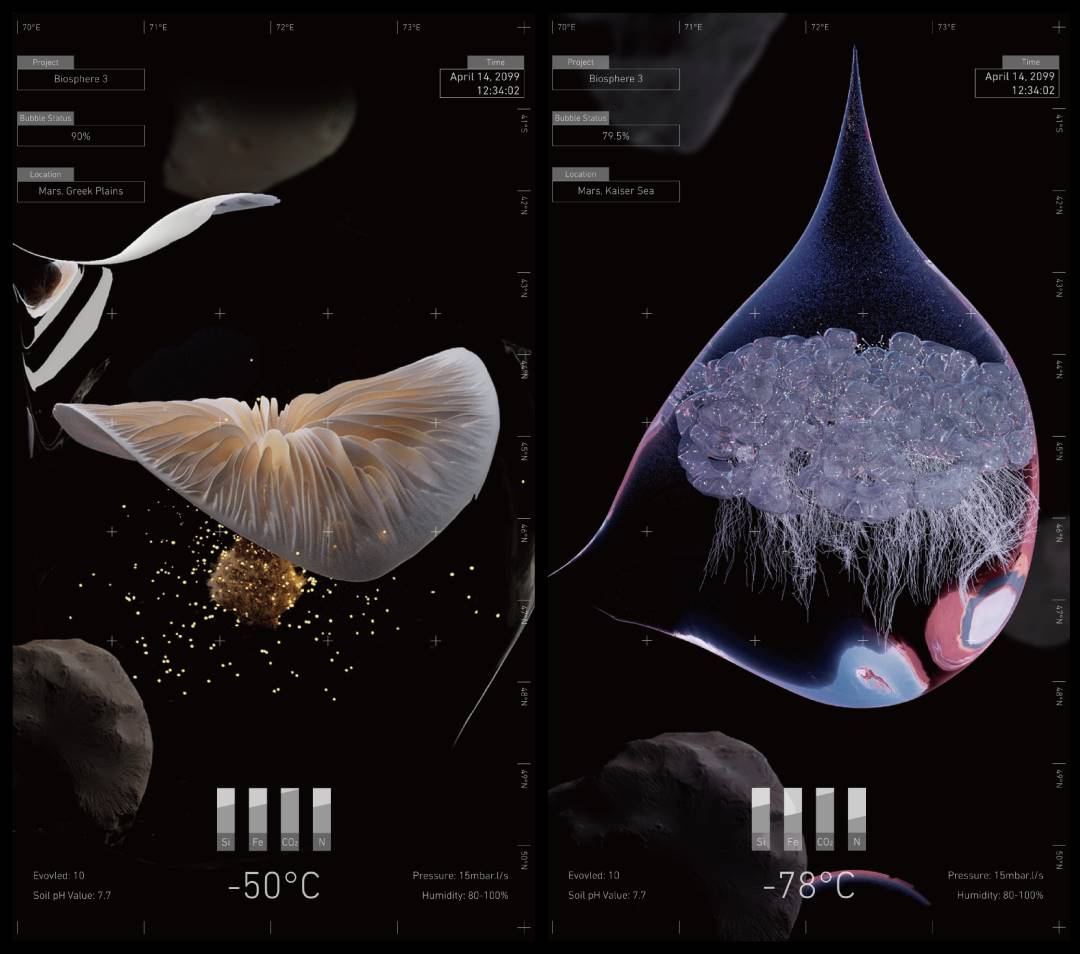
As a digital biological simulation system, Biosphere 3 is grounded in science, though it includes speculative elements. The premise deconstructs humanity’s colonial mindset in space exploration. Within this imagined world, countless non-human lifeforms develop unique communication, feeding, and reproduction strategies—expanding our understanding beyond anthropocentrism.
Biosphere 3 is designed to run infinitely, continually generating new life, though artistically it will be issued in limited editions.
5. Beichen: Is Black Void’s audience primarily from traditional art circles, or more from the Web3 space?
Cai Yixuan: The NFT audience is overwhelmingly from Web3, especially internationally. Brand collaborations and public projects reach broader, more general audiences.
6. Beichen: In earlier years, crypto art mostly involved issuing digital artworks as NFTs. Black Void’s works go much deeper into crypto. Can you elaborate on crypto’s role—or rather, blockchain’s role—in your work? What does it bring to art?
Cai Yixuan: Rather than “crypto,” it’s more accurate to say blockchain technology.
First, at the asset level: Artworks as assets can interact or bind with other assets via blockchain technology. Our integration of Twin Cloud with carbon credits is just one example—this opens many avenues for further development.
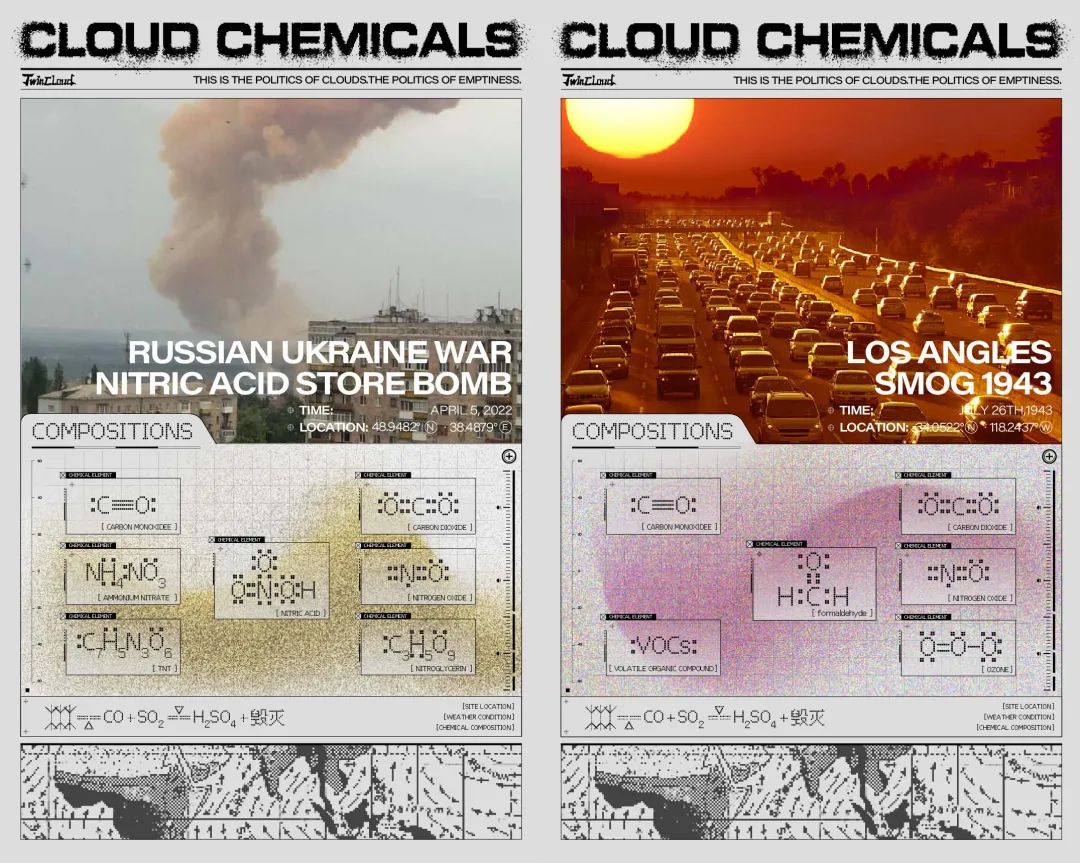
Second, at the creative level: Blockchain’s immutability allows permanent on-chain records—critical because humans tend to forget. Climate change is often denied, even after extreme weather or war-related pollution. Once skies clear, memory fades. The 999 Twin Cloud NFTs serve as on-chain records of recent climate events. During our data analysis, we paid particular attention to clouds during major events like the Russia-Ukraine war or Amazon fires.
Additionally, collectors participate in shaping the artwork when minting, and the work evolves based on their engagement—binding art closely to collectors and community. A good example is dynamic NFTs on OG.Art, where each transaction alters the crystal’s form—essentially incorporating user data into generative art.
7. Beichen: Indeed, crypto art enables new forms of creation, not just asset issuance. Beyond recording, what else does blockchain bring to the creative process?
Cai Yixuan: Artists using blockchain create new narrative forms—I prefer calling these works “crypto art” because blockchain’s application goes far beyond NFTs.
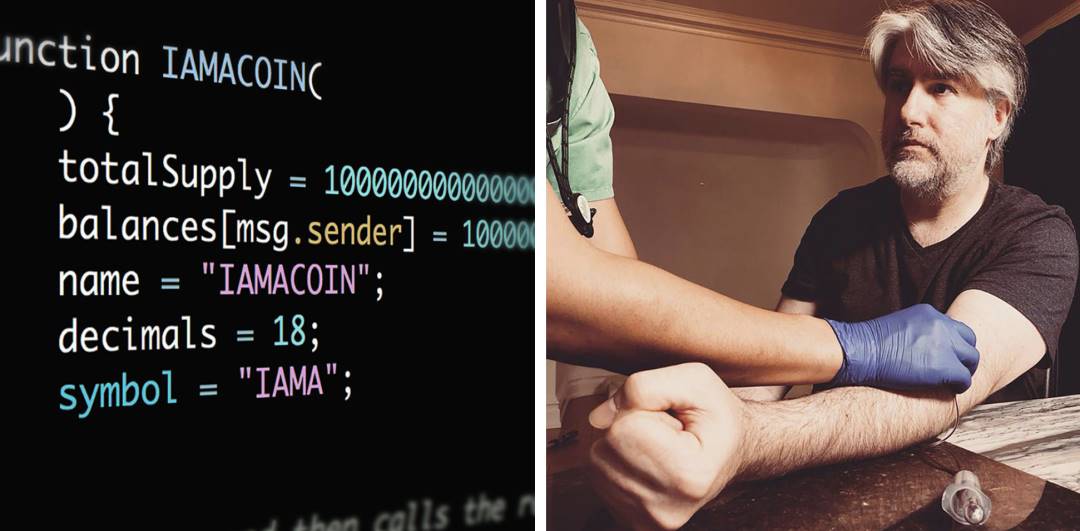
One work I admire is Kevin Abosch’s “I am a coin” (2018), where drops of his blood were tokenized on-chain, embedding cryptocurrency addresses into biological matter, challenging definitions of personhood and value. Here, blockchain becomes a medium to explore fundamental questions about money, value, and humanity.
Black Void focuses on hybrid ecologies—the entanglement of nature and technology forming a new world, where life itself transforms. AI, Bitcoin, any automated entity, becomes a node in this decentralized digital network.
Ralph Merkle once described Bitcoin as a new lifeform—it breathes, consumes energy, replicates across the internet, much like cells metabolizing and DNA copying. The values, trust, and meanings behind blockchain are all fertile ground for crypto art.
8. Beichen: Does this give rise to a new art field—crypto art? Though currently, it doesn’t seem to have coalesced into a distinct artistic style.
Cai Yixuan: The term “crypto art” lacks a clear definition. Broadly, any on-chain work qualifies. But personally, I believe only works that critically employ blockchain technology—such as smart contracts—as an essential medium truly qualify as crypto art.
Such works face valuation challenges. The traditional art market has established methods for appraisal, appreciation, and preservation. In crypto, however, value anchoring, collector stability, and platform longevity remain problematic—NFT values plummet with market swings, and many crypto art platforms have already disappeared.
Yet artists who began crypto art in the past three years were often already digital or new media artists. Such works, as collectibles or public installations, have existed for decades. Following the trajectory of digital art, we can trace the evolution and value systems of these works—crypto art is part of that lineage, albeit with unique operational dynamics due to its tight coupling with Web3 trading markets.
9. Beichen: Then specifically, what are these unique operational methods of crypto art collectibles?
Cai Yixuan: It depends on the case.
For large-scale series, operations resemble Web3 asset management and community governance—maintaining community consensus is key, along with continuous innovation. Still, they’re inevitably affected by overall market trends.
For limited-edition pieces (say, only 20 copies), circulation follows traditional art logic—where it’s exhibited, what recognition it receives (awards, critical reviews), which collectors own it—all affect value.
10. Beichen: Could you expand on how an artwork’s value system is structured? Today’s NFT collectibles market generally lacks this dimension.
Cai Yixuan: This comes down to who determines an artwork’s value. In the art world, there’s a well-established academic evaluation system and market infrastructure for assessing value.
First, academic depth and authoritative endorsement from within the art establishment—participation in international exhibitions, acquisition by major museums, scholarly research—all contribute to academic value. Black Void’s works have won the PacificVis 2023 Data Narrative Grand Prize, been exhibited at Venice Arsenale, Power Station of Art Shanghai, Guardian Art Center, and recently Twin Cloud was shortlisted for the 14th National Fine Arts Exhibition, China’s most prestigious quinquennial art showcase.
With academic credibility, artworks gain traction in the market and attract cross-industry brand partnerships. Black Void has collaborated with L'Oréal, Tencent SSV, Genesis, Polestar—sustainable brands—on public and charitable initiatives.
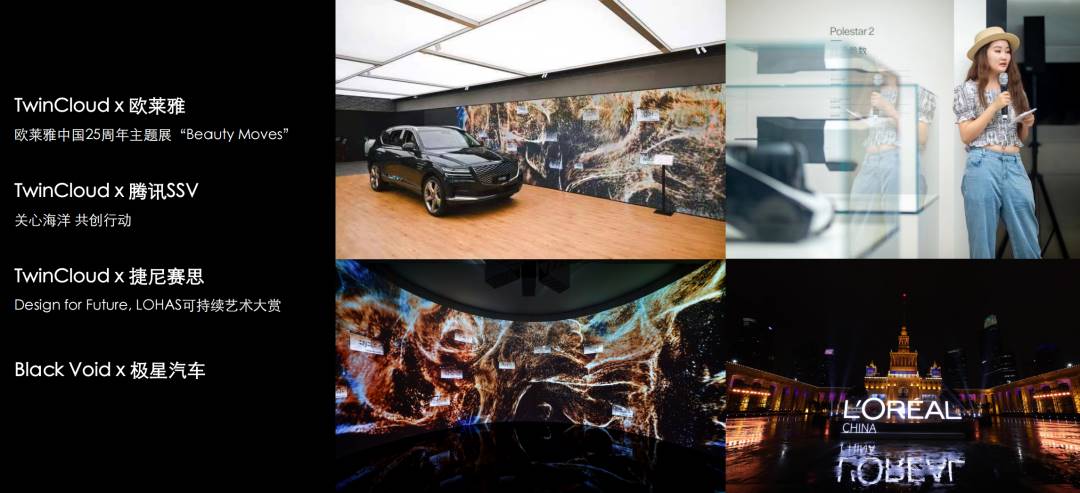
We aim to help establish a value framework for Web3’s digital art market, which currently lacks systematic evaluation and long-term planning—leading to unstable valuations.
We believe an artwork’s value stems from four dimensions: First, artistic merit—its aesthetic quality and cultural depth. Second, innovation in blockchain application and integration with Web3 ecosystems. Third, public relevance—Twin Cloud’s clouds represent urban climate identities; future installations could become cultural landmarks or tools for citizens to understand their environment. Community consensus in Web3 is also a form of publicness. Fourth, market value—distinct from traditional art, but must be grounded in the first three pillars.
11. Beichen: Excellent answer—it resolves a question from two years ago, when many NFT platforms thought they could replace galleries. Most have since vanished. Your response clearly refutes that idea: lacking academic validation and long-term artist development, their works had no foundation. Could you elaborate on balancing commercial value and artistic integrity? For instance, how do you approach brand collaborations?
Cai Yixuan: We don’t create service-oriented works solely for brands. Instead, we maintain our artistic voice while collaborating. Brands actually want artists to retain a consistent style—that’s what lends cultural authenticity. In turn, brands validate the artist commercially.
12. Beichen: Both of Black Void’s works address pressing real-world issues. But how does art ultimately intervene in cutting-edge technological and lifestyle transformations?
Cai Yixuan: Artworks aren’t functional products. Art’s role in changing the world is primarily intellectual and spiritual.
Art engages frontier issues in two ways. First, art reaches the public emotionally, amplifying the work of scientists and enterprises—while those issues deepen the work’s relevance. Second, art poses speculative questions, sparking public reflection and debate.
Take Biosphere 3—it imagines alien life mechanisms: perhaps entities composed of matter, information, and energy, entirely unlike Earth life. It offers a scientifically informed yet poetic glimpse into Martian species, raising questions about non-human life and space colonization.
13. Beichen: How does Black Void achieve cross-disciplinary collaboration during creation? This could inspire others in Web3, especially those working remotely across fields.
Cai Yixuan: We sometimes work together in-studio, but mostly online. The key is working with the right people—they naturally coalesce into a shared methodology. It’s an organic process.
But you need a clear creative vision—the core concept driving the work—before integrating various technologies. Twin Cloud is climate-data-driven generative art; Biosphere 3 is a parametric system generating digital life. Starting from these foundations, we layer in carbon credits, 3D printing—a gradual expansion.
14. Beichen: Understood—requires a central coordinator with clarity. Finally, what are Black Void’s future directions, and what challenges lie ahead in merging art and technology?
Cai Yixuan: Black Void is a cross-disciplinary art-science collective. We’ll continue exploring hybrid ecologies and deepen collaborations with tech enterprises.
Intelligent lifeforms formed by merging natural biology with information technology (like smart contracts, AI) operate fundamentally differently from human carbon-based life. Here, ecology, energy, even the meaning of life transform. Ecology shifts from being sustained by light, water, soil to a fusion of natural elements and technical infrastructure. Energy transitions from fossil fuels to computational power and data. We aim to reinterpret hybrid ecologies through art.
Challenges exist on both technical and sustainability fronts—after all, we’re pioneering uncharted artistic territory. We’re constantly exploring new partnership models, having worked with Copernicus, ECMWF, Bitcoin greening initiatives, decentralized solar networks, and Web3 carbon credit projects. We plan to expand to more corporations, NGOs, and scientific institutions.
We also hope to contribute a value assessment framework to Web3’s digital art scene. Currently, crypto art lacks a systematic evaluation model and long-term operation—leading to volatile values. We believe crypto art value comprises artistic merit (academic rigor), technological innovation, public impact, and market value—hence our activities span art, science, and Web3 domains.
Join TechFlow official community to stay tuned
Telegram:https://t.me/TechFlowDaily
X (Twitter):https://x.com/TechFlowPost
X (Twitter) EN:https://x.com/BlockFlow_News