The era of premium account interaction has arrived—what's the optimal solution for Scroll?
TechFlow Selected TechFlow Selected
The era of premium account interaction has arrived—what's the optimal solution for Scroll?
Covers Scroll basics, latest points campaigns and costs, and interaction opportunities with top protocols.
 Navigating Web3 tides with focused insights
Author: Nan Zhi, Odaily Planet Daily
The three major airdrop kings of 2023—Starknet, ZKsync, and LayerZero—have all concluded. Remaining large-scale public chain airdrop opportunities are limited, and market attention is now primarily focused on Monad, Scroll, Linea, and Berachain (as well as the upcoming Blast).
This article by Odaily will introduce Scroll’s fundamentals, its latest points campaign, associated costs, and interaction opportunities with top-tier protocols.
Before diving into specifics, users with less interaction experience should understand a key recent trend—account refinement, or what could be called greater emphasis on capital per address. Most new projects have adopted capital-based scoring systems, and rules like ZKsync’s capital staking requirements reflect this shift. The era of earning airdrops through low-cost transactions and monthly active accounts is essentially over. In Scroll’s latest points campaign, capital amount has become the most critical factor. Therefore, the author recommends prioritizing high-quality accounts in your interaction strategy.
Scroll Overview
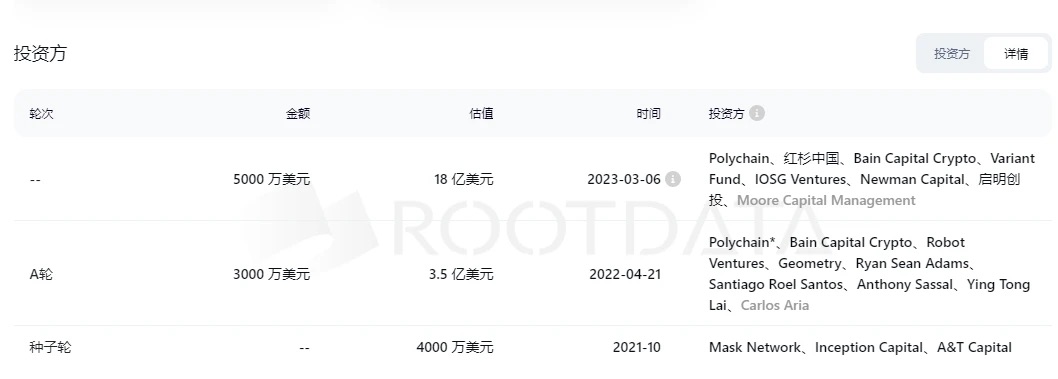
Scroll is a native zkEVM Layer 2 solution for Ethereum, offering native compatibility with existing Ethereum applications and tools. Scroll has completed three funding rounds, with the last one in March 2023 raising $50 million, backed by Polychain and Sequoia China, among others.
For reference: ZKsync’s final round raised $200 million; LayerZero raised $120 million in its last round with a $3 billion valuation; Starknet raised $100 million in its final round, valued at $8 billion.
Cross-Chain Fund Transfers
Whether to use the official bridge was a consideration in past Layer 2 airdrops, so it's recommended under a premium account strategy to perform at least one cross-chain via the official bridge.
With the median Ethereum mainnet gas price at 4.3 gwei, actual costs across different paths are as follows:
-
Withdrawing ETH from Binance to Ethereum mainnet costs 5 USDT; withdrawing to L2s like Arbitrum costs about 0.1 USDT;
-
Withdrawing ETH from OKX to Ethereum mainnet costs 1.38 USDT; withdrawing to L2s like Arbitrum costs about 0.2 USDT;
-
Official bridge cost: 1.8 USDT;
-
Using Stargate to bridge from L2 to Ethereum mainnet: 1.35 USDT in gas + 0.025% bridge fee;
-
Using Orbiter to bridge from L2 to Ethereum mainnet: 1.35 USDT in gas + 0.05% bridge fee;
-
Using Stargate to bridge from L2 to Scroll: 0.25 USDT in gas + 0.025% bridge fee;
Therefore, cross-chain strategies vary based on the original location of funds:
-
If funds are held on OKX, withdraw directly to the mainnet, then use the official bridge;
-
If funds are on Binance, transfer them to OKX first, then follow the above steps, rather than bridging from Binance to an L2 and then to the mainnet;
-
If funds are already on-chain, use Stargate’s Economy mode, which takes about 4 minutes to bridge to the mainnet.
Scroll Sessions
Scroll Session One is the second loyalty program launched by Scroll on June 22, 2024. According to the official announcement, this initiative aims to reward community members who actively participate in the Scroll ecosystem through Scroll Marks (referred to as points in this article).
Base Points – Deposited Assets
In April, Scroll ran Session Zero, during which users could earn points by bridging ETH and wstETH via the native bridge or STONE via LayerZero.
Under Session One, users earn points daily based on their asset balance after transferring any eligible asset to Scroll via any bridge. Eligible assets include ETH, wstETH, STONE, USDC, USDT, wrsETH, and various Tranchess protocol assets. Users can follow the cross-chain paths outlined in the previous section.
Bonus Points – Designated DEXs / Lending Protocols
Providing liquidity on designated DEXs or borrowing/lending on approved lending protocols earns bonus points.
There are six qualified DEXs: Ambient Finance, Nuri, Izumi Finance, Syncswap, Oku Trade, and Zebra;
Six qualified lending protocols: Aave, Rho Markets, LayerBank, Cog Finance, Compound, and Synonym. Note that a single borrowing action qualifies for full bonus points—repeated borrowing does not increase scores. Simply depositing and borrowing assets and leaving them in the wallet suffices to earn bonus points.
The launch of Scroll Sessions means that Scroll interactions now follow a capital-based points model. Due to the linear allocation of points, the strategy further favors premium accounts.
Top Protocols
In previous Layer 2 airdrops, the number of interactions with different contracts was also a significant factor. Although Scroll has introduced a points system, it still involves multiple protocols. It is advisable to interact with several protocols and tokens beyond just earning points, in case future airdrop rules require broader engagement.
This section introduces several leading projects. Besides these, users may choose other Session One projects listed by Scroll. Notably, the ZKsync network previously experienced numerous incidents involving top projects being hacked or rug-pulled, so users must pay extra attention to protocol security.
Tranchess
Tranchess is a yield derivatives protocol similar to Pendle, allowing interest-bearing tokens to be split into yield and principal tranches. It currently supports STONE, SolvBTC, and ETH, with nearly $300 million in TVL.
Four Tranchess assets—turPSTONE, staYSTONE, stoneQUEEN, and staYSTONE-STONE—are eligible for Scroll points.
(Odaily note: Tranchess’s native token CHESS was listed on Binance in 2021 and is one of the few spot-listed tokens without futures trading. Its security is relatively assured.)
Pencils Protocol
Pencils Protocol ranks second in TVL on Scroll and offers multiple features. For now, users can focus solely on its Stake module, which allows staking WETH, USDT, USDC, and other tokens to earn both protocol points and yield.
However, note that Pencils’ staking service is not included in the Session One bonus points list.
Ambient
Ambient is currently the DEX with the highest TVL on Scroll and is included in the Session One bonus points list. Ambient supports both AMM and Perp trading. Providing liquidity here earns not only Session One bonus points but also the protocol’s own points.
Aave
Aave is a veteran lending protocol from Ethereum, requiring no extensive introduction. Borrowing on Aave earns Session One bonus points and offers the best security. However, supply limits exist on Scroll—deposits are currently unavailable due to hitting the cap. Aave will periodically raise these limits.
Conclusion
Beyond the dominant trend of capital staking and Scroll’s adoption of a points model, users must also pay close attention to Scroll’s high gas fees. Even with a mainnet gas price of 4 gwei, each interaction costs around 0.25 USDT. Low-capital accounts not only fail to accumulate sufficient Scroll Marks but are also quickly drained of ETH by frequent high gas costs. The era of premium accounts is firmly upon us.
Join TechFlow official community to stay tuned
Telegram:https://t.me/TechFlowDaily
X (Twitter):https://x.com/TechFlowPost
X (Twitter) EN:https://x.com/BlockFlow_News
 Odaily