The New Narrative of Decentralized Computing: Will Quilibrium Be the Next ICP?
TechFlow Selected TechFlow Selected
The New Narrative of Decentralized Computing: Will Quilibrium Be the Next ICP?
Quilibrium attempts to find a "balance" between the computational power of the traditional internet and blockchain's decentralization, designing a unique decentralized cloud computing architecture for this purpose.
 Navigating Web3 tides with focused insights
Author: Lydia Wu
Disclosure: Since Quilibrium’s mainnet has not yet launched and publicly available information remains limited, descriptions in this article regarding incentive mechanisms, economic models, funding history, and roadmap are based solely on the current point in time and may change in the future. This report is intended for research and educational purposes only and should not be taken as investment advice. Feedback and critique from industry peers are welcome.
1. Key Takeaways
1.1 Core Investment Thesis
-
Quilibrium attempts to strike a "balance" between traditional internet computing power and blockchain decentralization by designing a unique decentralized cloud computing architecture.
-
Quilibrium has built an operating system based on databases, offering a developer experience closer to traditional software, which could attract more conventional software developers and enable current Web3 developers to build more complex crypto applications.
-
Quilibrium emphasizes security and privacy, making it highly appealing to enterprises that wish to use cryptographic technologies without exposing sensitive data. For individual users, Farcaster’s initial breakout success also demonstrates the long-term potential of decentralized applications in user acquisition and revenue generation.
-
Founder and CEO Cassie Heart is a former senior engineer at Coinbase and a Farcaster developer, leading a team with extensive experience, consistent delivery capabilities, and a distinct identity.
1.2 Key Risks
-
The project is in a very early stage, with no mainnet launch yet. Given its high complexity, technical feasibility and market demand remain unproven.
-
In the short term, it may face competition from the better-known Arweave AO in terms of developer mindshare and adoption.
-
There is no fixed token model, and the token emission rate may fluctuate, adding uncertainty for investors.
1.3 Valuation
Given Quilibrium’s early development stage, we cannot provide an accurate valuation at this time. However, judging by circulating and fully diluted market cap compared to conceptually similar projects, Quilibrium currently presents a relatively attractive valuation.
2. Business Analysis
Quilibrium defines itself as a “decentralized internet layer protocol providing the convenience of cloud computing without sacrificing privacy or scalability,” as well as a “decentralized PaaS solution.” To explore this positioning, this section will address the following questions:
-
What are the problems with traditional cloud computing?
-
Why do we need another decentralized computer?
-
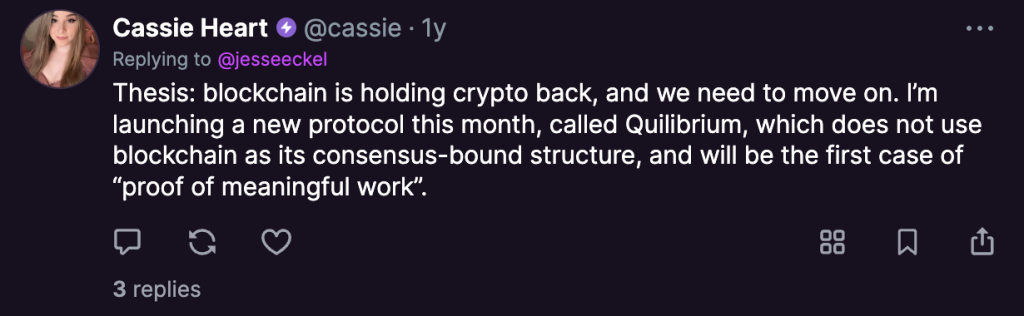
How does Quilibrium differ from mainstream blockchain designs?
Source: Cassie Heart’s Farcaster account
2.1 Business Positioning
2.1.1 Starting from Computation
Computation is a critical concept in both Web2 and Web3, serving as the driving force behind application development, execution, and scaling.
In traditional internet architecture, computational tasks are typically performed by centralized servers. The emergence of cloud computing has improved scalability, accessibility, and cost efficiency, gradually replacing traditional computing as the dominant model.
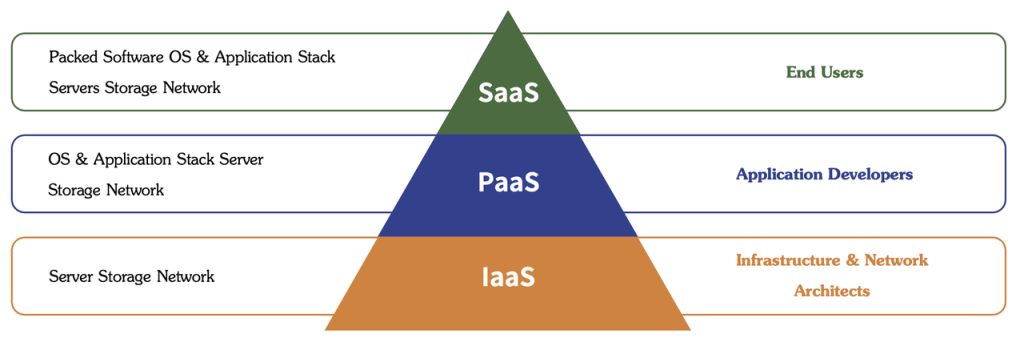
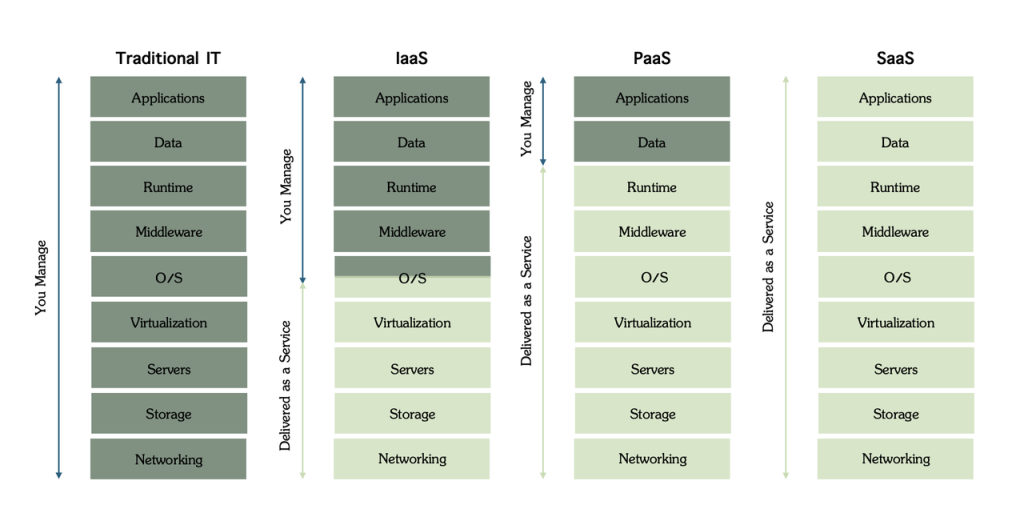
From a service perspective, major cloud providers generally offer three service models: Infrastructure-as-a-Service (IaaS), Platform-as-a-Service (PaaS), and Software-as-a-Service (SaaS). These cater to entities with varying needs and capabilities, offering different levels of control over resources. End users are most familiar with SaaS, while PaaS and IaaS primarily serve developers.
Source: Lydia @ Mint Ventures
Source: S2 Lab, Lydia @ Mint Ventures
In mainstream blockchains like Ethereum, computation is performed by decentralized nodes. This approach avoids reliance on centrally controlled servers—each node executes computations locally and uses consensus mechanisms to ensure data correctness and consistency. However, decentralized computing generally lags behind traditional cloud services in processing power and speed.
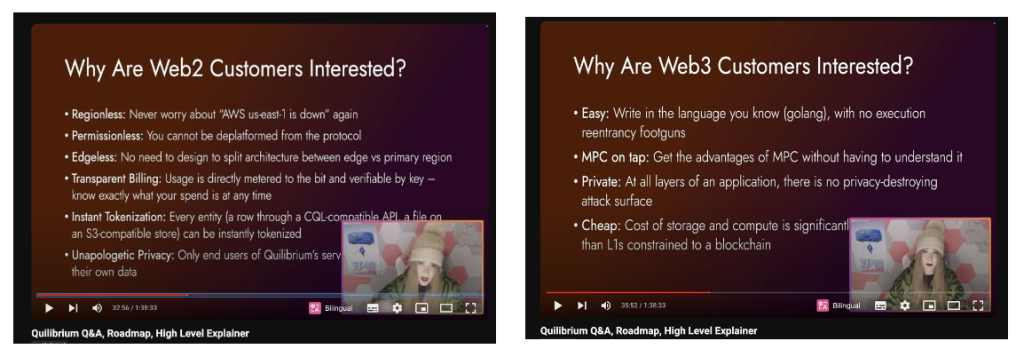
Quilibrium aims to find a “balance” between the computing power and scalability of traditional internet infrastructure and the decentralization of blockchains, opening new possibilities for application development.
Source: Cassie Heart’s livestream recording
2.1.2 Centralization Issues in Computing Systems
For most end users, centralization issues in computing systems are not easily perceptible. This is because end users directly interact mostly with hardware-level computer systems. Devices such as PCs and smartphones are physically distributed worldwide and operate independently under individual control, giving the hardware layer a decentralized nature.
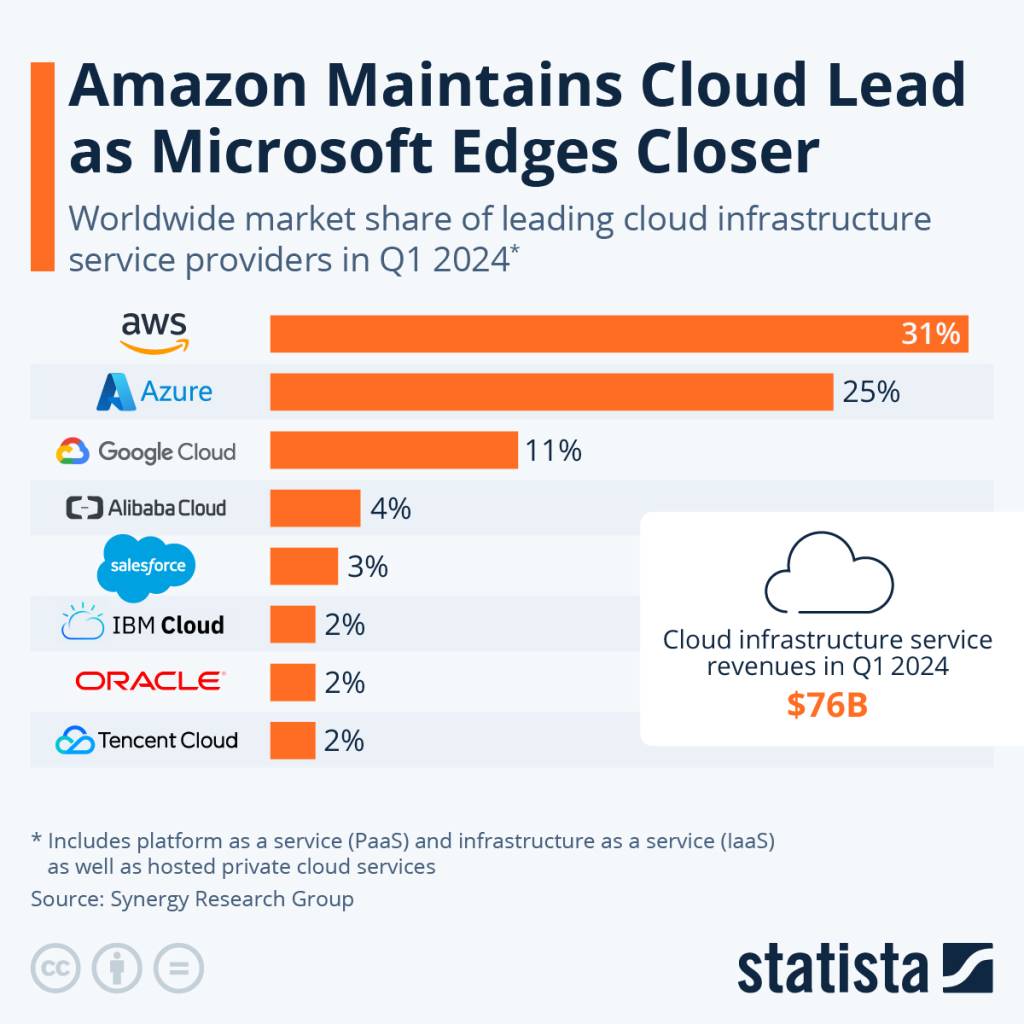
In contrast, existing computer systems are significantly more centralized at the network architecture and cloud service levels—Amazon AWS, Microsoft Azure, and Google Cloud collectively held over 67% of the cloud service market share in Q1 2024, pulling far ahead of later entrants.
Source: Synergy Research Group
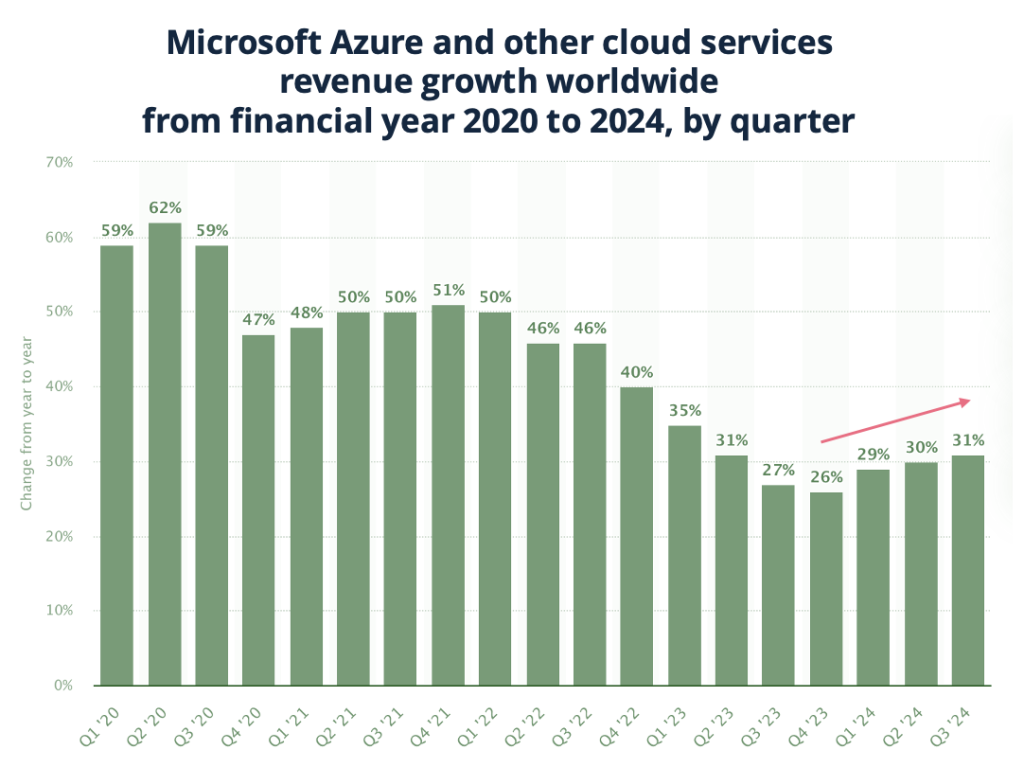
Moreover, as key enablers of the AI wave, cloud providers continue to strengthen their dominance. Microsoft Azure, as OpenAI’s exclusive cloud provider, reversed previous sluggish growth and entered an accelerated phase. In Microsoft’s fiscal third quarter of 2024 (calendar Q1 2024), Azure and other cloud services grew 31%, exceeding market expectations of 28.6%.
Source: Microsoft, Lydia @ Mint Ventures
Beyond market competition, privacy and security concerns arising from centralized computing systems are gaining increasing attention. Each outage at a major cloud provider can have widespread impact. Data shows AWS experienced 22 outages between 2010 and 2019, averaging 2.4 per year. Beyond Amazon’s own e-commerce operations, services from companies like Robinhood, Disney, Netflix, and Nintendo that rely on AWS were also severely disrupted.
2.1.3 The Case for Decentralized Computers
Against this backdrop, the necessity of decentralized computers has been repeatedly emphasized. As centralized cloud providers increasingly adopt distributed architectures—replicating data and services across multiple locations to avoid single points of failure and using edge storage to improve performance—the narrative around decentralized computing has shifted toward data security, privacy, scalability, and cost efficiency.
We now examine several concepts of decentralized computers proposed by various projects. Their common goal is to build a global distributed computing platform supporting decentralized applications through decentralized data storage and processing.
-
World Computer: Typically refers to Ethereum, providing a global smart contract execution environment focused on decentralized computation and globally consistent smart contract execution.
-
Internet Computer: Usually refers to ICP developed by the Dfinity Foundation, aiming to extend internet functionality so decentralized applications can run directly on the internet.
-
Hyper Parallel Computer: Typically refers to the AO protocol proposed by Arweave—a distributed computing system running on the Arweave network, known for high parallelism and fault tolerance.
Notably, ICP, AO, and Quilibrium are not blockchains in the traditional sense. They do not rely on linear block structures but maintain core blockchain principles such as decentralization and immutability, representing natural extensions of blockchain technology. While ICP has yet to fulfill its ambitious vision, the emergence of AO and Quilibrium introduces new possibilities that could shape the future of Web3.
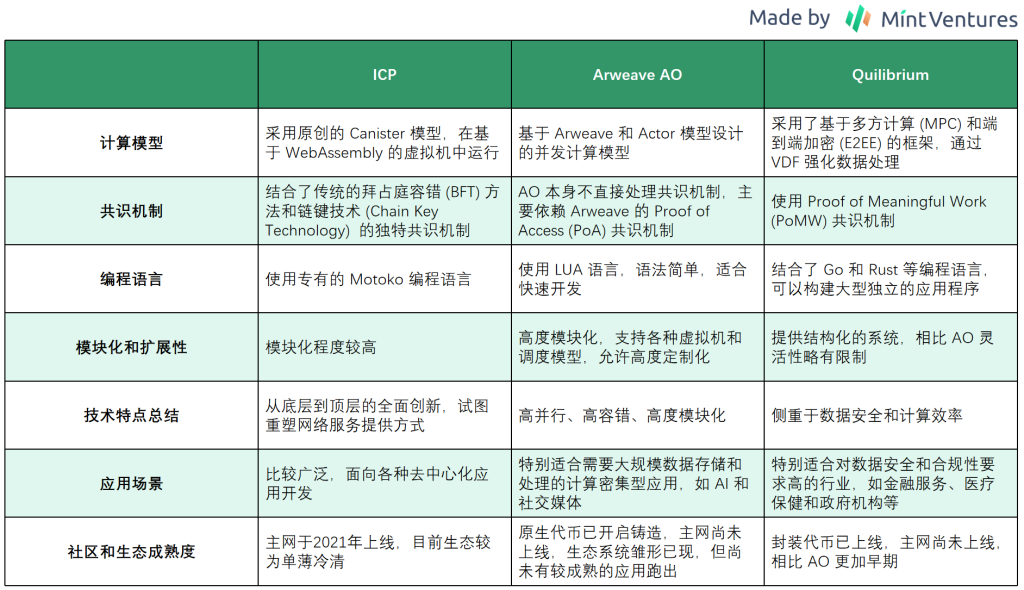
The table below compares their technical features and application directions, helping readers understand whether Quilibrium risks repeating ICP’s fate and how it differs from AO, often dubbed the “Ethereum killer,” as a cutting-edge decentralized computing solution.
2.2 Consensus Mechanism
In traditional blockchains, the consensus mechanism operates at an abstract, foundational level, defining how the network reaches agreement, processes transactions, and validates operations. Different consensus choices affect network security, speed, scalability, and degree of decentralization.
Quilibrium’s consensus mechanism is called Proof of Meaningful Work (PoMW), requiring miners to perform tasks of actual network value—such as data storage, retrieval, and network maintenance. PoMW integrates multiple disciplines including cryptography, multi-party computation, distributed systems, database architecture, and graph theory. It aims to reduce dependence on any single resource (e.g., energy or capital), preserve decentralization, and maintain security and scalability as the network grows.
Incentive mechanisms are crucial to ensuring smooth operation of the consensus. Quilibrium’s reward distribution is not static but dynamically adjusted based on network conditions to align incentives with real-time demand. Quilibrium also employs multi-proof mechanisms, allowing a single node to verify multiple data fragments, maintaining network functionality even when nodes or core resources are scarce.
A simplified formula can illustrate miner rewards, where the base reward adjusts dynamically with network scale:
Reward = Score × Base Reward
The score is calculated based on multiple factors, defined as follows:

Where each parameter is defined as:
-
Time in Mesh for Topic: Longer participation and higher stability lead to higher scores
-
First Message Deliveries for Topic: More initial message deliveries result in higher scores
-
Mesh Message Delivery Rate/Failures for Topic: Nodes with higher delivery rates and lower failure rates receive higher scores
-
Invalid Messages for Topic: Fewer invalid message transmissions yield higher scores
The weighted sum of these four parameters is capped by a Topic Ceiling (TC) to prevent unfair scoring due to outlier values.
-
Application-Specific Score: Defined by specific applications
-
IP Collocation Factor: Fewer nodes from the same IP address lead to higher scores
Source: Quilibrium Dashboard
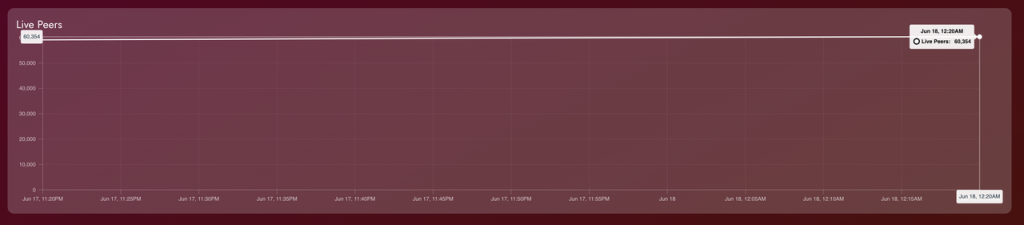
Quilibrium currently operates over 60,000 nodes. Miner rewards in practice may vary depending on parameter weights across versions. Since version v1.4.19, rewards can be viewed in real time, though they cannot be claimed until mainnet launch.
2.3 Network Architecture
Quilibrium’s core offering is a decentralized PaaS solution. Its network architecture consists of communication, storage, data querying and management, and an operating system. This section highlights design differences from mainstream blockchains. Readers interested in technical details should refer to official documentation and whitepapers.
2.3.1 Communication
As the foundation of the network, Quilibrium’s communication layer comprises four components.
a. Key Generation
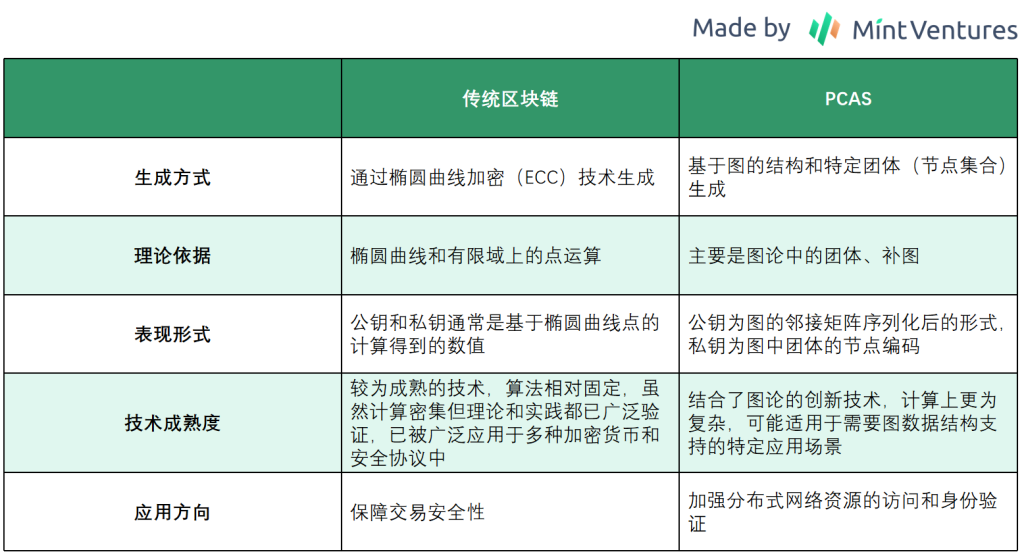
Quilibrium proposes a graph-theory-based PCAS (Planted Clique Addressing Scheme) for key generation. Like traditional blockchains, PCAS uses asymmetric encryption—each user has a public key (for encrypting messages or verifying signatures) and a private key (for decryption or signing). The distinction lies in key generation methods, representation, and application scope (see table below).
b. End-to-End Encryption
End-to-end encryption (E2EE) ensures secure node-to-node communication, allowing only sender and receiver to view plaintext. Even intermediaries relaying the data cannot access its content.
Quilibrium uses Triple-Ratchet, an E2EE method offering stronger security than traditional ECDH. While conventional schemes use static keys or periodic updates, Triple-Ratchet refreshes keys after every message exchange, enabling forward secrecy, backward secrecy, deniability, replay protection, and support for out-of-order messages. This is ideal for group chats but comes with higher computational overhead.
c. Hybrid Network Routing
Hybrid networks (Mixnets) act as black boxes: they receive messages from senders and deliver them to recipients without revealing the link between them, even if external attackers observe the network.
Quilibrium implements RPM (Random Permutation Matrix) technology, creating a structurally complex mixnet resistant to both internal and external attacks, with advantages in anonymity, security, and scalability.
d. Peer-to-Peer Communication
GossipSub is a widely used pub/sub-based P2P messaging protocol in blockchain and DApp ecosystems. Quilibrium’s BlossomSub protocol extends and improves GossipSub, enhancing privacy, resistance to Sybil attacks, and overall network performance.
2.3.2 Storage
Most traditional blockchains use cryptographic hash functions for data integrity verification and rely on consensus for consistency. This approach has two key limitations:
-
It typically lacks verification of storage duration, offering no direct defense against time- or compute-based attacks
-
Storage and consensus are often decoupled, potentially causing synchronization and consistency issues
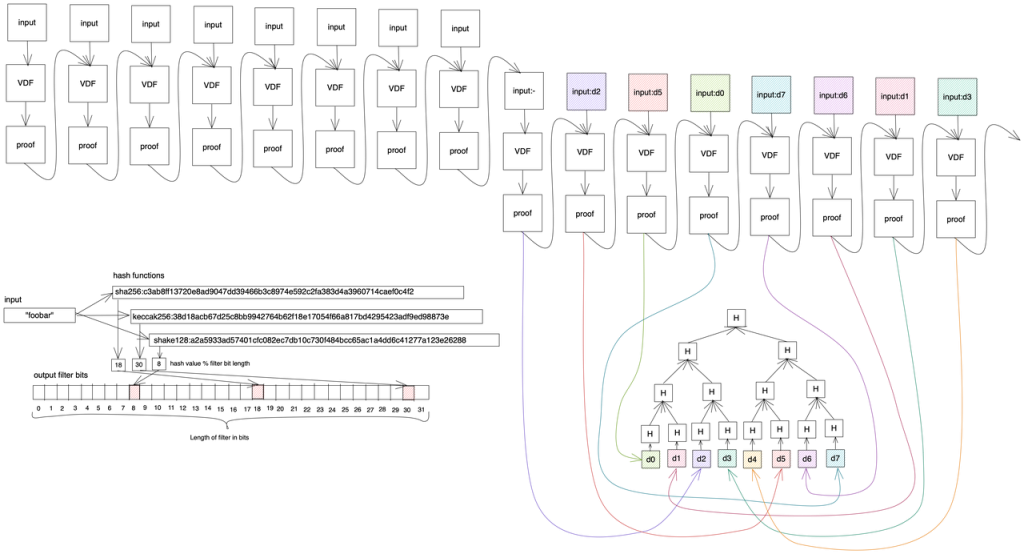
Quilibrium uses Verifiable Delay Functions (VDFs) to create a time-dependent chain structure that integrates storage and consensus. As illustrated below, this design offers several advantages:
-
Input Processing: Uses hash functions like SHA256 and SHAKE128—minor data changes produce vastly different hashes, making tampering harder and verification easier
-
Delay Guarantee: Computation is intentionally slow and sequential—each step depends on the prior one, preventing acceleration via added resources. This ensures outputs derive from continuous, time-bound computation. Because recomputing or altering published VDF results takes significant time, participants have ample opportunity to detect and respond
-
Fast Verification: Verifying a VDF result takes much less time than generating it, typically involving mathematical checks or auxiliary data to confirm validity
Source: Quilibrium Whitepaper
This time-proven chain structure does not rely on block creation, theoretically reducing MEV attacks and frontrunning.
2.3.3 Data Query and Management
Most traditional blockchains use simple key-value stores or Merkle Trees, limiting their ability to express complex relationships or support advanced queries. Additionally, most lack built-in privacy during node queries—this gap motivates solutions like zero-knowledge proofs.
Quilibrium introduces an “Oblivious Hypergraph” architecture combining hypergraphs and Oblivious Transfer (OT) techniques. This enables complex queries while preserving data privacy:
-
Hypergraph Structure: Edges can connect multiple vertices, enabling richer expression of complex relationships. This structure can directly map various database models, allowing any data relationship to be represented and queried
-
Oblivious Transfer: Even processing nodes cannot learn what specific data is being accessed, enhancing query privacy
2.3.4 Operating System
An operating system is not native to blockchains. Most focus on consensus and data immutability, lacking sophisticated OS-level functionality. For example, while Ethereum supports smart contracts, its OS features are minimal—limited to transaction processing and state management.
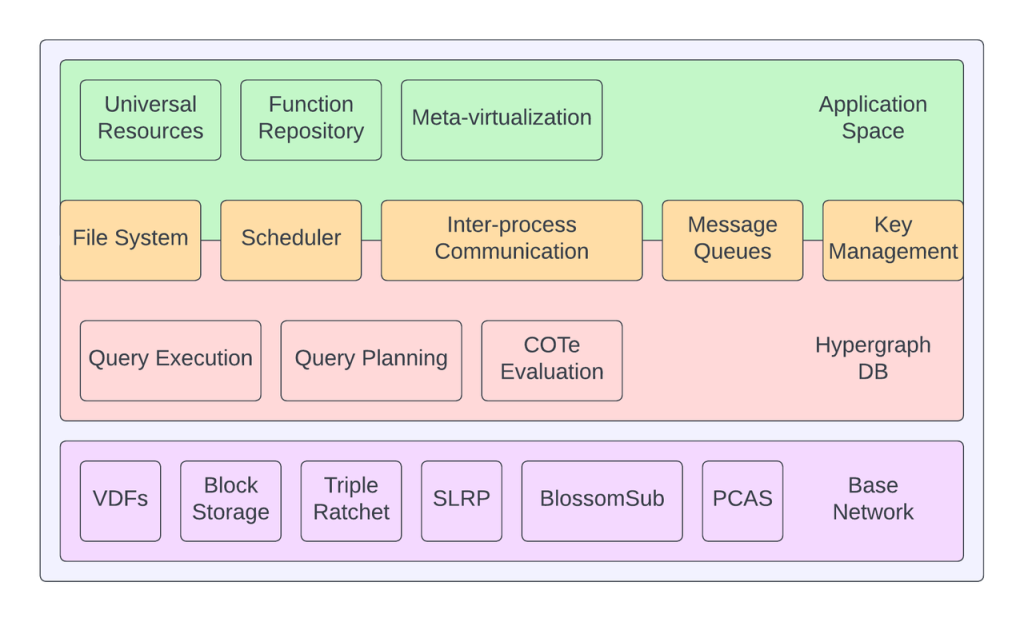
Quilibrium designs an OS built atop its hypergraph database, implementing standard OS primitives such as file systems, schedulers, IPC-like mechanisms, message queues, and control key management. This database-native OS design empowers developers to build complex decentralized applications.
Source: Quilibrium Whitepaper
2.4 Programming Language
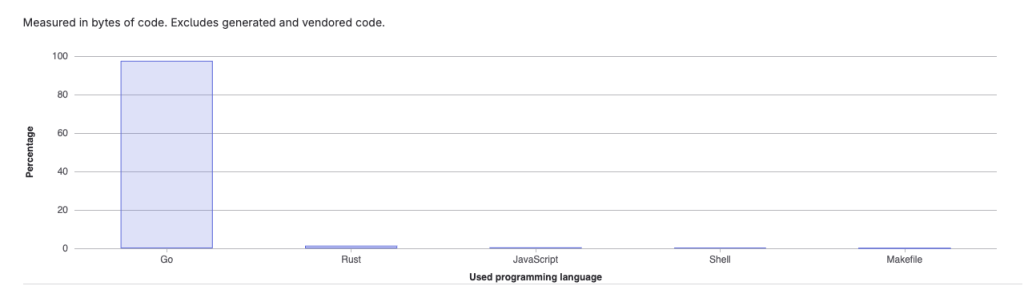
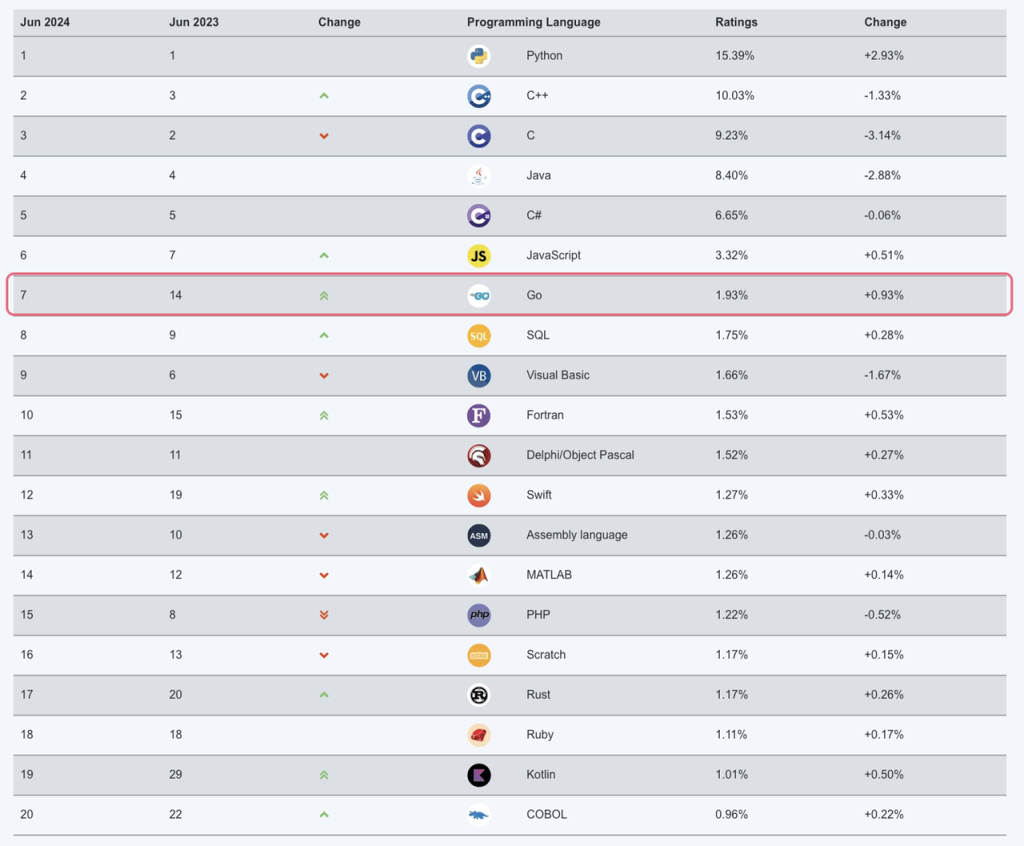
Quilibrium primarily uses Go for development, supplemented by Rust and JavaScript. Go excels in concurrency handling, clean syntax, and strong community support. According to TIOBE’s programming language rankings, Go has risen sharply in recent years, reaching 7th place in the latest June 2024 index. Other blockchain projects using Go for core development include Ethereum, Polygon, and Cosmos.
Source: Quilibrium
Source: TIOBE
3. Project Status
3.1 Project History and Roadmap
Quilibrium released its whitepaper in December 2022, outlining a roadmap in three phases: Dusk, Equinox, and Event Horizon.
The project remains in a very early stage, with biweekly network updates. The current version is v1.4.20. Due to the removal of the planned 1.5 phase, version 1.4 will upgrade directly to 2.0. Version 2.0 marks the end of the Dusk phase and corresponds to mainnet launch, expected in late July, enabling $QUIL bridging.
According to preliminary plans, the Equinox and Event Horizon phases will support advanced applications such as streaming and AI/ML model training.
3.2 Team and Funding
Quilibrium’s founder and CEO is Cassie Heart. Prior to founding Quilibrium, she was a Senior Software Engineer at Coinbase, with over 12 years of experience in software development and blockchain.
Due to her opposition to centralized social media platforms, Cassie and the Quilibrium project are primarily active on Farcaster. Her Farcaster account has over 310,000 followers, including Ethereum co-founder Vitalik Buterin. Cassie is also a contributor to Farcaster’s development.
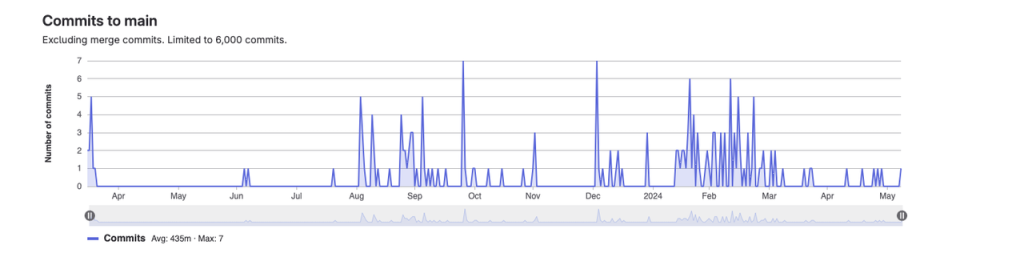
According to developer activity dashboards, Quilibrium’s development began in April 2023 and has progressed steadily. There are 24 identified contributors, led by Cassie Heart (Cassandra Heart).
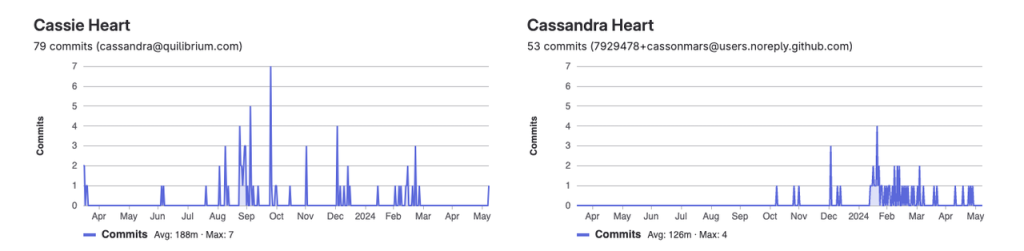
Source: Quilibrium
Quilibrium has not disclosed its funding history or investors.
3.3 Token Model Analysis
$QUIL is Quilibrium’s native token, launched via 100% fair launch—all tokens are mined through node operation. The team runs a small number of nodes but holds less than 1% of total supply.
$QUIL has no fixed token model; total supply is uncapped but dynamically adjusted based on network adoption. As the network scales, more tokens are released as node incentives. If growth slows, emission rates decrease accordingly.
The table below shows predictions by the team and community for token emissions. Current circulation is 340 million, with final supply projected to stabilize around 2 billion—actual issuance will depend on ecosystem development.
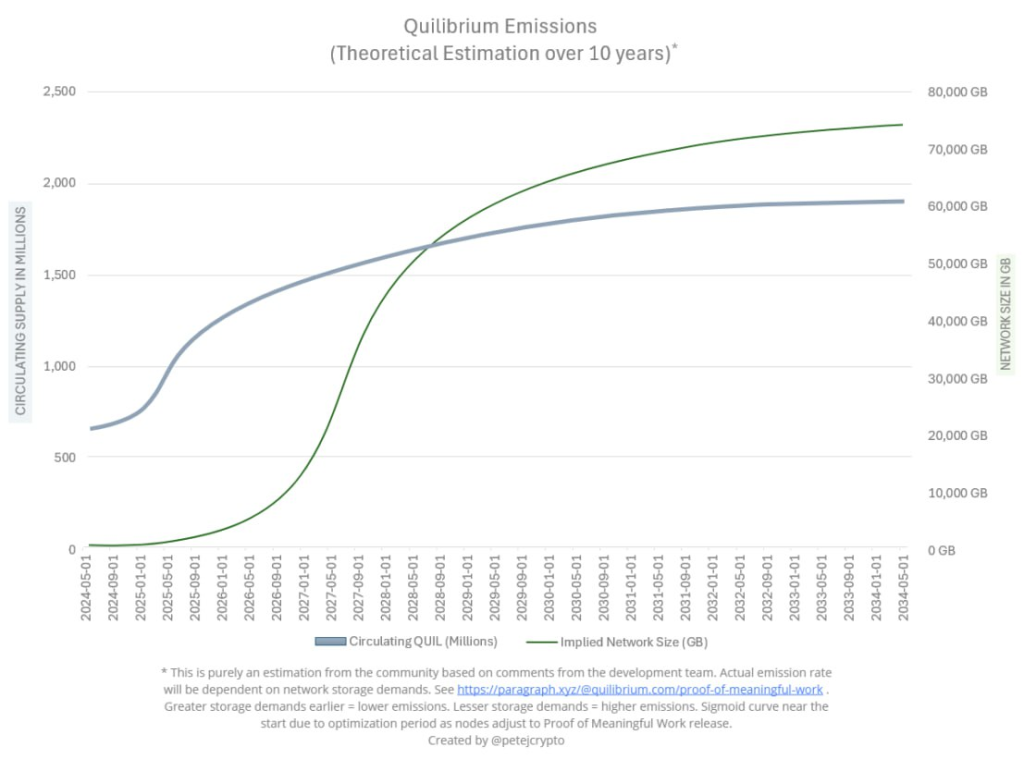
Source: @petejcrypto
3.4 Risks
Current risks for Quilibrium include:
-
The project is in a very early stage with no mainnet launch yet. High complexity means technical feasibility and market demand remain unproven.
-
Short-term competition from the more established Arweave AO in developer and user mindshare.
-
No fixed token model—volatile emission rates increase investor risk.
4. Valuation
Valuing general-purpose blockchain infrastructure is inherently complex, involving metrics like TVL, active addresses, dApp count, and developer activity. Given Quilibrium’s early stage and the fact that Arweave AO’s $AO token is not yet tradable, we cannot determine an accurate valuation at this time.
Below we list circulating and fully diluted market caps of projects with overlapping concepts as reference (data as of June 23, 2024).
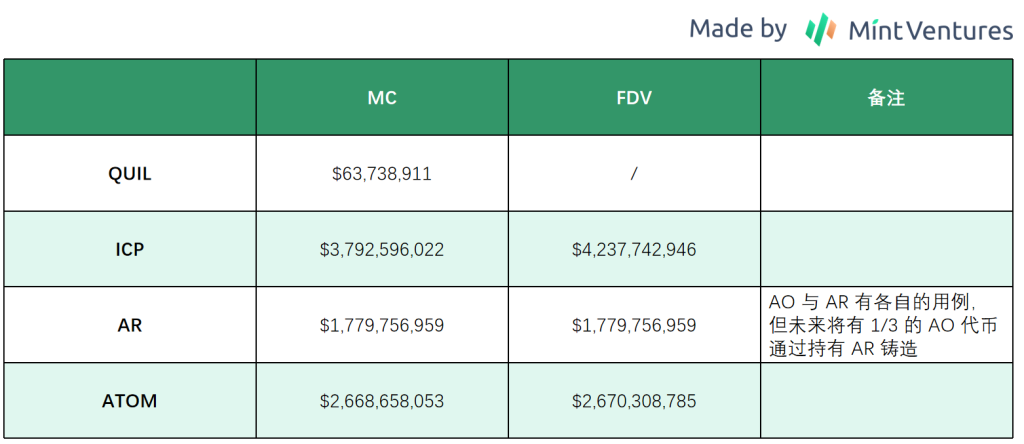
Source: CoinGecko, data as of June 23, 2024
Join TechFlow official community to stay tuned
Telegram:https://t.me/TechFlowDaily
X (Twitter):https://x.com/TechFlowPost
X (Twitter) EN:https://x.com/BlockFlow_News
 Mint Ventures