On Blockchain Gaming: I Conducted 1 Survey, Spoke with 62 Players, and Drew 7 Conclusions
TechFlow Selected TechFlow Selected
On Blockchain Gaming: I Conducted 1 Survey, Spoke with 62 Players, and Drew 7 Conclusions
As long as people still have a spiritual need for games, Web3 Gaming will surely have a future!
 Navigating Web3 tides with focused insights
Author: Uncle Jian
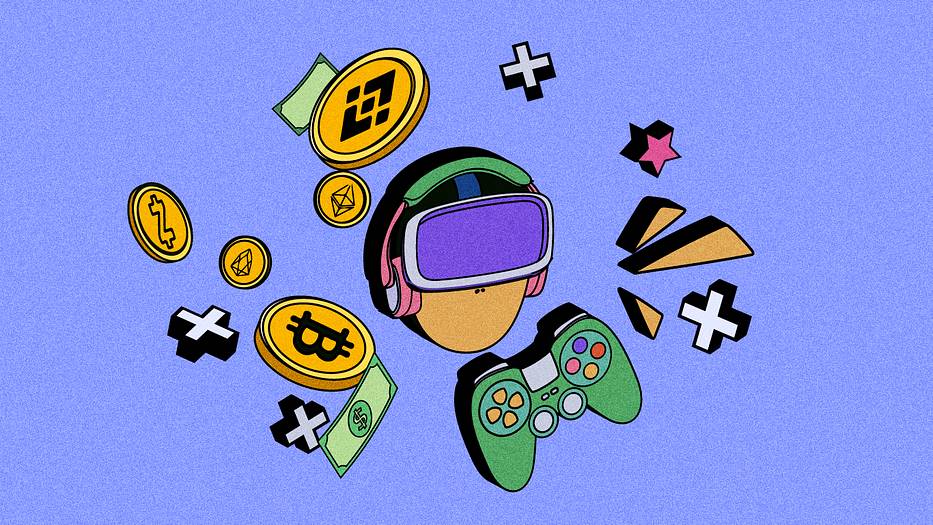
When it comes to blockchain gaming, many Web3 OGs probably see it as a "useless" sector. On one hand, despite years of development, no standout game has truly emerged—whenever one finally gains traction, it quickly gets shut down. Yet on the other hand, capital keeps flooding in like wind, funding a wave of AAA-level blockchain games. These games are actually being built, have decent gameplay mechanics, yet their token prices simply won't rise...
In the first half of this year, our team began focusing heavily on researching the blockchain gaming space. I personally led my teammates through numerous game experiences. From these trials, we found that some games were genuinely “fun,” while others were merely Web2 mini-games ported onto Web3 with little innovation. Some projects didn’t even qualify as “games” yet still managed to secure funding and listings on major exchanges...
At this point, several questions naturally arose:
1. Does the current blockchain gaming space need more “gameplay” or “gamification”?
2. What exactly is the difference between them?
3. From a Web3 player’s perspective, what do they really want?
To answer these questions, I spent five days conducting in-depth interviews with 62 players. Based on their feedback, I’ve drawn seven key conclusions about blockchain gaming. In the second part of this article, I’ll analyze those findings in detail. But before that, let me first discuss the most talked-about topic in today’s blockchain gaming scene—“gameplay”—and how it differs from “gamification.”
A One-Word Difference, Worlds Apart
In November 2019, MixMarvel's founder coined the term GameFi, birthing an entirely new sector. Three years later, global hits like Axie Infinity and StepN introduced a new model—X to Earn—and kicked off the Web3 gaming fundraising era, drawing nearly $10 billion in investments. Soon after, numerous AAA-grade games entered development. The industry has evolved from competing over “Fi” (finance) to now racing for superior “gameplay.”
Everyone talks about “gameplay,” but what does it actually mean? And how is it different from “gamification”?
Let’s use a cake analogy:
Gameplay refers to the core mechanics and experience of a game—the rules, challenges, interactions, and how players derive enjoyment. Think of gameplay as the actual cake itself: its foundation, determining flavor and structure.
Gamification, by contrast, involves applying game design elements, thinking, and mechanics to non-game contexts to boost user engagement and motivation. This is like decorative frosting and patterns on top of the cake—they make it look more appealing and tempting, but they’re not the cake itself.
In short, gamification drives appetite—making you *want* to eat—while gameplay determines taste—whether it’s actually *delicious*.
Applied to Web3 blockchain games, gameplay forms the essential foundation—it’s how players engage with stories, interact, compete, and enjoy the experience. Gamification, meanwhile, leverages game mechanics to incentivize participation in Web3-specific activities such as community building and market trading.
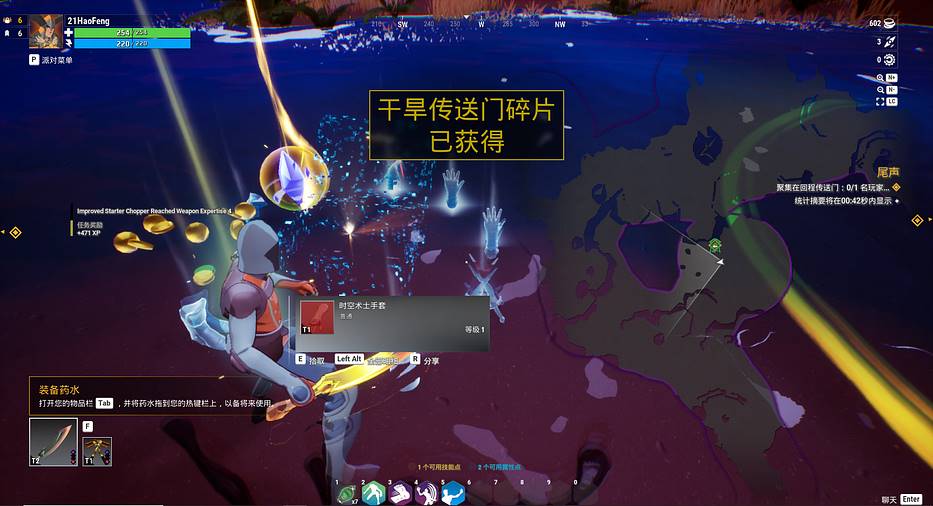
Take BigTime, for example—a quintessential Web3 game with strong gameplay. First, visually, it features diverse landscapes, each tied to unique dungeons and settings. This variety prevents monotony and enhances immersion. Second, defeating monsters randomly drops high-tier gear and NFTs, creating excitement akin to scratch-off lottery tickets—offering frequent “thrills.” Additionally, character progression strengthens gameplay: skills become a form of “fixed asset,” developed through persistent practice. Players can master techniques to overcome difficult bosses—even enabling free-to-play users to defeat pay-to-win whales—giving them a real sense of growth and achievement.
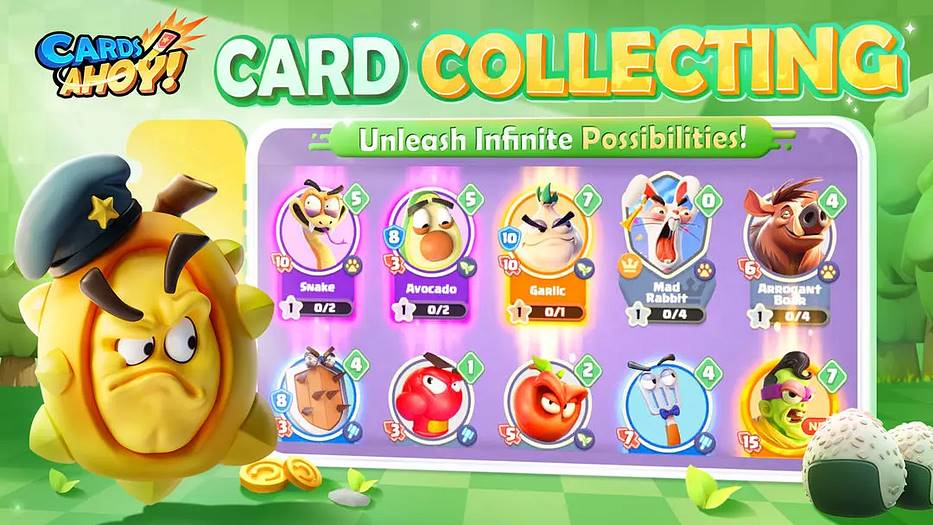
Another example I previously shared on Twitter is Cards Ahoy (CA), representative of Web3 games emphasizing true gameplay. As a card-based blockchain game, CA offers simple mechanics with meme flair—each match lasts just 60 seconds and is easy to pick up. Players pre-build their battle teams. In PvP mode, decks take turns battling in a relay format, where each card has health points (“energy bars”). Cards clash sequentially based on skills and attack attributes, depleting opponent energy. Once a card is defeated, the next enters—similar to the Tian Ji horse racing strategy. While seemingly simple, CA deeply expands on gameplay: daily stamina fluctuations, new races and factions, skill diversification, and time-based mechanics add strategic depth.
Indeed, there are already some promising Web3 games delivering solid gameplay that players appreciate. However, the pursuit of better gameplay isn’t particularly competitive—because genuinely fun Web3 games remain extremely rare. After all, making a cake truly delicious takes time and mastery.
So when developers realize they can’t compete on gameplay, they pivot toward gamification—maximizing Web3 incentive mechanisms, essentially “embroidering” and “sprinkling sugar” onto the cake. A prime example is Spacebar, a game built on the Blast ecosystem.
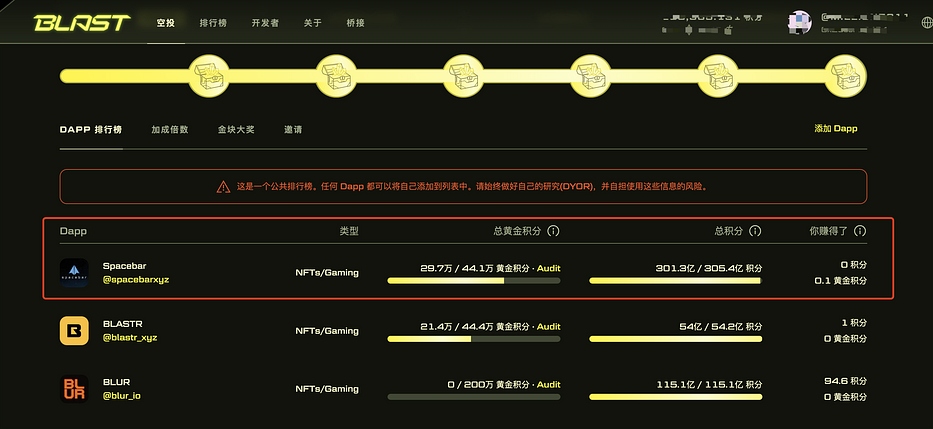
When Spacebar launched its 2x reward campaign within the Blast ecosystem, it was added to the official 2x rewards list. Many Blast reward hunters likely gave it a try. Its developer, AO Labs, raised $4.5 million in funding led by YGG—so it certainly has pedigree.
Spacebar’s core gameplay is strikingly simple:
1. Register a spaceship account
2. Pilot your ship through space, encountering other planets (projects) and reading their descriptions (project info)
3. Hold the spacebar to enter a planet (project), revealing project details, community links, and basic TVL data
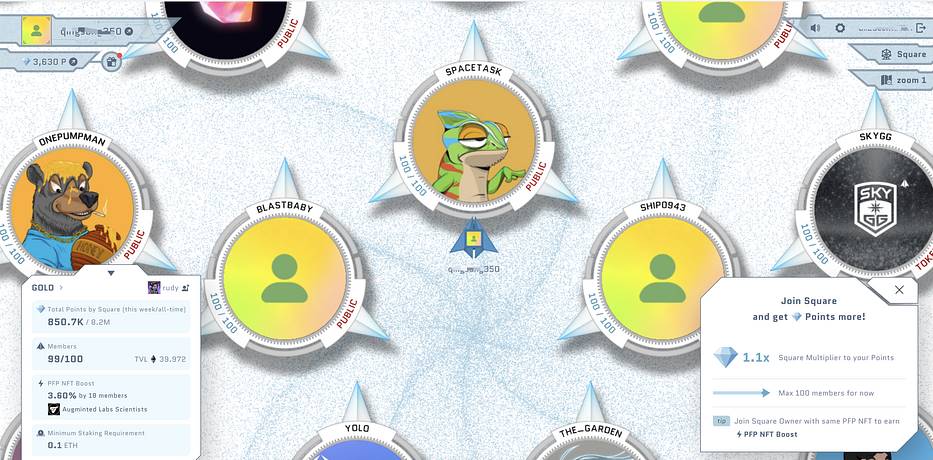
Beyond this main loop, Spacebar runs a daily check-in program rewarding players with points—apparently linked to Blast’s own reward system, since I earned Gold Points on Blast after checking in for a week. Beyond check-ins, players can stake ETH directly in Spacebar to earn dual rewards: both Spacebar and Blast ecosystem points.
Now, whether from personal experience or just reading this description, doesn’t it feel fundamentally unlike a real “game”?
Sure, the interface uses spaceships and interstellar themes, complete with planetary visuals and ambient music, making it *feel* like you're playing a game. But after trying it out, you realize it simply gamifies the process of discovering Web3 projects.
It uses daily login rewards (previously even offering 3x multipliers) to lure you back every day. Through partnerships with Blast, it encourages ETH staking to boost its TVL—and simultaneously earn double points. Then, via gamified actions, it nudges you to explore other ecosystem projects.
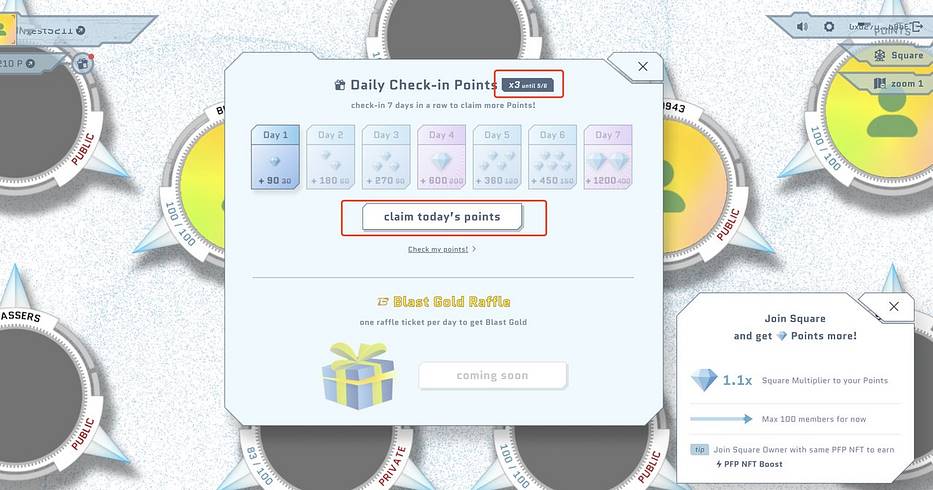
Each of these actions doesn’t improve the cake’s taste—it only makes you *want* to eat it more. By offering various incentives—check-ins, staking, collaborations with well-known ecosystems—it motivates deeper participation and immersion.
But are you really playing a “game”? Sort of—but not quite. If forced to call it a game, its name should be “Mining Points and Tokens.” Calling it a form of DeFi wouldn’t be inaccurate either...
Other examples of such gamification-focused blockchain games include Xpet, Xmetacene, Notcoin (recently viral on the TON ecosystem), and Catizen, which already boasts tens of millions of users—all turning the mining process into a gamified journey through clever incentive design.
But can we say that “decorating the cake” is inherently wrong? What if users actually prefer a prettier cake?
What Do Web3 Players Truly Value?
Whether a cake tastes good is somewhat subjective—everyone has different preferences. Creating a cake everyone loves is incredibly hard. But making people *want* to eat it? That’s much easier—just add enough “incentives” to entice them.
So, in today’s Web3 landscape, should we focus on making cakes people *want* to eat, or cakes they’ll find truly delicious?
The ones qualified to answer aren’t the bakers—but the diners themselves.
That is, real Web3 players: What do they value most? Why do they play certain games? How long do they stay engaged? What attracts them initially? And why do they eventually leave?
To explore these questions, I conducted a small-scale survey among fans and players, yielding seven key insights:
1. Most Web3 players haven’t played many blockchain games—typically fewer than five;
2. Twitter remains the primary channel for discovering new blockchain games;
3. 90% of Web3 players spend less than two hours daily on blockchain games, with 57.5% spending under one hour;
4. Game popularity is the main factor influencing whether players try a new blockchain game;
5. 30.6% play due to “gamification” (profit-driven incentives like earning tokens), while 29% play due to “gameplay” (rich, engaging mechanics)—nearly equal;
6. 38.7% quit a game because the “gamification” faded (no longer profitable), and another 38.7% left because the “gameplay” declined (it became boring);
7. Among highly anticipated upcoming games, the top five mentioned by players were: Xterio ecosystem games, MATR1X, Space Nation, Pixels, and BAC Games;
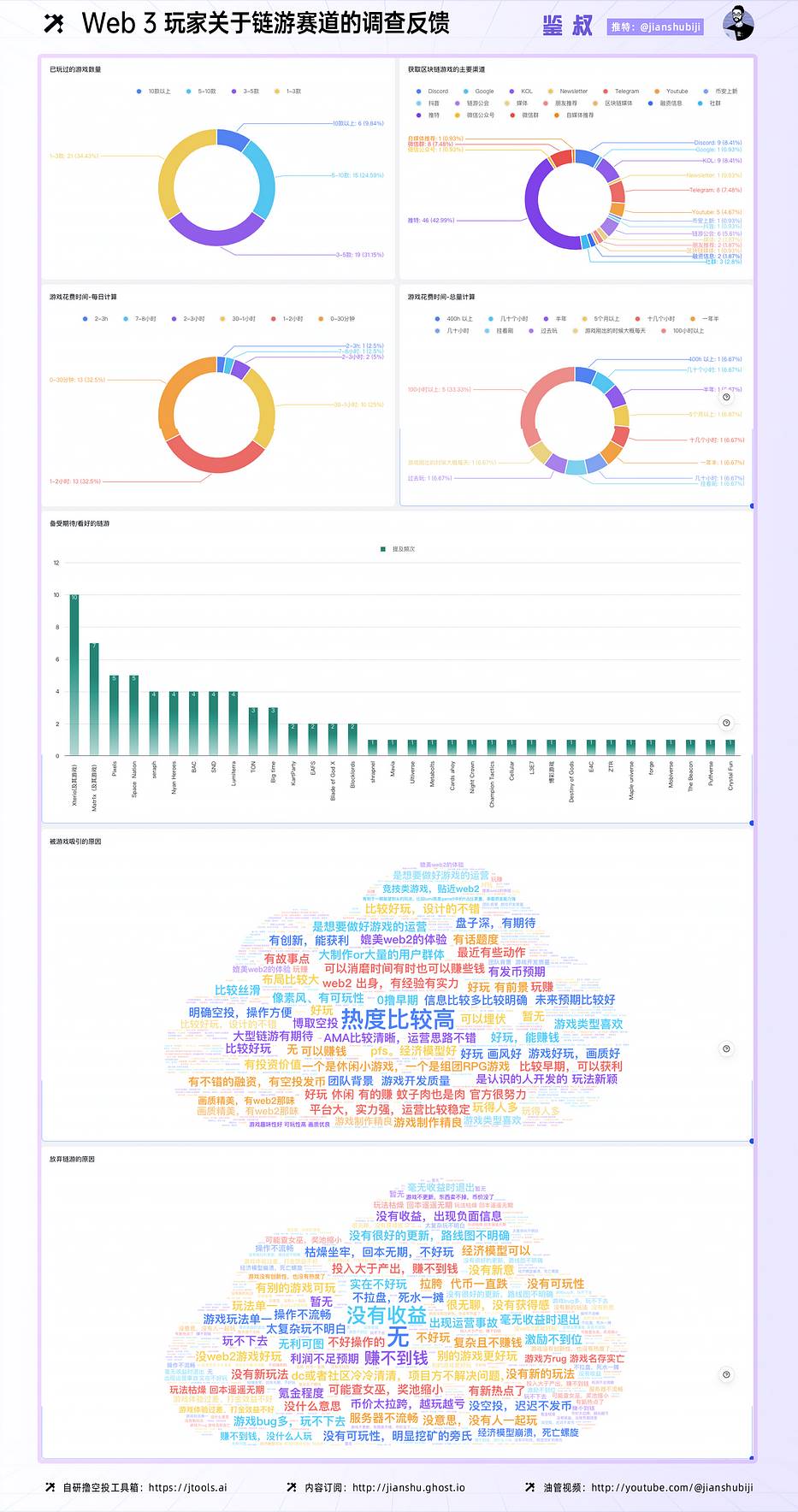
Frankly, I was surprised by these results. As a seasoned Web3 veteran, I assumed most players joined purely to make money, with few caring about actual fun or gameplay. But the survey showed nearly half the players engage because the game is genuinely enjoyable.
This suggests a shift: half of today’s players are moving beyond chain-centric motives and starting to care about the “game” aspect itself. From this, we can draw a key insight:
The Web3 gaming sector appears to be at a turning point—finally returning to a healthier state. The “useless” phase of blockchain gaming may soon be over.
Today’s Web3 players clearly value both gameplay and gamification—they’re placing bets on both fronts.
After all, users’ tastes are evolving. No one wants to admire a beautifully decorated cake only to take a bite and find it tastes like crap...
Final Thoughts
Therefore, whether innovation lies in gameplay or gamification, any genuine innovation is welcome. But no matter the form, innovation must never脱离 (detach from) real user needs. Over the years, human fundamental needs haven’t changed—survival, self-actualization—they remain constant. What evolves is not the need itself, but:
-the form in which those needs are satisfied.
In the past, game studios fulfilled psychological needs through Web2 games. Today, Web3 gaming simply offers a new format—but satisfies the same underlying need:
-the desire for mental freedom and emotional release.
However, due to the technical complexity of Web3 gaming, truly engaging games that fulfill these psychological needs remain scarce. Hence, the industry currently leans heavily on gamification. But does that mean Web3 gaming has no future?
-Absolutely not. As long as people continue to seek emotional fulfillment through games, Web3 gaming will always have a future!
But when will this future—where games truly meet players’ emotional needs—arrive?
-Unknown. The market is waiting for a breakout moment.
Yet one thing is certain: whether baking a cake people *want* to eat (gamification) or one they find truly *delicious* (gameplay), the ultimate goal remains the same:
Make the cake bigger!
Only then will both creators and players benefit—wouldn’t you agree?
Join TechFlow official community to stay tuned
Telegram:https://t.me/TechFlowDaily
X (Twitter):https://x.com/TechFlowPost
X (Twitter) EN:https://x.com/BlockFlow_News
 @jianshubiji