35+ Bitcoin Layer 2 Projects Overview: Exploring Innovative Projects and Technological Frontiers
TechFlow Selected TechFlow Selected
35+ Bitcoin Layer 2 Projects Overview: Exploring Innovative Projects and Technological Frontiers
In-depth exploration of multiple innovative Bitcoin Layer 2 projects, covering their technical principles, team backgrounds, funding status, and development roadmaps.
 Navigating Web3 tides with focused insights
Authored by: Trustless Labs
Introduction
In today's rapidly evolving blockchain landscape, Bitcoin is not only widely accepted as a digital asset but its underlying technology continues to innovate and evolve. As the Bitcoin ecosystem expands, various Layer 2 solutions have emerged like mushrooms after rain, aiming to enhance scalability, efficiency, and security of the Bitcoin network. This article will delve into multiple innovative Bitcoin Layer 2 projects. By analyzing their technical principles, team backgrounds, funding situations, and development roadmaps in detail, we aim to understand how these projects are driving innovation and growth within the Bitcoin ecosystem.
Babylon: Cross-chain Staking and Bitcoin Economic Security
Babylon leverages native staking of Bitcoin (BTC) through cryptographic methods to provide proof-of-stake (PoS) security for other blockchains. This mechanism not only brings on-chain yield to BTC but has also attracted significant market attention.
Technically, Babylon’s staking process relies entirely on cryptography without requiring third-party bridges or custodians. BTC stakers can achieve staking by sending transactions with two UTXO outputs. The first UTXO writes into a timelock script, allowing the staker to unlock BTC using their private key upon expiration; the second UTXO transfers to a temporary Bitcoin address whose public-private key pair meets the cryptographic standard of "Extractable One-Time Signatures (EOTS)." When a staker runs a node on a PoS chain and validates a unique valid block, they sign it using the EOTS private key.
If the staker behaves honestly—signing only one valid block per round—they receive validator rewards from the PoS chain. However, if they attempt malicious behavior by signing two different blocks simultaneously, their EOTS private key can be reverse-engineered, enabling anyone to use this key to sweep away the staked BTC, effectively slashing them and incentivizing honest participation. Additionally, Babylon offers a BTC timestamping service that uploads checkpoint data from any blockchain into BTC’s op_return field, enhancing overall security.
Babylon enables cross-chain staking where the staked bitcoins remain secured within scripts on the Bitcoin network. Stakers can designate validators on corresponding PoS chains to earn yield. By leveraging BTC to provide economic security for other PoS chains, Babylon allows BTC holders to generate returns without removing their assets from the mainnet—opening up a new frontier in BTC staking and significantly reshaping the dynamics of the BTC ecosystem.
According to DefiLlama data, the current market size of interest-bearing BTC exceeds $1 billion, with $400 million actively generating yield at rates between 0.01% and 1.25%, typically via delegation to centralized CeFi institutions or through bridged/wrapped BTC. In contrast, PoS blockchain staking rewards usually range from 5% to 20%. Through Babylon’s staking model, BTC holders avoid entrusting assets to third parties while potentially earning yields up to 50 times higher than traditional BTC yield strategies—indicating immense growth potential.
Nonetheless, most BTC holders are passive investors—25% of BTC hasn’t moved in over five years, and 67% has been held for more than one year—making it challenging to convince them to participate in staking. Babylon is currently conducting testnet staking and plans to launch its mainnet testing phase in May–June. It has not yet announced plans to issue liquid staking derivatives representing staked BTC.
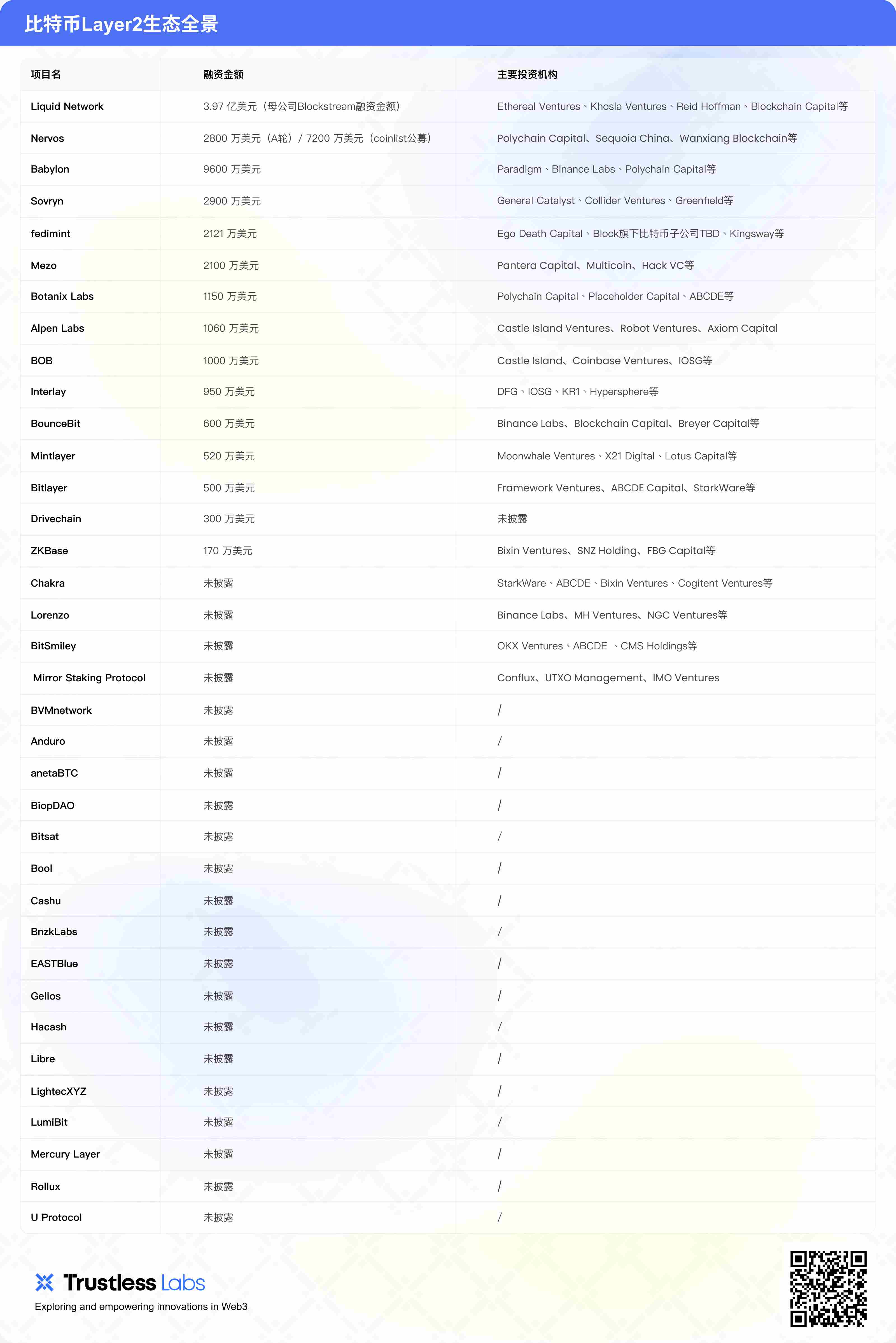
Founded in 2022 by Stanford professor David Tse and Dr. Fisher Yu, Babylon combines academic rigor with deep industry expertise. Dr. Yu is an esteemed member of the National Academy of Engineering, renowned for his pioneering proportional fair scheduling algorithm in wireless communications. On December 7, 2023, Babylon raised $18 million in a funding round led by Polychain Capital and Hack VC, with participation from Framework Ventures, Polygon Ventures, OKX Ventures, and IOSG Ventures. On February 24, 2024, Binance Labs announced an investment in Babylon. Most recently, in May 2024, Babylon completed a $70 million Series A round led by Paradigm.
Chakra: A ZK-Powered Bitcoin Restaking Protocol
Chakra is a ZK-driven Bitcoin restaking protocol aiming to build a secure Bitcoin-based PoS system. Leveraging ZK-STARKs and middleware chains, Chakra establishes a natively modular paradigm for scaling the BTC ecosystem. On April 30, Chakra announced completion of a strategic funding round with StarkWare, Bixin Ventures, Cogitent Ventures, and others participating—the exact amount and valuation were not disclosed.
Chakra aims to solve liquidity and interoperability challenges, unlocking the vast value locked in Bitcoin. With Chakra, other BTC Layer 2 solutions can focus on execution layers without needing to manage complex settlement infrastructure on Bitcoin.
The Chakra network unlocks liquidity and achieves economic security through a shared settlement layer, empowering participants across the BTC ecosystem. BTC Layer 2 projects and DApps benefit from strong network effects derived from robust liquidity within this secure and vibrant environment.
Chakra enables Bitcoin holders to stake without transferring assets out of their wallets by generating UTXOs with timelocks. It uses STARKs for its proof system. Compared to SNARKs, STARKs offer zero-knowledge proofs without requiring trusted setup. Chakra employs STARKs to implement zk light clients, enabling verification of staking information without connecting directly to the Bitcoin network—ensuring both efficiency and security. The integration of CairoVM further enhances scalability and transparency.
nubit_org: A Protocol Expanding Bitcoin Data Availability
Nubit is a protocol designed to expand data availability (DA) use cases for BTC. It operates a DA chain similar to Celestia using PoS consensus and periodically anchors Nubit’s DA data onto the Bitcoin mainchain. Nubit lacks smart contract functionality and requires rollups to be built atop its DA layer. Users upload data to Nubit, which enters a “soft confirmation” state after PoS consensus. Then, Nubit uploads the data root to the Bitcoin mainchain for finality. Users must store data tags on the Bitcoin mainchain to query original data from Merkle trees maintained by full nodes on Nubit.
Currently, there are about 100 BTC L2s. If all chose to post DA directly to Bitcoin blocks, even filling every Bitcoin block would support only around 20 such L2s. Thus, there remains a major narrative gap regarding how to connect securely with Bitcoin while leveraging its security. Nubit’s approach of repackaging DA presents an intriguing solution.
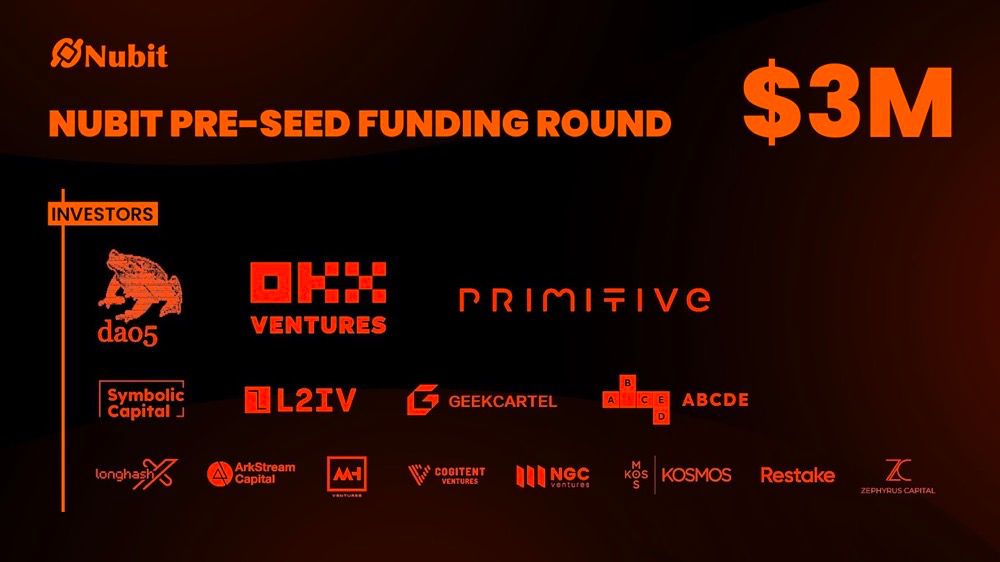
Nubit has completed its first Pre-Alpha Testnet phase, during which users could earn points by linking BTC accounts or running light nodes. After concluding Phase 1, Nubit plans to launch a second testnet iteration. Angel investors include Bounce Finance and Domo, founder of BRC20, who participated in a $3 million Pre-Seed round joined by dao5, OKX Ventures, and Primitive Ventures.
Lorenzo: A Liquid Staking Protocol for BTC
Built on top of Babylon, Lorenzo is a liquid staking protocol offering L2-as-a-service deployment capabilities. It aims to reduce slashing risks for stakers and unlock liquidity for staked BTC assets. Stakers deposit BTC into Lorenzo’s multisig address and receive an equivalent amount of stBTC as a liquid representation, along with staking rewards.
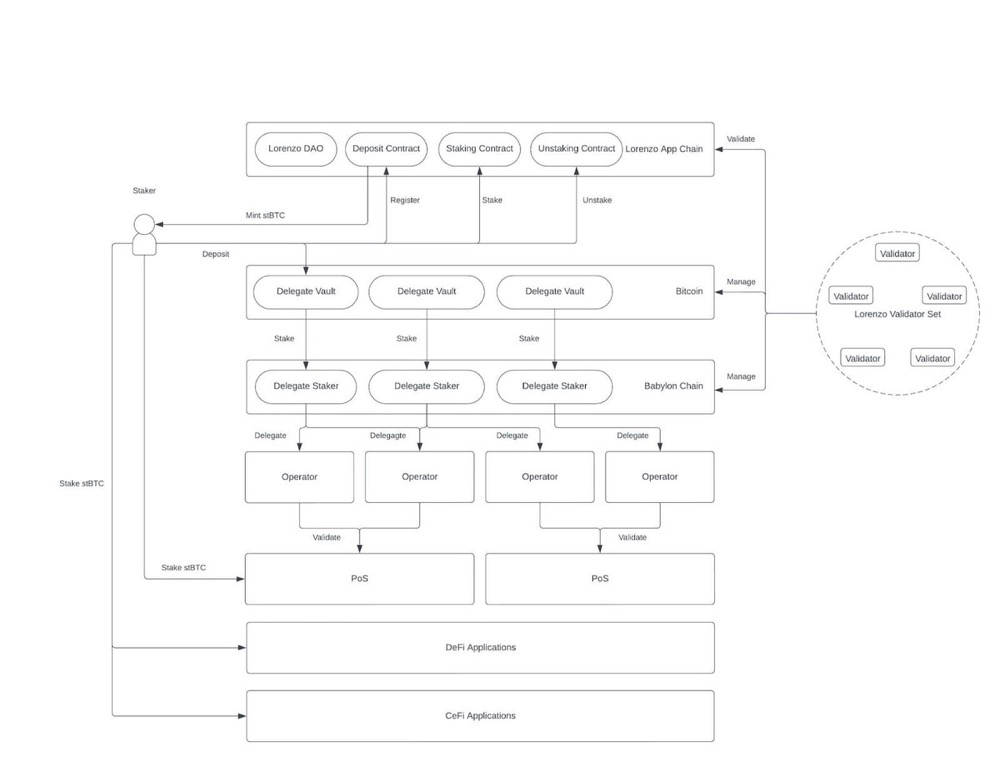
The Lorenzo chain itself is protected by Babylon’s shared Bitcoin security and functions as an EVM-compatible Bitcoin L2. In the future, it intends to adopt a modular architecture to assist in deploying additional BTC L2s and serve as an interoperability hub among them. Currently, Lorenzo has announced partnerships with Babylon, BounceBit, and others, planning to launch a Cosmos-based testnet. It is currently collaborating with Babylon’s fourth testnet phase to conduct liquidity restaking trials.
According to Rootdata, Lorenzo has received investments from Binance, MH Ventures, and NGC Ventures, though specific details remain undisclosed. Lorenzo recently launched a pre-staking campaign for Babylon and co-hosted the Bitlayer Mining Gala inaugural mining event. Users can stake BTC via the pre-staking page to obtain stBTC. All BTC received by Lorenzo will be automatically delegated to Babylon staking once Babylon launches. However, actual progress may depend on Babylon’s potential staking cap.
bitsmiley_labs: An Integrated DeFi Protocol for the Bitcoin Ecosystem
BitSmiley is an integrated DeFi protocol for the Bitcoin ecosystem, featuring over-collateralized stablecoin issuance, decentralized lending, and derivatives. bitUSD is an over-collateralized stablecoin issued via BitSmiley, operating similarly to MakerDAO, while its lending mechanism mirrors Compound. bitUSD can operate on both BTC L1 and L2, issued under the bitRC-20 standard with support for upgrades, minting, and burning—making it easy to represent stablecoins natively on the Bitcoin mainnet. BitSmiley is also developing AMM bitCow for stablecoins, currently undergoing testing across multiple BTC L2s.
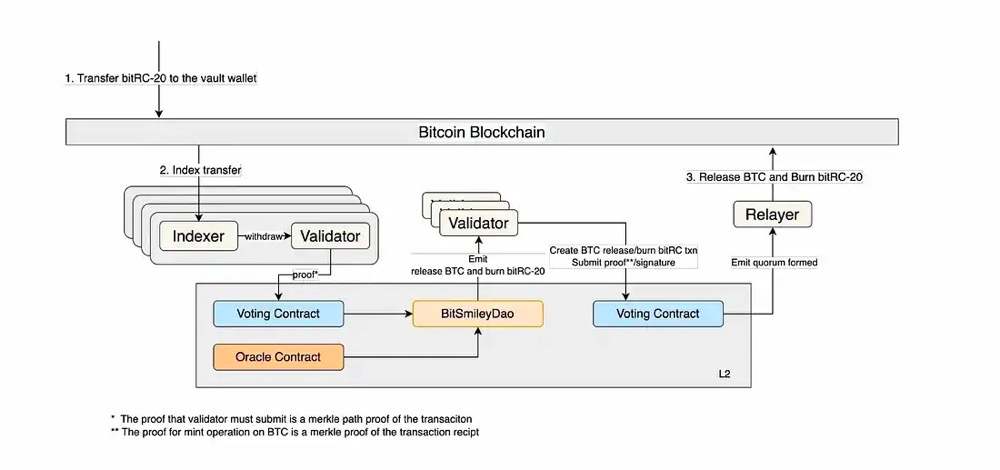
BitSmiley has been backed by institutions including OKX Ventures, ABCDE Capital, Forsight Ventures, Waterdrip Capital, Kucoin Ventures, CMS Holdings, and ArkStream Capital. In its early stages, BitSmiley issued the Ordinals NFT M-bitDisc-Black, which received positive market response and serves as a pass to access testnet activities.
build_on_bob: A BTC EVM Sidechain Architecture
BOB is a BTC EVM sidechain architecture built using the OP Superchain SDK. It uses wrapped BTC tokens like wBTC and tBTC from Ethereum as gas fees and plans to introduce Bitcoin-level security in the future through a novel POW merged-mining protocol. The BOB testnet has been operational for several months and already hosts a growing ecosystem. The mainnet officially launched on May 1, 2024. Over 40 projects have deployed in its first stage, achieving over $300 million in TVL. A second deposit campaign is ongoing, where accumulated Spice points correspond to $BOB token allocations.
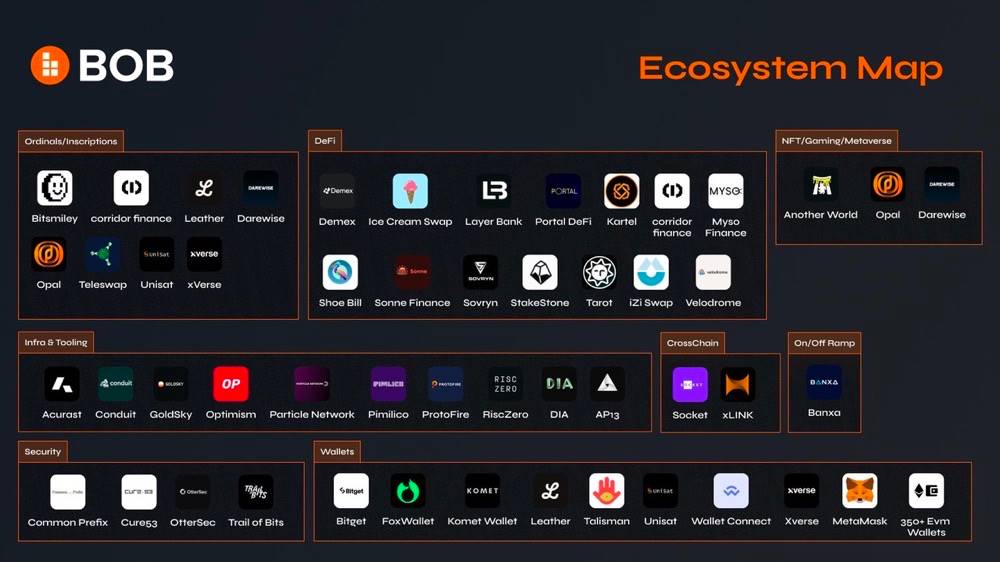
Participation in BOB’s pre-staking occurs on the Ethereum mainnet. For BTC holders, cross-chain conversion to $tBTC or $wBTC is required. These deposits offer a 1.5x reward multiplier. Other supported assets include DAI, eDLLR, rETH, USDC, USDT, wstETH, and STONE, with a 1.3x multiplier, and ALEX, ETH, and eSOV, with a 1x multiplier. BOB enjoys strong backing, having partnered with $MARA—the largest publicly traded Bitcoin miner in the U.S.—to launch a BTC L2 and securing a $10 million investment from Coinbase, indicating substantial potential.
Botanix Labs: An EVM-Equivalent L2 on Bitcoin
Botanix Labs builds an EVM-equivalent L2 on Bitcoin powered by PoS. Users can either deposit BTC into a multisig address to participate in L2 staking or bridge BTC to the L2 to engage with its ecosystem. A key feature is that these BTC assets are secured by Spiderchain—a decentralized multisig network.
By staking BTC to become a validator node in the PoS and multisig network Spiderchain, Botanix uses Bitcoin block hashes as a randomness source to randomly select nodes for block production. Finality is achieved when block headers are inscribed into Bitcoin blocks. All L2 assets on BTC are protected by the Spiderchain multisig network, where nodes form random multisig groups controlling BTC in multisig addresses. Misbehavior incurs high costs since staked BTC can be slashed.
On May 7, 2024, Botanix Labs announced a $11.5 million funding round led by Polychain Capital, Placeholder Capital, Valor Equity Partners, and angel investors including Andrew Kang, Fiskantes, Dan Held, The Crypto Dog, and Domo (founder of BRC20).
Botanix’s testnet has operated for six months, allowing users to participate and earn NFT credentials. Since beginning work on BTC L2s in 2022, Botanix Labs has demonstrated solid technical capability, making its testnet a valuable opportunity for early engagement.
bounce_bit: A BTC Yield and Restaking Infrastructure
BounceBit is a yield-generating and restaking infrastructure built on BTC, integrating CeFi and DeFi services to secure blockchain networks using BTC staking. BounceBit itself is a BTC EVM L2 where PoS staking accepts either native BB tokens or BTC assets. Deposited BTC is held in centralized custody services supported by Mainnet Digital and Ceffu. BTC deposited on BounceBit becomes bounceBTC, which users can stake to other validator networks to earn validation rewards. BounceBit delivers triple yield: yield from custodied BTC on the mainnet, yield from staking projects on-chain, and restaking rewards.
Backed by Binance, BounceBit will allocate 8% of its tokens to BNB stakers participating in the Binance Megadrop.
citrea_xyz: A ZK Rollup Enhancing Bitcoin Blockspace
Citrea is a ZK Rollup designed to enhance Bitcoin’s blockspace functionality, developed by Chainway and focused on early implementation of BitVM verification. The Citrea network processes transactions within a zkVM and generates zk proofs, which are then inscribed into Bitcoin blocks. Using BitVM, optimistic verification is performed on the Bitcoin mainnet, ensuring Citrea’s settlement and data availability are handled by the Bitcoin network.

Citrea enables trust-minimized asset bridging between L2 and the BTC mainnet via Clementine Bridge. When users withdraw BTC from L2, they send assets to an L2 withdrawal contract with a BTC address. Bridge operators first transfer their own BTC to the user. Every six months, the Clementine Bridge undergoes an interruption check, where operators must present raw transaction data, SPV withdrawal proof, and Citrea’s zk proof to claim rightful BTC. If an operator misbehaves, challengers can expose the raw data to prevent extraction, safeguarding bridge-held assets.
Citrea has completed a $2.7 million seed round led by Galaxy, with participation from Delphi Ventures, Eric Wall, Anurag Arjun, BatuX, Igor Barinov, and James Parillo.
Mintlayer: A PoS-Based Bitcoin Sidechain
Mintlayer is a Proof-of-Stake (PoS)-based Bitcoin sidechain that uses Verifiable Random Functions (VRF) to ensure consistent block production speed. Like Bitcoin, Mintlayer adopts a UTXO structure, enabling direct leverage of Bitcoin network advantages. Token issuance on Mintlayer does not require smart contracts but instead adds metadata to UTXOs—similar to Bitcoin’s colored coins. Atomic swaps between UTXOs can be implemented via hash time-locked contracts, enabling exchange with BTC mainnet assets—a feature unachievable by EVM and account-model BTC L2s.
Mintlayer has incubated Atomiq DeFi, a native-chain product utilizing atomic swap features to enable direct interaction with mainnet BTC within Atomiq DeFi. The $ATMQ token will be issued by end of Q2.
NervosNetwork: A Smart Contract Platform Based on PoW and UTXO Model
Nervos is a smart contract platform based on Proof-of-Work (PoW) and the UTXO model. In 2024, it introduced a comprehensive solution for expanding the BTC ecosystem and launched RGB++, a Bitcoin-layer asset issuance and expansion protocol. Drawing on years of experience with the UTXO model, Nervos’ RGB++ binds assets homomorphically to UTXOs, directly leveraging Bitcoin’s native capabilities and maintaining tight security alignment with the Bitcoin mainnet.
RGB++ issues assets on the BTC mainnet tied to Bitcoin UTXOs. Users can choose to “jump” these RGB++ assets to the Nervos network. Such BTC transactions create specific UTXOs on the mainnet, triggering shadow transactions on Nervos. Asset information is written into Nervos UTXOs, with unlocking conditions tied to specific BTC UTXOs. Users enjoy smart contract functionality, lower fees, and higher performance on Nervos, and can later jump assets back to the BTC mainnet via the same homomorphic binding mechanism.
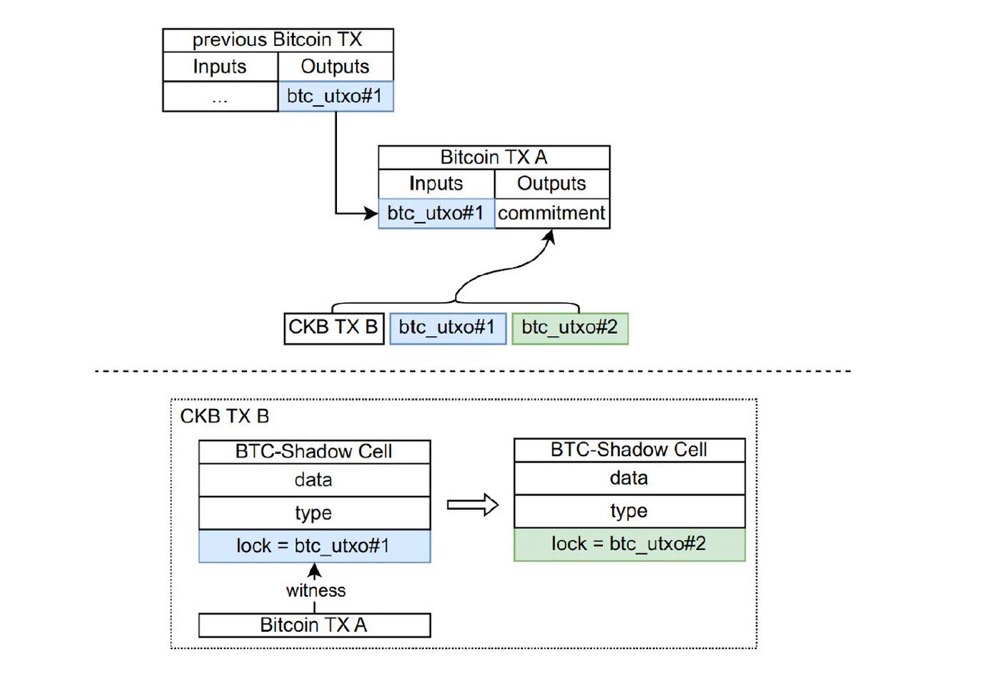
Building on this homomorphic binding concept, Nervos has released the UTXO Stack application chain framework—akin to Ethereum’s OP Stack—and is developing its own Lightning Network implementation. Nervos currently offers the most complete BTC ecosystem expansion solution.
Mezo: A BTC L2 Based on tBTC
Mezo is a BTC Layer 2 network built on tBTC, using the Cosmos EVM architecture and a tBTC multisig cross-chain bridge to transfer BTC assets to Mezo L2. Mezo introduces a Ponzi-like HODL Proof economics, analogous to BTC staking’s ve33. Users can lock BTC on Mezo to participate in consensus, with longer lock durations exponentially increasing staking weight and rewards.
Mezo’s PoS consists of BTC and native MEZO token components, both eligible to earn veMEZO rewards distributed across separate incentive pools. One-third of total incentives go to BTC stakers, two-thirds to MEZO stakers. Mezo has completed a $21 million Series A round led by Pantera Capital, with participation from Multicoin, Hack VC, and Draper Associates. Mezo has initiated an early deposit program accepting native BTC, wBTC, and tBTC, with mainnet launch expected in late 2024.
BVMnetwork: A Rollup-as-a-Service Platform Supporting Infinite Scalability
BVMnetwork is a modular Bitcoin L2 protocol specializing in mass deployment of BTC-related L2s, each optimized for specific purposes.
Positioned as Rollup-as-a-Service (Rollup as a Service), BVMnetwork uses an EVM-like model with Bitcoin serving as the data layer to achieve transaction-level consensus. Using TxWriter and TxReader, BVMnetwork embeds BVM transactions into Bitcoin transactions and ensures consistency across all BVM nodes. TxWriter embeds BVM transactions into Bitcoin transactions—similar to Ordinals technology—while TxReader filters BVM transactions from each new Bitcoin block. BVMnetwork follows a multi-layer Op-Rollup architecture comprising data availability (DA), smart contract platform, sequencer, rollup nodes, execution engine, settlement, and bridging layers. It provides a fully managed solution allowing users to deploy a BVM Chain with just a few clicks and customize configurations for their applications.
Currently, $BVM has a market cap of $143 million, a total supply of 100 million, and a circulating supply of 23 million. The token generation event (TGE) occurred on March 24, 2024, and the network is now in the staking phase. Users can stake BVM tokens to mine SHARD (BVM’s governance token), with an advertised annual percentage rate (APR) of 50%. They can also participate in mining newly launched BTC L2 tokens.
The BVM team has already launched several BTC L2s: alpha chain (the first BTC L2), naka (for BTC DeFi), EternalAI (fully on-chain AI on BTC), swamps (supporting SRC-20 DeFi), RuneChain (focused on Rune trading), Bittendo (supporting GameFi), and bloom (for BTC staking and restaking). Additional chains are planned, including those introducing PoW and real-world assets (RWA).
The BVM team iterates quickly and adeptly capitalizes on emerging trends. Most projects launch via airdrops to existing holders and prospective users, often involving legacy assets in IDOs. The team comprises prominent Bitcoin OGs active on Twitter. Previously, they developed BTC L2 Trustless Computer in 2023 with modest results, followed by a successful Friend.tech replica on Bitcoin before achieving breakthrough success with BVM.
BitLayerLabs: A BTC L2 Project Based on BitVM
BitLayerLabs is the first Bitcoin Layer 2 network (L2) built on BitVM, supporting multiple virtual machines and EVM compatibility using Optimistic Rollup (Op-Rollup) technology. On March 27, 2024, it announced a $5 million seed round co-led by Framework Ventures and ABCDE Capital, with participation from StarkWare, OKX Ventures, Alliance DAO, and UTXO Management. On May 19, it secured strategic funding from OKX, amount undisclosed.
Positioned as an Op-Rollup, BitLayerLabs plans to use DLC and BitVM for asset bridging, enabling users to withdraw assets from BTC even if issues arise on the mainnet (escape hatch). Through BitVM, BitLayerLabs builds a Turing-complete computation layer atop the Bitcoin stack, using basic building blocks like hash locks, time locks, and large Merkle roots to support complex computations and contracts. It supports multiple VMs including EVM, CairoVM, SolVM, and MoveVM.
However, the current mainnet uses PoS combined with a multisig bridge. BitLayer plans to achieve a minimal BitVM implementation in Q2 2025 to replace the current bridging mechanism.
Bitlayer has launched Mainnet V1 and announced developer incentive programs and early supporter NFT campaigns. It is currently collaborating with Lorenzo, Bitsmiley, Avalon, Bitcow, Pell, Enzo, and Bitparty on a two-week mining event ending June 10.
The roadmap indicates Bitlayer will launch Mainnet V2 in September 2024, transitioning to an equivalent Rollup model with Sequencer+DA mode, leveraging DLC/BitVM protocols to secure asset deposits and withdrawals. In June 2025, Mainnet V3 will utilize BitVM for L1 verification challenges, achieving BTC-level security equivalence, implementing OP challenges via BitVM, and deploying DLC-Attestors for asset escape mechanisms.
Alpen Labs: A Modular ZK-Rollup Project
Alpen Labs focuses on developing ZK-Rollup technology. Though limited information is available, the team and funding background are strong. The project positions itself as a modular ZK-Rollup with native ZK validators and optimistic ZK bridges.
Alpen Labs continues the BitVM philosophy but designs a specialized ZK SNARK verifier for Bitcoin called SNARKnado, reducing interactive verification rounds compared to BitVM’s design, thus improving feasibility. Some code has already been open-sourced.
On April 10, 2024, Alpen Labs revealed it had completed a $10.6 million seed round, though the actual fundraising concluded in 2023. Investors include Castle Island Ventures, Robot Ventures, and Axiom Capital. CEO and founder Simanta Gautam founded Alpen Labs in 2022, focusing on BTC and zkSNARKs. Gautam graduated from MIT and previously served as a research intern at MIT, NASA, and Amazon, and founded Synapse. Alpen Labs has not published code on GitHub, and no official roadmap has been released.
Anduro: A Sidechain System Backed by Nasdaq-Listed Miner Mara
Anduro is a multi-sidechain platform incubated by Marathon Digital Holdings, a Nasdaq-listed mining company, aiming to deliver sidechain solutions.
Anduro has designed two sidechains: COORDINATE, BTC-compatible, and ALYS, ETH-compatible. COORDINATE is a UTXO chain supporting innovations like Ordinals, while ALYS targets real-world asset (RWA) applications.
All Anduro sidechains engage in merged mining with Bitcoin, and their native asset Anduro BTC is pegged 1:1 to BTC. Anduro sidechains adhere closely to Bitcoin’s native properties, including using Proof-of-Work (PoW) for block production.
anetaBTC: A Wrapped BTC Project Based on Cardano and Ergo
anetaBTC is a Wrapped BTC project built on Cardano and Ergo, aiming to bring DeFi liquidity to BTC on these two chains. Through smart contracts, users can mint and redeem AnetaBTC, enabling BTC holders to participate in various DeFi activities—including lending, trading, and liquidity mining—on Cardano and Ergo ecosystems without relinquishing control of their BTC.
anetaBTC’s tokens include $cBTC, $NETA, and $cNETA. $cBTC is a Wrapped BTC token minted on Cardano and Ergo by anchoring BTC. $cBTC is still being minted, with approximately 17.6 BTC minted so far. $NETA and $cNETA are native project tokens with a total supply of 2 billion, issued respectively on Ergo and Cardano. The $cNETA market cap is currently $2.53 million, fully circulating, with 70% publicly allocated. The TGE for $cNETA has already taken place.
The project has launched V1 mainnet, with V2 testnet expected in Q2 2024, V2 mainnet scheduled for Q3 2024, and V3 planned for 2025.
Founded by Austin Regron, who has extensive development experience and focuses on bringing BTC into the Cardano and Ergo ecosystems. Co-founder Willie McClinton, a PhD student at MIT, contributed to early development but has since exited.
BiopDAO: An Op Rollup Project Supporting BRC-20 Protocol
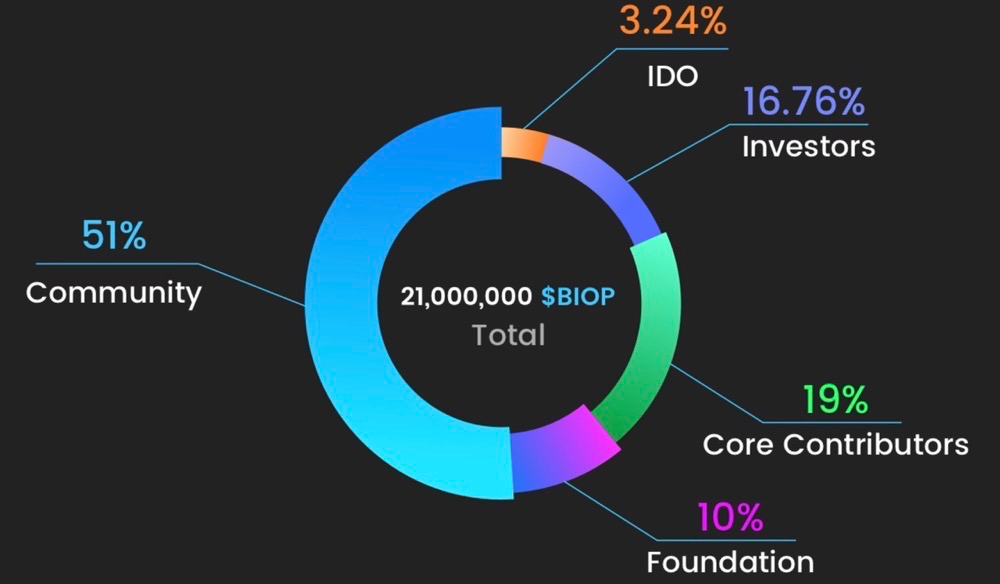
BiopDAO is an Op Rollup-based project focused on supporting protocols like BRC-20 and providing the Biop Virtual Machine (BVM) for smart contract support. Its goal is to create an efficient, secure, and scalable Layer 2 solution. The primary token is $Biop, with a total supply of 21 million. Currently, $Biop has a market cap of about $500,000 and a FDV of $2.5 million. BiopDAO plans to release three versions of its L2 blockchain: V1 targeted for Q1 2024, V2 for Q2 2024, and V3 for Q4 2024. Although BiopDAO has open-sourced its code, project progress is slow and overall completion remains low.
Bitsat_Official: A ZK-Rollup Project Integrating AI into BTC L2
Bitsat is a full-chain interoperable protocol compatible with both EVM and Cosmos, aiming to integrate AI into Bitcoin Layer 2 (L2) networks.
At the core of Bitsat is HyperLayer, a high-performance, scalable platform for deploying and running distributed AI applications on the Bitcoin network. Key technical features include ZK-Connector for efficient data and asset transfer, VM Engine compatible with Ethereum Virtual Machine (EVM), and an asynchronous high-performance consensus mechanism delivering scalability and speed.
The project has not yet disclosed tokenomics. The roadmap includes launching a testnet in Q2 2024 and mainnet V1 in Q4 2024.
Bool_Official: A Decentralized, Secure Bitcoin Validation Layer
Bool is a modular data availability (DA) layer leveraging ZK, MPC, and TEE (Trusted Execution Environment) technologies.
The project aims to deliver a decentralized and secure Bitcoin validation layer driven by MPC-based distributed key management. Technical highlights include Dynamic Hidden Committee (DHC) and Ring Verifiable Random Function (Ring VRF) protocols protecting member identities, with all key management processes executed inside Trusted Execution Environments (TEE). Regarding tokenomics, $BOOL has a total supply of 1 billion, with 500 million initially allocated.
The roadmap includes completing code audits in June 2024, mainnet launch in July 2024, and opening BTC staking starting August 2024. Code is open-source, development is advanced, and the project is awaiting audit.
CashuBTC : A Privacy-Focused BTC Project
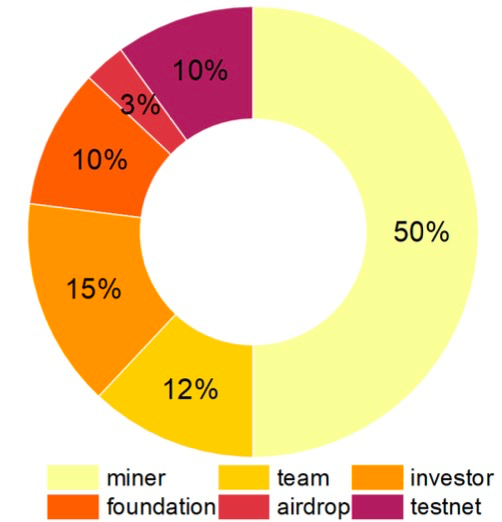
Cashu is a free, open-source Chaumian ecash system built for Bitcoin and deeply integrated with the Lightning Network to ensure privacy. It is well-regarded by the core Bitcoin community. Cashu provides an open electronic cash protocol called Cashu NUT, using blind signatures to protect user privacy with peer-to-peer transactions.
Technical features include Lightning node operators acting as custodians for users on the Lightning Network while issuing e-cash. Cashu is an open protocol already supported and used by multiple systems.
BnzkLabs: A BTC L2 Project Based on ZK-Rollup
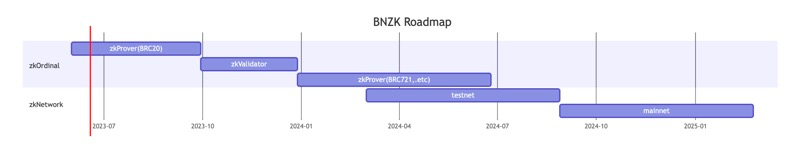
BnzkLabs plans to support the BRC20 protocol (via zkToken), followed by BRC721 (zkNFT) and other protocols. Current progress is limited, with no visible code. Tokenomics: $BNZK has a total supply of 21 million, with 10% reserved for the team, 20% for ecosystem rewards, 40% for public and private sales, and 30% for mining rewards. The roadmap includes launching testnet in April 2024 and mainnet in September 2024. Overall completion is average, and code remains unpublished.
Drivechain LayerTwoLabs: Bitcoin Sidechain Technology
LayerTwo Labs was formed by proponents of BTC Drivechain to create Bitcoin sidechains. Drivechain is a merged-mining BTC sidechain technology proposed as a soft fork upgrade to Bitcoin, introducing a new method for sidechain interaction.
Paul Sztorc, the proposer of Drivechain, is founder and CEO of LayerTwoLabs. A former Yale researcher and statistician, he is also a veteran Bitcoin contributor who detailed Drivechain concepts in BIP300 and BIP301.
Drivechain is a BTC sidechain technology that enables large-scale sidechain expansion of Bitcoin via hash rate hosting and miner scoring systems, without compromising Bitcoin’s core security and decentralization. It works by creating a new type of Bitcoin address: funds sent here are locked and can only be spent when miners collectively agree. Miners reach consensus via a “scoring” system—once a transaction accumulates sufficient score, it is published and funds move from sidechain to mainchain.
Drivechain allows the Bitcoin network to experiment with new use cases—such as asset issuance, fully private transactions, and stateful smart contracts—without sacrificing Bitcoin’s core security and decentralization. The project roadmap is already underway, with testnet launchers available for Linux, Mac, and Windows. Code is open-source, completion is good, and updates are frequent.
Raised $3 million in December 2022, details undisclosed.
EASTBlue_io: An L2 Solution Focused on Mass Adoption
EASTBlue is an L2 solution targeting mass adoption, backed by NEAR and leveraging Rollup technology with multi-VM support.
Based on Rollup, EASTBlue aims to introduce a new programmable layer to Bitcoin via the EAST Account Vault Model (AVM), leveraging NEAR’s chain signatures and account aggregation to solve congestion and scalability issues caused by Ordinals, enhancing BTC’s smart contract capabilities. EASTBlue achieves a new cross-chain transaction paradigm by transferring account ownership to smart contracts.
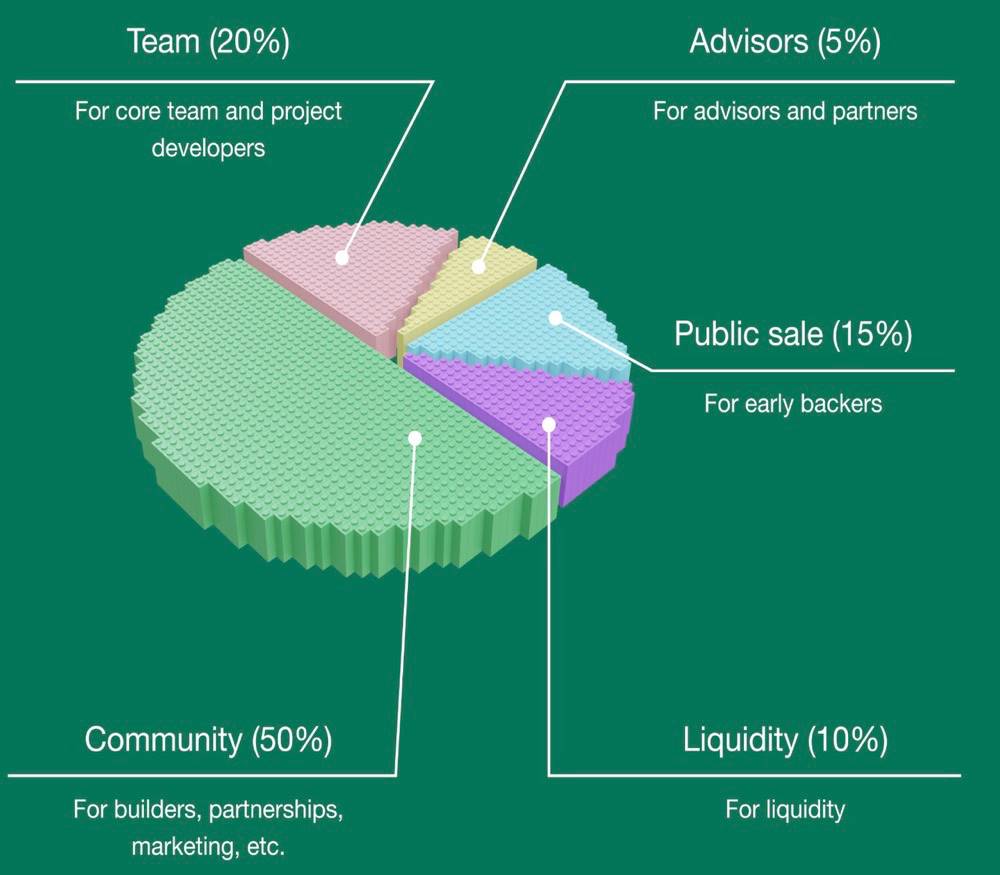
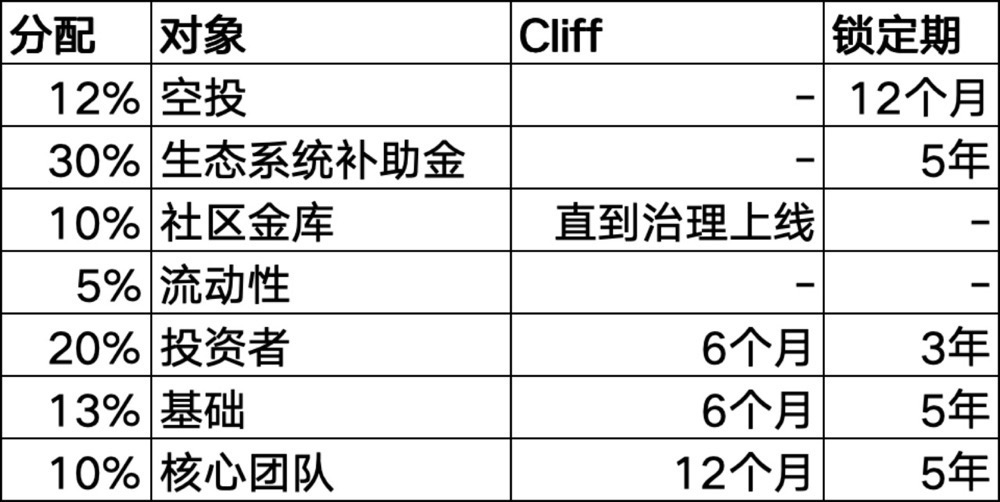
$EAST airdrop began on March 22, 2024, prioritizing PARAS token holders. Total supply is 1 billion, with $EAST dynamically issued based on ecosystem activity and performance, subject to a 5-year lock-up. Most tokens (52%) are allocated to community building and ecosystem onboarding. Staking functionality will be introduced, though a full roadmap is unavailable and no project code is visible.
Tokenomics allocation rules are as follows:
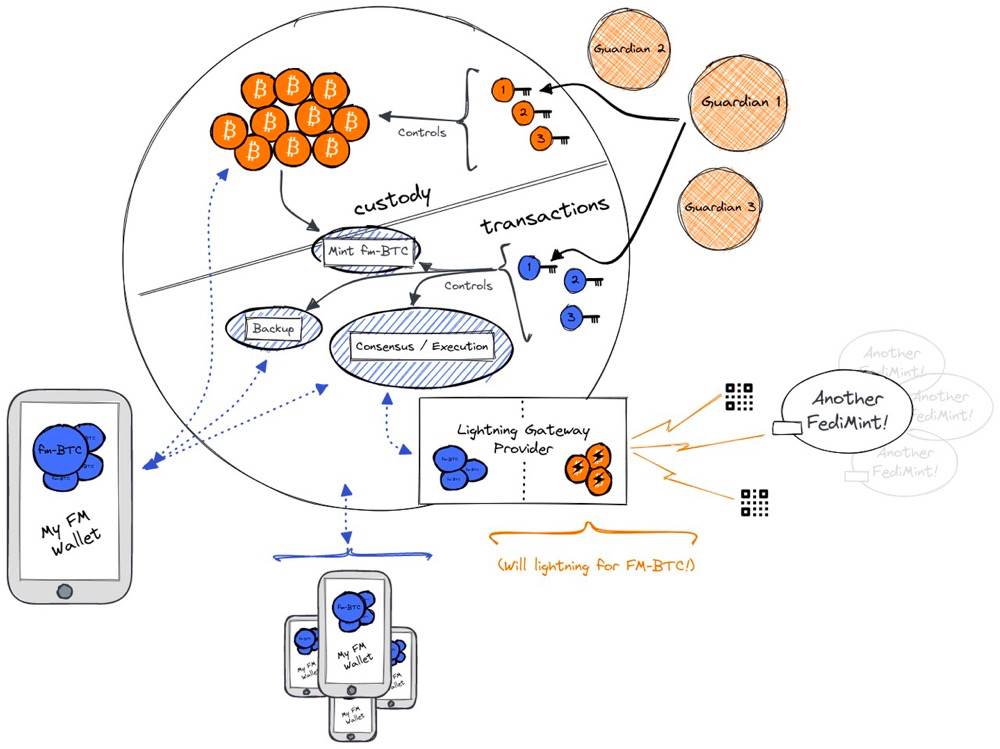
fedimint: An Open-Source Protocol for Community-Custodied Bitcoin Transactions
Fedimint is an open-source protocol for community-custodied Bitcoin transactions, emphasizing privacy and reducing reliance on large centralized exchanges. Co-founders include Justin Moon and Obi Nwosu, co-founder of austinbitdevs.com and former CEO of UK-based Bitcoin exchange Coinfloor. The project has completed a $4.2 million seed round and a $17 million Series A, totaling $21.21 million in funding. Fedimint recently released v0.3.0, making significant progress in automated version compatibility testing.
GeliosOfficial: A BTC L2 Supporting Runes Standard and EVM Compatibility
Gelios is a Bitcoin L2 supporting the Runes standard and EVM compatibility, aiming to facilitate seamless communication and cross-chain interactions between applications. Positioned as a dApp layer for Bitcoin, Gelios allows users to transfer BTC and WBTC onto its network, unlocking the potential of BTC DeFi. The project has partnered with Ave.ai, OKX, Bitget, Gate, and Unisat. Crimson Heart, a gacha-style card placement game, has already deployed on the Gelios network.
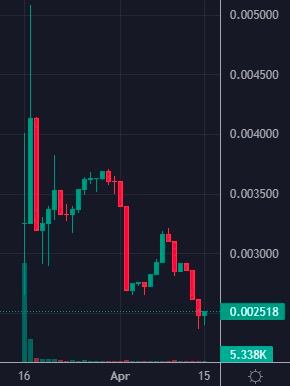
Gelios has an initial supply of 210 million $gOS tokens, an initial market cap of $40 million, and initial liquidity of 100 ETH. $gOS is live on Alphanet and tradable for ETH on Uniswap. The roadmap includes a three-phase airdrop: testnet (completed), Alphanet (ongoing), and mainnet (not yet started).
HacashCom: A Multi-Layer Scaling and State Channel Bitcoin Solution
Hacash.com is a project dedicated to solving Bitcoin scalability by implementing one-way transfers at Layer 1 and deploying state channels at Layer 2 for payment operations, while proposing a Layer 3 vision for ecosystem expansion.
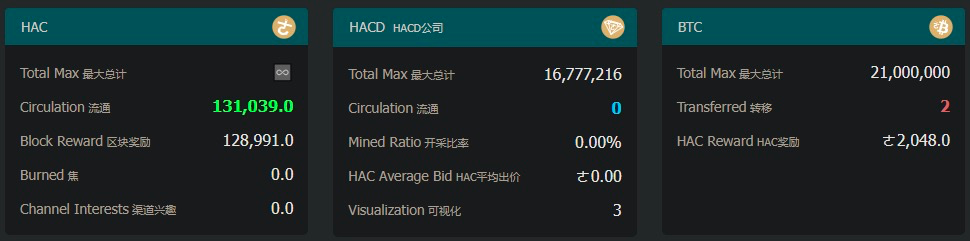
Since launching in 2019, the Hacash Layer 1 network uses Proof-of-Work (PoW) consensus and three PoW currencies—HACD, BTC, and HAC—for token issuance, distribution, and settlement—to address Bitcoin’s lack of monetary attributes. Layer 2 focuses on large-scale payments, building a chain of payment settlement channels and serving as infrastructure for Layer 3. Layer 3 supports multi-chain interactions and application development, enabling asset issuance, smart contract execution, on-chain data exchange, and cross-chain capabilities. Founding team members include Ken You, Trevor Stoll, and Leo Yang. The project raised $60,000 via crowdfunding for listing on Mexc exchange. It is currently in the testnet phase.
Bitcoin can be unidirectionally transferred into Hacash, preserving ownership and native value, with total supply capped at 21 million BTC, circulating in Hacash at the smallest Satoshi unit. BTC transfers trigger HAC creation, with HAC issuance gradually decreasing—after 1.05 million BTC transferred, each 1 BTC transfer produces only 1 HAC. HACD has a total supply of approximately 16.77 million, generated through mining and HAC auctions. Mining difficulty increases over time, with a maximum daily output of 58. Full HACD production is projected to take 800 years, though it may never be fully mined.

interlayHQ: Bitcoin-Supported Assets Enabling Cross-Chain Interoperability
Interlay’s flagship product is "interBTC," a fully collateralized, 1:1 Bitcoin-backed asset enabling interoperability across multiple blockchain ecosystems while preserving Bitcoin’s censorship resistance. Technically, Interlay v2 introduces native DeFi functionality by creating markets tailored for Bitcoin holders and establishing deep liquidity within these protocols. Users gain access to Bitcoin-centric DeFi use cases such as swap, borrow & lend, multi-chain BTC, and BTC staking. Users lock BTC to mint iBTC 1:1, use iBTC as collateral in DeFi to earn yield, and later redeem BTC. Interlay has undergone audits by renowned firms including Informal Systems, Quarkslab, NCC Group, and Security Research Labs. Founding team members Alexei Zamyatin and Dominik Harz hold PhDs from Imperial College London. To date, Interlay has completed two funding rounds totaling $9.5 million, with the latest $6.5 million raise on December 21, 2021, backed by IOSG Ventures, DFG, and Hypersphere.
libreblockchain: A Faster, Cheaper Bitcoin L2
Libre is a Bitcoin Layer-2 solution that makes Bitcoin and Ordinals faster, cheaper, and easier to program. Libre.org is an all-in-one platform for Bitcoin ordinals, offering search, wallet, marketplace, and inscription tools. Libre requires no token, supports TypeScript and other top-tier languages, allows users to join in seconds using BTC, and requires no KYC. Libre handles over 4,000 transactions per second with zero fees and includes on-chain AMM functionality. The Libre mainnet launched on July 4, 2022, distributing a 10 million LIBRE airdrop—only 277,000 claimed. Libre has also launched a beta BRC-20 DEX and mobile app to facilitate inscription trading.
LightecXYZ: A ZKP-Based Bitcoin Layer2 Solution
LightecXYZ aims to build a Bitcoin Layer2 using Zero-Knowledge Proof (ZKP) technology. Key projects include opZKP and zkBTC. opZKP offloads complex computations off-chain and generates concise proofs, verified on-chain by introducing new opcodes into Bitcoin’s scripting language. This overcomes Bitcoin’s Turing incompleteness, enabling diverse applications on Bitcoin. opZKP is technically complex and has a long development cycle. zkBTC, built atop opZKP, implements a ZKP-based cross-chain bridge between Bitcoin and Ethereum. Users deposit BTC into a designated address to mint an ERC-20 token $zkBTC pegged 1:1 to BTC. The process involves generating ZKP off-chain and verifying it via an Ethereum smart contract before minting $zkBTC. Redemption requires burning $zkBTC and generating off-chain proof, which, when validated, releases BTC. The Lightec team does not control the private keys of the designated address, ensuring security and decentralization.
The Lightec team is actively developing zkBTC, expecting testnet launch in several months. They are also designing a token economy model to support further development of the opZKP proposal and advance the Bitcoin Layer2 ecosystem.
Liquid_BTC: A Fast, Secure, and Confidential Layer2 Solution for Bitcoin
Liquid Network is a Layer2 solution for Bitcoin that enables fast, secure, and confidential settlements and issuance of digital assets—including stablecoins, security tokens, and other financial instruments. Liquid uses a Federated Byzantine Agreement (FBA) protocol,
Join TechFlow official community to stay tuned
Telegram:https://t.me/TechFlowDaily
X (Twitter):https://x.com/TechFlowPost
X (Twitter) EN:https://x.com/BlockFlow_News
 @TrustlessLabs