Understanding Seamoon Protocol: Japan's Comprehensive Giant DMM Group Builds an "Immortal" Web3 Steam
TechFlow Selected TechFlow Selected
Understanding Seamoon Protocol: Japan's Comprehensive Giant DMM Group Builds an "Immortal" Web3 Steam
Seamoon Protocol is dedicated to addressing the current challenges in the gaming industry through blockchain, providing users with persistent content access and empowering game assets.
 Navigating Web3 tides with focused insights
Text: Coolman, Foresight News
With the rapid advancement of content digitization, today's industries are evolving at a pace far exceeding that of two decades ago—especially the gaming industry. Beyond a few well-established giants, the entire sector faces a sense of instability and impermanence. Meanwhile, the shift from standalone games to online platforms has led users to entrust all their in-game assets to centralized game services, which means that if a platform shuts down, all user investments could vanish overnight.
The accelerating pace of iteration, coupled with gamers’ nostalgia for classic titles, has intensified demand for permanent and accessible digital content. An increasing number of projects are leveraging blockchain technology to address issues such as traceability of game transaction records, while using NFTs to enhance the functionality of in-game assets and reduce reliance on centralized platforms. However, decentralized data storage brings high costs and requires strong technical expertise in security and interoperability.
Therefore, although the vision of achieving permanent data storage and access via Web3 is compelling, very few projects have managed to overcome these challenges. Japan’s integrated IT giant DMM Group stands out as one of the pioneers tackling these obstacles head-on. Its Web3-focused subsidiary, DM2C Studio, has developed and operates Seamoon Protocol (SMP), aiming to leverage Web3 technologies to foster sustainable economic development in gaming and tackle shared challenges facing both Web3 and the gaming industry—providing users with permanent, tamper-resistant access to digital content. Leveraging DMM Group’s long-standing resources, SMP strives to build a secure, innovative, and open digital entertainment ecosystem for global users.
What is Seamoon Protocol?
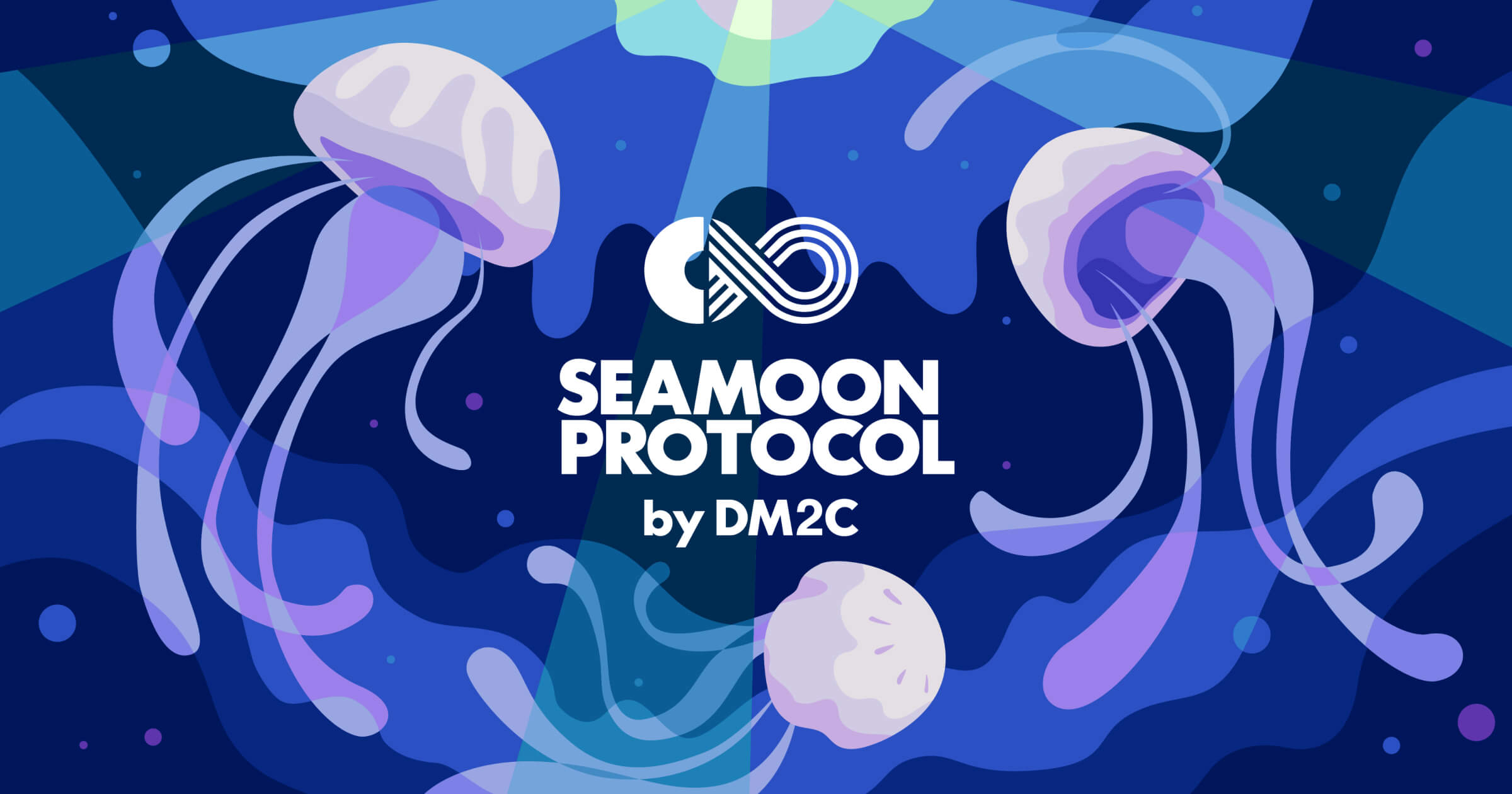
In simple terms, Seamoon Protocol is a Web3 entertainment platform aiming to establish a globally recognized application ecosystem representing Japan’s entertainment industry through sustained team development. The name “Seamoon” combines the Chinese characters for “sea” and “moon,” echoing the Japanese word “Kurage” (jellyfish). It draws inspiration from the so-called immortal Turritopsis jellyfish, symbolizing an enduring presence navigating endlessly through the ocean—an analogy for its sustainable development within the Web3 ecosystem.
Multi-Chain Architecture + Cross-Chain Interoperability
In its early stages, Seamoon Protocol can be understood as a launchpad providing foundational interaction logic for game projects, built across three distinct underlying infrastructures: Ethereum, Oasys Hub, and DM2 Verse, each supporting different use cases.
-
Oasys Hub (Oasys Layer 1) is a game-focused, EVM-compatible Layer 1 based on the Optimism architecture. It connects multiple Layer 2 networks, enables gasless high-speed transactions, and supports cross-chain asset transfers, ensuring interoperability with major public blockchains.
-
DM2 Verse (Oasys Layer 2) is SMP’s native blockchain, enabling fast and gasless transactions directly with Oasys Hub. Additionally, users can seamlessly transfer NFTs from Verse to other chains for external marketplace trading.
Beyond this multi-chain infrastructure tailored for various applications, SMP also plans to collaborate with full-chain interoperability protocol LayerZero to further enhance cross-chain capabilities. Unlike Web3 gaming platforms such as ImmutableX or Treasure, which are confined to specific ecosystems, SMP is not limited to a single environment. Currently, two games are set for imminent release, and the SMP project token is expected to list on exchanges this summer, with multiple Web3-native games planned for continuous rollout.
Team Background
DM2C Studio, the developer and operator behind Seamoon Protocol, is a Web3 subsidiary of DMM Group—one of Japan’s largest integrated entertainment companies. As of January 2023, DMM Group operates 60 businesses across 20 sectors including entertainment, gaming, finance, sports, infrastructure, and more, building an ecosystem involving numerous celebrities and creators.
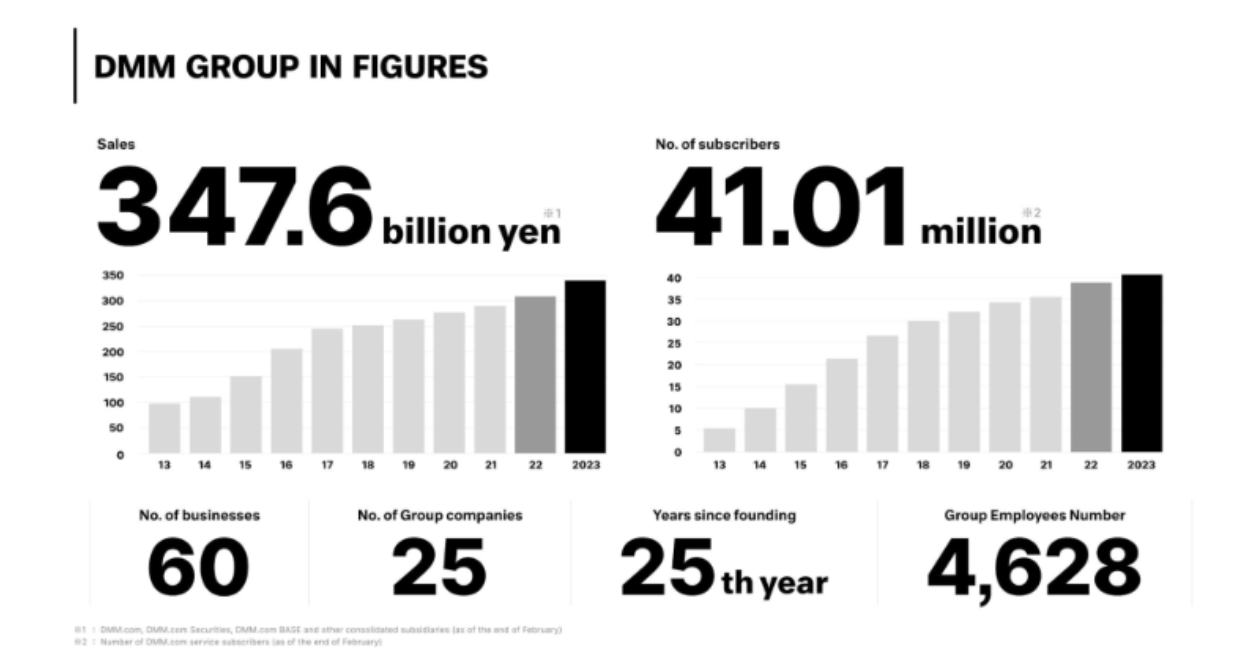
DMM Group brings Seamoon Protocol a user base of 41 million and a strong brand reputation, facilitating mass adoption of Web3 in Japan through conversion of its existing user base. The diverse business portfolio of DMM Group subsidiaries presents significant potential for future collaboration with Seamoon Protocol. This includes DMM Games, known for developing *Touken Ranbu* and publishing popular titles like *Umamusume Pretty Derby* in Japan, as well as DMM Bitcoin, a licensed Japanese cryptocurrency exchange. Beyond its domestic advantages, Seamoon Protocol is actively forming strategic partnerships with overseas enterprises and investors to achieve global expansion and reach new user demographics.
DM2C Studio Team Introduction
DM2C Studio currently has around 50 members dedicated to platform development, GameFi, financial infrastructure services, and non-gaming service innovations, directly overseen by Keishi Kameyama, CEO of DMM Group.
Nagato Kasaki, CEO of DM2C Studio, graduated from Keio University Graduate School of Policy and Media and joined DMM Group in 2014. He has been involved in big data platform development, distributed systems, blockchain R&D, and related business planning, authoring several technical books. Since 2022, he has served as the core technical lead for DMM Group’s Web3 division.
Tatsuya Sato, Director at DM2C Studio, spent 14 years at Japanese gaming giant Sega, contributing to arcade, online, and card games across generations. He then worked for 8 years at KDDI, Japan’s leading telecom company, before joining DMM in 2021 to lead strategic planning for GameFi initiatives and content & service layers.
Funding Status
On December 20, 2023, DM2C Studio announced a strategic funding round raising 340 million JPY (~$2.3M USD), led by Galaxy Interactive—one of the largest venture capital funds focused on global entertainment—with participation from prominent Web3 VCs including Shima Capital, Bitfinex, and Marblex. This marks DM2C Studio’s first fundraising effort, aimed at establishing partnerships with top-tier entertainment projects worldwide to accelerate global expansion.
DM2P Tokenomics
Token Distribution
The total supply of Seamoon Protocol’s native token DM2P is capped at 10 billion tokens. At TGE (Token Generation Event), only 20% will be issued and released initially, with additional minting determined by market demand thereafter.
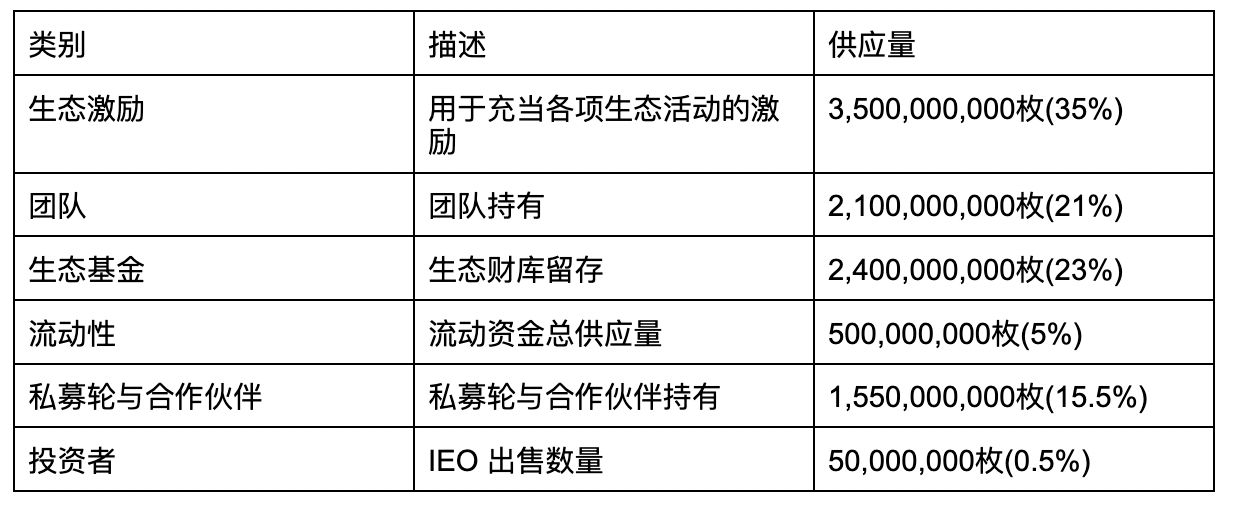
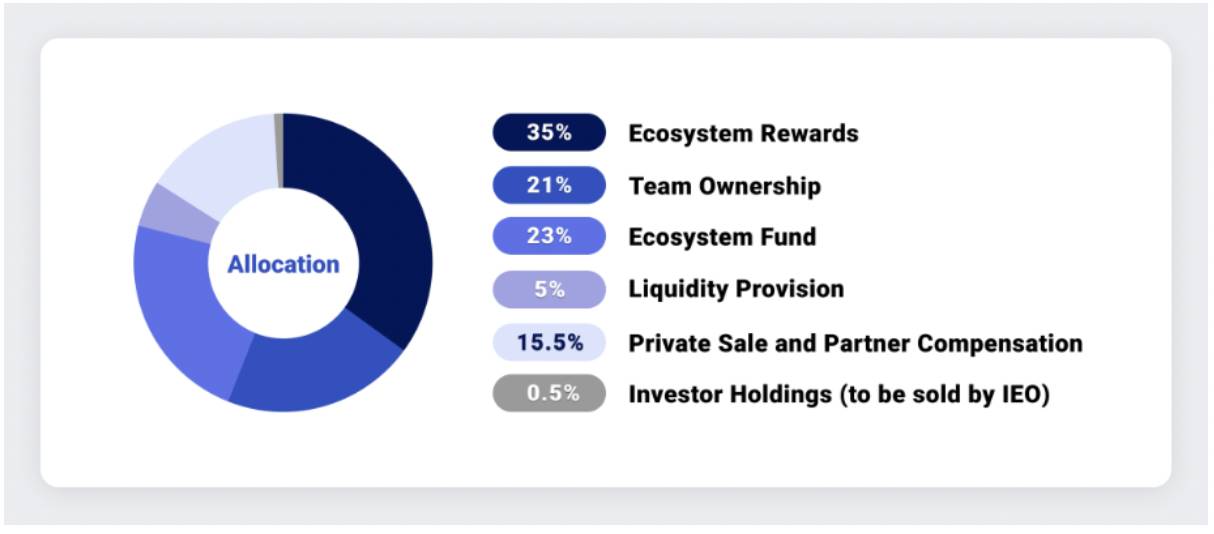
Notably, unlike typical Web3 platforms that rely heavily on investor funding and private sales, Seamoon Protocol—backed by DMM Group—allocates nearly 60% of its tokens to ecosystem incentives and retention, aiming to attract more users and developers and cultivate a vibrant, active community.
Token Utility
The DM2P token will primarily serve two purposes: paying platform fees and incentivizing token holders.
For payments, developers and publishers can use DM2P to cover various platform service fees, including identity verification, membership features, KYC, cross-chain bridges, customer support, analytics tools, and financial services (such as loans and custody). Consumers and gamers can use DM2P to purchase premium memberships, wallet upgrades, limited-edition NFTs, commemorative coins, and exclusive domain names.
Regarding holder incentives, both developers/publishers and consumers/gamers who hold DM2P gain preferential access to platform features, financial services, and in-app functionalities, as well as priority rights to purchase limited NFTs and participate in NFT voting events.
Ecosystem Development
Gaming Initiatives
KANPANI☆GIRLS is a cross-platform idle anime-style girl game developed and operated by DMM Games. Launched in 2014 with a unique and engaging world setting, it achieved over 2.5 million downloads. KANPANI☆GIRLS RE:BLOOM is a Web3 remake based on the original universe, featuring updated storylines and new gameplay mechanics. The game plans to start presales and officially launch in Japan between July and August.
DM2C has also formed a strategic partnership with Thai game developer ROTJANA KAANKEM to release their game Kyrie & Terra on Seamoon Protocol. Kyrie & Terra is a turn-based RPG with ACG-style anime aesthetics, specifically targeting Southeast Asian audiences. The game is scheduled for official release in July.
DeFi Initiatives
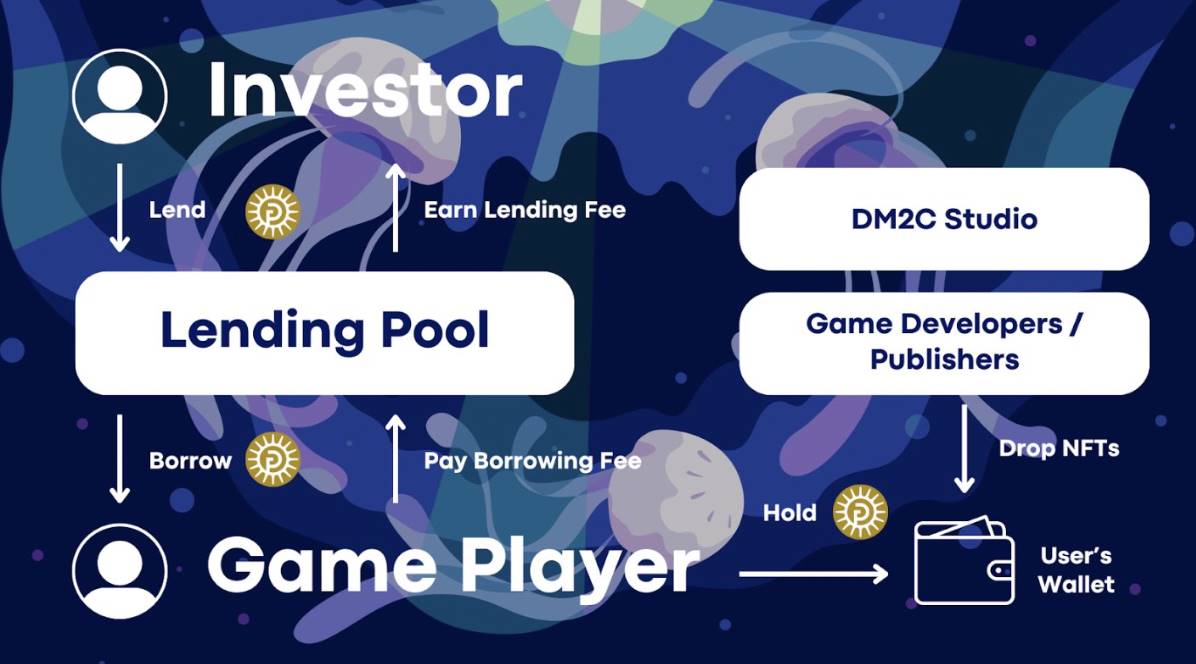
Alongside launching games, Seamoon Protocol has announced plans to develop DeFi services to strengthen the value of the DM2P token, focusing on liquidity pools and lending pools. In addition to its utility in payments, the project intends to design governance and usage rights for token holders—including membership privileges within SMP and its games, priority purchasing rights, and access to certain services offered by DMM Group. Holders will be able to lend out their tokens via lending services, effectively converting part of their holdings and associated rights into yield.
Conclusion
Seamoon Protocol aims to leverage blockchain technology to address current challenges in the gaming industry, offering users permanent access to content and empowering in-game assets. Backed by DMM Group’s extensive resources and deep expertise in gaming and DeFi, Seamoon Protocol may emerge as a key player in the evolution of digital entertainment. As more games and DeFi services roll out, we may soon witness Seamoon Protocol—a product of the "Akihabara nation"—leading the gaming industry toward a more durable and secure future.
Join TechFlow official community to stay tuned
Telegram:https://t.me/TechFlowDaily
X (Twitter):https://x.com/TechFlowPost
X (Twitter) EN:https://x.com/BlockFlow_News
 Foresight News