Interview with Sun Yuchen: I Don't Think Jia Yueting Is a Fraud; Running a Company Is My Only Hobby
TechFlow Selected TechFlow Selected
Interview with Sun Yuchen: I Don't Think Jia Yueting Is a Fraud; Running a Company Is My Only Hobby
My situation is different from CZ's—you can negotiate anything.
 Navigating Web3 tides with focused insights
Compilation: TechFlow
Sun Yuchen is always a trending figure in the crypto world.
From eye-catching social media remarks to anecdotes about his personal life, every small detail attracts public curiosity.
Today, Hua Zong hosted Sun Yuchen on his podcast "Open Mic" for a two-and-a-half-hour conversation, covering topics ranging from his potential investment in Jia Yueting’s IP-based e-commerce company to legendary tales involving coconut chicken.
TechFlow has been authorized by Hua Zong to transcribe and edit the podcast content. Due to the highly conversational nature of the original audio, this version condenses and highlights key insights, with some parts omitted.
Full audio available here: Vol. 01 This Time Sun Yuchen Didn’t Stand Anyone Up
Below is the main content of the podcast:
Hua Zong:
Hello everyone, I’m Hua Zong. Welcome to “Open Mic.” Through this show, I aim to present more dimensions of the stories and people I encounter. Today’s guest is Sun Yuchen. I first met him about ten years ago when he had just returned to China to start up—back then, he was quite green. A decade later, he’s become far more famous and wealthy, and the controversies surrounding him have intensified like never before. Recently, I met him in Hong Kong. What follows is drawn from our two-and-a-half-hour discussion.
Why Consider Investing in Jia Yueting?
Hua Zong: The reason I wanted to talk with you today stems from a recent interaction I saw between you and Mr. Jia—a one-sided gesture where you expressed interest in supporting him to launch an IP-focused company. Can you elaborate on that?
Sun Yuchen:
I’ve actually followed Jia Yueting for quite some time. I used to be a deep user of LeEco products—LeEco phones, LeEco TVs, and even the EasyGo ride-hailing service he acquired later. Essentially, across every segment of the LeEco ecosystem (except for the car they never managed to build), I was not only a user but a fairly heavy one.
Back then, as someone working in internet tech, I felt LeEco had a strong following in China because it seemed like the most promising A-share listed company that could potentially become the next Apple. At the time, both institutional investors and retail traders held high hopes for LeEco.
Hua Zong: Why did you think LeEco could resemble Apple? Was it because of their promoted “ecosystem” concept?
Sun Yuchen:
Yes, for several reasons. First, the overall quality of internet companies listed on China’s A-share market wasn’t particularly high, as many prominent firms couldn't list there due to structural issues.
Compared to other companies at the time, whether in terms of internet thinking or overall ethos, LeEco stood out. Like Apple, they aimed to build a full ecosystem—starting with content and TVs, then imitating Apple and Tesla by expanding into smartphones and electric vehicles. Back then, we believed LeEco was the only company on the A-share market with the resources to pull this off.
Their stock price soared because mainstream institutions and investors bought into their vision. Their products were decent too. But eventually, major problems emerged. In my view, the biggest issue was severe resource misallocation. For example, LeEco Sports spent 500 million RMB buying Premier League broadcast rights in Hong Kong, only to realize later they didn’t actually have the legal authority to broadcast those games there.
Studying Failures Extensively
Hua Zong: Do you see the resource misallocation as a strategic or tactical error?
Sun Yuchen: Personally, I think the strategy was sound, but execution went wrong in multiple areas.
Hua Zong: Was it a decision-making problem or an execution issue?
Sun Yuchen: I believe the top-level design wasn’t flawed. Even today, Jia Yueting’s top-level vision—such as entering the car industry—has proven prescient. When LeEco started building cars, most domestic competitors weren’t even in the game yet. So yes, their strategic foresight was ahead of its time, but the execution—timing, details, resource allocation—was severely mismatched. This kind of misalignment happens often in traditional industries. I study these cases carefully because I don’t want to repeat such mistakes.
Hua Zong: So do you spend significant time studying all these business stories and trajectories?
Sun Yuchen: Yes, I do. One key insight I gained from Hupan University is that outside the business world, people tend to study success—everyone wants to know how successful people made it. But real entrepreneurs focus more on studying failure, learning how to avoid it, which is actually essential to succeeding. Just like football players admire Messi and Ronaldo because they’re legends, but if you want to become one, you should instead study those prodigies who fell from grace—what went wrong for them?
Lessons from LeEco: Ecosystem vs Focus
Hua Zong: When you say “focus,” you mean capabilities and resources determine what you should pursue. You can see the summit, but if your stamina and oxygen supply are insufficient, you shouldn’t rush straight up. Does this mindset constantly guide you?
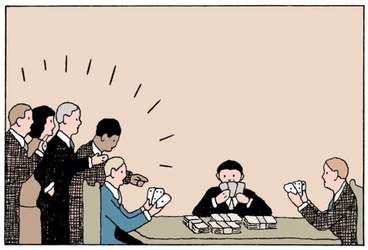
Sun Yuchen: Absolutely. And I think many overlook how similar running a company is to playing poker. Many assume that in business, if you have 100 points and achieve 90, you still succeed. That’s completely wrong—especially in internet industries. It’s winner-takes-all. In a Texas Hold’em tournament with eight players, eventually everyone else gets wiped out. Your goal must be to be the sole winner. LeEco should have focused on making each sub-ecosystem a dominant player before moving on. The internet naturally rejects second place—if you’re not number one, you’ll quickly get eliminated.
Hua Zong: Did ByteDance learn from LeEco’s mistakes? Can you elaborate?
Sun Yuchen: ByteDance excelled in resource allocation and strategic focus. Whenever they entered a new field, they poured massive resources into ensuring victory. For instance, in short video, they invested far more than any competitor. It’s like Lin Biao during the Chinese Civil War—he preferred concentrating superior forces in local battles so that even if overall strength was weaker, he could win decisive engagements. ByteDance adopted a similar approach—going all-in within specific domains to guarantee success.
I Don’t Think Jia Yueting Is a Fraud
Hua Zong: Many people call Jia Yueting a fraud. What’s your take?
Sun Yuchen: First, I don’t consider Jia Yueting a fraud. If he took large amounts of public funding and diverted it for personal luxury instead of actual business operations, then yes—that would make him a fraud. But I believe he genuinely tried to build things, investing resources into his ventures. Whether he succeeded is another matter. I understand the widespread skepticism toward him, especially regarding financial transparency. That’s why I think if Jia starts another venture, financial transparency will be critical—he’s lost public trust in that area.
Hua Zong: How do you define a fraud?
Sun Yuchen: A true fraud is someone who raises public funds and then disappears—evading accountability, sometimes even faking their death. I know many such people. But Jia isn’t like that. He took resources and put them into his projects.
Hua Zong: Does “fake it till you make it” count as fraud?
Sun Yuchen: No, I don’t see it that way. It’s a strategic presentation entrepreneurs use before fully achieving their goals—not malicious deception. True frauds are those who have zero chance of delivering but keep raising money anyway. There are many such companies in Silicon Valley promoting unproven ideas to attract investors. I think that’s different from the internet venture capital environment, which is more about executing existing ideas effectively.
No Intent to Bring Jia Into Crypto—Just Offering a Bottle of Water
Hua Zong: “Fake it till you make it”—to me, it sounds like doing whatever it takes to win. Let’s suppose I want to make a movie. All I have is a script. To raise money, I lie all the way through. Is that acceptable? Say I go to an investor claiming you’ve already agreed to be a founding shareholder—even though I’ve never met you. Is that okay?
Sun Yuchen: Definitely not. That’s outright fraud. Let me offer a better analogy.
Say I claim I’m going to produce “Investiture of the Gods,” and an investor gives me 100 million RMB. After spending it all, they discover I haven’t produced the film—turns out, I spent 50 million RMB just on a movie prop elephant model. Sure, the elephant looks amazing, but turning that into a full movie is still miles away. That’s closer to Jia’s situation—massive waste of social resources.
In this analogy, creating a largely useless elephant model is problematic. Allocating resources—whether as an entrepreneur or a director—is crucial. The public and media pay attention to these details; character matters.
From the outcome perspective, spending 50 million on an elephant model is certainly misleading—investors lose everything, money they’ll never recover. But for those who look deeper, there’s a difference between spending recklessly on a failed project versus outright scamming and fleeing with the cash.
Hua Zong: You mentioned opening a fully transparent account for him—essentially giving Jia a wallet on-chain. Are you suggesting tokenizing Jia’s IP?
Sun Yuchen: Not really. The blockchain and traditional worlds are quite different. Our business grows organically within our own lane—we don’t force growth or artificially merge unrelated fields.
Hua Zong: Six hundred million RMB is nowhere near enough to build a car. Do you think Jia’s car project is doomed?
Sun Yuchen: I’ve discussed this with him. Honestly, entering the car space now is too late—anyone can see that. Not just whether Jia can survive, but even whether Li Auto or XPeng can survive is questionable. Right now, the only ones likely to survive in the EV game are Tesla, BYD, and Huawei-affiliated players.
My Idol Is a Hybrid of CZ and Vitalik
Hua Zong: Who is your idol?
Sun Yuchen: My idol is a blend of CZ and Vitalik—both achieved tremendous success in blockchain. I hope to emulate them: stay focused on my mission and keep innovating.
Everything Gives Way to Work
Hua Zong: What’s your philosophy on work and life?
Sun Yuchen: Everything in my life yields to work. At this stage, work is the only thing that matters—everything else can be sacrificed. I’m like a professional athlete, training daily to maintain peak condition.
The Bloody Sword Manual as a Metaphor for Sacrifice
Hua Zong: A tougher question: We know Yue Buqun was willing to practice the Bloody Sword Manual to dominate the martial arts world. Would you make the same sacrifice to reach your goal?
Sun Yuchen: I don’t think there’s a “Bloody Sword Manual” in blockchain—no shortcut like the public imagines. Self-castration won’t grant you invincible kung fu. But metaphorically speaking, if it represents sacrifice, then yes—I agree.
Saying “self-castration” is abstract, but the truth is, blockchain—and what I do in it—is literally the only thing I’m doing and willing to do.
Harvester, Arbitrageur, Trader, or Astronaut?
Hua Zong: Which label do you prefer: harvester, arbitrageur, trader, or astronaut?
Sun Yuchen: I’d choose astronaut first, then trader, then arbitrageur, and lastly harvester. An astronaut symbolizes exploration and adventure; a trader reflects deep market understanding and skill; an arbitrageur spots opportunities. “Harvester” carries negative connotations—I dislike it.
The term “harvester” implies the blockchain industry is zero-sum. From my perspective, as an insider, I believe there’s deeper value—I firmly believe this industry should exist and has intrinsic worth, almost like a religion.
Hua Zong: Yet the harshest critics calling you a harvester or arbitrageur are insiders. Every time you pump, endorse, or act, you profit immensely while many others get wiped out.
Sun Yuchen: That’s not accurate. Even by price alone, our tokens have increased hundreds or thousands of times since issuance. Most people haven’t been wiped out—they’ve profited handsomely.
Also, I wouldn’t say we’re extremely rich. The on-chain landscape involves complex entities—it’s not like a poker player winning $10 million and walking away.
We remain at the table, so there’s constant pressure.
Recently I tweeted that I’m just an ordinary participant—maybe slightly smarter than others, but not fundamentally superior.
Like the poker analogy: even if I win first place in a tournament and collect all the chips, my victory comes from calculating each hand meticulously, striving for optimal decisions.
Of course, some losers might blame cheating—that the cards were rigged. I understand—they’re upset about losing money. But cheating is impossible; we don’t have that capability.
In a way, being attacked means people overestimate your power. Personally, I don’t believe I can influence the market significantly.
At best, we’re trend followers, rarely trend creators. I also wonder where the next wave in this industry will come from, or what trades will be most profitable—but predicting this is as complex as forecasting weather, shaped by countless factors.
I See It as Efficiency, Not Ruthlessness
Hua Zong: In a sense, do you aspire to be like artificial intelligence or a robot?
Sun Yuchen: Yes, I aim to minimize emotional fluctuations—like autopilot mode. Just as airplanes and cars operate more efficiently on autopilot, I find this approach less stressful.
Hua Zong: Could this be why people perceive you as a ruthless scythe?
Sun Yuchen: I wouldn’t call it ruthlessness—I’d call it efficiency. In fact, it carries a certain level of industry righteousness.
Like soldiers in battle, the best choice is to follow orders precisely. Many actions aren’t personal choices or emotional—they’re muscle memory, automatic execution.
Ducks, Chickens, and Peacocks
Hua Zong: Back in 2018, your “Lake Conversation” left a deep impression on me—especially the duck-chicken theory. Was that when you decided to accept your reality and commit to being a duck?
Sun Yuchen: Check my latest Douyin post. At home, I have a little peacock. It looks ugly now—baby peacocks aren’t beautiful. Everyone knows adult peacocks are stunning, but this one, drenched in rain, looks worse than a stray chicken—feathers muddy, pitifully pecking at rice. Only a peacock expert could tell it’s a peacock. To 99% of people, it’s indistinguishable from a common chicken.
So as an entrepreneur, you must deeply understand your industry and unique value, and stick to your framework—because you possess inherent worth.
When I started in 2012, I didn’t fully grasp the unique value of our industry. But after five years of struggle—from around 2016 to 2017—I gradually realized its intrinsic significance.
The Impact of Vitalik Creating Ethereum
Hua Zong: Was Vitalik launching Ethereum a pivotal moment for you?
Sun Yuchen: Yes, seeing Vitalik launch Ethereum at such a young age was truly inspiring. It gave me great motivation.
It felt a bit like Siddhartha’s enlightenment.
Siddhartha was once a prince living a luxurious life, but one day he awakened—he realized he was Buddha, and his priority shifted to spreading Buddhism.
Around 2016–2017, I had a similar awakening: I realized our industry operates like a science—with its own laws. I should dedicate all my time and energy to it. For example, people care about Wang Xiaochuan’s opinion of me, but honestly, he has no decisive impact on our industry. Our mission is simply to advance the industry itself.
Sometimes I Feel Like an Astrophysicist
Hua Zong: It sounds like entrepreneurship is like a highway—so crowded with toll booths that you’d rather build your own road and collect the fees?
Sun Yuchen: It’s more like humanity didn’t always have astrophysics. You start as a regular physicist, happen to explore the intersection of physics and celestial bodies, and gradually begin researching astrophysics.
After sufficient research, you realize astrophysics can stand as its own discipline—even producing phenomena the public can’t accept. For example, discovering Earth orbits the Sun, not vice versa. This conclusion causes trouble, but you must speak the truth.
Even if you lie and claim the Sun orbits Earth, other astrophysicists will spot the error—it contradicts observational data. Our job is to gather more data and clearly present facts to everyone. That’s how I define my role: exploring blockchain, making discoveries, and sharing them.
I Don’t Want to End Up Like Bruno
Sun Yuchen: Of course, I’m also a more strategic physicist. I believe relationships with regulators and the public are vital. Bruno provoked the public directly and got burned alive—a poor way to handle science and society. So I think regulatory and public opinions matter greatly. We should align development with their interests, demonstrate harmlessness, and cooperate with any reasonable requests to de-risk our operations.
Dispute with the SEC—How to Regulate Whales
Sun Yuchen: Many think we resist regulation, but we’ve never taken that stance. Good regulation requires debate. For example, the SEC says whales are fish and should fall under fishery regulations. But we argue whales are mammals, not fish. Better to regulate them under a Whale Protection Association rather than lazily lumping them into fish management.
Hua Zong: From a regulatory standpoint, you and CZ are both seen as warlords. Now that CZ has faced consequences, does that pressure you?
Sun Yuchen: To the Fishery Association, whales do seem like warlords—claiming, “We’re mammals, not your jurisdiction.” The association replies, “But you look like fish, and sometimes swim with them, right?”
Our message to regulators has always been: we welcome oversight, but given various interests, we need new regulatory models better suited to our industry’s development—which ultimately benefits the public and regulators alike.
Second, we also need regulators who understand our industry. Currently, the Fishery Association only handles fishing—they don’t protect whales or understand mammalian behavior. They apply fishery rules blindly, ignoring what whales need. That’s part of the regulatory problem.
My Situation Differs from CZ’s—Everything Is Negotiable
Hua Zong: Do you feel your current situation resembles Binance’s?
Sun Yuchen: There are similarities.
Hua Zong: If regulators offered you a deal similar to CZ’s, would you accept?
Sun Yuchen: Our situations aren’t identical. But as long as it helps our industry grow, nothing is off the table—including discussions about control rights founders accumulated early in crypto’s development. We operate financial infrastructure, and regulators are concerned about control. So frankly, almost nothing is untouchable. I even think holding too much control ourselves is risky.
Origin of “Profit Is the Sole Measure of Success”
Hua Zong: Ma Jiajia said Sun Yuchen measures success solely by profit—besides money, you have no other hobbies. Is that true?
Sun Yuchen: A few inaccuracies here. First, it wasn’t Ma Jiajia who said it—it was me. The quote came from a TV interview. I brought it up in context. Actually, Liu Chuanzhi proposed a similar idea: entrepreneurs are like scientists. Many treat business as something anyone can do without specialized training.
Liu said entrepreneurial initiative is as important as scientific discovery—the creative management ability of entrepreneurs deserves protection just like science. Then the host asked: “Is there a performance metric in entrepreneurship, like in sports?”
I replied: “Of course. The metric is how much money a company earns—its profitability.”
If a company earns a lot, it’s successful. Such entrepreneurs deserve protection and support. If they fail, the losses are severe.
So that was my answer to the host—an industry-specific benchmark.
Running Companies Is My Only Hobby
Hua Zong: Do you have any other hobbies or interests?
Sun Yuchen: Running companies is my only hobby. I’m deeply passionate about entrepreneurship and business, dedicating nearly all my time and energy to it. Though I sometimes feel exhausted, seeing the company grow and achieve milestones makes every effort worthwhile.
SBF Set the Industry Back Five Years Singlehandedly
Hua Zong: What’s your view on SBF’s impact on the industry?
Sun Yuchen: I think SBF singlehandedly set the industry back five to ten years. His collapse dealt a huge blow not just to himself, but to the entire sector. The public distrust and regulatory backlash he triggered—and the added burden of explanation for all of us going forward—will require immense effort to overcome.
Since Becoming a Fish, I’ve Stopped Being Twisted
Hua Zong: Next question is quite aggressive: Some say your current inner conflict stems from an unhappy childhood.
Sun Yuchen: I don’t feel twisted anymore. My most conflicted period was 2012 to 2017. Back then, my worldview wasn’t solid enough.
Hua Zong: Now it’s solid, right?
Sun Yuchen: Yes. Now my core worldview centers on the entire system—the development model, standards, and everything our industry has built. Returning to the astrophysicist analogy: initially, there was no such field. I just happened to get interested in celestial observation and stumbled into it. I saw huge potential—so many inventions, discoveries, so fascinating. But the negative feedback it generated was hard to bear. That’s when I was most conflicted.
After 2017, that knot began to untie—around the time of the awakening I mentioned. I recognized the independent value of what I was doing.
Hua Zong: Was this before or after 1994?
Sun Yuchen: Before 1994. I think 1994 was just feedback. Since 2017, I’ve dedicated myself entirely to astrophysics. So how should astrophysics proceed?
Hua Zong: Simply put, you stripped down and dove headfirst into the ocean of crypto?
Sun Yuchen: Exactly. During those five conflicted years, I worried—would I boil or freeze in the crypto ocean? Could I reach the shore, or would I drown?
Hua Zong: No desire to come ashore anymore—you see yourself as a fish?
Sun Yuchen: Yes. You nailed it. 2017 was indeed a turning point. From then on, I was clear. If others misunderstand or oppose us, it doesn’t affect me anymore—I’m a fish. If the water here is drained, I’ll swim elsewhere. That awakening freed me from inner conflict. Since then, decisions haven’t been hard—I knew my direction.
Actually, I’m Ruan Xiaoqi
Hua Zong: In a past interview, you made an interesting statement: You said you were Liu Bang, EOS was Xiang Yu, Ethereum was the Qin Dynasty—you planned to defeat EOS first, then divide the world. Do you still think that way?
Sun Yuchen: Not anymore. Back in 2017, our industry was far more crowded, with very few allies visible.
The space was small—Ethereum’s market cap was maybe tens of billions of dollars. Now the potential has exploded—stablecoins alone are worth hundreds of billions, protocol layers too.
In this context, we realize how small we are. Our growth can’t keep pace with the industry’s rapid evolution.
Now we follow the industry tide—see where it’s heading, assess our company’s resources, identify our strengths, and leverage them to push the industry forward. That’s already a great achievement.
Let me give the funniest analogy: I’m like Ruan Xiaoqi from *Water Margin*. In the story, everyone fights for dominance, but in the end, only Ruan Xiaoqi escapes to places like Vietnam or Thailand and becomes a king. Ruan Xiaoqi is fascinating—he transcends the entire novel.
Passport and Nationality
Hua Zong: Which country’s passport do you currently hold?
Sun Yuchen: I currently hold a passport from a Caribbean nation.
Hua Zong: Our
Join TechFlow official community to stay tuned
Telegram:https://t.me/TechFlowDaily
X (Twitter):https://x.com/TechFlowPost
X (Twitter) EN:https://x.com/BlockFlow_News
 @realhuazong