








Solana DePIN Project Mid-Year Report: Market Cap of Related Projects Exceeds $1 Billion, Helium Mobile Attracts Nearly 90,000 Users
TechFlow Selected TechFlow Selected
Solana DePIN Project Mid-Year Report: Market Cap of Related Projects Exceeds $1 Billion, Helium Mobile Attracts Nearly 90,000 Users
This article reviews four major DePIN projects on Solana: Render Network, Helium, Hivemapper, and ShdwDrive.
 Navigating Web3 tides with focused insights
By Chloe, PANews
AI and data storage—resource-intensive industries—have become central to real-world infrastructure. Meanwhile, DePIN (Decentralized Physical Infrastructure Networks) is reshaping the blockchain space by innovatively leveraging existing infrastructure and adopting a data-centric business model.
Unlike traditional Internet of Things (IoT), DePIN does not focus solely on hardware devices but emphasizes unlocking and circulating the value of data. Through decentralized network architectures and incentive mechanisms, DePIN encourages participants to collectively maintain and contribute data, maximizing its value.
As of 2023, data from Messari and DePIN.Ninja show that the DePIN ecosystem includes 650 projects with a total market capitalization reaching $35 billion. These projects span various sectors: 250 in computing, 200 in artificial intelligence, 100 in wireless technology, 50 in sensors, 50 in energy, and 25 in services. The DePIN market is currently valued at nearly $2.2 trillion and is projected to reach $3.5 trillion within the next four years.
Underpinning this vast and trustworthy data infrastructure, DePIN inherently relies heavily on community participation, as communities form the foundation of these distributed hardware networks. Many projects, including io.net, are primarily built on Solana, leveraging its advantages in liquidity, speed, scalability, and cost-efficiency to enable value transfer and unlock latent economic potential.
As a leading choice for deploying DePIN projects, Solana hosts DePIN initiatives with a combined FDV (Fully Diluted Valuation) exceeding $10 billion and a market cap surpassing $4 billion.
Recently, Flipside released a mid-year report on Solana DePIN. This article by PANews reviews four major DePIN projects on Solana—Render Network, Helium, Hivemapper, and ShdwDrive—analyzing on-chain data and their latest developments.
Render Network (RNDR)
Render Network provides GPU rendering services through decentralized computing, addressing creators’ need for substantial GPU computational power during rendering processes. The project offers a distributed GPU rendering platform where node operators can supply idle GPU capacity, enabling users to access resources they otherwise couldn’t afford while allowing owners to profit from underutilized hardware.
Recently, Render’s Octane software was featured by Apple, highlighting its momentum. Since migrating to Solana in November 2023, Render has successfully generated 33 million static images. These could be part of films, TV shows, games, or other visual content. If rendered continuously using a single NVIDIA RTX 3090 graphics card—one of today’s high-end consumer GPUs—it would take approximately 1,375 days (about 3 years and 9 months) to complete the same volume of work.
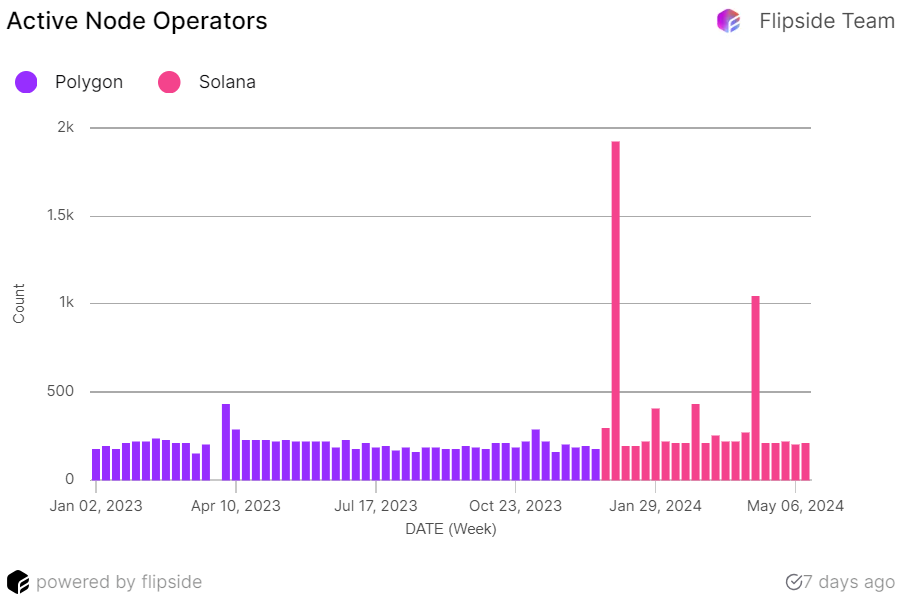
The number of active node operators peaked at 19,000 in January 2024, representing a 66.3% increase since migration. As demand for GPU performance continues to grow, more projects are expected to follow Render’s lead by building infrastructure on high-performance blockchains like Solana.
Helium Network
The Helium Network, a decentralized wireless networking project, migrated to the Solana blockchain in April this year. By utilizing distributed nodes instead of centralized infrastructure to provide connectivity services, Helium has successfully driven a paradigm shift in telecommunications.
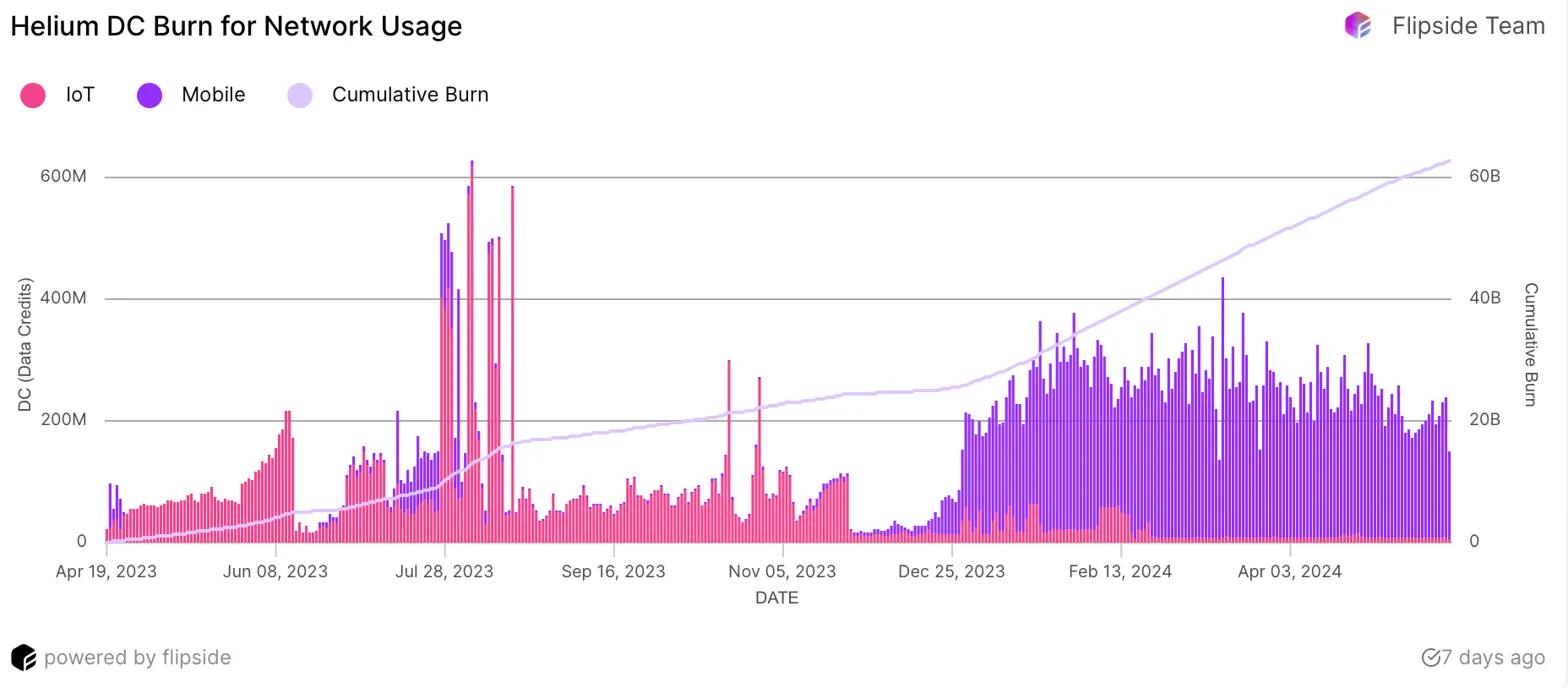
Currently, Helium offers dual products in IoT and mobile services. Over the past six months, the Helium ecosystem has shown significant growth, particularly in its mobile network. Helium Mobile attracted nearly 90,000 users within less than a year and has remained above 2023 levels ever since. This surge largely stems from Helium Mobile’s announcement last year to launch an unlimited 5G telecom service across the United States for just $20 per month, effectively bringing decentralized network services to the general public.
As shown in the chart below, DC (Data Credits) burned by Helium Mobile far exceeds that of the IoT network, indicating that the rollout of its 5G telecom service has significantly boosted network usage and adoption rates.
Beyond user growth, Helium Mobile has also driven network participation through various incentives. The distribution of Mobile Discovery rewards has significantly increased since December 2023, with growing numbers of users actively engaging in network coverage expansion and data collection tasks to earn MOBILE tokens—outpacing new user acquisition. With accelerating 5G deployment, the Helium ecosystem is poised for strong growth in the coming years.
Hivemapper
Hivemapper, a decentralized digital mapping network, creates real-time, global 3D maps by collecting map and spatial data, competing directly with traditional players like Google Maps. In 2022, it launched its native cryptocurrency HONEY, rewarding dashcam users who contribute driving data and road imagery.
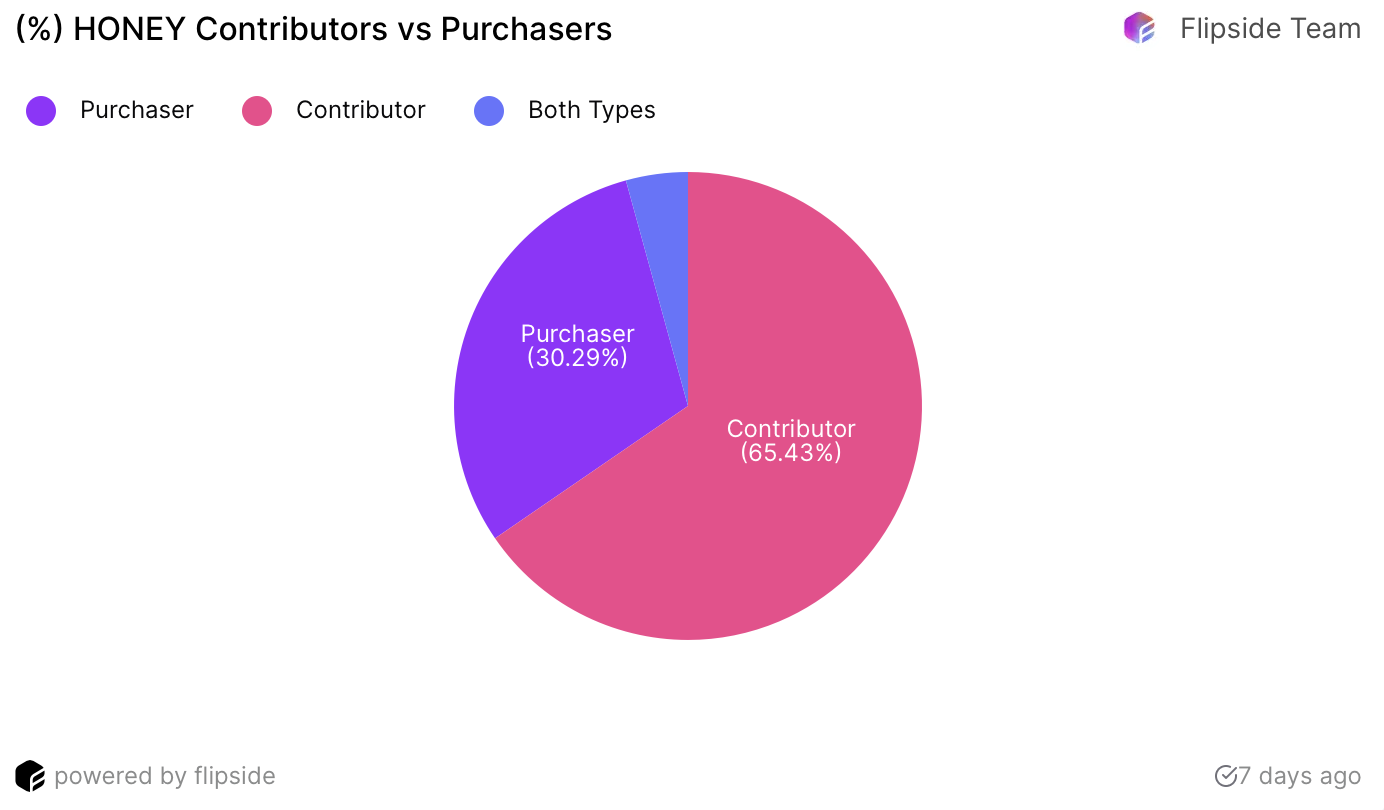
In under two years, Hivemapper has mapped over 50 million kilometers of roads; according to official figures, it has now surpassed 200 million kilometers. Its incentive model drives robust community engagement: as seen in the chart below, nearly one-third of HONEY token holders are active contributors. This high level of participation is fueled by Hivemapper’s reward system, which allows contributors to earn HONEY by participating in mapping, quality assurance, and training the Map AI.
With rising demand for high-precision map data from next-generation applications such as autonomous driving, decentralized solutions like Hivemapper are expected to attract greater attention and investment.
ShdwDrive
Decentralized storage is a key pillar of the DePIN ecosystem, aiming to deliver secure and reliable data hosting solutions. ShdwDrive is one of the emerging participants on Solana, focused on providing scalable object storage for Web3 builders.
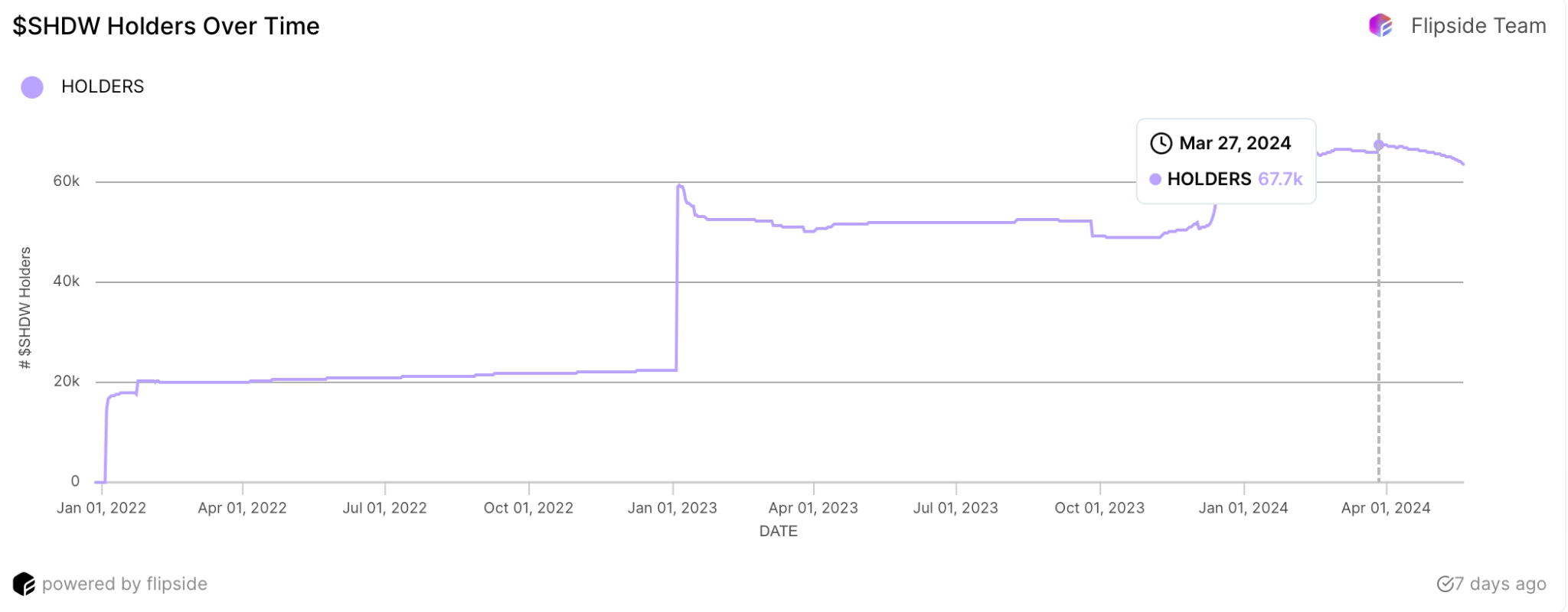
Although ShdwDrive has yet to launch its mainnet, it has achieved notable results on testnet. In a recent stress test, the network demonstrated the ability to handle up to 38,000 transactions per second under peak load. The number of SHDW token holders has also steadily grown, peaking at 67,000 in March 2024.
The composability of DePIN with other ecosystems positions it to transform economic systems through data integrity and scalable solution suites. As data volumes continue to grow inevitably, projects like ShdwDrive are expected to offer users enhanced security and resilient storage capacity, potentially catalyzing new use cases and innovation across the entire Web3 ecosystem.
What challenges must DePIN projects address?
In pursuing their stated visions, DePIN projects first face the complex integration of physical devices with blockchain technology. At their core, DePIN initiatives aim to seamlessly integrate physical hardware with data systems—a task requiring not only technical feasibility but also cost-effectiveness and market acceptance. Most projects currently collaborate with hardware manufacturers (e.g., sensor and monitor makers) or install DePIN applications onto existing devices. However, ensuring data security and privacy while achieving large-scale device connectivity and data interoperability remains a critical challenge.
Secondly, performance bottlenecks and consensus mechanisms for storage pose major hurdles. When millions of devices operate simultaneously on a blockchain, current infrastructure often struggles to support the required throughput. While high-performance public chains like Solana offer promising alternatives for DePIN projects, they may still only suffice for minimum viable product (MVP) stages.
Furthermore, decentralization hinges on data verifiability, yet IoT devices typically generate non-deterministic data sources. To ensure authenticity and reliability, robust systems for data traceability and certification must be established, complemented by statistical analysis and AI techniques to simulate and validate historical data patterns.
DePIN projects stand at a stage full of opportunities, yet cannot overlook concurrent challenges related to data, performance, and decentralization. For instance, in geolocation services, users expect privacy protection, while project teams strive to maintain system fairness—leading to tensions between personal privacy and data security. How projects balance technological innovation with sustainable business models will ultimately determine whether DePIN can truly bridge the physical and digital worlds and usher in a new era of the internet.
Join TechFlow official community to stay tuned
Telegram:https://t.me/TechFlowDaily
X (Twitter):https://x.com/TechFlowPost
X (Twitter) EN:https://x.com/BlockFlow_News
 PANews










