








Trump and Biden Launch "Crypto Election" Battle
TechFlow Selected TechFlow Selected
Trump and Biden Launch "Crypto Election" Battle
Crypto ballots: to fight for them or not?
 Navigating Web3 tides with focused insights
Author: Tuoluo Finance
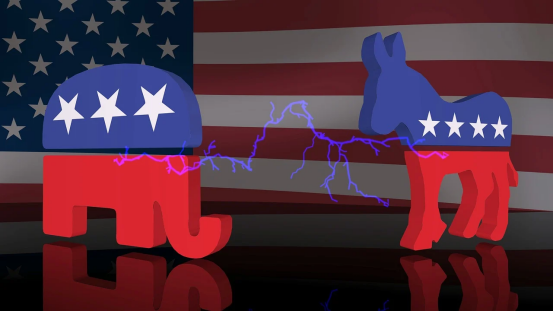
Starting this year, people around the world have been paying close attention to the U.S. presidential election.
On one hand, against a backdrop of increasing political polarization, persistent economic recession fears, and deeply divided public opinion, the choice of America’s next president will play a crucial role in shaping the nation's political future. On the other hand, with inflation remaining high, trade wars intensifying, and economies forming blocs, the direction of the global economy also hinges significantly on the outcome of the U.S. election.
November 5 marks the scheduled date for the 2024 U.S. presidential election. Based on current developments, barring any surprises, this year’s presidency will likely come down to either Joe Biden—the 81-year-old Democratic representative—or Donald Trump, the Republican figure known for his controversial rhetoric. To win votes, both candidates will embark on rallies and nationwide speeches outlining their political platforms and campaign promises, covering issues such as economy, demographics, gender, education, and military policy.
But unlike previous elections, cryptocurrency has surprisingly emerged as a rare topic in this presidential battle.
Not long ago, Trump suddenly announced he would accept cryptocurrency donations for his campaign and urged pro-crypto voters to support him: “President Joe Biden doesn’t even know what crypto is. If you like any form of cryptocurrency, if you support crypto, you’d better vote for Trump.”
This isn’t the first time Trump has shown support for the crypto space. As early as December 15, 2022, Trump used his social media platform TruthSocial to launch a collection of 45,000 NFTs, priced at $99 each. Buyers who purchased 45 digital trading cards were granted an invitation to dine with Trump.
Judging from the design, each card featured illustrations of Trump’s likeness—perhaps satisfying his flair for performance—portraying him as a superhero, cowboy, or astronaut, all rich in personal branding. Interestingly, just before the release, Trump posted on Truth Social saying, “America needs a superhero,” while teasing an “important announcement.” In response, Biden mocked him by replying, “I’ve had some major announcements over the past few weeks too.....”
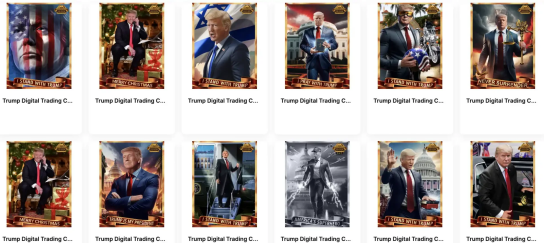
Trump's NFT series, source: public data
Earlier this year, he launched a third NFT series called the "Mugshot" edition. Despite accusations of cash-grabbing, Trump still fulfilled his promise. On May 8, after appearing in court, Trump flew back to Florida to have dinner with buyers who had purchased more than 47 Mugshot Edition NFT trading cards. At the dinner, Trump once again made bold claims: “We succeeded when NFTs weren't even popular yet. We’re going to make NFTs hot again.”
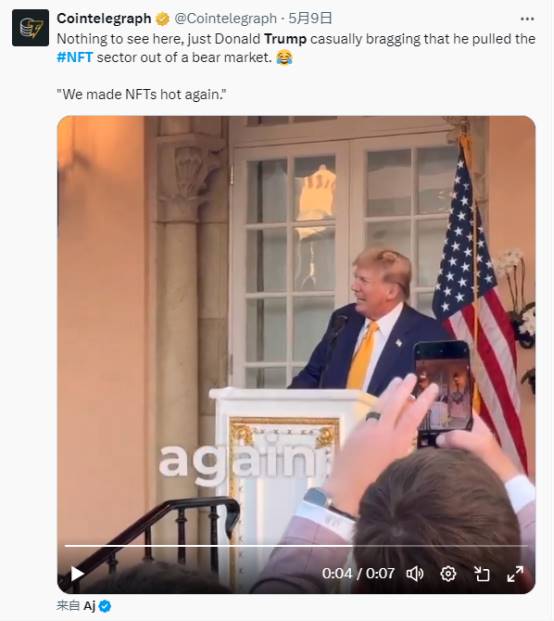
Trump claims he'll make NFTs hot again, source: X platform
It should be emphasized that aside from the lingering buzz around Bitcoin ordinals, the broader NFT market today cannot be described as thriving. On Ethereum, not only have blue-chip NFT collections dropped over 20% in value overall, but trading volume and market capitalization have also sharply declined. According to CryptoSlam data, Ethereum—the former stronghold of NFTs—recorded sales of $241 million in April, nearly half of March’s $489 million, marking its worst monthly NFT performance since October 2023.
Whether Trump can truly revive NFTs remains uncertain—after all, under his leadership, America hasn’t exactly become “great again” either—but one thing is clear: through these moves, he has successfully brought cryptocurrency into the spotlight of the election.
Looking at current party stances on crypto, most Democrats led by Biden adopt a cautious approach. Especially after the FTX collapse, the party has leaned further toward strict regulation. A telling sign is Gary Gensler, the widely criticized SEC Chair among crypto enthusiasts, who is a long-time donor to the Democratic Party and previously served as chief fundraiser for Hillary Clinton’s 2016 presidential campaign—a clear Democratic alignment. In contrast, most Republicans led by Trump have unusually displayed openness toward crypto, possibly to differentiate themselves politically and attract votes.
In fact, although crypto occupies only a small part of the entire election agenda, it doesn’t mean it’s unimportant. On the contrary, niche issues with stark differences can disproportionately influence voter preferences.
According to a survey conducted in early April by DCG and commissioned to Harris Poll, which interviewed over 1,000 voters per state, digital assets carry notable influence in key swing states such as Arizona, Michigan, Montana, Nevada, Ohio, and Pennsylvania. Data shows approximately 18% of voters (about 3.4 million people) in these states hold digital assets. In 2020, Trump narrowly lost three of these swing states.
Perhaps for this reason, since the official start of the election campaign in January, multiple candidates have voiced support for crypto. Besides Trump, Robert F. Kennedy Jr.—nephew of former President John F. Kennedy—has also emerged as a staunch crypto advocate: “Cryptocurrency is our exit from addiction to the Federal Reserve. It’s the best hedge against inflation. It strips control away from governments and monopolistic banking systems that use money printing to transfer wealth to billionaire oligarchs while impoverishing ordinary Americans. If you agree that crypto equals freedom, please help me advance this vision as president.”
While party-level support appears to surge, careful observers note that many presidential candidates have flip-flopped on crypto for electoral gain. Take Trump, for example. Back in 2019, his stance on Bitcoin was completely different. He tweeted on X: “I am not a fan of Bitcoin and other cryptocurrencies, which are not money and whose value fluctuates wildly, without underlying assets—they are made up out of thin air and unregulated. These factors allow crypto to be used for illegal acts, including drug trafficking and other illicit activities.” In 2021, he reiterated his view, calling Bitcoin “a scam” and stating, “I don’t like it because it competes with the dollar.”
Yet within just a few years, Trump has transformed himself into a self-proclaimed supporter and follower of crypto, vowing to “make NFTs great again,” and even mocking an 80-year-old man for being unable to use crypto software proficiently.
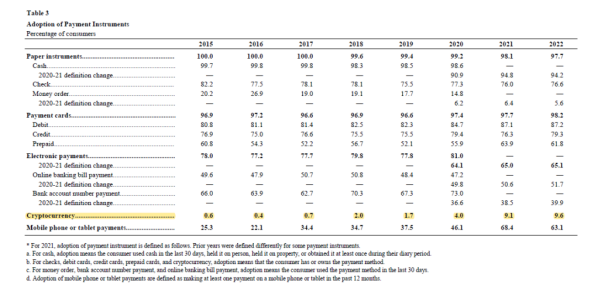
The reason lies largely in the rapid growth of the crypto industry in the U.S. In 2022, 9.6% of American adults owned cryptocurrency, compared to just 0.6% in 2015. Following the approval of Bitcoin ETFs, more Wall Street institutions have entered the crypto space. Data shows that 11 ETFs have already accumulated $52 billion in assets. Observing the U.S. government itself, its on-chain holdings exceed 200,000 BTC—worth over $6 billion—making it the largest holder among global governments. Moreover, crypto inherently represents a rejection of censorship and centralized control, aligning closely with today’s ideologically unshackled and highly unequal American society. Due to its natural financial advantages, in some developing nations like Nigeria and Ethiopia, support for cryptocurrency has already surpassed that of fiat currencies.
SDCPC survey on U.S. crypto holders, source: SDCPC
Of course, despite this, young voters—who actually hold crypto—are still a minority, perhaps explaining why Biden’s camp remains lukewarm. Deep down, the establishment behind the Democratic Party tends to be conservative and traditional, and its base strongly opposes cryptocurrencies that threaten the dominance of the U.S. dollar. Other parties, however, often take opposing stances to assert independence, using calls for freedom and equality as tools in partisan competition.
Upon closer inspection, neither Democrats nor Republicans have genuinely studied or focused on the crypto sector. For candidates, the crypto industry is merely a tool—a vehicle representing votes. Showing favorable attitudes when needed suffices; even those who pledge support may backtrack once elected due to other pressures. After all, compared to the traditional financial system, crypto accounts for only about 1% of financial volume—far less significant than widespread issues like welfare and education. From this perspective, all parties’ attention to crypto is purely temporary.
Yet tragically, from the crypto community’s standpoint, party support matters immensely. Recently, the SEC has gradually extended its regulatory reach from centralized entities to decentralized projects, targeting Metamask, Uniswap, and self-custody wallets. This has undoubtedly triggered panic across the crypto market. If decentralized projects are deemed violations of securities law, others will be left defenseless.
With the election approaching, frequent enforcement actions have fueled conspiracy theories, and the SEC appears to be taking sides. In this context, the crypto industry must rely on the election to fight for its rights. According to a report by Public Citizen, lobbying groups tied to the crypto industry have raised over $102 million to support candidates friendly to digital assets in the upcoming congressional elections. David Bailey, CMO of Azteco, even tweeted that they’ve been working with Trump’s campaign team over the past month to shape a Bitcoin and crypto policy agenda.
In the early hours of May 9, the U.S. House of Representatives passed the SAB121 repeal bill, aiming to overturn the Securities and Exchange Commission’s (SEC) 2022 Staff Accounting Bulletin No. 121 (SAB121), which addressed custody and recognition of crypto assets. That bulletin required financial institutions holding clients’ crypto assets to list those assets on their balance sheets. To maintain transparency, custodians would record crypto as liabilities, and to balance the books, an equivalent amount would need to be added to the asset side—significantly increasing custodial costs and violating the principle of uniform treatment of assets.
Since its release in 2022, the rule faced widespread criticism. The House’s recent passage of the repeal marks a significant act of political resistance within the crypto space. In response, the Biden administration expressed strong opposition, arguing the resolution undermines the SEC’s regulatory authority and vowing to reject the proposal if it reaches the president’s desk. However, internal party dynamics aren’t monolithic. Given Trump’s shift in stance on crypto, some advisors within the Democratic Party have reportedly suggested that Biden adjust his regulatory approach accordingly.
Clearly, the battle between the two parties over crypto will continue. Until the situation settles, it’s too early to declare victory for crypto. In the long run, as adoption accelerates, a political ecosystem held hostage by voters may eventually emerge—an outcome already seen in regions like South Korea and Argentina where crypto usage is concentrated. But in the short term, crypto may remain nothing more than a fleeting theme in the election cycle.
Back in the crypto world, for those riding the wave of entertainment, the election hype is naturally something not to be missed.
Markets move with the wind, giving rise to election-themed meme coins. Tokens named after Biden and Trump—“BODEN” and “TRUMP”—have created an alternative betting ecosystem. Previously, BODEN, the meme coin associated with Biden, surged hundreds of times in value within a short period. This year’s election will determine which token achieves the next hundredfold return.
At the time of writing, BODEN and TRUMP are trading at $0.26 and $8.66 respectively, with TRUMP up 14.6% over the past 24 hours.
Join TechFlow official community to stay tuned
Telegram:https://t.me/TechFlowDaily
X (Twitter):https://x.com/TechFlowPost
X (Twitter) EN:https://x.com/BlockFlow_News










