Interview with Keith Gill, the Man Behind the GameStop Short Squeeze: I Support Retail Investors and Their Right to Be Heard
TechFlow Selected TechFlow Selected
Interview with Keith Gill, the Man Behind the GameStop Short Squeeze: I Support Retail Investors and Their Right to Be Heard
Keith Gill led a group of fans in driving the surge of GameStop's stock price.
 Navigating Web3 tides with focused insights
By Julia-Ambra Verlaine / Gunjan Banerji, The Wall Street Journal
Translation: Initium Media

Keith Gill, the man behind the GameStop short squeeze frenzy, gives an exclusive interview to The Wall Street Journal. In his first-ever media appearance, he says: "I support these retail investors and their right to have a voice."
Photo source: Screenshot from The Wall Street Journal's website
Originally published on 2021-02-04
He led a legion of online followers in driving GameStop’s stock price to unimaginable heights, thrusting the video game retailer into global spotlight and sending countless individual investors on wild rides of sudden wealth and loss. Yet he insists he is just an ordinary person.
“I didn’t expect this at all,” said 34-year-old Keith Gill, known online as “DeepF—ingValue” on Reddit’s WallStreetBets forum and simply “Dada” to his two-year-old daughter. As for the attention drawn from Congress, the Federal Reserve, hedge funds, media, trading platforms, and hundreds of thousands of investors, he says it was never his intention.
Last week, after a roller-coaster ride in financial markets, Gill sat down with The Wall Street Journal (The Wall Street Journal) for an exclusive interview—the first time he has ever spoken to the press. “I am insignificant in this whole thing,” he said. “I support these retail investors and their right to have a voice.”
Until recently, Gill was just an ordinary marketing employee at Massachusetts Mutual Life Insurance Co., but many now see him as the catalyst behind GameStop’s meteoric rise. By last Friday, GameStop’s share price had surged more than 1,600% since the beginning of the year. On Wednesday alone, its stock jumped 135%, hitting a record high of $347.51 per share. Then on Thursday, it plunged to $194 before rebounding sharply over the remainder of the week. At the start of the year, GameStop was trading around $18 per share.
Many online investors say they were galvanized by Gill into forming a powerful collective force—one that inflicted heavy losses on prominent hedge funds and briefly upended Wall Street.
On Wednesday, Gill posted screenshots of his personal brokerage account showing approximately $20 million in gains from his GameStop stock and options positions the previous day. A Reddit user named “reality_czech” commented: “Your holding firm not only inspired many of us to buy and hold this stock—it actually changed the lives of thousands of ordinary people. We sincerely thank you. Every dollar you earned is well deserved.”
The next day, Gill posted another screenshot showing a $15 million loss on his GameStop investments. According to firsthand observation by Wall Street Journal reporters, his E*Trade account balance stood at about $33 million after Thursday’s close, including GameStop shares, options, and millions in cash.
“He’s always loved money,” said Elaine Gill, Keith’s mother. “He would collect scratched-off lottery tickets—many people don’t realize they’ve won and just toss them aside… but often those tickets still had real prizes.”
Gill goes by multiple online aliases—he’s known as “Roaring Kitty” on YouTube. His online persona has attracted tens of thousands of fans and imitators who share screenshots of their own brokerage accounts. According to Apptopia Inc., an internet data analytics firm, as the GameStop investment frenzy peaked last week, hundreds of thousands of new investors downloaded brokerage apps like Robinhood to join the movement.
Gill insists he isn’t some populist agitator pitting small-time traders against powerful institutional investors. Rather, he believes regular investors can uncover value in overlooked stocks. He never expected so many fans debating his true identity, nor imagined his brokerage account swelling by tens or even hundreds of millions of dollars. He says he’s just an average suburban Boston dad with hobbies and a plastic slide in his backyard.

January 30, 2021, GameStop store in Manhattan, New York City, USA
Gill recalls starting to invest in GameStop back in June 2019, when the stock hovered around $5. At the beginning of that year, GameStop began searching for its fifth CEO in just over 12 months. Gill kept buying shares. Though he rarely plays video games beyond Super Mario and Donkey Kong, he believed the struggling retailer could revive itself by attracting a new generation of gamers.
“People hastily assumed GameStop would become the next Blockbuster,” Gill said, referring to the video rental chain that declined alongside traditional retail. “It seems many failed to truly dig into the stock’s potential and instead quickly misclassified its investment opportunity.”
With long hair flowing past his shoulders, Gill launched his YouTube channel last summer. To avoid waking his daughter, he moved his work setup to the basement of his rented house in Wilmington, Massachusetts. During livestreams, he enthusiastically praised both GameStop and Belgian beer—his favorite being Delirium Tremens from Belgium.
During a recent YouTube livestream, wearing a red headband and aviator sunglasses, he answered viewers’ stock-related questions for over seven hours. He started pouring himself some Prosecco, then switched to beer, celebrating his massive profits while shouting excitedly at his large audience of investors. That stream drew over 200,000 views.
Gill’s username on Reddit’s WallStreetBets may be crude, but it reflects his belief in value investing—buying shares of companies that are fundamentally undervalued.
Among Gill’s many followers is Jon Hagedorn, a 34-year-old training manager from Ronkonkoma, New York, who said Gill “will surely go down as the greatest legend in WallStreetBets history.” He added, “He’s the original OG.”
GameStop’s skyrocketing share price appears completely detached from standard measures of corporate value, prompting complaints in financial circles that such coordinated retail buying amounts to market manipulation.
Last Friday, the U.S. Securities and Exchange Commission (SEC) announced, “If facts show abusive or manipulative trading activity occurred, the Commission will take action to protect retail investors.” Gill said the SEC has not contacted him.
Marathon Runner and Value Investor
“When this craze first started, my first question to him was whether this was dishonest or illegal,” recalled Gill’s mother. “He told me, ‘No, Mom, it’s not.’” Elaine and Steve Gill live in Brockton, Massachusetts, where Keith grew up.
In high school, Gill was a long-distance runner who later attended nearby Stonehill College, majoring in accounting. During college, he achieved national rankings in track and once ran a mile in under four minutes—a remarkable feat cut short by an Achilles tendon injury that forced his retirement.
Gill lived in New Hampshire for several years, where he met a mentor—an investor and programmer introduced by his aunt. Holding a Chartered Financial Analyst designation, he found deep intellectual appeal in the complexity and challenge of stock selection, which became a new outlet for his energy beyond running. He joined Massachusetts Mutual in 2019.
That summer, he began building his position in GameStop and occasionally posted screenshots of his E*Trade account showing his options holdings on the WallStreetBets forum. In September 2019, one trader replied to a post: “Holy s—, bro, what made you put $53,000 into GameStop?”
Over the following months, he regularly updated his progress under the title “GME YOLO update”—GME being GameStop’s ticker symbol. He reported five- and six-figure gains, posting updates even during sharp declines.
Gill remained determined to stick with his GameStop investment, and his unwavering commitment became legendary among day traders.
For his followers, his success tapped into the desire of millions of American retail investors to try their hand at trading. Today, stock trading incurs no commissions, and mobile apps make it easy to trade from smartphones. Online investing communities further lower the barrier to entry.
Early in the pandemic, many novice investors stuck at home found comfort in online discussions about stocks and options. In these forums, beginners often looked to those who had profited for guidance.
Not all exchanges were positive. A chatroom linked to WallStreetBets—but hosted outside Reddit—was filled with vulgar, racist, and homophobic rants. Many on the platform attacked Wall Street elites, while others openly wished for financial titans to suffer losses.
“I’m not targeting anyone,” Gill said. “‘Roaring Kitty’ is an investor education channel—I’m there to share my investment philosophy.”
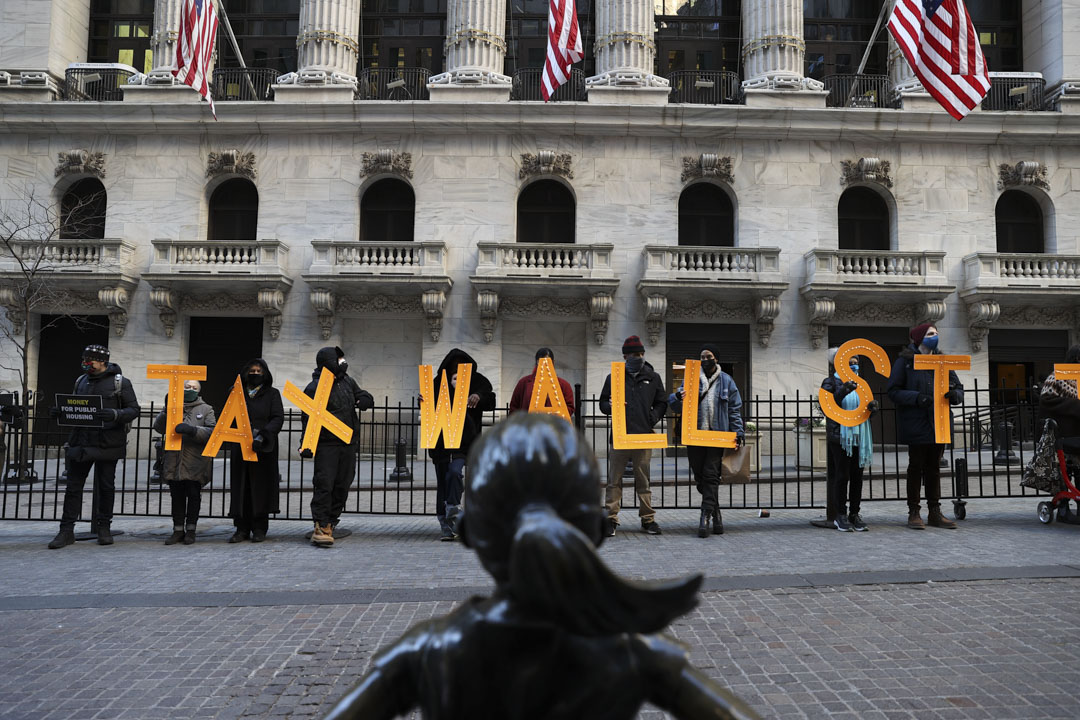
January 28, 2021, protesters outside the New York Stock Exchange in New York City, USA, demonstrating against online trading platform Robinhood for restricting retail purchases of GME and other surging stocks citing capital requirements, causing GME’s price to crash 44% that night
Hedge Fund Blowups
Many on Wall Street disagreed with Gill’s bullish view of GameStop—and paid dearly. Hedge funds and other professional investors bet heavily that the stock would fall.
To short a stock, hedge funds typically borrow shares and sell them, hoping to buy them back later at a lower price and pocket the difference. But when a heavily shorted stock rises instead of falling, the short sellers suffer losses. To cover their positions, they must buy back shares at higher prices, fueling further price increases—a phenomenon known as a “short squeeze.”
The presence of large short positions attracted many retail investors anticipating a squeeze. Gill said his strategy wasn’t solely based on a short squeeze, though he knew others might bet on one.
So far, the professionals have been wrong, and Gill and other big individual buyers have emerged victorious. Hedge funds Melvin Capital Management and Maplelane Capital were forced to cover their positions at huge losses, becoming laughingstocks among Reddit’s retail investors.
More retail investors piled into GameStop, hoping its price would “moon” as many on Reddit predicted. They also bought heavily into stocks like AMC Entertainment Holdings Inc., hoping for similar quick windfalls.
According to Meltwater, a global media intelligence company, there were hundreds of thousands of GameStop-related posts on Reddit, Twitter, and Facebook over the past month. Data from Dow Jones Market Data shows GameStop became one of the hottest speculative bets in the U.S. market in recent days, drawing intense investor enthusiasm as its price climbed.
Now, even seasoned traders are factoring in the influence of retail investors like Gill when making investment decisions.
Mark Sebastian, founder of Chicago-based options firm Option Pit and a veteran with nearly 20 years of options trading experience, developed software that analyzes numerous stocks to identify those with high retail investor activity. He trades options based on momentum, riding upward or downward trends. AMC recently caught his eye, though he admits he’s not particularly interested in the company itself.
“We’re trying to find these stocks before they blow up,” Sebastian said. He described one recent trade as essentially “something for nothing.”
Gill says his life has changed overnight, but he hasn’t mapped out future plans. He hopes to keep his “Roaring Kitty” YouTube channel going and maybe buy a house. “I thought my GameStop investment would succeed,” he said, “but I never imagined so much would happen in just one week.”
Gill has a dream: “I’ve always wanted to build an indoor track or an indoor athletic facility in Brockton,” he said, speaking of his hometown. “Now it looks like I might actually be able to make that dream come true.”
Join TechFlow official community to stay tuned
Telegram:https://t.me/TechFlowDaily
X (Twitter):https://x.com/TechFlowPost
X (Twitter) EN:https://x.com/BlockFlow_News