








Lumio: The White Knight of Parallel EVM – A New Primitve for Ethereum Scalability
TechFlow Selected TechFlow Selected
Lumio: The White Knight of Parallel EVM – A New Primitve for Ethereum Scalability
Lumio's parallel EVM implementation is an engineering solution based on a "glue-style" mindset.
 Navigating Web3 tides with focused insights
Author: NingNing
In the post-Cancun upgrade era, Ethereum equivalence is no longer inherently correct.
The core of Ethereum equivalence lies in EVM compatibility. EVM compatibility matters not only because of the EVM's simplicity, reliability, and mature development tools, but more importantly due to its vastly superior developer community and accumulated asset scale. For any chain or Rollup, achieving EVM compatibility means tapping into Ethereum’s ecosystem for developers, users, and capital—offering a fast track to product-market fit (PMF).
However, the EVM is far from perfect. Its account-based state data model and serial state processing feel like comparing a 19th-century ironclad warship to a 21st-century destroyer when measured against high-performance public chain VMs.
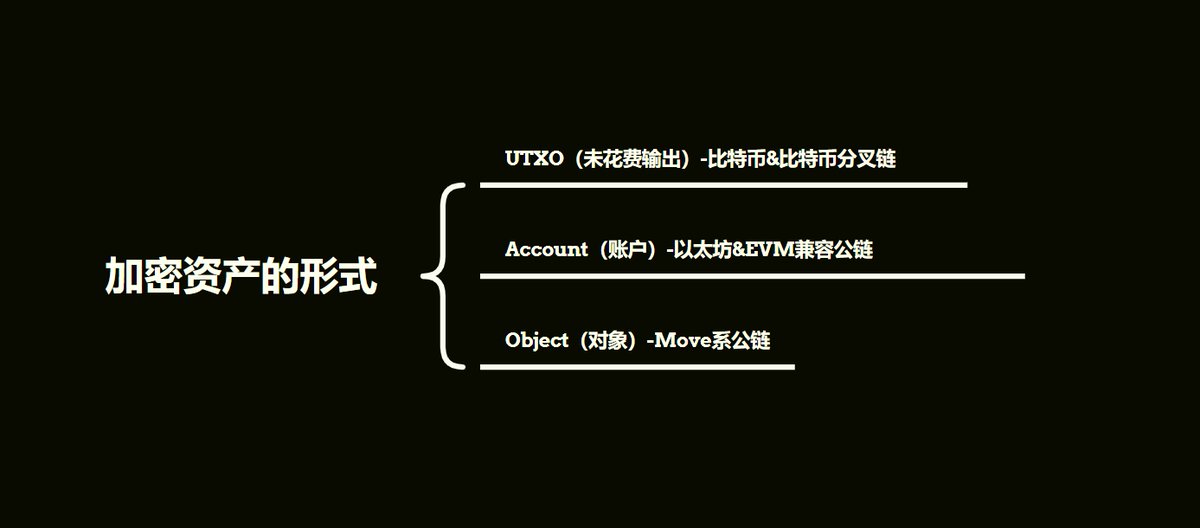
After the completion of the Cancun upgrade, although mainstream Rollup L2 gas fees dropped by two orders of magnitude, the much-anticipated explosion in Ethereum’s L2 ecosystem did not materialize. Instead, we have witnessed strong growth in ecosystems of high-performance blockchains such as Solana and Sui. This has prompted some sharp minds in the crypto industry to reconsider whether the universal Rollup L2 scaling approach—chasing full Ethereum equivalence as the ultimate goal—might be heading in the wrong direction.
Currently, horizontal scaling solutions face three main drawbacks: First, EVM compatibility and consistency in underlying mechanisms lead to high homogeneity among DApps across Ethereum mainnet and its general-purpose L2 ecosystem. Second, the hub-and-spoke network structure of L1-L2-L3 significantly undermines DApp developers’ sovereignty. Third, the linear scalability enhancement seen in numerous L2s—1+1+1+1+1+*+n—feels like a clumsy act of mechanically stacking LEGO bricks.
Therefore, we need both horizontal and vertical scaling approaches. Perhaps it's time to experiment with introducing the transaction parallelization capabilities of high-performance blockchain VMs into the Ethereum ecosystem—to create some chaos and uncertainty. Recently, parallel EVM projects such as Monad, Movement, and Lumio (Pontem) have all announced new funding rounds led and participated in by top-tier crypto VCs.
Monad and Movement need no introduction—they are highly well-known. Here, we’ll focus on the relatively low-key Lumio.
Lumio is a parallel EVM project developed by the Pontem team. It positions itself as an altVM layer for Ethereum—an abstracted VM protocol supporting multiple virtual machines including Move, SVM, and WASM. This altVM layer enables plug-and-play functionality, allowing teams from non-EVM ecosystems to “copy-paste” their code onto Ethereum with minimal modifications, while maintaining just one codebase to minimize technical debt.
The Pontem team is an exceptionally strong engineering group that has been deeply involved in the high-performance Move-based blockchain ecosystem since the Diem era. The team has already launched two mature products within the Aptos ecosystem: Liquidswap AMM and the Pontem Wallet. These two products average around 10,000 daily active addresses. Notably, Liquidswap has accumulated 8 million transactions, 700,000 unique addresses, and approximately $2 million in daily trading volume.
To briefly summarize Pontem’s evolution: wallet first, then DEX, then parallel EVM.
With rich application development experience, the Pontem team prioritized developer sovereignty and maximum freedom when designing Lumio’s architecture.
Lumio’s design goal is to support any chain and any VM, helping developers break free from product supply-chain lock-ins. VM-level modularity allows developers to deploy their favorite L2s and L1s—such as Optimism and Solana—on Lumio using their preferred VM (SVM, EVM, MoveVM), without sacrificing performance or interoperability.
By integrating foundational components such as the OP Stack, Arbitrum Orbits' shared sequencer, and cross-chain bridges, Lumio enables DApps to share state and unified liquidity with mainstream L2s.
Shared state and unified liquidity between Lumio and L1 ecosystems like Solana are achieved through cross-VM calls. Next, the Pontem team plans to extend this shared state and liquidity to other L1 ecosystems such as Bitcoin and Ton.
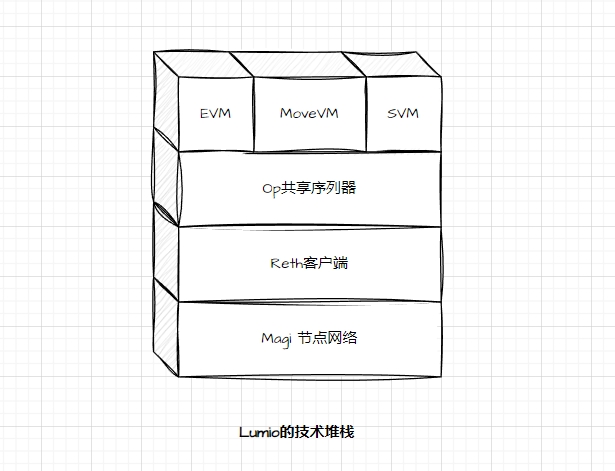
To achieve these design goals, Pontem extensively reuses components from the OP Stack, especially its Rust implementation. Lumio’s tech stack consists of A16Z-developed Magi node network + Reth (Rust-based Ethereum client) + OP Stack shared sequencer + the altVM layer.
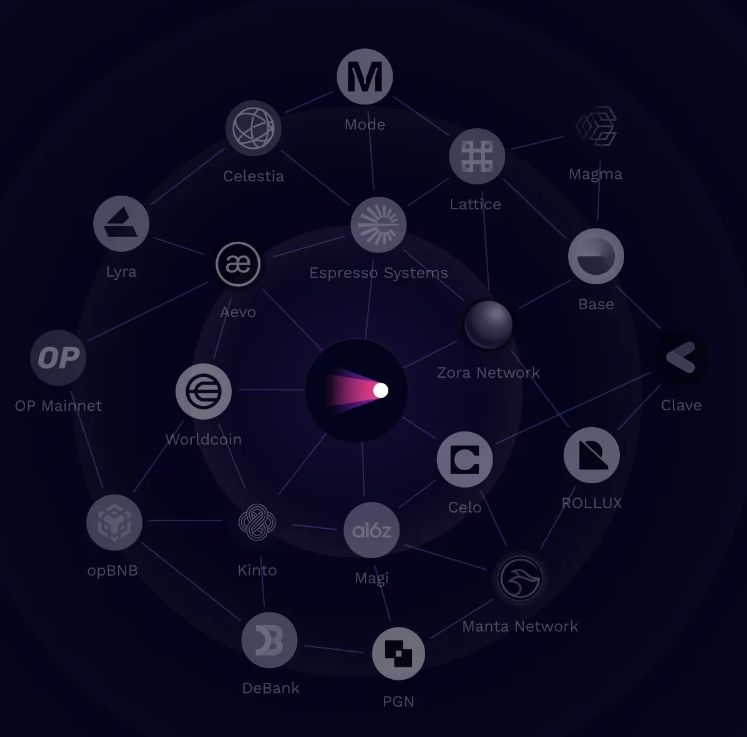
This tech stack design allows Lumio to leverage the high performance and security features of parallel EVMs like SVM and MoveVM, while maximizing EVM compatibility and UX consistency. Lumio’s first mainnet iteration, SuperLumio, can itself be viewed as an OP Superchain.
This gives Lumio a naturally strong graph relationship with other OP Superchain projects—such as OP Mainnet, Base, Aevo, Worldcoin, Redstone, Mode, and other Rollups—collectively forming a robust, thriving, and diverse L2 ecosystem.
To be fair, compared to Monad and Movement, Lumio’s parallel EVM implementation reflects a "glue-style" engineering mindset. Its advantages lie in rapid deployability, a gentle learning curve for developers, and stability. While it may lack the high concentration of novel technical primitives found in the other two, it remains an excellent and innovative L2 scalability solution for Ethereum.
Finally, here are the details of Pontem’s latest funding round: In January 2024, Pontem announced a $6 million raise co-led by Lightspeed Faction (Faction) and Lightspeed Venture Partners. The round also included participation from Pantera Capital, Aptos Foundation, Wintermute, Altonomy, Shima Capital, and Kraken Ventures.
Join TechFlow official community to stay tuned
Telegram:https://t.me/TechFlowDaily
X (Twitter):https://x.com/TechFlowPost
X (Twitter) EN:https://x.com/BlockFlow_News
 @0xNing0x







