Outlier Ventures: The Rise of Decentralized Social Media
TechFlow Selected TechFlow Selected
Outlier Ventures: The Rise of Decentralized Social Media
This article will delve into several major decentralized social media competitors in the crypto space, examining their respective features and architectures.
 Navigating Web3 tides with focused insights
Author: Lorenzo Sicilia, Engineering Lead at Outlier Ventures
Translation: xiaozou, Jinse Finance
Outlier Ventures has observed healthy developments in several decentralized social networks, with Farcaster and Lens Protocol beginning to attract genuine user attention. Cryptotechnology is becoming increasingly practical and efficient when it comes to mass-market products. Historically, private key management and the lack of mobile-first experiences have hindered crypto adoption.
In this article, we will dive into several major crypto-powered decentralized social media contenders, their respective features and architectures, and discuss the opportunity for Web3 founders to build new permissionless social graph protocols.
1. Social Networks
After more than a decade of using Instagram, Facebook, Twitter, and other platforms, everyone understands how social networks work. The concept centers around users who provide their preferences to the system by filling out profiles and choosing accounts they want to follow, receiving in return a real-time personalized feed.
Built around this simple idea, social networks have established digital empires whose ultimate goal is capturing user attention and keeping them within the walled gardens as long as possible. User data holds value—and that data becomes a commodity.
Decentralized social networks aim to break down these walls, enabling portable identities, giving users greater control over their preferences and privacy, and making it easier to switch between platforms.
Just as cryptocurrencies enable permissionless transactions for anyone, anywhere, DeSo (decentralized social) enables permissionless communication and censorship-resistant broadcasting.
What’s truly exciting, however, is that DeSo is also permissionless for builders—developers can innovate on top of existing protocols without needing approval from any gatekeepers. This echoes the successful "DeFi Lego" paradigm.
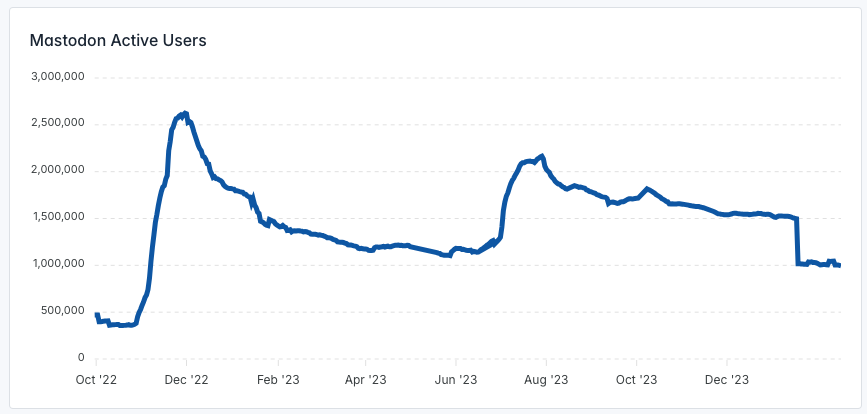
Before Web3-based DeSo emerged, the only notable attempt at decentralized social was Mastodon. After Elon Musk acquired Twitter, Mastodon seemed poised to capitalize—but usability issues and a fragmented user experience ultimately capped its growth at around one million daily active users.
Today, projects like Farcaster and Lens are taking a different approach—building on Web3 primitives to introduce something new.
2. SocialFi
SocialFi combines decentralized finance (DeFi) with social graph networks built on Web3 primitives. Participants include content creators, influencers, and end-users who seek better control over their data and freedom of expression, along with the ability to monetize their social followings and engagement.
Monetization occurs via cryptocurrency, while identity is managed through a set of private keys. Many claim they use decentralized autonomous organizations (DAOs) to resist censorship—but this remains unproven.
Let’s examine some of the key differences compared to traditional social networks:
-
Token-gated access: Only holders of a creator’s token can access certain features or areas.
-
Tipping: Users can receive tips in cryptocurrency, either in platform tokens or other assets.
-
One-time or recurring subscriptions: Crypto payments for digital goods or services occur directly within the platform.
-
Platform incentives: Users and creators earn platform tokens based on their level of participation.
While these concepts aren’t new, they gained significant market attention only after Friend Tech discovered the potential of token-gated chat. Users needed “keys”—tradeable tokens—that allowed them to benefit financially from a creator’s rising popularity.
At its peak, Friend Tech had 800,000 unique address users—but retention later dropped sharply.
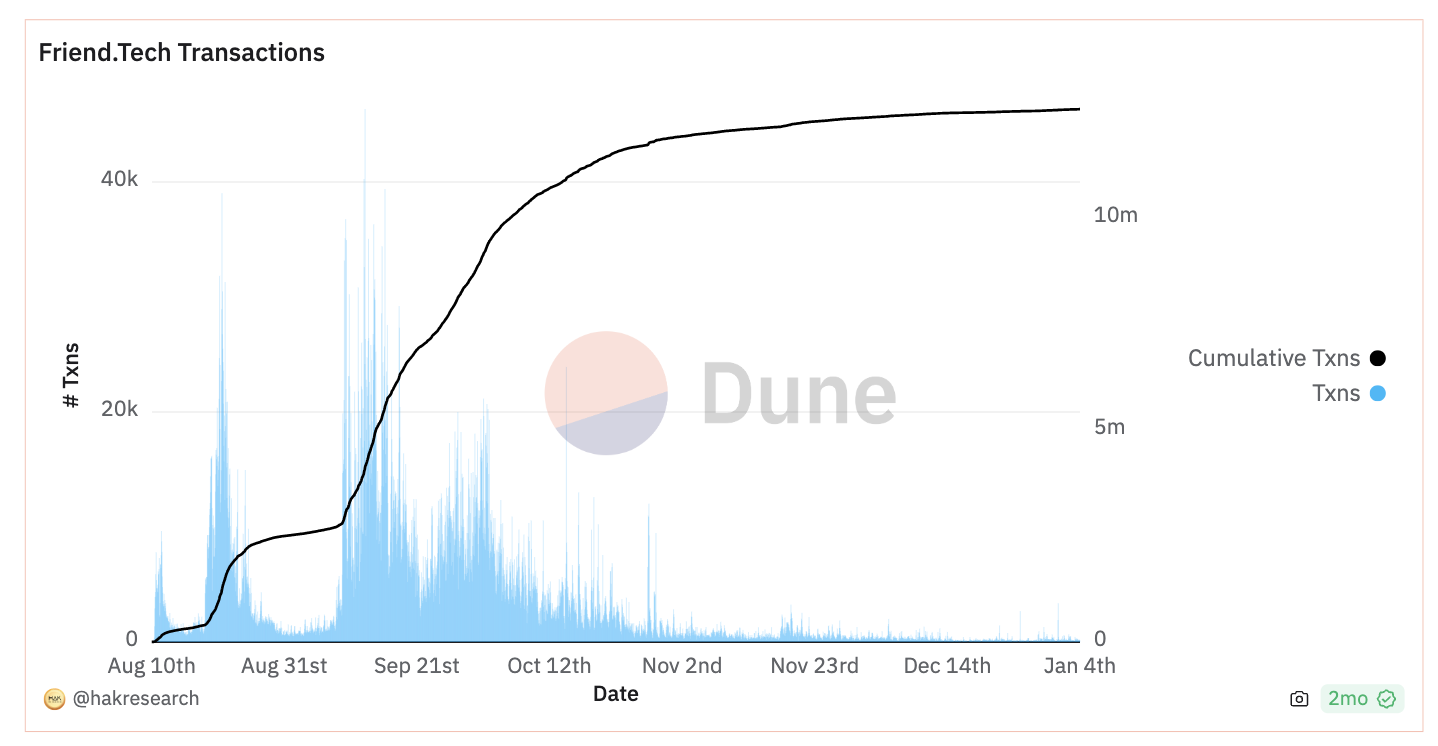
Although bonding curves excel at driving adoption through urgency and FOMO, they fall short in long-term user retention. To sustain engagement, two key elements are required: network effects that amplify platform value as more users join, and clear long-term utility that offers tangible benefits beyond short-term gains.
3. Web3 Social Graphs
A social graph represents relationships between entities—people, organizations, places, and anything else that can be connected. Web2 giants like Facebook, Twitter, Instagram, and TikTok have accumulated powerful network effects, particularly in deterring users from migrating to competing platforms, since switching means starting over from scratch.
Lens, Farcaster, and others are targeting this friction point by building genuinely open graphs with multiple frontends—offering different user experiences powered by the same underlying data.
However, Facebook generates 4 petabytes of data daily—510,000 comments, 293,000 status updates, 4 million likes, and 136,000 photos uploaded every minute. No existing blockchain can handle such volume—and likely never will, because blockchains are optimized for different use cases: permissionless value exchange.
For example, double-spending is a core financial risk in blockchains but irrelevant in decentralized social networks handling usernames, content distribution, and notifications. The teams behind Lens and Farcaster must consider various trade-offs under different assumptions.
4. Lens Protocol
Lens Protocol is a composable social graph created by Stani Kulechov, founder and CEO of Aave. It is community-driven and currently deployed on Polygon.
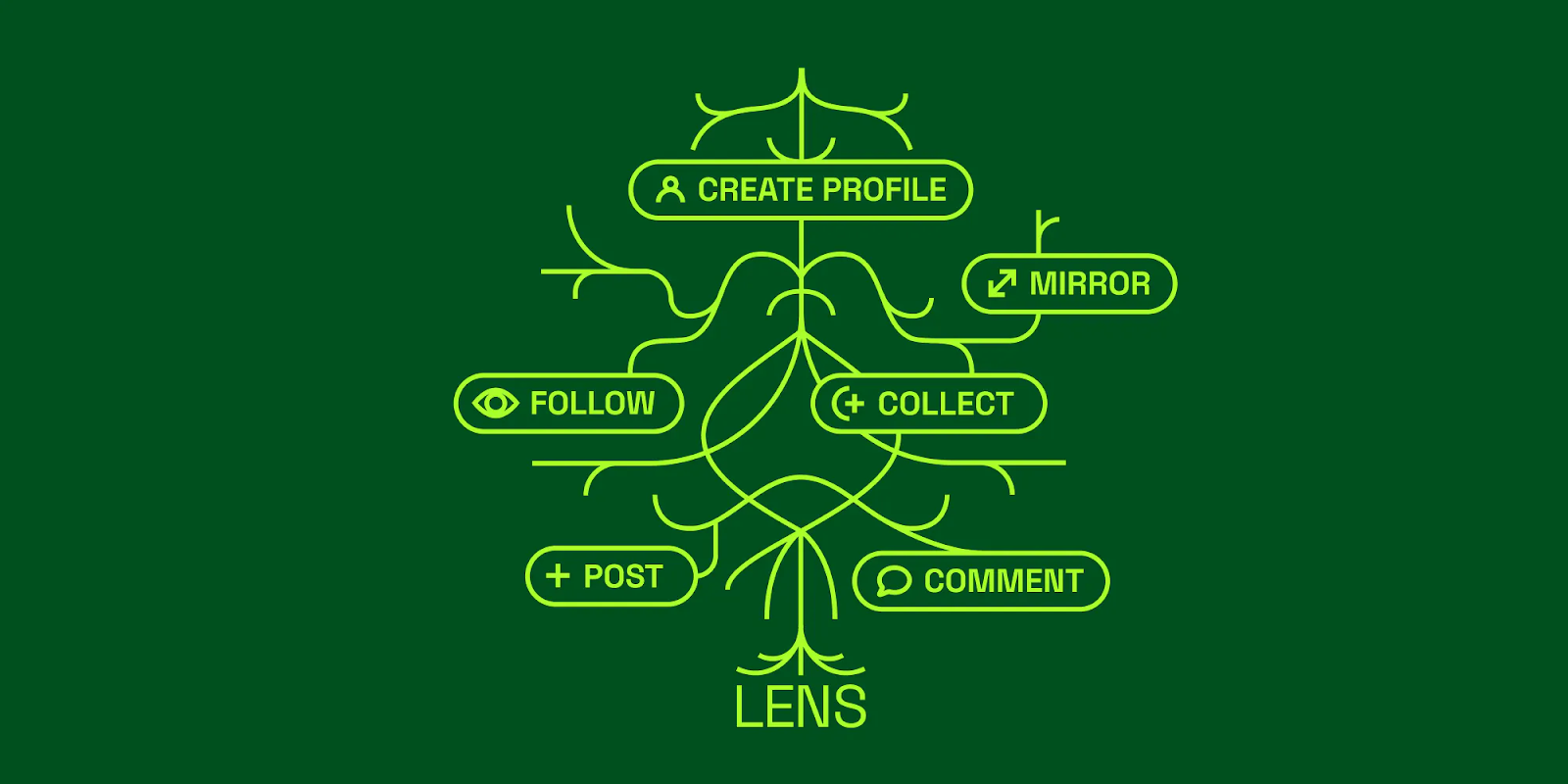
Lens is built around several key smart contracts managing different aspects of social interaction.
-
Profiles are represented as NFTs—the primary object in the protocol. Owning one gives you full control over your social graph and content. Each Profile stores the complete history of Posts, Quotes, Mirrors, Comments, and all other user-generated content.
-
Publications represent content on the protocol, with four types: Posts, Comments, Quotes, and Mirrors. Posts are the base entity; others extend it. Crucially, each publication has a ContentURI. While metadata stays on-chain, actual content (images, text, etc.) is linked to decentralized storage solutions like IPFS, Arweave, or even AWS S3.
-
Mirrors, Comments, and Quotes allow users to interact with publications through replies, citations, or content sharing. Rules applied to the original publication (e.g., only followers can quote/comment/mirror) carry over consistently.
-
Open Actions allow developers to build custom functions that integrate directly into the protocol. Think of them as hooks triggered by events (e.g., Alice sees Bob tipped her, so she can index earnings via a tracker).
From the start, the Lens team focused solely on the protocol, leaving frontend development to the community—resulting in numerous distinct UIs, each with its own design.
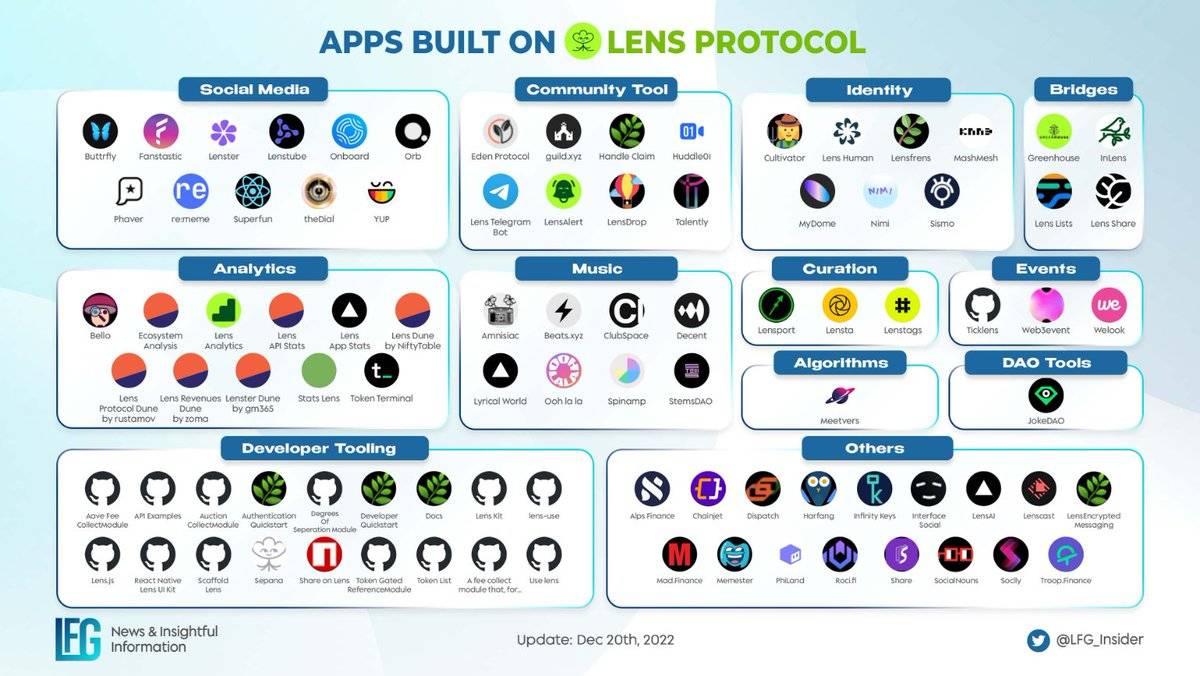
This led to a vibrant yet chaotic ecosystem, where many projects launched and disappeared quickly. However, consolidation is emerging—projects like buttrfly, hey.xyz, and orb are gaining traction.
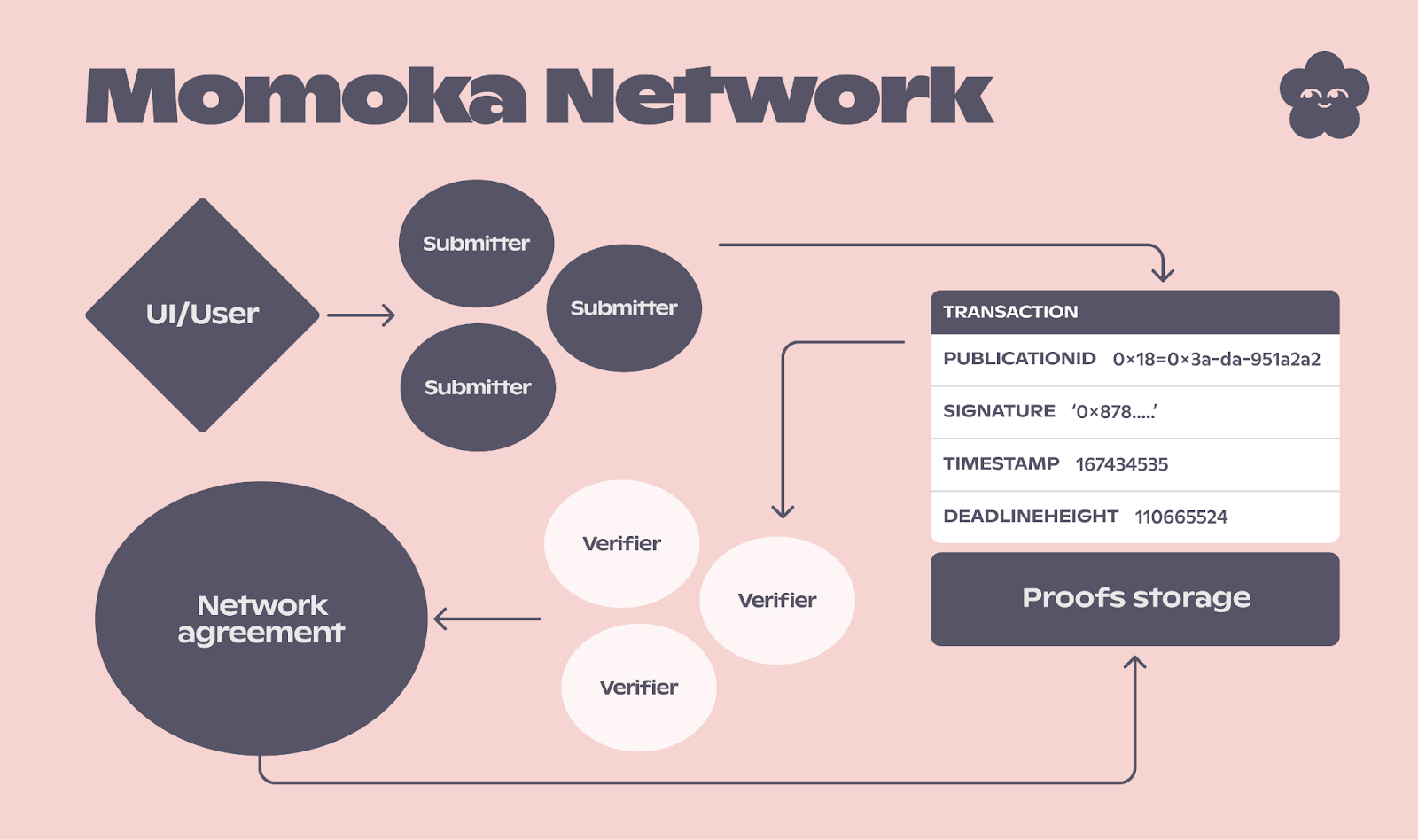
After running Lens v1 for some time, Lens introduced Momoka—an optimistic L3 extending beyond traditional blockchain constraints. Instead of storing data directly on Polygon, Momoka leverages data availability (DA) layers, reducing costs by uploading data simply to Arweave.
5. Farcaster
Farcaster is another Web3 social network built on Ethereum, combining on-chain smart contracts with a peer-to-peer network of client nodes called “Hubs.”
Like Lens, Farcaster is open—many clients have been built on top of it. The most popular is Warpcast, developed by the Farcaster team itself, along with Supercast (with paid features) and Yup (focused on cross-posting).
In 2022, Varun Srinivasan published a blog post on “sufficient decentralization,” outlining ideas that now form the foundation of Farcaster’s architecture and philosophy.
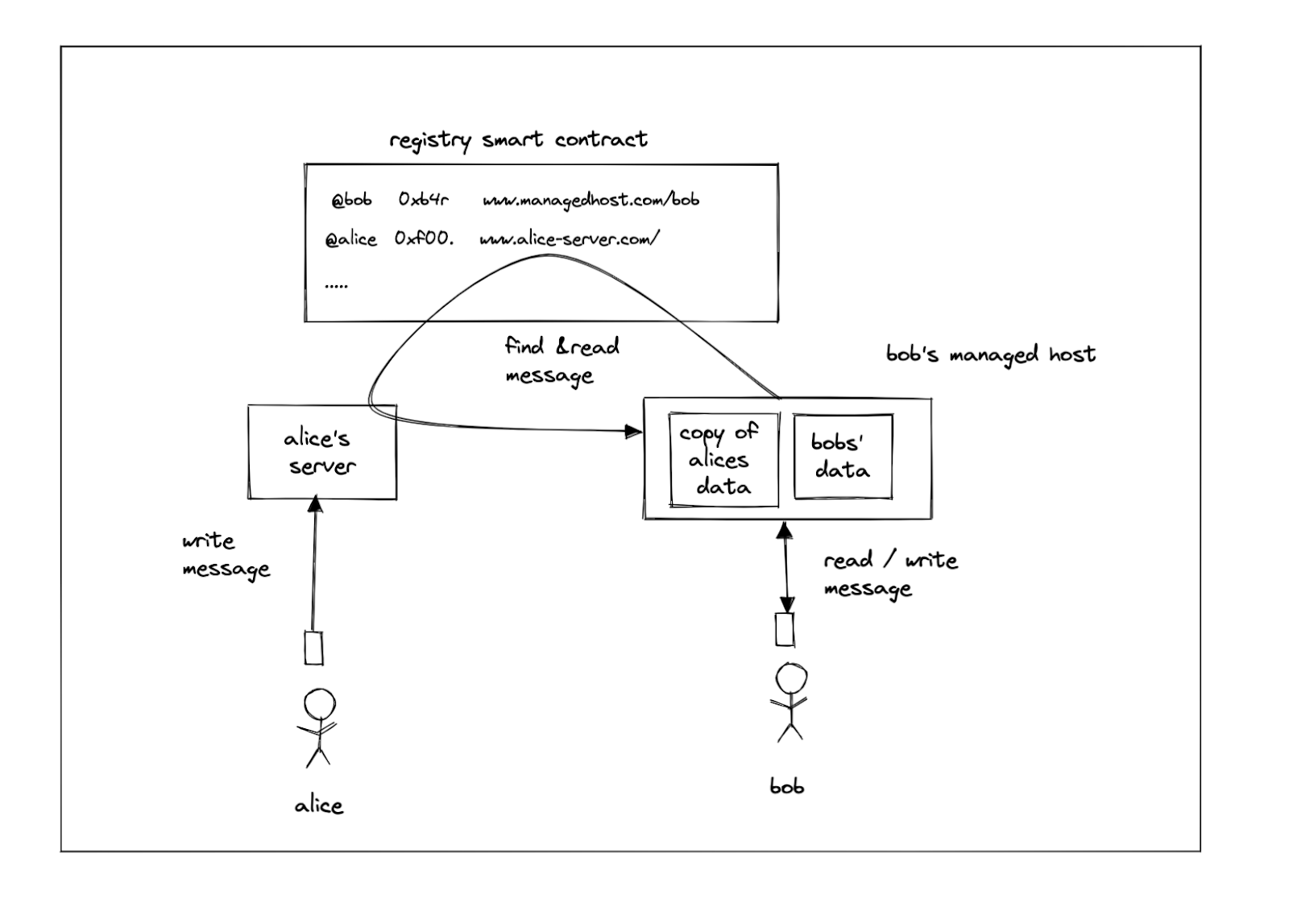
The core principle: a social network is sufficiently decentralized if two users can find each other and communicate despite obstacles imposed by the rest of the network.
To achieve this, three things are necessary:
-
Obtain a unique username
-
Post messages under that username
-
Read messages from any valid name
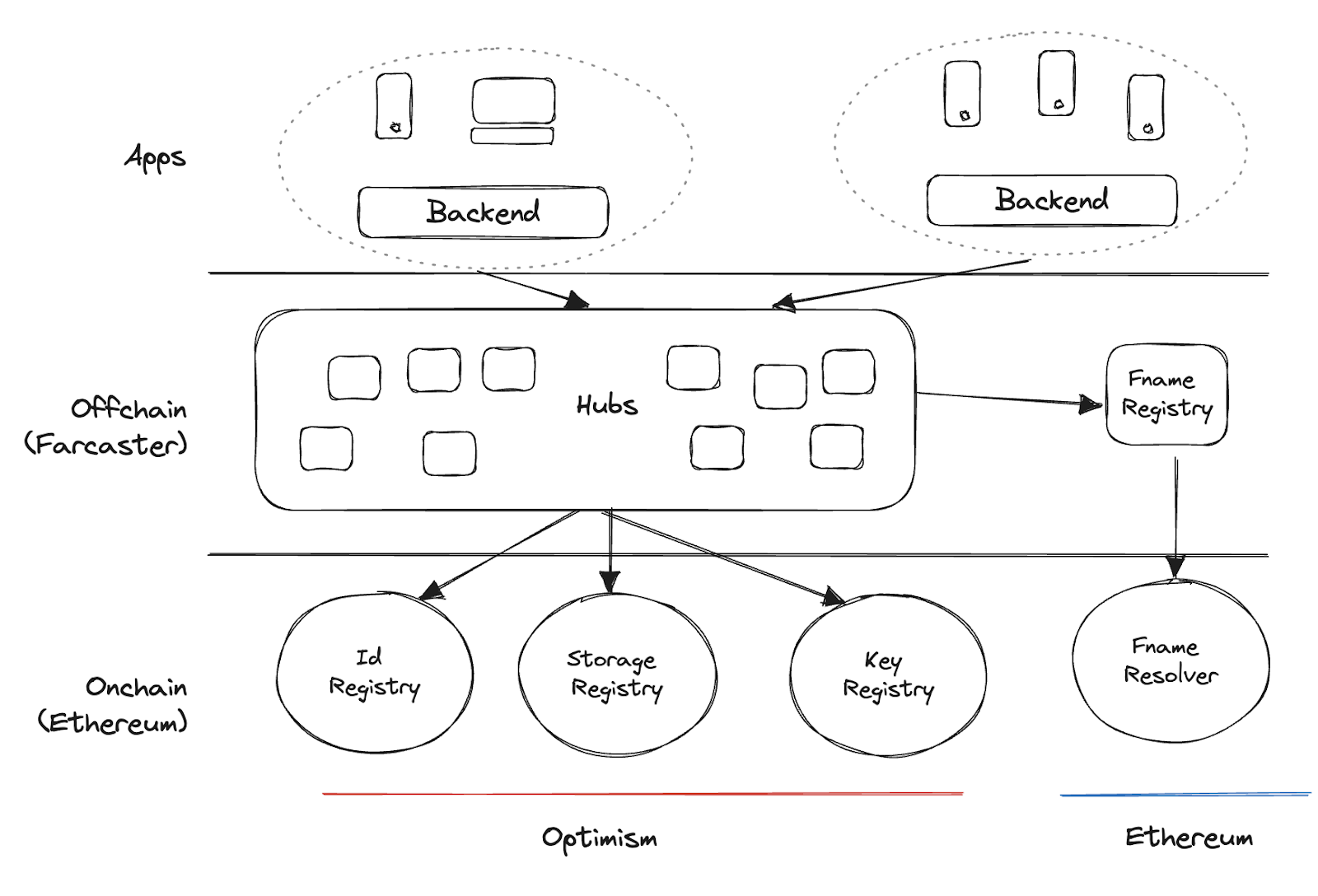
Farcaster implements its architecture via a set of core smart contracts deployed on Optimism:
-
IdRegistry creates new accounts and allows users to transfer and recover Farcaster accounts. It integrates with ENS, enabling legitimate owners to claim usernames.
-
Storage Registry rents storage space to accounts. Prices are denominated in USD and converted to ETH via an oracle, fluctuating based on supply and demand.
-
Key Registry allows accounts to publish app keys so those apps can post on their behalf.
As you can see, none of these smart contracts send or receive messages—that responsibility is delegated to Hubs. Hubs form a distributed network composed of Hubble instances—nodes built using TypeScript and Rust.
Nodes validate, store, replicate messages, and evaluate their peers.
Message-level validation occurs by checking valid signatures from a user’s account key.
Once validated, messages are stored asynchronously in the hub using CRRDT (Conflict-free Replicated Data Type).
Replication is achieved via diff sync and a gossip protocol based on the popular libp2p library. Hubs periodically select random peers to perform diff sync—comparing Merkle tries of message hashes to identify missing messages.
Hubs feature strong eventual consistency—any node can reconstruct its state from peers, even after going offline.
Peers are critical to maintaining protocol integrity, so they continuously assess each other. Nodes that fail to accept valid messages, lag behind, or gossip excessively may be ignored.
6. Permissionless Innovation
From these protocols and principles, new primitives are emerging. Among them, Farcaster’s Frames have drawn significant attention.
Frames inject interactive experiences directly into the Farcaster feed. They extend the Open Graph standard by adding up to four buttons, turning static images into dynamic interfaces. When a user clicks a button, a new image is returned based on the click and user metadata sent to the Frame’s server.
On this foundation, we’re seeing experiments emerge—liquidity pools, digital collectibles, and mini-games deployed through Frames.
Any application server capable of returning HTML content can generate a Frame. Already, tools like https://framesjs.org/, https://frog.fm/, and others are streamlining development.
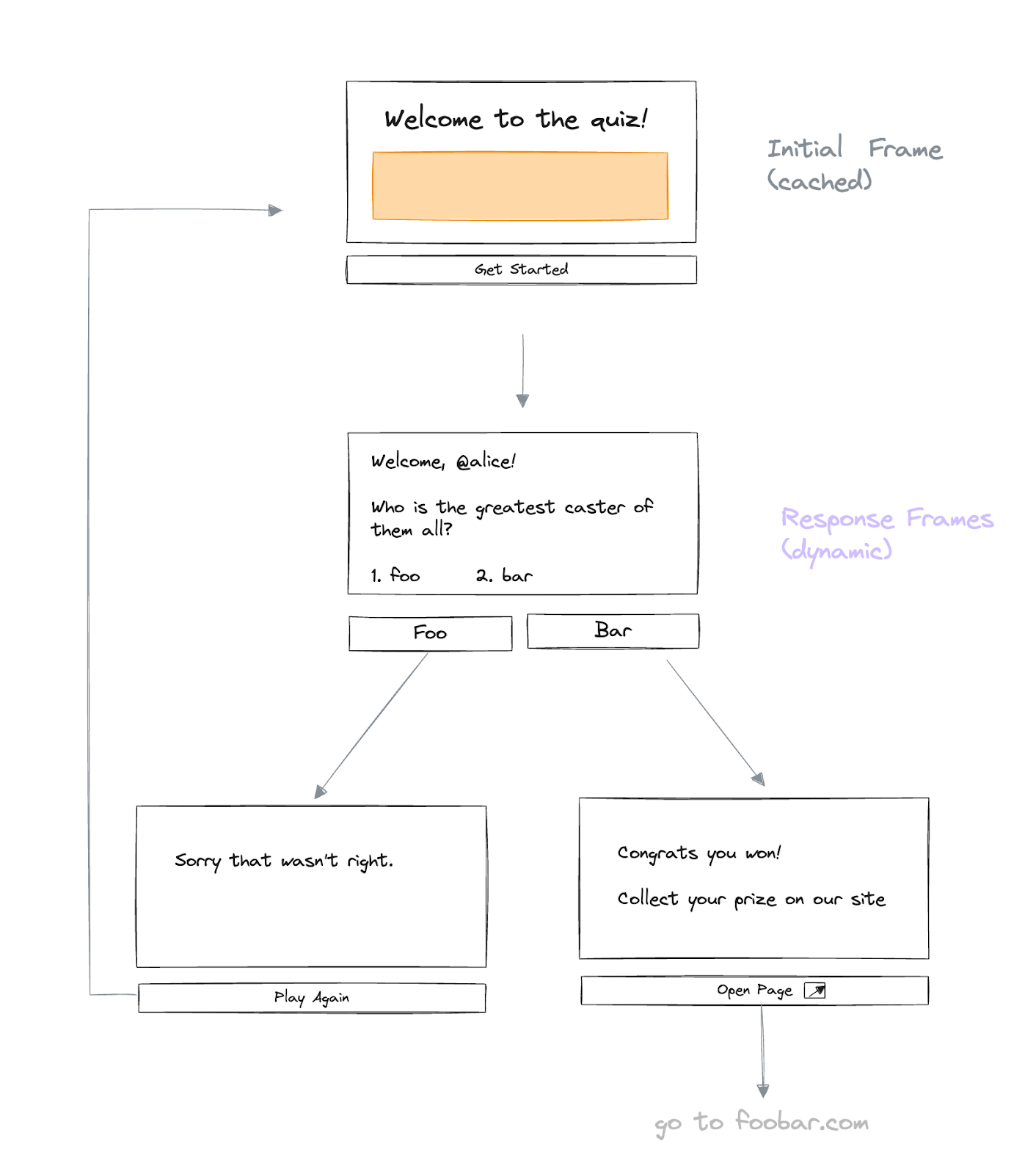
Following Frames’ success on Farcaster, Lens is now exploring similar capabilities—indicating that shared standards can become powerful catalysts.
7. Conclusion
Decentralized social networks still face significant challenges before achieving mainstream success—scaling infrastructure for more users, simplifying wallet creation for newcomers, and abstracting gas fees as much as possible.
Despite these hurdles, Farcaster has made meaningful progress in overall user experience and cultivated a sticky community (e.g., ~50,000 daily active users, ~350,000 registered). Key drivers include mobile app availability, ease of installation, and UX comparable to traditional social networks.
Another crucial factor is the permissionless nature of protocols like Farcaster and Lens, which provide fertile ground for developers to innovate and build atop existing components and features.
Much like DeFi Summer, we’re witnessing a dynamic environment of experimentation—projects like yup.io (a decentralized social aggregator), drakula.app (a short-video platform), and neynar.com (a Farcaster-based SaaS tool)—all emerging from these protocols.
Founders can now establish native Web3 distribution channels—users can begin their journey from initial interest and expand into other apps embedded directly in their feeds (e.g., via Frames) or linked applications. Meanwhile, user-acquisition apps can serve as distribution funnels back into the broader decentralized social ecosystem, creating a positive feedback loop.
Join TechFlow official community to stay tuned
Telegram:https://t.me/TechFlowDaily
X (Twitter):https://x.com/TechFlowPost
X (Twitter) EN:https://x.com/BlockFlow_News
 Outlier Ventures