








Polygon Founder: L3s Are Worse Compared to L2s
TechFlow Selected TechFlow Selected
Polygon Founder: L3s Are Worse Compared to L2s
L2 and L3 are different technologies in the cryptocurrency space designed to enhance blockchain network scalability and efficiency, with L3 development currently performing poorly.
 Navigating Web3 tides with focused insights
Written by: @0xMarcB
Translated by: Baicai Blockchain
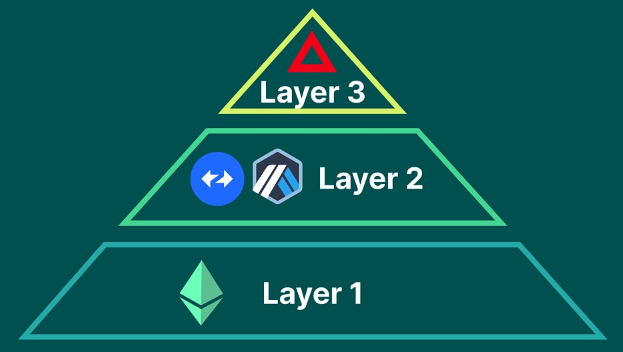
Layer 2 (L2) and Layer 3 (L3) are two distinct technological solutions in the cryptocurrency space designed to enhance blockchain scalability and efficiency.
L2 refers to second-layer protocols built on top of a primary blockchain—typically Ethereum. They alleviate congestion on the main chain by offloading transaction processing and smart contract execution to sidechains or rollup networks. L2 solutions typically offer faster transaction finality, lower fees, and support for higher transaction throughput. Common L2 technologies include Plasma, Rollups, and Sidechains.
In contrast, L3s are third-layer solutions constructed atop L2s. Their goal is to further improve scalability while introducing new functionalities such as cross-chain interoperability, customized smart contracts, and enhanced privacy features. L3s aim to provide users with greater flexibility and choice to meet diverse blockchain application needs.
While L3 technology may offer innovation and certain advantages, it also comes with potential drawbacks compared to L2. For instance, transactions on an L3 must often be confirmed through the underlying L2, resulting in longer processing times. Additionally, as a relatively new concept, L3s may face developmental and security challenges.
Today, let’s examine the analysis from the founder of Polygon regarding current L2 and L3 developments:
Don’t fall for marketing gimmicks—subpar tech promotion, or worse, attempts to quietly undermine Ethereum.
I believe that pursuing L3 development is worse than focusing on L2. Why is L3 inferior to L2?
1) You can customize everything on an L2 just like on an L3. Polygon CDK enables this for you.
2) You can use native GasTokens on an L2 just as you would on an L3. Polygon CDK supports this.
3) Seamless interoperability between L2s, L3s, and even L1 is possible without requiring L3s. AggLayer makes this achievable.
4) You can directly access an L2 from any exchange, provided at least one other chain connected to AggLayer is accessible from that exchange. This is far more flexible than requiring each L2 (and subsequently its L3) to individually integrate with every exchange. AggLayer + Polygon PoS enable this. Any X-layer connected to AggLayer offers the same support.
5) You can easily share transaction costs across multiple L2s and L3s just as effectively on an L2. AggLayer provides this capability.
6) As an L2, you maintain sovereignty and enjoy all the above benefits, whereas an L3 remains subject to whatever limitations the underlying L2 imposes.
7) An L2 allows frequent and fast withdrawals back to Ethereum. An L3 cannot do so independently—it always depends on the control of the intermediate L2.
So why go through the extra complexity of building an L3 on top of an L2?
L2 teams build L3s primarily to increase demand for blockspace on their own L2 and lock in network effects. They resort to this tactic because they lack zero-knowledge technology to securely interoperate between L2s, so they use L3s as a marketing workaround.
In some cases, they may believe they can generate enough network effect to eventually launch their own validator set and achieve sufficient economic security to replace Ethereum. This is a dangerous game—users should remain vigilant against market power abuse.
Should building L3s be allowed?
Of course! Cryptocurrency is about freedom. Neither I nor Polygon Labs will dictate what people can build. Some L3s are being built using Polygon technology. We don’t think it’s necessary—and actually consider it worse than building an L2—but who are we to stop people from making their own choices?
Join TechFlow official community to stay tuned
Telegram:https://t.me/TechFlowDaily
X (Twitter):https://x.com/TechFlowPost
X (Twitter) EN:https://x.com/BlockFlow_News
 @0xMarcB


